<?xml version="1.0" encoding="utf-8"?>
<feed xmlns="http://www.w3.org/2005/Atom">
    <title>Plain English</title>
    <link rel="alternate" type="text/html" href="http://www.artsjournal.com/plainenglish/" />
    <link rel="self" type="application/atom+xml" href="http://www.artsjournal.com/plainenglish/atom.xml" />
    <id>tag:www.artsjournal.com,2008-02-19:/plainenglish/40</id>
    <updated>2009-11-18T12:22:28Z</updated>
    <subtitle>Paul Levy measures the Angles</subtitle>
    <generator uri="http://www.sixapart.com/movabletype/">Movable Type 4.31-en</generator>

<entry>
    <title>Fairy Tales of Birmingham</title>
    <link rel="alternate" type="text/html" href="http://www.artsjournal.com/plainenglish/2009/11/fairy-tales-of-birmingham.html" />
    <id>tag:www.artsjournal.com,2009:/plainenglish//40.23294</id>

    <published>2009-11-17T14:42:25Z</published>
    <updated>2009-11-18T12:22:28Z</updated>

    <summary>It&apos;s not every day that I&apos;ll take the trouble to go to Birmingham to hear a piece of contemporary music - or to do anything else, as the train fare is 20 per cent more than the fare from Oxford...</summary>
    <author>
        <name>Plain English</name>
        <uri>http://www.artsjournal.com/plainenglish</uri>
    </author>
    
    <category term="paullevymeasurestheangles" label="Paul Levy Measures the Angles" scheme="http://www.sixapart.com/ns/types#tag" />
    
    <content type="html" xml:lang="en-US" xml:base="http://www.artsjournal.com/plainenglish/">
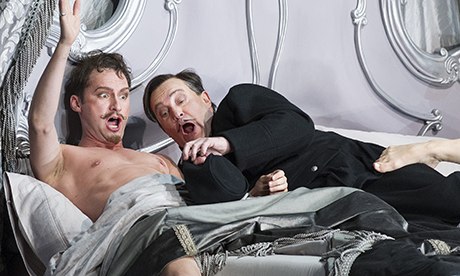
        <![CDATA[It's not every day that I'll take the trouble to go to Birmingham to hear a piece of contemporary music - or to do anything else, as the train fare is 20 per cent more than the fare from Oxford to London (though the distance is smaller), and as my wife refuses to drive in Birmingham because of its diabolical navigation difficulties. &nbsp;Despite having to share our carriage on the return leg with a gang of totally hammered public school boys with cut-glass accents pretending to be proletarian lager louts - a charming, if baffling aspiration - it was worth the journey. For we were at the world première performance of "Rumpelstiltskin: A grotesque fable for our times" by the Birmingham Contemporary Music Group, the score composed by David Sawer and directed by Richard Jones. <div><br /></div><div><br /></div><div><br /></div><div>&nbsp;<img alt="Rumpel.2890.JPG" src="http://www.artsjournal.com/plainenglish/Rumpel.2890.JPG" width="2100" height="1500" class="mt-image-none" style="" /></div><div><br /></div>]]>
        <![CDATA[<div><br /></div><div><br /></div><div><br /></div><div><br /></div><div><br /></div><div><span class="Apple-tab-span" style="white-space:pre">	</span>I have to confess that because of Richard Jones, I (and at least one other critic, an opera specialist) were expecting this Rumpelstiltskin to be an opera - or at least have some singing roles. Wrong. It was a strange and wonderful &nbsp;hybrid of &nbsp;chamber music and music for a 13-piece orchestra with non-speaking or singing roles for seven dancers, who danced very little, but emoted and mimed a great deal. Many of the musicians were made up, or costumed, and formed part of the spectacle.</div><div><span class="Apple-tab-span" style="white-space:pre">	</span>In the vast rehearsal space of the Birmingham Symphony, Martyn Brabbins conducted the basic band at stage right, while a harp stood with three music stands at stage left; these were occupied sometimes by a string trio, sometimes by various other combinations of instruments, including at one point a bass clarinet. Mr Sawer had composed various chamber numbers for them, sometimes stand-alone, though usually integrated musically with the larger ensemble. Three musicians at a time, some of them face-painted would leave the orchestra, make a ritual promenade around the chamber music area, take their seats, play a few bars (or a few pages), then circle the area again on their way back to the bigger band. Oddly enough, this was not annoying, but simply seemed to be one of the harmless rules of the production.</div><div><span class="Apple-tab-span" style="white-space:pre">	</span>Stewart Laing had designed an ingenious wood cabin with a sliding front wall as the miller's house, and all eight scenes were enacted in and on it. I have also to confess that I confused my fairy tales beginning with the letter "R", and kept waiting for the miller's daughter to let her hair down, but soon realised that she, with the help of a demon of restricted growth, was spinning straw into gold.&nbsp;</div><div><span class="Apple-tab-span" style="white-space:pre">	</span>Though only Mr Jones as director, and no choreographer or movement director is credited, there was constant, energetic movement, verging on dance - though never quite tipping over into it because the narrative element was paramount, and Mr Jones required some stylised awkwardness of his cast. If they did not exactly dance, they certainly did act. Without exaggerating their gestures too much, the young troupe displayed, not just a decent-sized repertory of emotions, but also harder-to-convey attitudes such as irony, teasing, flippancy and exasperation.</div><div><span class="Apple-tab-span" style="white-space:pre">	</span>Of course this was brilliantly underpinned by the music. Mr Sawer's score was in a modern idiom, but easy to comprehend - and easy to love, melodic in an early-Schönberg, post-Stravinsky-classical period way. It would be interesting to hear a recording of the piece; I have a suspicion it doesn't work on its own, without the actor/dancers and the set. Yet it makes a very satisfactory whole - perhaps Mr Jones and Mr Sawer are to be congratulated an achieving a paradoxical Wagnerian Gesamtkunstwerk without the operatic element.&nbsp;</div><div><span class="Apple-tab-span" style="white-space:pre">	</span>One aspect that is not so satisfactory is the purport of the subtitle: "A grotesque fable for our times." Yeah, we get it, making gold from straw is a Ponzi scheme, the miller's a Bernie Madoff, and all the rest. As a theatrical scheme this is already getting tired - we've had "Enron," we've had the latest David Hare play, and half a dozen other productions that I'm too lazy to Google. Last week we had (a completely valid) "Bluebeard" as Josef Fritzl, and I expect to see many more productions pushing that set of buttons. True originality ought really to take us beyond the headlines of yesterday's newspaper.</div><div><span class="Apple-tab-span" style="white-space:pre">	</span>The production tours in November to the Tramway, Glasgow and Bates Mill, Huddersfield - too few venues and for too short runs. "Rumplestiltskin: A grotesque fable for our times" would surely draw audiences for a week or so at Sadlers Wells or the Barbican.</div><div><br /></div>]]>
    </content>
</entry>

<entry>
    <title>Incest without the Morris Dancing</title>
    <link rel="alternate" type="text/html" href="http://www.artsjournal.com/plainenglish/2009/11/incest-without-the-morris-danc.html" />
    <id>tag:www.artsjournal.com,2009:/plainenglish//40.23209</id>

    <published>2009-11-12T18:50:22Z</published>
    <updated>2009-11-12T19:02:20Z</updated>

    <summary><![CDATA[photo credit: Johan Persson / ENOI've recently been to a performance in London where I imagine &nbsp;the audience reaction resembled that of the audience at the Paris première of The Rite of Spring on 29 May 1913. Indeed, the second...]]></summary>
    <author>
        <name>Plain English</name>
        <uri>http://www.artsjournal.com/plainenglish</uri>
    </author>
    
    <category term="paullevymeasurestheangles" label="Paul Levy measures the Angles" scheme="http://www.sixapart.com/ns/types#tag" />
    
    <content type="html" xml:lang="en-US" xml:base="http://www.artsjournal.com/plainenglish/">
        <![CDATA[<div><br /></div><div><img alt="duke_bluebeards_castle (3).jpg" src="http://www.artsjournal.com/plainenglish/duke_bluebeards_castle%20%283%29.jpg" width="128" height="128" class="mt-image-none" style="" /></div><div><p><span style="FONT-FAMILY: 'Verdana','sans-serif'; COLOR: gray">photo credit: 
Johan Persson / ENO</span><o:p></o:p></p></div>I've recently been to a performance in London where I imagine &nbsp;the audience reaction resembled that of the audience at the Paris première of <i>The Rite of Spring</i> on 29 May 1913. Indeed, the second half of the evening was a performance of Stravinsky's <i>The Rite of Spring</i>; but this was a double-bill, and it was the conclusion of the first half at which the audience sat for 30-45 seconds, too shocked (or embarrassed, claimed its detractors) to applaud. There was not a sound in the vast auditorium of the Coliseum at the end of &nbsp;Bartók's <i>Duke Bluebeard's Castle</i> until the stage lights went off altogether, and the house lights came up. Then there was a great deal of clapping and shouting - with the voice of a solitary booer carrying over the crowd. I, for one, was too stunned to make very much noise.&nbsp; ]]>
        <![CDATA[<div><br /></div><div><span class="Apple-tab-span" style="white-space:pre">	</span>The director was the hot young American, Daniel Kramer, better known as a stage director, though he's done Harry Birtwhistle's Punch and Judy]with the Young Vic - which I wish I'd seen. Designer Giles Cadle has provided a suburban front door with a streetlamp, for the first of the castle's seven closed doors; and the remainder are in a large basement. We know the tale. The new wife prevails upon Bluebeard to bring light into his dark castle by throwing open all seven doors. He implores her not to open the last door; she insists, and discovers that he's killed his three previous wives, as he will kill her.</div><div>&nbsp;&nbsp; &nbsp; &nbsp; Cadle's costumes for Clive Bayley's (terrifically sung, even better-acted) Bluebeard is an Austrian jacket - <i>Trach</i>t . When Judith, sung with real force but few consonants (thank god the English National Opera contradicts its own mission statement and uses surtitles for English-language performances, or we shouldn't have understand a word she sang) by Michaela Martens, opens the fifth door, he reveals to her his states and dominions. In Kramer's production, these are a large group of children. The eldest is a girl who is carrying her own baby. We are in no doubt who has fathered all of them.</div><div><span class="Apple-tab-span" style="white-space:pre">	</span>Suburban? Basement? Austria? Children? &nbsp;Uh-oh, we're in Josef Fritzl-land.</div><div><span class="Apple-tab-span" style="white-space:pre">	</span>Does it work? Yes. It anchors the horror of the 1697 Charles Perrault fairy tale in the kind of horror we read about nowadays. Even though we may not be able to feel much sympathy for the incestuous monster, the pathology is one we're familiar with, and whose reality we have to acknowledge. OK, we're in the realms of abnormal psychology, but we can't deny that the sort of thing we're seeing on the stage happens - we <i>know</i>&nbsp;it does, because it's actually happened in 2009.</div><div><span class="Apple-tab-span" style="white-space:pre">	</span>Bartók's Bluebeard is, however, interesting to us, not because of his idiosyncratic perversions, his incestuous desires and actions and his sado-masochism, but because of the universal aspect of the psychology of the character: here is a man who can only have a relationship if he has total power over the other. This is an extreme form of a common problem - how to form and conduct an intimate relationship where both parties are equal. The converse of this, of course, is that Bluebeard is impotent except when he has total power over his sexual object - the power to kill the thing he loves. The opera's relationship between Bluebeard and Judith is an exaggerated version of the war between the sexes. Bayley's Bluebeard plays with his own children's toys, and even his body-language is infantile. Judith forces herself upon him, even when some remaining scruple makes him hesitate from harming her.<i> Mutatis mutandis</i>&nbsp;it's the stuff of everyday emotional negotiations between couples.</div><div><span class="Apple-tab-span" style="white-space:pre">	</span>That's why the libretto by Béla Balázs has lasted as well as Bartók's wonderful, arching, surging, always-thrilling score. As Bruno Bettleheim pointed out, it's based on one of the few fairy tales that has absolutely no element of the supernatural about it. Scholars have always wanted to find an historical equivalent for Bluebeard - and lots have pinned the rap on Gilles de Rais, the Breton who fought for Joan of Arc - so we can hardly complain that Daniel Kramer has found an objective correlative (as it were) in yesterday's newspapers' reports of Josef Fritzl.</div><div><span class="Apple-tab-span" style="white-space:pre">	</span>As for pairing it with The Rite of Spring: they both end, after all, with the sacrifice of the Chosen One. I won't reveal the genuinely shocking ending of Kramer's <i>Bluebeard</i>, except to say that it involves a little boy, a sword, the three previous wives and a lot of gore. It's disturbing and distressing, whereas Michael Keegan-Dolan's rethink of <i>The Rite of Spring</i> &nbsp;is both these, but also exhilarating, so that you leave the Coliseum with Stravinsky's rhythms still pounding in your brain.</div><div><span class="Apple-tab-span" style="white-space:pre">	</span>The director/choreographer's Irish company, Fabulous Beast has 18 boys in the corps, plus three girls, and acting parts for a hag and a boy. A statue of the Virgin stage right tells us we're in an isolated Irish bog village, comparable to the ancient Russian <i>Golden Bough</i>-ish village Stravinsky intended (a comparison that has outraged several of my critic-colleagues, though Keegan-Dolan has said it's not necessarily his mother-country: "It's an imagined community, a patriarchal one, somewhere in North Atlantic Europe.") In any case, it's in modern dress. Seated on bleachers, the boys each have a box with a rope handle.</div><div>The three maidens arrive on their bicycles, circling the cigarette-smoking Hag, Stravinsky's queen of winter. The boys deposit their boxes at the back of the stage. Then the boys dance in unison, an intense, pulsing, tightly-knit stomp that manages to magnify what's going on in the pit, where Edward Gardner's orchestra are fluently executing Stravinsky's agitated, swelling and churning rhythms. At some places you're dizzied, or compelled to gasp for air, as if you were dancing yourself. There's violence; knives are drawn and hurled into the floor; a man is singled out and perhaps killed; the women don masks representing the head of a hare; the men ravish them; everyone is out of control.</div><div><span class="Apple-tab-span" style="white-space:pre">	</span>The boys all lower their trousers to their ankles, revealing their Y-fronts, and roll on the ground; they appear to be copulating with the earth itself. The hag and the little boy give each one his box. Inside is the head of &nbsp;a pit bull terrier, which they put on; now a pack of killer-dogs, they attack the women and kill two of them. They remove their heads, and strip willy-dangling naked. The hag and boy unfurl a coloured rope. The men take it, tug at it, and it unravels into women's dresses, which each naked boy puts on, as they dance the Ritual Action of the Ancestors. In drag, they are now a sisterhood, circling the maiden, the Chosen One, as she, exalted, performs the frenzied Sacred Dance of her own death. Speak of scaring the pants of someone.It would certainly have startled Stravinsky.</div><div><br /></div>]]>
    </content>
</entry>

<entry>
    <title>That Bloomsbury Voice</title>
    <link rel="alternate" type="text/html" href="http://www.artsjournal.com/plainenglish/2009/11/that-bloomsbury-voice.html" />
    <id>tag:www.artsjournal.com,2009:/plainenglish//40.23118</id>

    <published>2009-11-06T08:46:13Z</published>
    <updated>2009-11-06T08:54:23Z</updated>

    <summary> Wouldn&apos;t it be wonderful if we could hear the voice of Boswell, or of Mme de Lieven. Or if we had recordings of the voices of Hume, Gibbon and Macaulay? Or, to enter the realm of the possible, of...</summary>
    <author>
        <name>Plain English</name>
        <uri>http://www.artsjournal.com/plainenglish</uri>
    </author>
    
    <category term="paullevymeasurestheangles" label="Paul Levy measures the Angles" scheme="http://www.sixapart.com/ns/types#tag" />
    
    <content type="html" xml:lang="en-US" xml:base="http://www.artsjournal.com/plainenglish/">
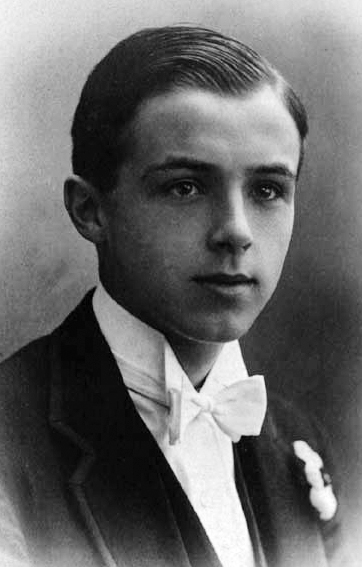
        <![CDATA[ <div><img alt="Bloomsbury.jpg" src="http://www.artsjournal.com/plainenglish/Bloomsbury.jpg" width="500" height="449" class="mt-image-none" style="" /></div><div>Wouldn't it be wonderful if we could hear the voice of Boswell, or of Mme de Lieven. Or if we had recordings of the voices of Hume, Gibbon and Macaulay? Or, to enter the realm of the possible, of Lytton Strachey, who wrote about the others in&nbsp;<i>Portraits in Miniature</i>. Indeed, Strachey's recording might be the most interesting of the bunch, because all who knew him have remarked on his remarkable speaking voice, which rose from a deep bass to a tinkling soprano, only to swoop again to the lower timbre. I think I understand what is meant by this, because I had an Uncle Louis whose voice played this trick. It was completely undependable in its pitch, and not in his control; even in his old age, it sounded like an adolescent boy's voice that had not quite broken or changed. But in addition to this, Strachey had a family vocal tic of accenting the unexpected syllable, and of strange inflection.&nbsp;</div>]]>
        <![CDATA[<div><br /></div><div>This last was infectious, and in my own lifetime I've known several people close to Lytton, such as the late Frances Partridge, David "Bunny" Garnett, Duncan Grant, and Lytton's sister-in-law, Alix Strachey, and fringe Bloomsberries such as Lord and Lady David Cecil, who seemed to have &nbsp;caught aspects of the voice, either from Lytton himself, or from Marjorie or Pippa Strachey.&nbsp;</div><div>I so wish there was a recording of Lytton's speech. I am the editor of his letters (and with Michael Holroyd, Lytton's literary executor), and knowing what they would have sounded like read aloud by their author would have been a scholarly help (for the occasional crux - that sort of thing), as well as a treat. Sadly, no one ever thought of doing this - or if anyone did consider it, no one succeeded in convincing Lytton to speak into a recording machine.&nbsp;</div><div>Happily, many of his friends did just that. The British Library has now released a new 2-CD compilation in its series "The Spoken Word," called simply "The Bloomsbury Group." (www.bl.uk/soundarchive ; to order: www.bl.uk/shop )&nbsp;</div><div>&nbsp;The clips are taken from a variety of sources, mostly from the BBC, and include what claims to be the only surviving recording of Virginia Woolf (though I listened to one many years in 1968 at the Houghton Library at Harvard, and my - of course, unreliable - memory of it is different). &nbsp;I listed to these discs the first time in Norfolk in the company of the current Desmond MacCarthy, and of Laura Cecil, both grandchildren of Desmond and Mollie MacCarthy (who coined the plural "Bloomsberries." Desmond sounded like any educated, upper-class Edwardian. The surprise was that Maynard Keynes did not, but had a really distinctive, velvety purr underlying the Old Etonian/Oxbridge vowels - cut glass, but with bevelled edges.</div><div>To those whose voices I knew well (or at least heard in conversation more than once) &nbsp;- Quentin Bell, David Cecil, E.M. Forster, Angelica Garnett, David Garnett, Duncan Grant, Nigel Nicolson, Frances Partridge, Bertrand Russell, Dadie Rylands and Leonard Woolf - I find it hard to apply my own Bloomsbury-voice detector. It's difficult to be analytical when the sound of the voice stirs the memory and calls up someone's image. &nbsp;Another reason for difficulty in saying which of these voices have the largest Bloomsbury quotient is that most of the recordings were made when their subjects were elderly - there are few youthfully strong voices on these discs.&nbsp;</div><div>I'd say Clive Bell was low BQ, Vanessa, too. Marjorie Strachey gives few clues to the family idiolect; and Virginia Woolf is mainly notable for her baritone voice.</div><div>&nbsp;Still, if you're doing a bit of Bloomsbury-detection, I recommend listening carefully to Quentin Bell, David Cecil and Maynard Keynes. As a bonus, Duncan Heyes, who writes the introduction to the accompanying pamphlet, and compiled the discs, imaginatively gives us the voices of Grace Higgins (whom I met), Nellie Boxhall, Lottie Hope and Louie Mayer, the first Duncan's cook at Charleston; the other three worked for Virginia and Leonard. &nbsp;</div><div>All praise, then, for these recordings. But a big damnation for the idiotic British television executives from the 1950s until 2004, when Frances died (Angelica Garnett is still, gloriously, with us and lives in France). The Teledummies of that half-century did not much value the Bloomsbury Group - they were thought to be too "elitist," too intellectual - and all the rest. So history missed its chance to have any of these people filmed in their prime - or even in their old age. Would we forgive the people responsible, if they had the means, but neglected to film Hume, Gibbon or Macaulay? &nbsp; &nbsp; &nbsp; &nbsp; &nbsp; &nbsp;</div><div><br /></div>]]>
    </content>
</entry>

<entry>
    <title>That boy&apos;s magic horn</title>
    <link rel="alternate" type="text/html" href="http://www.artsjournal.com/plainenglish/2009/10/that-boys-magic-horn.html" />
    <id>tag:www.artsjournal.com,2009:/plainenglish//40.22916</id>

    <published>2009-10-24T10:57:55Z</published>
    <updated>2009-10-24T11:10:37Z</updated>

    <summary>Tired of commuting to London for my daily culture-fix, it was wonderful to drive only as far as Oxford last week for the opening of the 2008 Oxford Lieder Festival, www.oxfordlieder.co.uk. This is the brainchild and labour of love of...</summary>
    <author>
        <name>Plain English</name>
        <uri>http://www.artsjournal.com/plainenglish</uri>
    </author>
    
    <category term="paullevymeasurestheangles" label="Paul Levy measures the Angles" scheme="http://www.sixapart.com/ns/types#tag" />
    
    <content type="html" xml:lang="en-US" xml:base="http://www.artsjournal.com/plainenglish/">
        <![CDATA[<span class="Apple-style-span" style="color: rgb(0, 0, 0); font-family: 'Lucida Grande', Arial, sans-serif; font-size: small; white-space: pre-wrap; ">Tired of commuting to London for my daily culture-fix, it was wonderful to drive only as far as Oxford last week for the opening of the 2008 Oxford Lieder Festival, <span class="Apple-style-span" style="text-decoration: underline;">www.oxfordlieder.co.uk</span>.  This is the brainchild and labour of love of Sholto Kynoch, a charismatic song accompanist and chamber musician (the pianist of the new Phoenix Piano Trio, who will be performing the Beethoven trios in 2010).  Interestingly, for me at any rate, the opening recital of songs from <i>Des Knaben Wunderhorn</i> was given at the Jacqueline du Pré Music Building of the formerly all-female St Hilda's College. </span> <div><font class="Apple-style-span" color="#000000" face="'Lucida Grande', Arial, sans-serif"><span class="Apple-style-span" style="font-size: small; white-space: pre-wrap;"><img alt="160_radcam.jpg" src="http://www.artsjournal.com/plainenglish/160_radcam.jpg" width="260" height="167" class="mt-image-none" style="" /></span></font></div><div><br /></div>]]>
        <![CDATA[<div>Shamefully, because it's been there for several years, this was the first time I'd ever been to the building. It's not easy to find, as you have to schlep through the college to arrive at its wide expanse. My wife, who's been in high summer, says it's torture to go to a concert there when the mercury's rising, as it's a heat trap with no air-conditioning. It was perfectly comfortable in October, though the architecture seems awfully quirky to me. But I found the acoustic a bit too bright for singers and piano only. It might work better for larger chamber groups, even string quartets.</div><div><span class="Apple-tab-span" style="white-space:pre">	</span>But the evening's lovely mezzo-soprano, Rowan Hellier, couldn't find her voice's volume control, and gave us a bit too much of what she's certainly got. Baritone William Berger had no dynamics problems - he could manage his <i>ppp</i>s as well as his<i> ff</i>s, and the room seemed better suited to his warm voice than to hers.</div><div><span class="Apple-tab-span" style="white-space:pre">	</span>The delightful programme contrasted songs from the collection made by &nbsp;Clemens Brentano (1778-1842) and Achim von Arnim (1781-1831) of these disparate folk verses, in settings by Schumann, Mendelssohn, Christian Sinding and Brahms, with the more famous ones by Mahler. A pre-recital lecture by Richard Stokes allowed us to hear several historic recordings of many of these. On the basis of listening to them I concluded that much of the - not fault - but slight defect of Ms Hellier's performance was that her voice was often placed wrongly. She has a lovely, pleasingly warm middle and lower register, and a clear, strong upper register; but she was using her chest voice for the most part, and large sections of many of these songs, especially the Mahlers, need to be sung, with the highest notes floated softly, with the head voice. Or so it seemed to me. I wonder what the most usual practice is?</div><div><span class="Apple-tab-span" style="white-space:pre">	</span>Full marks, though, to Mr Berger and Mr Kynoch. It was a very imaginative programme, and I'd go to hear it again. Oh, and I learned from one of the Schumann songs that the German for "ladybird" (or "ladybug" in America) is <i>Marienwuermchen. </i>Why?</div><div><span class="Apple-tab-span" style="white-space:pre">	</span></div><div><br /></div>]]>
    </content>
</entry>

<entry>
    <title>Brecht&apos;s problem play</title>
    <link rel="alternate" type="text/html" href="http://www.artsjournal.com/plainenglish/2009/10/brechts-problem-play.html" />
    <id>tag:www.artsjournal.com,2009:/plainenglish//40.22629</id>

    <published>2009-10-06T11:58:53Z</published>
    <updated>2009-10-06T12:15:09Z</updated>

    <summary>Brecht&apos;s Mother Courage and Her Children is a problem play, and the National Theatre&apos;s new production has had more than its share of troubles, with a press night postponed because the actor playing the second lead, the chaplain, either quit...</summary>
    <author>
        <name>Plain English</name>
        <uri>http://www.artsjournal.com/plainenglish</uri>
    </author>
    
    <category term="paullevymeasurestheangles" label="Paul Levy measures the Angles" scheme="http://www.sixapart.com/ns/types#tag" />
    
    <content type="html" xml:lang="en-US" xml:base="http://www.artsjournal.com/plainenglish/">
        <![CDATA[Brecht's <i>Mother Courage and Her Children</i> is a problem play, and the National Theatre's new production has had more than its share of troubles, with a press night postponed because the actor playing the second lead, the chaplain, either quit or was sacked, and replaced by an excellent Stephen Kennedy. This diverted critical attention, for a few moments, from the fact that this production, in a whizz-bang translation by Tony Kushner, is directed by Deborah Warner and stars her constant collaborator, Fiona Shaw.&nbsp; <div><br /></div><div><img alt="mothercourage_168x256pxAf53.jpg" src="http://www.artsjournal.com/plainenglish/mothercourage_168x256pxAf53.jpg" width="168" height="256" class="mt-image-none" style="" /></div><div><br /></div>]]>
        <![CDATA[<div><br /></div><div><span class="Apple-tab-span" style="white-space:pre">	</span>But the real problem is the play itself. I've seen stagings in which Brecht's woman-profiteer in the Thirty Years War is so dislikeable that you can scarcely bear to look at her, and others in which she is so hard that you can't believe in her single display of maternal instinct (when presented with the body of her favourite son). And I've seen others in which the lighting effects are so gloomy that the play might as well have been performed in the dark. The National's production has none of these drawbacks. From the moment she appears on the top of her cart, in hippy dress of billowing skirts that look like jodhpurs made for a giant, Fiona Shaw radiates a sort of paradoxical good nature, and is almost too attractive. &nbsp;Ms Warner achieves Brecht's alienation effects by the simple expedient of showing us all the stage machinery and stage-hands talking into their mics, and by having the musicians, a sort of Kurt Weill-tribute band led by Duke Special, an elfin creature with blond dreadlocks, one of them disconcertingly bisecting his face. He has a lovely voice though, to go with his sweet smile, as he bobs and weaves in and out of the stage action. His lyrics are interesting, his melodies a little too lyrical for Brecht, but not much short of first-rate.</div><div><span class="Apple-tab-span" style="white-space:pre">	</span>No, the trouble is Brecht. Ms Warner seems to have had the same trouble as I have deciding whether this is really an anti-war play, or whether it's an ideological play, taking a convenient anti-war stance when composed in 1939, because it was what the Communist Party was telling him to do, in support of the Hitler-Stalin non-aggression pact. Does it keep the faith, or does it stink of bad faith? Oddly enough, I think the decision to have Gore Vidal read the scene-setting stage directions argues against it being a pacifist play. It was a lovely surprise, when the curtain calls came at the first night, that Ms Shaw wheeled the old boy out in his wheelchair - and he broke with all National Theatre tradition and practice and called for a microphone. He made a very brief speech against the war in Afghanistan - and not, I think, from the absolutist position that all war is wrong. We cheered Gore Vidal to the rafters, of course; but what he was doing was drawing a parallel with Vietnam (and, implicitly, I think, with World War I), &nbsp;particular wars that are wrong on political grounds.&nbsp;</div><div><span class="Apple-tab-span" style="white-space:pre">	</span>The dramatic flaws in <i>Mother Courag</i>e are owing to this same unresolved tension. Brecht may not have been a hypocrite, but his sincerity is a touch hard to believe in.</div><div><br /></div>]]>
    </content>
</entry>

<entry>
    <title>Dies illa</title>
    <link rel="alternate" type="text/html" href="http://www.artsjournal.com/plainenglish/2009/09/dies-illa.html" />
    <id>tag:www.artsjournal.com,2009:/plainenglish//40.22435</id>

    <published>2009-09-23T16:54:21Z</published>
    <updated>2009-09-23T17:08:07Z</updated>

    <summary> I love going to what a former-debutante girlfriend used to call (generically) &quot;the play&quot; at the Almeida Theatre in Islington. The small, 325-seat auditorium is a warm, intimate space, the foyer and bars are welcoming, and it&apos;s located just...</summary>
    <author>
        <name>Plain English</name>
        <uri>http://www.artsjournal.com/plainenglish</uri>
    </author>
    
    <category term="paullevymeasurestheangles" label="Paul Levy measures the Angles" scheme="http://www.sixapart.com/ns/types#tag" />
    
    <content type="html" xml:lang="en-US" xml:base="http://www.artsjournal.com/plainenglish/">
        <![CDATA[ <div><div><br /></div><div>I love going to what a former-debutante girlfriend used to call (generically) "the play" at the Almeida Theatre in Islington. The small, 325-seat auditorium is a warm, intimate space, the foyer and bars are welcoming, and it's located just off Upper Street, which has gone from slummy to chic in the past 20 years, and teems with interesting restaurants, making it an adventure to eat after the show. In addition the theatre's adventurous programming policy makes almost everything the company presents very well worth the schlepp to this part of North London.</div><div><br /></div></div><div><font class="Apple-style-span" color="#000000" face="Arial"><span class="Apple-style-span" style="font-size: small; -webkit-border-horizontal-spacing: 2px; -webkit-border-vertical-spacing: 2px;"><span class="mt-enclosure mt-enclosure-image" style="display: inline;"><img alt="joe1web.jpg" src="http://www.artsjournal.com/plainenglish/joe1web.jpg" width="266" height="400" class="mt-image-none" style="" /></span></span></font></div><div><font class="Apple-style-span" color="#000000" face="Arial"><span class="Apple-style-span" style="font-size: small; -webkit-border-horizontal-spacing: 2px; -webkit-border-vertical-spacing: 2px; "><br /></span></font></div><div><font class="Apple-style-span" color="#000000" face="Arial"><span class="Apple-style-span" style="font-size: small; -webkit-border-horizontal-spacing: 2px; -webkit-border-vertical-spacing: 2px;"><br /></span></font></div><div><span class="Apple-style-span" style="color: rgb(0, 0, 0); font-family: Arial; font-size: small; -webkit-border-horizontal-spacing: 2px; -webkit-border-vertical-spacing: 2px; ">Joseph Millson in Judgment Day at the Almeida Theatre. Photo Keith Patterson</span></div>]]>
        <![CDATA[<div><br /></div><div><span class="Apple-tab-span" style="white-space:pre">	</span>On this occasion there was another reason for me to catch the first night, which is that the new production,<i> Judgment Day</i> a 1937 play by Ödön von Horváth, is being given in a new version by Christopher Hampton. He's had some deserved big hits recently, such as the 2006 film <i>Atonemen</i>t, Yasmina Reza's 2008 &nbsp;<i>God of Carnage</i> and an adaptation of <i>The Seagul</i>l at the Royal Court and on Broadway (2007-08) and has &nbsp;previously adapted three other plays by Ödön von Horváth. Hampton's film, <i>Carrington</i>, was first bruited at my kitchen table; so I take a special interest in his work.</div><div><span class="Apple-tab-span" style="white-space:pre">	</span><i>Judgment Day</i> powers down the tracks like the express train that is its central metaphor, in a plot about a rigid, moralistic stationmaster who makes one mistake, but a lethal one. Joseph Millson gives a striking performance as Thomas Hudetz, who always does his duty, follows orders to the letter, and has something of the automaton about him - until one evening he is distracted by a flirty village girl who kisses him, and causes him to forget to set the switches in time. It seems almost out of character that he tries to shirk responsibility for the fatal crash that follows and, indeed, is acquitted by the authorities. We're sympathetic to him at first, because he has a ghastly, cold, older wife. So chilly is she, that even her own brother, Alfons, disowns her. Alfons is, after a fashion, the conscience of the play, and at first sides with the stationmaster, as does everyone - the flirt even perjures herself for him.</div><div><span class="Apple-tab-span" style="white-space:pre">	</span>It all unravels in a distressing, frightening way, heightened by James Macdonald's direction and particularly by Miriam Buether's fabulously simple set that smoothly transforms itself from the railway station to a country inn. The play deals with shared guilt in 1937 Germany. There are no swastikas, no pictures of Hitler, no references to the Nazi party and no military uniforms. The only man who has a conscience has no idea what to do about it. The dilemma, and the catastrophe consequent on not solving it, are Germany's.</div><div>Following the 1933 election Ödön von Horváth left his native Bavaria for Budapest, where he renewed the Hungarian passport to which he was entitled by his paternity; and in Vienna that year he married a Jewish opera singer to give her a usable passport. Yet the next year he went to Berlin, to observe the Nazis at first-hand. Hampton says of this time in von Horváth's career: "The seven plays and two novels that poured out in the short time remaining to him are a compendium of the petty prejudices and rancorous suspicions of an era of epic mean-mindedness." After the<i> Anschluss</i> in 1938 he decided to emigrate to America, but en route stopped in Paris, where he was killed in a freak accident by a falling branch of a chestnut tree.&nbsp;</div><div><i>Judgment Day</i> reminds me of some of J.B. Priestley's plays of ideas, though this is better constructed, more subtle and more satisfying even than <i>An Inspector Calls</i>. Why don't we regularly see the plays of &nbsp;as West End and Broadway staples? If any of the others are as good as <i>Judgment Day</i>, we're missing a hell of a lot.</div><div><br /></div>]]>
    </content>
</entry>

<entry>
    <title>A high time in Auld Reekie</title>
    <link rel="alternate" type="text/html" href="http://www.artsjournal.com/plainenglish/2009/09/a-high-time-in-auld-reekie.html" />
    <id>tag:www.artsjournal.com,2009:/plainenglish//40.22077</id>

    <published>2009-09-01T15:43:43Z</published>
    <updated>2009-09-01T16:09:26Z</updated>

    <summary>Edinburgh 2009 (2)Apologies are owed to Edinburgh International Festival director, Jonathan Mills, as this is his third, not second, EIF, which I jolly well ought to know, as I was here for his inaugural festival, and very fine it was,...</summary>
    <author>
        <name>Plain English</name>
        <uri>http://www.artsjournal.com/plainenglish</uri>
    </author>
    
    <category term="paullevymeasurestheangles" label="Paul Levy measures the Angles" scheme="http://www.sixapart.com/ns/types#tag" />
    
    <content type="html" xml:lang="en-US" xml:base="http://www.artsjournal.com/plainenglish/">
        <![CDATA[<div>Edinburgh 2009 (2)</div><div>Apologies are owed to Edinburgh International Festival director, Jonathan Mills, as this is his third, not second, EIF, which I jolly well ought to know, as I was here for his inaugural festival, and very fine it was, too. My Edinburgh host and I were both convinced it was number two; my host and I are the same age, <i>verb sap</i>.</div><div>Very often in the past I have found the musical events of the Edinburgh Festival the most &nbsp;memorable, such as the occasion in the 1960s when at a Richter/Rostropovich complete Beethoven piano-cello sonatas cycle, I sat opposite a young Daniel and Jacqueline du Pres, mesmerised, sadly, not by the Beethoven but by du Pres nibbling the ends of her golden tresses. And they left at the interval.</div><div><br /></div> ]]>
        <![CDATA[<div>The Zurich Tonhalle-Orchester concert on Thursday, 27 August was, thank goodness, mostly notable for its music. Conductor David Zinman presided over an unremarkable performance of Brahms Variations on a theme by Haydn, which did nothing to make that old chestnut crackle. But then Dawn Upshaw sang Luciano Berio's "Folk Songs" with their mad orchestral accompaniments, followed by Mahler 4. It was difficult to say which was more exciting, as Upshaw's voice seems to have gone from bell-like silver to platinum.</div><div><span class="Apple-tab-span" style="white-space:pre">	</span>The themes of Mr Mills's third festival is the Enlightenment, with a sub-theme of Homecoming, and there have been several events turning on the most famous of all homecomings, the return of Ulysses to his Penelope. The Royal Ballet of Flanders presented a deliciously provocative view of events from Penelope's perspective, with Monteverdi music; while Handspring Puppet Company and the period instrument Ricercar Consort, with direction, animation and designs by S. African artist William Kentridge performed a stupendously complicated, beautifully sung version of the Monteverdi opera, Il ritorno d'Ulisse in patria. Larger than life-size puppets were operated with no attempt to disguise the puppeteers, some of whom were the singers themselves. Pure magic, and enhanced by Kentridge's clever visual counterpoint animations. The entire cast was good; Romina Basso as Penelope was outstanding.</div><div><span class="Apple-tab-span" style="white-space:pre">	</span>The dance event we most looked forward to was the new work by the Michael Clark Company. (See my review of this in the 4 Sept. Weekend edition of the Wall Street Journal Europe or online.) As we entered the theatre signs warned that there would be music that could damage your hearing (ear-plugs supplied on request) and "partial nudity." &nbsp;I loved it; but to my taste there was too much noise and not enough nudity.</div><div><span class="Apple-tab-span" style="white-space:pre">	</span>I'm not staying on long enough, I regret, to see "Peter and Wendy," so the big original theatre piece of my stay was Rona Munro's The Last Witch, played by the Traverse Theatre Company, directed by Dominic Hill. This was tied to the Enlightenment theme, as it started from the (scant) historical record of the burning of the last woman to be convicted of witchcraft in Scotland, in 1727, a short few decades before the Scottish Enlightenment reinforced the repeal of the witchcraft laws in 1736. If you could understand the thick Scots accents in which the piece was played Kathryn Howden was superb as Janet Horne, a middle-aged woman who half-believed she could curse her neighbour's cattle, but whose cures were mostly based on folk medicine, and worked in perfectly rational ways.</div><div><span class="Apple-tab-span" style="white-space:pre">	</span>Almost more interesting was the plight of her daughter Helen, played fetchingly by Hannah Donaldson, who has a strong sexual attraction to a young traveller whom she thinks might just be the devil. The only weak aspect of Naomi Wilkinson's design (though maybe it was the fault of lighting designer Chris Davey) was the strip lights that flashed naffly whenever the devil was mentioned. My chum the authority on Scottish culture says that the characters in the play reflect tribal hatreds, as the sex-obsessed lawman is a Ross, the farmers members of an opposing clan, Janet the descendent of the pagan Vikings, and the travellers Romanies. Oh yes, and it's suggested that "Jenny Horne" was a generic name for a witch in northern Scotland. All this is just a tiny bit more exciting than the play itself -- though it has moments of splendour, and needs only a little tinkering (and, sadly, translating) to make it -- not a successor to Blackwatch -- but a piece that could tour.</div><div><span class="Apple-tab-span" style="white-space:pre">	</span>I caught two of the Gate Theatre's three productions of plays by the great Irish playwright, Brian Friel, The Yalta Game and Afterplay. Both are two-handers, the first of these was difficult for us to hear, even in row J of the stalls of the too-large for these intimate pieces King's Theatre. Risteard Cooper, but especially Rebecca O'Mara needed to project much better to be heard here. But Patrick Mason's elegant direction of this lovely &nbsp;piece based on the Chekhov story of adultery and seduction, "Lady with Dog," combined with Liz Ascroft' sympathetically minimal designs, made it worth struggling to hear.</div><div><span class="Apple-tab-span" style="white-space:pre">	</span>Though I thought "Afterplay" better when I last saw it (and I can't remember whether it was in Dublin or, more likely, London), director Garry Hynes and designer Francis O'Connor have done &nbsp;beautiful job with this hugely imaginative play in which Sonia Serebriakova of Uncle Vanya meets Andrey Prozorov, the brother of the Three Sisters in a Moscow café. This isn't just writerly cleverness: Friel has given them a genuinely interesting relationship; and the play was performed supremely well by Frances Barber and Niall Buggy. The pity is that the house wasn't full either time.</div><div><span class="Apple-tab-span" style="white-space:pre">	</span>Just this, at the Queen's Hall, I heard the Arditti Quartet play the Beethoven "Grosse Fuge," (Op 133), and very weird it was. The attacks were ferocious, the pizzicato passages almost violent, the sound of Irvin Arditti's first violin often metallic, almost harsh. I can see that his idea is to bring out the similarities between Beethoven and contemporary, even 21st century composers. Fair enough. But the sweet passages lacked sweetness in the most disconcerting way. All was forgiven, though, for the quartet's playing of Webern's "Six Bagatelles Op 9" and the totally thrilling Schoenberg "String Quartet No 2 in F sharp major," with Barbara Hannigan mellifluously belting out the soprano part, so beautifully and lustily that you just had to cheer.</div><div><span class="Apple-tab-span" style="white-space:pre">	</span>How can anyone hear this piece and then claim to dislike "modern music"?</div><div>Tonight we go to the Usher Hall to hear my acquaintance Simone Young conduct the Hamburg State Opera in The Flying Dutchman, and tomorrow I go home, happily surfeited with high culture - with the single, ecstatic exception of the annual concert of the RTO, as initiates refer to the Really Terrible Orchestra. Google it.</div><div><br /></div>]]>
    </content>
</entry>

<entry>
    <title>The curse of the Counter-Enlightenment</title>
    <link rel="alternate" type="text/html" href="http://www.artsjournal.com/plainenglish/2009/08/the-curse-of-the-counter-enlig.html" />
    <id>tag:www.artsjournal.com,2009:/plainenglish//40.22010</id>

    <published>2009-08-27T15:54:46Z</published>
    <updated>2009-08-27T16:34:28Z</updated>

    <summary><![CDATA[Edinburgh Festival 2009 (1)&nbsp;Edinburgh, the capital of the devolved nation of Scotland, is the place to be this summer, partly owing to the fuss about the compassionate freeing of the convicted Lockerbie bomber, Mr Al-Magrahi. I've yet to talk to...]]></summary>
    <author>
        <name>Plain English</name>
        <uri>http://www.artsjournal.com/plainenglish</uri>
    </author>
    
    <category term="paullevymeasurestheangles" label="Paul Levy measures the Angles" scheme="http://www.sixapart.com/ns/types#tag" />
    
    <content type="html" xml:lang="en-US" xml:base="http://www.artsjournal.com/plainenglish/">
        <![CDATA[<div>Edinburgh Festival 2009 (1)&nbsp;</div><div><br /></div><div>Edinburgh, the capital of the devolved nation of Scotland, is the place to be this summer, partly owing to the fuss about the compassionate freeing of the convicted Lockerbie bomber, Mr Al-Magrahi. I've yet to talk to a Scot who thinks &nbsp;the Libyan actually did it; so much dinner-table conversation here consists of &nbsp;conspiracy theories, and the wilder they are, the more people seem to enjoy propounding and rebutting them. &nbsp; &nbsp;</div><div>Last year was the first time I missed the Edinburgh Festival in many years, and it was also the first festival for its new director, the Australian composer, Jonathan Mills. Mills is a friend of mine (that's the interest declared); so I'm very pleased that I've been able to come this year. I arrived at the beginning of the second week and, my god, it started with a bang.</div><div>(This is the visual emblem of the 2009 festival, <i>toile de Jouy</i>, with urban activities and scenes substituting for pre-Enlightenment bucolic ones,)</div><div><br /></div><div><span class="mt-enclosure mt-enclosure-image" style="display: inline;"><img alt="toile900_2-3.jpg" src="http://www.artsjournal.com/plainenglish/toile900_2-3.jpg" width="900" height="300" class="mt-image-none" style="" /></span></div> ]]>
        <![CDATA[<div>&nbsp;The 11.0 morning concert at Queen's Hall was the splendid string quartet, Quattor Mosaiques, who were playing a Haydn programme of the Quartet in D Op 33 No 6, and the string quartet arrangement of The Seven Last Words of our Saviour on the Cross. They were playing period instruments, which means fragile gut strings; the first violin broke his A or E string (I couldn't see) early on -- &nbsp;and so a five-minute pause. As the piece was getting increasingly harrowing, a cello string snapped, for &nbsp;another delay, giving a wobbly, distressed- looking gent a chance for the house manager to help him out. Then just after (I think) "Sitio" (I thirst), there was a crash as an elderly woman in the back stalls fell over onto her neighbour; she was taken away, rapidly in an ambulance, and it was only a few minutes before Jonathan Mills, marshalling all the sangfroid in his nature, was able to nod that the performance could continue. The Seven Words is a sub-theme of this edition of the Festival - I heard another version at Queen's Hall on Tuesday,&nbsp;Scottish composer James MacMillan's utterly scary, moving masterpiece, sung by the Scottish chamber choir, Tenebrae, accompanied by the Scottish Ensemble, for whom the piece was written (plus an incredibly virtuosic orchestration for them of Ravel's Quartet in F by Rudolf Barshai). Last night &nbsp;I heard the full Haydn German version, with four world-class soloists, including Rebecca Evans and Christine Rice. The piece had already claimed another victim, for Sir Charles Mackerras who was to have conducted it, was indisposed and had to be replaced by the too-loose limbed (to mark the beat clearly, with the result of scrappy orchestra ensemble) Garry Walker. (Also on the programme was the world premiere of Giorgio Battistelli's "Fair is foul, foul is fair," which turned out to be superior horror movie music, involving a great deal of work for the two percussionists)</div><div>This must surely have some bearing on the overall theme of the 2009 festival, which is the Enlightenment. It looks to me as though some secret and sinister religious order, determined on the overthrow of Enlightenment values, and on having the very last word,never mind the Seventh, has placed a &nbsp;jolly effective curse on &nbsp;at least some of &nbsp;the proceedings.<span class="Apple-tab-span" style="white-space:pre">	</span></div><div><span class="Apple-tab-span" style="white-space:pre">	</span></div><div><br /></div>]]>
    </content>
</entry>

<entry>
    <title>Tristan&apos;s triste tryst in Sussex</title>
    <link rel="alternate" type="text/html" href="http://www.artsjournal.com/plainenglish/2009/08/tristans-triste-tryst-in-susse.html" />
    <id>tag:www.artsjournal.com,2009:/plainenglish//40.21680</id>

    <published>2009-08-08T13:40:10Z</published>
    <updated>2009-08-08T13:57:05Z</updated>

    <summary>Nikolaus Lehnhoff&apos;s minimalist production of Tristan und Isolde at Glyndebourne depends for its effect largely on Roland Aeschlimann&apos;s curving abstract sets and Robin Carter&apos;s amazing lighting effects. Andrea Schmidt-Futterer&apos;s mediaeval/Japanese warrior/Ku Klux Klan (in the case of the demented-looking Act...</summary>
    <author>
        <name>Plain English</name>
        <uri>http://www.artsjournal.com/plainenglish</uri>
    </author>
    
    <category term="paullevymeasurestheangles" label="Paul Levy measures the Angles" scheme="http://www.sixapart.com/ns/types#tag" />
    
    <content type="html" xml:lang="en-US" xml:base="http://www.artsjournal.com/plainenglish/">
        <![CDATA[Nikolaus Lehnhoff's minimalist production of Tristan und Isolde at Glyndebourne depends for its effect largely on Roland Aeschlimann's curving abstract sets and Robin Carter's amazing lighting effects. Andrea Schmidt-Futterer's mediaeval/Japanese warrior/Ku Klux Klan (in the case of the demented-looking Act III shepherd) costumes are the least successful element; though they do have the merit, when combined with Carter's shadow-casting lighting, of concealing the fuller Wagnerian figure. This is the third outing for this production, which everyone says reflects Lehnhoff's early association with Wieland Wagner, whose 1964 Bayreuth Tristan provided the template for all future abstract-ish stagings. Though I've seen Tristan done in 1920s/30s costume, aboard a cruise ship (or ocean liner) and in a casualty department of a hospital, there's a great deal to be said in favour of a production where the setting is not determinate. Thought it's always risky, as a permanent abstract set courts boredom, it does allow us to think Wagnerian deep thoughts (or feel alarming feelings) about annihilation and the just-conceivable pleasures of the extinction of desire.&nbsp; <div><br /></div><div><span class="mt-enclosure mt-enclosure-image" style="display: inline;"><img alt="tristan_und_isolde321-lr.jpg" src="http://www.artsjournal.com/plainenglish/tristan_und_isolde321-lr.jpg" width="720" height="479" class="mt-image-none" style="" /></span></div><div>(Photograph: Alastair Muir)</div>]]>
        <![CDATA[<div>In the past, the greatest virtue of this wonderful production was Nina Stemme's Isolde (which we get to see and hear again this autumn in Covent Garden's new production). We saw this again in the cinema, and it was a revelation, mostly because of the camera-work. Close-ups revealed what you can't see even from the front row of Glyndebourne (or any other house, come to that), the splendid, subtle acting of Ms Stemme and her Tristan, Robert Gambill. The DVD is very worth owning.&nbsp;</div><div>This time around, the real excitement was in the pit, as the Glyndebourne music director, 37-year-old Vladimir Jurowski, was conducting his first Tristan. It was a near-total success, I'd say. He was acutely sensitive to the Isolde, Anja Kampe's, need for a little orchestral restraint, especially in the Liebestod, and he helped Torsten Kerl, the Tristan, who was very careful to reserve some puff for Act III. But Jurowski made it clear from the beginning that he was revelling in the long Wagnerian phrasing, so much so that by the time he came to the Act III prelude, it was impossible even to hear the brass or woodwinds so much as take a breath. Everything flowed inexorably, sweeping along, but with all the detail intact. Despite the accelerating whoosh of the music, the cor anglais solo of Act III has never seemed so defined, so precise or so lengthy (or so beautiful).</div><div>Daniel Dooner's revival direction needs some attention. He has forgotten the first rule of opera - that everybody on the stage is singing to somebody else, and only infrequently to the audience. True, the solipsism of Tristan und Isolde makes directing them difficult - but the problem of their very odd relationship isn't solved by having them simply stand and deliver to the stalls, especially not in this awkward, curvy set.</div><div>Some critics adored Ms Kampe's Isolde, and she couldn't be faulted for intonation or phrasing; but the memory of Nina Stemme nagged at my consciousness all the way through the opera. (I've seen her develop from singing the role at Salzburg, when she was a powerful lyric soprano, to becoming a full-fledged dramatic soprano in her first Glyndebourne Isolde.) Still, again thanks to Carter's lighting, the Nirvana-image of her shimmering and then vanishing at the end of the Liebestod, transfigured even if she's deceiving herself about seeing Tristan ever again, is unforgettable.</div><div>Two other fine performances marked the evening. The first was Sarah Connolly's luscious Brangäne; she had stepped in when Kristine Jepson was very sadly unable to make what would have been her house début. Ms Connolly sang the role with Jurowski in December, 2008, but that was a concert performance. Second was Georg Zeppenfeld's King Mark, because he has such a beautiful voice - a rare, truly lyrical bass.&nbsp;</div><div><br /></div>]]>
    </content>
</entry>

<entry>
    <title>The Four Day Ring</title>
    <link rel="alternate" type="text/html" href="http://www.artsjournal.com/plainenglish/2009/08/the-four-day-ring.html" />
    <id>tag:www.artsjournal.com,2009:/plainenglish//40.21607</id>

    <published>2009-08-03T15:49:39Z</published>
    <updated>2009-08-03T16:28:40Z</updated>

    <summary>Not all that long ago I was going to attempt to go to all the many performances of Wagner&apos;s Ring taking place all over the planet, and write a book about the experience. My publishers decided it was uncommercial (I...</summary>
    <author>
        <name>Plain English</name>
        <uri>http://www.artsjournal.com/plainenglish</uri>
    </author>
    
    <category term="paullevymeasurestheangles" label="Paul Levy measures the Angles" scheme="http://www.sixapart.com/ns/types#tag" />
    
    <content type="html" xml:lang="en-US" xml:base="http://www.artsjournal.com/plainenglish/">
        <![CDATA[Not all that long ago I was going to attempt to go to all the many performances of Wagner's Ring taking place all over the planet, and write a book about the experience. My publishers decided it was uncommercial (I still think they were wrong), but not before I had been to complete cycles at Adelaide, for the first Australian Ring and to a wonderful and wacky Ring in the famous opera house at Manaus, near the Amazonian jungles of Brazil.<div><br /></div><div><span class="mt-enclosure mt-enclosure-image" style="display: inline;"><img alt="Mariinsky  Ring-500wi.jpg" src="http://www.artsjournal.com/plainenglish/Mariinsky%20%20Ring-500wi.jpg" width="500" height="359" class="mt-image-none" style="" /></span></div><div><br /></div>]]>
        <![CDATA[<div><br /></div><div><br /></div><div><span class="Apple-tab-span" style="white-space:pre">	</span>So I felt it essential to go last week to the Royal Opera House Covent Garden for the Mariinsky production: it firmly belonged in my Ring collection, as it was being performed on four consecutive nights, starting with Das Rheingold on Wednesday, and ending with Götterdämmerung on the Saturday. Even Wagner himself never got to see his 14-16 hours of musical drama performed in this fashion. Of course it's a crazy idea. For one thing, it's impossible to have continuity of casting, as no singer is capable of properly singing the roles of Wotan, Brünnhilde or Siegfried in consecutive performances - at least, not without ruining his or her voice.</div><div><span class="Apple-tab-span" style="white-space:pre">	</span>It's no surprise that the Mariinsky's continent-commuting boss Valery Gergiev should see this as just another challenge. &nbsp;His production, designed by the great George Tsypin, who has been responsible for some of the most memorable sets I've ever seen (his Glyndebourne Makropulos Case was a masterpiece), had already been performed in the normal way in St Petersburg in 2003, and had toured extensively, including to Cardiff in 2006, where it was played consecutively.</div><div><span class="Apple-tab-span" style="white-space:pre">	</span>It was not exactly received with rapture. Indeed some critics claimed that the production had - literally - no direction; that Gergiev and Tsypin told the singers where to stand, and that was that. So the big news this time is that they have brought in as stage director Gergiev's newest protégé, the 24-year-old Alexander Zeldin, whom he first notice when Zeldin stage the Russian première of Thomas Adès's Powder Her Face. If the unusual name seems familiar, it is because, as I learned when he tapped me on the shoulder as I emerged from the Gents' at Covent Garden, Alexander is the nephew of Theodore Zeldin, historian of France, co-founder of the Oxford Symposium on Food &amp; Cookery, radical thinker, prophet and seer.</div><div><span class="Apple-tab-span" style="white-space:pre">	</span>The young man obviously did not have adequate rehearsal time; indeed, it is a testimony to his talents that you could so easily tell the passages he had been able to direct, simply from the fact that the singers were acting, something they signally failed to do at other times. For example, the scene in the Gibichung Hall in Act I of Götterdämmerung was terrific, with Hagen, Gunther and Gutrune actually singing to each other, whereas in Act III of Siegfried, one of Wagner's greatest moments, even "Heil dir, Sonne" fell flat, and Brünnhilde and Siegfried might just as well have been strangers ignoring each other at a bus stop.</div><div>&nbsp;&nbsp; &nbsp; &nbsp; &nbsp;This production has one insuperable problem, though - Tsypin's vast sets (see the illustration above for proof). He and Gergiev say they were looking at folk tales from Gergiev's native Ossetia that parallel the myths on which Wagner drew. In the programme Tsypin says: "I had this image of an amazing Ring which looks towards Asia, towards the Russian steppes. I had a sense of this ancient Russia - an almost archaic barbaric perception of that culture, and I was very inspired." &nbsp;Hmm. What this meant in practical terms was giant, 2-story high papier mâché sculptures, like mummified Easter Island figures, sometimes headless, sometimes limbless, with metal armatures showing, and Tatiana Noginova's costumes that veered from the wonderful feathered cape Siegfried had on one occasion, to the demented lampshade-cum-tea cosy worn by the Woodbird and the similarly insane costumes of the Norns, which made me pleased I had misread the time on the ticket and was too late to see them except at the curtain call. Sometimes ghastly, but when I wondered why Hagen was dressed in a two-tiered skirt looking as though he was going to a Minoan ball, my confusion was cleared up in Act III of Götterdämmerung, where it became clear that the costumes were copied from Persian miniatures, and the stage picture of the picnic meal just before Siegfried's murder is taken from a celebrated picture with lancers lining the platform on either side. That was lovely, as were some of Sven Ortel's new video projections that give at least some minimal interest to Tsypin's dummies.</div><div>&nbsp;&nbsp; &nbsp; &nbsp; &nbsp;On the whole, though, poor Zeldin could only tell the cast to remember to sing to each other, and not to trip over the sets - but in fact, wherever his touch was evident, the cast did manage their manoeuvres pleasingly and with more energy than they displayed in the parts he had not been able to get to. With enough rehearsal time, he could have made this an almost respectable production, though the sets would never allow a really interesting reading of the work to emerge.&nbsp;</div><div>&nbsp;&nbsp; &nbsp; &nbsp; &nbsp;And the music? Oh dear. In Rheingold Gergiev mostly failed to capture the long Wagnerian lines; it was choppy, and a little dull. When the brass section and the timpani really let go, it seemed almost a vulgar contrast with the middling dynamic range of most of their reading. This improved, and by Act II of Die Walküre, Gergiev's phrasing got longer; oddly enough, he got one thing right nearly every time, something that a lot of conductors miss - the dynamics of the crashing cadence of Act II of this and of Act II of Götterdämmerung, which should give the audience a real fright. I was lucky that my tardiness for the Prologue got me banished to a box from which I could see that when the conductor was seated, he and the orchestra were sometimes on autopilot. The band's attacks were too often casual; details were not precise, either; and even the power of the bass instruments was sometimes muffled.</div><div>&nbsp;&nbsp; &nbsp; &nbsp; &nbsp;The awful truth is that the singers weren't much good, the exceptions being Mikhail Petrenko's Hagen, as he looked and acted the part (though perhaps a bit too sympathetically), Vasily Gorshkov's sometimes too-beautifully sung Mime; and Nikolai Putilin's simply terrific Alberich. &nbsp;The two Siegfrieds were not bad, though I didn't warm to Leonid Zakhozhaev's steely timbre, or to Viktor Lutsyuk's imperious posturing. None of the three Brünnhildes had the puff to make it through to the end, and Olga Sergeyeva's vibrato was so wide you could drive a bendy bus through it, and in the Rhinedaughters' final ensemble somebody was flat .</div><div>&nbsp;&nbsp; &nbsp; &nbsp; &nbsp;Am I glad I saw it? Yes. Why? Because it was there, but I think all Gergiev has proved is that a Ring in four days is a no-no.</div><div><br /></div>]]>
    </content>
</entry>

<entry>
    <title>Snake oil and sick sopranos</title>
    <link rel="alternate" type="text/html" href="http://www.artsjournal.com/plainenglish/2009/07/snake-oil-and-sick-sopranos.html" />
    <id>tag:www.artsjournal.com,2009:/plainenglish//40.21499</id>

    <published>2009-07-27T15:22:52Z</published>
    <updated>2009-07-27T15:37:22Z</updated>

    <summary>It was one of those cinematic nights at the opera. The soprano is ill; her understudy gets, and makes the most of, her chance of a lifetime - and a star is born. In this case she wasn&apos;t the cover;...</summary>
    <author>
        <name>Plain English</name>
        <uri>http://www.artsjournal.com/plainenglish</uri>
    </author>
    
    <category term="paullevymeasurestheangles" label="Paul Levy measures the Angles" scheme="http://www.sixapart.com/ns/types#tag" />
    
    <content type="html" xml:lang="en-US" xml:base="http://www.artsjournal.com/plainenglish/">
        <![CDATA[<div>It was one of those cinematic nights at the opera. The soprano is ill; her understudy gets, and makes the most of, her chance of a lifetime - and a star is born. In this case she wasn't the cover; in fact she was on holiday in Leipzig (Leipzig?) when the call came that Ekaterina Siurina had a throat infection, and would she come to Glyndebourne and sing the lead role of Adina in Donizetti's L'elisir d'amore that very evening? She was good - very good. How did she do it?&nbsp;</div><div><span class="mt-enclosure mt-enclosure-image" style="display: inline;"><img alt="Auty.elisir-gly-000109- 72-lr.jpg" src="http://www.artsjournal.com/plainenglish/Auty.elisir-gly-000109-%2072-lr.jpg" width="720" height="485" class="mt-image-none" style="" /></span></div><div><br /></div><div><br /></div><div style="text-align: right;">(photo of Peter Auty by &nbsp;Simon Annand)</div>]]>
        <![CDATA[<div><br /></div><div><span class="Apple-tab-span" style="white-space:pre">	</span>Annabel Arden's production is highly choreographed by Leah Hausman. Shortly after Adina enters she has roll up the bottoms of her trousers, stand in a fountain, pump out a gush of water and wash her feet - without wetting her slacks, which were not a brilliant fit for the Basque singer Ainhoa Garmendia, and, indeed, made her look much plumper than she did later in a frock. She carried on in the same vein, collapsing in the arms of admirers, being hoisted aloft by them, and generally cutting a pretty and pretty complicated caper - without missing or fluffing a note, even in her coloratura passages. Her acting was precise and confident. She knew exactly where she needed to be at every moment, and her ensembles were perfect. Though she's sung the role before at Leipzig, I could not believe she was performing it for the first time at Glyndebourne that night.&nbsp;</div><div>How on earth did she manage to learn all this in a few hours, after what I was told was a single walk-through in a different location? Born in the lovely town of San Sebastian in Spain, says the addendum to the programme, "she studied accordion and piano and attended the Universities of Music in Madrid and Vienna, and the Opera Studio CNIPAL in Marseilles." Gosh. How did Glyndebourne know about her? The answer is she sang Despina there last year. She's scheduled to sing Micaëla in Carmen at the Liceu - maybe the production will allow her to demonstrate her proficiency on the accordion.</div><div>Elixir is a strange opera. The worst production I've seen of any opera was the Met's old Elixir, which looked like a tatty school production and had zero direction. The Glyndebourne production I saw first when they toured it in 2007. It has a simple permanent set by Lez Brotherston, being the façade of Adina's house, set diagonally over part of the back of the stage, plus an electricity pole downstage. The costumes are rural Italian post-War, not quite Italian Straw Hat. Maurizio Benini contributed hugely to the success of the show; his conducting of the London Philharmonic was sparkling, but hawk-alert to Ms Garmendia's needs. He made Donizetti's repetitions seem natural, even necessary.</div><div>If you know the piece, you'll be asking "and what about the tenor?" &nbsp;I heard Peter Auty sing Nemorino first two years ago, when he was quite good. He is now sensationally good, his tone warm and beautiful, with just enough tear in his voice to make us aware that Nemorino, though gullible, has a big, genuine heart. The flaw in the plot is that Nemorino has to be stupid enough to fall for Dr Dulcamara's snake-oil patter and buy the elixir off him, but clever enough to win the heart of Adina, who, when the opera opens, is reading the tale of Tristan and Isolde (and is thus a cultured lady). This credibility gap has to be bridged by the tenor's performance - we somehow have to believe he deserves to win her because he's capable of singing a sustained top C with his natural, chest voice. No, it doesn't make much sense - but give me another explanation of how this piece works. In any case, Mr. Auty's got it and he flaunts it.</div><div>Glyndebourne's really been on a roll this season. First the Fairy Queen, then a splendid Rusalka, and now this dramatically rescued production to join the short list of nights at the opera you want to remember to tell your future grandchildren about.</div><div><span class="Apple-tab-span" style="white-space:pre">	</span></div><div><br /></div>]]>
    </content>
</entry>

<entry>
    <title>Second city&apos;s cultural feast</title>
    <link rel="alternate" type="text/html" href="http://www.artsjournal.com/plainenglish/2009/07/second-citys-cultural-feast.html" />
    <id>tag:www.artsjournal.com,2009:/plainenglish//40.21423</id>

    <published>2009-07-22T09:28:10Z</published>
    <updated>2009-07-22T09:41:46Z</updated>

    <summary><![CDATA[I confess I've only paid flying visits to Manchester - &nbsp;though I think of it as England's second city - and both of those were for purposes of plugging a book. Indeed, prior to last week I had seen nothing...]]></summary>
    <author>
        <name>Plain English</name>
        <uri>http://www.artsjournal.com/plainenglish</uri>
    </author>
    
    <category term="paullevymeasurestheangles" label="Paul Levy measures the Angles" scheme="http://www.sixapart.com/ns/types#tag" />
    
    <content type="html" xml:lang="en-US" xml:base="http://www.artsjournal.com/plainenglish/">
        <![CDATA[<div><br /></div><div><br /></div><div>I confess I've only paid flying visits to Manchester - &nbsp;though I think of it as England's second city - and both of those were for purposes of plugging a book. Indeed, prior to last week I had seen nothing of Manchester save the large office building housing the &nbsp;TV and radio studios of BBC Manchester. Though I saw these again, making fleeting appearances on both media, I also managed to see something of this half-dilapidated, half-modernised city, its centre full of pompous Victorian municipal buildings, of which most seemed to have been converted into night-clubs, though the famous Free Trade Hall is now a Radisson luxury hotel.</div><div><br /></div><div><span class="mt-enclosure mt-enclosure-image" style="display: inline;"><img alt="zaha-hadid-500x333.jpg" src="http://www.artsjournal.com/plainenglish/zaha-hadid-500x333.jpg" width="500" height="333" class="mt-image-none" style="" /></span></div> ]]>
        <![CDATA[<div><br /></div><div><span class="Apple-tab-span" style="white-space:pre">	</span>We were there for the tail-end of the biennial Manchester International Festival. To declare an interest up-front, I was there to work, as I was the consultant for putting together the final event, Festival Feast. We fed 2,000 Mancunians a free five-course meal of Spanish, Caribbean, Chinese, Indian and English dishes. So popular was it that every single place at the four sittings had been taken by an hour and ten minutes after the booking lines opened in the spring. On the initiative of the white-hot Festival Director, Alex Poots, who is a ball of educated energy combined with flawless taste, we persuaded my Oxford Symposium on Food and Cookery colleagues Claudia Roden, Fuchsia Dunlop and Camellia and Namita Panjabi, to collaborate with Manchester Restaurants, Evuna, Yang Sing and Zouk respectively, to make 2,000 portions each of &nbsp;ajo blanco con uvas, zhong shui jiao and rogani murg, using recipes supplied by the internationally celebrated cookery writers. Two &nbsp;Michelin-starred Manchester chef Paul Heathcote was responsible for making Levi Roots' jerk chicken and his own, delicious, summer pudding.</div><div><span class="Apple-tab-span" style="white-space:pre">	</span>The USP of the MIF is that every work is a new commission, and I am pleased to say that every event I saw was world-class. &nbsp;Gustav Metzger's "Flailing Trees" was the emblem of the MIF. A public art installation of 21 uprooted willow trees cemented upside-down into a block of concrete, it was a slight disappointment. The idea was that the dying roots waved very slightly in the breeze (it was nasty weather with occasional bursts of sunshine) where the branches ought to be, subverting the natural order in a literal way (roots = branches) and substituting something dead for a live tree. I thought the trunks too slender to bear such weighty meaning, though siting the sculpture in a city centre did raise a (fairly feeble) environmental question. Not Metzger's personal best.</div><div><span class="Apple-tab-span" style="white-space:pre">	</span>On the other hand the collaboration of radical theatre company Punchdrunk with BBC filmmaker Adam Curtis and composer Damon Albarn (and the Kronos Quartet who recorded his original music), "It Felt Like a Kiss," was a world-class installation cum performance. You began by taking, in a group of eight, &nbsp;the lift to the 6th floor of a nondescript office building, where you wandered through various spooky amusement park/ghost train /house of horror rooms, with films, and obstacles hanging from the ceiling to be negotiated.&nbsp;</div><div><span class="Apple-tab-span" style="white-space:pre">	</span>Next you trailed through room after room of American houses of the 1960s, fully furnished with everything from fridges to books, belonging to all manner and classes of people, from suburban middle-class to underclass people living on food stamps. You descended floors (five altogether), and watched Adam Curtis's superbly edited film, whose subject was a comprehensive conspiracy on the part of the USA to remake the entire world in its own highly attractive (in the rock 'n' roll era) image. It was replete with every nonsense ever uttered or written about the Kennedy and other assassinations, the death of Marilyn Monroe, the invasion of Cuba - you get the picture - but so well put together that you were happy to suspend disbelief and blame the CIA for absolutely everything.</div><div><span class="Apple-tab-span" style="white-space:pre">	</span>Following the film you traipsed around some more rooms, ending up in a hospital ward where you were asked to fill in five pages of questionnaires asking your views on personal freedom and other such trivial matters, as well as taking a personality assessment test that measured whether you were inner- or outer-directed (in David Riesman's jargon of the period, which they inexplicably neglected to use). Next you were told to stick tightly together in your group of eight, and, for your own safety, follow the directions shown on the screens (some of which were CCTV showing yourself moving down the scary corridors). Then, you guessed it, you were attacked by a masked man wielding a chain saw. Of course. Having escaped him, you were funnelled down a series of corridors through electrically controlled gates and doors that performed a triage, and made it impossible to remain together as a group. Finally, there was no way out, except on your own - and the walls bore the caption: this is individual freedom; how do you like it?&nbsp;</div><div><span class="Apple-tab-span" style="white-space:pre">	</span>We'd been there for hours. It was completely daft. I loved it.</div><div><span class="Apple-tab-span" style="white-space:pre">	</span>"End of the Road" by Young@Heart and the No Theater company was an extraordinarily poignant, not at all sentimental sort of geriatric review by singers aged 73 to 90, who performed songs ranging from "When I Grow to Old to Dream" to the latest Bruce Springsteen number. OK, it tugged at the heartstrings to know that none of the original 1982 troupe were still alive, and that this is their last-ever (but tenth?) &nbsp;tour of Europe, but you were never made to feel sorry for any of them. It was a privilege to see this alluring, vivid show with its terrific sets and amazingly versatile &nbsp;musicianship of the (younger) band. (The conductor played the piano with his right hand, the electric bass with his left. How did he pluck the strings?)</div><div><span class="Apple-tab-span" style="white-space:pre">	</span>Of course it was Laurie Anderson and Lou Reed in concert that made me feel my age - they are my age. It was loud, though Laurie's party trick (besides singing in a basso profundo) is whispering on pitch, and it was exciting. I loved Anderson's story-telling, and cannot account for never having been before to one of her gigs.</div><div><span class="Apple-tab-span" style="white-space:pre">	</span>Alex Poots's greatest coup is probably to have got Zaha Hadid to build a chamber music hall structure inside the Manchester Art Gallery, where three great musicians gave nine recitals of unaccompanied works by Bach. We heard one of the extra lunchtime recitals by a cellist from the Royal Northern College of Music, Stephanie Oade, the Cello Suite No 2 in D minor. Sitting in the middle of the white fabric and wire structure that swirls around the gallery, ranging in width from a ribbon to a substantial roof - in effect a Moebius strip with volume - Ms Oade and her cello seemed to be a single physical entity responding to the structure, as the architecture seems to be Ms Hadad's spatial and visual response to the music.</div><div><span class="Apple-tab-span" style="white-space:pre">	</span>But what everyone really wants to know is: was Rufus Wainwright's first opera a success? Prima Donna sounded in advance to be based on Callas or someone like her attempting a comeback. It wasn't. Wainwright's French-lite libretto, done with Bernadette Colomine, is its own thing, the tale of a diva of French-Canadian origin, &nbsp;Régine Saint Laurent, who has captured Paris at the première of a new opera about Eleanor of Aquitaine, but who inexplicably loses her voice on the second night (in a flashback we learn that the reason was sexual jealousy - the usual stuff about the tenor who can't keep his trousers on), leaving nothing but, myths, memories and a recording of the performance. Six years later, can she take up exactly where she left off, and perform her greatest role again?</div><div><span class="Apple-tab-span" style="white-space:pre">	</span>Designer Antony McDonald has made it look magical, and the young director Daniel Kramer has got strikingly good performances from each of the six characters by the simply expediency of making them think about who they are singing to, so that the dramatic tension never flags. Janis Kelly as the diva is particularly fine, in wonderful voice, able to float her high soprano convincingly above the 65-piece orchestra, warmly conducted by Pierre-André Valade. And she looks divine - beautiful and vulnerable. &nbsp;William Joyner brilliantly acted the role of the journalist who has come to interview the diva, and whom she hopes to make her lover. But the role of André is not his fach; it lies too high for his strong tenor voice, and the strain was audible.</div><div><span class="Apple-tab-span" style="white-space:pre">	</span>And the music? It was so melodic, tuneful and lushly orchestrated that (I hear) some musical big-wigs complained that Wainwright had sold the pass. The reversion to late romanticism, however well-suited it was to the subject, annoyed them in its wilful ignoring of the hard-won operatic gains made by Richard Strauss, Schönberg Berg and Britten, let alone Ligeti and Adams.&nbsp;</div><div><span class="Apple-tab-span" style="white-space:pre">	</span>Yes, there were luscious echoes of Massenet, and Puccini, come to that. But it was totally apt, theatrically pertinent and shamelessly, enjoyably rich, like 90% cocoa-butter chocolate. Moreover, how can you fail to love an opera in which the tenor jilts the soprano for Mme Butterfly? It's good-natured and good-humoured, and tens of thousands of young people will see this and instantly get the point of opera. Bravo, Rufus!</div><div><span class="Apple-tab-span" style="white-space:pre">	</span></div><div><br /></div>]]>
    </content>
</entry>

<entry>
    <title>A fishy tale?</title>
    <link rel="alternate" type="text/html" href="http://www.artsjournal.com/plainenglish/2009/07/a-fishy-tale.html" />
    <id>tag:www.artsjournal.com,2009:/plainenglish//40.21207</id>

    <published>2009-07-09T17:13:32Z</published>
    <updated>2009-07-09T17:29:56Z</updated>

    <summary> Bill CooperThe opera at Glyndebourne on a warm summer evening is one life&apos;s big and unfailing pleasures. The air-conditioned auditorium with its good acoustic and excellent sightlines is always comfortable; and you can reduce the considerable cost of the...</summary>
    <author>
        <name>Plain English</name>
        <uri>http://www.artsjournal.com/plainenglish</uri>
    </author>
    
    <category term="paullevymeasurestheangles" label="Paul Levy measures the Angles" scheme="http://www.sixapart.com/ns/types#tag" />
    
    <content type="html" xml:lang="en-US" xml:base="http://www.artsjournal.com/plainenglish/">
        <![CDATA[ <div><span class="mt-enclosure mt-enclosure-image" style="display: inline;"><img alt="rusalka-alone.jpg" src="http://www.artsjournal.com/plainenglish/rusalka-alone.jpg" width="512" height="308" class="mt-image-none" style="" /></span></div><div><div style="text-align: right;"><br /></div><div style="text-align: right;">Bill Cooper</div><div><br /></div><div>The opera at Glyndebourne on a warm summer evening is one life's big and unfailing pleasures. The air-conditioned auditorium with its good acoustic and excellent sightlines is always comfortable; and you can reduce the considerable cost of the evening by bringing your own picnic and drink. All this means that the general director, David Pritchard and his team can take a box office risk or two each season. This year's gamble is Rusalka, the tale of the water nymph who wants to be human, the first opera they've staged by Dvořák, and director Melly Still's opera début. Also making her house début is Rae Smith, who designed the great production of Warhorse now playing in London. So we knew we were in for something good.</div><div><span class="Apple-tab-span" style="white-space: pre; ">	</span>In fact, it's as good a production as I can imagine (having seen this strange fairy-tale piece once before at the Edinburgh Festival in a slightly cheesy Russian production). As in Warhorse Ms Rae has roles for dancers/acrobat/handlers/stagehands. Dressed in very dark colours, with only their hands showing, they tumble and cartwheel around a sunken pit in the centre of the stage, acting as waves that lift and transport the singers in the underwater scenes. Rusalka's sister nymphs are flown in from the tower, scary, white 20-foot-long tails dangling and coiling. &nbsp;Ana María Martínez, the Puerto Rican soprano, whom we've seen at Covent Garden as Donna Elvira and Violetta, makes her house début in the title role, lustrous and convincing- despite having to shed the lengthy mermaid tail in order to develop legs. It's to her and Ms Still's credit that though this metamorphosis is obviously a metaphor for developing female genitalia, it's done with delicacy and aplomb.</div></div>]]>
        <![CDATA[<div><br /></div><div><span class="Apple-tab-span" style="white-space:pre">	</span>So what is this weird piece about? Is it a mysogynistic work, in which Rusalka's inability to give herself to her prince not-entirely-charming (gloriously sung and nicely acted by the handsome all-American tenor from Montana, Brandon Jovanovich) is representative of how all women use their men? As in some interpretations of Cosí fan tutte? I don't think there's a hint of this. Is it about a late 19th century fear of women, then, the gynophobia symbolised by Lamia, Medusa, Gorgon and the myth of vagina dentata? That's a more reasonable view of Jaroslav Kvapil's libretto, except that the prince is far from being spooked. Instead he's so strongly sexed that when he's frustrated by Rusalka's refusals, he goes off with the wily, sexy foreign princess.</div><div><span class="Apple-tab-span" style="white-space:pre">	</span>Obsession seems to me a better fit for this sometimes Wagnerian music, with its Hollywood movie moments allied to Czech folk music, dance melodies and rhythms; and a better fit for the libretto. Rusalka is obsessed with her prince, to the point that she wants to give up her immortality, is willing to undergo symbolic spaying by allowing the witch Ježibaba (Larissa Diadkova, no less) to cut out her tongue, and splay her tail to give her legs, in full knowledge that a curse accompanies these operations. The curse amounts to receiving human form, without receiving human sexuality - she gets the legs (and genitals), but not the sexual desire.</div><div><span class="Apple-tab-span" style="white-space:pre">	</span>The prince, on the other hand, is powered by sheer lust - and he is sexually obsessed, first with the white doe, then with Rusalka. This, it seems to me, is a genuinely rich and interesting reading of this mysterious piece - a clash of two obsessives. Note that we first see the sexually obsessed hero as a literal stalker, on the trail of the white doe. And the poor water nymph Rusalka, whose very body, lacking genitalia, summarises her lack of interest in sex and expresses her frigidity in her very flesh. This incompatible pair are doomed to love each other, but cannot, except in death.&nbsp;</div><div><span class="Apple-tab-span" style="white-space:pre">	</span>If only the music were as good as Tristan und Isolde. Even so, it's a lovely score, and conducted by Jiří Bělohávek, the LPO and Glyndebourne Chorus, with superb performances by the cast and dancers, this is one of those thrilling stagings of which &nbsp;Glyndebourne seems to have so many more more that its share.</div><div><br /></div>]]>
    </content>
</entry>

<entry>
    <title>Diva details</title>
    <link rel="alternate" type="text/html" href="http://www.artsjournal.com/plainenglish/2009/06/diva-details.html" />
    <id>tag:www.artsjournal.com,2009:/plainenglish//40.21024</id>

    <published>2009-06-28T10:19:47Z</published>
    <updated>2009-06-28T10:58:39Z</updated>

    <summary>The current revival of La traviata at the Royal Opera House could easily have been one of the great performances ever staged there. Richard Eyre has returned to direct his 1994 production, with its staggeringly wonderful, lavish sets by Bob...</summary>
    <author>
        <name>Plain English</name>
        <uri>http://www.artsjournal.com/plainenglish</uri>
    </author>
    
    <category term="paullevymeasurestheangles" label="Paul Levy measures the Angles" scheme="http://www.sixapart.com/ns/types#tag" />
    
    <content type="html" xml:lang="en-US" xml:base="http://www.artsjournal.com/plainenglish/">
        <![CDATA[The current revival of La traviata at the Royal Opera House could easily have been one of the great performances ever staged there. Richard Eyre has returned to direct his 1994 production, with its staggeringly wonderful, lavish sets by Bob Crowley (the sight of the elaborately grotesque yet beautiful décor of Flora's Act II scene 2 salon alone is worth the price of a ticket) &nbsp;and magical lighting by Jean Kalman. Moreover, Alfredo is sung by the Maltese tenor, Joseph Calleja, who makes the transition from chest to head voice and back again so smoothly that there is not even a hint of gear-changing. Thomas Hampson sings Germont père at Covent Garden for the first time, and is a total wow, handsome both to look at and to hear. Violetta is a genuine diva, Renée Fleming.<div><br /></div><div><span class="mt-enclosure mt-enclosure-image" style="display: inline;"><img alt="latraviata[1](1).jpg" src="http://www.artsjournal.com/plainenglish/latraviata%5B1%5D%281%29.jpg" width="848" height="241" class="mt-image-none" style="" /></span></div><div><br /></div><div>Flora's salon in Act II, Scene 2</div>]]>
        <![CDATA[<div><br /></div><div>&nbsp;&nbsp; &nbsp; &nbsp; &nbsp;With her luxuriant red hair (when I met her once, a few years ago, her hair was the same colour, but I think this was a wig, as it was inconveniently long for someone who travels as much as a soprano at the top of her game), her voice as beautifully coloured as her hair, &nbsp;her figure looking youthful and lithe in Crowley's sumptuous costumes, and her considerable gifts as an actress, Ms Fleming is the diva in every detail.</div><div><span class="Apple-tab-span" style="white-space:pre">	</span>Antonio Pappano conducted his own Royal Opera &nbsp;orchestra with aplomb and passion, and with the attention to both overall phrasing and dynamics we've come to expect from him and them.</div><div><span class="Apple-tab-span" style="white-space:pre">	</span>So why wasn't this a perfect performance? &nbsp;Some years ago I had the good luck to watch Sir Jonathan Miller give an acting masterclass for young opera singers, at Ischia, in the Bay of Naples. It was one of the most impressive moments of theatre I've ever seen, for he boiled down the entire secret of directing opera to a simple maxim: Remember that in opera you are always singing to someone. On very rare occasions it is the audience to whom you are singing; but in most cases you are singing to another person, or group of people, on the stage. This doesn't mean the singer can never look at the conductor. A moment of eye-contact is often sufficient to establish this bond with the other character(s) - but it has to be there, for in that connection is the essence of the drama.&nbsp;</div><div>&nbsp;&nbsp; &nbsp; &nbsp;If only Richard Eyre had insisted on this, we'd have seen a great historical performance, rather than the very good one I much enjoyed.</div><div><br /></div>]]>
    </content>
</entry>

<entry>
    <title>Shakespeare Propelled?</title>
    <link rel="alternate" type="text/html" href="http://www.artsjournal.com/plainenglish/2009/06/shakespeare-propelled.html" />
    <id>tag:www.artsjournal.com,2009:/plainenglish//40.20948</id>

    <published>2009-06-24T13:34:45Z</published>
    <updated>2009-06-24T13:42:40Z</updated>

    <summary><![CDATA[ &nbsp;(photo Nobby Clark)Chip off the (solid oak - he's Peter Hall's son) old block Edward Hall leads Propeller, an all-male company dedicated to performing the works of Shakespeare. I try to see all their productions; they're usually superb, and...]]></summary>
    <author>
        <name>Plain English</name>
        <uri>http://www.artsjournal.com/plainenglish</uri>
    </author>
    
    <category term="paullevymeasurestheangles" label="Paul Levy measures the Angles" scheme="http://www.sixapart.com/ns/types#tag" />
    
    <content type="html" xml:lang="en-US" xml:base="http://www.artsjournal.com/plainenglish/">
        <![CDATA[ <div><span class="mt-enclosure mt-enclosure-image" style="display: inline;"><img alt="" src="http://www.artsjournal.com/plainenglish/prop_small_web2.jpg" width="299" height="412" class="mt-image-none" style="" /></span></div><div>&nbsp;(photo Nobby Clark)</div><div><br /></div><div><div>Chip off the (solid oak - he's Peter Hall's son) old block Edward Hall leads Propeller, an all-male company dedicated to performing the works of Shakespeare. I try to see all their productions; they're usually superb, and never less than exciting - every one I've seen makes you think again about a text you know well, and the revelations generally come thick and furious.&nbsp;</div><div><span class="Apple-tab-span" style="white-space: pre; ">	</span>Hall and his troupe approach Shakespeare with fundamental honesty; they do not try to sugar-coat the bitter pill. So their 2006 The Taming of the Shrew was tremendously funny, but there was the strong black espresso of brutal misogyny under the froth of comedy. Now they've returned to A Midsummer Night's Dream (their first production of it was in 2003) and have paired it with The Merchant of Venice.</div></div>]]>
        <![CDATA[<div><br /></div><div><br /></div><div><span class="Apple-tab-span" style="white-space:pre">	</span>Designer Michael Pavelka's Dream is a bit Punk, with most of the characters wearing their combinations, though Puck (Jon Trenchard) is in a tutu held up by braces, and stripy tights. Most of the cast sport shaved heads. The only concessions to female appearance made by those playing the women's roles are gait and posture - and these are sometimes camply exaggerated. The sets look like a big cave made of ice or glass, with a row of ice/glass chairs suspended halfway up the back wall.&nbsp;</div><div>Bob Barrett makes a nicely disgusting, flatulent Bottom, Babou Ceesay a startled, appropriately pathetic Helena. The two plays are cross-cast, and the actors as good as you'd expect Mr Hall's team to be.&nbsp;</div><div>The Merchant of Venice &nbsp;takes the idea that Venice is a prison literally, and Shylock and Antonio the capi of different mobs inside the jail. The further it's extended the barer the conceit gets; and when we have the scenes at Belmont, we really don't know where the characters are, as the permanent set of cages within cages doesn't seem to alter much. All the personae &nbsp;are &nbsp;brutalised in this reading, even Portia, and seeing Jessica as a stool-pigeon as well as a traitor to her father does little to enhance her moral standing. It would be futile to deny the power of this staging, but I'm not in a hurry to see it again.</div><div>I suppose it's a virtue of this production that it makes you realise how thoroughgoing and virulent is the anti-Semitism of the text. Having seen this, I wonder if I'll ever be able again to respond to a reading of the play in which Shylock is portrayed as sympathetic? In some ways I feel disillusioned by Propeller's Merchant: no civilised person is eager to admit that Shakespeare was an enthusiastic anti-Semite; but that's the argument this production makes.</div><div><br /></div>]]>
    </content>
</entry>

</feed>