
Recenter

The "reception" of a piece of music becomes part of its identity. Our performances, recordings, reviews, reactions, lawsuits, teaching, reflection, arrangements, remixes, appropriation -- all of that is the piece, along with the text we started from. Famous music acquires a larger and larger, and more multiply-determined identity. Eventually, there are so many components that none of us can affect the whole very much.
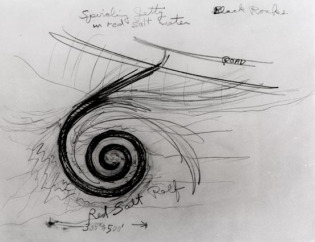
jettyAJ.jpgWhen I give the first performance of new music (I'm playing a new piano piece by Nico Muhly in May), my performance functions to begin staking out an identity for that music in public. Actors are said to "create" new roles. Immediately things begin to shift as my playing is heard, as I play again, or record. Nothing ever gets taken back.

With canonic music, no matter how significant we believe our insights or approach to be, we don't make much of a difference. The music is large -- like a person who has lived a long time and for whom a few minutes represent only a small, small fraction of a life. In contrast, a few more minutes in a child's life significantly increase the whole.

Scripted music does continue to change, as it's played. Its identity is recentered, at an increasingly slow rate. How radically we depart from what has been done before in performing may be part of how far this recentering goes.

Does this explain Mannerism? As a style, or a particular piece of art becomes more and more familiar, an artist's assertion of personal voice (an attempt to recenter the piece, or school) may result in extremes. It is not exactly a wish to shock that drives Beethoven or Parmigianino -- but the desire to be heard.

October 26, 2009 6:26 AM | | Comments (2)

2 Comments

Yeah, I agree, this is very interesting. Interpretation is something no two musicians may have the exact same idea on it and I think the idea that we do not affect a piece that much is true.

Interesting article. It's always intriguing to read how different artists approach the art of interpreting.

Leave a comment

Recent Comments

Me Elsewhere

on the web 

"Bruce Brubaker on Breaking Down Boundaries" -- extensive audio interview at PittsburghNewMusicNet.com

"Heavy on the Ivories" -- Andrea Shea's story for WBUR about Bruce Brubaker's performances and recording of "The Time Curve Preludes" by William Duckworh

"Feeding Those Young and Curious Listeners" -- Anthony Tommasini in The New York Times on the first anniversary of the Poisson Rouge

"The Post-Postmodern Pianist" -- Damian Da Costa profiles Bruce Brubaker in The New York Observer

Bruce Brubaker questioned at NewYorkPianist.net

PianoMorphosis on Twitter

"Finding the keys to the heart of Jordan Hall" -- Joan Anderman in the Boston Globe on the search for a new concert grand piano

"Hearing and Seeing" -- Philip Glass speaks with Bruce Brubaker and Jon Magnussen, Princeton, Institute for Advanced Study

Bruce Brubaker about Messiaen's bird music, NPR, "Here and Now"

"I Hear America: Gunther Schuller at 80" -- notes and programs for concert series, New England Conservatory, Harvard University, Boston Symphony Orchestra

"A Conversation That Never Occurred About the Irene Diamond Concert," Juilliard Journal

Bruce Brubaker plays music by Alvin Curran at (le) Poisson Rouge


more

Blogroll

About this Entry

This page contains a single entry by PianoMorphosis published on October 26, 2009 6:26 AM.

Quality Control was the previous entry in this blog.

Iowa was the name of the Star is the next entry in this blog.

Find recent content on the main index or look in the archives to find all content.

AJ Blogs

AJBlogCentral | rss

culture
About Last Night
Terry Teachout on the arts in New York City
Artful Manager
Andrew Taylor on the business of arts & culture
blog riley
rock culture approximately
critical difference
Laura Collins-Hughes on arts, culture and coverage
Dewey21C
Richard Kessler on arts education
diacritical
Douglas McLennan's blog
Dog Days
Dalouge Smith advocates for the Arts
Flyover
Art from the American Outback
Life's a Pitch
For immediate release: the arts are marketable
Mind the Gap
No genre is the new genre
Performance Monkey
David Jays on theatre and dance
Plain English
Paul Levy measures the Angles
Real Clear Arts
Judith H. Dobrzynski on Culture
Rockwell Matters
John Rockwell on the arts
Straight Up |
Jan Herman - arts, media & culture with 'tude

dance
Foot in Mouth
Apollinaire Scherr talks about dance
Seeing Things
Tobi Tobias on dance et al...

jazz
Jazz Beyond Jazz
Howard Mandel's freelance Urban Improvisation
ListenGood
Focus on New Orleans. Jazz and Other Sounds
Rifftides
Doug Ramsey on Jazz and other matters...

media
Out There
Jeff Weinstein's Cultural Mixology
Serious Popcorn
Martha Bayles on Film...

classical music
Creative Destruction
Fresh ideas on building arts communities
The Future of Classical Music?
Greg Sandow performs a book-in-progress
On the Record
Exploring Orchestras w/ Henry Fogel
Overflow
Harvey Sachs on music, and various digressions
PianoMorphosis
Bruce Brubaker on all things Piano
PostClassic
Kyle Gann on music after the fact
Sandow
Greg Sandow on the future of Classical Music
Slipped Disc
Norman Lebrecht on Shifting Sound Worlds

publishing
book/daddy
Jerome Weeks on Books
Quick Study
Scott McLemee on books, ideas & trash-culture ephemera

theatre
Drama Queen
Wendy Rosenfield: covering drama, onstage and off
lies like truth
Chloe Veltman on how culture will save the world

visual
Aesthetic Grounds
Public Art, Public Space
Another Bouncing Ball
Regina Hackett takes her Art To Go
Artopia
John Perreault's art diary
CultureGrrl
Lee Rosenbaum's Cultural Commentary
Modern Art Notes
Tyler Green's modern & contemporary art blog
Creative Commons License
This weblog is licensed under a Creative Commons License.