
Wrote Arnold Schoenberg (in "Problems in Teaching Art"): "Is technique a cause or an effect, a by-product? Expressive content wishes to make itself understood; its upheaval produces a form. A volcano erupts, the devastation makes an ornamental effect; a steam-kettle explodes, and the objects it strews around fall at points one could exactly calculate on the basis of relationships of tension, weights, distances and resistances. One can, … [Read more...]
Archives for May 2009
All feet

The patterns of stress inform everything. More, less. Less, more. Our languages (our speech) inform our music, our thought, our designs, and concepts -- our emotions? I am -- iamb! In Western European music, the falling inflection predominates, strong, then weak. That's the two-part poetic foot, the "trochee." "Iambs" (weak - strong) are rarer in music and (?) in French, German, Italian (so rare as to need a marking -- città). In these languages, … [Read more...]
Roll
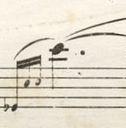
Some elaborate preparations to long notes in piano music are attempts to mimic the ways singers can begin a sound. The many shadings and extensions of initial consonants may get translated into piano music as multiple short notes, usually notated in small print. Though often marked with a slur, this kind of writing can still be confusing. The articulateness of the keyboard is certainly what's not wanted -- these are compound sounds. I … [Read more...]
Where can artists learn?

Where do artists learn best? In the midst of a bucolic landscape -- with no urban distractions? Or, is "natural" beauty distracting? Is there an ideal environment for making art? Perhaps, different arts come from different places? Pianist Russell Sherman writes: "The large cities of the world provide a treasure trove of culture and its artifacts, of concerts, theaters, museums, and libraries nurturing the forces of creation and … [Read more...]