
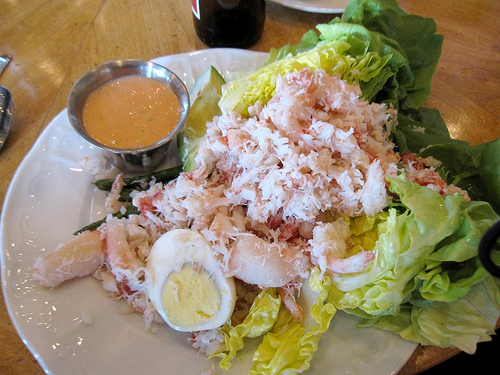
 Who Invented Crab Louis?
It’s almost pink, not a pretty-in-pink pink but a sickly, Pepto pink. Neither liquid nor solid, it crawls from server to plate like lava, lava with chunks.
I know what those chunks are, because I chopped and diced green pepper, green onion, and green olive to create them.
Sure, I licked that spoon. But in the time it took for my palate to awaken, before I could compute the flavor and register my pleasure and approval — the taste was right, in the certain way that a blend of wrong things can be right — I found myself not in my own kitchen but at a small, naperied table, dwarfed by an enormous room with tall columns and large electric globes.
Sunlight tries to force its way through tea-colored curtains. (They look emerald in the illustration, but postcards of the time were colored fancifully.) Smoke drifts from the glossy bar, and polite clinking can be heard from similar tables around me, with muffled clatter somewhere in back.
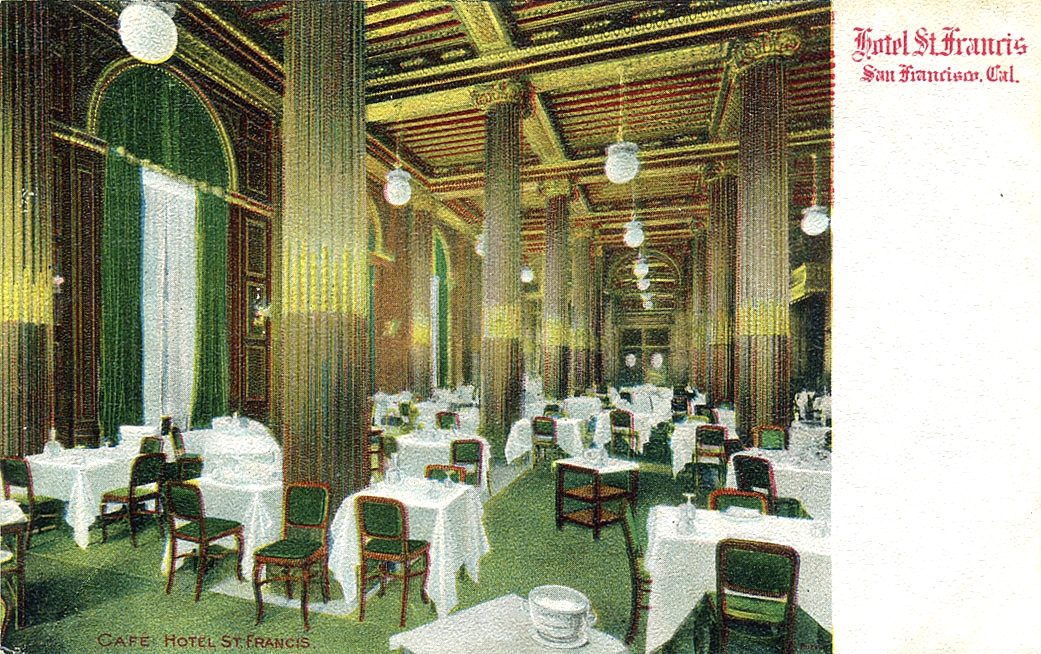
So it is with Crab Louis, for I am sitting in one of at least three West Coast dining rooms that may have served it first. You can’t see me in the neutron-bomb card above, but that’s where I find myself, in the cafe of San Francisco’s Hotel St. Francis. Fame-queen chef Victor Hirtzler runs the kitchen, and will for quite some time.
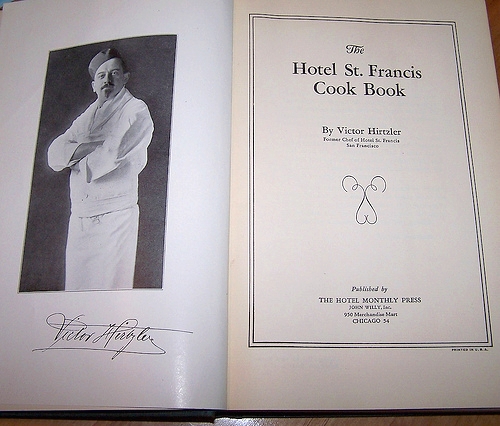
Major digression: Some claim that Hirtzler was responsible for Woodrow Wilson’s razor-thin second presidential victory in 1916. The story goes that the credible Republican candidate, Charles Evans Hughes, was to be hosted by the hotel’s owners at a pre-election banquet. But right before the meal, waiters went on strike. Because the kingly cook told his guests not to worry and himself served the food, the union leafleted the city, attacking Hughes as anti-labor — which, as a firm Republican, he most certainly was. Hughes lost California by 3673 votes, and therefore the White House.
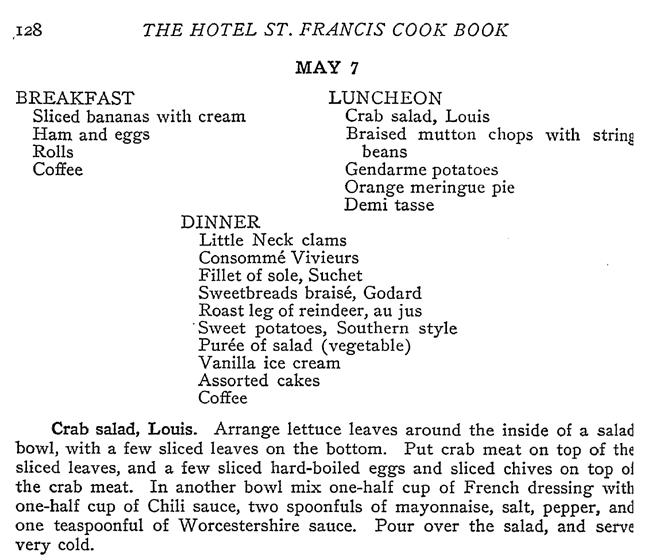
Take meat of crab in large pieces and dress with the following: One-third mayonnaise, two-thirds chili sauce, small quantity chopped English chow-chow, a little Worcestershire sauce and minced tarragon, shallots and sweet parsley. Season with salt and pepper and keep on ice.

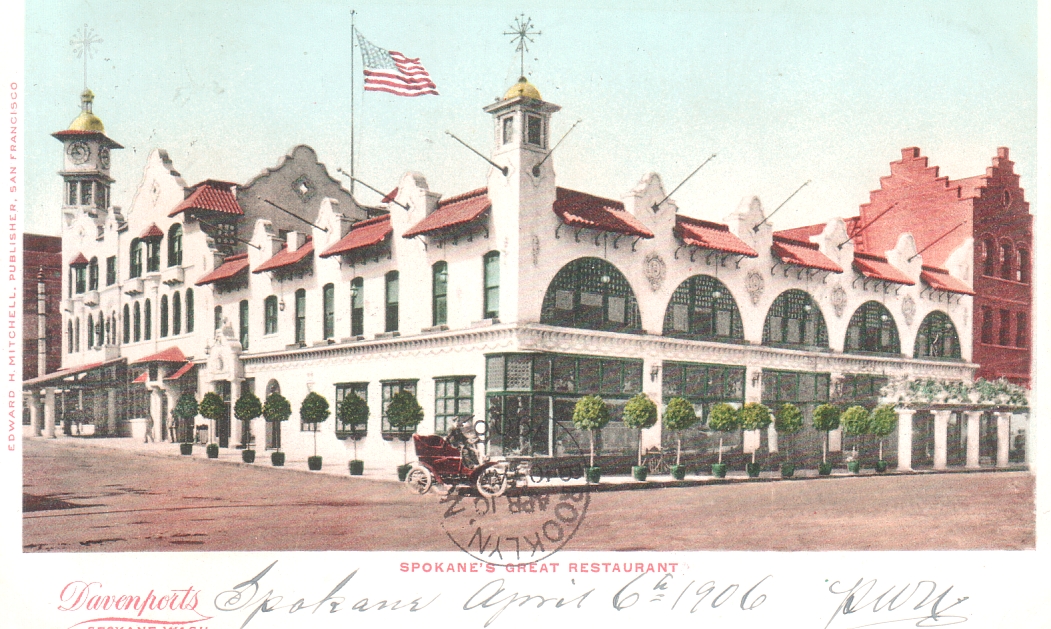
Publicity continues to claim that hotel founder “Crab” Louis Davenport invented the dish, using Seattle crustacea. (Did he invent the sofa as well?) His initial recipe hasn’t surfaced, but here’s what’s on the menu now, $20 at lunch, $22 for dinner:
Created by Louis Davenport himself, our signature salad is made with crisp butter lettuce topped with fresh crab, hard boiled eggs, tomatoes & pickled white asparagus dressed with a rich Louis dressing.
Butter lettuce isn’t crisp — that’s why it’s called “butter” lettuce. And the salad is “dressed” with a “dressing.”
Waiter!
Great piece, Jeff! Can’t wait to try the original Crab salad, Louis, recipe, maybe with a haunch of venison to follow.
One of your more delicious columns, my friend. Someday I must recount the restraint with which Boston’s Locke Ober prepares Clams Casino. No doubt that dish, usually overwhelmed with bread crumb stuffing instead of fresh clams, was invented in Las Vegas or Reno.