
 Lettuce Soup. For vegephiles. To my friends Meredith, Sasha, and Daphne.
If you can score a real head with dirt still on it, or harvest your own — I know, lets out most of my faithful correspondents — or just pretend with what’s left in the fridge, this recipe will make your lettuce almost sumptuous. And, unless you’re an Asian cook, chances are this will the first time you’ve put heat to this particular leaf.
Ingredients: that lettuce, and it can be a few days gone, because it will still throw its faded lettuceness into the broth; garlic scapes or garlic; any hard grating cheese, Pecorino is fine; pine nuts or leftover almonds from your weekend party; olive oil, the Greeker and stronger the better; vegetable or chicken broth, boxed organic or that high-rent frozen kind, or make your own. Or canned. Or just use water. Cheap is a plus.
Basically, you’re wilting the lettuce in a dead-simple broth whose flavor has been “bloomed” by a few spoons of basilless pesto. (Basil trumps lettuce.) You can make the pseudopesto in advance; the oil will leach flavor from the scapes and share itself with the nuts.
Get out your processor, blender, mortar and pestle (yes, I know), or knife, and make a pounded, chopped mash of the nuts, cheese, and scapes or garlic. Whip in the oil. Ingredient ratios can vary, but mix it up so the result is one color, maybe two, not three or four. Taste. If you use scapes and almonds as opposed to garlic and pignoli, the texture may be sandy, but don’t fret. Maybe add some salt if the cheese doesn’t do that trick already.
Heat a cup of broth per person.
By the way, this is an ideal solipsistic solo lunch. The food will provide the company you need.
Add one tablespoon per person of that partial pesto to the broth, or even a bit more, and watch the oil float out of it like a ghost and the tiny particles of flavoring disseminate. What a pleasing aroma, the magazine would say.
Rip or cut the lettuce into wide strips or pieces at least half the size of the leaf. When the broth is steaming, throw it all in, stir for a minute or two at most, pour into your flattest, widest brimmed bowl, plucking out the just-collapsed greens that remain in the pot, wipe edge (please, neatness counts), and serve immediately with hard-crust bread or at least toast.
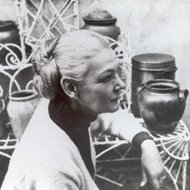 Elizabeth David, an English food historian of convincing chic and poet whose poems were recipes, first alerted me to lettuce soup in her earthy and elegant 1960 correction to English food, French Provincial Cooking. She assumed that her readers also read French, which is odd, but she was concerned that her research be understood in an authentic mode. The lettuce recipe, then, was named “Potage du P
ère Tranquille,” after some obscure Capuchin monk who was particularly susceptible to the well-known quieting effects of lettuce. She recommends the dish as “useful for those who have more lettuces in their gardens than they can eat as salads.”
That’s the advice I remembered. What a curious thing to say, I had thought when I first read it so many years back. Imagine, kitchen gardens in sooty London, Manhattan. And “lettuces,” a plural form that meant I would never feel comfortable at the author’s table. Her iceberg, I had joked, could only be the one that sank the Titanic.
Yet as I turned through her fruity-voiced, pleasure-filled instructions and learned the many ways to cook an egg and how to discern exactly when the optimal point was reached for a baked yolk or fillet of this or that, I fell in love. Or maybe I should say that in some small but permanent manner, I was overtaken by the writer’s senses.
Do you lose your sense, your sense of yourself, when someone’s sensibility inhabits your own? No, not at all. Instead, that gentle transfer is the way cooking breeds a certain human sympathy, a “sense” of being at least two people at once.
Elizabeth David’s Potage du Père Tranquille, or Lettuce Soup
Two large whole lettuces, or the outside leaves of 3, about 1 pint of mild chicken or veal broth and 1 pint of milk, seasonings, a little butter or cream.
Cut the carefully washed lettuce leaves into fine ribbons; put them in a saucepan with just enough broth to cover them. Let them simmer gently, adding a little more liquid, until they are quite soft. Sieve them, or puree then in the electric blender. Return the purée to the pan, gradually add the rest of the broth and enough milk to make a thin cream. Season with salt if necessary, a lump or two of sugar, and a scrap of nutmeg. Before serving stir in a small lump of butter or a little thick fresh cream. Makes five or six helpings.
For an automatic alert when there is a new Out There post, email
What can I say? I am touched that you would think of me. I am sure of the three women to whom you dedicated this, that it is for me that you write about lettuce’s tranquilizing effect. Is that your garden that you picture there? I have my copy of Elizabeth David, and will retunr soon to it, perhaps even bring it on vacation. W.H. Auden said: “The state of enchantment is one of certainty. When enchanhted, we neither believe nor doubt nor deny: we know, even if, as inthe case of a false enchantment, our knowledge is self-deception.” David enchanted you for real. Now you have me.
This is a great idea. I am thinking of including a variation on my site. Thanks for the heads up!