
Do Children Still Hunger for the Past?
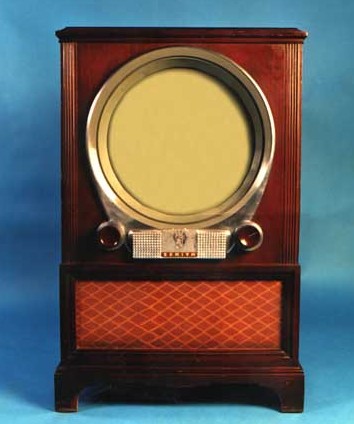
My brother and I were early TV-babies, and the family’s first set, a blond-wood Zenith, had a screen the size and shape of a salad plate. Although he did the usual little-brother things like bite me on the leg when he was mad, Les and I watched everything together, making fun of sitcom characters (like handsome but prim Mr. Boynton in Our Miss Brooks) or singing dirty-word versions of theme songs and jingles.
All that seems normal, but we also did something with TV that I really can’t explain. When those jerky but wildly surreal Max Fleischer cartoons came up as afternoon kiddy fare, and Fred ‘n’ Gingery black-and-white movies were shown on New York’s Million Dollar Movie or The Early Show (anyone recall its “Syncopated Clock”?), we’d both leap from the sofa and put our runny noses to the screen so we could make out the tiny Roman-numeral copyright date beneath the titles before it vanished. Then we’d scream the number, and the earlier the year, the happier we were.
That was in the ’50s, whose contemporary Douglas Sirk-ish products could easily serve the same purpose now — they’re decades more distant than our antique trophies were — to history-hungry tykes. But are online boys ands girls interested in pictures and sounds from the past?
A newspaper story jogged me into retrospection, the one in the Times last week about the ostensibly earliest recorded sound. When I began to comprehend that French inventor Édouard-Léon Scott de Martinville had produced sonic representations called phonautograms 17 years before Thomas Edison received his phonograph patent, and a team of “audio historians” converted the sooty images into actual sounds, I nearly fainted with the same copyright delight that had grabbed me as a child.
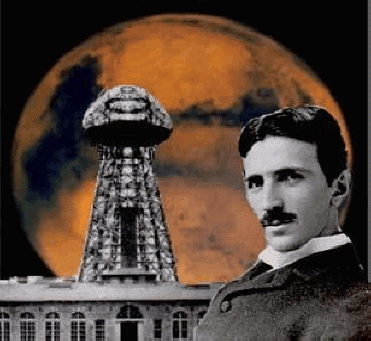 Phonautograms weren’t playback-able, yet their ignored inventor deserved some sort of credit. And though there’s reportedly no evidence that Edison knew anything about Scott, we are well aware that the American hero was an American thief of ideas; just read Wizard, Marc Seifer’s fine biography of Nikola Tesla, or even the poetic libretto of the recently produced opera Violet Fire, to see how Mr. Light Bulb wrested credit and a fortune for the invention of alternating current from the gay, Croatia-born genius (at left).
I hurriedly looked online for a button, and yes! There it was, an 11-second mp3 file of a probably female voice singing “Au Clair de la Lune” that the detectives say was recorded on April 9, 1860 — almost exactly 148 years ago.
In what type of room was it sung? In what color gown, of what rustling silk, was the vocalist clad? At just what time of day? A boy’s inquiring mind wants to know.
And then I remembered something from those saucer-TV days, an episode from a science fiction series — called, conveniently, Science Fiction Theater — with a plot about a kidnapped scientist:
Enemy espionage obtains a record of a physicist’s top-secret conversation with the Secretary of Defense in a completely sealed room. The secret of the leak lies in a bottle of ant poison containing a mysterious crystal — a crystal with the power to record entire conversations!
“The Frozen Sound” first aired on July 29, 1955, and the program ended with something that has never left my imagination. Two scientists take a chunk of Vesuvius lava from Pompeii and place it in the ant-poison machine that frees the captured sound. They wait, and … screams, shrieks, moans of a population burned and buried suddenly two millennia before. Their listening faces show an unforgettable hybrid of fascination and horror.
Decades of haunting yard sales and flea markets have led me to understand that I require dusty, worn, hand-holdable evidence that daily life existed before I was born — even better if the original price tag, as it were, is still attached. I don’t know why the mounds of traditional cultural evidence heaped under me, the world’s books, art and music, never fully suffice. I have a modern, life-affirming desire to see the actual menu, and the bill, for The Last Supper.
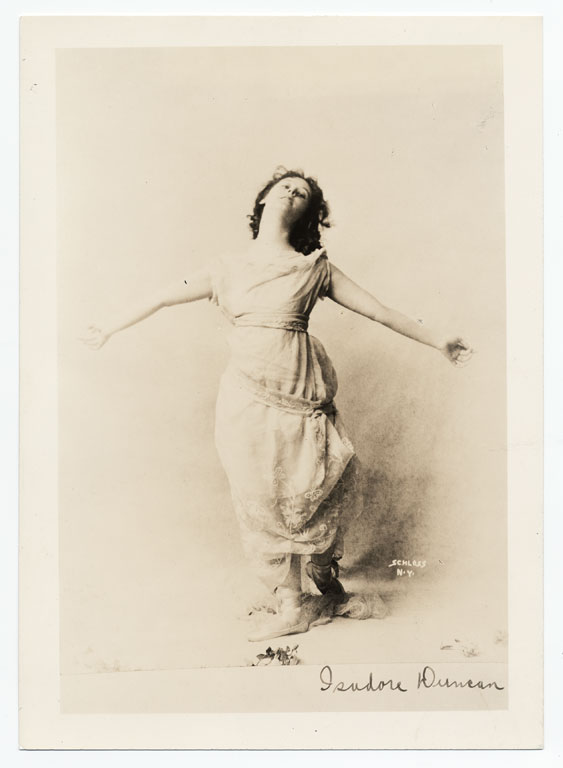
Or a moving image, vital and seminal, of Isadora Duncan, drapery flying.
Or a sound, steeped in ghostly gray Parisian ether, of a still recognizable song. Who was she?
Now I have another button to press, and more of the proof of a lived-in past I seem to need.
Ah yes, “The Synchopated Clock”!