Creative Destruction: March 2010 Archives
Much has changed around us.
We haven't changed much.
Embedded in these last six entries are indictments of our ways of doing what we do, the practices we have come to call normal.
They are killing us. Killing the field, and ultimately killing the art.
Yes, it's true that things happened to us, but we also happened to things. In other words, we were comfortable with the way we were, we were terribly slow to adapt, and it has caught up to us.
We still tend to think of management and artists as being adversaries. Our contracts have almost no flexibility in them to adapt to the ever-changing market place. We're stuck in a bad business model, and we perpetuate it without thinking.
It is killing us.
We still think of audience members as customers and of donors as friends.
It is killing us to categorize like this.
We don't grasp the implications of technology, or we won't put it to good use because somebody might lose money in the deal.
It's killing us to think like that.
We don't seem to understand that one of the most important aspects of a public concert is the community it creates at that moment. Our art happens within the communal experience. If not, we can download a personalized version of the sound-product for less than a dollar. It isn't that the art isn't important, but that the context of the art has become equally important. They are now one thing.
I had dinner recently with some friends and found myself in a discussion of a course one was taking at a local college. He was talking about how we have changed in our view of ourselves in the course of history, and I asked, "Give us the short-hand version of the movement from Pre- to Postmodernism."
He answered, "First, 'us', followed by a more fluid situation in which it is sometimes 'me' and sometimes 'we', ending with 'me'."
I thought he had also unintentionally described the environment of the evolution of the listening experience: first in community, then in a mix between live settings and mass media, and finally the mp3 experience, divorcing ourselves from each other, even as we share the same recorded performance.
All generalizations are lies, and his was, of course, no different. But often the well-phrased lie reveals an underlying truth.
The fact is, the model no longer fits the way we live.
We have to experiment, and to look at the little pools of ideas often happening at the edges of our field. We have to be humble and care less about the address of the idea than the merit of the idea. Much of the entrepreneurial work is happening in places most of us haven't even heard of. We need to look in unusual places.
There are a lot of bad ideas out there, but there are many good ones too. We need to know about them, test or reject them, and there is no time to lose.
To be clear, I'm an optimist. We're doing a lot of things right. God knows - if we weren't, we would already be gone.
Honestly, the modern orchestra is one of the wonders of the world, but it has been hampered at every turn by a history of resisting change.
For those of us who were sleep walking before the crisis came, we've been slapped in the face, and now we have to wake up.
In short, we need to change. Really change. It is time to write the story of our future in a way very unlike the story of our past.
I started An Unfinished Story with the phrase, "Once upon a time there were concerts...."
Let's hope that part was a fiction.
Like all stories, mine left many parts out, condensed and simplified, and adopted a point of view. It was a case study of demise designed to make a point.
The interesting thing, at least to me, is that we finally seem to be ready to accelerate the rate of change. I think that, as a field, we're scared to death. Ironically, that may just save us. I have never seen such an atmosphere of curiosity about alternative approaches to our traditional model than we are experiencing right now.
We may just be ready to live by the verse, "Physician, heal thyself."
A few weeks ago, at the University of Michigan in Ann Arbor, I attended a symposium that was quite timely. It brought together many leaders in the field who openly discussed the history and the possible future paths of the American Orchestra. It would have been instructive for anyone, anywhere.
There were some highs and some lows, as you might expect. We heard some great ideas for new models, and I was genuinely heartened by them. But candidly, I also heard some of the worst ideas I've ever come across.
That isn't a bad thing.
If we really intend to survive and to thrive, we'll have to be both open and brutal as we consider alternatives. We need courage to go past a bad consensus-decision built around a poorly thought-out idea, and argue our way (yes, politely...) into a good one.
We need imaginations equal to the task, tempered by truly disciplined thought.
We need open debate in the field instead of smug, worn out approaches, endless cynicism about management/labor relations, and disrespect for the many components that make up a modern symphony organization. At times I heard those criticisms in Ann Arbor, and they were, for me, the most disheartening moments. It was as if we were listening to well-rehearsed, old lines for a play that had already closed.
We need to throw away that script.
That won't be easy, because, even if the script is flawed, it is the only one we know.
As I type this I hear John Lennon singing in my mind's ear, "You may say I'm a dreamer, but I'm not the only one..."
It is easy to get disheartened because of the sheer inertia in this field. Can anything really change? But then, read Gandhi and ask yourself what is possible. And follow that up with the sobering realization of the level of leadership we'll need to pull this off.
At the summit, my favorite moment came from Henry Fogel. During one panel discussion he was asked what the next BIG IDEA was, and he said he wouldn't answer. He went on to explain that there wasn't just one, but a host of things we would have to do to get out of this mess.
I agree.
Oh, and one more thing: We'll need to quit assigning blame.
Absolutely everyone has acted just as one might expect. So, it looks to me like we might have to start acting in ways no one expects.
The good news is, as bad as things are right at this moment, the story is still unfinished....
So, to paraphrase Stravinsky's soldier in L'histoire du soldat, "Now, what are we going to do? What are we going to do now?"
I finished An Unfinished Story with allusions to a field of change growing from the ashes of the old way; not one phoenix, but many.
In any era of experimentation, there will be losers as well as winners. I would expect us to see a number of new approaches over the next few years. Many will not work, and that is, frankly, as it should be. Some may succeed, and we might find that we look a lot different than we do at the moment.
Those new approaches are, actually, already taking place in places as diverse as St. Paul and Memphis.
Regardless, in a postmodern age, I'm fairly certain that we can no longer expect to thrive on a pre-modern model.
And so it seems the right time to ask, "Who's got a phoenix-in-waiting?" It's your moment.

Part 6 of 6
The monopoly of the past century was finished.
 All seemed lost.
That year was a catastrophe.
As the months progressed, income plummeted for the organizations while the expenses continued at the same level as before. Again this was because the organizations tried to honor the promises they had made months earlier when they had announced their concerts, repertoire, and guests.
Finally, when the season ended they made drastic cuts.
Everyone hoped people would return to the concerts, but many didn't.
They also hoped their donors would give again, but many were scared of losing their jobs, so they didn't either.
The revenues were so low that, even with their recent budget cuts, the organizations continued to accumulate deficits.
Suddenly the gap was too wide for the organizations to stay in business without truly drastic measures.
Because of the implications of the next apocalyptic action, it was delayed until it was obvious that this final, most onerous step was necessary.
They spent the endowments.
Because there was no income to keep the organizations running, their endowments were raided in order to meet the expenses associated with their current obligations.
It is important to remember that, at the point the endowments were being withdrawn from their protected status, the financial markets were depressed. This meant that not only was the interest being earned from the principal already under projected budget levels, the actual principal was also depressed in value.
The cost of spending down the endowments was, therefore, much higher than the value of actual income generated, when measured against traditional valuations.
This was the worst of all possible worlds: spending long-term investments at discounted valuations for short-term needs.
Many savvy people worried that they would never see those endowments again funded at pre-crisis levels, but they had no choice. There was simply no other resource to use.
In effect, they spent their future to pay for their present. It was the only remaining way to stay in business.
Again, there is no need to assign blame. Looking back now, it is clear that there were no other viable options: The choice was to die immediately, or to live long enough to fight for the future. Anyone would have made the same choice.
The concerts during that time were particularly poignant, but the orchestras played for empty seats, and the donors didn't have the resources to reverse the situation.
The writing was on the wall.
It was clear that all the predictions, all the precedents, and all the knowledge everyone had was entirely inadequate to the situation.
It took some time for the scenario to play itself out. During the next several years there was a tremendous upheaval in the field.
Many of the organizations failed during that period. They are remembered now with much veneration, since they made great art. Their recordings and much anecdotal evidence attest to that fact.
This decade effectively marked the end of the old model.
Things looked so bleak that few noticed, amid the ashes, that a new phoenix was arising.
Of course, as we know now, there was not just one phoenix rising, but many.
It was not the art that was flawed, and, thankfully, the art did not die alongside the business model.
Next: a postscript
Part 5 of 6
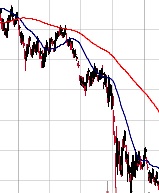
Then the bottom fell out.
Of course, the bottom didn't only drop out on the world of the concert-giving organizations; it was systemic.
It crossed every boundary, every country, every business.
It was incredible.
Many people lost their jobs. Many businesses failed.
It was a free-fall. And it kept falling.
Everyone thought there would be a bottom, but each month the crisis deepened.
Even the banks were in trouble, and certain large companies too. But they got massive government help so they survived.
This support said much about the values of the time.
As for the organizations in our story though, there's was a different outcome.
The crisis happened so fast that very few could react quickly enough. This was because many behaviors of the organizations' traditional supporters had changed, almost overnight.
Businesses could not continue to fill the role of philanthropist.
Foundations lost holdings in the stock markets to such a degree that they had to cut their support. Some failed completely.
Donors delayed gifts, lowered giving levels or discontinued support entirely.
Many found themselves having to choose between supporting causes for basic human needs or for Art. It was not an easy decision for some of them, but many did not choose the second option. Given the degree of suffering this was entirely understandable.
Purchasing patterns changed as well. When the crisis occurred ticket buyers made choices that made perfect sense within the new normalcy of their lives.
Subscribers purchased smaller packages or became single-ticket buyers.
The single-ticket-buyers stayed home. They didn't need to buy a ticket to watch television or surf the Internet - while concert tickets were suddenly perceived as being too expensive for the value they offered.
There were also reasons for the behavioral changes that were not based completely on the financial situation. The crisis had simply accelerated those changes.
Faced with diminishing resources people embraced that which felt most relevant. They dropped all that seemed extraneous.
Many had already been increasingly replacing the traditional experiences with the fruits of new technologies that felt more relevant to their modern world.
As for those old behaviors of going to concerts as a way of claiming social status, there had been a complete re-ordering of what was acceptable and even what was admirable.
People did not go to concerts to announce they had arrived anymore. Frankly, that could be accomplished by simply owning the most popular smart phone or the newest personal listening device. One could now purchase one's status.
As a delivery system for music, then, the concerts were no longer deemed essential.
Suddenly the organizations realized that they had not changed fast enough.
They had lost a generation - even those who were now listening to the same music they were producing. It was now coming to the listeners in entirely new, entirely personalized platforms. Virtually the entire universe of music was now available on a portable device that could easily fit inside a pocket.
The monopoly of the past century was finished.
All seemed lost.
Of course, in the background were frequent economic expansions followed by recessions. The recessions were particularly tough on the organizations because their business model didn't allow them to react quickly enough.
When the audiences and contributions would get smaller as a result of the temporary economic downturn, there would naturally be a deficit.
It was as if there were two slopes, similar in shape but one always a bit behind the other. The forward slope represented revenues, while the following slope represented expenses.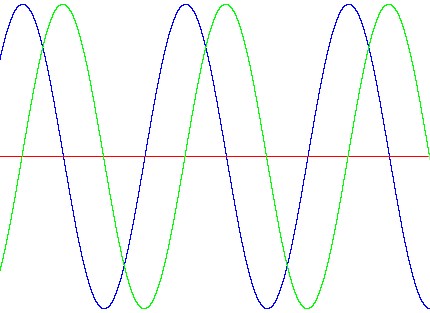 During economic downturns the organizations' revenue slopes would plummet, although the expense slopes would always lag behind the revenue in dropping too.
This occurred because the organizations wanted to keep their word about the repertoire and artists they had announced. They had already committed themselves and they didn't want to lose their audiences.
If the recessions were lengthy, major cuts would be scheduled for the following season or even delayed and negotiated during the next round of contracts - sometimes several years later. This time lag in response to the downturns was critical in accumulating deficits.
Conversely, during times of expanding resources the organizations became optimistic so they looked for new ways to serve their community, enlarging their offerings. The new programs were then formalized and came to be expected each year. Naturally, the musicians were paid for the new offerings. This helped the musicians because they could count on predicable income at a higher level.
During the expansions the revenues would gradually rise again, but it was not common for the expansions to either last long enough to fully pay off the debts, or for the organizations to discipline themselves from growing their expenses.
When there would be another recession the newly-expanded offerings again worked against the organizations. Since they were in multi-year contracts with little flexibility, the situation kept them from responding quickly to the economic meltdowns by quickly cutting programs and reining in costs, as any other business would have done.
It is important to realize that assigning blame is useless here. The organizations wanted to serve the communities and to make great art. The musicians wanted to do the same and to make a living doing so. These were natural motivations.
To make matters worse, during the recessions the government would cut back on its arts support. Over a number of years, that support dwindled considerably and, in some cases, completely stopped. By the time of the eventual crisis, as a predictable resource for maintaining economic stability in the arts sector the government's support had become irrelevant. It was simply too small to be a meaningful factor, except as one more missing element in the economic vacuum.
However, as long as the economic downs and the ups were in relative moderation, this model held up. This is because, although the model was flawed, it was run quite well.
Artistically the orchestras were so remarkable they could produce a remarkable result in very few rehearsals, and the managements did an incredible job of finding new sources of earned income and soliciting business and philanthropic support. Many audience members remained loyal, and there was a constant inflow of new audience members trying out the product. If they had returned consistently and in sufficient numbers perhaps things would have turned out differently. Just before the crisis many of the organizations focused on audience retention rates. Although they were late in noticing how important it was, we should note that they DID realize they had a problem and had begun to address it.
It is hard to believe, but although there were times of upheaval there were also periods of relative calm. It wasn't a perfect world, but it seemed to work, although everyone always seemed to talk about how difficult it was to feel secure about the future.
Then the bottom fell out.
Blogroll
AJ Ads
AJ Blogs
AJBlogCentral | rssculture
Terry Teachout on the arts in New York City
Andrew Taylor on the business of arts & culture
rock culture approximately
Laura Collins-Hughes on arts, culture and coverage
Richard Kessler on arts education
Douglas McLennan's blog
Dalouge Smith advocates for the Arts
Art from the American Outback
Chloe Veltman on how culture will save the world
For immediate release: the arts are marketable
No genre is the new genre
David Jays on theatre and dance
Paul Levy measures the Angles
Judith H. Dobrzynski on Culture
John Rockwell on the arts
innovations and impediments in not-for-profit arts
Jan Herman - arts, media & culture with 'tude
dance
Apollinaire Scherr talks about dance
Tobi Tobias on dance et al...
jazz
Howard Mandel's freelance Urban Improvisation
Focus on New Orleans. Jazz and Other Sounds
Doug Ramsey on Jazz and other matters...
media
Jeff Weinstein's Cultural Mixology
Martha Bayles on Film...
classical music
Fresh ideas on building arts communities
Greg Sandow performs a book-in-progress
Harvey Sachs on music, and various digressions
Bruce Brubaker on all things Piano
Kyle Gann on music after the fact
Greg Sandow on the future of Classical Music
Norman Lebrecht on Shifting Sound Worlds
Joe Horowitz on music
publishing
Jerome Weeks on Books
Scott McLemee on books, ideas & trash-culture ephemera
theatre
Wendy Rosenfield: covering drama, onstage and off
visual
Public Art, Public Space
Regina Hackett takes her Art To Go
John Perreault's art diary
Lee Rosenbaum's Cultural Commentary