Creative Destruction: February 2010 Archives
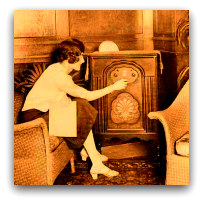 New technologies emerged.
At first this development seemed positive.
There were new programs on the radio and television. More people heard music through the new technologies than ever before. Certain musicians proved to be very good teachers within the new mediums.
Many people were inspired.
Radio and television offered new ways to experience extraordinary events and entertainment. They were fun and they felt freer than the traditional entertainment formats. As those technologies matured, each venue of delivery, called stations or channels, became focused on its particular genre.
Over time the audiences became equally specialized in their listening habits.
Even movies changed. Instead of having to see them in theaters people could rent the films and take them home, watch them in pajamas and make their own popcorn. Much later, they could even see them on their telephones!
Meanwhile the Internet appeared, offering every conceivable form of entertainment at the click of a device called a "mouse". Within a few decades the Internet had spread across the globe in what was correctly called a "world-wide web".
The organizations did not understand how important the technologies were.
They created websites, social networking pages, and email marketing campaigns, but they had not understood the magnitude of the ramifications.
Ironically, with the appearance of the Internet, the musical choices
readily available were now increasingly diverse. Just as tastes had
become specialized before, they now became infinitely catholic in
nature.
This was a period when people were very interested in personal electronic devices. Increasingly they liked to listen to music alone.
In other words, the new technologies had implications on listening habits, both in terms of content and context.
In terms of personal and societal behavior much had evolved.
Since the organizations didn't notice the implications, they didn't make big changes.
They were in great danger, but they could not see it.
Part 2 of 6
Time passed.
The cost of the concerts grew.
 This was, in part, due to the professionalization of management. There were larger staffs with specialists in fundraising, marketing and administration.
The musicians cost more too. They were increasingly of a new, educated class. Many had two and even three degrees.
The season grew to encompass a much larger part of the year. The artistic level of the musicians rose dramatically. The musicians, quite rightly, expected a living wage for the commitment of time and the expectation of high quality placed upon them.
The orchestras tried to increase their productivity.
The conductors learned how to work efficiently. The conductors who thrived most were masters of psychology and organizational behavior in addition to being outstanding musicians.
To realize what models of efficiency the orchestras were at the time is to suddenly grasp the situation. There was nothing wasted. There was nothing extraneous.
Rehearsals were professional, intense and productive. To think that such artistic levels could have been achieved in fewer rehearsals is to misunderstand everything. Actually, it was a marvel that such things WERE accomplished in such a short time.
This is why there was no way for the organizations to artistically cut their way to a balanced budget.
Those that chose that approach saw their product deteriorate and audiences dwindle.
Expenses rose on a gentle, upward slope, and revenues also rose, although at a lower rate. This meant there was a growing gap between revenues and expenditures that continued to widen each year. There was intense focus on solving the structural deficits inherent in the business model.
Managements looked for ways to increase revenues and to strengthen community relationships. They created education and outreach programs which both gave musicians additional work and which raised money too.
As the general economy grew, more businesses took on the role of philanthropist. Boards of the concert-giving organizations grew.
Businesses, foundations and philanthropists contributed to endowments created to ensure long-term financial stability for the organizations. Soon the organizations began to count on the income generated from those endowment funds for their budgets to balance.
Government tried to help fill the gap through national, state, and, in some cases, local grants.
More time passed. The financial gap continued to widen.
New technologies emerged.
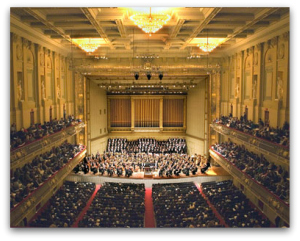
Once upon a time in America, there were concerts.
People went to them and then went home. In between those two activities they listened to great music. That was the whole point. It was a total experience inside the concert hall, complete in and of itself.
These concerts needed organizational structures to become stable. They needed administrators, volunteers, conductors, guest artists and a predictable roster of musicians.
The people who produced the concerts explored different ways of organizing themselves. There were many approaches tried and the model that finally was adopted, almost universally, was a mix between capitalism and philanthropy.
Some people subscribed to the whole season, some people bought individual tickets. The gap between expenses and ticket revenues was filled through the generosity of some wealthy individuals.
Because the subscribers spent more than the individual ticket buyers, they were highly valued.
Because the donors gave money to the organizations they were valued even higher.
The organizations thanked the donors for each gift. They didn't do that for the subscribers, but they offered some special things to them.
Individual ticket buyers were treated like any customer in a business relationship. They were not thanked.
Instead, the organizations traded the ticket for the money and hoped they would come again and that someday they might become subscribers. Sometimes the organizations would ask them for money through letters sent to the individual ticket buyers. Since the organizations had not established any real relationship with them this practice annoyed many of the individuals in the audience.
The organizations had a monopoly on the music because people had to attend the concerts in order to hear it.
Also, going to the concerts was considered the thing to do for those people who were rising in society. Attending the concerts was a way of announcing that they had arrived.
Part of the value of the symphony was that it provided a venue for people to have a public persona. Going to concerts offered a way to be seen by other audience members.
People chose their clothing to attend the concerts partly because others could see that they were well dressed.
Rules of behavior were established and quietly enforced.
People learned when to clap.
Time passed.
The cost of the concerts grew.
Blogroll
AJ Ads
AJ Blogs
AJBlogCentral | rssculture
Terry Teachout on the arts in New York City
Andrew Taylor on the business of arts & culture
rock culture approximately
Laura Collins-Hughes on arts, culture and coverage
Richard Kessler on arts education
Douglas McLennan's blog
Dalouge Smith advocates for the Arts
Art from the American Outback
Chloe Veltman on how culture will save the world
For immediate release: the arts are marketable
No genre is the new genre
David Jays on theatre and dance
Paul Levy measures the Angles
Judith H. Dobrzynski on Culture
John Rockwell on the arts
innovations and impediments in not-for-profit arts
Jan Herman - arts, media & culture with 'tude
dance
Apollinaire Scherr talks about dance
Tobi Tobias on dance et al...
jazz
Howard Mandel's freelance Urban Improvisation
Focus on New Orleans. Jazz and Other Sounds
Doug Ramsey on Jazz and other matters...
media
Jeff Weinstein's Cultural Mixology
Martha Bayles on Film...
classical music
Fresh ideas on building arts communities
Greg Sandow performs a book-in-progress
Harvey Sachs on music, and various digressions
Bruce Brubaker on all things Piano
Kyle Gann on music after the fact
Greg Sandow on the future of Classical Music
Norman Lebrecht on Shifting Sound Worlds
Joe Horowitz on music
publishing
Jerome Weeks on Books
Scott McLemee on books, ideas & trash-culture ephemera
theatre
Wendy Rosenfield: covering drama, onstage and off
visual
Public Art, Public Space
Regina Hackett takes her Art To Go
John Perreault's art diary
Lee Rosenbaum's Cultural Commentary