Creative Destruction: July 2009 Archives
Sometimes you just need a little perspective. Sometimes you need a way to look at things, a prism through which you shine an idea so that on the other side it reveals a new aspect, previously hidden but clearly latent within.
Today I experienced both: a prism and then a little perspective.
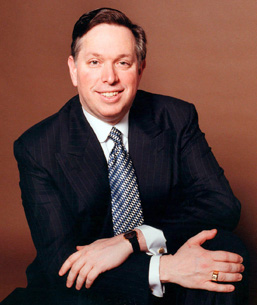
This morning Kennedy Center's acclaimed President, Michael Kaiser, spoke to a roomful of arts leaders in Kalamazoo, Michigan. I drove two hours to get there and, upon arrival, found that the room was full and the mood was surprisingly upbeat.
In the state with the nation's highest unemployment rate the arts are reeling. Budget cuts have reduced state support for the arts to zero. Corporate support has plummeted alongside a staggering statewide economic crisis of truly epic proportions. And yet there was some laughter in the room, and a sense of hope - or at least a sturdy sense of grit. By the time we got to the Q&A session at the end it was clear that people attending wanted answers to their questions about how to survive these dark days so that they might thrive again in the not-too-distant future. I didn't feel fear. I felt resolve.
In that light I was taken by Mr. Kaiser's comment about his experience turning around the Alvin Ailey Dance Theater. "There was a recession then too, and that company could have been lost in the thinning out process, but it took just two years to come out of the crisis - and what a loss to the country it would have been if we hadn't survived! How much poorer would we all be without Alvin Ailey Dance Theater? Today's recession doesn't meant we just get scared and close down. We can't accept the premise that losing so many artists and institutions is inevitable."
Kaiser, known for his book, The Art of the Turnaround, offered three primary ideas to stave off disaster: Don't cut funding for the artistic product, don't cut marketing, and plan really INTERESTING projects which might take several years to accomplish. Donors will support bigger, interesting ideas more than little, boring ones, but big ideas need time to get funding in place and to capture the public imagination. His four-word mantra: great art, well marketed.
So much for the prism; now for a bit of perspective.
We're all feeling shell-shocked in the wake of a financial meltdown the likes of which none of us has seen, but there are no roadside bombs on the way to rehearsal and no threats of violence for making our art.
Today, I read a blog in the New York Times about the National Symphony Orchestra in Baghdad. We should take a lesson from Maestro Karim Wasfi who continues to make music in the midst of extraordinary circumstances. He is reaching out to new potential concert sponsors and looking past the present difficulties while contemplating some future day when there will be a new Opera House in which he'll hold his concerts. His is the triumph of vision over reality.
I am surely putting words in their mouths, but I take away the following:
From Mr. Kaiser: Have the courage to be creative, daring and interesting because tepid art isn't worth the price of admission, and in a down market no one will spend money to come to something that isn't compelling. For all your budget woes, continue to market aggressively and innovatively because potential audiences won't come if they don't know about your art and potential donors won't give if they don't care about your institution. Even in times like these it's ok to think big, but give yourself time to succeed.
And from the National Symphony Orchestra of Iraq: Things could be a lot worse. Don't give up. We have to keep making art. Things will surely get easier later, but this just might be our finest hour.
 In June of 2006 there was a concert at Beijing's Central Conservatory of Music devoted to new works by young Tibetan composers. Four of them were students while the fifth was their teacher from Lhasa, Professor Jorgar. This multi-year program was his dream - a way of taking a promising generation of composers from Tibet and training them in the music of both the Western and Eastern traditions at the highest levels China could offer. Replanted back home some of them would surely teach, and a home-grown Tibetan school of composers might then be born into existence.
I heard about this Beijing concert at a special program which was part of a National Endowment for the Humanities Summer Institute devoted to studying Buddhist Traditions of Tibet and the Himalayas. Last Thursday night an evening of Tibetan and Chinese composers was presented by Dr. Ning Tien at College of the Holy Cross, and I was among those attending. Like anyone else there I didn't know what to expect, and the music didn't disappoint. It featured a recording of the concert given in Beijing as well as a "live" part of the program with a string quartet and a pianist.
The evening began with a recorded performance of Circle of Life by Mingyur Tendzin. A work which tracks the life cycle according to Buddhist thought: Life, Death, Bardo and Rebirth, it featured an ensemble of orchestral instruments, a chorus singing in Chinese and a tenor singing in Tibetan. The music was largely set in pentatonic mode with layers of ostinati - over which the vocalists offered folk-derived music that could have formed a sound-track to the film Lost Horizon. Although the work was largely set in predictable phrase lengths and expected rhythmic patterns, the closing Reincarnation music was truly glorious - almost surprisingly so, considering the fact that the soul was re-entering the world of samsara!
The remainder of the program was equally interesting but there was one composer who stood head and shoulders above the rest. His work was surprising in a number of ways. Most of the night's music featurerd harmonies from a world nestled between Debussy and Turandot. But here was a composer using birdcalls, medieval drones, tone-clusters and truly atmospheric uses of percussion - from enormous drums to the most delicate of bells - to evoke a Tibetan soundscape with a ring of truth in every note. The work, called Yalone, was at once both modern and ancient. It had coloristic moments that could have come from Joseph Schwantner's music juxtaposed against passages featuring an evocative, pitch-bending bamboo flute over a single, held note reflecting a scene of post-meditative calm. More than fifteen minutes long, it held the listener's interest from beginning to end. This was the music of a young master. His name is Penpa Dawa.
After the program ended I spoke with Ning Tien, asking her about details of the music and perhaps more importantly, what had happen to these composers since the concert took place. "They're back in Lhasa now," she said - adding that she should would soon be in contact with her parents, both on the faculty of the Conservatory, to learn about what kind of artistic work they were involved in. "But is there an infra-structure in Tibet to support such creativity?" I asked. "Perhaps they will teach, write music for smaller ensembles, and maybe for film as well," she answered. "They'll have to be creative to make a living."
I didn't miss the irony that such an answer could be said of any young composer - even one from the Land of Snows.
Blogroll
AJ Ads
AJ Blogs
AJBlogCentral | rssculture
Terry Teachout on the arts in New York City
Andrew Taylor on the business of arts & culture
rock culture approximately
Laura Collins-Hughes on arts, culture and coverage
Richard Kessler on arts education
Douglas McLennan's blog
Dalouge Smith advocates for the Arts
Art from the American Outback
Chloe Veltman on how culture will save the world
For immediate release: the arts are marketable
No genre is the new genre
David Jays on theatre and dance
Paul Levy measures the Angles
Judith H. Dobrzynski on Culture
John Rockwell on the arts
innovations and impediments in not-for-profit arts
Jan Herman - arts, media & culture with 'tude
dance
Apollinaire Scherr talks about dance
Tobi Tobias on dance et al...
jazz
Howard Mandel's freelance Urban Improvisation
Focus on New Orleans. Jazz and Other Sounds
Doug Ramsey on Jazz and other matters...
media
Jeff Weinstein's Cultural Mixology
Martha Bayles on Film...
classical music
Fresh ideas on building arts communities
Greg Sandow performs a book-in-progress
Harvey Sachs on music, and various digressions
Bruce Brubaker on all things Piano
Kyle Gann on music after the fact
Greg Sandow on the future of Classical Music
Norman Lebrecht on Shifting Sound Worlds
Joe Horowitz on music
publishing
Jerome Weeks on Books
Scott McLemee on books, ideas & trash-culture ephemera
theatre
Wendy Rosenfield: covering drama, onstage and off
visual
Public Art, Public Space
Regina Hackett takes her Art To Go
John Perreault's art diary
Lee Rosenbaum's Cultural Commentary