Creative Destruction: June 2009 Archives
You might remember from an earlier post that I was in Chicago this month at the League of American Orchestra's National Conference.
Going to the conference revealed the current issues, unspoken fears, and magnitude of the challenge being faced within the field. The elephant in the room was the current financial meltdown and its impact on precarious institutions like symphony orchestras. But the implication was that the problem was larger than the bleak economy.
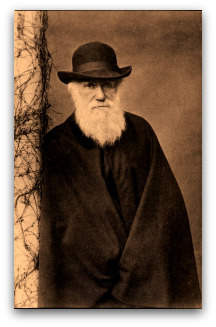 The problem is us. Darwin was right: When circumstances change, we have to adapt.
Our field is notoriously slow to change its model, and throughout the week speakers were prodding everyone to move away from the status quo by comparing the possible future of the symphony orchestra field to that of the failing newspaper industry. More than once we were reminded of the unwillingness of the big three Detroit automakers to face reality and innovate. The clear implication was that we have to change, that change is good, and that we don't have time to waste.
In a private conversation, I heard that a leader in the field had made an estimate that as many as a third of non-profits would probably fail during this economic downturn. Yes, a THIRD! If that ratio held true for symphony orchestras it would mean a catastrophic loss to this field. I have kept returning to that prediction as I have thought about three particular sessions among the many I attended during the conference:
- The first was a Beyond the Score program devoted to Dvorak's Symphony No. 9 in e minor, From the New World. It was a remarkable production, certainly worthy of the immense resources of the Chicago Symphony's very creative staff. The performance included photos, film clips and a well-written script performed by three actors, one of whom played Mr. Dvorak himself, supplemented by occasional lines from Sir Mark Elder who conducted. The Civic Orchestra of Chicago performed excerpts from Dvorak's symphony to illustrate the story of its creation, and we heard passages from polkas, Slavonic dances and spirituals as well.
- The second session was on the implications of social networking tools in the performing arts. The consensus was that no one really knows HOW to most effectively use these new tools yet, but there seems to be agreement that this is the wave of the future - or, more accurately, of the present. Obviously this will be a growing area of experimentation in the near term across the field.
- The last session was an attempt to retain audiences by studying those audience members who have come only once to a symphony orchestra performance, never to return because of their unhappiness with a host of seemingly unrelated issues ranging from parking their car to the price of a glass of wine at intermission. The upshot of that session was that if you can get audience members to come to a second performance there is a good chance you'll keep them for a long time.
When I look back at the League's convention those three sessions keep flashing "pay attention!" It is clear that the next few years will see a tremendous shakedown in this field, and none of us knows which institutions will remain standing. Most will try to change. Some will use innovative concert-models like Beyond the Score, many will try to use Twitter, Facebook, and iPhone applications to build on-line communities, some will focus on the experiential approach - adjusting repertoire and adding services and value to keep their patrons coming back. A few won't change a thing, and most of those probably won't be here at the end of this process.
What will we change? Will we re-format our concerts on the Beyond the Score model to contextualize a work like Dvorak's Ninth, taking on the task of teaching our audiences with a Discovery Channel-like approach? Will we find and retain audiences through the power of the internet? Will we adapt our audience-services model to be more like an up-scale retail outlet whose primary product is the complete night out - from soup to nuts with Brahms in between? Will it be something else? Or even MANY new things? Now we're getting someplace!
They kept making buggy whips while Henry Ford was cranking out his first cars.
It's past time for this field to get to work. The question remains: "On what?" The one's who adapt well will remain. As for the rest...ask Charles Darwin.
It's a concert week for me. Tomorrow night, the Adrian Symphony Orchestra will present a pops concert to end the season. As of early in the week we had seven seats left to sell and none of them were "two-together" in the hall.
Mid-week I stopped by the local radio station to meet with the station manager who was going to do the narration for this concert when he surprised me with, "Hey, today the phones lit up when we gave away two tickets for the concert. We couldn't believe how quickly people were calling in!" Excuse me? We hadn't offered a ticket giveaway. Actually, at the time, we had a waiting list for tickets and had sent out an e-mail to our subscribers asking those who weren't planning on using their tickets for this concert to donate them back to the office in order to accommodate the demand.
It took me a moment to realize what had happened. Someone who couldn't attend decided that their tickets were precious commodities, and, instead of just letting them be re-sold they took it upon themselves to take them to the radio station, which would announce the giveaway. In other words they created their own marketing campaign.
Over the past eight years, the ASO has been engaged in reinventing itself and consciously serving as a laboratory for new ideas. We've taken some pride for our innovations: creating new tools for growing our audiences, launching a new multi-year donor model, and designing innovative artistic programs while being more responsive to our community. We're in a difficult economic climate - around 22% actual unemployment in this region - so seeing positive results is even more remarkable. We've made a plan, and it's working.
But it struck me that this was something entirely different.
Instead of a top-down marketing campaign conceived of in the office; instead of using free viral tools like our Invite a Friend or Be Our Guest cards that WE created to encourage our audience members to broaden our base; instead of utilizing Purple Cow elements WE built into the concert-going experience that guaranteed buzz on Monday morning after a concert - here was an audience member acting independently and creating their own campaign, finding a means of distributing the information locally, and then disappearing into thin air! It was a "Lone Ranger" moment. Who WAS that masked audience-member? I don't know! WE don't know.
Sometimes I ask myself what a vibrant arts community looks like. How do you know when you've found one?
Perhaps in the new model, it will be when someone creates their own campaign on Facebook or Twitter - "I'm giving away two tickets to this week's Bruckner symphony to the first person who responds!"
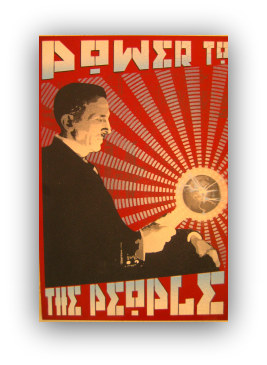
Vibrant arts communities may feel chaotic because the command structures we're used to won't be operational anymore. The forces for change will be decentralized.
Power to the people!
Oooo baby, we're about to lose control, and I like it!
Last week, while participating in the League of American Orchestras' National Conference in Chicago, I attended a Chicago Symphony Orchestra Dvorak Festival concert with Sir Mark Elder conducting and Alisa Weilerstein as the very able soloist.
My seat was in the Upper Balcony, and I ascended the stairs to the very top of Symphony Hall. It's quite a view from that perch - the rake of the hall takes your breath away until you get used to the steep angle looking down on the stage. The ceiling seems close enough to touch if you could just jump high enough, and the acoustics are surprisingly good.
Perhaps the best part of sitting up there is that those audience members listen to the music with a level of intensity I have rarely experienced. It seemed to me that the folks in the Upper Balcony are there for the music and nothing else - except, perhaps, for the opportunity to share their enthusiasm with others.
I settled in and was immediately captivated. The program began with In Nature's Realm, a rarely heard work that received a marvelous reading under Elder's baton.
Soon Alisa Weilerstein entered the stage and Dvorak's Cello Concerto began. The music was sumptuous one moment and electric the next. The audience sat silently until the final notes of the concerto led to an outburst in the balcony that was deafening. Far off to the right of the section, I heard a male voice bellowing, "That was GREAT! THAT was just GREAT!" I looked over and saw a man in his seventies beaming with happiness.
During intermission, in the balcony's lobby, the man walked near me. "What'd you think?" I asked. "Incredible!" he answered and his face lit up with joy. Curious, I asked him a few questions and found that Bob was a retired schoolteacher. He had been required to take a music appreciation class from Chicago Teachers' College in the early nineteen-sixties, and one of the course requirements was to attend a CSO concert. Bob was hooked. "I kept coming back. I never missed a concert by Solti or Giulini," he said. "I've stayed through Barenboim's time and now I can't wait for Muti to take over. You have no idea how much joy this place has brought into my life...and you know the best thing? I can afford it. So much is beyond my means, but this is something I can do!"
When you start to wonder if we can pull this off - find a business model to ensure that we'll continue to make great music at a level of genuine excellence, develop marketing strategies that will draw in new audiences, cultivate enough donors to sustain ourselves, and weather the financial storm long enough to survive - go sit in the upper balcony. Look around for the Bobs of this world. They aren't rich and they may not pronounce "Muti" correctly, but they love music as much or more than anyone else.
The Bobs count. They're why we're in this field in the first place, and they're why we can't allow ourselves to fail.
Click on this for the speech!  I found a terrific little speech by Seth Godin on Ted.com, and I think it might be of benefit as we think about drawing communities together around the arts.
I've come to respect Godin's thinking on a number of subjects. His book, Purple Cow, formed the basis of the Adrian Symphony Orchestra's reinvention of itself with some quite remarkable results, and it is such a simple concept that it can be applied to a number of seemingly unrelated areas and activities. It has even encouraged me to ask myself, "is this program purple," when I'm choosing music for upcoming concerts, so it certainly provides a way of provoking new thinking for me.
In this presentation Godin is thinking about how we self-identify, how we look for others with a similar self-identifications, and then how we form groups around that unifying identity.
He calls these groups "tribes", and as soon as he said it, I found myself reacting to that word because it has such "primitive" connotations. I had to admit that the word resonated within me. And then I had to ask myself, "Why?"
So much in this field is changing so rapidly, I find it somehow comforting to use some enduring tenets of human nature as a guide while I think about what we might do next. It certainly feels better than trying to react willy-nilly to a mind-boggling cascade of seemingly uncontrollable outside events.
I try to remember that underneath change there is something that remains constant, and reflecting on that fact helps us to focus ourselves calmly even while we're in the midst of apparent chaos. Finding "that which remains unchanging" would certainly make a foundation for action.
What would it mean if what is unchanging is simply that we're still tribal? It might appear that thinking "tribally" wouldn't be of much use in a field as sophisticated as the arts, but actually I think it's a pretty good start!
It's a bit humbling to realize that even as modern a world as ours still thinks in terms not too dissimilar from that of a hunter-gatherer society. Recognizing our primal tendencies can remind us to draw upon our natural ways of thinking even as we try to solve rather complex modern challenges.
For instance, thinking through a "tribal" prism, we would quickly realize that people don't just want to be part of an audience, they want to belong. Getting an audience in the room may result from a good marketing campaign, but allowing them to become a tribe is a different matter altogether.
Blogroll
AJ Ads
AJ Blogs
AJBlogCentral | rssculture
Terry Teachout on the arts in New York City
Andrew Taylor on the business of arts & culture
rock culture approximately
Laura Collins-Hughes on arts, culture and coverage
Richard Kessler on arts education
Douglas McLennan's blog
Dalouge Smith advocates for the Arts
Art from the American Outback
Chloe Veltman on how culture will save the world
For immediate release: the arts are marketable
No genre is the new genre
David Jays on theatre and dance
Paul Levy measures the Angles
Judith H. Dobrzynski on Culture
John Rockwell on the arts
innovations and impediments in not-for-profit arts
Jan Herman - arts, media & culture with 'tude
dance
Apollinaire Scherr talks about dance
Tobi Tobias on dance et al...
jazz
Howard Mandel's freelance Urban Improvisation
Focus on New Orleans. Jazz and Other Sounds
Doug Ramsey on Jazz and other matters...
media
Jeff Weinstein's Cultural Mixology
Martha Bayles on Film...
classical music
Fresh ideas on building arts communities
Greg Sandow performs a book-in-progress
Harvey Sachs on music, and various digressions
Bruce Brubaker on all things Piano
Kyle Gann on music after the fact
Greg Sandow on the future of Classical Music
Norman Lebrecht on Shifting Sound Worlds
Joe Horowitz on music
publishing
Jerome Weeks on Books
Scott McLemee on books, ideas & trash-culture ephemera
theatre
Wendy Rosenfield: covering drama, onstage and off
visual
Public Art, Public Space
Regina Hackett takes her Art To Go
John Perreault's art diary
Lee Rosenbaum's Cultural Commentary