« November 2011 | Main | January 2012 »
December 30, 2011
TT: Music at night
"I have the A minor Quartet on the gramophone, and I find it quite inexhaustible to study. There is a sort of heavenly, or at least more than human gaiety, about some of his later things which one imagines might come to oneself as the fruit of reconciliation and relief after immense suffering; I should like to get something of that into verse before I die."
T.S. Eliot, letter to Stephen Spender, March 1931
* * *
The Busch Quartet plays the third movement of Beethoven's A Minor Quartet, Op. 132, recorded in 1937:
Posted December 30, 11:35 PM
TT: Just so you'll know
Mrs. T and I have spent the past week in Smalltown, U.S.A., where my mother is seriously ill. Her condition appears to have stabilized for now and she is resting as comfortably as can be expected, so we're planning to return to New York on Sunday night, though we're prepared to fly back to Smalltown on short notice.
To those of you who follow my Twitter feed and know about my mother's condition, many thanks for your kind words. We're coping as best we can, and the good people of the Clearview Nursing Center are taking wonderful care of my mother, as are David and Kathy, my brother and sister-in-law. These are hard times, but your concern is a continuing comfort.
Posted December 30, 10:03 AM
TT: A King full of aces
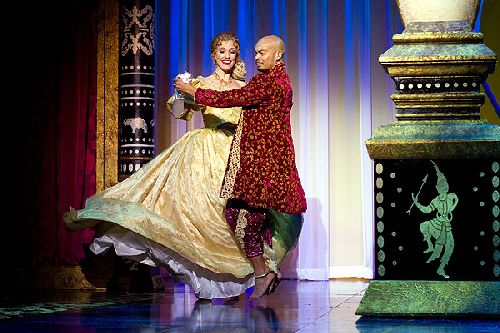
In today's Wall Street Journal drama column I review a Philadelphia show, the Walnut Street Theatre revival of The King and I. Here's an excerpt.
* * *
Of all the Rodgers and Hammerstein musicals, "The King and I," in which a high-handed Siamese potentate is given a lesson in democracy by a prim Welsh schoolmarm, is the one to which time has been kindest. Sixty years after it first opened on Broadway, "The King and I" remains both charming and--if done well--theatrically potent....
But the show, with its palatial décor and giant-sized cast, doesn't lend itself to small-scale production, and if you cut corners when putting it on, the results will look cheap at best, amateurish at worst. Hence it is a real pleasure to report that Philadelphia's Walnut Street Theatre has just mounted a strongly cast, newly choreographed revival of "The King and I" that looks anything but chintzy.
The biggest difficulty facing any company that seeks to put its stamp on "The King and I" is getting out from under the shadow of Yul Brynner, who created the role of the King of Siam in 1951, starred in the 1956 film version of the show and continued to play the part onstage at regular intervals until his death in 1985. As a result, everybody who thinks of "The King and I" usually thinks first of Brynner, and most of the actors who have since assumed his role have evoked--deliberately or not--his performance, which was so distinctive as to be easily caricatured. Not Mel Sagrado Maghuyop, a Filipino-American musical-comedy singer who neither looks nor sounds like Brynner (he has a higher-pitched voice and is shorter than Rachel York, his leading lady). Mr. Maghuyop's king is petulant to the point of childishness, which makes his climactic explosion of rage all the more frightening, and he is both physically lithe and an adept comedian....
Marc Robin, the director and choreographer, has daringly chosen to jettison Jerome Robbins' well-known dances, turning "The Small House of Uncle Thomas" into a classical-style tutu-and-toe-shoes story ballet (Robbins staged it as a Thai-style dance-and-mime pastiche) and putting a comic spin on "Shall We Dance?" Though Robbins' dance version of "Uncle Tom's Cabin" was one of the most memorable pieces of choreography ever created for the Broadway stage, Mr. Robin's miniature ballet is a lovely piece of work in its own right, and I liked his "Shall We Dance?" at least as much as Robbins' more straightforward version....
* * *
Read the whole thing here.
Jerome Robbins' "The Small House of Uncle Thomas," from the 1951 film version of The King and I:
Posted December 30, 12:00 AM
TT: Almanac
"Man must be sustained in suffering by a hope so high that no conflict with actuality can dash it--so high, indeed, that no fulfilment can satisfy it: a hope reaching out beyond this world."
Friedrich Nietzsche, The Antichrist
Posted December 30, 12:00 AM
December 29, 2011
TT: So you want to see a show?
Here's my list of recommended Broadway, off-Broadway, and out-of-town shows, updated weekly. In all cases, I gave these shows favorable reviews (if sometimes qualifiedly so) in The Wall Street Journal when they opened. For more information, click on the title.
BROADWAY:
• Anything Goes (musical, G/PG-13, mildly adult subject matter that will be unintelligible to children, closes Apr. 29, reviewed here)
• Chinglish (comedy, PG-13, adult subject matter, closes Apr. 29, reviewed here)
• Godspell (musical, G, suitable for children, most performances sold out last week, reviewed here)
• How to Succeed in Business Without Really Trying (musical, G/PG-13, perfectly fine for children whose parents aren't actively prudish, most performances sold out last week, reviewed here)
• Other Desert Cities (drama, PG-13, adult subject matter, reviewed here)
• Seminar (serious comedy, PG-13, closes Mar. 4, reviewed here)
• Stick Fly (serious comedy, PG-13, reviewed here)
OFF BROADWAY:
• Avenue Q (musical, R, adult subject matter and one show-stopping scene of puppet-on-puppet sex, reviewed here)
• Dancing at Lughnasa (drama, G/PG-13, closes Jan. 29, reviewed here)
• The Fantasticks (musical, G, suitable for children capable of enjoying a love story, reviewed here)
• Million Dollar Quartet (jukebox musical, G, off-Broadway remounting of Broadway production, original run reviewed here)
CLOSING SOON ON BROADWAY:
• Follies (musical, PG-13, adult subject matter, closes Jan. 22, reviewed here)
CLOSING NEXT WEEK OFF BROADWAY:
• The Cherry Orchard (drama, G, too serious for children, closes Jan. 8, reviewed here)
CLOSING SUNDAY OFF BROADWAY:
• Neighbourhood Watch (serious comedy, PG-13, reviewed here)
Posted December 29, 12:00 AM
TT: Almanac
"By 'a good audience,' an artist means, in the first place, a crowd that is receptive, easily roused, which unresistingly succumbs to mass suggestion, whatever the actual musical standard of its members. But an audience may be very cultured musically and yet be 'bad,' namely frosty, critical and fault-finding."
Carl Flesch, Memoirs (trans. Hans Keller)
Posted December 29, 12:00 AM
December 28, 2011
TT: Snapshot
The opening scene of a rare kinescope of a 1955 Ford Star Jubilee telecast of the original Broadway production of Herman Wouk's The Caine Mutiny Court Martial, directed by Charles Laughton and starring Lloyd Nolan as Captain Queeg:
(This is the latest in a series of arts-related videos that appear in this space each Monday and Wednesday.)
Posted December 28, 12:00 AM
TT: Almanac
"In any kind of artistic activity, it is always the impulse, the expressive need, the inner compulsion which dictates in the first place, and not the technical equipment. Just as a hungry man will always get hold of food, if need be by force, so every original artist finds, as a rule unconsciously, the necessary technical means to still his spiritual hunger."
Carl Flesch, Memoirs (trans. Hans Keller)
Posted December 28, 12:00 AM
December 27, 2011
TT: Helen Frankenthaler, R.I.P.
The New York Times obituary is here.
* * *
"Grey Fireworks," 1982:

UPDATE: I agree with everything that this piece by Eric Gibson says about Helen Frankenthaler's work and significance.
Posted December 27, 10:38 AM
TT: Almanac
"As teachers, towering individualities usually are vampires who suck out their pupils' personality."
Carl Flesch, Memoirs (trans. Hans Keller)
Posted December 27, 12:00 AM
December 26, 2011
TT: Just because
Robert Preston sings Meredith Willson's "Trouble" (from The Music Man) on the 1971 Tony Awards telecast:
(This is the latest in a series of arts-related videos that appear in this space each Monday and Wednesday.)
Posted December 26, 12:00 AM
TT: Almanac
"Now, an ingrained habit of the defensive is a prime condition of defeat."
Hilaire Belloc, Essays of a Catholic Layman in England
Posted December 26, 12:00 AM
December 24, 2011
REVIVAL OF THE FITTEST
"To look back on the year of 'Follies' is to be reminded that it's revivals, not new work, that make American theater go 'round these days..."Posted December 24, 7:12 PM
December 23, 2011
TT: The sound of hope
Laura Newell plays the solo harp interlude from Benjamin Britten's A Ceremony of Carols:
Posted December 23, 12:00 AM
TT: The best theater of 2011
In today's Wall Street Journal I talk about the shows, directors, performers, and theater companies that made the strongest and most favorable impressions on me in the year just past.
Among those mentioned:
• Best new play: Stephen Adly Guirgis' The Motherf**ker with the Hat
• Best revival: Classic Stage Company's The Cherry Orchard
• Best musical revivals: Porgy and Bess at Chicago's Court Theatre and Show Boat at Connecticut's Goodspeed Musicals
• Best Shakespeare revival: Amanda Dehnert's Julius Caesar at the Oregon Shakespeare Festival
• Performer of the year: Chicago's Carrie Coon
To find out what and who else delighted me in 2011, go here.
* * *
Carrie Coon talks about the Steppenwolf Theatre Company production of Who's Afraid of Virginia Woolf? in which she appeared earlier this year. The production, directed by Pam MacKinnon and also starring Tracy Letts, is scheduled to transfer to Broadway in the fall of 2012:
Posted December 23, 12:00 AM
TT: They don't make Christmas specials like they used to (III)
Truman Capote's A Christmas Memory, starring Geraldine Page, directed by Frank Perry, and originally telecast on ABC Stage 67 in 1966. Capote is the narrator and wrote the teleplay:
(This is the latest in a series of arts-related videos that appear in this space each Monday and Wednesday.)
Posted December 23, 12:00 AM
TT: Almanac
"There is a land of the living and a land of the dead and the bridge is love, the only survival, the only meaning."
Thornton Wilder, The Bridge of San Luis Rey
Posted December 23, 12:00 AM
December 22, 2011
TT: So you want to see a show?
Here's my list of recommended Broadway, off-Broadway, and out-of-town shows, updated weekly. In all cases, I gave these shows favorable reviews (if sometimes qualifiedly so) in The Wall Street Journal when they opened. For more information, click on the title.
BROADWAY:
• Anything Goes (musical, G/PG-13, mildly adult subject matter that will be unintelligible to children, closes Apr. 29, most performances sold out last week, reviewed here)
• Chinglish (comedy, PG-13, adult subject matter, closes Apr. 29, reviewed here)
• Follies (musical, PG-13, adult subject matter, closes Jan. 22, reviewed here)
• Godspell (musical, G, suitable for children, most performances sold out last week, reviewed here)
• How to Succeed in Business Without Really Trying (musical, G/PG-13, perfectly fine for children whose parents aren't actively prudish, reviewed here)
• Other Desert Cities (drama, PG-13, adult subject matter, most performances sold out last week, reviewed here)
• Seminar (serious comedy, PG-13, closes Mar. 4, reviewed here)
• Stick Fly (serious comedy, PG-13, reviewed here)
OFF BROADWAY:
• Avenue Q (musical, R, adult subject matter and one show-stopping scene of puppet-on-puppet sex, reviewed here)
• Dancing at Lughnasa (drama, G/PG-13, extended through Jan. 29, reviewed here)
• The Fantasticks (musical, G, suitable for children capable of enjoying a love story, reviewed here)
• Million Dollar Quartet (jukebox musical, G, off-Broadway remounting of Broadway production, original run reviewed here)
CLOSING SOON OFF BROADWAY:
• The Cherry Orchard (drama, G, too serious for children, extended through Jan. 8, reviewed here)
CLOSING NEXT WEEK OFF BROADWAY:
• Neighbourhood Watch (serious comedy, PG-13, closes Jan. 1, reviewed here)
Posted December 22, 12:00 AM
TT: They don't make Christmas specials like they used to (II)
An extremely rare kinescope of the opening of Mr. Charles Laughton, a Christmas-eve special originally telecast on NBC in 1951 and based on Laughton's one-man stage shows:
Posted December 22, 12:00 AM
TT: Almanac
"I was almost killed once in a car accident. I was drunk and I ran off the side of the road and I turned over four times. They took me out of that car for dead, but I lived. And I prayed last night to know why I lived and she died, but I got no answer to my prayers. I still don't know why she died and I lived. I don't know the answer to nothing. Not a blessed thing. I don't know why I wandered out to this part of Texas drunk and you took me in and pitied me and helped me to straighten out and married me. Why, why did this happen? Is there a reason that happened? And Sonny's father died in the war. My daughter killed in an automobile accident. Why? You see, I don't trust happiness. I never did, I never will."
Horton Foote, screenplay for Tender Mercies
Posted December 22, 12:00 AM
December 21, 2011
TT: Snapshot
The Choir of King's College, Cambridge, sings Peter Warlock's "Bethlehem Down":
(This is the latest in a weekly series of arts-related videos that appear in this space each Monday and Wednesday.)
Posted December 21, 12:00 AM
TT: Almanac
"A comedy is the form in which the unsayable is said and that, thus, for a moment, breaks the corrosive cycle of repression."
David Mamet, Bambi vs. Godzilla: On the Nature, Purpose, and Practice of the Movie Business
Posted December 21, 12:00 AM
December 20, 2011
TT: From my mailbox
A reader writes:
O.K., so you didn't like Christopher Hitchens. And you're certainly entitled to your views about speaking frankly about the recently departed. (And you're right--Hitchens would have agreed with you on this.)But did you have to be so self-aggrandizing, as usual? Who cares whether you liked him or not? For you, of all people, to call him "vain" is absurd. You write about yourself far more often than Hitchens wrote about himself.
This is clearly not a fellow who should be reading blogs!
Posted December 20, 8:17 PM
TT: They don't make Christmas specials like they used to (I)
".22 Rifle for Christmas," an episode of Dragnet originally telecast on Dec. 18, 1952:
Posted December 20, 12:00 AM
TT: Almanac
"If you say that two sheep added to two sheep make four sheep, your audience will accept it patiently--like sheep. But if you say it of two monkeys, or two kangaroos, or two sea-green griffins, people will refuse to believe that two and two make four. They seem to imagine that you must have made up the arithmetic, just as you have made up the illustration of the arithmetic. And though they would actually know that what you say is sense, if they thought about it sensibly, they cannot believe that anything decorated by an incidental joke can be sensible. Perhaps it explains why so many successful men are so dull--or why so many dull men are successful."
G.K. Chesterton, Autobiography
Posted December 20, 12:00 AM
December 19, 2011
TT: Just because
James Taylor sings "Have Yourself a Merry Little Christmas":
(This is the latest in a series of arts-related videos that appear in this space each Monday and Wednesday.)
Posted December 19, 12:00 AM
TT: Stocking stuffers for the hopelessly arty
On Friday The Wall Street Journal will be publishing my best-theater-of-the-year list for 2011. Hence I thought that this would be a good time for me to take a quick look back at my ten favorite Top Five picks of the year just past:
• Debra Bricker Balken, John Marin: Modernism at Midcentury (Yale, $40). The catalogue of the Portland Museum's superlative exhibition of Marin's late paintings and watercolors is itself a first-class effort, a penetrating study of a great painter whose work is no longer widely known save to students of American modernism.
• Car 54 Where Are You?: Complete First Season (Shanachie, four DVDs). All thirty episodes of the 1961-62 season of one of the most clever and well-made situation comedies ever to appear on American television. Nat Hiken, who made Phil Silvers a TV star, did the same for Fred Gwynne and Joe E. Ross in this zany portrait of a squad-car team who troll the Bronx in search of trouble--all of which happens to them. An absolute must for golden-age TV buffs.
• The Essential Rosanne Cash (Sony Legacy, two CDs). Thirty-six tracks from one of America's most creative singer-songwriters, chosen by Cash herself. An ideal one-stop introduction to her work, especially when heard in tandem with Composed, Cash's 2010 memoir.
• John Gielgud, Ages of Man (Entertainment One). Courtesy of the Archive of American Television, the 1966 broadcast version of the great actor's one-man Shakespeare show, which aired on CBS on two consecutive Sunday afternoons (the network suits didn't think anybody would sit still long enough to watch the whole show in one go) and has been in limbo ever since. Contemporary Shakespeare style has changed beyond recognition since Gielgud's day, but his elegant delivery and exquisitely modulated voice remain as seductive--and intelligent--as ever.
• Percy Grainger, The Complete 78-RPM Solo Recordings 1908-1945 (Appian, five CDs). The composer of "Country Gardens" and "Molly on the Shore" was also one of the greatest pianists of the twentieth century, a marvelously idiosyncratic virtuoso whose style ranged from tender lyricism to explosive extroversion. Most of his 78s have been unavailable in any format since their original release. This much-needed box set solves that problem--and does it right. Ward Marston's digital transfers of such classic Grainger recordings as Chopin's B Minor Sonata, Schumann's Symphonic Etudes, and Grieg's "Wedding Day at Troldhaugen" are crystal-clear and scratch-free.
• Justified: The Complete First Season (Sony, three DVDs). In this cable-TV series, Graham Yost takes U.S. Marshal Raylan Givens, one of Elmore Leonard's most attractive recurring characters, and returns him to Kentucky's Harlan County for a series of freshly written adventures that have the true Leonard touch. Timothy Olyphant, who plays Givens, is exactly, exquisitely right.
• Pat Metheny, What's It All About (Nonesuch). A lovely sequel to One Quiet Night, Metheny's 2009 album of acoustic-guitar solos. This time around the fare consists of pop standards, some likely ("Alfie"), others joltingly unexpected ("Betcha by Golly, Wow"), and all played with luminescent sensitivity. Ideal for wee-small-hours listening.
• A Minister's Wife (PS Classics). The original-cast recording of the Lincoln Center Theatre production of this musical version of George Bernard Shaw's Candida is a major event. I called it "the most important new musical since The Light in the Piazza" when I reviewed the show in The Wall Street Journal, and now you can revel at leisure in Joshua Schmidt's astringent yet tuneful score. If you didn't see A Minister's Wife on stage, make haste to hear it on record.
• Ricky Riccardi, What a Wonderful World: The Magic of Louis Armstrong's Later Years (Pantheon, $28.95). I can't do any better than to repeat my dust-jacket blurb: "The later years of Louis Armstrong are one of the most fascinating untold tales in the history of jazz. What a Wonderful World is indispensable to anyone with a serious interest in the greatest jazz musician of the twentieth century." If you liked Pops, you need to read this book.
• Wesley Stace, Charles Jessold, Considered as a Murderer (Picador, $15 paper). A bewitchingly clever historical thriller in which the lives and work of Peter Warlock, Constant Lambert, and Carlo Gesualdo are blended into the hair-raising tale of an unworldly music critic who writes an opera libretto for a flint-hearted composer who returns the favor in the most malevolent way imaginable. The author (better known in pop-music circles as John Wesley Harding) has done a virtuosic job of fusing fact with fiction, and the result is one of the few novels with a musical setting in which the background is rendered accurately. Absolutely not for musicians only, though those who already know the dramatis personae will be dazzled by the sure-footed skill with which Stace has put their real-life stories to novelistic use.
Posted December 19, 12:00 AM
TT: Almanac
"They who lack talent expect things to happen without effort. They ascribe failure to a lack of inspiration or ability, or to misfortune, rather than to insufficient application. At the core of every true talent there is an awareness of the difficulties inherent in any achievement, and the confidence that by persistence and patience something worthwhile will be realized. Thus talent is a species of vigor."
Eric Hoffer, Reflections on the Human Condition
Posted December 19, 12:00 AM
December 16, 2011
TT: For the record
I had lunch with Christopher Hitchens in 2000 at the behest of a mutual friend, and didn't like him at all. Though he was perfectly nice to me, Hitchens struck me as snobbish and vain, the very model of an expatriate Brit frolicking among the ugly Americans at whom he delighted to sneer. We never met again.
Two years later, he gave my biography of H.L. Mencken an indifferent review in the New York Times. It may or may not have prejudiced me against his essays, which too often struck me as self-consciously contrarian rather than expressive of deep-seated convictions, of which I frankly doubt he had all that many.
I did, however, greatly admire (as who did not?) the courage with which he faced his fast-approaching end, as well as the stylish eloquence with which he described it in print. We should all be so brave--and so honest.
Ave atque vale.
UPDATE: In case you weren't reading this blog in 2005, here's something I wrote back then about speaking ill of the recently dead. As you can see, I haven't changed my mind--and Hitchens would have agreed with me.
Posted December 16, 8:20 PM
TT: A master's music
Here are five Bob Brookmeyer CDs of which I'm especially fond:
• Bob Brookmeyer Quintet, Traditionalism Revisited, with Jimmy Giuffre and Jim Hall (1957)
• The Bob Brookmeyer Small Band, Live at Sandy's Jazz Revival (1978)
• The Bob Brookmeyer New Art Orchestra, New Works: Celebration (1999)
• Holiday: Bob Brookmeyer Plays Piano (2001)
• The Bob Brookmeyer New Art Orchestra, Get Well Soon (2004)
Posted December 16, 1:48 PM
TT: Bob Brookmeyer, R.I.P.
Nothing you can say about Bob Brookmeyer can possibly rival the truth about him. He was one of the giants of jazz, a great valve trombonist, a composer of the first rank, and an astonishingly gifted teacher whose pupils included Maria Schneider. He was also a man of ear-shattering candor who liked nothing better than saying whatever was on his mind at any given moment, especially when he knew it would give offense. Unlikely as it may sound, he was genuinely lovable--unless you happened to be on the receiving end of one of his diatribes, and sometimes even then--and I adored him.
I met Bob when I interviewed him in 1999 for a profile that appeared in the Sunday New York Times on the occasion of his seventieth birthday:
T0day is the jazz trombonist Bob Brookmeyer's 7oth birthday, and he's surprised. He never expected to outlive such illustrious colleagues as Al Cohn, Stan Getz, Gerry Mulligan and Zoot Sims, with whom he worked back in the days when he was doing his best to drink himself to death. ''I didn't think I'd see 30,'' he said in the matter-of-fact tones of a man whose memories were horrendous enough to need no embroidery. ''I almost didn't make 45. My major accomplishment back then was not falling down more than, oh, 10 times a day.''
He was amused by what I wrote, and a friendship resulted. We didn't see much of one another--he stayed as far away from Manhattan as he could--but our rare meetings were full of raucous laughter and much affection. Alas, what would have been our last meeting failed to take place because of the illness that claimed his life last night. He was too depressed to want to be seen, and I was too shy to insist on seeing him.
Now he is gone, but his music will always be with us, for which much thanks.
* * *
Bob Brookmeyer and Jim Hall play "I Should Care" at the Bath Festival in 1987:
Bob Brookmeyer rehearses the Vanguard Jazz Orchestra in his own "Suite for Three" in 2009:
Posted December 16, 12:34 PM
TT: (Still)born again
In today's Wall Street Journal drama column, I sound the alarm about On a Clear Day You Can See Forever and Lysistrata Jones. Here's an excerpt.
* * *
In the rogues' gallery of problem musicals, "On a Clear Day You Can See Forever" ranks right next to "Candide" and "Merrily We Roll Along" at the very top of the list. The Burton Lane-Alan Jay Lerner score is so good that everyone who loves musical comedy dreams of seeing the show successfully revived, but Lerner's book is so bad that no one has ever figured out how to do it. Now Michael Mayer, the director of "American Idiot" and "Spring Awakening," has taken a costly shot at what most theater buffs have long thought impossible--and proved them right.
The original "On a Clear Day" was the muddled story of Mark Bruckner, a Manhattan psychiatrist who hypnotizes a ditsy young client named Daisy and discovers that she appears to be the reincarnation of one Melinda Wells, an 18th-century society lady from London, with whom he thereupon falls in love. Daisy/Melinda was the star of the show--Barbara Harris played her on Broadway in 1965, Barbra Streisand in the even more confusing 1970 film version--and nobody got the girl(s). In the new "On a Clear Day," whose book, written by Peter Parnell, retains recognizable chunks of Lerner's 1965 script but has mostly been written from scratch, the shrink (Harry Connick, Jr.) is the star and his ditsy young client becomes a ditsy gay florist (David Turner) who appears to be the reincarnation of a beautiful swing-era big-band canary (Jessie Mueller).
Mr. Mayer is responsible for dreaming up this silly-sounding premise, and while I suppose it would be wrong to say that nobody in the world could ever have made it work onstage, he and Mr. Parnell have definitely failed to do the job....
Mr. Connick is, of course, a popular school-of-Sinatra swing balladeer who made a splash in the 2006 Broadway revival of "The Pajama Game." His acting skills, however, are strictly limited, and whoever thought he was up to playing a Jewish shrink ought to have his head examined, preferably with a blunt instrument....
Douglas Carter Beane's brand of flyweight camp is not to all tastes, but plenty of people flipped over "Xanadu," and those unpicky folk are more than welcome to revel in "Lysistrata Jones," in which Aristophanes' classic comedy is turned into a spoofy-woofy college musical about an inept basketball team whose players are galvanized into action when their girlfriends vow not to sleep with them until they win a game. In the ever-relevant words of Max Beerbohm, "For people who like that kind of thing, that is the kind of thing they like."
If you're that kind of person, be forewarned that Mr. Beane's book is vapid to the max and Lewis Flinn's score is as tuneful as a ringtone medley....
* * *
Read the whole thing here.
Posted December 16, 12:00 AM
TT: Almanac
"Biographies grasp the exteriors of lives and give what account they can of their interiors. These can be wholly different realities."
Guy Davenport, "Ruskin"
Posted December 16, 12:00 AM
December 15, 2011
TT: So you want to see a show?
Here's my list of recommended Broadway, off-Broadway, and out-of-town shows, updated weekly. In all cases, I gave these shows favorable reviews (if sometimes qualifiedly so) in The Wall Street Journal when they opened. For more information, click on the title.
BROADWAY:
• Anything Goes (musical, G/PG-13, mildly adult subject matter that will be unintelligible to children, closes Apr. 29, most performances sold out last week, reviewed here)
• Chinglish (comedy, PG-13, adult subject matter, closes Apr. 29, reviewed here)
• Follies (musical, PG-13, adult subject matter, closes Jan. 22, reviewed here)
• Godspell (musical, G, suitable for children, most performances sold out last week, reviewed here)
• How to Succeed in Business Without Really Trying (musical, G/PG-13, perfectly fine for children whose parents aren't actively prudish, reviewed here)
• Other Desert Cities (drama, PG-13, adult subject matter, most performances sold out last week, reviewed here)
• Seminar (serious comedy, PG-13, closes Mar. 4, reviewed here)
• Stick Fly (serious comedy, PG-13, reviewed here)
OFF BROADWAY:
• Avenue Q (musical, R, adult subject matter and one show-stopping scene of puppet-on-puppet sex, reviewed here)
• The Fantasticks (musical, G, suitable for children capable of enjoying a love story, reviewed here)
• Million Dollar Quartet (jukebox musical, G, off-Broadway remounting of Broadway production, original run reviewed here)
CLOSING SOON OFF BROADWAY:
• The Cherry Orchard (drama, G, too serious for children, extended through Jan. 8, reviewed here)
• Dancing at Lughnasa (drama, G/PG-13, closes Jan. 15, reviewed here)
• Neighbourhood Watch (serious comedy, PG-13, closes Jan. 1, reviewed here)
GOING ON HIATUS ON BROADWAY:
• Venus in Fur (serious comedy, R, adult subject matter, closes Sunday and reopens Feb. 17, most performances sold out last week, reviewed here)
CLOSING SUNDAY OFF BROADWAY:
• Krapp's Last Tape (drama, PG-13, absolutely not suitable for children, most performances sold out last week, reviewed here)
Posted December 15, 12:00 AM
TT: Almanac
"Just how difficult it is to write a biography can be reckoned by anybody who sits down and considers just how many people know the truth about his or her love affairs."
Rebecca West (quoted in Vogue, Nov. 1, 1952)
Posted December 15, 12:00 AM
December 14, 2011
TT: Here we are
This is a lovely place to be on a Wednesday morning--especially after having eaten a perfect breakfast in front of a roaring fire:

Next stop, Gypsy!
Posted December 14, 11:09 AM
TT: The sound of Pops
Sean Prpick, a producer for the Canadian Broadcasting Corporation, came to my apartment earlier this year to interview me at length for a CBC radio documentary about Louis Armstrong. The program, Sean told me, would be based on the private tape recordings that Armstrong made in the last quarter-century of his life, hundreds of which are now on deposit at the Louis Armstrong House Museum in Queens and served as unique and indispensable primary sources for Pops: A Life of Louis Armstrong, my 2009 Armstrong biography, and Satchmo at the Waldorf, my one-man play about Armstrong and Joe Glaser, his manager.
Few of these tapes--some of which are astonishingly, even shockingly candid--have been heard by the general public, and I was curious to see what the CBC would do with them. The answer came on Sunday when "Louis Armstrong: Real to Reel" aired throughout Canada. Not only was it a first-rate piece of work, but the excerpts from Armstrong's tapes that were heard during the program were, to put it very mildly, uncensored.
You can now listen to "Real to Reel" on your computer by going here, and I strongly recommend that you do so. If you read Pops or saw Satchmo at the Waldorf and found yourself wondering what Louis Armstrong really sounded like in private, click on the link and you'll find out.
Posted December 14, 9:56 AM
TT: Snapshot
Peter Pears and Benjamin Britten perform Britten's arrangements of Purcell's "I attempt from Love's sickness to fly" and "Man is for the woman made" in Tokyo in 1956:
(This is the latest in a series of arts-related videos that appear in this space each Monday and Wednesday.)
Posted December 14, 12:00 AM
TT: Almanac
"Read no history: nothing but biography, for that is life without theory."
Benjamin Disraeli, Contarini Fleming
Posted December 14, 12:00 AM
December 13, 2011
TT: But not forgotten
Some things you don't get over. My old friend Nancy LaMott died sixteen years ago today. That's a long time, yet I still feel a pang of unappeasable sorrow whenever I think of her, and in particular of her painful last days, which she faced with uncommon courage.
Not surprisingly, I prefer to remember the happy days of our brief acquaintance, for it was full of warmth and laughter. Though we only knew one another for the year and a half before she died, I've never felt closer to a friend. She was a great artist and a dear person whom I loved with all my heart.
This is something that I wrote about Nancy for The Wall Street Journal in 2005. I still feel the same way, and always will.
* * *
Nancy LaMott sings "Moon River" in 1995, nine days before her death, with Christopher Marlowe at the piano:
Posted December 13, 12:00 AM
TT: Almanac
"Grief is the price we pay for love."
Queen Elizabeth II, message to the mourners at a 9/11 memorial service in New York (Sept. 20, 2001)
Posted December 13, 12:00 AM
December 12, 2011
THE ECLIPSE OF SPENCER TRACY
"He is probably best known as an appendage to Katharine Hepburn, with whom he made nine movies and conducted a more-or-less open affair from 1941 to his death in 1967. Indeed, the Tracy-Hepburn romance is the only thing that the average under-50 moviegoer knows about the man whom John Ford called 'the best actor we ever had...'"Posted December 12, 11:56 PM
TT: Just because
Elaine Stritch and Kim Stanley in a short excerpt from the original Broadway production of William Inge's Bus Stop, telecast in 1955 and introduced by Farley Granger:
(This is the latest in a series of arts-related videos that appear in this space each Monday and Wednesday.)
Posted December 12, 12:00 AM
TT: Almanac
"I never did write a biography, and I don't exactly know how to set about it; you see I have to be accurate and keep to the facts, a most difficult thing for a writer of fiction."
Elizabeth Gaskell, letter to Harriet Anderson, Mar. 15, 1856
Posted December 12, 12:00 AM
December 9, 2011
TT: Guess who's coming to Martha's Vineyard
In today's regularly scheduled Wall Street Journal drama column, I review two New York premieres, Lydia R. Diamond's Stick Fly and Alan Ayckbourn's Neighbourhood Watch. Here's an excerpt.
* * *
One of the most exciting things that a playwright can do is to show you an unfamiliar way of life. A play that succeeds in doing so can be forgiven any number of theatrical sins. "Stick Fly," in which Lydia R. Diamond puts America's black upper class onstage, fills the bill on all counts. Yes, it's a mess, but a fascinating one, well directed by Kenny Leon and performed with total persuasiveness by his ensemble cast, and the best parts are so good that you'll be glad to forgive Ms. Diamond when she goes wrong.
The setting is the posh Martha's Vineyard summer home of the LeVays. Save for the fact that they're black, the LeVays seem like just the sort of people whom you'd expect to have a posh Martha's Vineyard summer home. Joe (Ruben Santiago-Hudson) is a neurosurgeon whose two sons, Flip (Mekhi Phifer) and Spoon (Dulé Hill), are pursuing similarly class-specific careers (Flip is a plastic surgeon, Spoon a first-time novelist who's still trying to "find himself"). They have a maid (Condola Rashad), collect art, play Parcheesi and drink a lot. As the play opens, both young men bring their girlfriends (Rosie Benton and Tracie Thoms) home for the first time. Neither one is quite what Joe expected. Taylor (Tracie Thoms), Spoon's girl, is an earnest graduate student who is ill at ease among the rich, while Kimber (Rosie Benton), Flip's well-heeled companion, is--big surprise--white....
As this description suggests, "Stick Fly" feels like two related plays that have been woven loosely together. In the "Guess Who's Coming to Dinner" part, Ms. Diamond's wholly original subject matter is at war with her been-there-done-that plot. Once she finally gets around to springing Joe's surprise (which isn't all that surprising--you'll see it coming midway through the first act) on the audience, the dramatic stakes go up, and "Stick Fly" shakes off its play-safe trappings and starts taking chances....
Alan Ayckbourn's politically flavored plays tend not to get done in America. All credit, then, to 59E59 Theatres' annual Brits Off Broadway festival for showing us a different side of Mr. Ayckbourn with his own crisp, tidy staging of "Neighbourhood Watch," a darkish comedy about the coming of fascism to a middle-class suburb.
The characters in "Neighbourhood Watch," terrified by urban unrest and dismayed by the seeming unwillingness of the police to do anything about it, vote to take matters into their own hands and turn their once-cozy neighborhood into a gated community. As is Mr. Ayckbourn's wont, things get out of hand, and before you know it, the Bluebell Hill Development has become a prison camp...
"Neighbourhood Watch" falls short of Mr. Ayckbourn's usual high standards in two ways. Not only do its disparate parts fit somewhat awkwardly together, but it's more than a little bit trite for him to suggest that the authoritarian impulses of Martin and Hilda (Matthew Cottle and Alexandra Mathie), the ever-so-genteel Hitler and Eva Braun of Bluebell Hill, arise from their sexual inhibitions. Even so, "Neighbourhood Watch" is both funny and (mostly) smart...
* * *
Read the whole thing here.
Posted December 09, 12:00 AM
TT: The small screen, sixty years ago
In my "Sightings" column for today's Wall Street Journal, I take a look at what network TV was like in 1951, and find that it hasn't really changed all that much. Here's an excerpt.
* * *
In present-tense culture, golden anniversaries tend to get swept away by the whirlwind of current events. Here's an example: Network television as we know it came into being on Sept. 4, 1951, when AT&T threw the switch on the first transcontinental coaxial cable. Up to that time, TV had been an essentially regional phenomenon. The most important network shows were all performed live in New York, and the only way for West Coast viewers to see them was for fuzzy-looking film copies called "kinescopes" to be shipped to Los Angeles and broadcast a week later. The coaxial cable changed that by making it possible to transmit live video signals from coast to coast--in both directions. Within a matter of months, Hollywood had become a major center of TV production.
Don't be embarrassed if you didn't know any of this. So far as I know, no one has taken note of the golden anniversary of the coaxial cable, or celebrated the fiftieth birthdays of three influential series that the cable made possible. But if you owned a TV set in 1951, you might well remember these Truman-era debuts:
• Oct. 15, 1951: "I Love Lucy," the first Hollywood-based sitcom to be shot on film with three cameras in front of a live studio audience. Lucille Ball's zany antics soon made it the most popular show on the air. At a time when there were only 15 million TV sets in America, 11 million families watched "I Love Lucy" every Monday night.
• Nov. 18, 1951: "See It Now," the first TV newsmagazine, whose first episode opened with a shot of two control-room monitors. One showed a live picture of the Statue of Liberty, the other a live picture of the Golden Gate Bridge. Edward R. Murrow, the host, was visibly impressed: "For the first time, man has been able to sit at home and look at two oceans at the same time." It may sound quaint now, but 60 years ago that image took people's breaths away.
• Dec. 16, 1951: "Dragnet," the first filmed crime drama to make extensive use of location shooting. When Jack Webb opened each episode by saying "This is the city," he meant Los Angeles, not a cramped TV studio somewhere in midtown Manhattan--and that's what you saw on the small screen.
Sound familiar? It should--just as it did in 1951. Not only did "See It Now," "I Love Lucy" and "Dragnet" originate on radio, but they're still being imitated....
* * *
Read the whole thing here.
The opening sequence of the first episode of See It Now:
"The Human Bomb," the first episode of Dragnet, directed by Jack Webb, written by James E. Moser, and starring Webb, Barton Yarborough, and Raymond Burr:
Posted December 09, 12:00 AM
TT: Almanac
"Not one of us knows what effect his life produces, and what he gives to others; that is hidden from us and must remain so, though we are often allowed to see some little fraction of it, so that we may not lose courage."
Albert Schweitzer, The Spiritual Life
Posted December 09, 12:00 AM
December 8, 2011
TT: The end of the line
Since this is a theatrically crowded week in New York, I've written a special bonus drama column for today's Wall Street Journal that's devoted to Classic Stage Company's The Cherry Orchard and John Hurt's solo turn in Krapp's Last Tape. Both are sublime. Here's an excerpt.
* * *
Anton Chekhov's plays, sublime though they are, have a well-deserved reputation for being hard directorial nuts to crack. This may explain why "The Cherry Orchard" doesn't get done nearly as often as it should in this country. Take Classic Stage Company's ambitious "Chekhov Initiative" cycle, which has been, perhaps inevitably, a hit-or-miss affair in which a very fine "Seagull" directed by Viacheslav Dolgachev in 2008 was followed by Austin Pendleton's interesting but exceedingly uneven "Uncle Vanya" and "Three Sisters." This time around, though, CSC has covered itself in glory, giving "The Cherry Orchard" a staging directed by Andrei Belgrader and led by John Turturro, Juliet Rylance and Dianne Wiest that is as good as anything you're likely to see on a New York stage this season--or anywhere else, at any other time.
What makes Mr. Belgrader's "Cherry Orchard" so noteworthy? To begin with, he's struck the right balance between comedy and melancholy, which is the key to making Chekhov's masterpiece work onstage. If it's not funny, it becomes lugubrious; if it's too broad, like the slapsticky version that Boston's Huntington Theatre Company mounted four years ago, the results can swing perilously near vulgarity. Mr. Belgrader nails it, giving full value to the farcical side of the Gaevs, Chekhov's impoverished family of aristocratic landowners, without ever letting you forget that theirs is the plight of a once-dignified class that has reached the end of its rope.
While everyone in the stellar cast is on Mr. Belgrader's wavelength, it is Mr. Turturro whose performance is most essential to the effect of the production. He plays Lopakhin, the up-and-coming merchant who buys the estate on which his ancestors worked as slaves, with a bitter touch of Shylock-like vengefulness--yet he is no less alive to Lopakhin's ludicrous, even pathetic side....
Speaking of tough nuts, the Brooklyn Academy of Music's Next Wave Festival has imported Dublin's Gate Theatre revival of "Krapp's Last Tape," Samuel Beckett's hour-long 1958 "duologue" for an angry old writer (John Hurt, made up to look like Beckett himself) who listens to a tape recording of himself when young and can't stand what he hears. Indeed, he doesn't seem to like much of anything except bananas, a fruit for which he has a weakness bordering on compulsion.
"Krapp" is, like all of Beckett's plays, a black comedy of the utmost horror and despair, and Mr. Hurt, who famously played the title role in Atom Egoyan's 2000 TV version, is once again in perfect harmony with Krapp's agony....
* * *
Read the whole thing here.
John Hurt in the 2000 TV version of Krapp's Last Tape:
Posted December 08, 12:00 AM
TT: So you want to see a show?
Here's my list of recommended Broadway, off-Broadway, and out-of-town shows, updated weekly. In all cases, I gave these shows favorable reviews (if sometimes qualifiedly so) in The Wall Street Journal when they opened. For more information, click on the title.
BROADWAY:
• Anything Goes (musical, G/PG-13, mildly adult subject matter that will be unintelligible to children, closes Apr. 29, most performances sold out last week, reviewed here)
• Chinglish (comedy, PG-13, adult subject matter, closes Apr. 29, reviewed here)
• Follies (musical, PG-13, adult subject matter, closes Jan. 22, reviewed here)
• Godspell (musical, G, suitable for children, reviewed here)
• How to Succeed in Business Without Really Trying (musical, G/PG-13, perfectly fine for children whose parents aren't actively prudish, reviewed here)
• Other Desert Cities (drama, PG-13, adult subject matter, most performances sold out last week, reviewed here)
• Seminar (serious comedy, PG-13, closes Mar. 4, most performances sold out last week, reviewed here)
OFF BROADWAY:
• Dancing at Lughnasa (drama, G/PG-13, closes Jan. 15, reviewed here)
• Avenue Q (musical, R, adult subject matter and one show-stopping scene of puppet-on-puppet sex, reviewed here)
• The Fantasticks (musical, G, suitable for children capable of enjoying a love story, reviewed here)
• Million Dollar Quartet (jukebox musical, G, off-Broadway remounting of Broadway production, original run reviewed here)
CLOSING SOON ON BROADWAY:
• Venus in Fur (serious comedy, R, adult subject matter, closes Dec. 18, most performances sold out last week, reviewed here)
Posted December 08, 12:00 AM
TT: Almanac
"Most people would die sooner than think--in fact they do so."
Bertrand Russell, The ABC of Relativity
Posted December 08, 12:00 AM
December 7, 2011
TT: Snapshot
Jascha Heifetz, Gregor Piatigorsky, and Artur Rubinstein play the first movement of Mendelssohn's D Minor Trio:
(This is the latest in a series of arts-related videos that appear in this space each Monday and Wednesday.)
Posted December 07, 12:00 AM
TT: Almanac
"The universe is not required to be in perfect harmony with human ambition."
Carl Sagan, Cosmos
Posted December 07, 12:00 AM
December 6, 2011
TT: Almanac
"I knew what it was, or thought I did. Something about the dreadful simplicity of true goodness, the infuriating innocence which can accept, and perhaps rightly dismiss as irrelevant, those minor vices (pathetic snobbery, insecure egotism, scared conventionality) which madden the more complicated and drive them to desperate measures."
Francis Wyndham, "Ursula"
Posted December 06, 12:00 AM
December 5, 2011
TT: Just because
From the 1943 film Du Barry Was a Lady, Tommy Dorsey plays "Well, Git It!" with Ziggy Elman on trumpet and Buddy Rich on drums:
(This is the latest in a series of arts-related videos that appear in this space each Monday and Wednesday.)
Posted December 05, 12:00 AM
TT: Almanac
"Fellow hobbyists share something important to them which the outside world considers unimportant and frivolous, so that in a small way all hobbyists are social outcasts; a true social outcast can become less noticeable in their midst."
Richard Stark, The Rare Coin Score
Posted December 05, 12:00 AM
December 2, 2011
TT: Wheel this Barrow out of town
In today's Wall Street Journal drama column, I do the job on Bonnie & Clyde. Here's an excerpt.
* * *
"Bonnie & Clyde" isn't the worst musical to open on Broadway in the past decade. It isn't even the worst Frank Wildhorn musical to open on Broadway in the past decade. (That would be "Dracula.") It is, however, quite sufficiently bad enough to qualify for the finals of this year's What-Were-They-Thinking Prize. Why would anyone not obviously deranged put money into a show with music by a composer whose last three Broadway outings tanked? And who thought it was a good idea to write a commodity musical whose title gives the impression that "Bonnie & Clyde" is based (even though it isn't) on a 44-year-old movie that is no longer well remembered save by upper-middle-aged baby boomers? Nor have Mr. Wildhorn and his feckless collaborators managed to beat these long odds: "Bonnie & Clyde" is so enervatingly bland and insipid that you'll leave the theater asking yourself why you ever liked musicals in the first place....
As awful as Ivan Menchell's book is--and it's hopeless--it's the score that makes "Bonnie & Clyde" unendurable. Mr. Wildhorn's tunes sound like half-remembered middle-of-the-road AM-radio ballads from the '70s, touched up with banjo and dobro to give them a theme-park period feel. Don Black's gimcrack lyrics range from the instantly forgettable to the indelibly horrific...
Everybody in "Bonnie & Clyde," Laura Osnes and Melissa van der Schyff in particular, can sing. The ability to act, alas, does not appear to have been so widely distributed among the members of the cast, though the phony-sounding regional accents might be confusing the issue somewhat....
* * *
Read the whole thing here.
Posted December 02, 12:00 AM
TT: Almanac
"It is a grotesque misapprehension which sees in art no more than a craft comprehensible perfectly only to the craftsman; art is a manifestation of emotion, and emotion speaks a language that all may understand. But I will allow that the critic who has not a practical knowledge of technique is seldom able to say anything on the subject of real value."
W. Somerset Maugham, The Moon and Sixpence
Posted December 02, 12:00 AM
December 1, 2011
TT: So you want to see a show?
Here's my list of recommended Broadway, off-Broadway, and out-of-town shows, updated weekly. In all cases, I gave these shows favorable reviews (if sometimes qualifiedly so) in The Wall Street Journal when they opened. For more information, click on the title.
BROADWAY:
• Anything Goes (musical, G/PG-13, mildly adult subject matter that will be unintelligible to children, closes Apr. 29, most performances sold out last week, reviewed here)
• Chinglish (comedy, PG-13, adult subject matter, closes Apr. 29, reviewed here)
• Follies (musical, PG-13, adult subject matter, closes Jan. 22, reviewed here)
• Godspell (musical, G, suitable for children, reviewed here)
• How to Succeed in Business Without Really Trying (musical, G/PG-13, perfectly fine for children whose parents aren't actively prudish, reviewed here)
• Other Desert Cities (drama, PG-13, adult subject matter, most performances sold out last week, reviewed here)
• Seminar (serious comedy, PG-13, closes Mar. 4, most performances sold out last week, reviewed here)
OFF BROADWAY:
• Dancing at Lughnasa (drama, G/PG-13, closes Jan. 15, reviewed here)
• Avenue Q (musical, R, adult subject matter and one show-stopping scene of puppet-on-puppet sex, reviewed here)
• The Fantasticks (musical, G, suitable for children capable of enjoying a love story, reviewed here)
• Million Dollar Quartet (jukebox musical, G, off-Broadway remounting of Broadway production, original run reviewed here)
CLOSING SOON ON BROADWAY:
• Venus in Fur (serious comedy, R, adult subject matter, closes Dec. 18, most performances sold out last week, reviewed here)
CLOSING SUNDAY OFF BROADWAY:
• The Agony and the Ecstasy of Steve Jobs (monologue, PG-13, reviewed here)
CLOSING SUNDAY IN GLENCOE, ILLINOIS:
• The Real Thing (serious comedy, PG-13, reviewed here)
Posted December 01, 12:00 AM
TT: Almanac
"The quality of the artist depends on the quality of the man and no one can excel in the arts who has not, besides his special gifts, moral rectitude; I would not deny, however, that this may exhibit itself in a form that is surprising and fantastic."
W. Somerset Maugham, preface to Theatre
Posted December 01, 12:00 AM