« September 2011 | Main | November 2011 »
October 31, 2011
TT: Just because
Sister Rosetta Tharpe sings "Up Above My Head" with the Olivet Institutional Baptist Church Choir:
Posted October 31, 12:00 AM
TT: Almanac
"Only man can be absurd: for only man can be dignified."
G.K. Chesterton, "Spiritualism"
Posted October 31, 12:00 AM
October 28, 2011
TT: The Follies of our dreams
In today's Wall Street Journal I report on two shows, Chicago Shakespeare's revival of Follies and David Henry Hwang's Chinglish, which has just transferred to Broadway. In both cases, the news is good. Here's an excerpt.
* * *
When "Follies" first opened in 1971, it was the most expensive musical in the history of Broadway. Even now it's usually done on the grandest scale possible. The current Broadway revival of "Follies" may not have any falling chandeliers or flying helicopters, but it's being performed on the proscenium stage of the 1,615-seat Marquis Theatre, one of Broadway's largest houses, and it's more than big enough to fit.
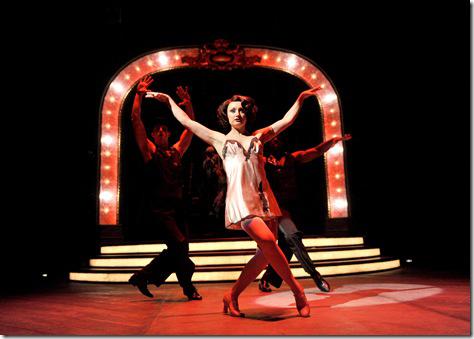
The problem with this approach to "Follies" is that it's not so much a traditional musical as a memory play, one in which two unhappily married middle-aged couples who are haunted by the ghosts of their younger selves revisit the past in the hope of coming to terms with the present. What makes it a musical is that Phyllis and Sally, the stars of "Follies," are retired Broadway gypsies. They've brought Buddy and Ben, their husbands, to a reunion of the chorus girls from the Weissmann Follies, who sing and dance one last time on the crumbling stage of the soon-to-be-demolished theater where they performed together decades ago. This ingenious premise opens the door to mounting "Follies" on a luxuriantly large scale, but it doesn't have to be done that way, and Chicago Shakespeare's darkly poignant new production, directed by Gary Griffin, shows how "Follies" can profit from being presented in a more intimate manner.
Mr. Griffin's version takes place in the company's 500-seat mainstage theater, an Elizabethan-style courtyard house whose deep thrust stage puts you mere feet away from the performers, and Kevin Depinet's reversed-perspective set creates the illusion that you're seeing the show from backstage, with the 12-piece orchestra seated in tiers on the far side of the proscenium. This allows Mr. Griffin and Alex Sanchez, the choreographer, to stage the show's musical numbers so that the Weissmann Girls seem to be performing for one another rather than for the audience. It's as if we're eavesdropping on their final reunion--and on the fast-fraying marriages around which the show is woven....
If, like me, you've dreamed of a "Follies" that eschews fancy frills and cuts straight to the heart of the matter, you don't have to wait any longer. It's here, and it's great....
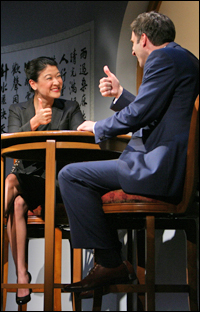
David Henry Hwang, the author of "M. Butterfly," is back on Broadway with "Chinglish," which originated at Chicago's Goodman Theatre. Mr. Hwang's new play is a fluffy bilingual romcom that makes clever use of projected supertitles. In the first act we meet Daniel (Gary Wilmes), an Ohio businessman who comes to China hoping to make a profitable deal, blunders into a thicket of cultural confusion and falls hard for Xi Yan (Jennifer Lim), a married government official who is looking for something more than a fling but less than a divorce. "Chinglish" is a one-joke show, the joke being that none of the Chinese characters, the translators very much included, can speak English well enough to make themselves fully understood to Daniel ("I appreciate the frank American style" becomes "He enjoys your rudeness"). The second act is deeper in tone, enough so that you wish the first act had taken more chances. But Mr. Hwang wrings the most out of his one joke...
This is Ms. Lim's Broadway debut, and she's a knockout, tough, smart and sexy....
* * *
Read the whole thing here.
Posted October 28, 12:00 AM
TT: Why Fantasia mattered
Gunther Schuller's newly published autobiography is the occasion for my "Sightings" column in today's Wall Street Journal. Here's an excerpt.
* * *
If you'd done a quarter of what Gunther Schuller has done in his lifetime, I'd want to read your memoirs, too. Mr. Schuller, who turns 86 next month, is a much-admired classical composer and conductor and a distinguished jazz scholar. Before that, he was the principal horn player of the Metropolitan Opera Orchestra. He is the only musician in the world who can claim to have played with Maria Callas, Miles Davis, Ethel Merman, Frank Sinatra, Igor Stravinsky and Arturo Toscanini. In "Gunther Schuller: A Life in Pursuit of Music and Beauty," just out from the University of Rochester Press, he talks about all this and much, much, much more. Mr. Schuller's autobiography, which takes him up to 1957, is a 654-page monster that appears not to have been edited by anyone, least of all the author. It's garrulous, unselective and riddled with errors (somebody really needs to tell Mr. Schuller how to spell Ralph Vaughan Williams' name). I don't care. I couldn't put it down, and I can't wait until he finishes the second volume.
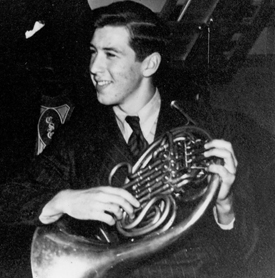
Paradoxical as it may sound, it is Mr. Schuller's lack of discrimination that helps to make "Gunther Schuller" so compulsively readable. Yes, he's led an unusually varied life, and no, we don't need to hear about all of it, or even most of it. But it is precisely because he thinks otherwise that Mr. Schuller has inadvertently given us what amounts to a cultural history of America in the '40s and '50s, viewed through the prism of his personal experience. If you're not especially interested in what he's talking about at any given moment, all you have to do is turn the page.
I was especially interested in what Mr. Schuller had to say about "Fantasia," Walt Disney's 1940 animated feature film about classical music, which he saw for the first time when he was 14: "That film masterpiece truly changed my life, particularly its Stravinsky 'Rite of Spring' sequence, which, as far as I can remember, was the first time I heard that remarkable music. It completely bowled me over. I knew then and there that I had to be a composer."
Needless to say, snobs of all kinds have long taken a dim view of "Fantasia," with its dancing mushrooms and cavorting hippos. Not so Gunther Schuller: "I hope [Stravinsky] appreciated that hundreds--perhaps thousands--of musicians were turned onto 'The Rite of Spring' (and by implication lots of other modern music) through 'Fantasia,' musicians who might otherwise never have heard the work, or at least not until many years later."
I'm with Mr. Schuller. Hollywood used to do a lot to introduce youthful moviegoers to the joys of classical music....
* * *
Read the whole thing here.
The Rite of Spring sequence from Fantasia. Stravinsky's score is performed by Leopold Stokowski and the Philadelphia Orchestra:
Posted October 28, 12:00 AM
TT: Almanac
"Mere abuse is no criticism."
P.G. Wodehouse, Quick Service
Posted October 28, 12:00 AM
October 27, 2011
TT: So you want to see a show?
Here's my list of recommended Broadway, off-Broadway, and out-of-town shows, updated weekly. In all cases, I gave these shows favorable reviews (if sometimes qualifiedly so) in The Wall Street Journal when they opened. For more information, click on the title.
BROADWAY:
• Anything Goes (musical, G/PG-13, mildly adult subject matter that will be unintelligible to children, closes Apr. 29, most performances sold out last week, reviewed here)
• Follies (musical, PG-13, adult subject matter, closes Jan. 22, reviewed here)
• How to Succeed in Business Without Really Trying (musical, G/PG-13, perfectly fine for children whose parents aren't actively prudish, most performances sold out last week, reviewed here)
• Man and Boy (drama, PG-13, closes Nov. 27, most performances sold out last week, reviewed here)
OFF BROADWAY:
• The Agony and the Ecstasy of Steve Jobs (monologue, PG-13, extended through Dec. 4, reviewed here)
• Avenue Q (musical, R, adult subject matter and one show-stopping scene of puppet-on-puppet sex, reviewed here)
• The Fantasticks (musical, G, suitable for children capable of enjoying a love story, reviewed here)
• Million Dollar Quartet (jukebox musical, G, off-Broadway remounting of Broadway production, original run reviewed here)
IN GLENCOE, ILLINOIS:
• The Real Thing (serious comedy, PG-13, extended through Dec. 4, reviewed here)
CLOSING NEXT WEEK OFF BROADWAY:
• We Live Here (drama, PG-13, closes Nov. 6, reviewed here)
CLOSING NEXT WEEK IN ASHLAND, OREGON:
• August: Osage County (drama, PG-13/R, closes Nov. 5, reviewed here)
• Julius Caesar (Shakespeare, PG-13, closes Nov. 6, reviewed here)
• Measure for Measure (Shakespeare, PG-13, closes Nov. 6, reviewed here)
Posted October 27, 12:00 AM
TT: Almanac
"Dialogue should be logical, but it doesn't have to be banal."
Lanford Wilson (quoted in the Cincinnati Inquirer, May 6, 2001)
Posted October 27, 12:00 AM
October 26, 2011
TT: Snapshot
The original hour-long TV version of Reginald Rose's Twelve Angry Men, starring Robert Cummings, directed by Franklin Schaffner, and telecast live on Studio One in 1954:
(This is the latest in a weekly series of arts-related videos that appear in this space each Wednesday.)
Posted October 26, 12:00 AM
TT: Almanac
"You don't get goodhearted by accident."
Paddy Chayefsky, Marty
Posted October 26, 12:00 AM
October 25, 2011
TT: Almanac
"It is when power is wedded to chronic fear that it becomes formidable."
Eric Hoffer, The Passionate State of Mind
Posted October 25, 12:00 AM
October 24, 2011
TT: Stowaway
I returned from my travels harboring a virus that's laid me low. I'll be back when it leaves.
Posted October 24, 12:00 AM
TT: Just because
Dean Martin and Judy Holliday sing "Just in Time," from the film version of Bells Are Ringing:
Posted October 24, 12:00 AM
TT: Almanac
"Writing is the thing that props me up."
Horton Foote (quoted in the New York Times Magazine, Aug. 19, 2007)
Posted October 24, 12:00 AM
October 21, 2011
TT: Didja hear the one about the hunchback?
In today's Wall Street Journal I report on two shows, the Old Vic's Richard III in San Francisco and the Broadway premiere of Relatively Speaking. Both are disappointments. Here's an excerpt.
* * *
The smartest thing that Kevin Spacey ever did was scale back his film career in order to become the artistic director of London's Old Vic. Though he's a gifted actor, his range is narrow, and his brief run as a Hollywood leading man was something of a fluke. Not only is the stage his natural habitat, but "Richard III" appears at first glance to be well suited to his knack for playing unhappy men who despise themselves. Sam Mendes, who directed Mr. Spacey in "American Beauty," is at the helm of this production, the latest installment in the Old Vic's Bridge Project, which will come to New York's BAM Harvey Theatre in January. Would that it were worth waiting for, but it doesn't come off, and it looks like both men are equally to blame.
Mr. Spacey turns Shakespeare's villainous hunchback-king into a monochromatic monster in a leg brace, by turns sarcastic, petulant and supercilious. He shoots for and gets plenty of laughs, an approach that can work--it worked for John Douglas Thompson in Shakespeare & Company's 2010 production--but Mr. Spacey, unlike Mr. Thompson, is not a classical actor, and his voice lacks the color and amplitude necessary to bring Shakespeare's verse to life. Too often he resorts to ranting, and the fact that he is surrounded by a first-class supporting cast draws further attention to his limitations....
Mr. Mendes has his own limitations. I haven't much cared for the unpoetic, self-consciously clever Shakespeare productions that he's previously mounted as part of the Bridge Project, and this modern-dress "Richard III" is in many ways all of a piece with the "Tempest" and "Winter's Tale" that preceded it. No sooner do you walk into the theater than you see the word NOW projected in huge letters on the back wall of the set. That's just what Mr. Mendes gives us, a fast shuffle through the stock Shakespeare-our-contemporary clichés...
It isn't hard to see why the producers of "Relatively Speaking" thought it would be a smart idea to bring to Broadway a triple bill of one-act comedies by Woody Allen, Ethan Coen and Elaine May. Big names fill seats, and if your target market is retirement-age New Yorkers, Mr. Allen and Ms. May are more than big enough to do the job all by themselves, with Mr. Coen as a special added attraction for somewhat younger nihilists. The theory is impeccable, the results disastrous....
* * *
Read the whole thing here.
Posted October 21, 12:00 AM
TT: Almanac
"Certain things, once said, can change at a stroke the interior workings of love, leaving the outside architecture untouched."
William Brodrick, The Sixth Lamentation
Posted October 21, 12:00 AM
October 20, 2011
TT: So you want to see a show?
Here's my list of recommended Broadway, off-Broadway, and out-of-town shows, updated weekly. In all cases, I gave these shows favorable reviews (if sometimes qualifiedly so) in The Wall Street Journal when they opened. For more information, click on the title.
BROADWAY:
• Anything Goes (musical, G/PG-13, mildly adult subject matter that will be unintelligible to children, closes Apr. 29, most performances sold out last week, reviewed here)
• Follies (musical, PG-13, adult subject matter, closes Jan. 22, reviewed here)
• How to Succeed in Business Without Really Trying (musical, G/PG-13, perfectly fine for children whose parents aren't actively prudish, most performances sold out last week, reviewed here)
• Man and Boy (drama, PG-13, closes Nov. 27, most performances sold out last week, reviewed here)
OFF BROADWAY:
• The Agony and the Ecstasy of Steve Jobs (monologue, PG-13, closes Nov. 13, reviewed here)
• Avenue Q (musical, R, adult subject matter and one show-stopping scene of puppet-on-puppet sex, reviewed here)
• The Fantasticks (musical, G, suitable for children capable of enjoying a love story, reviewed here)
• Million Dollar Quartet (jukebox musical, G, off-Broadway remounting of Broadway production, original run reviewed here)
IN GLENCOE, ILLINOIS:
• The Real Thing (serious comedy, PG-13, closes Nov. 20, reviewed here)
CLOSING SOON OFF BROADWAY:
• We Live Here (drama, PG-13, closes Nov. 6, reviewed here)
CLOSING SOON IN ASHLAND, OREGON:
• August: Osage County (drama, PG-13/R, closes Nov. 5, reviewed here)
• Julius Caesar (Shakespeare, PG-13, closes Nov. 6, reviewed here)
• Measure for Measure (Shakespeare, PG-13, closes Nov. 6, reviewed here)
CLOSING SATURDAY OFF BROADWAY:
• Lemon Sky (drama, PG-13/R, adult subject matter, reviewed here)
Posted October 20, 12:00 AM
TT: Almanac
"She had seen death at work, its industrious regard for detail, and, like the men who dug up the roads, its preference for doing the job slowly."
William Brodrick, The Sixth Lamentation
Posted October 20, 12:00 AM
October 19, 2011
TT: Norman Corwin, R.I.P.
Norman Corwin, who wrote verse dramas for network radio back in the days when such things were possible, has died at the age of 101. I had the great good fortune to interview him in 1996, and wrote about the experience in a column for Civilization that I subsequently posted on this blog:
This is how important Norman Corwin was: nine months before World War II ended, CBS commissioned him to write an original radio play to be broadcast on V-E Day. It was called On a Note of Triumph, and it made so powerful an impact that more than a few of its first listeners still remember parts of it word for word. "I'm going to interview Norman Corwin this morning," I told an older friend of mine, who promptly rattled off its opening lines: Take a bow, G.I.,/Take a bow, little guy./The superman of tomorrow lies at the feet of you common men of this afternoon.There was room on commercial radio for things like that, just as there was room for Arturo Toscanini and the NBC Symphony, or Orson Welles directing Shakespeare. But it couldn't last, and it didn't. One day in 1948, Corwin ran into Bill Paley, the president of CBS, on a train from Pasadena to New York. "We've simply got to face up to the fact that we're a commercial business," Paley told his star playwright. "If we do not reach as many people as possible, then we're not making the best use of our talent, our time, and our equipment." At that moment, Corwin knew his own days at CBS were numbered. To make matters worse, 1948 was also the year network TV finally arrived, and it wasn't long before radio itself was on the ropes, laid low by Milton Berle. To be sure, Corwin didn't want for work after he left CBS--among other things, he wrote the script for Lust for Life, Vincente Minnelli's 1956 film version of the life of Vincent Van Gogh--but the thing he loved best was a thing of the past....
Read the whole thing here.
* * *
The Los Angeles Times obituary is here.
To listen to the 1945 CBS broadcast of On a Note of Triumph, starring Martin Gabel and scored by Bernard Herrmann, go here.
To listen to Corwin's The Plot to Overthrow Christmas, as rebroadcast by CBS in 1942, go here.
My Wall Street Journal review of the Irish Repertory Theatre's 2009 off-Broadway revival of The Rivalry, Corwin's 1959 play about the Lincoln-Douglas debates, is here.
My 2006 "Sightings" column about Lust for Life is here.
Norman Corwin talks about writing On a Note of Triumph:
Posted October 19, 12:00 AM
TT: Snapshot
Luciana Souza records her setting of Pablo Neruda's "Sonnet 49" in 2003:
(This is the latest in a weekly series of arts-related videos that appear in this space each Wednesday.)
Posted October 19, 12:00 AM
TT: Almanac
"The incredible has a habit of disrupting the parts of our lives to which we're most attached."
William Brodrick, The Sixth Lamentation
Posted October 19, 12:00 AM
October 18, 2011
TT: Time present and time past
I spend so much time seeing plays and musicals these days that I don't get to spend nearly enough time doing anything else. When I went to the Blue Note on Sunday night to hear Pat Metheny and Larry Grenadier, I realized with a start that I couldn't remember the last time I'd been to a nightclub. Such is the paradoxical fate of the erstwhile generalist who mutates into a specialist in midlife: it's immeasurably rewarding to immerse yourself in a single discipline, but it cuts you off from all sorts of other good things.
Fortunately, I bobbed to the surface in exactly the right place at exactly the right time, for Metheny and Grenadier gave the kind of performance that you're lucky to see a half-dozen times in your life, totally focused and hypnotically involving. It was ecstasy-making to watch them move with nonchalant grace from "Bright Size Life," the song in which Metheny helped codify the language of fusion thirty-seven years ago, to an oblique, near-abstract, hard-swinging blues, sounding equally at ease in both tunes.
I had the good luck to be seated ten feet from the bandstand, and to be sitting with Julia Dollison and Kerry Marsh, two old friends who are themselves jazz musicians of the highest accomplishment. (I wrote the liner notes for Julia's first album, which was co-produced by Kerry, her husband.) All three of us know Pat a bit, and we got a chance to chat with him after the show, which was almost as much fun as hearing him play. He is the nicest and most modest fellow imaginable--you'd never guess that he's also one of the most important and influential jazz guitarists of the postwar era--and it was pure pleasure to catch up and swap stories.
Listening to Sunday's performance had a stirring effect on me. As I said to Julia and Kerry afterward, "That wasn't a set--it was a way of life." For me, of course, it was a reminder of the way of life that I practiced many years ago, and to which my friends have consecrated their own lives. I like to call myself a recovering musician, a line that rarely fails to get a laugh, perhaps because there's a certain amount of truth in it. I wrote about that in this space five years ago:
Somebody asked me once if I were a frustrated musician. "No," I said, "I'm a fulfilled writer." But that doesn't mean I never think about what might have been, much less what used to be. The way I feel about having once been a musician is not unlike the way some reformed alcoholics feel about booze. They know they can't live with it anymore, but they also know how much they liked it, and they remember, as clearly as if it were this morning, how good that last drink tasted. I remember, too.
Needless to say, my playing days are over. I'm a full-time writer now, for better or worse, and I feel even more fulfilled now that my professional life encompasses both criticism and writing for the stage. Nor do I regret having chosen to fling myself into the world of theater, whose endless bounty feeds my soul far more than adequately. But as I packed my bag and prepared to fly to San Francisco, where I'll be seeing Kevin Spacey in Richard III tomorrow night, I found myself feeling no less grateful for having had the chance to dip my toe into the once-familiar stream of jazz again, if only for a night. It was good to be home.
* * *
Bill Evans plays "Time Remembered":
Posted October 18, 12:00 AM
TT: Fascist thugs and useful idiots
In light of the recent death of Steve Jobs, The Wall Street Journal has given me an extra drama column today in which to review Mike Daisey's The Agony and the Ecstasy of Steve Jobs. Here's an excerpt.
* * *
Mike Daisey is the inventor of his own pigeonhole. He calls himself a "storyteller" and specializes in semi-improvised autobiographical monologues of the kind that made Spalding Gray semi-famous. But his "stories" tend to be issue-driven and to have a political edge, which makes them seem more like theatrical journalism than storytelling. In "The Agony and the Ecstasy of Steve Jobs," Mr. Daisey's journalistic side comes to the fore, in part because he had the luck (if that's the word) to bring his new show to the Public Theater immediately after the death of its subject. Even if Mr. Jobs were still alive, this show, in which Mr. Daisey weaves together his experience as a technogeek with the story of a visit that he paid to the Chinese factories in which Apple's products are assembled, would still have a journalistic feel.
All that said, Mr. Daisey's new monologue is first and foremost a work of theatrical art, just as Mr. Daisey himself, though he is not an actor in the ordinary sense of the word, is an awesomely gifted stage performer. Indeed, it is so strong a piece of theater that you can't help but wonder about its journalistic soundness. About that I'm not qualified to render judgment, but I can vouch for its theatrical soundness: "The Agony and the Ecstasy of Steve Jobs" ranks alongside "Follies" as the most exciting show in town.
Mr. Daisey used to worship at the Apple altar, and Mr. Jobs, he claims, was "the only hero I ever had." Then he went to Shenzhen, the city where Apple products are put together in huge sweatshop-like factories that reportedly make use of child labor. Mr. Daisey claims to have talked his way into some of these factories, and to have spoken to some of the leaders of the illegal "secret unions" that are struggling to improve conditions in Shenzhen. What he saw shocked him to the core...
Mr. Daisey is the least glamorous figure imaginable, a sweaty, bulbous fellow with a foot-wide mouth whose demeanor suggests the kind of smart-ass second banana you might expect to encounter in a high-school romcom. But no sooner do the proceedings get underway than he starts to work his coarsely irresistible magic. Imagine an essay by Tom Wolfe being read out loud by John Belushi and you'll get some idea of how he comes across onstage. His klaxon-horn delivery is that of a stand-up comedian, but it acquires an energizing tightness of focus from the fact that he remains seated throughout the show, using his hands like a mime to add color to his words....
The trouble with "The Agony and the Ecstasy of Steve Jobs," as with all theatrical journalism, is that Mr. Daisey is in essence asking us to take his word for it. He hasn't brought back pictures or named names, and the artful anger with which he tells his tale inevitably makes it still more suspect. You don't have to be a puritan to prefer that facts be served straight up. Still, Mr. Daisey deserves much credit for telling his audience things it almost certainly doesn't want to hear...
* * *
Read the whole thing here.
Posted October 18, 12:00 AM
TT: Almanac
"She smiled, as only the very old can, intimating an acceptance of things that once could not be accepted."
William Brodrick, The Sixth Lamentation
Posted October 18, 12:00 AM
October 17, 2011
TT: Time off (and on)
I didn't take any time off this summer, so last week I compensated myself for my excessive industry by spending three nights with Mrs. T at Ecce Bed and Breakfast, the peaceful retreat in the southern Catskills where we spent part of our honeymoon four years ago and about which I've written more than once in this space. Since the point of taking time off is to do nothing, I don't have any leisurely activities to describe. We slept late, we took a long afternoon drive and looked at the autumn foliage, we sat on the terrace and looked at the Upper Delaware River, we ate a very nice dinner in the quaint little town of Narrowsburg, and we watched a couple of movies.
Oh, yes--I wrote the first draft of a new play. From scratch.
Temporary inactivity, even for so short a span of time, usually recharges my creative batteries, but I wasn't counting on quite so spectacular a demonstration of its rejuvenating effects. I suppose it would have been better, all things being equal, if I hadn't written a word at Ecce, but once the coin dropped, I figured I'd better follow it wherever it rolled, and when it kept on rolling, I kept on following. "I guess it's good that we didn't have a whole week off," Mrs. T said with amusement when I announced that the play was finished.
Not really. The truth is that I only managed to skim the cream off the top of my weariness last week. I really do need a week or two off, and I won't be getting it until January, when we'll be heading south to Florida for a sun-and-theater "holiday" that will include an uninterrupted span of theoretical inactivity on Sanibel Island, where I wrote three chapters of my Duke Ellington biography this past January.
No doubt I'll get yet another chunk of writing done in Florida. Writing, after all, is what I do, not merely for a living but also for the sheer love of putting words together. I don't know what I'd do if I couldn't write. H.L. Mencken, the subject of my first biography, learned the answer to that question when he suffered a stroke in 1948 that deprived him for the last eight years of his life of the power to read and write. It was a hideously ironic fate for a man who had spent the greater part of his waking life pecking away happily at his typewriter, and it chilled me to write about it in The Skeptic.
Yet even Mencken finally managed to come to terms with his fate, as a friend of his later recalled:
What remained to him of his old joys was music; many mornings he told me how he had listened for a couple of hours the night before and how superb it had been. Yet in truth he had left to him something the average man never acquires--the capacity to enjoy the commonplace activities of life. Though these, of course, could not make up for his inability to work, they helped. One lovely autumn morning, with the sky clear, the breeze cool, and the sun warm, Mr. Mencken sat over in the sun so that it fell on his back. "Well, this is very nice. This is fine. This ought to make us feel good....You know, I always enjoyed life in all its forms. I've always taken a great pleasure in getting up in the morning, having breakfast, and settling down to work. I had a good time while it lasted."
I mean to have an equally good time while it lasts, but should the time ever run out, I hope I can enjoy sitting in the sun as much as Mencken did. That said, I also hope that I never have to relinquish the miraculous, inexplicable joy of settling down to work each day--or the more explicable but no less miraculous joy of taking an occasional day off, a pleasure whose savor is heightened by the preceding day's work as the flavor of food is heightened by a judicious pinch of salt.
I suppose I'm a workaholic, but it reassures me to know that I can take it or leave it alone. Yesterday I woke up at eight-thirty, looked at the clock, gave brief thought to writing a piece for The Wall Street Journal, then said to myself, The hell with it. Instead I spent the whole day in bed reading Ian Ker's new biography of G.K. Chesterton, then arose in the evening and went downtown to have dinner with friends and hear Pat Metheny and Larry Grenadier at the Blue Note.
Today belongs to the Journal, but Sunday belonged to me. I had a good time while it lasted, and it lasted all day long.
Posted October 17, 12:00 AM
TT: Just because
Jo Stafford sings "The Gentleman Is a Dope":
Posted October 17, 12:00 AM
TT: Almanac
"Anselm's first surprise on entering religious life was to discover the monastery contained ordinary human beings alarmingly similar to one or two villains he had represented at the criminal Bar."
William Brodrick, The Sixth Lamentation
Posted October 17, 12:00 AM
October 14, 2011
TT: Here comes Dr. King
In today's Wall Street Journal drama column I review two New York premieres, The Mountaintop and We Live Here. Here's an excerpt.
* * *
Most Americans regard Martin Luther King, Jr. as something of a saint, and don't care to suppose that he might actually have been a great but flawed man. When it became known that Jackie Kennedy, of all people, called him "phony" and "tricky" in an interview recorded in 1964 but not released until last month, the result was a mass fit of cognitive dissonance, followed by...silence. Nobody likes to talk about his extramarital philandering, which was amply documented in FBI reports shared with Mrs. Kennedy by her gossipy husband, himself a serial adulterer. Yet Americans long ago faced the facts about John Kennedy and (mostly) continue to admire him. What makes Dr. King different? Why are we so reluctant to see him as he was?
For the first few minutes of "The Mountaintop," the new play about the last hours of Dr. King's life that opened last night on Broadway, it appears as though Katori Hall is prepared to portray the civil-rights leader (played by Samuel L. Jackson) not as a wax dummy but as a creature of flesh, blood and smelly feet who smokes and drinks on the sly and views himself with the wry detachment of a man who knows better than to take his own reputation too seriously. The arrival on the scene of a sassy maid (Angela Bassett) bodes no less well, for it is clear that "Preacher King," as she calls him, would very much like to coax her into bed. At that point "The Mountaintop" turns into a Tracy-Hepburn comedy rewritten for the chitlin circuit, but the laughs are honest ones and you don't feel cheated--yet. Alas, Ms. Hall pulls an even bigger switch halfway through the play, about which critical etiquette precludes me from saying more than that she appears to have seen "Here Comes Mr. Jordan" more than once....
Anyone who doubts that life is unfair need only buy a ticket to Zoe Kazan's "We Live Here" in order to have his nose rubbed in the inescapable truth of human inequality. Ms. Kazan, lately of "Angels in America" and "A Behanding in Spokane" and the most gifted stage actress of her generation, also writes plays on the side. This one, her first to be produced in New York, is an impressively self-assured domestic drama about Dinah and Althea (Betty Gilpin and Jessica Collins), two sisters who have a man (Oscar Isaac) in common. It complicates matters further that the 19-year-old Dinah is much younger than the man in question, or that Althea is a flaming neurotic who is about to marry a different man (Jeremy Shamos), a very nice guy who clearly didn't know what he was getting into when he popped the question.
Ms. Kazan, who is 28, has given us the kind of solidly constructed play that today's young authors tend not to favor, and her wide-ranging stage experience has taught her how to make the pieces fit together tightly. It's salted with comic repartee that is quick but not glib, and she also knows how to write scenes that imply more than they say....
* * *
Read the whole thing here.
Posted October 14, 12:00 AM
TT: Don't call it art
In today's Wall Street Journal I empty both barrels into the PBS Arts Fall Festival, which kicks off tonight. Here's an excerpt.
* * *
Paula Kerger, the president and CEO of PBS, gave a speech a year and a half ago in which she more or less admitted what everybody already knew, which is that public-TV arts programming--what there is of it--is barely worth watching. "To be candid, over the last year, we haven't done as good a job as we could," she said. "I think we can do more....We plan to significantly expand the presence of the arts in our prime-time lineup."
Now comes the payoff. This week the network launches its new arts initiative with a "festival" of nine arts-related programs that are scheduled to run on Friday nights through mid-December on those PBS affiliates that care to carry them. And what does Ms. Kerger have in store for her art-starved viewers?
In chronological order, here's the lineup:
• The Guthrie Theater's new production of "H.M.S. Pinafore," in which the classic Gilbert and Sullivan operetta, according to the press release, is "infused with fresh musical arrangements ranging from big-band swing to classic pop."
• A Cameron Crowe-directed "American Masters" documentary about Pearl Jam, the Seattle rock band.
• A "Great Performances" telecast in which George Balanchine's "Square Dance" and "Western Symphony" and Twyla Tharp's "The Golden Section" are danced by Edward Villella's Miami City Ballet.
• "Give Me the Banjo," a Steve Martin-narrated documentary about the role of the banjo in American music.
• Another "American Masters" episode, this one about the making of "Fondly Do We Hope...Fervently Do We Pray," a "dance-theater piece" about Abraham Lincoln that was created in 2009 by Bill T. Jones, the black modern-dance choreographer.
• "Women Who Rock," a "performance documentary" made in collaboration with Cleveland's Rock and Roll Hall of Fame and Museum.
• Los Angeles Opera's 2010 production of Daniel Catán's Spanish-language stage version of the popular Italian film "Il Postino," starring Plácido Domingo.
• An outdoor concert given last month in Central Park by Andrea Bocelli, the Italian crossover tenor, and the New York Philharmonic, featuring a guest appearance by pop diva Celine Dion.
• The San Francisco Ballet's dance version of "The Little Mermaid."
I have just one question: Who's kidding whom?
These shows don't add up to an arts festival, or anything remotely like it. What PBS is giving us instead is a stiff dose of the usual safety-first pledge-week fare, only spread out over two months. Except for Miami City Ballet's Balanchine-Tharp bill, all nine programs are carefully designed to please those members of the gray-ponytail set who prefer politically correct popular culture to high art. Straight plays? Who needs 'em? Jazz? Bor-ing. As for the visual arts, they don't even exist in the unserious, unchallenging world of the PBS Arts Fall Festival. Instead we get recycled Puccini, goosed-up Gilbert and Sullivan and yesterday's grunge rock....
* * *
Read the whole thing here.
Posted October 14, 12:00 AM
TT: Almanac
"The one great principle of the English law is, to make business for itself."
Charles Dickens, Bleak House
Posted October 14, 12:00 AM
October 13, 2011
TT: So you want to see a show?
Here's my list of recommended Broadway, off-Broadway, and out-of-town shows, updated weekly. In all cases, I gave these shows favorable reviews (if sometimes qualifiedly so) in The Wall Street Journal when they opened. For more information, click on the title.
BROADWAY:
• Anything Goes (musical, G/PG-13, mildly adult subject matter that will be unintelligible to children, closes Apr. 29, most performances sold out last week, reviewed here)
• Follies (musical, PG-13, adult subject matter, closes Jan. 22, reviewed here)
• How to Succeed in Business Without Really Trying (musical, G/PG-13, perfectly fine for children whose parents aren't actively prudish, most performances sold out last week, reviewed here)
• Man and Boy (drama, PG-13, closes Nov. 27, most performances sold out last week, reviewed here)
OFF BROADWAY:
• Avenue Q (musical, R, adult subject matter and one show-stopping scene of puppet-on-puppet sex, reviewed here)
• The Fantasticks (musical, G, suitable for children capable of enjoying a love story, reviewed here)
• Million Dollar Quartet (jukebox musical, G, off-Broadway remounting of Broadway production, original run reviewed here)
IN GLENCOE, ILLINOIS:
• The Real Thing (serious comedy, PG-13, closes Nov. 20, reviewed here)
CLOSING SOON IN ASHLAND, OREGON:
• August: Osage County (drama, PG-13/R, closes Nov. 5, reviewed here)
• Julius Caesar (Shakespeare, PG-13, closes Nov. 6, reviewed here)
• Measure for Measure (Shakespeare, PG-13, closes Nov. 6, reviewed here)
CLOSING NEXT WEEK OFF BROADWAY:
• Lemon Sky (drama, PG-13/R, adult subject matter, closes Oct. 22, reviewed here)
CLOSING SUNDAY IN NEW HAVEN, CONNECTICUT:
• Molly Sweeney (drama, G, too serious for children, New Haven remounting of off-Broadway production, original run reviewed here)
CLOSING SUNDAY IN WASHINGTON, D.C.:
• The Habit of Art (serious comedy, R, adult subject matter, reviewed here)
Posted October 13, 12:00 AM
TT: Almanac
"Like all things human, the sight was far more bearable than he had imagined."
Scott Turow, The Burden of Proof
Posted October 13, 12:00 AM
October 12, 2011
TT: Snapshot
Tony Bennett and Bill Evans perform "When in Rome" on The Tonight Show in 1975:
(This is the latest in a weekly series of arts-related videos that appear in this space each Wednesday.)
Posted October 12, 12:00 AM
TT: Almanac
"There was no place for brutal honesty with a child. Everyone felt that. It was taken in the Western countries as a rule of nature. So we raise our children with love and comfort for a future they can only find disappointing."
Scott Turow, The Burden of Proof
Posted October 12, 12:00 AM
October 11, 2011
TT: Daddy dearest
The New York theater season is now rolling, and The Wall Street Journal has given me an extra column this week so that I can hold forth at greater length on the Broadway revival of Terence Rattigan's Man and Boy. Here's an excerpt.
* * *
In England Terence Rattigan is a growth stock, a purveyor of immaculately crafted plays who was immensely popular in the '40s and '50s, went out of fashion in the '60s and is now popular once more. Not so in America, where the once-beloved author of "The Browning Version" and "The Winslow Boy" remains largely unknown to under-50 theatergoers. It's been at least a decade since a Rattigan play received a high- or medium-profile professional production anywhere in this country, and the Roundabout Theatre Company's production of "Man and Boy," written in 1963, marks the first time that any of his plays has been seen on Broadway since 1998. This being the centenary of his birth, it makes sense that the Roundabout has revived one of his plays as a vehicle for Frank Langella, and it's no surprise whatsoever that Mr. Langella, one of our greatest stage actors, makes the most of the opportunity. The surprise is that "Man and Boy," which flopped hard in 1963 and sank without trace, turns out to be a tautly effective melodrama whose subject--the villainy of a financial "wizard" who is unmasked as a big-time swindler--is as timely as tomorrow's tweets....
Mr. Langella, who was so fabulous in "Frost/Nixon," is a crook of a different color in "Man and Boy," courtly and exquisitely well mannered, a man whose whole life has been an act and who is determined to keep it up all the way to the final curtain. Yes, his performance is stagey, but deliberately so, and by playing the first half of "Man and Boy" in the silken tones of high comedy, he sets the audience up for the crash that everyone knows is just around the corner.
The trouble with actors like Mr. Langella is that they have a way of washing their colleagues off the stage, and that's what happens here. Adam Driver and Virginia Kull, who plays his flapperish girlfriend, seem all but weightless by comparison. It doesn't help that Maria Aitken, the director, seems to have nudged her cast in the direction of broad-brush caricature. Mr. Langella is supposed to be stagey--that's the point--but his regal carriage would make better theatrical sense were it framed by more conventionally realistic supporting performances....
Rattigan wrote stronger plays than "Man and Boy," "The Deep Blue Sea" and "Separate Tables" in particular, and he would have been even better served had the Roundabout revived one of them instead. Nor does this production, save for Mr. Langella's ennobling presence and Ms. Aitken's shrewd cuts, make the best possible case for "Man and Boy." But it's still what the Brits call a rattling good show...
* * *
Read the whole thing here.
Posted October 11, 12:00 AM
TT: Almanac
"As life had repeatedly shown him, there was usually something to other people's pleasures."
Scott Turow, The Burden of Proof
Posted October 11, 12:00 AM
October 10, 2011
TT: Escape
Mrs. T and I had a horrendously busy time of it this summer, and we didn't get to take a vacation because our plate was piled high with business- and family-related travel. As a result, we're both bushed, so we've carved three nights out of our schedules and will depart tomorrow afternoon for Ecce Bed and Breakfast, the superlatively tranquil Southern Catskills retreat where we spent our honeymoon four years ago and to which we have since returned as often as possible.
In order to bring off this feat of leisure, I saw four shows and wrote five pieces in the past four days. That's quite enough work to hold me for the moment, so please forgive me if I don't post anything more than the usual almanac entries, videos, and theater-related stuff between now and next Monday.
Don't write. Don't call. It could get ugly.
Posted October 10, 12:00 AM
TT: Just because
Tony Bennett sings "Who Can I Turn To?" in 1978:
Posted October 10, 12:00 AM
TT: Almanac
"Some spoke of the nobility of the law. Stern did not believe in that. Too much of the grubby boneshop, the odor of the abattoir, emanated from every courtroom he had entered. It was often a nasty business. But the law, at least, sought to govern misfortune, the slights and injuries of our social existence that were otherwise wholly random. The law's object was to let the seas engulf only those who had been seleted for drowning on an orderly basis. In human affairs, reason would never fully triumph; but there was no better cause to champion."
Scott Turow, The Burden of Proof
Posted October 10, 12:00 AM
October 7, 2011
TT: Sauce for the gander
In today's Wall Street Journal drama column I write about a Chicago show, Writers' Theatre's revival of Tom Stoppard's The Real Thing, and an off-Broadway show, the Atlantic Theatre Company's premiere of Adam Rapp's Dreams of Flying Dreams of Falling. The first is better--by far. Here's an excerpt.
* * *
Tom Stoppard is known for writing plays of ideas that are sufficiently witty to sugar the pill of their eggheady subject matter. "The Real Thing," though it contains far more than its fair share of glittering wit and bristling complications, is a play of a different sort, a study of a modern marriage built atop the wreckage of unfaithfulness that threatens to be destroyed by the same destructive force that brought it into being. Small wonder that three decades after it opened in London, "The Real Thing" remains Mr. Stoppard's best-loved play. Not surprisingly, it gets done fairly often, but I doubt that "The Real Thing" will soon receive a better production than the one now playing at Chicago's Writers' Theatre. Staged with heartfelt clarity by Michael Halberstam, the company's artistic director, this is the kind of show that reminds you of why you go to the theater in the first place, and makes you wonder why anybody settles for anything less....
Mr. Halberstam, whom New York audiences know as the director of "A Minister's Wife," has given us an unusually intimate staging of "The Real Thing" that profits no end from being performed in Writers' Theatre's 108-seat house. Punch lines that would need to be nailed to the back wall of a Broadway-sized theater can instead be tossed off with deceptive casualness, allowing the audience to concentrate not on Mr. Stoppard's jokes but on the increasingly hurtful truths that his characters tell one another....
The ever-trendy Adam Rapp is at it again with "Dreams of Flying Dreams of Falling," a play that is as trite as it is smug. The setting is "an opulent Connecticut home" and the subject is the soulnessness of the upper middle classes, whose members, Mr. Rapp assures us, are empty shells of brittle good manners whose only hope of redemption is to have wild sex and/or to be led by their black servants down the path to politico-spiritual enlightenment....
* * *
Read the whole thing here.
Posted October 07, 12:00 AM
TT: Almanac
"When you have loved as she has loved, you grow old beautifully."
W. Somerset Maugham, The Circle
Posted October 07, 12:00 AM
October 6, 2011
TT: So you want to see a show?
Here's my list of recommended Broadway, off-Broadway, and out-of-town shows, updated weekly. In all cases, I gave these shows favorable reviews (if sometimes qualifiedly so) in The Wall Street Journal when they opened. For more information, click on the title.
BROADWAY:
• Anything Goes (musical, G/PG-13, mildly adult subject matter that will be unintelligible to children, closes Apr. 29, most performances sold out last week, reviewed here)
• Follies (musical, PG-13, adult subject matter, closes Jan. 22, most performances sold out last week, reviewed here)
• How to Succeed in Business Without Really Trying (musical, G/PG-13, perfectly fine for children whose parents aren't actively prudish, reviewed here)
OFF BROADWAY:
• Avenue Q (musical, R, adult subject matter and one show-stopping scene of puppet-on-puppet sex, reviewed here)
• The Fantasticks (musical, G, suitable for children capable of enjoying a love story, reviewed here)
• Million Dollar Quartet (jukebox musical, G, off-Broadway remounting of Broadway production, original run reviewed here)
IN ASHLAND, OREGON:
• August: Osage County (drama, PG-13/R, closes Nov. 5, reviewed here)
• Julius Caesar (Shakespeare, PG-13, closes Nov. 6, reviewed here)
• Measure for Measure (Shakespeare, PG-13, closes Nov. 6, reviewed here)
CLOSING SOON OFF BROADWAY:
• Lemon Sky (drama, PG-13/R, adult subject matter, closes Oct. 22, reviewed here)
CLOSING NEXT WEEK IN NEW HAVEN, CONNECTICUT:
• Molly Sweeney (drama, G, too serious for children, New Haven remounting of off-Broadway production, closes Oct. 16, original run reviewed here)
CLOSING NEXT WEEK IN WASHINGTON, D.C.:
• The Habit of Art (serious comedy, R, adult subject matter, closes Oct. 16, reviewed here)
CLOSING TODAY IN HARTFORD, CONNECTICUT:
• The Crucible (drama, PG-13, partial nudity, reviewed here)
CLOSING SATURDAY IN ASHLAND, OREGON:
• The Pirates of Penzance (operetta, G, suitable for children, reviewed here)
Posted October 06, 12:00 AM
TT: Almanac
"It is unsafe to take your reader for more of a fool than he is."
W. Somerset Maugham, Ten Novels and Their Authors
Posted October 06, 12:00 AM
October 5, 2011
TT: Snapshot
A concert by Stan Getz, Gary Burton, Steve Swallow, and Roy Haynes, taped by the BBC in 1966 at the London School of Economics:
(This is the latest in a weekly series of arts-related videos that appear in this space each Wednesday.)
Posted October 05, 12:00 AM
TT: Almanac
"No one should come to New York to live unless he is willing to be lucky."
E.B. White, Here is New York
Posted October 05, 12:00 AM
October 4, 2011
TT: Almanac
"Television will enormously enlarge the eye's range, and, like radio, will advertise the Elsewhere. Together with the tabs, the mags, and the movies, it will insist that we forget the primary and the near in favor of the secondary and the remote."
E.B. White, One Man's Meat
Posted October 04, 12:00 AM
October 3, 2011
TT: Happy ending
Lauren Teachout, my niece, got married to Ryan Dukes, her longtime boyfriend, in Smalltown, U.S.A., on Saturday afternoon. Regular readers of this blog know that my mother has been seriously ill all summer long, and until last Thursday we assumed that she would be unable to attend the ceremony. Nevertheless, she wanted very much to go, and on Thursday her doctors gave her the green light. Rarely have I seen anyone so happy as my mother was when she heard the news--or when we wheeled her into the church to watch her beloved granddaughter tie the knot. You won't be surprised to hear that many tears were shed.
On Sunday Mrs. T and I got in our rented car and drove up to Kansas City, where we chowed down on Winstead's steakburgers before checking into our hotel. (This is her first visit to my second home town, and I wanted to start it off on a high note.) Alas, the sun set too soon for me to show her around, but we did drive past the brand-new Kauffman Center for the Performing Arts, designed by Moshe Safdie, which cuts quite a figure--so to speak--when viewed from a distance.
I'll be giving a lecture tonight at the University of Missouri-Kansas City. The festivities start at seven p.m. and admission is free. I'll be signing copies of Pops: A Life of Louis Armstrong (or any other book by me that you care to bring along) after the lecture and a question-and-answer session. Should you be interested in hearing me live and in person, go here for more information.
I'll also be appearing on Up to Date, Steve Kraske's hour-long radio show, which airs at eleven a.m. CT today on KCUR-FM, Kansas City's NPR-affiliated station. Tune in to 89.3 FM if you live in the area, or go here if you find it more convenient to listen to the show via streaming audio or download a podcast version.
* * *
I returned to Kansas City in 2009 for the first time after a decade-long absence, and wrote about it here.
In other news, I updated the right-hand column over the weekend, posting new entries in the Top Five, "Out of the Past," "TT in Commentary," and "TT Elsewhere" modules. If you don't have anything better to do this week, take a look.
Posted October 03, 12:00 AM
TT: Just because
Johnny Cash and the Tennessee Two perform "Get Rhythm" on Tex Ritter's Ranch Party:
Posted October 03, 12:00 AM
TT: Almanac
"Sitting with my gin or whisky afterwards I would often manage to get into conversation with some lonely man or other--usually an exile like myself--and the talk would be about the world, air-routes and shipping-lines, drinking-places thousands of miles away. Then I felt happy, felt I had come home, because home to people like me is not a place but all places, all places except the one we happen to be in at the moment."
Anthony Burgess, The Right to an Answer
Posted October 03, 12:00 AM
October 1, 2011
NOVEL
John Williams, Stoner (New York Review Books, $14.95 paper). This darkly stoic novel, which tells the story of a Missouri farm boy who became a professor of literature, is reminiscent of and directly comparable in quality to Willa Cather's O Pioneers! Originally published in 1965, it is an insufficiently heralded masterpiece, one of the most remarkable novels to be published in this country in the Sixties. Don't look to Stoner if you want to have your heart warmed, but anyone strong enough to look straight into the dual abyss of marital estrangement and frustrated aspiration will find it extraordinary in every way (TT).Posted October 01, 12:11 PM
CD
The Essential Bill Monroe and His Blue Grass Boys, 1945-1948 (Sony, two CDs). Bluegrass took shape in these classic recordings, the best of which also feature Lester Flatt on guitar and lead vocals and Earl Scruggs on banjo--a supergroup by any conceivable standard. Listen first to "It's Mighty Dark to Travel" and you'll hear in three electrifying minutes exactly what Monroe and his colleagues contributed to the history of American music (TT).Posted October 01, 12:03 PM
BOOK
Alan Brinkley, The Publisher: Henry Luce and His American Century (Vintage, $17 paper). This splendid 2010 biography of the founder of Time, Life, and Fortune, now available in paperback, is essential reading for anyone interested in the history of American magazine journalism. Though Brinkley isn't the most scintillating of stylists, he's got all the facts at his fingertips and sets them forth them in a sober yet eminently readable way. I don't know when I last read another biography that I wished had been longer (TT).Posted October 01, 10:20 AM
CD
A Minister's Wife (PS Classics). The original-cast recording of the Lincoln Center Theatre production of this musical version of George Bernard Shaw's Candida is a major event. I called it "the most important new musical since The Light in the Piazza" when I reviewed the show in The Wall Street Journal earlier this year, and now you can revel at leisure in Joshua Schmidt's astringent yet tuneful score. If you didn't see A Minister's Wife on stage, make haste to hear it on record (TT).Posted October 01, 10:15 AM
PLAY
Lemon Sky (Keen Company, Clurman Theatre, 410 W. 42, closes Oct. 22). Lanford Wilson's 1970 coming-of-age play, like the rest of his prolific output, has faded from view in recent years, but Keen Company's letter-perfect off-Broadway revival makes a powerfully compelling case for this Glass Menagerie-derived tale of a sensitive teenage boy whose long-delayed reunion with his divorced father proves to be wrenchingly disrupting. How good was Wilson? Judging by this superlative production, it's time for a full-scale reconsideration of his work (TT).Posted October 01, 10:15 AM
THE THREE LIVES OF TONY BENNETT
"Bennett was by no means the only pop musician of his generation to be thrown off balance by the coming of rock. But instead of retreating into dignified obscurity, he stopped using drugs, resumed his recording career, and made the kind of comeback that is the stuff of Hollywood biopics. Today his fans include listeners whose parents had not yet been born when he cut his first single in 1950. Amazingly, he brought off this feat without altering or compromising his style in any way. At 85, Bennett continues to sing the songs of the Twenties and Thirties the way he did in the Fifties and Sixties. All that has changed is his audience..."Posted October 01, 10:02 AM
FILM
The Last Picture Show (Film Forum, 209 W. Houston, closes Thursday). Peter Bogdanovich's classic 1971 study of small-town life in postwar America is now showing at Manhattan's Film Forum in a brand-new print. Eileen Brennan, Jeff Bridges, Ellen Burstyn, Ben Johnson, Cloris Leachman, and Cybill Shepherd are all amazingly, even startlingly true to life. Yes, they really did make better movies in the Seventies, and this was one of the very best of the lot (TT).Posted October 01, 9:18 AM