AJ Logo an ARTSJOURNAL weblog | ArtsJournal Home | AJ Blog Central

« May 2011 | Main | July 2011 »

June 30, 2011

TT: So you want to see a show?

Here's my list of recommended Broadway, off-Broadway, and out-of-town shows, updated weekly. In all cases, I gave these shows favorable reviews (if sometimes qualifiedly so) in The Wall Street Journal when they opened. For more information, click on the title.

BROADWAY:
Anything Goes (musical, G/PG-13, mildly adult subject matter that will be unintelligible to children, closes Jan. 8, reviewed here)
How to Succeed in Business Without Really Trying (musical, G/PG-13, perfectly fine for children whose parents aren't actively prudish, reviewed here)

OFF BROADWAY:
Avenue Q (musical, R, adult subject matter and one show-stopping scene of puppet-on-puppet sex, reviewed here)
The Fantasticks (musical, G, suitable for children capable of enjoying a love story, reviewed here)
Play Dead (theatrical spook show, PG-13, utterly unsuitable for easily frightened children or adults, closes July 24, reviewed here)

CLOSING SOON IN CHICAGO:
The Front Page (comedy, PG-13, extended through July 17, reviewed here)

CLOSING SOON IN PITTSFIELD, MASS.:
Guys and Dolls (musical, G, closes July 16, reviewed here)

CLOSING SOON OFF BROADWAY:
A Little Journey (drama, G, extended through July 17, reviewed here)

CLOSING SOON ON BROADWAY:
The Motherf**ker with the Hat (serious comedy, R, adult subject matter, closes July 17, reviewed here)

CLOSING SUNDAY ON BROADWAY:
The Importance of Being Earnest (high comedy, G, just possible for very smart children, reviewed here)

CLOSING SUNDAY IN CHICAGO:
Porgy and Bess (operatic musical, PG-13, reviewed here)
Posted June 30, 12:00 AM

TT: Almanac

"A sense of the common fallibility of all flesh makes us kin. No man is lovable who is invincible."

Neville Cardus, Good Days

Posted June 30, 12:00 AM

June 29, 2011

TT: Snapshot (special Bernard Herrmann centennial edition)

"Music for the Movies: Bernard Herrmann," a 1992 documentary narrated by Philip Bosco:

(This is the latest in a weekly series of arts-related videos that appear in this space each Wednesday.)

Posted June 29, 12:00 AM

TT: Almanac

"Whatever may be said in favour of the Victorians, it is pretty generally admitted that few of them were to be trusted within reach of a trowel and a pile of bricks."

P.G. Wodehouse, Summer Moonshine

Posted June 29, 12:00 AM

June 28, 2011

TT: Found painting

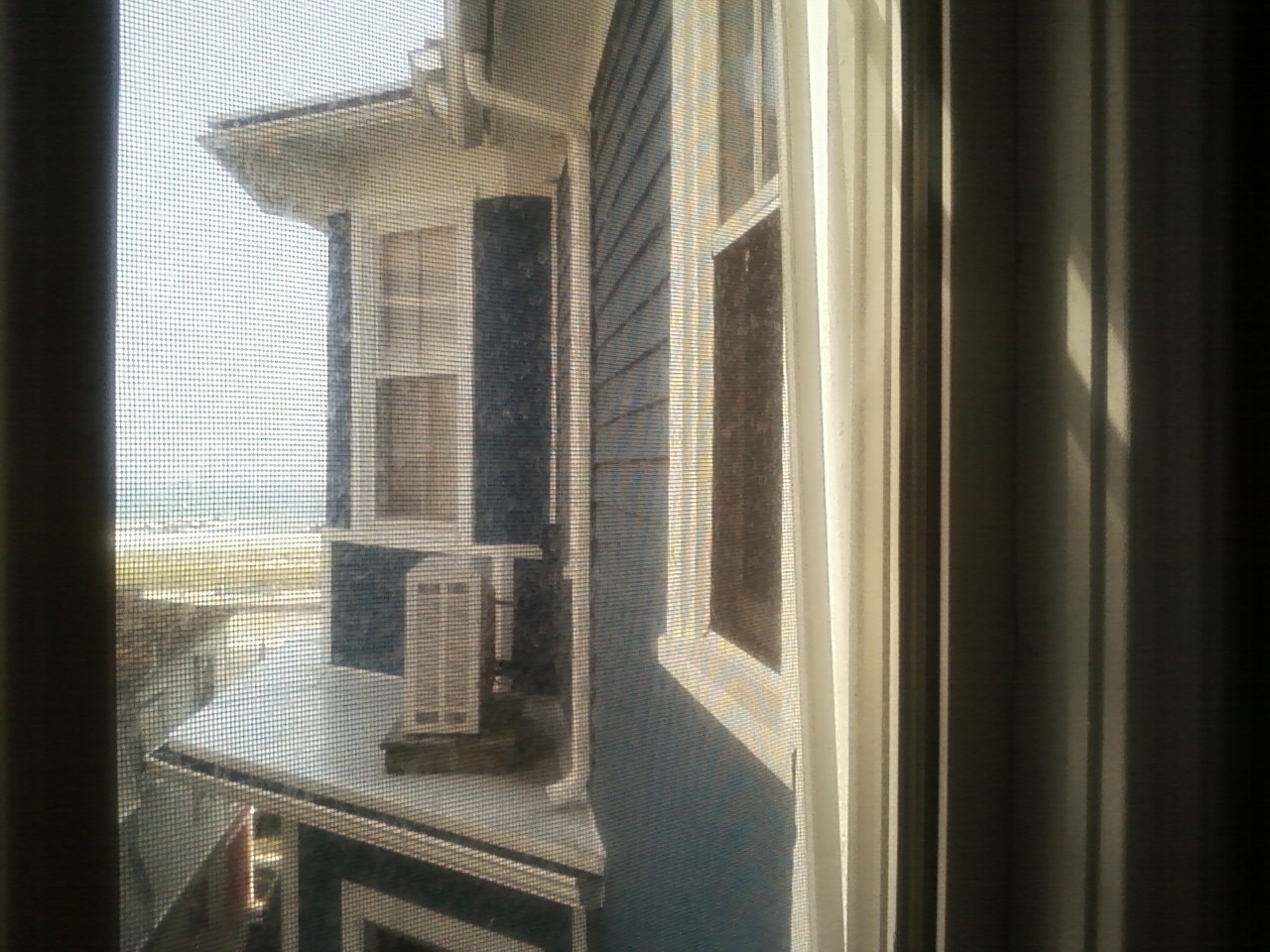
The view from our window in Cape May, New Jersey, is Hopperesque:

0628111624.jpg

Posted June 28, 4:28 PM

TT: Travels with Mrs. T (I)

deadline_usa_copy.jpgFRIDAY Up at eight to pack for an afternoon flight out of Hartford, whose airport is an hour's drive from our place in the Connecticut woods. Mrs. T is a sleep-late-then-pack-fast kind of gal, whereas I have obsessive travel-related tendencies reinforced by years and years of making deadlines. Whenever two such folk set up house together, it necessarily leads to a certain amount of tension, albeit of a productive kind: Mrs. T and I get everywhere on time, then relax and enjoy ourselves. The only friction occurs in the frenzied hour just before we hit the road, during which glares and harsh words are exchanged, followed by an on-time departure (though never a minute early!) and profuse apologies.

It took us well over an hour to drive from Pittsburgh International Airport to our downtown hotel. Nobody told us that President Obama was giving a speech in Pittsburgh that day, or that the Secret Service was planning to seal off the main road into town. Miranda, our trusty GPS, got us to the hotel via a circuitous alternate route, but a whole lot of other people must have decided to take the same route, since it, too, was jammed. Fortunately, Richard Strauss' seraphically genial oboe concerto was playing on the radio and the University Center Holiday Inn has superior room service, so no one got killed or maimed.

250px-TheDirtyOinOakland.jpgSATURDAY We slept in, then lunched at Essie's Original Hot Dog Shop, popularly known as the Dirty O, which is famous for serving you what you think are more French fries than you can possibly eat--until you try one. Said Mrs. T: "These are the best fries I've ever had!" As for the main course, I can do no better than cite Paul Lukas' 2002 survey of America's top dogs:

While the Steel City's dogs have no regional quirks, the Original's griddle-grilled beauties have one thing going for them: flavor. The franks' tight skins snap as you bite into them, resulting in an explosion of beefy goodness. This is not just a great hot dog; this is a great piece of meat. And happily, although I do not get to Pittsburgh as often as I would like, my standard order at the Original is one I have had lots of practice delivering elsewhere: "Gimme two, with mustard."

He forgot the chili, but otherwise that's a recipe for bliss. (Don't forget to specify brown mustard--it's the finishing touch.)

1015903_standard.jpgAfter lunch we went to the Carnegie Museum of Art, one of the country's finest second-tier encyclopedic museums. While it can't rival Fort Worth's Kimbell or the old Cleveland Museum for sheer consistency, the Carnegie contains its share of show-stoppers. I think that Rocks at the Seashore, a breathtaking early Cézanne, was my favorite piece, with Joan Mitchell's Low Water (Mrs. T's pick) running it a close second. But there was plenty of competition, including a first-class Chardin still life and an astonishingly vivid portrait by Whistler of the great Spanish violinist Pablo de Sarasate.

thelenamartynikeh.jpgIn the evening we paid our first visit to Pittsburgh Irish and Classical Theatre, a company that I've been meaning to check out for the past few seasons but was unable to shoehorn into my summer schedule until now. PICT is performing House & Garden, one of Alan Ayckbourn's conceptual extravaganzas, two plays which, like The Norman Conquests, take place in different parts of the same house but are designed to be performed simultaneously in adjacent theaters, with the members of the cast racing from stage to stage as needed. PICT, whose two stages are connected by a spiral staircase, is ideally suited to such an undertaking, so I decided that the time had finally come to spend a couple of nights in Pittsburgh.

This, needless to say, is one of the signal advantages of being the drama critic of The Wall Street Journal, which encourages me to criss-cross America in search of noteworthy shows to review. Were it not for the Journal's unique commitment to regional theater, I'd probably never have gotten a chance to see House & Garden. It was done in Chicago, Manhattan, and Rochester shortly after its 1999 premiere at Ayckbourn's own Stephen Joseph Theatre in Scarborough, but since then the only professional staging of which I've heard was by Dallas' Theatre Three in 2008.

(To be continued)

* * *

Pauline Oostenrijk, Neeme Järvi, and the Hague Philharmonic perform the first movement of Richard Strauss' Oboe Concerto, composed in 1945:

Posted June 28, 12:00 AM

TT: Almanac

"How hard it is, in literary criticism, to find words of praise. There are infinite gradations of blame, a thousand fresh and pungent metaphors for detraction, the epithets of dissatisfaction seem never to stale (perhaps that is why contemporary writings, and particularly contemporary essays, are usually noticeable only when they are abusive), but the moment one finds a work which genuinely impresses and delights, there seems no article of expression other than the clichés that grin at one from every publisher's advertisement."

Evelyn Waugh, "Art from Anarchy" (Night and Day, Sept. 16, 1937)

Posted June 28, 12:00 AM

June 27, 2011

TT: Never enough stuff

Somebody tweeted the other day about an essay of mine that appeared in a coffee-table book called America at Home: A Close-Up Look at How We Live that was published in 2008. I'd completely forgotten that I wrote this piece, and had to look it up in my electronic files to recall what it was about. Though I no longer live in the apartment described below, I rather liked the piece on renewed acquaintance, and thought that you might feel the same way.

* * *

"Simplify, simplify," Henry David Thoreau exhorted us in Walden, in which he tells how he spent two years living in a hand-built one-room shack so as to free himself from the shackles of stuff. Me, I live in a small New York apartment whose walls are lined with eight hundred books, three thousand compact discs, and thirty-six lithographs, etchings, screenprints, woodcuts, and watercolors, and it's been five years since any of those numbers last trended downward. Middle-class Manhattanites typically live in close quarters, and I'm no exception: I keep my sauce pans in the oven and sleep in a loft. But that doesn't stop me from wedging more stuff into my Upper West Side home, whose neatness (for I am very neat) arises from the fact that my closets are so full that the only way I can cram something new into them is to throw out something old.

I am, in other words, a collector, and chances are that so are you. Most Americans are collectors, though some are more systematic about it than others. The works of modern American art that I own, for instance, are a collection in every sense of the word, so much so that a friend started referring to my apartment as "the Teachout Museum." Not that any of my pieces are priceless--I'm big on eBay--but they still amount to something more than a bunch of miscellaneous prints. That's how you know you've amassed a collection: the whole is greater than the sum of its parts, which is a polite way of saying that you own too damn much of something for any immediately obvious purpose. My father collected mugs--but why? What did he get out of looking at the shelves on which dozens of dusty mugs were arranged as carefully and lovingly as I now hang the prints by John Marin, Milton Avery, Hans Hofmann, and Fairfield Porter that grace the walls of my living room? It never occurred to me to ask him. The mugs were as much a part of him as his deep voice, and that was that.

Are we what we collect? Sometimes the answer is self-evident. Louis Armstrong and H.L. Mencken, who in every other way were utterly dissimilar, preserved every scrap of personal memorabilia they could squeeze into their multi-story homes. I once spent a rainy afternoon leafing through Mencken's old hospital bills. Both men, in essence, collected themselves, and with good reason, since they were great artists through whose self-collections scholars now rummage in search of insight. But even those of us who have no like claim on posterity seem no less compelled to collect something, be it mugs, lithographs, recipes, stamps, matchbooks, or plastic handbags. And while I know two collectors who have gone so far as to rent apartments devoted solely to the storage and display of their collections, it seems in the nature of most Americans to want to keep their stuff closer to hand. Not a few of the finest museums in America began life as the private homes of wealthy art collectors.

0606110919_0002.jpgMight it be that the presence of a collection, whether humble or haute, is part of what makes a house a home? If so, then it might also be that we are all self-collectors, and that our collections are, in Alec Wilder's phrase, clues to a life. Perhaps my father, who spent the middle part of his life as a traveling salesman, had a story to go with each of his mugs. I know that each of the carefully framed family snapshots that hang on the walls of the house where he lived, and where my mother still lives, tells a little piece of the story of my family. They, too, are a collection, one of no value to anyone but my kinfolk, to whom they are as priceless as any of the Rembrandts hanging at the Met.

Needless to say, you can't take it with you, and so from time to time I make yet another virtuous but futile attempt to prune my shelves and clean out my closets. Frank Lloyd Wright, America's greatest domestic architect, was a passionate stuff-hater who actually went so far as to design houses that were intended to prevent their owners from piling up needless, life-complicating possessions. In my heart I know he was right, and that the accumulation of too much stuff is a drag on the spirit. Yet I still can't help but smile wryly when I remember that Kentuck Knob, one of Wright's most beautiful residences, was later purchased by a British baron who collects...houses.

Posted June 27, 12:00 AM

NOVEL

Wesley Stace, Charles Jessold, Considered as a Murderer (Picador, $15 paper). A bewitchingly clever historical thriller in which the lives and work of Peter Warlock, Constant Lambert, and Carlo Gesualdo are blended into the hair-raising tale of an unworldly music critic who writes an opera libretto for a flint-hearted composer who returns the favor in the most malevolent way imaginable. The author (better known in pop-music circles as John Wesley Harding) has done a virtuosic job of fusing fact with fiction, and the result is one of the few novels with a musical setting in which the background is rendered accurately. Absolutely not for musicians only, though those who already know the dramatis personae will be dazzled by the sure-footed skill with which Stace has put their real-life stories to novelistic use (TT).

Posted June 27, 12:00 AM

TT: Almanac

"I am attracted only to music which I consider to be better than it can be performed. Therefore I feel (rightly or wrongly) that unless a piece of music presents a problem to me, a never-ending problem, it doesn't interest me too much."

Artur Schnabel, My Life and Music

Posted June 27, 12:00 AM

June 24, 2011

TT: Peter Falk, R.I.P.

I've never laughed harder in my life than I did when I first saw this scene from The In-Laws in 1979--and I bet you can guess which line did the job on me:


Posted June 24, 7:54 PM

TT: Joy in Runyonland

On Sunday I drove up to Massachusetts' Barrington Stage Company to see a letter-perfect revival of Guys and Dolls, and in today's Wall Street Journal I rave about it. Here's an excerpt.

* * *

If "Guys and Dolls" isn't the best Broadway musical ever written, then...but why go on? Everybody who knows and loves the show agrees that it's as good as a musical can get. Frank Loesser's score is a platinum mine--at least half of the 16 songs, including "If I Were a Bell," "I'll Know," "I've Never Been in Love Before" and "Luck Be a Lady," are take-it-to-the-bank standards--and the book, smartly adapted by Abe Burrows from the raffish short stories of Damon Runyon, is funny enough to stand on its own.

But no musical, however classic, is invulnerable to bad direction, and Des McAnuff's miscast 2009 Broadway revival was an over-cooked scoop of mush soft enough to make anyone unfamiliar with "Guys and Dolls" wonder what the fuss was about. If only John Rando's new Barrington Stage version had opened on Broadway instead of in the Berkshires! Mr. Rando, a master of musical comedy who won a Tony for "Urinetown," gets everything right that Mr. McAnuff got wrong, and plenty more besides.

tn-500_guysdollsbsc11kspra_1174.jpgThe manifold virtues of this revival start with the stars. The four lead roles are played by top-class regional-theater performers with Broadway experience, all of whom sing as well as they act. Matthew Risch, lately of "Pal Joey," is smooth and debonair as Sky Masterson, the high-rolling sharpie who wins the heart of Miss Sarah Brown (Morgan James), the dishy Salvation Army doll who longs to save the souls of all the heels on Broadway. Michael Thomas Holmes plays Nathan Detroit, the proprietor of the oldest established permanent floating crap game in New York, like a slightly nebbishy Harvey Keitel. Ms. James, a refugee from the cast of "Wonderland," has classical-quality pipes and enough warmth to melt the heart of a bill collector in January. As for Leslie Kritzer, who stood out in "A Catered Affair" and "Sondheim on Sondheim," she shines brightly as the tough but lovable Adelaide, a third-tier nightclub warbler who's been engaged to Nathan for 14 years and doesn't want to hear any more excuses.

None of these four pros needs help to make a strong impression, but Mr. Rando, working in tandem with Joshua Bergasse, the show's choreographer, surely deserves plenty of credit for sharpening the focus of their characterizations. Every plot point is put across with the unobtrusive crispness of the comradely kiss that Sky plants atop Adelaide's head at the end of the reprise of "Adelaide's Lament." The laughs are there, but so is the feeling: You never forget that "Guys and Dolls" is not just a comedy but also a double-barreled love story, and you believe at all times in the truth of the underlying emotions that give meaning to the jokes....

* * *

Read the whole thing here.

Posted June 24, 12:00 AM

TT: See me, hear me (cont'd)

I'm one of the panelists on the latest episode of Theater Talk, which will be telecast by CUNY-TV on Saturday at 8:30 p.m. ET (followed by several repeat airings). Joining me are fellow drama critics Adam Feldman, Jacques le Sourd, and Elisabeth Vincentelli. The hosts are Michael Riedel and Susan Haskins. We'll be talking about the Broadway season just ended, and I can promise you that the discussion, which we taped a few weeks ago, will be frisky.

For more information, go here.

If you want to watch it now, here's the complete episode:

Posted June 24, 12:00 AM

TT: Julie Taymor's complaint

The ex-director of Spider-Man: Turn Off the Dark is still making news, and the news she's making is the subject of my "Sightings" column in today's Wall Street Journal. Here's an excerpt.

* * *
Blame it on Twitter. So says Julie Taymor, who claims that she got fired from "Spider-Man: Turn Off the Dark" because unhappy audience members who saw the show in previews took to social media in droves to complain, spinning a web of negative buzz that ultimately led to her dismissal as the show's director.

220px-Julie_Taymor.jpg"Twitter and Facebook and blogging just trump you," Ms. Taymor said at a recent meeting of the Theater Communications Group. "When you're trying to create new work, and you're trying to break new ground and experiment, which seems an incredibly crazy thing to do in a Broadway environment, the immediate answers that audiences give are never going to be good." She added that the producers' decision to rewrite the book of "Spider-Man" based on the input of focus groups was a mistake: "It's very scary if people are going more towards that, to have audiences tell you how to make a show. Shakespeare would have been appalled."

Ms. Taymor got one thing right: It's crazy to experiment on Broadway, especially if you're doing it with somebody else's $70 million. But the rest of her lament was alternately self-serving and ill-informed, as anyone familiar with the history of New York theater could--and should--have told her.

Let's start with the self-serving part. Ms. Taymor seems to think that her attempt to create a groundbreaking work of theatrical art was sabotaged by a horde of philistines who just didn't get it. Er, how's that again? "Spider-Man: Turn Off the Dark" was, and remains, a commodity musical about a comic-book character. No matter how well they're done, commodity musicals are not high art. Even if they're supremely artful, like Ms. Taymor's "The Lion King," they're still applause machines whose main function is to make pots of money for their backers.

As for the alleged culpability of social media, it's true that Twitter, Facebook, and the Broadway-oriented message boards have accelerated word of mouth to the speed of light. It's also true that innovative artistic ideas need time to be perfected--and to be assimilated by those who are seeing them for the first time. And social media definitely spread the word about the problems of "Spider-Man" early on, though much of the sharpest criticism was written not by furious fanboys but by thoughtful commentators who, like Chris Caggiano, author of the theater blog "Everything I Know I Learned From Musicals," are at least as smart as the best print-media critics.

All this notwithstanding, the truth is that Broadway hasn't been changed all that much by Twitter....

* * *

Read the whole thing here.

Posted June 24, 12:00 AM

TT: Almanac

"Always providing you have enough courage--or money--you can do without a reputation."

Margaret Mitchell, Gone With the Wind

Posted June 24, 12:00 AM

June 23, 2011

TT: With humble apologies to Cole Porter...

...I offer this new lyric to an old song in the hope of making certain careless theatergoers think twice:

Turn off your cellphone,
Start powering it down.
Turn off your cellphone
Or your fellow men will frown.
If it rings at the end of
The Crucible,
All the ushers will treat you as gooseable.
If you chat when you ought to be si-o-lent,
Then assume that your date will get violent.
We're all sick of the buzzing and ringing
That detracts from the acting and singing.
Turn off your cellphone
Or get out of town.

* * *

Cole Porter's "Brush Up Your Shakespeare," sung by Lee Wilkof and Michael Mulheren in the 1999 Broadway revival of Kiss Me, Kate:

Posted June 23, 12:00 AM

TT: So you want to see a show?

Here's my list of recommended Broadway, off-Broadway, and out-of-town shows, updated weekly. In all cases, I gave these shows favorable reviews (if sometimes qualifiedly so) in The Wall Street Journal when they opened. For more information, click on the title.

BROADWAY:
Anything Goes (musical, G/PG-13, mildly adult subject matter that will be unintelligible to children, closes Jan. 8, reviewed here)
How to Succeed in Business Without Really Trying (musical, G/PG-13, perfectly fine for children whose parents aren't actively prudish, reviewed here)
The Motherf**ker with the Hat (serious comedy, R, adult subject matter, closes July 17, reviewed here)

OFF BROADWAY:
Avenue Q (musical, R, adult subject matter and one show-stopping scene of puppet-on-puppet sex, reviewed here)
The Fantasticks (musical, G, suitable for children capable of enjoying a love story, reviewed here)
Play Dead (theatrical spook show, PG-13, utterly unsuitable for easily frightened children or adults, closes July 24, reviewed here)

IN CHICAGO:
The Front Page (comedy, PG-13, extended through July 17, reviewed here)

CLOSING SOON OFF BROADWAY:
A Little Journey (drama, G, closes July 10, reviewed here)

CLOSING NEXT WEEK ON BROADWAY:
The Importance of Being Earnest (high comedy, G, just possible for very smart children, closes July 3, reviewed here)

CLOSING NEXT WEEK IN CHICAGO:
Porgy and Bess (operatic musical, PG-13, closes July 3, reviewed here)

CLOSING SATURDAY ON BROADWAY:
The House of Blue Leaves (serious comedy, PG-13, reviewed here)

CLOSING SUNDAY IN WASHINGTON, D.C.:
Old Times (drama, PG-13, reviewed here)

CLOSING SUNDAY IN GLENCOE, ILL.:
Heartbreak House (serious comedy, PG-13, reviewed here)

CLOSING SUNDAY IN WASHINGTON, D.C.:
Follies (musical, PG-13, adult subject matter, reviewed here)

CLOSING SUNDAY ON BROADWAY:
Born Yesterday (comedy, G/PG-13, reviewed here)

Posted June 23, 12:00 AM

TT: Almanac

"Q. Do you care about reviews?

"A. Of course you care. I don't read them, but you don't really have to--you know what they are with the way people respond. There's nothing in the world more silent than the telephone the morning after everybody pans your play. It won't ring from room service; your mother won't be calling you. If the phone has not rung by 8 in the morning, you're dead."

David Mamet (interview, New York Times, May 27, 2011)

Posted June 23, 12:00 AM

June 22, 2011

TT: Snapshot

"The 100 Greatest Movie Threats of All Time," compiled by Harry Hanrahan:

(This is the latest in a weekly series of arts-related videos that appear in this space each Wednesday.)

Posted June 22, 12:00 AM

TT: Almanac

"The thing about men that don't talk much is that they don't usually learn much, either."

Larry McMurtry, Lonesome Dove

Posted June 22, 12:00 AM

June 21, 2011

TT: Almanac

"Occasionally the very youngness of the young moved him to charity--they had no sense of the swiftness of life, nor of its limits. The years would pass like weeks, and loves would pass too, or else grow sour."

Larry McMurtry, Lonesome Dove

Posted June 21, 12:00 AM

June 20, 2011

TT: Here, but not here

I'm taking a couple of days off from the blog, the theater, New York, and life itself. (Regular readers won't need to be told why!) The usual theater-related postings and daily almanac entries will, needless to say, continue uninterrupted, and I've also rolled over the Top Five and "Out of the Past" modules of the right-hand column for your delectation. I'll also post the weekly "Snapshot" video on Wednesday. Otherwise, I'm elsewhere.

See you a little later in the week.

Posted June 20, 12:00 AM

TT: Almanac

"'I doubt she'll want to spend no time in San Antonio,' Augustus said. 'That's where she was before she came here, and women don't like to go backwards. Most women will never back up an inch their whole lives.'"

Larry McMurtry, Lonesome Dove

Posted June 20, 12:00 AM

June 18, 2011

CD

Miss Peggy Lee (Capitol, four CDs). One of the three or four top names on the short list of great pop-jazz singers, Peggy Lee was exceedingly well served by this 1998 retrospective of 113 tracks recorded for Capitol in the Forties, Fifties, and Sixties. All the hits are here, including "Fever" and "Is That All There Is," plus a sizable helping of her own excellent songs. The liner notes are by Gene Lees, who knew Lee and understood her. The discographical information is sketchy, but you can find out everything you want to know here. If you're planning a road trip, pack this set (TT).

Posted June 18, 12:00 PM

BOOK

James Agate, The Selective Ego. You don't have to be an intellectual to be a great diarist, and Agate, the debt-ridden, spectacularly self-involved drama critic of the London Sunday Times from 1923 until his death in 1947, wrote about the printable parts of his life with careful evasion (he was a brothel-loving homosexual given to masochistic practices of the grossest sort) and colossal panache. This compact selection of entries from Ego, the nine-volume series of diaries that Agate published in the Thirties and Forties, is a superlative bedside book, hugely amusing and easily readable in random snatches (TT).

Posted June 18, 11:52 AM

GALLERY

Wolf Kahn: Color and Consequence (Ameringer McEnery Yohe, 525 W. 22, up through July 16). New paintings by an underappreciated modern master, a Hans Hofmann pupil who renders the American landscape in high-key colors that recall the luminous palette of Pierre Bonnard. The result is a deeply personal style in which abstraction and representation are so closely intertwined that they can't be teased apart (TT).

Posted June 18, 11:44 AM

NOVEL

Richard Stark, Butcher's Moon (University of Chicago, $15 paper). The best of Donald Westlake's pseudonymous thrillers about Parker, the toughest burglar who ever lived, in which he goes up against an entire big-city crime syndicate--with a little help from a lot of friends. Out of print for years and years, Butcher's Moon is the ultimate Parker novel, best read as an installment in the series as a whole but comprehensible and wholly satisfying on its own (TT).

Posted June 18, 11:38 AM

CD

The Essential Rosanne Cash (Sony Legacy, two CDs). Thirty-six tracks from one of America's most creative singer-songwriters, chosen by Cash herself. An ideal one-stop introduction to her work, especially when heard in tandem with Composed, Cash's 2010 memoir (TT).

Posted June 18, 11:38 AM

PLAY

Play Dead (Players Theatre, 115 MacDougal, closes July 24). Teller's wonderfully creepy off-Broadway theatrical spook show has posted its closing notice, so if you haven't seen it yet, go while you still can. The illusions are spectacular, the humor delicious. Two pieces of advice: (1) If asked to go onstage, say yes. (2) Wait until after the show to eat dinner (TT).

Posted June 18, 11:37 AM

DVD

Justified: The Complete First Season (Sony, three DVDs). In this cable-TV series, Graham Yost takes U.S. Marshal Raylan Givens, one of Elmore Leonard's most attractive recurring characters, and returns him to Kentucky's Harlan County for a series of freshly written adventures that have the true Leonard touch. Timothy Olyphant, who plays Givens, is exactly, exquisitely right. You can't follow the second season on FX without knowing what happened last year, so if you're coming late to the party, buy this box set first and savor each episode (TT).

Posted June 18, 11:37 AM

June 17, 2011

TT: Welcome back, Rachel Crothers

I have much wholehearted praise for the Mint Theater Company's revival of Rachel Crothers' A Little Journey. Here's an excerpt.

* * *

The Mint Theater Company, one of New York's most admired Off-Broadway troupes, specializes in neglected plays that have slipped through the cracks. More often than not it comes up with gems, among the most notable of which was Rachel Crothers' "Susan and God," first seen in 1937 and revived by the Mint to impressive effect in 2006. Now the company has gone back to the same well with an equally strong staging of another Crothers play, "A Little Journey," which hasn't been performed professionally in New York since it closed on Broadway in 1919--and guess what? It's just as good.

Crothers, America's most successful woman playwright, is all but unknown today. Born in 1878, she wrote some 30-odd plays that made it to Broadway prior to her death in 1958, most of which she also directed and many of which, like "A Little Journey" and "Susan and God," were hits that were later filmed. How could so distinguished a female artist have vanished into the memory hole? You'd think that literary-minded feminists would have been her most outspoken champions. But Crothers, like Lillian Hellman, was a commercial playwright who specialized in "well-made" plays, a genre that became unfashionable after Tennessee Williams and Arthur Miller trashed the theatrical rulebook, and the fact that she'd been so popular in her lifetime worked against her posthumously. Not until the Mint exhumed "Susan and God" did it occur to anyone that her body of work deserved a second look.

ALMINT.jpgAll of which brings us to "A Little Journey," an unusually well-crafted play about a group of strangers of widely varied backgrounds who get to know one another while traveling by train from Grand Central Station to the West Coast. You're heard that one before, right? In fact, it's one of the best-known of storytelling tricks, but "A Little Journey" predates Vicki Baum's "Grand Hotel" by a decade, and Crothers may actually have invented the device herself. More importantly, she uses it with great freshness, tucking a surprise into the last act that will make you jump....

The Mint long ago mastered the magical art of cramming big shows onto its shoebox-sized stage without breaking anything. Roger Hanna's set for "A Little Journey," for instance, turns Crothers' sleeper car into a simple but handsome-looking revolving carousel, a sleight-of-hand trick that gives the production a feeling of forward movement unrivaled by infinitely more complicated (and expensive) Pullman-car sets....

* * *

Read the whole thing here.

Posted June 17, 12:00 AM

TT: Almanac

"It seemed to him there was never much time with women. Before you could look at one twice, you were into an argument, and they were telling you what was going to happen."

Larry McMurtry, Lonesome Dove

Posted June 17, 12:00 AM

June 16, 2011

TT: So you want to see a show?

Here's my list of recommended Broadway, off-Broadway, and out-of-town shows, updated weekly. In all cases, I gave these shows favorable reviews (if sometimes qualifiedly so) in The Wall Street Journal when they opened. For more information, click on the title.

BROADWAY:
Anything Goes (musical, G/PG-13, mildly adult subject matter that will be unintelligible to children, closes Jan. 8, reviewed here)
Born Yesterday (comedy, G/PG-13, closes July 31, reviewed here)
How to Succeed in Business Without Really Trying (musical, G/PG-13, perfectly fine for children whose parents aren't actively prudish, reviewed here)
The Motherf**ker with the Hat (serious comedy, R, adult subject matter, closes July 17, reviewed here)

OFF BROADWAY:
Avenue Q (musical, R, adult subject matter and one show-stopping scene of puppet-on-puppet sex, reviewed here)
The Fantasticks (musical, G, suitable for children capable of enjoying a love story, reviewed here)
Play Dead (theatrical spook show, PG-13, utterly unsuitable for easily frightened children or adults, closes July 24, reviewed here)

IN CHICAGO:
The Front Page (comedy, PG-13, extended through July 17, reviewed here)

CLOSING SOON ON BROADWAY:
The Importance of Being Earnest (high comedy, G, just possible for very smart children, closes July 3, reviewed here)

CLOSING SOON IN CHICAGO:
Porgy and Bess (operatic musical, PG-13, extended through July 3, reviewed here)

CLOSING NEXT WEEK IN WASHINGTON, D.C.:
Old Times (drama, PG-13, closes June 26, reviewed here)

CLOSING NEXT WEEK IN GLENCOE, ILL.:
Heartbreak House (serious comedy, PG-13, closes June 26, reviewed here)

CLOSING NEXT WEEK ON BROADWAY:
The House of Blue Leaves (serious comedy, PG-13, closes June 25, reviewed here)

CLOSING SUNDAY IN WASHINGTON, D.C.:
Follies (musical, PG-13, adult subject matter, reviewed here)

Posted June 16, 12:00 AM

TT: Once a musician...

Richard%20Strauss.jpegPeople think of the strangest things in a crisis. When Mrs. T and I were getting ready to carry my mother to our rental car in order to rush her to the emergency room last Wednesday, I said to myself, Whenever you have to do something in a hurry, make yourself slow down. All at once I found myself recalling two of Richard Strauss' "Golden Rules for the Album of a Young Conductor":

• "You should not perspire when conducting. Only the audience should get warm."

• "When you think you have reached the limits of prestissimo, take the tempo half as fast. (Mozart conductors, please note!)"

That's good advice, whatever the circumstances.

* * *

Wilhelm Furtwängler leads the Vienna Philharmonic in a 1950 performance of Richard Strauss' Till Eulenspiegel's Merry Pranks:

Posted June 16, 12:00 AM

TT: Almanac

"The boy was young and had all his hopes, while Deets was older and had fewer. Newt sometimes asked so many questions that Deets had to laugh--he was like a cistern, from which questions flowed instead of water. Some Deets answered and some he didn't. He didn't tell Newt all he knew. He didn't tell him that even when life seemed easy, it kept on getting harder."

Larry McMurtry, Lonesome Dove

Posted June 16, 12:00 AM

June 15, 2011

TT: Three cheers for the bad guy

Spider-Man: Turn Off the Dark has finally opened, and my review is in today's Wall Street Journal. Here's an excerpt.

* * *

spider-man-005.jpgIf beauty were really only skin deep, then "Spider-Man: Turn Off the Dark" would be the perfect musical. Every cent of the $70 million budget is visible. George Tsypin's sets, Kyle Cooper's digital projections and Eiko Ishioka's costumes have been melded into an exquisitely exact stage equivalent of the sharp-angled, high-contrast drawing style of the Marvel comic books in which Peter Parker and his web-spinning alter ego first came to fictional life. The show's sheer visual dynamism is staggering--but except for one great performance, it has little else to offer. It's the best-looking mediocre musical ever to open on Broadway....

Poetry, not special effects, is the engine that drives lyric theater, and "Spider-Man: Turn Off the Dark" is as unpoetic as you can get. Mr. Aguirre-Sacasa's book is flabby and witless. The score, by U2's Bono and The Edge, sounds like a double album of B-sides ("Don't think about tomorrow/We've only got today"). Not only are the songs forgettable, but they never succeed in generating any dramatic momentum--all they do is get louder. As for Mr. Carney and Ms. Damiano, they're pretty, bland and devoid of charisma....

Outside of the décor, what does "Spider-Man" have going for it? The bad guy. Patrick Page is a classical actor of high distinction whom New York playgoers will remember as the mercurial Henry VIII of the Roundabout Theatre Company's marvelous 2008 revival of "A Man for All Seasons." Mr. Page has a voice like a cathedral organ and enough charisma to blast Mr. Carney off the stage and into the next county, and you can tell that he's having a grand old time playing a super-villain....

* * *

Read the whole thing here.

Posted June 15, 12:00 AM

TT: Snapshot

Booker T. and the MGs play "Time Is Tight":

(This is the latest in a weekly series of arts-related videos that appear in this space each Wednesday.)

Posted June 15, 12:00 AM

TT: Almanac

"Perhaps, after all, there is something in the theory that only the ultra-busy can find time for everything."

James Agate, Ego 4

Posted June 15, 12:00 AM

June 14, 2011

TT: Not while we're around

My mother turned eighty-two today. She didn't expect to spend her birthday in a hospital room, any more than Mrs. T and I expected to spend it sitting by her bed. As usual, I had to plug our annual summertime visit to Smalltown, U.S.A., into the only available hole in my schedule, and the hole in question closed up last Thursday. Our plan was to send flowers from the road. Instead we delivered them in person, which is--needless to say--much nicer.

Now that my mother is feeling better, I can say that her ailment (a perforated bowel) was sufficiently grave that she wasn't expected to live. That she not only survived a major operation but now appears to be flourishing is a sign of the stamina of a woman who was born in the same year that the Great Depression began working its terrible will on America. Life was tough in the Thirties, especially if, like my mother, you grew up on a dirt farm in the middle of nowhere. Anyone who got through the Thirties in one piece isn't likely to be fazed by a perforated bowel, or anything else.

Not surprisingly, Stephen Sondheim wrote a song about it:

I've run the gamut
A to Z.
Three cheers and dammit,
C'est la vie.
I got through all of last year,
And I'm here.

She sure is, for which all of the Teachouts are profoundly grateful today.

* * *

Yvonne De Carlo sings "I'm Still Here" on The David Frost Show:

Posted June 14, 5:54 PM

TT: Almanac

"A professional is a man who can do his job when he doesn't feel like it; an amateur is one who can't when he does feel like it."

James Agate, Ego

Posted June 14, 12:00 AM

June 13, 2011

TT: Songs of ourselves

0612111949.jpgLife has been hectic since Mrs. T and I rushed my mother to the hospital last Wednesday for emergency surgery. We'd been planning to drive up to St. Louis on Thursday to see a show, which of course we didn't do, and we expected for the same reason not to return to New York on Friday afternoon. But my mother, like so many veterans of the Great Depression, is much tougher than she looks, and it soon became evident that she was going to fool everybody and get better.

So I flew to New York on schedule, leaving Mrs. T and the rest of my family behind to hold the fort, and saw two shows on Saturday, the long-awaited press preview of Spider-Man: Turn Off the Dark (about which more on Wednesday) and a screening of The Importance of Being Earnest. That done, I caught the first flight back to St. Louis on Sunday morning, rented a car at the airport, and drove to Cape Girardeau to see my mother, who was now sitting up in a chair and chatting happily about her unexpected ordeal.

Not surprisingly, I haven't had much time to read since arriving in Smalltown, U.S.A., nine days ago, but I did manage to knock off two books, Jon Ronson's The Psychopath Test: A Journey Through the Madness Industry and Dominic Shellard's 2003 biography of Kenneth Tynan. At first glance these books would seem to be ill matched, but they turned out to have a fair amount in common.

Ronson's book is, not to put too fine a point on it, irksome. It's also exemplary, a perfect example of what I think of as This American Life-type journalism, a genre in which the author views every aspect of life through the self-aggrandizing prism of his own tediously nebbishy personality. If Woody Allen had modeled himself on Tom Wolfe instead of Ingmar Bergman, he would have written books like The Psychopath Test. Part of what's wrong with journalism today is that a great many journalists, were they to read that sentence out of context, would take it to be a compliment.

Kenneth Tynan, who in the Fifties was England's most influential British drama critic, is no longer widely remembered, though those who know his work won't need to be told that he was a writer of far greater accomplishment and significance than Jon Ronson. Yet Tynan, too, was self-centered in the extreme, and the more you learn about him, the less attractive he becomes, not just as a man but also as a critic.

Tynan summed up his critical point of view as follows:

One would have thought that the notion of an impersonal critic was as patently absurd as that of an impersonal person: yet playwrights still cherish it as a sort of holy ideal. Admittedly, we all make mystiques: but this one is particularly wishful. The man who asks for an anonymous, impersonal criticism is trying to elevate criticism to the status of a science; whereas it is, I am afraid, only an art. The critic's business is to write readable English: the playwright's to write speakable English. Beyond that it is every man for himself.

TYNAN.jpgIt sounds plausible when put so elegantly, but at bottom Tynan is saying that criticism is pure opinion, and he went well out of his way to practice what he preached. He was, as a result, a wildly erratic critic, sometimes inspirational but at least as often arbitrary to the point of perversity, and it was his invariable custom to offer up his prejudices as though they were the revealed word. Thus it isn't surprising that he was a power-seeker who longed desperately to work on the other side of the proscenium--indeed, Tynan abandoned criticism early on to become the first literary manager of the National Theatre under Laurence Olivier--and it's downright funny to learn that the sharpest-tongued critic of his day was in private life a devotee of S&M who liked to spank his sex partners.

I don't think that criticism, or any other kind of journalism, should be impersonal, and I believe that the best critics are those who have professional experience in the art forms about which they write. But the journalist who thinks himself more interesting than his subject matter is almost always kidding himself, while the critic who uses his pulpit as a means to the end of personal power is a menace to the world of art.

I know that I'm not nearly modest enough, and that I, too, have been known to err in my own work on the side of self-aggrandizement. Not long ago my editor at The Wall Street Journal, who is a wise man, suggested that I might be slipping too far in that direction, and that I should do penance by spending a few weeks trying to keep the word "I" out of my theater reviews save when absolutely necessary. (I'm doing my best!)

Narcissism is, of course, the twin vice of critics and bloggers. I blog and tweet on the assumption--perhaps mistaken--that cyberspace is full of people who want to know what I think and how I live. Mrs. T, on the other hand, believes Twitter to be a collective exercise in rampant vanity. I hope she's wrong, but even if she isn't, I'm sure it's good for me to be married to a woman who takes so skeptical a view of the value of public self-revelation. The world, I suspect, would be a better place if every professional writer were similarly blessed.

Posted June 13, 12:00 AM

TT: Almanac

"Poetry does not reason about serious things, it depicts them. When we read and remember it we mold ourselves; when we recite it we share what we have become."

Richard Brookhiser, "Rusher and Poetry" (National Review, May 16, 2011)

Posted June 13, 12:00 AM

June 10, 2011

TT: Big muddy

article-0-01AAF12C00000578-166_468x312_popup.jpgThe other day I took my mother for a drive through the flood-drenched lowlands of Illinois, east of the Mississippi River. It's been years since I saw that part of the country under water, and the sight was alarming--as well as sobering.

Growing up in Smalltown, U.S.A., made me intensely aware of nature's power to do damage. My home town has seen its share of tornadoes and earthquakes, and the mighty Mississippi is a half-hour's drive from my mother's front door. But people who spend their lives in close proximity to natural disaster tend not to waste a whole lot of time thinking about it. Tornado warnings sent my family clambering downstairs several times each year when I was a boy. After your first few trips to the basement, you start taking your own survival for granted.

Driving down a levee road is a good way to be reminded of what a river can do to you. It's also a salutary lesson in modesty. Man's ingenuity has its limits, and nature can swamp them whenever it pleases her to do so. Like everyone else who follows the news, I was shocked to hear of how a tornado destroyed a hospital in Joplin, Missouri--but one-man tornadoes sweep through every hospital in the world every day of the year. Sooner or later the sand is going to run out of your hourglass, and when it does, it won't matter how smart your doctor is, or how thick the walls of your house are.

Cairo-Illinois-Mississippi-flooding.jpgI'm not a fatalist, much less a quietist. Cardinal Newman summed up my view of things in The Dream of Gerontius: And, ere afresh the ruin on thee fall,/Use well the interval. The fact that we all live under the aspect of eternity has always struck me not as a reason for passivity but as a goad to action. That said, it was no less instructive that Mrs. T and I had to rush my mother to a hospital in Cape Girardeau for emergency surgery not two days after our visit to the floodlands.

She's doing reasonably well, as much so as can be expected, and we're feeling cautiously hopeful today. But sometimes you find yourself driving to the emergency room at ninety miles an hour mere minutes after pouring a cup of coffee that you'll never get around to drinking--or looking out your window one summer afternoon and seeing fate roaring down the street in the form of a funnel cloud. Tornadoes and sunsets, lest we forget, both come out of the same beautiful, indifferent sky.

Posted June 10, 12:00 AM

TT: Smile as the bomb goes off

In today's Wall Street Journal I report enthusiastically on a pair of shows in Chicagoland and Washington, D.C., Writers' Theatre's production of George Bernard Shaw's Heartbreak House and the Shakespeare Theatre Company's revival of Harold Pinter's Old Times. Here's an excerpt.

* * *

Shaw's purpose in writing "Heartbreak House" was to suggest that World War I had brought the British ruling class to the end of its tether. But the complexity of his own world view (he opposed British involvement in the war but was himself a power-worshipper with a totalitarian itch who believed passionately in human perfectibility) charges what might have been a standard-issue Shavian sermon with the multi-layered ambiguity of high art. So, too, does Writers' Theatre's new production, directed with extreme sensitivity by William Brown, make a compelling case for ranking "Heartbreak House" alongside Jean Renoir's "Rules of the Game" as one of the great fictional chronicles of how Europe's upper classes lost their way--and their will.

heartbreak-house-writers-theatre-004.jpgNow that "Heartbreak House" is in the public domain, it can be performed with cuts, and Mr. Brown has tightened the script so shrewdly that you'll have to look at the published version to see what got left out of his staging, which runs for about two hours and 45 minutes. He has also moved the action forward from 1914 to 1940 in order to give the play a more contemporary feel. It's a clever touch, though my guess is that both of the world wars will seem equally alien to most of those who see this revival. Far more important is the skill with which Mr. Brown has balanced the play's predominantly comic aspect with the sharp shock of the final scene, in which sirens wail and bombs descend on the country garden of the Shotovers, who respond with a horrific glee that symbolizes the death wish of their doomed class.

Mr. Brown has put together a knockout cast led by Karen Janes Woditsch as Hesione Hushabye, the sexiest of the Shotovers. Charismatic is far too mild a word for Ms. Woditsch...

The Shakespeare Theatre Company is doing excellent things with "Old Times," Harold Pinter's compact, creepy comedy (or is it?) about a smug husband, his seemingly naïve wife and a houseguest whose arrival has an effect on the couple not unlike pitching a hand grenade into their bedroom. While every aspect of this production is impressive, the best thing about it is Holly Twyford, who gives a stupendously good performance as Anna, the mysterious guest. The contrast between Ms. Twyford's tightly crossed legs and the long arms that she flings about like the tentacles of a carnivorous octopus is both riotously funny and downright frightening....

* * *

Read the whole thing here.

Posted June 10, 12:00 AM

TT: How I voted for the Tony Awards

The first paragraph of my "Sightings" column in today's Journal sums it up:

Drama critics who cover Broadway can vote for the Tony Awards, which will be announced on Sunday. (A complete list of the nominees is at tonyawards.com.) In the interests of transparency, I thought you might like to know which ones I picked.

Read the whole thing here. Some of my choices may surprise you!

Posted June 10, 12:00 AM

TT: Almanac

"Screenplays can't be works of art unto themselves because they're not unto themselves, they're roadmaps to something else."

Lem Dobbs, interview with Dan Schneider (Cosmoetica, January 25, 2009)

Posted June 10, 12:00 AM

June 9, 2011

TT: So you want to see a show?

Here's my list of recommended Broadway, off-Broadway, and out-of-town shows, updated weekly. In all cases, I gave these shows favorable reviews (if sometimes qualifiedly so) in The Wall Street Journal when they opened. For more information, click on the title.

BROADWAY:
Anything Goes (musical, G/PG-13, mildly adult subject matter that will be unintelligible to children, closes Jan. 8, reviewed here)
Born Yesterday (comedy, G/PG-13, closes July 31, reviewed here)
The House of Blue Leaves (serious comedy, PG-13, closes July 23, reviewed here)
How to Succeed in Business Without Really Trying (musical, G/PG-13, perfectly fine for children whose parents aren't actively prudish, reviewed here)
The Motherf**ker with the Hat (serious comedy, R, adult subject matter, closes July 17, reviewed here)

OFF BROADWAY:
Avenue Q (musical, R, adult subject matter and one show-stopping scene of puppet-on-puppet sex, reviewed here)
The Fantasticks (musical, G, suitable for children capable of enjoying a love story, reviewed here)
Play Dead (theatrical spook show, PG-13, utterly unsuitable for easily frightened children or adults, reviewed here)

IN CHICAGO:
The Front Page (comedy, PG-13, extended through July 17, reviewed here)

CLOSING SOON ON BROADWAY:
The Importance of Being Earnest (high comedy, G, just possible for very smart children, closes July 3, reviewed here)

CLOSING SOON IN CHICAGO:
Porgy and Bess (operatic musical, PG-13, extended through July 3, reviewed here)

CLOSING NEXT WEEK IN WASHINGTON, D.C.:
Follies (musical, PG-13, adult subject matter, closes June 19, reviewed here)

CLOSING SUNDAY OFF BROADWAY:
By the Way, Meet Vera Stark (comedy, PG-13, reviewed here)
A Minister's Wife (serious musical, G, far too complicated for children, reviewed here)

CLOSING SUNDAY ON BROADWAY:
Million Dollar Quartet (jukebox musical, G, reviewed here, reopening off Broadway in July)

Posted June 09, 12:00 AM

TT: Almanac

"I don't quite understand myself how, why, or when technology and the technical aspects of filmmaking completely overran, overcame, overwhelmed the human, the emotional, the intellectual, the real. Was it when kids first started bringing pocket calculators to school with them? They would have been more or less the first film school generation. So there came to be filmmakers who were somehow excited by Kurosawa, but not by the Western Canon that excited him--Shakespeare, Dostoyevsky--and who thought Godard's jump-cuts were sexy, but could no more discuss his interest in Nicholas Ray or the dialectics of Marxism than they could fly to Mars, filmmakers who can imitate Hitchcock's technique, but are incapable of emulating his emotional or narrative complexity. Writers, directors, actors, even when relatively young, once seemed mature. Somewhere along the line, quite recently, that changed. Now, no matter what their age, they're immature, and the films reflect that. The obsession with technology appears to have accelerated this process of infantilism and occluded all else."

Lem Dobbs, interview with Dan Schneider (Cosmoetica, January 25, 2009)

Posted June 09, 12:00 AM

June 8, 2011

TT: Snapshot

Leadbelly and John Lomax appear in a 1935 March of Time newsreel:

(This is the latest in a weekly series of arts-related videos that appear in this space each Wednesday.)

Posted June 08, 12:00 AM

TT: Almanac

"Of all the arts I suppose that writing is the one which develops the lowest attributes, in that its very pursuit magnifies all the human failings. It encourages introversion, neurasthenia, insomnia, irritability and all forms of self-indulgence. It encourages a sensitiveness which makes one open to any sort of slight. It begets a type of personal inflation, for it is nearly impossible to continue without the consciousness of a definite gift of genius. It may be that one is misunderstood by editors, perhaps because one is too far advanced to be comprehended by the simple moron mind. It may be that this hidden gift still lies fallow, but there must be an inner conviction of its presence. It is what enables an author to walk airily among his colleagues and to dispense and to receive the bitter little condescensions of the trade. There is a jealousy in the writing profession which is peculiarly its own."

John P. Marquand, Wickford Point

Posted June 08, 12:00 AM

June 7, 2011

TT: One is a wanderer

246702_2090143616526_1333296871_32430782_5903273_n.jpgI left my home town a few months after graduating from high school in 1974, and since then I've only returned as a visitor. Not so David, my younger brother, who chose to settle in Smalltown, U.S.A., and has never lived anywhere else. He and his wife live three blocks from my mother's house. If there's such a thing as a model citizen, he fills the bill with room to spare. Among countless other valuable things, he's served two terms on the city council and is a member of the board of trustees of his church, and whenever anyone in Smalltown now has occasion to mention the name "Teachout," they usually mean him, not me.

I'm proud of my brother's achievements, and more than a little bit jealous of them. In particular I envy his deep roots in the soil of Smalltown. I can't claim to feel that way about New York City, where I've lived for the past quarter-century but to which I have no special attachment save for my love of certain people who live there.

For me, "home" is where Mrs. T is, and that changes from day to day. We moved to a new apartment last November, but we've spent so little time there that most of our belongings are still packed in cardboard boxes. So far this year we've "lived" in upper Manhattan, rural Connecticut, various parts of Florida, and a string of hotel rooms in Chicago, San Diego, and Washington, D.C. Right now we're in Smalltown, but we'll be driving up to St. Louis on Thursday, and a week and a half after that we'll be on our way to Pittsburgh.

Truth to tell, I'm about as close to rootless as you can get, and because I come from Smalltown, where people tend as a rule to grow where they're planted and stay where they're put, this rootlessness has always seemed strange to me. I ought to feel at home somewhere or other, but when I moved away in 1974, I lost the sense of belonging that I possessed throughout the first eighteen years of my life, and since then I've never managed to recapture it.

This came as a surprise to me. I always figured I'd find a job in town, marry a Smalltown girl, start a family, and become a pillar of the community. My brother did those things, but I pulled up stakes and became a rambling man, moving from city to city in search of an identity that it took me the better part of a lifetime to find, insofar as I can be said to have found it. At various times in my life I expected to become a concert violinist, a lawyer, a high school teacher, and a psychotherapist, none of which I ended up doing. Instead I've paid the rent by working as a bank teller, a jazz bassist, a magazine editor, an editorial writer, a biographer, and a drama critic.

389143_9425road2.jpgMy brother and I, in short, have both led typical American lives. It is fully as American to stick close to home as it is to become a wanderer, but it's the wanderers who get most of the press, perhaps because we're the ones who write it--and I'm not so sure it should be that way. I left home to find myself, but my brother didn't have to leave home because he knew who he was. I call my mother every night, but he sees her every day. I write books, but he has a grown daughter. I like to think that my work may ultimately prove to have some lasting value, but I'm sure that he's done more to make the world a better place.

Might I have been happier had I stayed in Smalltown? That is, needless to say, the least answerable of questions, though Stephen Sondheim went part way towards answering it in a song from Follies called "The Road You Didn't Take": The choices that you make/Aren't all that grim./The worlds I'll never see/Still will be around,/Won't they?/The Ben I'll never be,/Who remembers him? Nobody remembers the nonexistent Terry Teachout who stayed home and became a schoolteacher, but everybody in Smalltown, U.S.A., knows his real-life brother David, who had the luck to know which road to take--and the sense to take it. As much as I love my life, I'll always wonder which one of us made the better call.

Posted June 07, 12:00 AM

TT: Only once

Mencko.jpgA colleague of mine has just published his first book, a great day that puts me in mind of my favorite paragraph from H.L. Mencken's Newspaper Days, in which Mencken recalled an equally great day that took place when he was working under Lynn Meekins at the now-defunct Baltimore Herald. I reprint it here in tribute to my fortunate colleague.

* * *

I recall, in point, the day when the proofs of my first real book, "George Bernard Shaw: His Plays," came in. It was a small volume, else I could not have found the time to write it at all, but it was nevertheless a book, set up and to be published by a real publisher, and I was so enchanted that I could not resist taking the proofs to the office and showing them to Meekins--on the pretense, as I recall, of consulting him about a doubtful passage. He seemed almost as happy about it as I was. "If you live to be two hundred years old," he said, "you will never forget this day. It is one of the great days of your life, and maybe the greatest. You will write other books, but none of them will ever give you half the thrill of this one. Go to your office, lock the door, and sit down to read your proofs. Nothing going on in the office can be as important. Take the whole day off, and enjoy yourself." I naturally protested, saying that this or that had to be looked to. "Nonsense!" replied Meekins. "Let all those things take care of themselves. I order you to do nothing whatsoever until you have finished with the proofs. If anything pops up I'll have it sent to me." So I locked myself in as he commanded, and had a shining day indeed, and I can still remember its unparalleled glow after all these years.

Posted June 07, 12:00 AM

TT: Almanac

"It was amusing to observe that Allen became hesitant, now that he reached the point, and I knew how he felt. He was no longer Dr. Southby, but a tyro who desired a favorable judgment or none at all. He was like a young writer in an editor's office, explaining the inner meaning of what he had written so that one could understand it before one read it."

John P. Marquand, Wickford Point

Posted June 07, 12:00 AM

June 6, 2011

TT: It was twenty years ago today

COLUMNS.jpgTime falls away when I visit my mother in Smalltown, U.S.A., though not because Smalltown is in any way behind the times. (No place in America is behind the times--network TV has seen to that.) Rather, it's because I slip slightly out of sync with my big-city routine each time I come here. So far, this trip has been no exception. Not only do I have no deadlines to hit, but in order to check my e-mail, I have to hop in my rented car and drive to one of the three fast-food joints out by the highway that are equipped with free wi-fi. This has the relaxing effect of cutting me off from the ceaseless hum and buzz of New York, and it also puts me in touch with things I wouldn't have encountered in my unpeaceable urban cocoon.

On Sunday I woke up at eight, drove to Burger King, and booted up my MacBook to see what was going on in the world. As I sipped orange juice and downloaded my e-mail, I heard playing in the background a song from Stephen Stills' Manassas, an album that I hadn't thought about, much less listened to, since high school. (Did Stephen Stills ever expect to become Muzak?) It instantly put me in mind of myself when young, sitting in my bedroom and flailing away at my twelve-string guitar, trying as best as I could to master the complicated guitar licks that I gleaned from the albums I bought each week with my carefully hoarded allowance.

As I drove home, I saw a blood-red cardinal perched on a fence post, and marveled at the gaudy sight. The only birds I see in Manhattan are pigeons, which says more about me than it does about Manhattan. I almost never notice things there. Instead, I think about the next thing: the next deadline, the next appointment, the next show I have to review. Not so in Smalltown, where I have time to look at what's around me instead of what's in my head.

MATELEM.jpgBecause I grew up in Smalltown, much of what's around me makes me think of my youth, something I don't often do when I'm in New York. Each time I open the front door of my mother's house, for instance, I can see at the end of the block the elementary school that I attended a half-century ago, and if it's recess time on a weekday, I can also hear hundreds of children gleefully yelling their heads off. Fifty years after the fact, I know that Matthews Elementary School was designed in the prairie-hugging manner of Frank Lloyd Wright, and that incongruously worldly fact makes me smile. Back then all I knew was that recess was the time of day I liked least, the hour when I had to pretend to enjoy playing games. If only I could have pretended that I was good at them! Left to my own devices, I would have been more than happy to spend recess sitting at my desk with my nose firmly planted in a book.

In 1991 I published a memoir of my childhood and youth. It contains the following passage:

The bald facts of a big city, its tall buildings and storied landmarks, give it a surface glamour that needs no explaining. A small town needs lots of explaining. It has no tall buildings, and the landmarks are all in your mind. When you look up, you see the sky; when you show somebody the sights, you see yourself.

It doesn't seem possible that I published that book--my first book--twenty years ago. Much has happened to me since then, far more than I ever thought possible, some of it hurtful but most of it lovely and amazing. Among other things, I've practiced my craft on a near-daily basis, and I hope that I write better now than I did then. Yet I continue to stand by that passage, for it seems to me to embody a fundamental truth about what it feels like to return home to the place where you grew up.

I wouldn't want to be a child again, much less a teenager, but I'm glad to see the past all around me each time I come back to Smalltown for a visit. It reminds me of who I am and where I come from, and those are precious things to know.

Posted June 06, 12:00 AM

TT: Almanac

"I wish to goodness my life were not always a circle. I wish I were not always resting beneath the umbrella of my own personality."

John P. Marquand, The Late George Apley

Posted June 06, 12:00 AM

June 3, 2011

TT: Getting Follies right

In today's Wall Street Journal I cheer loudly for the new Kennedy Center revival of Stephen Sondheim's Follies. Here's an excerpt.

* * *

Of all the major postwar musicals, "Follies" may be the hardest to revive successfully. Not only was it one of the largest-scaled Broadway shows to come along prior to the Era of Falling Chandeliers, but the subject matter of "Follies," a caustic study of two middle-aged marriages gone sour, is disturbing in a way likely to put off casual dinner-and-a-show theatergoers. Factor in Stephen Sondheim's magnificent score, which is too musically complex to be done well by most theater companies and too popular in style to be done at all by most opera houses, and you've got a recipe for obscurity.

37429b.jpgYet "Follies" somehow keeps on getting done, albeit not often, and each production is a magnet for Mr. Sondheim's ardent fans, who will travel as far as necessary to see a performance, be it good, bad or indifferent. So it is great and glorious news indeed that the Kennedy Center's new revival, whose near-ideal cast includes Bernadette Peters and Jan Maxwell, is not just good but superlative....

One of the signal achievements of this "Follies" is that it succeeds in untangling each and every strand of the show's knotty plot. Most of the credit belongs to Eric Schaeffer, the director, whose Signature Theatre has produced more Sondheim revivals than any other regional theater company in America. Mr. Schaeffer is clearly unafraid of the darkness of "Follies," so much so that the first act is bitter enough to sting. Yet he and Warren Carlyle, the choreographer, just as clearly revel in the richness of the knowing pastiche songs with which Mr. Sondheim evokes the popular music of the pre-rock era. It helps that they were given a budget big enough to produce "Follies" on a grand scale--and to hire a top-flight set designer, Broadway's Derek McLane, with enough imagination to make the most of the materials at hand.

The result is a "Follies" that is superior in every way to the lackluster, ill-sung 2001 Broadway revival....


* * *

Read the whole thing here.

This rare home movie shot during a performance of the original 1971 Broadway production of Follies (with an overdubbed soundtrack recorded directly from the production soundboard) shows the transition to the second-act "Loveland" sequence. The set was designed by Boris Aronson:

Posted June 03, 12:00 AM

TT: Almanac

"It was a yawn without beginning or end, a yawn as endless as a Wagner melody."

Milan Kundera, Immortality (courtesy of Rick Brookhiser)

Posted June 03, 12:00 AM

June 2, 2011

TT: So you want to see a show?

Here's my list of recommended Broadway, off-Broadway, and out-of-town shows, updated weekly. In all cases, I gave these shows favorable reviews (if sometimes qualifiedly so) in The Wall Street Journal when they opened. For more information, click on the title.

BROADWAY:
Anything Goes (musical, G/PG-13, mildly adult subject matter that will be unintelligible to children, closes Jan. 8, reviewed here)
Born Yesterday (comedy, G/PG-13, closes July 31, reviewed here)
The House of Blue Leaves (serious comedy, PG-13, closes July 23, reviewed here)
How to Succeed in Business Without Really Trying (musical, G/PG-13, perfectly fine for children whose parents aren't actively prudish, reviewed here)
The Importance of Being Earnest (high comedy, G, just possible for very smart children, closes July 3, reviewed here)
Million Dollar Quartet (jukebox musical, G, reviewed here)
The Motherf**ker with the Hat (serious comedy, R, adult subject matter, closes July 17, reviewed here)

OFF BROADWAY:
Avenue Q (musical, R, adult subject matter and one show-stopping scene of puppet-on-puppet sex, reviewed here)
The Fantasticks (musical, G, suitable for children capable of enjoying a love story, reviewed here)
Play Dead (theatrical spook show, PG-13, utterly unsuitable for easily frightened children or adults, reviewed here)

IN CHICAGO:
The Front Page (comedy, PG-13, extended through July 17, reviewed here)
Porgy and Bess (operatic musical, PG-13, extended through July 3, reviewed here)

CLOSING NEXT WEEK OFF BROADWAY:
By the Way, Meet Vera Stark (comedy, PG-13, closes June 12, reviewed here)
A Minister's Wife (serious musical, G, far too complicated for children, closes June 12, reviewed here)

CLOSING SUNDAY IN SAN DIEGO:
Life of Riley (serious comedy, PG-13, reviewed here)

Posted June 02, 12:00 AM

TT: Almanac

"I wish you had read more books. The foundation must be laid by reading. General principles must be had from books. But they must be brought to the test of real life."

Samuel Johnson, in conversation with James Boswell (Boswell, journal entry, Apr. 16, 1775, courtesy of Anecdotal Evidence)

Posted June 02, 12:00 AM

June 1, 2011

TT: Snapshot

Peggy Lee sings "When the World Was Young" on The Judy Garland Show in 1963:

(This is the latest in a weekly series of arts-related videos that appear in this space each Wednesday.)

Posted June 01, 12:00 AM

TT: Almanac

"Too much can be read into an artist's biography. I was not immune. In fact, I'd made rather a career of it. History books love these kinds of necessary development. Schoenberg's story (and its ghoulish fictional alternative) could support a biographical argument about his work one way or the other. The jigsaw fits together easily enough: forget the pieces left in the box."

Wesley Stace, Charles Jessold, Considered as a Murderer

Posted June 01, 12:00 AM

e="application/atom+xml" title="Atom" href="http://www.artsjournal.com/aboutlastnight/atom.xml" /> About Last Night: June 2011 Archives

« May 2011 | Main | July 2011 »

June 2011 Archives

June 1, 2011

TT: Almanac

"Too much can be read into an artist's biography. I was not immune. In fact, I'd made rather a career of it. History books love these kinds of necessary development. Schoenberg's story (and its ghoulish fictional alternative) could support a biographical argument about his work one way or the other. The jigsaw fits together easily enough: forget the pieces left in the box."

Wesley Stace, Charles Jessold, Considered as a Murderer

TT: Snapshot

Peggy Lee sings "When the World Was Young" on The Judy Garland Show in 1963:

(This is the latest in a weekly series of arts-related videos that appear in this space each Wednesday.)

June 2, 2011

TT: Almanac

"I wish you had read more books. The foundation must be laid by reading. General principles must be had from books. But they must be brought to the test of real life."

Samuel Johnson, in conversation with James Boswell (Boswell, journal entry, Apr. 16, 1775, courtesy of Anecdotal Evidence)

TT: So you want to see a show?

Here's my list of recommended Broadway, off-Broadway, and out-of-town shows, updated weekly. In all cases, I gave these shows favorable reviews (if sometimes qualifiedly so) in The Wall Street Journal when they opened. For more information, click on the title.

BROADWAY:
Anything Goes (musical, G/PG-13, mildly adult subject matter that will be unintelligible to children, closes Jan. 8, reviewed here)
Born Yesterday (comedy, G/PG-13, closes July 31, reviewed here)
The House of Blue Leaves (serious comedy, PG-13, closes July 23, reviewed here)
How to Succeed in Business Without Really Trying (musical, G/PG-13, perfectly fine for children whose parents aren't actively prudish, reviewed here)
The Importance of Being Earnest (high comedy, G, just possible for very smart children, closes July 3, reviewed here)
Million Dollar Quartet (jukebox musical, G, reviewed here)
The Motherf**ker with the Hat (serious comedy, R, adult subject matter, closes July 17, reviewed here)

OFF BROADWAY:
Avenue Q (musical, R, adult subject matter and one show-stopping scene of puppet-on-puppet sex, reviewed here)
The Fantasticks (musical, G, suitable for children capable of enjoying a love story, reviewed here)
Play Dead (theatrical spook show, PG-13, utterly unsuitable for easily frightened children or adults, reviewed here)

IN CHICAGO:
The Front Page (comedy, PG-13, extended through July 17, reviewed here)
Porgy and Bess (operatic musical, PG-13, extended through July 3, reviewed here)

CLOSING NEXT WEEK OFF BROADWAY:
By the Way, Meet Vera Stark (comedy, PG-13, closes June 12, reviewed here)
A Minister's Wife (serious musical, G, far too complicated for children, closes June 12, reviewed here)

CLOSING SUNDAY IN SAN DIEGO:
Life of Riley (serious comedy, PG-13, reviewed here)

June 3, 2011

TT: Almanac

"It was a yawn without beginning or end, a yawn as endless as a Wagner melody."

Milan Kundera, Immortality (courtesy of Rick Brookhiser)

TT: Getting Follies right

In today's Wall Street Journal I cheer loudly for the new Kennedy Center revival of Stephen Sondheim's Follies. Here's an excerpt.

* * *

Of all the major postwar musicals, "Follies" may be the hardest to revive successfully. Not only was it one of the largest-scaled Broadway shows to come along prior to the Era of Falling Chandeliers, but the subject matter of "Follies," a caustic study of two middle-aged marriages gone sour, is disturbing in a way likely to put off casual dinner-and-a-show theatergoers. Factor in Stephen Sondheim's magnificent score, which is too musically complex to be done well by most theater companies and too popular in style to be done at all by most opera houses, and you've got a recipe for obscurity.

37429b.jpgYet "Follies" somehow keeps on getting done, albeit not often, and each production is a magnet for Mr. Sondheim's ardent fans, who will travel as far as necessary to see a performance, be it good, bad or indifferent. So it is great and glorious news indeed that the Kennedy Center's new revival, whose near-ideal cast includes Bernadette Peters and Jan Maxwell, is not just good but superlative....

One of the signal achievements of this "Follies" is that it succeeds in untangling each and every strand of the show's knotty plot. Most of the credit belongs to Eric Schaeffer, the director, whose Signature Theatre has produced more Sondheim revivals than any other regional theater company in America. Mr. Schaeffer is clearly unafraid of the darkness of "Follies," so much so that the first act is bitter enough to sting. Yet he and Warren Carlyle, the choreographer, just as clearly revel in the richness of the knowing pastiche songs with which Mr. Sondheim evokes the popular music of the pre-rock era. It helps that they were given a budget big enough to produce "Follies" on a grand scale--and to hire a top-flight set designer, Broadway's Derek McLane, with enough imagination to make the most of the materials at hand.

The result is a "Follies" that is superior in every way to the lackluster, ill-sung 2001 Broadway revival....


* * *

Read the whole thing here.

This rare home movie shot during a performance of the original 1971 Broadway production of Follies (with an overdubbed soundtrack recorded directly from the production soundboard) shows the transition to the second-act "Loveland" sequence. The set was designed by Boris Aronson:

June 6, 2011

TT: Almanac

"I wish to goodness my life were not always a circle. I wish I were not always resting beneath the umbrella of my own personality."

John P. Marquand, The Late George Apley

TT: It was twenty years ago today

COLUMNS.jpgTime falls away when I visit my mother in Smalltown, U.S.A., though not because Smalltown is in any way behind the times. (No place in America is behind the times--network TV has seen to that.) Rather, it's because I slip slightly out of sync with my big-city routine each time I come here. So far, this trip has been no exception. Not only do I have no deadlines to hit, but in order to check my e-mail, I have to hop in my rented car and drive to one of the three fast-food joints out by the highway that are equipped with free wi-fi. This has the relaxing effect of cutting me off from the ceaseless hum and buzz of New York, and it also puts me in touch with things I wouldn't have encountered in my unpeaceable urban cocoon.

On Sunday I woke up at eight, drove to Burger King, and booted up my MacBook to see what was going on in the world. As I sipped orange juice and downloaded my e-mail, I heard playing in the background a song from Stephen Stills' Manassas, an album that I hadn't thought about, much less listened to, since high school. (Did Stephen Stills ever expect to become Muzak?) It instantly put me in mind of myself when young, sitting in my bedroom and flailing away at my twelve-string guitar, trying as best as I could to master the complicated guitar licks that I gleaned from the albums I bought each week with my carefully hoarded allowance.

As I drove home, I saw a blood-red cardinal perched on a fence post, and marveled at the gaudy sight. The only birds I see in Manhattan are pigeons, which says more about me than it does about Manhattan. I almost never notice things there. Instead, I think about the next thing: the next deadline, the next appointment, the next show I have to review. Not so in Smalltown, where I have time to look at what's around me instead of what's in my head.

MATELEM.jpgBecause I grew up in Smalltown, much of what's around me makes me think of my youth, something I don't often do when I'm in New York. Each time I open the front door of my mother's house, for instance, I can see at the end of the block the elementary school that I attended a half-century ago, and if it's recess time on a weekday, I can also hear hundreds of children gleefully yelling their heads off. Fifty years after the fact, I know that Matthews Elementary School was designed in the prairie-hugging manner of Frank Lloyd Wright, and that incongruously worldly fact makes me smile. Back then all I knew was that recess was the time of day I liked least, the hour when I had to pretend to enjoy playing games. If only I could have pretended that I was good at them! Left to my own devices, I would have been more than happy to spend recess sitting at my desk with my nose firmly planted in a book.

In 1991 I published a memoir of my childhood and youth. It contains the following passage:

The bald facts of a big city, its tall buildings and storied landmarks, give it a surface glamour that needs no explaining. A small town needs lots of explaining. It has no tall buildings, and the landmarks are all in your mind. When you look up, you see the sky; when you show somebody the sights, you see yourself.

It doesn't seem possible that I published that book--my first book--twenty years ago. Much has happened to me since then, far more than I ever thought possible, some of it hurtful but most of it lovely and amazing. Among other things, I've practiced my craft on a near-daily basis, and I hope that I write better now than I did then. Yet I continue to stand by that passage, for it seems to me to embody a fundamental truth about what it feels like to return home to the place where you grew up.

I wouldn't want to be a child again, much less a teenager, but I'm glad to see the past all around me each time I come back to Smalltown for a visit. It reminds me of who I am and where I come from, and those are precious things to know.

June 7, 2011

TT: Almanac

"It was amusing to observe that Allen became hesitant, now that he reached the point, and I knew how he felt. He was no longer Dr. Southby, but a tyro who desired a favorable judgment or none at all. He was like a young writer in an editor's office, explaining the inner meaning of what he had written so that one could understand it before one read it."

John P. Marquand, Wickford Point

TT: Only once

Mencko.jpgA colleague of mine has just published his first book, a great day that puts me in mind of my favorite paragraph from H.L. Mencken's Newspaper Days, in which Mencken recalled an equally great day that took place when he was working under Lynn Meekins at the now-defunct Baltimore Herald. I reprint it here in tribute to my fortunate colleague.

* * *

I recall, in point, the day when the proofs of my first real book, "George Bernard Shaw: His Plays," came in. It was a small volume, else I could not have found the time to write it at all, but it was nevertheless a book, set up and to be published by a real publisher, and I was so enchanted that I could not resist taking the proofs to the office and showing them to Meekins--on the pretense, as I recall, of consulting him about a doubtful passage. He seemed almost as happy about it as I was. "If you live to be two hundred years old," he said, "you will never forget this day. It is one of the great days of your life, and maybe the greatest. You will write other books, but none of them will ever give you half the thrill of this one. Go to your office, lock the door, and sit down to read your proofs. Nothing going on in the office can be as important. Take the whole day off, and enjoy yourself." I naturally protested, saying that this or that had to be looked to. "Nonsense!" replied Meekins. "Let all those things take care of themselves. I order you to do nothing whatsoever until you have finished with the proofs. If anything pops up I'll have it sent to me." So I locked myself in as he commanded, and had a shining day indeed, and I can still remember its unparalleled glow after all these years.

TT: One is a wanderer

246702_2090143616526_1333296871_32430782_5903273_n.jpgI left my home town a few months after graduating from high school in 1974, and since then I've only returned as a visitor. Not so David, my younger brother, who chose to settle in Smalltown, U.S.A., and has never lived anywhere else. He and his wife live three blocks from my mother's house. If there's such a thing as a model citizen, he fills the bill with room to spare. Among countless other valuable things, he's served two terms on the city council and is a member of the board of trustees of his church, and whenever anyone in Smalltown now has occasion to mention the name "Teachout," they usually mean him, not me.

I'm proud of my brother's achievements, and more than a little bit jealous of them. In particular I envy his deep roots in the soil of Smalltown. I can't claim to feel that way about New York City, where I've lived for the past quarter-century but to which I have no special attachment save for my love of certain people who live there.

For me, "home" is where Mrs. T is, and that changes from day to day. We moved to a new apartment last November, but we've spent so little time there that most of our belongings are still packed in cardboard boxes. So far this year we've "lived" in upper Manhattan, rural Connecticut, various parts of Florida, and a string of hotel rooms in Chicago, San Diego, and Washington, D.C. Right now we're in Smalltown, but we'll be driving up to St. Louis on Thursday, and a week and a half after that we'll be on our way to Pittsburgh.

Truth to tell, I'm about as close to rootless as you can get, and because I come from Smalltown, where people tend as a rule to grow where they're planted and stay where they're put, this rootlessness has always seemed strange to me. I ought to feel at home somewhere or other, but when I moved away in 1974, I lost the sense of belonging that I possessed throughout the first eighteen years of my life, and since then I've never managed to recapture it.

This came as a surprise to me. I always figured I'd find a job in town, marry a Smalltown girl, start a family, and become a pillar of the community. My brother did those things, but I pulled up stakes and became a rambling man, moving from city to city in search of an identity that it took me the better part of a lifetime to find, insofar as I can be said to have found it. At various times in my life I expected to become a concert violinist, a lawyer, a high school teacher, and a psychotherapist, none of which I ended up doing. Instead I've paid the rent by working as a bank teller, a jazz bassist, a magazine editor, an editorial writer, a biographer, and a drama critic.

389143_9425road2.jpgMy brother and I, in short, have both led typical American lives. It is fully as American to stick close to home as it is to become a wanderer, but it's the wanderers who get most of the press, perhaps because we're the ones who write it--and I'm not so sure it should be that way. I left home to find myself, but my brother didn't have to leave home because he knew who he was. I call my mother every night, but he sees her every day. I write books, but he has a grown daughter. I like to think that my work may ultimately prove to have some lasting value, but I'm sure that he's done more to make the world a better place.

Might I have been happier had I stayed in Smalltown? That is, needless to say, the least answerable of questions, though Stephen Sondheim went part way towards answering it in a song from Follies called "The Road You Didn't Take": The choices that you make/Aren't all that grim./The worlds I'll never see/Still will be around,/Won't they?/The Ben I'll never be,/Who remembers him? Nobody remembers the nonexistent Terry Teachout who stayed home and became a schoolteacher, but everybody in Smalltown, U.S.A., knows his real-life brother David, who had the luck to know which road to take--and the sense to take it. As much as I love my life, I'll always wonder which one of us made the better call.

June 8, 2011

TT: Almanac

"Of all the arts I suppose that writing is the one which develops the lowest attributes, in that its very pursuit magnifies all the human failings. It encourages introversion, neurasthenia, insomnia, irritability and all forms of self-indulgence. It encourages a sensitiveness which makes one open to any sort of slight. It begets a type of personal inflation, for it is nearly impossible to continue without the consciousness of a definite gift of genius. It may be that one is misunderstood by editors, perhaps because one is too far advanced to be comprehended by the simple moron mind. It may be that this hidden gift still lies fallow, but there must be an inner conviction of its presence. It is what enables an author to walk airily among his colleagues and to dispense and to receive the bitter little condescensions of the trade. There is a jealousy in the writing profession which is peculiarly its own."

John P. Marquand, Wickford Point

TT: Snapshot

Leadbelly and John Lomax appear in a 1935 March of Time newsreel:

(This is the latest in a weekly series of arts-related videos that appear in this space each Wednesday.)

June 9, 2011

TT: Almanac

"I don't quite understand myself how, why, or when technology and the technical aspects of filmmaking completely overran, overcame, overwhelmed the human, the emotional, the intellectual, the real. Was it when kids first started bringing pocket calculators to school with them? They would have been more or less the first film school generation. So there came to be filmmakers who were somehow excited by Kurosawa, but not by the Western Canon that excited him--Shakespeare, Dostoyevsky--and who thought Godard's jump-cuts were sexy, but could no more discuss his interest in Nicholas Ray or the dialectics of Marxism than they could fly to Mars, filmmakers who can imitate Hitchcock's technique, but are incapable of emulating his emotional or narrative complexity. Writers, directors, actors, even when relatively young, once seemed mature. Somewhere along the line, quite recently, that changed. Now, no matter what their age, they're immature, and the films reflect that. The obsession with technology appears to have accelerated this process of infantilism and occluded all else."

Lem Dobbs, interview with Dan Schneider (Cosmoetica, January 25, 2009)

TT: So you want to see a show?

Here's my list of recommended Broadway, off-Broadway, and out-of-town shows, updated weekly. In all cases, I gave these shows favorable reviews (if sometimes qualifiedly so) in The Wall Street Journal when they opened. For more information, click on the title.

BROADWAY:
Anything Goes (musical, G/PG-13, mildly adult subject matter that will be unintelligible to children, closes Jan. 8, reviewed here)
Born Yesterday (comedy, G/PG-13, closes July 31, reviewed here)
The House of Blue Leaves (serious comedy, PG-13, closes July 23, reviewed here)
How to Succeed in Business Without Really Trying (musical, G/PG-13, perfectly fine for children whose parents aren't actively prudish, reviewed here)
The Motherf**ker with the Hat (serious comedy, R, adult subject matter, closes July 17, reviewed here)

OFF BROADWAY:
Avenue Q (musical, R, adult subject matter and one show-stopping scene of puppet-on-puppet sex, reviewed here)
The Fantasticks (musical, G, suitable for children capable of enjoying a love story, reviewed here)
Play Dead (theatrical spook show, PG-13, utterly unsuitable for easily frightened children or adults, reviewed here)

IN CHICAGO:
The Front Page (comedy, PG-13, extended through July 17, reviewed here)

CLOSING SOON ON BROADWAY:
The Importance of Being Earnest (high comedy, G, just possible for very smart children, closes July 3, reviewed here)

CLOSING SOON IN CHICAGO:
Porgy and Bess (operatic musical, PG-13, extended through July 3, reviewed here)

CLOSING NEXT WEEK IN WASHINGTON, D.C.:
Follies (musical, PG-13, adult subject matter, closes June 19, reviewed here)

CLOSING SUNDAY OFF BROADWAY:
By the Way, Meet Vera Stark (comedy, PG-13, reviewed here)
A Minister's Wife (serious musical, G, far too complicated for children, reviewed here)

CLOSING SUNDAY ON BROADWAY:
Million Dollar Quartet (jukebox musical, G, reviewed here, reopening off Broadway in July)

June 10, 2011

TT: Almanac

"Screenplays can't be works of art unto themselves because they're not unto themselves, they're roadmaps to something else."

Lem Dobbs, interview with Dan Schneider (Cosmoetica, January 25, 2009)

TT: How I voted for the Tony Awards

The first paragraph of my "Sightings" column in today's Journal sums it up:

Drama critics who cover Broadway can vote for the Tony Awards, which will be announced on Sunday. (A complete list of the nominees is at tonyawards.com.) In the interests of transparency, I thought you might like to know which ones I picked.

Read the whole thing here. Some of my choices may surprise you!

TT: Smile as the bomb goes off

In today's Wall Street Journal I report enthusiastically on a pair of shows in Chicagoland and Washington, D.C., Writers' Theatre's production of George Bernard Shaw's Heartbreak House and the Shakespeare Theatre Company's revival of Harold Pinter's Old Times. Here's an excerpt.

* * *

Shaw's purpose in writing "Heartbreak House" was to suggest that World War I had brought the British ruling class to the end of its tether. But the complexity of his own world view (he opposed British involvement in the war but was himself a power-worshipper with a totalitarian itch who believed passionately in human perfectibility) charges what might have been a standard-issue Shavian sermon with the multi-layered ambiguity of high art. So, too, does Writers' Theatre's new production, directed with extreme sensitivity by William Brown, make a compelling case for ranking "Heartbreak House" alongside Jean Renoir's "Rules of the Game" as one of the great fictional chronicles of how Europe's upper classes lost their way--and their will.

heartbreak-house-writers-theatre-004.jpgNow that "Heartbreak House" is in the public domain, it can be performed with cuts, and Mr. Brown has tightened the script so shrewdly that you'll have to look at the published version to see what got left out of his staging, which runs for about two hours and 45 minutes. He has also moved the action forward from 1914 to 1940 in order to give the play a more contemporary feel. It's a clever touch, though my guess is that both of the world wars will seem equally alien to most of those who see this revival. Far more important is the skill with which Mr. Brown has balanced the play's predominantly comic aspect with the sharp shock of the final scene, in which sirens wail and bombs descend on the country garden of the Shotovers, who respond with a horrific glee that symbolizes the death wish of their doomed class.

Mr. Brown has put together a knockout cast led by Karen Janes Woditsch as Hesione Hushabye, the sexiest of the Shotovers. Charismatic is far too mild a word for Ms. Woditsch...

The Shakespeare Theatre Company is doing excellent things with "Old Times," Harold Pinter's compact, creepy comedy (or is it?) about a smug husband, his seemingly naïve wife and a houseguest whose arrival has an effect on the couple not unlike pitching a hand grenade into their bedroom. While every aspect of this production is impressive, the best thing about it is Holly Twyford, who gives a stupendously good performance as Anna, the mysterious guest. The contrast between Ms. Twyford's tightly crossed legs and the long arms that she flings about like the tentacles of a carnivorous octopus is both riotously funny and downright frightening....

* * *

Read the whole thing here.

TT: Big muddy

article-0-01AAF12C00000578-166_468x312_popup.jpgThe other day I took my mother for a drive through the flood-drenched lowlands of Illinois, east of the Mississippi River. It's been years since I saw that part of the country under water, and the sight was alarming--as well as sobering.

Growing up in Smalltown, U.S.A., made me intensely aware of nature's power to do damage. My home town has seen its share of tornadoes and earthquakes, and the mighty Mississippi is a half-hour's drive from my mother's front door. But people who spend their lives in close proximity to natural disaster tend not to waste a whole lot of time thinking about it. Tornado warnings sent my family clambering downstairs several times each year when I was a boy. After your first few trips to the basement, you start taking your own survival for granted.

Driving down a levee road is a good way to be reminded of what a river can do to you. It's also a salutary lesson in modesty. Man's ingenuity has its limits, and nature can swamp them whenever it pleases her to do so. Like everyone else who follows the news, I was shocked to hear of how a tornado destroyed a hospital in Joplin, Missouri--but one-man tornadoes sweep through every hospital in the world every day of the year. Sooner or later the sand is going to run out of your hourglass, and when it does, it won't matter how smart your doctor is, or how thick the walls of your house are.

Cairo-Illinois-Mississippi-flooding.jpgI'm not a fatalist, much less a quietist. Cardinal Newman summed up my view of things in The Dream of Gerontius: And, ere afresh the ruin on thee fall,/Use well the interval. The fact that we all live under the aspect of eternity has always struck me not as a reason for passivity but as a goad to action. That said, it was no less instructive that Mrs. T and I had to rush my mother to a hospital in Cape Girardeau for emergency surgery not two days after our visit to the floodlands.

She's doing reasonably well, as much so as can be expected, and we're feeling cautiously hopeful today. But sometimes you find yourself driving to the emergency room at ninety miles an hour mere minutes after pouring a cup of coffee that you'll never get around to drinking--or looking out your window one summer afternoon and seeing fate roaring down the street in the form of a funnel cloud. Tornadoes and sunsets, lest we forget, both come out of the same beautiful, indifferent sky.

June 13, 2011

TT: Almanac

"Poetry does not reason about serious things, it depicts them. When we read and remember it we mold ourselves; when we recite it we share what we have become."

Richard Brookhiser, "Rusher and Poetry" (National Review, May 16, 2011)

TT: Songs of ourselves

0612111949.jpgLife has been hectic since Mrs. T and I rushed my mother to the hospital last Wednesday for emergency surgery. We'd been planning to drive up to St. Louis on Thursday to see a show, which of course we didn't do, and we expected for the same reason not to return to New York on Friday afternoon. But my mother, like so many veterans of the Great Depression, is much tougher than she looks, and it soon became evident that she was going to fool everybody and get better.

So I flew to New York on schedule, leaving Mrs. T and the rest of my family behind to hold the fort, and saw two shows on Saturday, the long-awaited press preview of Spider-Man: Turn Off the Dark (about which more on Wednesday) and a screening of The Importance of Being Earnest. That done, I caught the first flight back to St. Louis on Sunday morning, rented a car at the airport, and drove to Cape Girardeau to see my mother, who was now sitting up in a chair and chatting happily about her unexpected ordeal.

Not surprisingly, I haven't had much time to read since arriving in Smalltown, U.S.A., nine days ago, but I did manage to knock off two books, Jon Ronson's The Psychopath Test: A Journey Through the Madness Industry and Dominic Shellard's 2003 biography of Kenneth Tynan. At first glance these books would seem to be ill matched, but they turned out to have a fair amount in common.

Ronson's book is, not to put too fine a point on it, irksome. It's also exemplary, a perfect example of what I think of as This American Life-type journalism, a genre in which the author views every aspect of life through the self-aggrandizing prism of his own tediously nebbishy personality. If Woody Allen had modeled himself on Tom Wolfe instead of Ingmar Bergman, he would have written books like The Psychopath Test. Part of what's wrong with journalism today is that a great many journalists, were they to read that sentence out of context, would take it to be a compliment.

Kenneth Tynan, who in the Fifties was England's most influential British drama critic, is no longer widely remembered, though those who know his work won't need to be told that he was a writer of far greater accomplishment and significance than Jon Ronson. Yet Tynan, too, was self-centered in the extreme, and the more you learn about him, the less attractive he becomes, not just as a man but also as a critic.

Tynan summed up his critical point of view as follows:

One would have thought that the notion of an impersonal critic was as patently absurd as that of an impersonal person: yet playwrights still cherish it as a sort of holy ideal. Admittedly, we all make mystiques: but this one is particularly wishful. The man who asks for an anonymous, impersonal criticism is trying to elevate criticism to the status of a science; whereas it is, I am afraid, only an art. The critic's business is to write readable English: the playwright's to write speakable English. Beyond that it is every man for himself.

TYNAN.jpgIt sounds plausible when put so elegantly, but at bottom Tynan is saying that criticism is pure opinion, and he went well out of his way to practice what he preached. He was, as a result, a wildly erratic critic, sometimes inspirational but at least as often arbitrary to the point of perversity, and it was his invariable custom to offer up his prejudices as though they were the revealed word. Thus it isn't surprising that he was a power-seeker who longed desperately to work on the other side of the proscenium--indeed, Tynan abandoned criticism early on to become the first literary manager of the National Theatre under Laurence Olivier--and it's downright funny to learn that the sharpest-tongued critic of his day was in private life a devotee of S&M who liked to spank his sex partners.

I don't think that criticism, or any other kind of journalism, should be impersonal, and I believe that the best critics are those who have professional experience in the art forms about which they write. But the journalist who thinks himself more interesting than his subject matter is almost always kidding himself, while the critic who uses his pulpit as a means to the end of personal power is a menace to the world of art.

I know that I'm not nearly modest enough, and that I, too, have been known to err in my own work on the side of self-aggrandizement. Not long ago my editor at The Wall Street Journal, who is a wise man, suggested that I might be slipping too far in that direction, and that I should do penance by spending a few weeks trying to keep the word "I" out of my theater reviews save when absolutely necessary. (I'm doing my best!)

Narcissism is, of course, the twin vice of critics and bloggers. I blog and tweet on the assumption--perhaps mistaken--that cyberspace is full of people who want to know what I think and how I live. Mrs. T, on the other hand, believes Twitter to be a collective exercise in rampant vanity. I hope she's wrong, but even if she isn't, I'm sure it's good for me to be married to a woman who takes so skeptical a view of the value of public self-revelation. The world, I suspect, would be a better place if every professional writer were similarly blessed.

June 14, 2011

TT: Almanac

"A professional is a man who can do his job when he doesn't feel like it; an amateur is one who can't when he does feel like it."

James Agate, Ego

TT: Not while we're around

My mother turned eighty-two today. She didn't expect to spend her birthday in a hospital room, any more than Mrs. T and I expected to spend it sitting by her bed. As usual, I had to plug our annual summertime visit to Smalltown, U.S.A., into the only available hole in my schedule, and the hole in question closed up last Thursday. Our plan was to send flowers from the road. Instead we delivered them in person, which is--needless to say--much nicer.

Now that my mother is feeling better, I can say that her ailment (a perforated bowel) was sufficiently grave that she wasn't expected to live. That she not only survived a major operation but now appears to be flourishing is a sign of the stamina of a woman who was born in the same year that the Great Depression began working its terrible will on America. Life was tough in the Thirties, especially if, like my mother, you grew up on a dirt farm in the middle of nowhere. Anyone who got through the Thirties in one piece isn't likely to be fazed by a perforated bowel, or anything else.

Not surprisingly, Stephen Sondheim wrote a song about it:

I've run the gamut
A to Z.
Three cheers and dammit,
C'est la vie.
I got through all of last year,
And I'm here.

She sure is, for which all of the Teachouts are profoundly grateful today.

* * *

Yvonne De Carlo sings "I'm Still Here" on The David Frost Show:

June 15, 2011

TT: Almanac

"Perhaps, after all, there is something in the theory that only the ultra-busy can find time for everything."

James Agate, Ego 4

TT: Snapshot

Booker T. and the MGs play "Time Is Tight":

(This is the latest in a weekly series of arts-related videos that appear in this space each Wednesday.)

TT: Three cheers for the bad guy

Spider-Man: Turn Off the Dark has finally opened, and my review is in today's Wall Street Journal. Here's an excerpt.

* * *

spider-man-005.jpgIf beauty were really only skin deep, then "Spider-Man: Turn Off the Dark" would be the perfect musical. Every cent of the $70 million budget is visible. George Tsypin's sets, Kyle Cooper's digital projections and Eiko Ishioka's costumes have been melded into an exquisitely exact stage equivalent of the sharp-angled, high-contrast drawing style of the Marvel comic books in which Peter Parker and his web-spinning alter ego first came to fictional life. The show's sheer visual dynamism is staggering--but except for one great performance, it has little else to offer. It's the best-looking mediocre musical ever to open on Broadway....

Poetry, not special effects, is the engine that drives lyric theater, and "Spider-Man: Turn Off the Dark" is as unpoetic as you can get. Mr. Aguirre-Sacasa's book is flabby and witless. The score, by U2's Bono and The Edge, sounds like a double album of B-sides ("Don't think about tomorrow/We've only got today"). Not only are the songs forgettable, but they never succeed in generating any dramatic momentum--all they do is get louder. As for Mr. Carney and Ms. Damiano, they're pretty, bland and devoid of charisma....

Outside of the décor, what does "Spider-Man" have going for it? The bad guy. Patrick Page is a classical actor of high distinction whom New York playgoers will remember as the mercurial Henry VIII of the Roundabout Theatre Company's marvelous 2008 revival of "A Man for All Seasons." Mr. Page has a voice like a cathedral organ and enough charisma to blast Mr. Carney off the stage and into the next county, and you can tell that he's having a grand old time playing a super-villain....

* * *

Read the whole thing here.

June 16, 2011

TT: Almanac

"The boy was young and had all his hopes, while Deets was older and had fewer. Newt sometimes asked so many questions that Deets had to laugh--he was like a cistern, from which questions flowed instead of water. Some Deets answered and some he didn't. He didn't tell Newt all he knew. He didn't tell him that even when life seemed easy, it kept on getting harder."

Larry McMurtry, Lonesome Dove

TT: Once a musician...

Richard%20Strauss.jpegPeople think of the strangest things in a crisis. When Mrs. T and I were getting ready to carry my mother to our rental car in order to rush her to the emergency room last Wednesday, I said to myself, Whenever you have to do something in a hurry, make yourself slow down. All at once I found myself recalling two of Richard Strauss' "Golden Rules for the Album of a Young Conductor":

• "You should not perspire when conducting. Only the audience should get warm."

• "When you think you have reached the limits of prestissimo, take the tempo half as fast. (Mozart conductors, please note!)"

That's good advice, whatever the circumstances.

* * *

Wilhelm Furtwängler leads the Vienna Philharmonic in a 1950 performance of Richard Strauss' Till Eulenspiegel's Merry Pranks:

TT: So you want to see a show?

Here's my list of recommended Broadway, off-Broadway, and out-of-town shows, updated weekly. In all cases, I gave these shows favorable reviews (if sometimes qualifiedly so) in The Wall Street Journal when they opened. For more information, click on the title.

BROADWAY:
Anything Goes (musical, G/PG-13, mildly adult subject matter that will be unintelligible to children, closes Jan. 8, reviewed here)
Born Yesterday (comedy, G/PG-13, closes July 31, reviewed here)
How to Succeed in Business Without Really Trying (musical, G/PG-13, perfectly fine for children whose parents aren't actively prudish, reviewed here)
The Motherf**ker with the Hat (serious comedy, R, adult subject matter, closes July 17, reviewed here)

OFF BROADWAY:
Avenue Q (musical, R, adult subject matter and one show-stopping scene of puppet-on-puppet sex, reviewed here)
The Fantasticks (musical, G, suitable for children capable of enjoying a love story, reviewed here)
Play Dead (theatrical spook show, PG-13, utterly unsuitable for easily frightened children or adults, closes July 24, reviewed here)

IN CHICAGO:
The Front Page (comedy, PG-13, extended through July 17, reviewed here)

CLOSING SOON ON BROADWAY:
The Importance of Being Earnest (high comedy, G, just possible for very smart children, closes July 3, reviewed here)

CLOSING SOON IN CHICAGO:
Porgy and Bess (operatic musical, PG-13, extended through July 3, reviewed here)

CLOSING NEXT WEEK IN WASHINGTON, D.C.:
Old Times (drama, PG-13, closes June 26, reviewed here)

CLOSING NEXT WEEK IN GLENCOE, ILL.:
Heartbreak House (serious comedy, PG-13, closes June 26, reviewed here)

CLOSING NEXT WEEK ON BROADWAY:
The House of Blue Leaves (serious comedy, PG-13, closes June 25, reviewed here)

CLOSING SUNDAY IN WASHINGTON, D.C.:
Follies (musical, PG-13, adult subject matter, reviewed here)

June 17, 2011

TT: Almanac

"It seemed to him there was never much time with women. Before you could look at one twice, you were into an argument, and they were telling you what was going to happen."

Larry McMurtry, Lonesome Dove

TT: Welcome back, Rachel Crothers

I have much wholehearted praise for the Mint Theater Company's revival of Rachel Crothers' A Little Journey. Here's an excerpt.

* * *

The Mint Theater Company, one of New York's most admired Off-Broadway troupes, specializes in neglected plays that have slipped through the cracks. More often than not it comes up with gems, among the most notable of which was Rachel Crothers' "Susan and God," first seen in 1937 and revived by the Mint to impressive effect in 2006. Now the company has gone back to the same well with an equally strong staging of another Crothers play, "A Little Journey," which hasn't been performed professionally in New York since it closed on Broadway in 1919--and guess what? It's just as good.

Crothers, America's most successful woman playwright, is all but unknown today. Born in 1878, she wrote some 30-odd plays that made it to Broadway prior to her death in 1958, most of which she also directed and many of which, like "A Little Journey" and "Susan and God," were hits that were later filmed. How could so distinguished a female artist have vanished into the memory hole? You'd think that literary-minded feminists would have been her most outspoken champions. But Crothers, like Lillian Hellman, was a commercial playwright who specialized in "well-made" plays, a genre that became unfashionable after Tennessee Williams and Arthur Miller trashed the theatrical rulebook, and the fact that she'd been so popular in her lifetime worked against her posthumously. Not until the Mint exhumed "Susan and God" did it occur to anyone that her body of work deserved a second look.

ALMINT.jpgAll of which brings us to "A Little Journey," an unusually well-crafted play about a group of strangers of widely varied backgrounds who get to know one another while traveling by train from Grand Central Station to the West Coast. You're heard that one before, right? In fact, it's one of the best-known of storytelling tricks, but "A Little Journey" predates Vicki Baum's "Grand Hotel" by a decade, and Crothers may actually have invented the device herself. More importantly, she uses it with great freshness, tucking a surprise into the last act that will make you jump....

The Mint long ago mastered the magical art of cramming big shows onto its shoebox-sized stage without breaking anything. Roger Hanna's set for "A Little Journey," for instance, turns Crothers' sleeper car into a simple but handsome-looking revolving carousel, a sleight-of-hand trick that gives the production a feeling of forward movement unrivaled by infinitely more complicated (and expensive) Pullman-car sets....

* * *

Read the whole thing here.

June 18, 2011

DVD

Justified: The Complete First Season (Sony, three DVDs). In this cable-TV series, Graham Yost takes U.S. Marshal Raylan Givens, one of Elmore Leonard's most attractive recurring characters, and returns him to Kentucky's Harlan County for a series of freshly written adventures that have the true Leonard touch. Timothy Olyphant, who plays Givens, is exactly, exquisitely right. You can't follow the second season on FX without knowing what happened last year, so if you're coming late to the party, buy this box set first and savor each episode (TT).

PLAY

Play Dead (Players Theatre, 115 MacDougal, closes July 24). Teller's wonderfully creepy off-Broadway theatrical spook show has posted its closing notice, so if you haven't seen it yet, go while you still can. The illusions are spectacular, the humor delicious. Two pieces of advice: (1) If asked to go onstage, say yes. (2) Wait until after the show to eat dinner (TT).

CD

The Essential Rosanne Cash (Sony Legacy, two CDs). Thirty-six tracks from one of America's most creative singer-songwriters, chosen by Cash herself. An ideal one-stop introduction to her work, especially when heard in tandem with Composed, Cash's 2010 memoir (TT).

NOVEL

Richard Stark, Butcher's Moon (University of Chicago, $15 paper). The best of Donald Westlake's pseudonymous thrillers about Parker, the toughest burglar who ever lived, in which he goes up against an entire big-city crime syndicate--with a little help from a lot of friends. Out of print for years and years, Butcher's Moon is the ultimate Parker novel, best read as an installment in the series as a whole but comprehensible and wholly satisfying on its own (TT).

GALLERY

Wolf Kahn: Color and Consequence (Ameringer McEnery Yohe, 525 W. 22, up through July 16). New paintings by an underappreciated modern master, a Hans Hofmann pupil who renders the American landscape in high-key colors that recall the luminous palette of Pierre Bonnard. The result is a deeply personal style in which abstraction and representation are so closely intertwined that they can't be teased apart (TT).

BOOK

James Agate, The Selective Ego. You don't have to be an intellectual to be a great diarist, and Agate, the debt-ridden, spectacularly self-involved drama critic of the London Sunday Times from 1923 until his death in 1947, wrote about the printable parts of his life with careful evasion (he was a brothel-loving homosexual given to masochistic practices of the grossest sort) and colossal panache. This compact selection of entries from Ego, the nine-volume series of diaries that Agate published in the Thirties and Forties, is a superlative bedside book, hugely amusing and easily readable in random snatches (TT).

CD

Miss Peggy Lee (Capitol, four CDs). One of the three or four top names on the short list of great pop-jazz singers, Peggy Lee was exceedingly well served by this 1998 retrospective of 113 tracks recorded for Capitol in the Forties, Fifties, and Sixties. All the hits are here, including "Fever" and "Is That All There Is," plus a sizable helping of her own excellent songs. The liner notes are by Gene Lees, who knew Lee and understood her. The discographical information is sketchy, but you can find out everything you want to know here. If you're planning a road trip, pack this set (TT).

June 20, 2011

TT: Almanac

"'I doubt she'll want to spend no time in San Antonio,' Augustus said. 'That's where she was before she came here, and women don't like to go backwards. Most women will never back up an inch their whole lives.'"

Larry McMurtry, Lonesome Dove

TT: Here, but not here

I'm taking a couple of days off from the blog, the theater, New York, and life itself. (Regular readers won't need to be told why!) The usual theater-related postings and daily almanac entries will, needless to say, continue uninterrupted, and I've also rolled over the Top Five and "Out of the Past" modules of the right-hand column for your delectation. I'll also post the weekly "Snapshot" video on Wednesday. Otherwise, I'm elsewhere.

See you a little later in the week.

June 21, 2011

TT: Almanac

"Occasionally the very youngness of the young moved him to charity--they had no sense of the swiftness of life, nor of its limits. The years would pass like weeks, and loves would pass too, or else grow sour."

Larry McMurtry, Lonesome Dove

June 22, 2011

TT: Almanac

"The thing about men that don't talk much is that they don't usually learn much, either."

Larry McMurtry, Lonesome Dove

TT: Snapshot

"The 100 Greatest Movie Threats of All Time," compiled by Harry Hanrahan:

(This is the latest in a weekly series of arts-related videos that appear in this space each Wednesday.)

June 23, 2011

TT: Almanac

"Q. Do you care about reviews?

"A. Of course you care. I don't read them, but you don't really have to--you know what they are with the way people respond. There's nothing in the world more silent than the telephone the morning after everybody pans your play. It won't ring from room service; your mother won't be calling you. If the phone has not rung by 8 in the morning, you're dead."

David Mamet (interview, New York Times, May 27, 2011)

TT: So you want to see a show?

Here's my list of recommended Broadway, off-Broadway, and out-of-town shows, updated weekly. In all cases, I gave these shows favorable reviews (if sometimes qualifiedly so) in The Wall Street Journal when they opened. For more information, click on the title.

BROADWAY:
Anything Goes (musical, G/PG-13, mildly adult subject matter that will be unintelligible to children, closes Jan. 8, reviewed here)
How to Succeed in Business Without Really Trying (musical, G/PG-13, perfectly fine for children whose parents aren't actively prudish, reviewed here)
The Motherf**ker with the Hat (serious comedy, R, adult subject matter, closes July 17, reviewed here)

OFF BROADWAY:
Avenue Q (musical, R, adult subject matter and one show-stopping scene of puppet-on-puppet sex, reviewed here)
The Fantasticks (musical, G, suitable for children capable of enjoying a love story, reviewed here)
Play Dead (theatrical spook show, PG-13, utterly unsuitable for easily frightened children or adults, closes July 24, reviewed here)

IN CHICAGO:
The Front Page (comedy, PG-13, extended through July 17, reviewed here)

CLOSING SOON OFF BROADWAY:
A Little Journey (drama, G, closes July 10, reviewed here)

CLOSING NEXT WEEK ON BROADWAY:
The Importance of Being Earnest (high comedy, G, just possible for very smart children, closes July 3, reviewed here)

CLOSING NEXT WEEK IN CHICAGO:
Porgy and Bess (operatic musical, PG-13, closes July 3, reviewed here)

CLOSING SATURDAY ON BROADWAY:
The House of Blue Leaves (serious comedy, PG-13, reviewed here)

CLOSING SUNDAY IN WASHINGTON, D.C.:
Old Times (drama, PG-13, reviewed here)

CLOSING SUNDAY IN GLENCOE, ILL.:
Heartbreak House (serious comedy, PG-13, reviewed here)

CLOSING SUNDAY IN WASHINGTON, D.C.:
Follies (musical, PG-13, adult subject matter, reviewed here)

CLOSING SUNDAY ON BROADWAY:
Born Yesterday (comedy, G/PG-13, reviewed here)

TT: With humble apologies to Cole Porter...

...I offer this new lyric to an old song in the hope of making certain careless theatergoers think twice:

Turn off your cellphone,
Start powering it down.
Turn off your cellphone
Or your fellow men will frown.
If it rings at the end of
The Crucible,
All the ushers will treat you as gooseable.
If you chat when you ought to be si-o-lent,
Then assume that your date will get violent.
We're all sick of the buzzing and ringing
That detracts from the acting and singing.
Turn off your cellphone
Or get out of town.

* * *

Cole Porter's "Brush Up Your Shakespeare," sung by Lee Wilkof and Michael Mulheren in the 1999 Broadway revival of Kiss Me, Kate:

June 24, 2011

TT: Almanac

"Always providing you have enough courage--or money--you can do without a reputation."

Margaret Mitchell, Gone With the Wind

TT: See me, hear me (cont'd)

I'm one of the panelists on the latest episode of Theater Talk, which will be telecast by CUNY-TV on Saturday at 8:30 p.m. ET (followed by several repeat airings). Joining me are fellow drama critics Adam Feldman, Jacques le Sourd, and Elisabeth Vincentelli. The hosts are Michael Riedel and Susan Haskins. We'll be talking about the Broadway season just ended, and I can promise you that the discussion, which we taped a few weeks ago, will be frisky.

For more information, go here.

If you want to watch it now, here's the complete episode:

TT: Julie Taymor's complaint

The ex-director of Spider-Man: Turn Off the Dark is still making news, and the news she's making is the subject of my "Sightings" column in today's Wall Street Journal. Here's an excerpt.

* * *
Blame it on Twitter. So says Julie Taymor, who claims that she got fired from "Spider-Man: Turn Off the Dark" because unhappy audience members who saw the show in previews took to social media in droves to complain, spinning a web of negative buzz that ultimately led to her dismissal as the show's director.

220px-Julie_Taymor.jpg"Twitter and Facebook and blogging just trump you," Ms. Taymor said at a recent meeting of the Theater Communications Group. "When you're trying to create new work, and you're trying to break new ground and experiment, which seems an incredibly crazy thing to do in a Broadway environment, the immediate answers that audiences give are never going to be good." She added that the producers' decision to rewrite the book of "Spider-Man" based on the input of focus groups was a mistake: "It's very scary if people are going more towards that, to have audiences tell you how to make a show. Shakespeare would have been appalled."

Ms. Taymor got one thing right: It's crazy to experiment on Broadway, especially if you're doing it with somebody else's $70 million. But the rest of her lament was alternately self-serving and ill-informed, as anyone familiar with the history of New York theater could--and should--have told her.

Let's start with the self-serving part. Ms. Taymor seems to think that her attempt to create a groundbreaking work of theatrical art was sabotaged by a horde of philistines who just didn't get it. Er, how's that again? "Spider-Man: Turn Off the Dark" was, and remains, a commodity musical about a comic-book character. No matter how well they're done, commodity musicals are not high art. Even if they're supremely artful, like Ms. Taymor's "The Lion King," they're still applause machines whose main function is to make pots of money for their backers.

As for the alleged culpability of social media, it's true that Twitter, Facebook, and the Broadway-oriented message boards have accelerated word of mouth to the speed of light. It's also true that innovative artistic ideas need time to be perfected--and to be assimilated by those who are seeing them for the first time. And social media definitely spread the word about the problems of "Spider-Man" early on, though much of the sharpest criticism was written not by furious fanboys but by thoughtful commentators who, like Chris Caggiano, author of the theater blog "Everything I Know I Learned From Musicals," are at least as smart as the best print-media critics.

All this notwithstanding, the truth is that Broadway hasn't been changed all that much by Twitter....

* * *

Read the whole thing here.

TT: Joy in Runyonland

On Sunday I drove up to Massachusetts' Barrington Stage Company to see a letter-perfect revival of Guys and Dolls, and in today's Wall Street Journal I rave about it. Here's an excerpt.

* * *

If "Guys and Dolls" isn't the best Broadway musical ever written, then...but why go on? Everybody who knows and loves the show agrees that it's as good as a musical can get. Frank Loesser's score is a platinum mine--at least half of the 16 songs, including "If I Were a Bell," "I'll Know," "I've Never Been in Love Before" and "Luck Be a Lady," are take-it-to-the-bank standards--and the book, smartly adapted by Abe Burrows from the raffish short stories of Damon Runyon, is funny enough to stand on its own.

But no musical, however classic, is invulnerable to bad direction, and Des McAnuff's miscast 2009 Broadway revival was an over-cooked scoop of mush soft enough to make anyone unfamiliar with "Guys and Dolls" wonder what the fuss was about. If only John Rando's new Barrington Stage version had opened on Broadway instead of in the Berkshires! Mr. Rando, a master of musical comedy who won a Tony for "Urinetown," gets everything right that Mr. McAnuff got wrong, and plenty more besides.

tn-500_guysdollsbsc11kspra_1174.jpgThe manifold virtues of this revival start with the stars. The four lead roles are played by top-class regional-theater performers with Broadway experience, all of whom sing as well as they act. Matthew Risch, lately of "Pal Joey," is smooth and debonair as Sky Masterson, the high-rolling sharpie who wins the heart of Miss Sarah Brown (Morgan James), the dishy Salvation Army doll who longs to save the souls of all the heels on Broadway. Michael Thomas Holmes plays Nathan Detroit, the proprietor of the oldest established permanent floating crap game in New York, like a slightly nebbishy Harvey Keitel. Ms. James, a refugee from the cast of "Wonderland," has classical-quality pipes and enough warmth to melt the heart of a bill collector in January. As for Leslie Kritzer, who stood out in "A Catered Affair" and "Sondheim on Sondheim," she shines brightly as the tough but lovable Adelaide, a third-tier nightclub warbler who's been engaged to Nathan for 14 years and doesn't want to hear any more excuses.

None of these four pros needs help to make a strong impression, but Mr. Rando, working in tandem with Joshua Bergasse, the show's choreographer, surely deserves plenty of credit for sharpening the focus of their characterizations. Every plot point is put across with the unobtrusive crispness of the comradely kiss that Sky plants atop Adelaide's head at the end of the reprise of "Adelaide's Lament." The laughs are there, but so is the feeling: You never forget that "Guys and Dolls" is not just a comedy but also a double-barreled love story, and you believe at all times in the truth of the underlying emotions that give meaning to the jokes....

* * *

Read the whole thing here.

TT: Peter Falk, R.I.P.

I've never laughed harder in my life than I did when I first saw this scene from The In-Laws in 1979--and I bet you can guess which line did the job on me:


June 27, 2011

NOVEL

Wesley Stace, Charles Jessold, Considered as a Murderer (Picador, $15 paper). A bewitchingly clever historical thriller in which the lives and work of Peter Warlock, Constant Lambert, and Carlo Gesualdo are blended into the hair-raising tale of an unworldly music critic who writes an opera libretto for a flint-hearted composer who returns the favor in the most malevolent way imaginable. The author (better known in pop-music circles as John Wesley Harding) has done a virtuosic job of fusing fact with fiction, and the result is one of the few novels with a musical setting in which the background is rendered accurately. Absolutely not for musicians only, though those who already know the dramatis personae will be dazzled by the sure-footed skill with which Stace has put their real-life stories to novelistic use (TT).

TT: Almanac

"I am attracted only to music which I consider to be better than it can be performed. Therefore I feel (rightly or wrongly) that unless a piece of music presents a problem to me, a never-ending problem, it doesn't interest me too much."

Artur Schnabel, My Life and Music

TT: Never enough stuff

Somebody tweeted the other day about an essay of mine that appeared in a coffee-table book called America at Home: A Close-Up Look at How We Live that was published in 2008. I'd completely forgotten that I wrote this piece, and had to look it up in my electronic files to recall what it was about. Though I no longer live in the apartment described below, I rather liked the piece on renewed acquaintance, and thought that you might feel the same way.

* * *

"Simplify, simplify," Henry David Thoreau exhorted us in Walden, in which he tells how he spent two years living in a hand-built one-room shack so as to free himself from the shackles of stuff. Me, I live in a small New York apartment whose walls are lined with eight hundred books, three thousand compact discs, and thirty-six lithographs, etchings, screenprints, woodcuts, and watercolors, and it's been five years since any of those numbers last trended downward. Middle-class Manhattanites typically live in close quarters, and I'm no exception: I keep my sauce pans in the oven and sleep in a loft. But that doesn't stop me from wedging more stuff into my Upper West Side home, whose neatness (for I am very neat) arises from the fact that my closets are so full that the only way I can cram something new into them is to throw out something old.

I am, in other words, a collector, and chances are that so are you. Most Americans are collectors, though some are more systematic about it than others. The works of modern American art that I own, for instance, are a collection in every sense of the word, so much so that a friend started referring to my apartment as "the Teachout Museum." Not that any of my pieces are priceless--I'm big on eBay--but they still amount to something more than a bunch of miscellaneous prints. That's how you know you've amassed a collection: the whole is greater than the sum of its parts, which is a polite way of saying that you own too damn much of something for any immediately obvious purpose. My father collected mugs--but why? What did he get out of looking at the shelves on which dozens of dusty mugs were arranged as carefully and lovingly as I now hang the prints by John Marin, Milton Avery, Hans Hofmann, and Fairfield Porter that grace the walls of my living room? It never occurred to me to ask him. The mugs were as much a part of him as his deep voice, and that was that.

Are we what we collect? Sometimes the answer is self-evident. Louis Armstrong and H.L. Mencken, who in every other way were utterly dissimilar, preserved every scrap of personal memorabilia they could squeeze into their multi-story homes. I once spent a rainy afternoon leafing through Mencken's old hospital bills. Both men, in essence, collected themselves, and with good reason, since they were great artists through whose self-collections scholars now rummage in search of insight. But even those of us who have no like claim on posterity seem no less compelled to collect something, be it mugs, lithographs, recipes, stamps, matchbooks, or plastic handbags. And while I know two collectors who have gone so far as to rent apartments devoted solely to the storage and display of their collections, it seems in the nature of most Americans to want to keep their stuff closer to hand. Not a few of the finest museums in America began life as the private homes of wealthy art collectors.

0606110919_0002.jpgMight it be that the presence of a collection, whether humble or haute, is part of what makes a house a home? If so, then it might also be that we are all self-collectors, and that our collections are, in Alec Wilder's phrase, clues to a life. Perhaps my father, who spent the middle part of his life as a traveling salesman, had a story to go with each of his mugs. I know that each of the carefully framed family snapshots that hang on the walls of the house where he lived, and where my mother still lives, tells a little piece of the story of my family. They, too, are a collection, one of no value to anyone but my kinfolk, to whom they are as priceless as any of the Rembrandts hanging at the Met.

Needless to say, you can't take it with you, and so from time to time I make yet another virtuous but futile attempt to prune my shelves and clean out my closets. Frank Lloyd Wright, America's greatest domestic architect, was a passionate stuff-hater who actually went so far as to design houses that were intended to prevent their owners from piling up needless, life-complicating possessions. In my heart I know he was right, and that the accumulation of too much stuff is a drag on the spirit. Yet I still can't help but smile wryly when I remember that Kentuck Knob, one of Wright's most beautiful residences, was later purchased by a British baron who collects...houses.

June 28, 2011

TT: Almanac

"How hard it is, in literary criticism, to find words of praise. There are infinite gradations of blame, a thousand fresh and pungent metaphors for detraction, the epithets of dissatisfaction seem never to stale (perhaps that is why contemporary writings, and particularly contemporary essays, are usually noticeable only when they are abusive), but the moment one finds a work which genuinely impresses and delights, there seems no article of expression other than the clichés that grin at one from every publisher's advertisement."

Evelyn Waugh, "Art from Anarchy" (Night and Day, Sept. 16, 1937)

TT: Travels with Mrs. T (I)

deadline_usa_copy.jpgFRIDAY Up at eight to pack for an afternoon flight out of Hartford, whose airport is an hour's drive from our place in the Connecticut woods. Mrs. T is a sleep-late-then-pack-fast kind of gal, whereas I have obsessive travel-related tendencies reinforced by years and years of making deadlines. Whenever two such folk set up house together, it necessarily leads to a certain amount of tension, albeit of a productive kind: Mrs. T and I get everywhere on time, then relax and enjoy ourselves. The only friction occurs in the frenzied hour just before we hit the road, during which glares and harsh words are exchanged, followed by an on-time departure (though never a minute early!) and profuse apologies.

It took us well over an hour to drive from Pittsburgh International Airport to our downtown hotel. Nobody told us that President Obama was giving a speech in Pittsburgh that day, or that the Secret Service was planning to seal off the main road into town. Miranda, our trusty GPS, got us to the hotel via a circuitous alternate route, but a whole lot of other people must have decided to take the same route, since it, too, was jammed. Fortunately, Richard Strauss' seraphically genial oboe concerto was playing on the radio and the University Center Holiday Inn has superior room service, so no one got killed or maimed.

250px-TheDirtyOinOakland.jpgSATURDAY We slept in, then lunched at Essie's Original Hot Dog Shop, popularly known as the Dirty O, which is famous for serving you what you think are more French fries than you can possibly eat--until you try one. Said Mrs. T: "These are the best fries I've ever had!" As for the main course, I can do no better than cite Paul Lukas' 2002 survey of America's top dogs:

While the Steel City's dogs have no regional quirks, the Original's griddle-grilled beauties have one thing going for them: flavor. The franks' tight skins snap as you bite into them, resulting in an explosion of beefy goodness. This is not just a great hot dog; this is a great piece of meat. And happily, although I do not get to Pittsburgh as often as I would like, my standard order at the Original is one I have had lots of practice delivering elsewhere: "Gimme two, with mustard."

He forgot the chili, but otherwise that's a recipe for bliss. (Don't forget to specify brown mustard--it's the finishing touch.)

1015903_standard.jpgAfter lunch we went to the Carnegie Museum of Art, one of the country's finest second-tier encyclopedic museums. While it can't rival Fort Worth's Kimbell or the old Cleveland Museum for sheer consistency, the Carnegie contains its share of show-stoppers. I think that Rocks at the Seashore, a breathtaking early Cézanne, was my favorite piece, with Joan Mitchell's Low Water (Mrs. T's pick) running it a close second. But there was plenty of competition, including a first-class Chardin still life and an astonishingly vivid portrait by Whistler of the great Spanish violinist Pablo de Sarasate.

thelenamartynikeh.jpgIn the evening we paid our first visit to Pittsburgh Irish and Classical Theatre, a company that I've been meaning to check out for the past few seasons but was unable to shoehorn into my summer schedule until now. PICT is performing House & Garden, one of Alan Ayckbourn's conceptual extravaganzas, two plays which, like The Norman Conquests, take place in different parts of the same house but are designed to be performed simultaneously in adjacent theaters, with the members of the cast racing from stage to stage as needed. PICT, whose two stages are connected by a spiral staircase, is ideally suited to such an undertaking, so I decided that the time had finally come to spend a couple of nights in Pittsburgh.

This, needless to say, is one of the signal advantages of being the drama critic of The Wall Street Journal, which encourages me to criss-cross America in search of noteworthy shows to review. Were it not for the Journal's unique commitment to regional theater, I'd probably never have gotten a chance to see House & Garden. It was done in Chicago, Manhattan, and Rochester shortly after its 1999 premiere at Ayckbourn's own Stephen Joseph Theatre in Scarborough, but since then the only professional staging of which I've heard was by Dallas' Theatre Three in 2008.

(To be continued)

* * *

Pauline Oostenrijk, Neeme Järvi, and the Hague Philharmonic perform the first movement of Richard Strauss' Oboe Concerto, composed in 1945:

TT: Found painting

The view from our window in Cape May, New Jersey, is Hopperesque:

0628111624.jpg

June 29, 2011

TT: Almanac

"Whatever may be said in favour of the Victorians, it is pretty generally admitted that few of them were to be trusted within reach of a trowel and a pile of bricks."

P.G. Wodehouse, Summer Moonshine

TT: Snapshot (special Bernard Herrmann centennial edition)

"Music for the Movies: Bernard Herrmann," a 1992 documentary narrated by Philip Bosco:

(This is the latest in a weekly series of arts-related videos that appear in this space each Wednesday.)

June 30, 2011

TT: Almanac

"A sense of the common fallibility of all flesh makes us kin. No man is lovable who is invincible."

Neville Cardus, Good Days

TT: So you want to see a show?

Here's my list of recommended Broadway, off-Broadway, and out-of-town shows, updated weekly. In all cases, I gave these shows favorable reviews (if sometimes qualifiedly so) in The Wall Street Journal when they opened. For more information, click on the title.

BROADWAY:
Anything Goes (musical, G/PG-13, mildly adult subject matter that will be unintelligible to children, closes Jan. 8, reviewed here)
How to Succeed in Business Without Really Trying (musical, G/PG-13, perfectly fine for children whose parents aren't actively prudish, reviewed here)

OFF BROADWAY:
Avenue Q (musical, R, adult subject matter and one show-stopping scene of puppet-on-puppet sex, reviewed here)
The Fantasticks (musical, G, suitable for children capable of enjoying a love story, reviewed here)
Play Dead (theatrical spook show, PG-13, utterly unsuitable for easily frightened children or adults, closes July 24, reviewed here)

CLOSING SOON IN CHICAGO:
The Front Page (comedy, PG-13, extended through July 17, reviewed here)

CLOSING SOON IN PITTSFIELD, MASS.:
Guys and Dolls (musical, G, closes July 16, reviewed here)

CLOSING SOON OFF BROADWAY:
A Little Journey (drama, G, extended through July 17, reviewed here)

CLOSING SOON ON BROADWAY:
The Motherf**ker with the Hat (serious comedy, R, adult subject matter, closes July 17, reviewed here)

CLOSING SUNDAY ON BROADWAY:
The Importance of Being Earnest (high comedy, G, just possible for very smart children, reviewed here)

CLOSING SUNDAY IN CHICAGO:
Porgy and Bess (operatic musical, PG-13, reviewed here)
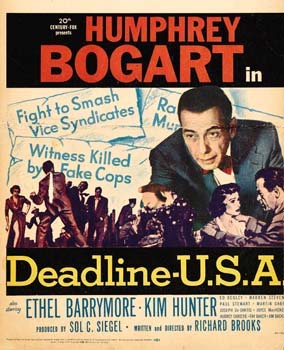
About June 2011

This page contains all entries posted to About Last Night in June 2011. They are listed from oldest to newest.

May 2011 is the previous archive.

July 2011 is the next archive.

Many more can be found on the main index page or by looking through the archives.

Powered by
Movable Type 3.33