« September 2008 | Main | November 2008 »
October 31, 2008
CAAF: 5 x 5 More Books For A Spooky Halloween by Kelly Link
5 x 5 Books ... is a recommendation of five books that appears regularly in this space. Last Halloween, author Kelly Link and husband Gavin Grant, publishers of Small Beer Press, were kind enough to share spooky and not-so-spooky tales for Halloween reading. (If you missed it, here's Kelly's list and here's Gavin's.) If you've ever been to one of Kelly's readings, or met her, you'll know she's a generous booster of other people's work -- and that her book recommendations are always the best. So it's great to have her return with another 5 x 5 of Halloween reading for About Last Night. Kelly's the author of three short-story collections, the most recent of which is the YA collection Pretty Monsters, itself an excellent choice to bring home this Halloween weekend.
1. Painted Devils by Robert Aickman. This collection is worth picking up for the short story "Ringing the Changes" alone, but I've never read an Aickman story that didn't leave me unnerved and afraid of the dark.
2. Be My Guest by Rachel Ingalls. Like Aickman, Ingalls' short stories will simultaneously unsettle and satisfy. For this list, I've picked her pair of novellas published as Be My Guest, but the collections The Pearl Killers and I See a Long Journey would also be great starting places.
3. Yoshitoshi's Thirty-Six Ghosts by John Stevenson. This book collects a series of Taiso Yoshitoshi's ukiyo-e (woodblock prints). There are monsters, creatures from Japanese folklore, and some really terrifying ghosts. The text accompanying each print gives provides background on the folklore that Yoshitoshi drew on.
4. Resume With Monsters by William Browning Spenser. This isn't just one of the best Lovecraft pastiches I've ever read, it's also one of my favorite comic novels. Spencer's protagonist is a would-be novelist working in Lovecraftian territory. He also has a temp job at the Pelidyne Corporation, where devolved office workers living in crawl spaces and ducts pass alarming office memos about cannibalism back and forth, and true believers use Xerox machines to send their consciousnesses into outer darkness where the elder gods lurk, waiting to rise again.
5. Strange Toys by Patricia Geary. Geary's novel encompasses childhood games, toy poodles, black magic, and sibling rivalry. Like Lynda Barry's Cruddy, I read it every few years in order to remind myself of the strange and dangerous territory childhood can represent.
I'll finish by recommending three short stories you can find online. At LitGothic, you'll find some M. R. James as well as Edith Wharton's "Afterward," one of the one of the best ghost stories I've ever read. Google Books has the text of Michael Shea's powerful and graphic story about a mining disaster and a small-town doctor, "The Autopsy." Lastly, there's Lucy Lane Clifford's extraordinary fairytale "The New Mother".
Posted October 31, 12:14 AM
TT: An old house made new
Today's Wall Street Journal drama column is devoted to a pair of shows playing in alternating repertory at Cleveland's Great Lakes Theater Festival, Into the Woods and Macbeth. Both are excellent, while the company's new theater, which just opened, is sumptuous. Here's an excerpt.
* * *
When Noël Coward, Alfred Lunt and Lynn Fontanne wanted to tune up "Design for Living" before bringing it to Broadway in 1933, they opened the show at the Hanna Theatre in downtown Cleveland. Theaterwise, that's about as historic as it gets. Now this grand old building, built in 1921, has been taken over by the Great Lakes Theater Festival and remodeled in order to make it suitable for modern repertory theater. The result is one of the most satisfying theatrical renovations ever to be undertaken in this country. The "new" Hanna, designed by the Cleveland firm of Westlake Reed Leskosky, has been turned from a 1,421-seat Broadway-style house into an intimate 548-seat thrust-stage theater whose seating and public areas flow together seamlessly, thus encouraging playgoers to come early and use the Hanna as a meeting place. At the same time, the charmingly elaborate architectural detail of the original interior has been preserved. I can't imagine a more pleasing place in which to see a show....
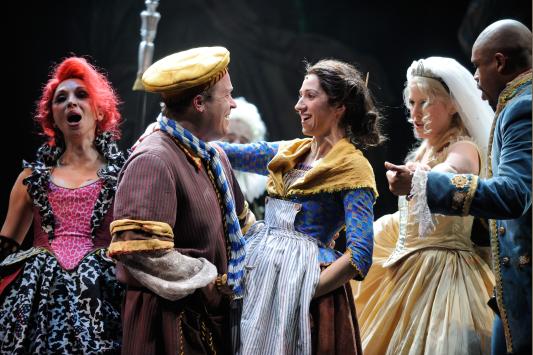
I've seen quite a few productions of "Into the Woods," starting with the Broadway premiere in 1987, and this one ranks close to the top of the list. The cast is very strong, with Jodi Dominick giving a top-notch performance as the Baker's Wife, at once richly funny and vibrantly physical. Joanna Gleason, who created the role on Broadway 21 years ago, was and is a tough act to follow, but Ms. Dominick makes an impression all her own. Victoria Bussert's staging is no less impressive in its clarity and drive...
I don't want to spoil any of director Charles Fee's surprises, so I'll say only that he's given us a Japanese-style "Macbeth" that evokes the stylized rituals of Noh theater. The stage is flanked by a pair of costumed percussionists who provide thunderous accompaniment for the play's horrific occurrences. Instead of buckets of blood, we get long, fluttering ribbons of red silk, while the three Weird Sisters are dressed as bats on crutches, a deliciously jolting touch. Gage Williams, who designed the set, and Star Moxley, who devised the costumes, deserve co-equal credit with Mr. Fee for the success of this "Macbeth." Rarely have I seen a Shakespeare production in which staging and décor were fused so indissolubly....
* * *
Read the whole thing here.
Posted October 31, 12:00 AM
TT: Almanac
"The fact is popular art dates. It grows quaint. How many people feel strongly about Gilbert and Sullivan today compared to those who felt strongly in 1890?"
Stephen Sondheim (quoted in the International Herald Tribune, June 20, 1989)
Posted October 31, 12:00 AM
October 30, 2008
TT: So you want to see a show?
Here's my list of recommended Broadway, off-Broadway, and out-of-town shows, updated weekly. In all cases, I gave these shows favorable reviews (if sometimes qualifiedly so) in The Wall Street Journal when they opened. For more information, click on the title.
Warning: Broadway shows marked with an asterisk were sold out, or nearly so, last week.
BROADWAY:
• Alfred Hitchcock's The 39 Steps (comedy, G, suitable for bright children, reviewed here)
• August: Osage County (drama, R, adult subject matter, reviewed here)
• Avenue Q (musical, R, adult subject matter and one show-stopping scene of puppet-on-puppet sex, reviewed here)
• Boeing-Boeing (comedy, PG-13, cartoonishly sexy, reviewed here)
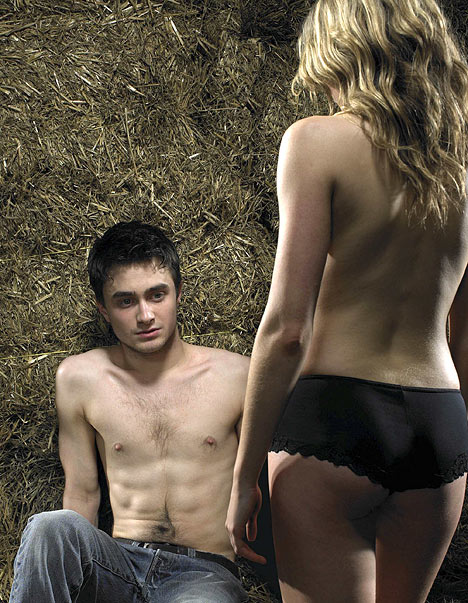
• Equus (drama, R, nudity and adult subject matter, closes Feb. 8, reviewed here)
• Gypsy (musical, PG-13, adult subject matter, reviewed here)
• The Little Mermaid (musical, G, entirely suitable for children, reviewed here)
• A Man for All Seasons * (drama, G, too intellectually demanding for children of any age, extended through Dec. 14, reviewed here)
• South Pacific * (musical, G/PG-13, some sexual content, brilliantly staged but unsuitable for viewers acutely allergic to preachiness, reviewed here)
OFF BROADWAY:
• The Fantasticks (musical, G, suitable for children capable of enjoying a love story, reviewed here)
IN SUBURBAN CHICAGO:
• Picnic (drama, PG-13, adult themes, closes Nov. 30, reviewed here)
Posted October 30, 12:00 AM
TT: Almanac
"We respond to a drama to that extent to which it corresponds to our dreamlife."
David Mamet, Writing in Restaurants
Posted October 30, 12:00 AM
October 29, 2008
TT: So what else is new?
Busy as always, I'm off to Washington this morning to attend a meeting of the National Council on the Arts. On Friday afternoon I'll be lunching at the U.S. Supreme Court, where the National Endowment for the Arts and Justices Scalia, Kennedy, and Ginsburg are throwing a lunchtime bash for Leontyne Price, Carlisle Floyd, Richard Gaddes, and James Levine, the first recipients of the new NEA Opera Honors.
Well-informed readers will recall that Gaddes retired the other day from the Santa Fe Opera, where one of his last duties was to commission Paul Moravec and me to write The Letter. I had nothing whatsoever to do with Gaddes' receiving an NEA Opera Honor--the NEA is exceedingly fussy about conflicts of interest, real or perceived--but it goes without saying that I'm glad he's getting it, and I'll be saying a few words to that effect on Friday.
You know the rest. I'll blog when I can. See you around.
Posted October 29, 12:00 AM
CAAF: Morning coffee
• There was no more sleep for me that night, and I was thankful when daylight came. Another story to print and read in a sunlit place, Edith Wharton's "The Lady's Maid's Bell."
(Previous Halloween installments: Elizabeth Bowen's "The Demon Lover" and Kelly Link's "The Specialist's Hat.")
• This catalog of haunted libraries in the Northeast makes a good companion to the Wharton. The case of the ghost who habituates the U.S. Capital Building Rotunda (former near neighbor to the Library of Congress) is particularly poignant. He's said to be the ghost of a librarian who is looking for "$6,000 he stashed in the pages of some obscure volumes." The library of course has long since been moved, the money found and (one assumes) dispersed ... and still the poor guy wanders. One wonders, Can no one tell him? Can't a collection be taken up? And what exactly were the titles of those obscure volumes? I picture the librarian alive and stalking through the stacks all, "Population Fluctuations on the Lapsang Peninsula (1812-1843)? Ain't no one looking in there." (Via Maud.)
Posted October 29, 12:00 AM
TT: Snapshot
Frank Lloyd Wright appears as the mystery guest on What's My Line?:
(This is the latest in a weekly series of arts-related videos that appear in this space each Wednesday.)
Posted October 29, 12:00 AM
TT: Almanac
"Stupidity, outrage, vanity, cruelty, iniquity, bad faith, falsehood--we fail to see the whole array when it is facing in the same direction as we."
Jean Rostand, The Substance of Man
Posted October 29, 12:00 AM
October 28, 2008
TT: Almanac
"I wanted to slap her, because her tone, and the look in her eyes going over me, made me feel like a potato she was peeling."
Rex Stout, Some Buried Caesar
Posted October 28, 12:00 AM
October 27, 2008
CD
Dennis Brain: The Horn Player (EMI, four CDs). This specially priced box set contains most of the commercial recordings of the great British horn player whose death in a 1957 car accident deprived the world of one of its most prodigally gifted instrumentalists. Brain's celebrated studio performances of the concertos of Mozart, Richard Strauss, and Paul Hindemith are all here, together with a generous helping of chamber music, including the exquisitely played versions of Dukas Villanelle and the Schumann Adagio and Allegro that he recorded with Gerald Moore in 1952. If you've never heard Brain's horn playing, prepare yourself to experience a miracle of suavity and grace (TT).Posted October 27, 7:21 AM
TT: Who's on first?
Mrs. T and I just returned from a much-needed holiday at Ecce Bed and Breakfast, our favorite retreat. One of the books that I brought along with me to read was Some Buried Caesar, the sixth of Rex Stout's Nero Wolfe novels, published in 1939. In it Archie Goodwin makes the following remark about Lily Rowan, his on-again-off-again girlfriend: "I was wondering which would be more satisfactory, to slap her and then kiss her, or to kiss her and then slap her." I must have read the book a dozen times over the years, but never until now had that line caught my eye.
Suddenly a coin dropped in my head and I remembered another line: "She reached a quick arm around my neck and started to pull. So I kissed her. It was either that or slug her." It comes, of course, from Raymond Chandler's The Little Sister, published in 1949.
Chandler once told a correspondent that he considered himself "far above" Stout, and very likely he did. But could it possibly be that he was thinking of Some Buried Caesar, consciously or not, when he penned that famous line?
Posted October 27, 12:00 AM
TT: Scenes from a marriage (cont'd)
Time: near the end of a leisurely dinner. Place: Restaurant 15 Main, Narrowsburg, New York. Frank Sinatra's recording of "Thanks for the Memory" is playing in the background.
SHE I never liked that song.
HE Well--
SHE Don't say it--I already know what you're going to say. "Well, I like it." Of course you like it. You're got more in common with your parents' generation than with ours.
HE What do you mean? I know twice as much about rock and roll as you do.
SHE Yeah, but you never hung out in bars and danced with girls when you were in high school.
HE I was always on the bandstand. And how come you don't like "Thanks for the Memory"?
SHE It's corny.
HE (with mock outrage) What do you mean, corny? It's one of the greatest list songs ever written.
SHE One of the what?
HE List songs. You know, songs whose lyrics are a list. "You're the Top" is the locus classicus of the genre. "You're the National Gallery/You're Garbo's salary/You're cellophane." (Triumphantly) What do you say to that?
SHE It's still corny.
She rolls her eyes.
* * *
Decide for yourself:
Posted October 27, 12:00 AM
TT: Almanac
"The silent bear no witness against themselves."
Aldous Huxley, Point Counter Point
Posted October 27, 12:00 AM
October 24, 2008
CAAF: Morning coffee
Yesterday I pointed to Elizabeth Bowen's "The Demon Lover." Today continue the ghostly march toward Halloween with Kelly Link's "The Specialist's Hat," which can be found in her first collection, Stranger Things Happen, as well as her latest, Pretty Monsters. As before: print & read in a crowded place.
Posted October 24, 9:47 AM
TT: Hell, Hollywood style
In today's Wall Street Journal drama column I review two shows, one on Broadway (Speed-the-Plow) and one in suburban Chicago (Writers' Theatre's Picnic). The first is uneven, the second...well, perfect. Here's a excerpt.
* * *
David Mamet writes funny plays about horrible people. "Speed-the-Plow," in which a pair of vulturine Hollywood executives wrangle over the shapely carcass of a not-so-innocent secretary, was first seen in 1988 in a production that starred Joe Mantegna, Ron Silver and Madonna, a cast about which New York playgoers are still talking. I wasn't lucky enough to catch it back then, but the 20th-anniversary revival, which features Broadway star Raúl Esparza and two hot young cable-TV guns, Elisabeth Moss of "Mad Men" and Jeremy Piven of "Entourage," shows that Mr. Mamet's best play has lost none of its zing in the intervening years--even though Neil Pepe's well-meaning production isn't as good as it ought to be.
Like all of Mr. Mamet's so-called comedies, "Speed-the-Plow" is grimly serious just beneath the surface, a variation on Jean-Paul Sartre's "No Exit" in which the hell where his three ambitious characters reside is not a locked room but a film studio. Mr. Esparza gets the point, and the results are terrifying to behold. As Charlie Fox, the fawning underling who longs to get out from under and sees his main chance going astray, he twists himself into a double knot of aggression and desperation, then rips himself loose in a comic explosion that rocks the theater....
Mr. Piven, who plays Mr. Esparza's boss, lacks his knockdown punch. In a Mamet play, the dialogue must sound like an Uzi being fired at a big brass bell, and Mr. Piven, despite his extensive stage experience, is a bit too soft around the edges to keep the bell ringing. As for Ms. Moss, she gives an unconvincingly mousy one-note performance...
William Inge wrote four Broadway hits in a row between 1950 and 1957, all of which were turned into hit movies. After that he lost his touch, left New York and committed suicide, but throughout the '50s his track record was so consistent that suspicious critics came to doubt his seriousness. Last season's Broadway revival of "Come Back, Little Sheba" persuaded me otherwise, and now Writers' Theatre, a remarkable little troupe based in suburban Chicago, has mounted a production of "Picnic" that blasts the bull's-eye out of the target. Directed by David Cromer, it is one of the best performances of anything--and I mean anything, not just plays--that I've seen in my life, and it also leaves no possible doubt that Inge was not a mere commercial craftsman but an indisputably major artist, one of this country's half-dozen greatest playwrights....
Everybody in Writer's Theatre's "Picnic," and everybody involved with it, deserves the highest possible praise. This is a destination show, worth traveling any distance to see.
* * *
Read the whole thing here.
Watch my wsj.com video review of Speed-the-Plow here:
Posted October 24, 12:00 AM
TT: You, too, can be a conductor
Maestro, BBC-2's latest venture into reality-TV programming, has yet to be imported to the United States, no doubt because it's a trifle arty for the average American TV viewer. In the series, which ran throughout August and September, eight semi-celebrities took crash courses in orchestral conducting, then competed for a chance to conduct the BBC Concert Orchestra as part of a televised concert. (The comedian won.) Not altogether surprisingly, Maestro attracted quite a bit of attention in the British press, not all of it favorable. Norman Lebrecht, for instance, called it "a new nadir in arts broadcasting" and "a calculated insult to art."
It happens that I know a thing or two about conducting--I did a fair amount of it in my college days--and so I decided that Maestro would make a suitable topic for my "Sightings" column in tomorrow's Wall Street Journal. Is it really true, as the producers of Maestro seem to suggest, that you don't have to be a trained musician in order to successfully lead a symphony orchestra? Or might there possibly be more to the art of conducting than waving a wooden stick? To find out, pick up a copy of Saturday's Journal and see what I have to say.
UPDATE: Read the whole thing here.
Watch Sue Perkins, the winner of the Maestro competition, conduct the first movement of Beethoven's Fifth Symphony here:
Posted October 24, 12:00 AM
TT: Almanac
"If you rest, you rust."
Helen Hayes, My Life in Three Acts
Posted October 24, 12:00 AM
October 23, 2008
CAAF: Morning coffee
Some ghoulish entertainment in preparation for Halloween:
• Elizabeth Bowen's "The Demon Lover." Set during the Blitz, the story is one of the spooky stories recommended by James Hynes which I pointed to yesterday and can be found in the excellent Norton Book of Ghost Stories , edited by Brad Leithauser. Very compressed, gorgeous & hair-raising -- print it out and read in a crowded place.
• The old Scottish ballad the story is based on.
Posted October 23, 8:31 AM
TT: So you want to see a show?
Here's my list of recommended Broadway, off-Broadway, and out-of-town shows, updated weekly. In all cases, I gave these shows favorable reviews (if sometimes qualifiedly so) in The Wall Street Journal when they opened. For more information, click on the title.
Warning: Broadway shows marked with an asterisk were sold out, or nearly so, last week.
BROADWAY:
• Alfred Hitchcock's The 39 Steps (comedy, G, suitable for bright children, reviewed here)
• August: Osage County (drama, R, adult subject matter, reviewed here)
• Avenue Q (musical, R, adult subject matter and one show-stopping scene of puppet-on-puppet sex, reviewed here)
• Boeing-Boeing (comedy, PG-13, cartoonishly sexy, reviewed here)
• Equus (drama, R, nudity and adult subject matter, closes Feb. 8, reviewed here)
• Gypsy (musical, PG-13, adult subject matter, reviewed here)
• The Little Mermaid (musical, G, entirely suitable for children, reviewed here)
• A Man for All Seasons * (drama, G, too intellectually demanding for children of any age, extended through Dec. 14, reviewed here)
• South Pacific * (musical, G/PG-13, some sexual content, brilliantly staged but unsuitable for viewers acutely allergic to preachiness, reviewed here)
OFF BROADWAY:
• The Fantasticks (musical, G, suitable for children capable of enjoying a love story, reviewed here)
IN CLEVELAND:
• Noises Off (farce, PG-13, some mild sexual content, reviewed here)
CLOSING SATURDAY IN CHICAGO:
• R.U.R. (serious comedy, PG-13, adult themes, reviewed here)
CLOSING SUNDAY OFF BROADWAY:
• Enter Laughing (musical, PG-13, full of sex jokes, reviewed here)
Posted October 23, 12:00 AM
TT: Almanac
"When statesmen forsake their own private conscience for the sake of their public duties, they lead their country by a short route to chaos."
Robert Bolt, A Man for All Seasons
Posted October 23, 12:00 AM
October 22, 2008
CAAF: Afternoon coffee
• James Hynes recommends ten spooky stories for midnight reading. (Via Maudie.)
• John Updike talks to Emily Nussbaum about The Widows of Eastwick, his follow-up to 1984's Witches of Eastwick. (Via Sarah.)
• Vampire bats, leeches, chiggers and bed bugs are among the bloodsuckers featured in Dark Banquet, a new book by biologist Bill Schutt which, as it happens, I trotted to the bookstore last night to purchase. (Via Jenny.)
Posted October 22, 2:59 PM
TT: A glimpse of history
On May 17, 1947, Louis Armstrong gave an all-star concert at New York's Town Hall that changed his life. He had been leading a touring big band since 1929, but World War II brought the Swing Era to an end, and by 1947 Armstrong knew that he had to find a different way to package himself for postwar audiences. He did so at the Town Hall concert, which teamed him with a small group whose members included Sid Catlett, Bobby Hackett, and Jack Teagarden. As I wrote in A Cluster of Sunlight: The Life of Louis Armstrong:
It was, for one thing, the first time that he had ever given a full-evening concert with a combo, and it appears to have been the first time since 1926 that he had appeared in public as the leader of a small group of his own. Not that he needed a good band to play well. "I work with two bands, the one on stage and the one in my head," he would later tell Ruby Braff. "If they sound good on stage, O.K., I'll play with them. If not, I just turn up the volume of the band in my head." But the band with which he was playing at Town Hall that night sounded very good indeed...At the time, comparatively little fuss was made over the event, which went unmentioned in the New York Times, Time, and The New Yorker. Only the jazz press took note of the occasion: Down Beat's review was headed "Satchmo's Genius Still Lives," while The Melody Maker ran a piece by a correspondent who reported that Armstrong's playing "had all the freshness and vigour of the early Hot Five and Seven days. He never strove for effects, never played to the gallery." But one person in the audience was listening with the closest possible attention. Joe Glaser, Armstrong's manager, who was sitting in a box seat, knew at once that his troubles were over. Not only had Armstrong proved himself capable of thrilling a crowd without the support of a big band, but in Jack Teagarden he had found the foil of a lifetime. Like the businessman he was, Glaser struck while the iron was smoking hot. He signed Teagarden to a long-term contract on Monday morning, then gave the members of the big band two months' notice.
Three months after that, Armstrong opened at Billy Berg's, a Los Angeles nightclub, leading a six-piece combo whose other members included Sid Catlett and Jack Teagarden. The engagement was a huge success, and for the rest of his life Armstrong toured the world with the band that Glaser later dubbed "the All Stars."
Rarely have microphones been present at so historically significant a one-night stand as Armstrong's 1947 Town Hall concert, but Ernie Anderson, the promoter who persuaded Glaser to let him present the concert, took care to record it, and the resulting album leaves no possible doubt that it was as good as everybody remembered. Fortunately, the great jazz photographer Bill Gottlieb was also present, and took a beautiful group shot of Armstrong and his musicians in full cry. A cropped version of the photo was published two months later in Down Beat, but the original vanished into Gottlieb's files, and it didn't resurface until he left his personal archive of sixteen hundred prints and negatives to the Library of Congress, which has created an online collection of Gottlieb's work.
I was lucky enough to be casually acquainted with Gottlieb, who died a couple of years ago, and I knew as soon as I started choosing the illustrations for A Cluster of Sunlight that his Town Hall photograph would have to be included. I'm pleased to say that his son Edward has given me permission to reprint this essential document of the most consequential performance of Louis Armstrong's life. It isn't as well known as it ought to be, perhaps because it isn't all that dramatic, but even so, no Armstrong biography could possibly be complete without it.
Posted October 22, 12:00 AM
TT: Snapshot
The George Shearing Quintet plays "Conception":
(This is the latest in a weekly series of arts-related videos that appear in this space each Wednesday.)
Posted October 22, 12:00 AM
TT: Don't call us, we'll call you (maybe)
Mrs. T and I are departing this afternoon for a brief, well-deserved holiday at Ecce Bed and Breakfast, the Catskills inn where we honeymooned a year ago. Our deflector shields will be set to maximum until Sunday, when we return to New York with what I expect to be the utmost reluctance. You'll find the usual almanac entries and theater-related postings in this space, but if you need anything other than that between now and then, ask somebody else.
Later.
Posted October 22, 12:00 AM
TT: Almanac
"Unlike any other visual image, a photograph is not a rendering, an imitation or an interpretation of its subject, but actually a trace of it. No painting or drawing, however naturalist, belongs to its subject in the way that a photograph does."
John Berger, About Looking
Posted October 22, 12:00 AM
October 21, 2008
TT: Adventures in copyright
One of the minor pleasures of writing a biography is picking the photographs that will be used to illustrate it--so long as you can get permission to reproduce them. When you can't, it's pure hell.
In addition to looking through some two thousand photos of Louis Armstrong at the Armstrong Archives, I spent several days trolling the Web for images, mostly in vain, since just about everything I found was over-familiar and/or unusable. I did, however, run across one spectacular shot of Armstrong and the All Stars on stage in Amsterdam in 1955, and no sooner did I find it on a Web-based photo album than I knew I wanted to include it in A Cluster of Sunlight: The Life of Louis Armstrong. I've seen hundreds of pictures of Armstrong in performance, but I can't think of one that does a better job of suggesting the atmosphere of a jazz concert.
On top of that, this particular photo is of what I believe to have been Armstrong's best working group, the one that featured Edmond Hall on clarinet, Trummy Young on trombone, and Billy Kyle on piano. Armstrong, as it happens, felt exactly the same way. As he said in a little-known 1956 interview quoted in A Cluster of Sunlight:
Oh yeah, that first group of All Stars [i.e., the one that included Barney Bigard on clarinet, Sid Catlett on drums, Earl Hines on piano, and Jack Teagarden on trombone] was a good one all right, but I think the group I have now is the best of 'em all. It seems to me this band gets more appreciation now than the other All Stars. Some of the other Stars got so they was prima donnas and didn't want to play with the other fellows. They wouldn't play as a team but was like a basket ball side with everybody trying to make the basket. They was great musicians, but after a while they played as if their heart ain't in what they was doin'. A fella would take a solo but no-one would play him no attention--just gaze here, look around there. And the audience would see things like that--I don't praise that kind of work y' know....The All Stars now ain't like that and the audience appreciate the spirit in the band. As musicians they ain't any better, but a lot of people say these boys seem like they're real glad to be up there swingin' with me.
Here is that same band playing "Muskrat Ramble" on TV in 1958:
Clearly, then, I had to include that image in my book. There was only one catch, but it was a huge one: the Web album didn't include the photographer's name or e-mail address. So what did I do? Simple: I told Ariel Davis, my trusty research assistant, to track the man down. It took her a couple of weeks to oblige, but she finally brought home the bacon.
Much to my surprise, it turned out that Joel Elkins, who shot what Ariel and I had taken by then to calling the Mystery Photo, knew who I was. "It's a pleasure to be associated with a book about the great Louis Armstrong written by someone such as yourself," he wrote. Elkins charged a token fee for permission to reprint his wonderful picture in A Cluster of Sunlight, asking only that we send him a signed copy of the book when it comes out next year. I can't wait to oblige.
No, it's not always that easy....
Posted October 21, 12:00 AM
TT: Almanac
"We also have to learn to forget music. Otherwise we become addicted to the past."
Keith Jarrett (quoted in The Wall Street Journal, Oct. 11, 2008)
Posted October 21, 12:00 AM
October 20, 2008
TT: In one piece
I'm up in Connecticut with Mrs. T, writing captions for the thirty-odd photographs that will be reproduced in A Cluster of Sunlight: The Life of Louis Armstrong, about which more later in the week. I was, alas, out of town when the Orpheus Chamber Orchestra gave the premiere of Paul Moravec's Brandenburg Gate at Carnegie Hall last Thursday night, but the composer was on hand to take a well-deserved bow. When not busy composing operas, Paul also writes instrumental music of tremendous distinction and individuality, and Brandenburg Gate, an homage to Bach's Brandenburg Concerti, is one of his very best pieces. He called me in Connecticut on Friday morning to report that it was a hit, which didn't surprise me in the least.
WNYC broadcast the concert live in New York and has since archived the program on its Web site. You can listen to it, as I did, by going here. The program also includes Haydn's "Fire" Symphony, Jacques Ibert's Hommage à Mozart, and the Saint-Saëns G Minor Piano Concerto, performed by Jean-Yves Thibaudet. To listen to Brandenburg Gate, skip forward to the thirty-minute mark in the playback. The performance is followed by an interview with Paul that was taped earlier in the day.
The announcers made public something that I've been keeping more or less under wraps until now, which is that Paul suffered a mild stroke in August. I'm sure I don't need to tell you how scary that was, but the stroke, as you'll hear when you listen to Paul talking about Brandenburg Gate, had no effect whatsoever on his mental processes (except that his e-mails were full of misspelled words for a week or so!). I'm delighted to say that he's been spending the past few weeks orchestrating The Letter, which is, like A Cluster of Sunlight, moving steadily toward the finish line.
If you'd like to celebrate with us, check out Brandenburg Gate. I think you'll like what you hear.
Posted October 20, 12:00 AM
TT: Almanac
"Politics in a literary work is like a gun shot in the middle of a concert, something vulgar, and however, something which is impossible to ignore."
Stendhal, The Charterhouse of Parma (trans. Jeri King)
Posted October 20, 12:00 AM
October 19, 2008
TT: Neal Hefti and Dave McKenna, R.I.P.
Two more jazz masters have passed on. Neal Hefti was best known to the public for composing the Batman and Odd Couple themes, but among musicians it was his smoothly swinging work for Count Basie that made him legendary, in the process helping to update and redefine the language of postwar big-band arranging. The Atomic Mr. Basie, their best-known collaboration, contained "Li'l Darlin'," the slower-than-slow ballad for which Hefti will always be remembered. Marc Myers' obituary deftly summarizes his innumerable other musical achievements and offers a well-chosen list of recommended recordings. I especially like "The Good Earth," the oft-reissued 1945 Woody Herman flagwaver that is one of my all-time favorite big-band recordings.
Dave McKenna was best known for his unaccompanied piano solos, whose propulsive left-hand walking-bass lines rendered sidemen superfluous. He was also a consummately sensitive balladeer, and Solo Piano, recorded for Chiaroscuro in 1972, includes a version of Leonard Bernstein's "Lucky to Be Me" that shows him at his most tender. (You can download it from iTunes.)
McKenna recorded frequently before illness forced him into retirement, but not nearly enough of his albums remain in print. I hope Concord will hasten to reissue My Friend the Piano, for me his most satisfying record. Used copies are easy to find, and I suggest that you order one, listen to "Baby, Baby All the Time," and mourn the passing of an artist.
* * *
"Li'l Darlin'," "The Good Earth," and "Lucky to Be Me" can all be downloaded from iTunes.
Hefti's New York Times obituary is here. McKenna's is here.
Doug Ramsey writes well about Hefti and McKenna here and here.
Here's an appropriately elegiac McKenna medley of Leonard Bernstein's "Some Other Time" and Johnny Mandel's "A Time for Love":
Posted October 19, 11:37 AM
October 18, 2008
MUSEUM
Giorgio Morandi, 1890-1964 (Metropolitan Museum, 1000 Fifth Ave., up through Dec. 14). It's too crowded, too noisy, and poorly hung, but the Met's Morandi exhibition, the first ever to come to the United States, is still a major event, a retrospective of one hundred and ten paintings and works on paper by one of the greatest and least sufficiently appreciated still-life painters of the twentieth century. Unless you take the trouble to go to Bologna's Museo Morandi, it's unlikely that you'll ever get another chance to see this many Morandis at one time, so pick an off hour, pack a set of earplugs, and dive in (TT).Posted October 18, 12:00 AM
October 17, 2008
TT: Don't shoot the playwright
I review three shows in this week's Wall Street Journal drama column. Two are on Broadway, All My Sons and To Be or Not to Be, and both are doubleplusungood. Not so the Cleveland Play House's revival of Noises Off, which I liked enormously. Here's an excerpt.
* * *
Everything that Arthur Miller was to become can be seen in embryo in "All My Sons," his first hit, which ran for nine months on Broadway in 1947 and has now returned there in a revival graced--if that's the word--by the presence of Katie Holmes. Earnest and hectoring, "All My Sons" is as much a secular sermon as a play, a school-of-Ibsen indictment of the moral emptiness of the American bourgeoisie, always a draw for guilt-wracked playgoers who enjoy being flagellated at $100 a pop. Unlike the plays that followed it, however, "All My Sons" is for the most part satisfyingly unpretentious, a next-to-no-nonsense wartime tragedy about a corrupt factory owner (John Lithgow) whose greed leads to the suicide of his soldier son, and it deserves better than this windy production, in which Simon McBurney commits first-degree directorial malpractice.
Mr. McBurney is the artistic director of Complicité, a British avant-garde theater troupe whose work I admire. Perhaps not surprisingly, he has used "All My Sons" as a vehicle for his multi-media prestidigitation: Newsreel-style rear projections, thunderous sound effects and spooky incidental music are seen and heard throughout the evening, while Tom Pye's minimalist set looks as though it were designed for an opera by Philip Glass. But while this trickery might well have been impressive if deployed in the service of one of Complicité's surreal spectacles, it has nothing whatsoever to do with the modest exercise in kitchen-sink naturalism that is "All My Sons," and Miller's script all but disappears under the weight of Mr. McBurney's staging....
Like most of the pretty young screen things who have made Broadway debuts in recent seasons, Ms. Holmes is a creature of the camera who doesn't know the first thing about stage acting. Anyone misguided enough to make her professional stage debut on Broadway opposite Mr. Lithgow and Ms. Wiest in an Arthur Miller play is, of course, asking for trouble, and Ms. Holmes gets it in spades....
Ernst Lubitsch never made a funnier movie than "To Be or Not to Be," in which Jack Benny played a second-rate Polish actor who bamboozles the Nazis in spite of himself. Why, then, attempt to turn so well-made a work of cinematic art into a stage play? A musical, maybe, but Nick Whitby's adaptation, which takes the script of the 1942 film and pumps it full of new punch lines and a semi-serious ending, makes no sense at all--not least because none of Mr. Whitby's jokes is even slightly funny....
"Noises Off," first seen on Broadway in 1983, consists of a rehearsal and two performances of "Nothing On," a not-so-hot British sex comedy acted by a calamity-prone touring troupe. The gimmick of the show is that the set is turned around for the second act, allowing us to witness the disastrous backstage occurrences from the actors' point of view. The result is a metafarce--a farce whose subject matter is farce itself. Neeedless to say, so complicated a conceit cannot possibly be made to work without pristinely immaculate craftsmanship, but "Noises Off" fills the bill. Once the nine doors of James Leonard Joy's two-story set start slamming, the laughter starts swelling in a crescendo so protracted that it's a wonder people don't faint in the aisles from sheer exhaustion.
David H. Bell, the director of this production, is a specialist in musical comedy who doubles as a choreographer, which may help to explain the miraculous exactitude with which he has staged "Noises Off." Every comic bomb goes off at the right split-second....
* * *
Read the whole thing here.
Watch my wsj.com video review here:
Posted October 17, 12:00 AM
TT: Almanac
"You critics are always writing about the meaning of music, the ethic, the Weltanschauung of the composer, and God knows what. The whole point of music is that it should sound well. Never mind what it signifies. Music should have wings and float and give delight."
Sir Thomas Beecham (quoted in Neville Cardus, Autobiography
Posted October 17, 12:00 AM
October 16, 2008
TT: So you want to see a show?
Here's my list of recommended Broadway, off-Broadway, and out-of-town shows, updated weekly. In all cases, I gave these shows favorable reviews (if sometimes qualifiedly so) in The Wall Street Journal when they opened. For more information, click on the title.
Warning: Broadway shows marked with an asterisk were sold out, or nearly so, last week.
BROADWAY:
• Alfred Hitchcock's The 39 Steps (comedy, G, suitable for bright children, reviewed here)
• August: Osage County (drama, R, adult subject matter, reviewed here)
• Avenue Q (musical, R, adult subject matter and one show-stopping scene of puppet-on-puppet sex, reviewed here)
• Boeing-Boeing (comedy, PG-13, cartoonishly sexy, reviewed here)
• Equus (drama, R, nudity and adult subject matter, closes Feb. 8, reviewed here)
• Gypsy (musical, PG-13, adult subject matter, reviewed here)
• The Little Mermaid * (musical, G, entirely suitable for children, reviewed here)
• A Man for All Seasons (drama, G, too intellectually demanding for children of any age, extended through Dec. 14, reviewed here)
• South Pacific * (musical, G/PG-13, some sexual content, brilliantly staged but unsuitable for viewers acutely allergic to preachiness, reviewed here)
OFF BROADWAY:
• The Fantasticks (musical, G, suitable for children capable of enjoying a love story, reviewed here)
CLOSING NEXT SATURDAY IN CHICAGO:
• R.U.R. (serious comedy, PG-13, adult themes, closes Oct. 25, reviewed here)
CLOSING NEXT SUNDAY OFF BROADWAY:
• Enter Laughing (musical, PG-13, full of sex jokes, closes Oct. 26, reviewed here)
Posted October 16, 12:00 AM
TT: The second time around
I heard from a connoisseur of the art of Giorgio Morandi not long after I posted yesterday morning on the deficiencies of the Metropolitan Museum's Morandi retrospective:
Another time we can perhaps discuss the Met's presentation. It is a much neglected but in my eyes crucial element to understanding Morandi's paintings, generally speaking and also to reveal their contemporaneity. To me they have specificity that requires very close attention to how they are (1) framed, (2) grouped, (3) spaced within a room. For example, no one would ever dare to jam as many Robert Rymans in one room, let alone that room. Giacometti is another you would not dare doing this to--although MoMA has (oops!).The results, as you say, were "educational," but only in the sense of being able to see the paintings in person rather than in reproduction. Had the Met mounted them with space to spare in the large galleries, it would have been a true eye opener towards greater understanding of the monumentality of Morandi's work--and a riveting pleasure at that.
I couldn't agree more. Morandi's paintings should not be jammed together, as they are at the Met. They need plenty of space to breathe and resonate. They also need silence, and so I went back to the Met at noon yesterday to take a second look at the show, which I had seen under unfavorable circumstances on Sunday afternoon. It was slightly less crowded but no less full of enthusiastic conversationalists. Next time I'll try going earlier in the morning.
When you go--and you should, soon--I commend your special attention to the following items: 4, 17, 34, 44, 57, 64, 82, 86 (from the Phillips Collection), 105, 107, 111, 120, 121, and 125 (Morandi's last painting).
Posted October 16, 12:00 AM
TT: Almanac
"A comfortable house is a great source of happiness. It ranks immediately after health and a good conscience."
Sydney Smith, letter, Sept. 29, 1843
Posted October 16, 12:00 AM
October 15, 2008
TT: Never on Sunday
Mrs. T departed for Connecticut last Friday morning, and I promptly hurled myself into a frenzy of urban activity. It was a brilliant and balmy weekend in New York City, the best of all possible times to be out and about, and so I spent very little time at home. On Friday evening I saw To Be or Not to Be on Broadway. The next morning I went to the gym, dropped by Mr. JazzWax's apartment to listen to records, visited two art galleries, and returned to Broadway to see Katie Holmes make her stage debut in Arthur Miller's All My Sons. On Sunday I took a brisk walk through Central Park, ending up at the Metropolitan Museum of Art, where I spent an hour looking at paintings, then returned to the Upper West Side to dine at Good Enough to Eat, where I hadn't eaten for weeks. Walking through the front door felt a little like coming home after a sea voyage.
You've probably guessed that I spent a good-sized chunk of the weekend looking at the paintings, watercolors, and etchings of Giorgio Morandi, which are currently on display at the Met, Pace Master Prints, and Lucas Schoormans Gallery. My trip to the Met wasn't quite as satisfying as I'd hoped, however, though not because of the show, which isn't quite perfect--the choice of etchings is less than representative--but comes close enough to be unforgettable. The problem is that the curators of the show made the inexplicable and irreparable mistake of installing it in a high-traffic area that is mere steps away from the museum's new downstairs cafeteria. As a result, "Giorgio Morandi, 1890-1964" is drawing large numbers of people who would rather talk than look at art, not a few of whom seem unaware that the use of a cellphone within five hundred yards of a Morandi still life would be punishable by death and/or dismemberment if I had anything to do with it.
I'm sure, by the way, that I beamed benevolently at some of the very same people when I saw them in Central Park a few minutes earlier. Parks are supposed to be crowded on balmy Sunday afternoons, and I enjoyed every minute of my long walk from the West Side to the East Side. But a park is by definition open to all comers, a gathering place for the demos. An art museum is a trickier proposition. I know that I ought to want the Metropolitan Museum to be crowded seven days a week, that it should be a sign of cultural health for its galleries to be packed. I also know what it's like to visit a museum that time and demography have passed by. In 2003 I paid a weekday visit to the Newark Museum and was shocked to find myself the only person in the galleries other than the guards. I would never want that to happen to the Met.
Alas, the experience of high art is democratic only in theory, never in practice, which is why there is something inherently contradictory, perhaps even deeply wrong, about seeing crowds at an exhibition of the paintings of Giorgio Morandi. Morandi is a difficult painter, one whose still lifes inevitably strike the casual viewer as both repetitive and plain. They require close, quiet attention in order to be appreciated. Giorgio Morandi: The Art of Silence is the apt title of a monograph about Morandi published a couple of years ago. It is inconceivable that anyone capable of talking in the presence of Morandi's late watercolors, which are so concentrated and oblique as to border on outright abstraction, could possibly be appreciating them.
My Saturday visits to Pace Master Prints and Lucas Schoormans Gallery were a different story. I spent a half-hour looking at the two dozen etchings on display at Pace Master Prints, and throughout that time I was the only person in the gallery devoted to Morandi. I was glad to be alone--but troubled, too, by the fact that no one else in New York City was there. Morandi, after all, was one of the greatest printmakers of the twentieth century, a master of his infinitely subtle medium, and the Pace show is a once-in-a-lifetime experience, an indispensable pendant to the Met retrospective. How is it possible that so important an exhibition should have drawn only a single viewer at midday on a Saturday in October? Be careful what you ask for, I thought as I left the gallery.
Things were different in yet another, more benign way when I arrived at Lucas Schoormans Gallery, whose Morandi show seems to me to be just about perfect. Instead of a hundred paintings and works on paper, there were a couple of dozen carefully chosen pieces on display. Instead of a clamorous horde of visitors--or none--there were six or seven people whose rapt, uncasual silence spoke for itself. Not for a moment did I doubt that they were there for the right reasons. Yet they had passed no test to be admitted: Lucas Schoormans Gallery, like Central Park, is open to all comers, not just to wealthy collectors or accredited connoisseurs. To partake of its offerings is, in the truest and best sense of the word, a democratic experience.
As for the Met, it is...well, the Met. While no great museum gets everything right, the Metropolitan Museum of Art, like the Phillips Collection, comes far closer than most. I am blessed to be within comfortable walking distance of its front door, and I expect to go back to see its Morandi exhibition several more times--but never again on a Sunday afternoon. It is possible to believe in the necessity of democracy without feeling the need to idealize it.
* * *
Lucas Schoormans Gallery's "Giorgio Morandi: Paintings and Works on Paper" and Pace Master Prints' "The Etchings of Giorgio Morandi" both close on Saturday. For more information, go here and here.
"Giorgio Morandi, 1890-1964" is up at the Met through December 14.
Posted October 15, 9:19 AM
TT: Snapshot
Excerpts from the 1997 premiere of Paul Taylor's Piazzolla Caldera, performed by the Paul Taylor Dance Company:
(This is the latest in a weekly series of arts-related videos that appear in this space each Wednesday.)
Posted October 15, 12:00 AM
TT: Almanac
"Great music is that which penetrates the ear with facility and leaves the memory with difficulty. Magical music never leaves the memory."
Sir Thomas Beecham (quoted in the Sunday Times of London, Sept. 16, 1962)
Posted October 15, 12:00 AM
October 14, 2008
TT: The horror! The horror!
If you're a biographer, you'll appreciate this: I spent most of Monday making sure that the manuscript of A Cluster of Sunlight: The Life of Louis Armstrong conforms to fair-use requirements for quotations from copyrighted sources. I ended up chopping some three thousand-odd words out of what I'd thought was the final draft, which (octuple arrgh) made the book better.
Alas, my eyes are now red and gritty from excessive busywork, and I don't have it in me to finish the post I started writing about my recent art-related adventures, so you'll have to do without it until tomorrow. In lieu of a nice juicy posting, kindly note that I posted all sorts of new stuff in the right-hand column over the weekend. But you already noticed that, right? No? Well, get cracking.
Posted October 14, 12:00 AM
TT: The kind of mail you like to open
From a regular reader of "About Last Night":
Best wishes on your anniversary. May you have many more and may they all be as happy as this one. It has now been five years that your blog has been an almost daily part of my life. For that I thank you deeply. It has enriched my life in ways that you cannot even imagine.
What can I say? The pleasure is all ours.
Posted October 14, 12:00 AM
TT: Almanac
"A portrait is a painting where there's always something not quite right about the mouth."
John Singer Sargent, quoted by Max Beerbohm in S.N. Behrman, Portrait of Max (courtesy of John Pancake)
Posted October 14, 12:00 AM
October 13, 2008
TT: Repose of the soul
"To me wherever you go--even behind the Iron Curtain--it's just another city," Louis Armstrong told a reporter in 1966. "All hotels are alike--bed, bureau, two pillows." I know what he meant, and now that I spend so much time on the road reviewing regional theater for The Wall Street Journal, I escape the terrible sameness of hotel life by staying in bed-and-breakfast inns as often as I can. I love the unassuming comfort that these homes-away-from-home afford, but the gingham-and-frills décor favored by most innkeepers isn't my style--I'm a confirmed midcentury modernist--and from time to time I feel the need to do something completely different.
Usually that means holing up for a night or two in an ultra-modern big-city high-rise hotel, and under normal circumstances that's what I would have done when I went to Cleveland last week to visit the Great Lakes Theater Festival and the Cleveland Play House. It happened, though, that the only performances of the Great Lakes Theater Festival's productions of Macbeth and Into the Woods that I could stuff into my schedule took place last Sunday and Wednesday, meaning that I'd have to spend four nights in town instead of my usual two. So instead of staying in the theater district of Cleveland, Mrs. T and I spent the better part of a week at the Penfield House, a half-century-old home designed by Frank Lloyd Wright, and turned a business trip into a retreat.
The Penfield House is one of six Wright-designed houses that can be rented on a short-term basis. It's located in Willoughby, a quiet suburb east of downtown Cleveland. The house isn't visible from the road--it's in the middle of thirty acres of heavily wooded land--and you have to look closely to spot the Cherokee-red gate which tells you that you've gotten where you're going. You push open the gate and drive down the gravel road, and all at once the house comes quietly into view, a simple two-story home built out of glass, wooden beams, concrete blocks, and light tan asbestos-and-concrete panels.
Like all of Wright's Usonian houses, the Penfield House seems to melt into the landscape rather than dominating it. As you pass through the unostentatious entrance, you feel as though you're still out of doors, for one of the walls of the twelve-foot-high living room is made almost entirely of glass, and the ceiling and floor extend beyond the glass wall in such a way as to create the illusion that the house is wide open to the surrounding woodland. The Chagrin River is nearby, and Paul Penfield, the owner, has cut a trail through the woods, making it possible for guests to wander at their leisure. Even though the house is only twenty minutes from downtown Cleveland, the city feels as though it's on the far side of the world. One afternoon I sat in the living room watching the leaves fall, and a half-dozen deer sauntered through the yard as though I didn't exist.
The sense of removal from the encroaching world is heightened by the fact that you can't surf the Web in the Penfield House. During my stay there, I checked my e-mail once a day by driving a mile to the parking lot of a Wendy's that had free wireless service. Otherwise I was out of touch, and glad to be. Instead of keeping up with current events, I read two new books from cover to cover, Brad Gooch's forthcoming biography of Flannery O'Connor and John Lucas' Thomas Beecham: An Obsession With Music, and listened to Stravinsky's Apollo and Symphonies of Wind Instruments, the Copland Piano Sonata, Julian Bream's recording of Lennox Berkeley's Guitar Sonatina, and a Beethoven string quartet. The house has a TV, but we never bothered to turn it on.
At night we drove into the city to dine and see shows, but we came back to the house as soon as we were done, for we knew within minutes of our arrival on Sunday that we'd want to spend as much time there as possible. Since both theaters were dark on Monday, Mrs. T and I spent the whole day and night at the house, leaving only long enough to buy groceries. After dinner we turned on all the lights, went outside, and marveled at its warm, unassuming beauty. Even though the Penfield House is a work of art in and of itself, Paul and his wife Donna have gone to considerable trouble to make it look and feel like a home, not a museum. I've never stayed in a more comfortable place, or a more soothing one.
Some part of this comfort, I know, arose less from the house than from the circumstances of our staying there. To spend four days in a Web-free woodland retreat could scarcely fail to please an Upper West Side writer who lives in the middle of the hum and buzz of urban culture. But it wouldn't have been the same had we stayed in a log cabin or a McMansion, for the all-pervading orderliness of the grid that Wright used to generate the floor plan and architectural detail of the Penfield House is both relaxing and reassuring to the eye. Modern the house most definitely is, but not in the hectoring manner of the International Style. It is, above all, tranquil, a point of repose in a world of pandemonium, a place where you can hear yourself think--or, if you like, where you can think of nothing at all. Wallace Stevens wrote a poem called "Not Ideas About the Thing but the Thing Itself." Such self-sufficient things were the stuff of which our four days at Penfield House were made: falling leaves, train whistles in the distance, deer on the lawn, rain on the roof.
On Tuesday morning I rose early, went downstairs, and wrote a drama column for The Wall Street Journal. I sat at the kitchen table, listening to the birds singing outside the house, and thought to myself, I could write a book here. The piece came easily, and by noon I'd driven to Wendy's, e-mailed it to New York, and returned home--for by then Hilary and I both thought of the Penfield House as our home. That day was the first anniversary of our marriage, and we celebrated in style, eating a flawlessly served champagne dinner at Stages, the onsite bistro of the Cleveland Play House, then strolling down the hall to see Michael Frayn's Noises Off, the funniest play ever written. I'd added it to my schedule partly because I'd never seen the company and partly because Mrs. T had never seen the play. You couldn't have asked for a more festive evening. Still, the best part was when we drove back to the Penfield House, unlocked the gate, and put the world behind us again.
We left on Thursday morning with the utmost reluctance, easing the pain of our going by paying a visit to the Cleveland Museum of Art en route to the airport. It is, to be sure, a very great museum, just as our life in New York and Connecticut is an unmixed blessing, and we rejoiced in seeing such masterpieces as John Constable's "Hampstead Heath, Looking Toward Harrow," an exquisite little oil on paper that I longed to show off to Our Girl, who is responsible for having gotten me excited about Constable in the first place. Yet all that Mrs. T and I could talk about on the flight home was how much we looked forward to our next trip to Cleveland. May it come soon.
* * *
To reserve the Penfield House, go here or call 440-942-9996. A two-night minimum stay is required.
Posted October 13, 12:00 AM
TT: Scenes from a marriage (I)
Time: just before midnight. Place: The front seat of a car driving east on I-90 outside Cleveland.
HE See that sign? "Executive's Den." Too funny.
SHE Yeah, right. No windows, either. You know what that means.
A beat.
Say, have you ever had a lap dance?
HE Oh, God, no. Eeuuww.
SHE (amused) Figures. I bet you've never even seen a stripper.
HE No, I guess I haven't.
A beat.
Does Salome count?
She rolls her eyes.
Posted October 13, 12:00 AM
TT: Almanac
At the earliest ending of winter,
In March, a scrawny cry from outside
Seemed like a sound in his mind.
He knew that he heard it,
A bird's cry, at daylight or before,
In the early March wind.
The sun was rising at six,
No longer a battered panache above snow....
It would have been outside.
It was not from the vast ventriloquism
Of sleep's faded papier-mache....
The sun was coming from outside.
That scrawny cry--it was
A chorister whose C preceded the choir.
It was part of the colossal sun,
Surrounded by its choral rings,
Still far away. It was like
A new knowledge of reality.
Wallace Stevens, "Not Ideas About the Thing but the Thing Itself"
Posted October 13, 12:00 AM
October 12, 2008
BOOK
Karen Wilkin, Giorgio Morandi (Rizzoli, $35). If you want to get up to speed on Morandi, this lavishly illustrated monograph, published in 1998, is the place to start. The most lucid and sensible of present-day art critics, Wilkin explains with perfect clarity why the Italian painter's soft-spoken, deceptively repetitive tabletop microcosms rank among the greatest achievements of twentieth-century art. Look first, then read--then look again (TT).Posted October 12, 11:55 AM
CD
Louis Jordan and His Tympani Five (JSP, five CDs). After Fats Waller, Louis Jordan was the great exponent of good-time small-group jazz whose entertainment value cunningly concealed its musical sophistication. A superb alto saxophonist who had a knack for singing (and picking) comic songs, Jordan put together a "jump band" so appealing that it was successfully marketed to blacks and whites alike, in the process leaving an indelible stamp on both R&B and early white rock and roll. This budget-priced, gorgeously remastered five-CD box set contains all 131 of the recordings Jordan and his combo cut for Decca between 1938 and 1950, not a few of which topped the charts. Like Waller's recordings, they never fail to hit the spot--especially after a long, tiring day at the office. Listen to them in tandem with John Chilton's excellent 1994 biography of Jordan (TT).Posted October 12, 11:46 AM
BOOK
Joseph Epstein, Fred Astaire (Yale, $22). The latest addition to Yale's "Icons of America" series is a 198-page tribute to America's greatest dancer by one of America's best essayists. Witty, thoughtful, concentrated, and astute, Fred Astaire goes a long way toward conveying the essential quality of an intensely private man who only seems to have come fully to life in the studio. Unlike most commentators, Epstein also pays proper attention to Astaire's singing, but most of the book is devoted to his dancing--and, no less interestingly, the persona he projected in his films and TV appearances. After Arlene Croce's indispensable 1974 monograph on the Astaire-Rogers films, this is the Fred Astaire book to have if you're only having two (TT).Posted October 12, 11:23 AM
October 10, 2008
TT: Bowing to a higher authority
This week's Wall Street Journal drama column--which I wrote in the living room of a Frank Lloyd Wright house in Cleveland, Ohio, thank you very much--is about two shows I saw last week on Broadway, A Man for All Seasons and 13. The first is good, the second not. Here's an excerpt.
* * *
In 1961, Robert Bolt's "A Man for All Seasons" opened on Broadway and ran for a year and a half--an impressive run by any standard, and altogether astonishing for an intellectually demanding history play set in the 16th century. Now "A Man for All Seasons" is back on Broadway for the first time in 45 years. Why the long wait? Two words: the movie. Fred Zinnemann's 1966 film version preserves Paul Scofield's famous stage performance St. Thomas More, who got his head chopped off in 1535 for opposing the illegal divorce and remarriage of King Henry VIII and was canonized 400 years later. It's one of the best movies ever made from a play, and it brought home six Oscars, one of them for Scofield and all well deserved. Small wonder that nobody dared to revive the play until now.
Why, then, is the Roundabout Theatre Company bucking such long odds? Because it has an ace in the hole: Frank Langella. He hit the jackpot last year with his eerily evocative interpretation of Richard Nixon in "Frost/Nixon," and is returning to Broadway in an equally meaty role. From disgraced president to martyred saint--how can you lose? Nor does he. Mr. Langella's version of St. Thomas is all his own: urbane, world-weary, more public than that of his great predecessor, which makes it all the more moving when he collapses in fear and desperation midway through the second act, knowing that he may be about to lose his life over a matter of conscience. Better than Scofield? No--but just as good....
The authors of "13" have taken the cynical advice of the authors of "Gypsy": They've got a gimmick. Specifically, their show, which tells the story of a young New Yorker (Graham Phillips) who moves to a small town in Indiana and can't figure out how to fit in with the cool kids, was written for "tweens" and is performed by teenagers. Except for Tom Kitt, the conductor, everyone in the cast and in the onstage rock band that accompanies "13" is well under the age of 20.
I, alas, am a childless drama critic of an all-too-certain age, so I'm not sure that my reactions to "13" will be relevant to its target market (and I use the word "market" very advisedly). On the other hand, I'm an avid fan of teen-oriented films and TV series like "Napoleon Dynamite" and "Buffy the Vampire Slayer" in which the agonies of adolescence are portrayed with wit and detachment, so it may be worth saying that I found "13" to be banal from start to finish...
* * *
Read the whole thing here.
Here's my wsj.com video review of A Man for All Seasons, which includes footage from the show. Don't be fazed by the introductory commercial--it'll be over in a flash:
Posted October 10, 12:00 AM
TT: Campaigning with cylinders
A couple of weeks ago Archeophone Records, a tiny but inventive label that specializes in CD reissues of sound recordings made in the early years of the twentieth century, sent me a copy of its latest release, Debate '08: Taft and Bryan Campaign on the Edison Phonograph. It's a collection of the twenty-two cylinder recordings that were made by William Jennings Bryan and William Howard Taft for Thomas Edison's National Phonograph Company as part of their presidential campaigns. (You can hear snippets from the recordings by visiting Archeophone's Web site.) I knew at once that a "Sightings" column for The Wall Street Journal had been dropped into my lap, and in tomorrow's paper you can read the results.
The story of these cylinders is extraordinarily interesting, and is well told in the seventy-nine-page booklet that accompanies Debate '08. But it's even more interesting to listen to the recordings than it is to read about them. How did two nineteenth-century politicians respond to the challenge of a brand-new medium that required them to read their speeches into a horn instead of bellowing them out in front of a large audience without benefit of amplification? To find out, pick up a copy of Saturday's Journal and see what I have to say.
UPDATE: Read the whole thing here. You can also listen to excerpts from four recorded speeches in which Bryan and Taft discuss American imperialism and the banking crisis of 1907-08. Talk about timely!
Posted October 10, 12:00 AM
TT: Almanac
"All live performance is a passing away of time and the body: this dying is the primer, the medium, upon which all theatrical and performative activity is imposed; in its wake nothing, mere memory that fades and dies away as well. It is at the heart of all live performance; in common with the performer the audience is passing away also, decaying, bodies experiencing the curse of time together."
George Hunka, Superfluities Redux, Sept. 25, 2008
Posted October 10, 12:00 AM
October 9, 2008
BOOK
David Sheward, Rage and Glory: The Volatile Life and Career of George C. Scott (Applause, $29.95). The first full-scale biography of the actor who turned down an Oscar for Patton, Rage and Glory serves as a useful reminder that there was far more to George C. Scott than his legendary temper. Detailed and decently written, it devotes as much attention to his stage career as to the films--most of them, alas, awful--for which he is now best remembered. As for the films, take a look at Anatomy of a Murder, Dr. Strangelove, The Hustler, and The Hospital if you haven't done so lately. Along with Patton, they're the only worthy movies that Scott made, but they're good enough to ensure that he won't be forgotten (TT).Posted October 09, 9:08 PM
CAAF: Who doesn't?
Last week I pointed to a New Republic review of a new collection of the letters of Robert Lowell and Elizabeth Bishop. The book, Words In Air, won't be out till the end of the month, but until then you can find a nice sampling of the letters in the October issue of Poetry (unfortunately not available online).
I've read much of Bishop's side of the correspondence in One Art but it's even more enjoyable to read her letters alongside Lowell's own volleys and sallies. The letters are little gems, and I'm tempted to type them all in here, but in lieu of copyright larceny I'll give you this sauntering paragraph from one of Lowell's:
Since my last letter it has become autumnal (nice but muggy) and I've read Black Arrow, Weir of Hermiston, The Master of Ballantrae, and Graves' abridgement of David Copperfield. Saw Black Arrow as a movie too -- it's a cumbersome pot-boiler at best, but redone with the plot of a western thriller it is, is -- words fail me. Had a drunken discussion with two Englishmen in which I tried to use the Socratic method, but only discovered that none of us could define "right" or "good." And finished off 23 more poets; God, how I dislike them!
Posted October 09, 8:06 AM
CAAF: Morning coffee
• Should Margaret Drabble's next novel feature a boy wizard with magical friends I guess we'll all understand why. (Via Literary Saloon.)
• Not literary but five days later this skit still makes me laugh.
Posted October 09, 7:35 AM
TT: So you want to see a show?
Here's my list of recommended Broadway, off-Broadway, and out-of-town shows, updated weekly. In all cases, I gave these shows favorable reviews (if sometimes qualifiedly so) in The Wall Street Journal when they opened. For more information, click on the title.
Warning: Broadway shows marked with an asterisk were sold out, or nearly so, last week.
BROADWAY:
• Alfred Hitchcock's The 39 Steps (comedy, G, suitable for bright children, reviewed here)
• August: Osage County (drama, R, adult subject matter, reviewed here)
• Avenue Q (musical, R, adult subject matter and one show-stopping scene of puppet-on-puppet sex, reviewed here)
• Boeing-Boeing (comedy, PG-13, cartoonishly sexy, reviewed here)
• Equus (drama, R, nudity and adult subject matter, closes Feb. 8, reviewed here)
• Gypsy (musical, PG-13, adult subject matter, reviewed here)
• The Little Mermaid * (musical, G, entirely suitable for children, reviewed here)
• South Pacific * (musical, G/PG-13, some sexual content, brilliantly staged but unsuitable for viewers acutely allergic to preachiness, reviewed here)
OFF BROADWAY:
• The Fantasticks (musical, G, suitable for children capable of enjoying a love story, reviewed here)
CLOSING NEXT WEEK OFF BROADWAY:
• Enter Laughing (musical, PG-13, closes Oct. 26, reviewed here)
CLOSING NEXT WEEK IN CHICAGO
• R.U.R. (serious comedy, PG-13, adult themes, closes Oct. 25, reviewed here)
CLOSING SATURDAY IN CAPE MAY, N.J.:
• To the Ladies (comedy, G, closes Oct. 18, reviewed here)
Posted October 09, 12:00 AM
TT: Almanac
"I sometimes suspect that New Yorkers do not have a desire to be in theatres, I think they want to go to whatever the certified hit is, of the season. What the Delphic oracle tells them to go and see, sometimes in depressed moments I think, 'Well, they really don't want to be there at all. They're looking for every excuse not to go. The New York Times tells them it's not up to much, "Oh good, we've got a reason for not going."' The English are not like that. They're much more independent about their theatre. They're much more naturally theatrical in their instincts. Theatre is part of their life in a way that it is not part of the average American's life."
Peter Shaffer, interviewed by Mike Wood for the William Inge Theatre Festival, Feb. 27, 1992
Posted October 09, 12:00 AM
October 8, 2008
OGIC: The eyes have it
My paid workload is at something like an all-time height this week and into next, so consider this just poking my head in. I've been in this boat for a while, leading a narrowed life. But I did carve out some time last weekend for something special: a first-ever viewing of The Godfather on the big screen, and a gorgeous new print at that. In a recent story in Slate, Fred Kaplan walked readers through the heroically painstaking process through which Coppola's masterpiece, and its even greater sequel, were restored to their original glory.
The quality of the picture and sound, and of course the liberation from living-room scale, made the film a new experience. We noticed details that were easy to lose in the background in previous viewings--a tear in Tom Hagen's eye in one scene and numerous details of setting throughout. But Al Pacino's performance is the element that most benefits from the restoration as far as I'm concerned. It's a more subtle and powerful performance than I knew before. And it's all in the eyes.
The transformation of Michael Corleone is tracked as much in his countenance and expression as in his speech, actions, and gestures. Pacino conveys all of this with terrific restraint, building his performance from the eyes out. After the incident outside the hospital, Michael becomes a strikingly more self-contained figure--composed, calculating, and almost shrunken--so that the eyes become his main conduit of expression. They're darting and furtive in the earliest scenes following the blow to Michael's face, the scenes in which the hits on Sollozzo and McCluskey are planned and carried out and Michael is still making rookie mistakes like betraying his surprise when the car gets on a bridge to Jersey. But the eyes themselves eventually come under discipline, too, growing steady and dead well before the final settling of accounts.
The new print is an electrifying experience, and one that really makes you lament what's happened to Pacino. If you knew him only from such latter-day growling and bellowing as his performances in, say, Heat and Any Given Sunday, would you even recognize him here?
I can hardly wait to see Part II.
Posted October 08, 12:34 PM
TT: Snapshot
Truman Capote talks to a CBC interviewer in 1966 about how he came to write In Cold Blood:
(This is the latest in a weekly series of arts-related videos that appear in this space each Wednesday.)
Posted October 08, 12:00 AM
TT: Almanac
"People everywhere confuse what they read in newspapers with news."
A.J. Liebling, "A Talkative Something or Other" (The New Yorker, Apr. 7, 1956)
Posted October 08, 12:00 AM
October 7, 2008
CAAF: Morning coffee
• Richard Eder's view of Ted Hughes is more chilly than my own, but his review of Hughes's collection of letters, just released stateside, is still worth a read.
• A great interview with Kelly Link, whose new collection of short stories Pretty Monsters I got this past weekend and am loving. (Via Gwenda. She also notes that Link's previous collection, Magic for Beginners, is now available for free download.)
Posted October 07, 12:20 AM
CAAF: Not waving but glassy, choppy, & violent
In the October issue of Poetry, William Logan writes about the responses he received to his review of Hart Crane's Complete Poems and Selected Letters, which ran last year in the New York Times Book Review. As Logan puts it, "I've always loved Hart Crane; but I love him in fractions, delighting in half a dozen of those rhapsodic poems long on style and short on sense but finding the rest mystifying as a Masonic ritual." Perhaps inevitably, some readers took issue with this mixed assessment and wrote in "furious" letters to the editor, leading Logan to conclude, "[r]eviewing Crane, if you don't review him fondly, is like poking a pencil into a hornet's nest."
Little of Logan's experience will surprise anyone who's ever expressed a dissenting opinion as a critic, but it can be enjoyable to have a look at other people's hate mail. And an interesting side issue crops up in the essay about the factual, if not critical, errors that Logan made in his review, all of which fell in the review's first sentence, "Before Hart Crane's leap into the Caribbean that fatal April noon in 1932, he folded his jacket over the ship's rail with impeccable manners. Striking out into the glassy sea, he was seen no more, dying younger than Byron but older than Shelley."
As Crane biographer Paul Mariani pointed out in his own letter to the editor, that sentence contains three errors: Crane was wearing a light topcoat that day, not a jacket, the sea in question wasn't the Caribbean but the Atlantic, and the water wasn't "glassy" but had "sizable waves."
Logan cedes the first two points but notes there's conflicting opinion among Crane's four biographers about what exactly the conditions of the water were that day at noon -- which then leads him to a nice consideration of the role of fact vs. fantasy in the summing up of someone else's life (or is it factual truth vs. truth truth?):
Mariani fails in The Broken Tower to describe the roughness of the ocean (he mentions the "impenetrable waters off which the noon sun gleamed," which doesn't sound choppy or rugged); Philip Horton in Hart Crane claims the "sea was mild"; and Clive Fisher, quoting Guggenheim in Hart Crane: A Life, says the sea was "like a mirror that could be walked on." [In a later version of the review] I changed my "glassy sea" to a "violent wake" (the wake, some think, dragged Crane under). On balance, however, the "glassy sea" seems likely.In his description of Crane's death, Mariani was attracted to the captain's notion that the poet might have been eaten by a shark--"Did he feel something brush his leg, the file-sharp streaking side of concentrated muscle, before the silver flash and teeth pulled him under?" This is sheer moonshine, but a biographer's fantasies--and gruesome fantasies they are--don't mitigate the critic's error of fact. (The biographer then throws some of Crane's purple prose--or rather purple poetry-- back at him: "But this time the calyx of death's bounty gave back neither scattered chapter nor livid hieroglyph." The allusion is to "At Melville's Tomb," but as prose it sounds like a canceled passage by Sir Thomas Browne.) The aggrieved reader's fondest delusion is that a critic's sidelong errors undermine a disagreement about taste; yet don't we prefer Eliot's opinions, despite his habitual misquotation, to the arguments of some bozo supported by quotes correct to the last nicety? That doesn't make the errors less embarrassing.
In the run of things, a small scholarly kerfuffle, but one that's stayed with me, maybe because it's suggestive of the two great difficulties of writing -- how hard it is to enter other people's minds, to see the world and think as your characters or subjects do (we don't know what was in Hart Crane's mind before he leapt, we can't even agree on what the sea looked like in front of him), and then to actually write well & with accuracy about what you find there. For example, it is hard to write well and with particularity about the sea -- whether it is "glassy" or "violent" or "immense" or "wet." Here, for what it's worth, is Herman Melville describing conditions at the outset of Benito Cereno, "The morning was one peculiar to that coast. Everything was mute and calm; everything grey. The sea, though undulated into long roods of swells, seemed fixed, and was sleeked at the surface like waved lead that had cooled and set in the smelter's mould."
Posted October 07, 12:05 AM
TT: Almanac
"The physician can bury his mistakes, but the architect can only advise his clients to plant vines."
Frank Lloyd Wright (quoted in The New York Times Magazine, Oct. 4, 1953)
Posted October 07, 12:00 AM
October 6, 2008
TT: Fortunate son
As I mentioned the other day, Mrs. T and I are spending the week in Cleveland, seeing shows and hitting museums. We are, amazingly enough, quartered in a house designed by Frank Lloyd Wright, about which much more later. Unfortunately--or not--the house in question is Web-unfriendly, so any blogging I do this week beyond the routine and regular almanac entries, weekly video, and theater-related postings will be catch as catch can.
I say "or not" because Mrs. T and I are greatly looking forward to having a bit of time to ourselves. We were married a year ago tomorrow, and we'll be celebrating our first anniversary by seeing Noises Off, the funniest play ever written, at the Cleveland Play House, having what I hope will be a very nice dinner, and reveling in the always-special experience of spending the night with Frank Lloyd Wright. We'd just as soon not invite anyone else over, if you know what I mean.
I make regular mention of Mrs. T on this blog, so I expect you've long since figured out that our marriage has proved to be a rip-roaring success. She wouldn't want me to blather on about it, but since she's asleep in the next room and doesn't know that I'm writing these words, I'll add one thing more: I never expected to be as happy as I am now, and Hilary is the reason why it happened. I met her a bit less than three years ago, a few weeks before I fell victim to the illness that nearly killed me. I had already come to the reluctant and unwelcome conclusion that I would be spending whatever was left of my life flying solo, and by then I was starting to wonder whether that time might be short. Instead I fell in love, got well, got married, wrote a biography and an opera libretto, and discovered that there was much to be said for embarking on my fifth decade.
I am, in short, a very lucky man--but meeting Mrs. T was the best piece of luck I ever had, and I don't expect to top it. Or want to. Or need to.
* * *
Our Girl and CAAF will be taking it from here for the rest of the week. See you next Monday.
Posted October 06, 12:00 AM
TT: Almanac
"It wasn't until I got to New York that I became a Kansan. Everyone there kept reminding me that they were Jewish or Irish, or whatever, so I kept reminding them that I was midwestern. Before I knew it, I actually began to brag about being from Kansas! I discovered I had something unique, but it was the nature of New York that forced me to claim my past."
William Inge (quoted in Ralph F. Voss, A Life of William Inge)
Posted October 06, 12:00 AM
October 3, 2008
TT: A noisy Seagull
In today's Wall Street Journal I review the new Broadway production of The Seagull and a very rare revival by Chicago's Strawdog Theatre Company of Karel Capek's R.U.R.. I had fair-to-partly-cloudy feelings about The Seagull, but R.U.R. knocked me out. Here's an excerpt.
* * *
It's been eight years since any play by Anton Chekhov was last seen on Broadway, and 15 since Tony Randall's National Actors Theatre performed "The Seagull" there. So the arrival in town of the Royal Court Theatre's highly praised production of 2007, in which Kristin Scott Thomas ("The English Patient") plays Arkadina, ought to be cause for celebration. Sure enough, Ian Rickson has given us a carefully considered staging, one that makes sense on paper--yet I never managed to warm up to it, or felt myself drawn into Chekhov's world, in which comedy and tragedy are tied together so tightly that you can't tell them apart.
Not until well into the second act did I figure out what was bothering me. Especially in Christopher Hampton's new English-language version, this is a very British "Seagull," but not in the pale, old-fashioned way: I've never seen a production of "The Seagull" that was played so successfully, even relentlessly, for laughs. Up to a point this is as it should be, but Mr. Rickson's staging is over-emphatic and overly detailed, often to the point of outright fussiness. Nobody throws anything away--every moment is made to register--and much of the play's poignancy, at least for me, got lost in the resulting clutter. Compared to the Classic Stage Company's recent Off-Broadway "Seagull," which was as intimate as it was immediate, this production struck me as both too big and (so to speak) too noisy....
The word "robot" was introduced to the world by the Czech playwright Karel Capek in "R.U.R.," a play that was first performed in 1921 and ran for four performances on Broadway in 1942. Now you know all I knew about "R.U.R." when I went to see it in Chicago last week. It is, to be sure, known by name to most people with a serious interest in science fiction or Central European drama, but I'd never seen it on stage, nor has it been professionally performed in this country at any time in my memory. I went partly out of curiosity and partly because I was so impressed by Strawdog Theatre Company's electrifying 2007 production of Brian Friel's "Aristocrats" that I wanted to see if it had been a fluke. I'm happy to report that lightning struck twice: Strawdog's "R.U.R." is a major revival of a play that turns out to be far more than a mere historical curiosity.
"R.U.R." is a tale of modernity run amok, the story of Rossum's Universal Robots, an island factory that manufactures lifelike but soulless artificial humans in vast quantities, then ships them all over Europe to grateful purchasers who use them to do their dirty work. This being science fiction, things inevitably go wrong: Dr. Gall (John Henry Roberts), one of the white-coated scientists in the employ of Rossum's Universal Robots, makes the fatal mistake of building a few hundred robots that can feel emotions, upon which all hell breaks well and truly loose....
* * *
Read the whole thing here.
Posted October 03, 12:00 AM
TT: Full disclosure
This is the last paragraph of today's Wall Street Journal drama column, in its entirety:
Footnote: Hildegard Bechtler, who designed the sets and costumes for the Royal Court Theatre's production of "The Seagull," is also working on the Santa Fe Opera's 2009 premiere of Paul Moravec's "The Letter," an opera for which I wrote the libretto. For the record, I have never had any contact of any kind with Ms. Bechtler, didn't recommend her to the Santa Fe Opera, and didn't even know that she had designed "The Seagull" until I read the press release for the show a couple of weeks ago.
I never expected to have to publish such an author's note in the Journal. Bechtler is based in Europe, not the United States, and the only other time her work (which I admire greatly) has been seen on Broadway was when the National Theatre of Great Britain's production of Anthony Sher's Primo came to New York in the summer of 2005 for a month-long run, long before I knew that she would have anything to do with The Letter.
As soon as I found out that Bechtler had designed The Seagull, I e-mailed my editors at the paper to ask what they wanted me to do. After due consideration they decided that I could write about The Seagull, provided that I said nothing about Bechtler's sets or costumes and disclosed my professional connection to her at the end of the review. Needless to say, I did just that.
I mention all this because I thought you'd like to know how such matters are handled at The Wall Street Journal, and that I take them as seriously as the Journal does.
Posted October 03, 12:00 AM
TT: Almanac
"My stage successes have provided me with the greatest moments outside myself, my film successes the best moments, professionally, within myself."
Laurence Olivier, On Acting
Posted October 03, 12:00 AM
October 2, 2008
CAAF: Late morning coffee
• O happy (yet ominously overcast Gothic) day! From Galleycat, news of Donna Tartt's third novel.
• The correspondence of Elizabeth Bishop and Robert Lowell makes clear how the poets "developed in tandem": Editing, inspiring, cold-mugging one another.
• A tour of entrepreneur Jay Walker's incredible personal library. (Via Gwenda.)
Posted October 02, 11:25 AM
TT: Wrapping it up
I got a bit ahead of myself when I declared at the beginning of September that I'd just put "one last coat of polish on the manuscript" of my Louis Armstrong biography. In fact I ended up doing another month's worth of work on the book, in part because the jazz critic Dan Morgenstern, who knew Armstrong and was kind enough to read the previous draft, sent me a batch of additional notes on the last few chapters. That gave me an excuse to do some further polishing, in the course of which I unearthed more source material...and so on and so forth, ad infinitum. Of the making of books there is no end, saith the Preacher, and he sure knew what he was talking about.
But all things, even the writing of a primary-source biography, must come to an end, and the writing of this book ended on Tuesday night after Mrs. T, who read the manuscript over the weekend, gave me the last of her editorial suggestions, which I hastened to adopt. I read through the whole book from start to finish, and at long last I heard the click in my mind's ear that told me to lay down my blue pencil. It's finished, I said to myself, and I could feel my body slackening with relief as I said it.
On Wednesday morning I e-mailed Andrea Schulz, my editor at Harcourt, to let her know that I was ready to discuss the placement in the text of the "images" of Armstrong (as they're now known in the book trade) that will be included in the published version. She'd already commented in detail on what turned out to be the antepenultimate draft, so the next thing I did was e-mail her the complete finished manuscript. No fanfare, no fuss: I clicked a few keys and off it went, and that was that.
Andrea had already told me that the sales force at Harcourt was lukewarm about "Rhythm Man" as a title, so I went back to the drawing board. Alas, I was getting nowhere fast when she sent me another e-mail in which she mentioned a description by the trumpeter Rex Stewart of a performance given by Armstrong in the early Thirties:
Louis bounced onto the opposite stage, immaculate in a white suit. Somehow, the way the lights reflected off his trumpet made the instrument look like anything but a horn. It looked as if he were holding a wand of rainbows or a cluster of sunlight.
"Might there be a title there?" she said. "It has a poetic ring to it."
I riffled through the prologue of the book, in which Andrea had found Stewart's description, and ran across the following passage:
The trumpeter Max Kaminsky told of how "the combination of Louis's dazzling virtuosity and sensational brilliance of tone so overwhelmed me that I felt as if I had stared into the sun's eye." Such imagery came easily to those who heard Armstrong in his halcyon days. The poet Philip Larkin, a part-time jazz critic and lifelong fan, praised him in similar terms, calling him "something inexhaustible and unchanging like the sun."
A Cluster of Sunlight: The Life of Louis Armstrong, I thought. Not too shabby.
Mrs. T agreed, as did Dan Morgenstern. I Googled the phrase and found it to be unique to Stewart. It looked nice when I dummied up a new title page, and it still looks nice a month later. So that's the new title of my book, and unlike the last one, I think it's going to stick.
Now I'm finished with research, finished with tinkering, ready to put A Cluster of Sunlight aside. As of now, anything I don't already know about the life and work of Louis Armstrong isn't worth knowing, at least as far as I'm concerned. Much, to be sure, remains to be done before the book goes to press a year from now. I still have to pick the images, write the captions, answer the copyeditor's queries, fill out the publicity questionnaire, sign off on the design, edit the galleys, approve the flap copy, and write a stump speech. But the hard part is really and truly over, and though that fact has yet to soak in, I expect that it'll hit me like a tidal wave at some point in the next week or two.
At which point...what? Post-partum depression, more than likely. Or maybe not. After all, I've still got an opera to finish, not to mention my usual full plate of theater-related work. And the exhilaration that goes along with wrapping up a large-scale project takes a fair amount of time to dissipate.
As I wrote in this space four and a half years ago:
Three months ago, All in the Dances didn't exist. Over the years I'd told dozens of people all about George Balanchine's life and work, but every time I had to start fresh. Now there's an inch-thick pile of paper on my kitchen table with a title page on top, the gateway to a world I made, and even though I'll be reviewing a Broadway play tomorrow morning, then writing my Washington Post column in the afternoon, part of me is still back in that world of shadows.That's why I wanted to tell you now about how it felt--and how it feels. I want to enjoy it just a little while longer before I return to the world of daylight and deadlines.
I feel that way today, and I expect I'll feel the same way tomorrow. This is the longest and most ambitious book I've written, and I think it's worthy of the great and good man who is its subject. In the end, of course, that will be for others to say, not me, but so far they haven't read it. As of this morning, only seven living people have read A Cluster of Sunlight, and I'm one of them. The other six claim to like it as much as I do.
The rest of the world can wait: today I'm content.
Posted October 02, 12:00 AM
TT: So you want to see a show?
Here's my list of recommended Broadway, off-Broadway, and out-of-town shows, updated weekly. In all cases, I gave these shows favorable reviews (if sometimes qualifiedly so) in The Wall Street Journal when they opened. For more information, click on the title.
Warning: Broadway shows marked with an asterisk were sold out, or nearly so, last week.
BROADWAY:
• Alfred Hitchcock's The 39 Steps (comedy, G, suitable for bright children, reviewed here)
• August: Osage County (drama, R, adult subject matter, reviewed here)
• Avenue Q (musical, R, adult subject matter and one show-stopping scene of puppet-on-puppet sex, reviewed here)
• Boeing-Boeing (comedy, PG-13, cartoonishly sexy, reviewed here)
• Equus (drama, R, nudity and adult subject matter, reviewed here)
• Gypsy (musical, PG-13, adult subject matter, reviewed here)
• The Little Mermaid * (musical, G, entirely suitable for children, reviewed here)
• South Pacific * (musical, G/PG-13, some sexual content, brilliantly staged but unsuitable for viewers acutely allergic to preachiness, reviewed here)
OFF BROADWAY:
• Enter Laughing (musical, PG-13, extended through Oct. 26, reviewed here)
• The Fantasticks (musical, G, suitable for children capable of enjoying a love story, reviewed here)
CLOSING SOON IN CAPE MAY, N.J.:
• To the Ladies (comedy, G, closes Oct. 18, reviewed here)
CLOSING SUNDAY IN HARTFORD, CONN.:
• A Midsummer Night's Dream (comedy, G, surprisingly child-friendly, closes Oct. 5, reviewed here)
CLOSING SUNDAY IN MADISON, N.J..:
• A Streetcar Named Desire (drama, PG-13, adult subject matter, closes Oct. 5, reviewed here)
CLOSING SUNDAY IN SPRING GREEN, WISC.:
• A Midsummer Night's Dream/Widowers' Houses (comedies, G, playing in repertory through Oct. 5, reviewed here)
Posted October 02, 12:00 AM
TT: Almanac
"Pain itself can be pleasurable accidentally in so far as it is accompanied by wonder, as in stage-plays; or in so far as it recalls a beloved object to one's memory, and makes one feel one's love for the thing, whose absence gives us pain. Consequently, since love is pleasant, both pain and whatever else results from love, in so far as they remind us of our love, are pleasant."
St. Thomas Aquinas, Summa Theologica
Posted October 02, 12:00 AM
October 1, 2008
TT: In recovery
As I look back on the past few weeks, it's a wonder that I didn't get sick sooner. The climax came when I hopped on a plane and flew to Raleigh to see Carolina Ballet, returned to New York two days later to see Equus and write five pieces in a row, then hopped on another plane and flew to Chicago to see two shows. Not surprisingly, a fuse blew toward the end of this nine-day gallop, and by the time I got back to New York on Sunday afternoon, I was sneezing, coughing, and generally feeling awful.
I was already planning to take Monday and Tuesday off, during which I'd meant to go see the Metropolitan Museum's Morandi retrospective. Instead I stayed home, sat on the couch, watched John Wayne movies, drank all the fluids I could choke down, and tinkered more or less effectually with the manuscript of my Louis Armstrong biography, on which I'm about to put the final touches.
I feel better today than I did two days ago--not all the way back to par, but better. It helps that this week's schedule is somewhat more reasonable: I have three Broadway shows to see, one piece to write, and a video review to tape. (Yes, I'm now reviewing Broadway openings on video for The Wall Street Journal's Web site. To see what I said about Equus last week, go here.)
On Sunday morning Mrs. T and I depart for Cleveland, where we'll be seeing shows at the Cleveland Play House and the Great Lakes Theater Festival, visiting the Cleveland Museum of Art, and spending four nights in Frank Lloyd Wright's Penfield House, about which much more next week.
Busy but not crazy, in other words, and I'll try to work in some blogging while I'm at it. In the meantime, I appreciate your forbearance. A man's gotta do what a man's gotta do, and sometimes he's gotta take a nap!
Posted October 01, 12:00 AM
TT: Snapshot
Lotte Lenya sings Kurt Weill's "Surabaya Johnny" in 1962:
(This is the latest in a weekly series of arts-related videos that appear in this space each Wednesday--or are supposed to, anyway. Sorry about last week. I forgot!)
Posted October 01, 12:00 AM
TT: Almanac
"Society cannot share a common communication system so long as it is split into warring factions."
Bertolt Brecht, "A Short Organum for the Theatre"
Posted October 01, 12:00 AM