
« May 2008 | Main | July 2008 »
June 30, 2008
TT: Hipper than thou
Carrie's posting about the fifteenth-anniversary reissue of Exile in Guyville reminds me that it was Our Girl who introduced me to the music of Liz Phair twelve years ago. I had come to Chicago to pay her a visit, and she played me a mixtape (remember those?) as we drove to dinner. Our Girl has long considered it her duty to keep me conversant with the newest wrinkles in popular culture, so none of the artists on the tape was familiar to me. The music washed undistractingly over us as we discussed the day's adventures. Then a woman with a low, throaty voice sang a song whose first lines caught my ear:
I woke up alarmed
I didn't know where I was at first
Just that I woke up in your arms
And almost immediately I felt sorry
"Who's that?" I asked. The song, OGIC replied, was from an album by a Chicago singer-songwriter that was intended as an "answer" to the Rolling Stones' Exile on Main Street. "I want to hear the whole thing," I replied, and later that night I listened to Exile in Guyville for the first time. It opened with another line that made me sit up and take notice: I bet you fall in bed too easily/With the beautiful girls who are shyly brave. The rest of the album hit me just as hard. Not only did I feel that I'd been given a glimpse into the private lives of my younger friends, but I was excited by the spare, raw-sounding instrumental tracks laid down by Phair's band.
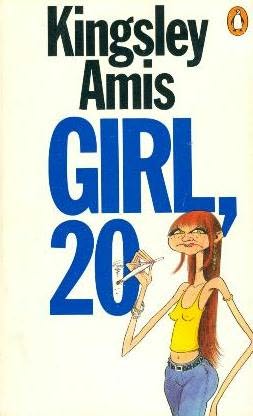
I bought Guyville and Go West, Phair's second album, as soon as I got back to New York, and told everyone I met about my latest discovery. Most of them were way ahead of me. "You can stop trying to be hip now," a twentysomething friend said to me with dry, tolerant amusement a few weeks later. "It isn't working." I winced at her remark, which reminded of a scene in Kingsley Amis' Girl, 20 in which Sir Roy Vandervane, a Leonard Bernstein-like conductor of a certain age who takes up with a seventeen-year-old girl and writes a concerto for violin and rock band, is accused of trying to "arse-creep youth."
Since then I've weathered a midlife crisis, survived a bout of congestive heart failure, and managed to cross the fiftieth meridian without buying a red sports car or marrying a woman half my age. (Mrs. T and I are coeval.) Not surprisingly, I now put less energy into staying abreast of current cultural events. As I wrote in this space two years ago:
I suspect I've entered a fallow period, a necessary time of recovery after the frenzied events of the second half of 2005. I nearly died, then I turned fifty: that's enough to knock anybody off his pins, and I'd say I was well and truly knocked. The other day I had occasion to quote to a friend the Spanish proverb that figures frequently in Patrick O'Brian's Aubrey-Maturin novels, May no new thing arise. That's for me. More than a few new things arose in my life in the past couple of years, and for the moment I've had enough.This, too, shall pass, sooner or later. At some point I'm sure I'll start to feel the tug of the new, bob to the surface, and start sniffing the air. I always have. But not just yet. I'm not quite ready to engage with the moment. I think I'll stick to the tried and true for a little while longer. The world will have to take care of itself, for now.
I'm sniffing the air again, but not so obsessively as I used to: I've pretty much given up on new movies, for instance, and I don't even pretend to know what's going on in pop music. One can only absorb so many new things in a lifetime. These days I devote most of my absorptive capacity to the shows I write about each Friday in The Wall Street Journal. I'm embarrassed to say that I didn't even bother to check out Liz Phair's last album.
Last month Mark Sarvas posted a list of "beloved books he's afraid to re-read for fear they won't hold up." I was tempted to follow suit, but after reading Carrie's posting, I'm more inclined to opt for music over literature. Perhaps Exile in Guyville belongs on that list. It's been a couple of years since I last put it on, and I wonder what I'd think of it now. Would it excite me as much as it did when I first heard it in Our Girl's living room? I'm not entirely sure I want to know. Certain pleasures are better remembered than revisited.
I should add, however, that a fifty-two-year-old man probably has no business feeling nostalgic about something that happened when he was forty. Nostalgia is a seductive and dangerous drug, to be used in the strictest of moderation on pain of losing your grip on the present moment. I don't often have occasion to quote Frank Zappa, but he once said something very much to the point: "It isn't necessary to imagine the world ending in fire or ice--there are two other possibilities: one is paperwork, and the other is nostalgia."
Posted June 30, 12:00 AM
TT: Almanac
"It's funny how when you remember you can't choose what it is you remember."
G.B. Edwards, The Book of Ebenezer Le Page
Posted June 30, 12:00 AM
June 27, 2008
TT: Refreshment
Look to the right and you'll find (at last!) a fair amount of new content in the "Top Five" and "Out of the Past" modules of the right-hand column, with still more on the way.
Enjoy.
Posted June 27, 9:57 AM
BOOK
Erin Hogan, Spiral Jetta: A Road Trip through the Land Art of the American West (University of Chicago, $20). A city-dwelling, solitude-hating connoisseur of modern art hops in her compact car, drives west in search of Robert Smithson's "Spiral Jetty" and a half-dozen other pieces of monumental land art, and finds...herself. Even if (like me) you don't have any use for minimalism, you'll be charmed by Hogan's wryly self-deprecating account of her desert pilgrimage, in the course of which she learned that being alone isn't so bad after all (TT).Posted June 27, 9:51 AM
DANCE
Pilobolus (Joyce Theater, 175 Eighth Ave., June 30-July 26). Summer is here, meaning that Pilobolus Dance Theatre has set up shop in Chelsea for its annual month-long summer season of modern dance, gymnastics, head-twisting trompe-l'oeil effects, and (mostly) comic surrealism. Three mixed bills, one of which pairs Day Two, the company's signature piece, with a new work designed by master puppeteer Basil Twist (TT). Pilobolus (Joyce Theater, 175 Eighth Ave., June 30-July 6). Summer is here, meaning that Pilobolus Dance Theatre has set up shop in Chelsea for its annual month-long summer season of modern dance, gymnastics, head-twisting trompe-l'oeil effects, and (mostly) comic surrealism. Three mixed bills, one of which pairs Day Two, the company's signature piece, with a new work designed by master puppeteer Basil Twist (TT).Posted June 27, 9:38 AM
MUSICAL
She Loves Me (Williamstown Theatre Festival, Williamstown, Mass., closes July 12). Nicholas Martin's Boston revival of the 1962 Jerry Bock-Sheldon Harnick musical version of The Shop Around the Corner has transferred to the Williamstown Theatre Festival for a three-week run. Catch it if you can. She Loves Me is the most sweetly romantic musical imaginable, give or take The Fantasticks, and this lovely production does it full justice. Kate Baldwin is letter-perfect (right down to her high C) in the role created by Barbara Cook (TT).Posted June 27, 9:26 AM
FILM
The Trouble With Harry. Most of Alfred Hitchcock's movies are funny--that's part of what makes them so jolting--but this one is a not-so-straight black comedy about a group of people in a small Vermont town who stumble across a corpse in the woods and can't decide what to do with it. Shirley MacLaine made her screen debut in this 1955 film, and the rest of the ensemble cast includes such familiar faces as John Forsythe, Edmund Gwenn, Mildred Natwick, and Jerry Mathers--yes, that Jerry Mathers. Eisenhower-era audiences didn't buy the premise of John Michael Hayes' screenplay, and even now The Trouble with Harry is probably the least well known of Hitchcock's middle-period major-studio pictures. Might its fey, off-center humor make it ripe for revival today? See for yourself, and be sure to note Bernard Herrmann's droll score (his first for Hitchcock) and the gorgeously autumnal cinematography of Robert Burks (TT).Posted June 27, 9:18 AM
CD
Mississippi John Hurt, Avalon Blues: The Complete 1928 OKeh Recordings (Columbia/Legacy). Born in a tiny, isolated Mississippi town in 1892, Hurt taught himself how to pick the guitar in a smoothly syncopated style that had nothing to do with the rawer playing of the Delta bluesmen elsewhere in the state. OKeh cut thirteen solo sides of his singing and playing, after which he vanished into the shadows until he became the first of the Mississippi acoustic bluesmen to be rediscovered and re-recorded, not long before his death in 1966. The albums he made in old age for Vanguard circulated far more widely, but his easygoing, deliciously danceable 78s, reissued on CD in 1996, are even better (TT).Posted June 27, 9:00 AM
TT: Getting it right the first time
Today's Wall Street Journal drama column is devoted in its entirety to the last of my reports from Chicago, a review of Shattered Globe Theatre's revival of Shelagh Delaney's A Taste of Honey. Here's an excerpt.
* * *
Few theatrical debuts have been so startling as that of Shelagh Delaney, who wrote herself into the history of British drama with her very first play. Not only was "A Taste of Honey" a hit in London in 1959 and on Broadway a year later, but the equally successful 1961 film version is now considered to be a high point of what came to be known as the "New Wave" of British cinema. Not too shabby for a girl who was 19 years old when "A Taste of Honey" opened in the West End--but never again managed to write anything else of any consequence.
That Ms. Delaney was unable to follow up on the success of her first play undoubtedly explains why it is so much better known in England than in this country, where "A Taste of Honey" is rarely seen. The Roundabout Theatre Company brought it to Broadway in 1981 with Amanda Plummer in the lead, but I don't know of any major productions since then, and I'd never seen the play performed until I made a trip to Chicago the other day to catch Shattered Globe Theatre's revival. Though I'd heard good things about the company, I feared that "A Taste of Honey" would be as dated as the angry-young-man plays of John Osborne and Arnold Wesker. Not so: "A Taste of Honey" could have been written last week, and Shattered Globe's marvelous staging has all the burning immediacy of a world premiere....
For American playgoers, "A Taste of Honey" will likely recall Clifford Odets' "Awake and Sing," another play about working-class urban life whose author had a pitch-perfect ear for the way plain people talk. Odets endowed the kitchen-table conversation of his Lower East Side characters with a sharp-toothed, strangely poetic quality. Ms. Delaney's pungent dialogue has something of the same quality, only transposed into a different key: "Go and lay the table. Do something. Turn yourself into a bloody termite and crawl into the wall or something, but make yourself scarce." But unlike Odets, she is unsentimental to the point of hardness, and at play's end she leaves us in no doubt whatsoever that the rest of Jo's life will be bleak and comfortless.
Helen Sadler, who plays Jo, is a find, an actress full of fire and wit who plays Jo with a gawky, angry energy that keeps you looking her way at all times. While everyone else in the ensemble is strong, my guess is that it's Ms. Sadler whose performance you'll be talking about on the way home. Jeremy Wechsler's staging is as direct and unmannered as the play itself, and Kevin Hagan has designed a tenement set so seedy-looking that I briefly considered checking myself for fleas at intermission....
* * *
Read the whole thing here.
Posted June 27, 12:00 AM
TT: Almanac
"In my walks I would fain return to my senses."
Henry David Thoreau, "Walking"
Posted June 27, 12:00 AM
June 26, 2008
TT: So you want to see a show?
Here's my list of recommended Broadway, off-Broadway, and out-of-town shows, updated weekly. In all cases, I gave these shows favorable reviews (if sometimes qualifiedly so) in The Wall Street Journal when they opened. For more information, click on the title.
Warning: Broadway shows marked with an asterisk were sold out, or nearly so, last week.
BROADWAY:
• Alfred Hitchcock's The 39 Steps * (comedy, G, suitable for bright children, reviewed here)
• August: Osage County * (drama, R, adult subject matter, reviewed here)
• Avenue Q (musical, R, adult subject matter and one show-stopping scene of puppet-on-puppet sex, reviewed here)
• Boeing-Boeing (comedy, PG-13, cartoonishly sexy, reviewed here)
• A Chorus Line (musical, PG-13/R, adult subject matter, closes Aug. 17, reviewed here)
• Gypsy * (musical, PG-13, adult subject matter, reviewed here)
• The Little Mermaid * (musical, G, entirely suitable for children, reviewed here)
• November (comedy, PG-13, profusely spattered with obscene language, closes July 13, reviewed here)
• Passing Strange (musical, PG-13, adult subject matter, reviewed here)
• South Pacific * (musical, G/PG-13, some sexual content, brilliantly staged but unsuitable for viewers acutely allergic to preachiness, reviewed here)
OFF BROADWAY:
• Adding Machine (musical, PG-13, adult subject matter, too musically demanding for youngsters, closes Aug. 31, reviewed here)
REOPENED OFF BROADWAY:
• The Fantasticks (musical, G, suitable for children capable of enjoying a love story, reviewed here)
IN SUBURBAN CHICAGO:
• The Lion in Winter (serious comedy, PG-13, adult subject matter, closes Aug. 3, reviewed here)
CLOSING NEXT WEEK IN WASHINGTON, D.C.:
• Julius Caesar/Antony and Cleopatra (drama, PG-13, adult subject matter, performed in alternating repertory through July 6, reviewed here)
CLOSING SUNDAY IN CHICAGO
• The Comedy of Errors (comedy, PG-13, reviewed here)
CLOSING SUNDAY IN MONTGOMERY, ALA.:
• The Count of Monte Cristo/Romeo and Juliet (drama, G/PG-13, performed in alternating repertory through June 29, reviewed here)
CLOSING SUNDAY ON BROADWAY:
• Sunday in the Park with George * (musical, PG-13, too complicated for children, closes June 29, reviewed here)
Posted June 26, 12:00 AM
TT: Almanac
"An involuntary return to the point of departure is, without doubt, the most disturbing of all journeys."
Iain Sinclair, "Riverside Opportunities"
Posted June 26, 12:00 AM
June 25, 2008
CAAF: The morning of June 27th was clear and sunny...
As Lauren notes (see the July 23rd event), this summer marks the 60th anniversary of the publication of Shirley Jackson's "The Lottery." Through sheer coincidence, I recently re-read the story for my book club, along with Jackson's masterful last novel, We Have Always Lived in the Castle.* If you can, it's worth it to check out the Penguin edition of We Have Always Lived in the Castle, which features a great, perceptive introduction by Jonathan Lethem (sadly not available online).
The precise anniversary of "The Lottery" is tomorrow, in fact. The story was originally published in the June 26th, 1948 issue of The New Yorker -- a date that neatly coincides with the story's first line -- and, as Lethem notes in the introduction of We Have Always Lived in the Castle, its appearance caused a storm of controversy. Subscriptions were cancelled, and Jackson received bags of hate mail "denouncing the story as 'nauseating,' 'perverted,' and 'vicious.'" (According to its Wikipedia page, the story was even banned in South Africa.)
1948 is also the same year The New Yorker published J.D. Salinger's "A Perfect Day For Bananafish," another story that ends with a rather shocking, unexpected death. I'm sure some enterprising PhD thesis has already been done on the topic, but I'm curious about how both stories relate to the field of psychology as it stood in the late '40s: Behaviorism ascendant, Freud and Jung still in the air and about to rise again. Like most of Salinger, "Bananafish" can be read as a flat rejection of psychology's ability to ever explain the mysterious self, whereas Jackson seems to have embraced the field, as if she used its concepts and terminology as a jumping-off point for her art. Haunting Of Hill House, for example, reads like a hothouse catalog of Freudian concepts. (Interesting to note, though, that "The Lottery," which could serve as a case study in the brutal pathology of group think, anticipated the Milgram experiment by about 13 years.)
As Lethem writes about Jackson's work:
Though she teased at explanations of sorcery in both her life and her art (an early dust-flap biography called her "a practicing amateur witch,"** and she seems never to have shaken the effects of this debatable publicity strategy) Jackson's great subject was precisely the opposite of paranormality. The relentless, undeniable core of her writing--her six complete novels and the twenty-odd fiercest of her stories--conveys a vast intimacy with everyday evil, with the pathological undertones of prosaic human configurations: a village, a family, a self. She disinterred the wickedness in normality, cataloguing the ways conformity and repression tip into pyscyhosis, persecution, and paranoia, into cruelty and its masochistic, injury-cherishing twin. Like Alfred Hitchock and Patricia Highsmith, Jackson's keynotes were complicity and denial, and the strange fluidity of guilt as it passes from one person to another.
RELATED LINK: In "Monstrous Acts and Little Murders," another, earlier piece by Lethem about Shirley Jackson, he talks about living in North Bennington, Vermont, which provided the setting for "The Lottery." While the town held a grudge for a while, it seems to have forgiven Jackson her trespasses.
* About half our club had never read the story before, which surprised me. I thought no one escaped junior high without writing at least one five-paragraph essay on "The Lottery."
** Speaking of witches and Shirley Jackson: My reading of We Have Always Lived in the Castle has set me off on a Jackson kick. In my library's holdings I was surprised to come across a book written for children called The Witchcraft of Salem Village. I'm sure I must have read it as a kid -- I was ghoulish and read everything I could about Salem, desperately hoping for illustrations of the hangings, pressings by stone, etc. -- but I hadn't connected its author as being that Shirley Jackson.
Posted June 25, 12:30 AM
TT: Snapshot
Jascha Heifetz plays Saint-Saëns' Introduction and Rondo Capriccioso in the 1939 film They Shall Have Music. The conductor is Alfred Newman:
(This is the latest in a weekly series of arts-related videos that appear in this space each Wednesday.)
Posted June 25, 12:00 AM
TT: Almanac
"At your return visit our house; let our old acquaintance be renewed."
William Shakespeare, Henry IV (part two)
Posted June 25, 12:00 AM
June 24, 2008
CAAF: Red pants, silver shirt?
Can it have been 15 years since Exile in Guyville came out? Yes, it can. The album is being re-released today, and in honor of the occasion I thought I'd share Phair's setlist from one of her very first shows, when she appeared as part of a showcase put on by Matador Records at Irving Plaza on July 23, 1993.
I was living in Massachusetts then, working at the Golden Nozzle Carwash post-graduation, and drove into New York with some friends for the show. According to this New York Times review of the concert, Pavement, Moonshake and members of the Silver Jews also played, which I have absolutely no memory of. Alex Ross wrote the Times review, and he describes Phair as "a distinctive singer and songwriter disadvantaged by an overloud backing band." As I remember she was also out of tune and visibly ill at ease on the stage, standing stiffly front and center for most of her set.
My friend Shana, who doesn't remember Moonshake and Pavement playing either (where were we?), tore Phair's setlist from the stage after she performed and was good enough to send along a photograph of it. We have a no-swearing policy here at "About Last Night," which I try to honor when I don't forget, and one of Liz's song titles breaks it, so the photo appears after the jump.

Posted June 24, 2:00 PM
OGIC: The bees in their hives
I feel rather sorry for this guy, unable to derive a shred of pleasure from A Dance to the Music of Time and its minute observations from within of the English upper classes, even after shedding his Marxist convictions. I don't imagine he'd care much for my current book A Legacy either: Sybille Bedford grew up and lived among the European aristocracy and cast a similarly cultivated eye on their wayss. Again he'd be missing the boat.
Powell and Bedford both look on their privileged bees and hives from a clear insider's perspective, with all the understanding that implies and some of the sympathy. But they both also have plenty of ironic distance on these scenes and their absurdities. And they wouldn't be successful satirists of the social scene if they didn't also take seriously, and observe perceptively, the moral and emotional lives playing out within the teeming hive.
Bedford, a twentieth-century writer attending to a nineteenth-century scene, employs more ironic distance. She sends up her characters' milieu and all their attendant mannerisms deliciously. One character is a bachelor living on the French Riviera who keeps pet monkeys that everyone speaks of as though they were badly behaved children, making the term "monkey" for a few pages ambiguous. His engagement to a young woman and visit to her starchy family in Berlin brings about the following passage that made me, a painfully self-conscious type, laugh out loud on the train to work yesterday about five separate times and again on the way out of the terminal.
Grandmama Merz eventually put two and two together."Is Melanie going to live in a house with monkeys?"
Fraulein von Tschernin, who had had a glimpse also of Julius, confirmed that this was part of her daughter's radiant prospects.
"We're not going to allow it," said Grandmama.
"Herr Gehaimrat is fond of them too."
"Monkeys are all right for bachelors," said Grandpapa.
"I asked him whether he was going to have those brutes around for the rest of his life," said Markwald; "and you know what he told me? Alas, very likely not, although they did live longer than dogs."
"Dogs too?" said Grandmama.
"Flora's Max brought one," said Friedrich.
"Not in the house," said Grandmama. "Flora told me."
"What does one do with unwanted monkeys?" said Emil.
Grandmama pondered this. "He must give them away," she said. "Hasn't he any poor relations?"
An arrangement is eventually made with "a new kind of cageless zoo," though Julius is "only just prevented from accepting the return present of a seal."
The comedy is high when her view is long, but Bedford is just as canny when she gets up close to individual emotional life. The social, political, and historical forces that shape such life don't care a fig for their victims--the novelist most adeptly makes this clear. But she cares herself.
The character we get closest to through the first three parts is Sarah, sister-in-law of the affianced Melanie, displacer of the monkeys. The following, roughly in regard to Sarah, is the sobering (or just numbing) perspective of having seen too much go by.
Tomorrow, and tomorrow, and tomorrow... Life, in the neat sad dry little French phrase that bundles it all into its place, Life is never as bad nor as good as one thinks. La vie, voyez-vous, ca n'est jamais si bon ni si mauvais qu'on croit. Never as bad, never as good... When? At the instant of calamity, at the edge of fear? when the bad news is brought, and the trap felt sprung, or the loss strikes home? At low ebb, in tedium, in accidie? In the moments of renewal? the transfiguration of love, the flush of work, the grace of a new vision, the long-held now? Or later, when the doors shut, one after another, and regret moves in the heart like a steel coil? Never as good, never as bad, but a drab, bearable, half-sleep banked by a little store of this and that, subsiding after visitations and alarms, a drowsing, often not uneasy, down the years, an even-paced irreversible passage--life, the run of lives, the sum of life? Is it consoling? Is it the whole truth? Is it inevitable?
A few pages later, this character is in love.
Posted June 24, 8:19 AM
TT: Passing through
Mrs. T and I took a few hard-earned days off and went to Blueberry Pointe on the Lake, one of our two favorite retreats. (This is the other one.) We sat on the spacious deck of our tranquil lakeside cottage, cooked hot dogs on the grill, listened to the birds singing, smelled the balmy air, and unwound as far as it's humanly possible to unwind. I don't know when I've had a more restful vacation. Bless you, Megan McArdle, for insisting that I fly the coop for a whole week!
Instead of going to plays, we spent our evenings looking at sunsets, then going inside and watching old movies, among them Kenneth Lonergan's You Can Count on Me and John Sayles' Sunshine State, both of which have held up fabulously well since I wrote about them early in the decade:
A couple of years ago, I wrote about The Dreamlife of Angels, a haunting French film about two down-and-out young women that got glowing reviews and made no impression whatsoever on American moviegoers (it received not a single Oscar nomination). Kenneth Lonergan's masterly You Can Count on Me resembles that miraculous film in its straightforwardness and lack of pretence, though it also reminded me of Tender Mercies, another rare example of an American movie that accurately conveys the look and feel of small-town life. Every foot of You Can Count on Me is real.Lonergan's directorial debut also has in common with The Dreamlife of Angels and Tender Mercies a novelistic richness that defies the simplifying art of the pitchman. To say that it is about Terry, an immature drifter (Mark Ruffalo), and Sammy, his stay-at-home older sister (Laura Linney), orphaned in childhood and desperately lonely as young adults, is to convey nothing of the moral complexity of Lonergan's script, which pays the viewer the compliment of not making his mind up for him. Terry is never romanticized and Sammy is never treated with condescension: they are both treated as human beings, deeply flawed but not without virtue, seeking to make their way in a postmodern world that no longer has much to offer in the way of certainty....
John Sayles' method can be seen at its purest in Sunshine State, the unabashedly rambling story of what happens when a group of unscrupulous real-estate developers tries to take over Delrona Beach, a shabby Florida town famous for nothing, and bulldoze it into a gorgeously landscaped beachfront community full of rich golfers. (Among the bad guys is Alan King, a superannuated stand-up comedian whom old age has miraculously transformed into one of the craftiest character actors around.) While their shady machinations are central to the complicated plot, Sunshine State is not a Chinatown-like study of moral corruption, and it doesn't even matter all that much that the bad guys lose--sort of--in the end. Sayles' real interest is in the citizens, past and present, of Delrona Beach, in particular Marly Temple (Edie Falco), a sun-dried motel manager who hates her unadventurous life but lacks the nerve to change it, and Desirée Stokes (Angela Bassett), who left town at fifteen, black, pregnant and unmarried, and has now come back home as an adult to try to make peace with her genteel, censorious mother (Mary Alice).
If you're thinking that all this sounds like a cross between a soap opera and an eat-your-spinach editorial in Mother Jones, I can see why. Many of Sayles' films sound painfully stilted--on paper. It's only when you see them, or hear him talk about them, that you realize how essentially unideological he is. This has nothing to do with politics, at least as that term used to be construed. I'm sure he's never voted for a Republican in his life, but as a filmmaker, he doesn't go in for political caricature, or any other kind of caricature. (Significantly, he is one of the very few filmmakers whose black characters invariably act like real people, not secular saints.)
On Friday we drove into Providence to pay a visit to the museum of the Rhode Island School of Design, whose small but uncommonly choice permanent collection contains first-class paintings by Manet, Cézanne, Winslow Homer, George Bellows, Lyonel Feininger, and Jackson Pollock, none of which I can show you, alas, because the museum is foolishly cautious about making images available on line. Afterward we ate pizza and pasta in the garden of Al Forno, our favorite restaurant in New England.
Today we're headed back to Connecticut, but only just long enough to change clothes. Work awaits, and our next stop is Garrison, New York, where we'll be visiting the Hudson Valley Shakespeare Festival and the Storm King Art Center, located across the Hudson River in Mountainville.
More as it happens....
Posted June 24, 12:00 AM
TT: Almanac
"For a novelist, a given historic situation is an anthropologic laboratory in which he explores his basic question: What is human existence?"
Milan Kundera, Life Is Elsewhere
Posted June 24, 12:00 AM
June 23, 2008
CAAF: Morning coffee
I'm back. After a week of second-guessing whether I should have sprung for the $115 antibiotics, whatever respiratory crud I had seems to have cleared out.
• "I tried to make myself read it, my mouth gaping in a silent scream, but I failed.": In the Sunday Times, critics such as Stephen Amidon and John Carey pick their most-loathed books. Turns out, Patricia Cornwell has a lot to answer for. (Via Lit Saloon.)
• The San Diego Union-Tribune profiles the wonderful Jincy Willett. (Via Sarah Weinman.)
• The semicolon is dead. Long live the semicolon!
Posted June 23, 8:00 AM
TT: Almanac
"Life--how curious is that habit that makes us think it is not here, but elsewhere."
V.S. Pritchett, Midnight Oil
Posted June 23, 12:00 AM
June 20, 2008
TT: How to earn a Tony
Today's Wall Street Journal drama column contains the latest of my reports from Chicago, this time on Chicago Shakespeare Theater's production of The Comedy of Errors. In addition, I review the Public Theater's Shakespeare in the Park production of Hamlet. Here's an excerpt.
* * *
I didn't know that Chicago Shakespeare would be receiving a regional-theater Tony when I made plans to see Barbara Gaines' production of "The Comedy of Errors." It's pure dumb luck that this review is running less than a week after the company was honored for the unfailing excellence of its work--and that the show I came to town to see is a model of its intelligent yet accessible style. "I don't think Shakespeare set out to teach us anything," Ms. Gaines, the company's founder and artistic director, has said. "He just wanted to tell a great story." If so, then this "Comedy of Errors" must be what the Bard had in mind, for the only "lesson" it teaches is that loud laughter in large quantities is good for the soul....
Not only is "The Comedy of Errors" complicated to the max, but it also happens to be Shakespeare's shortest play, thus giving smart directors plenty of room to make still more mischief. Ms. Gaines, for instance, has turned it into a play within a play: In her version, "The Comedy of Errors" is being filmed on an English soundstage during the Battle of Britain. The characters become caricatures of recognizable theatrical types--the pompous actor-peer, the promiscuous movie star, the American crooner turned Hollywood heart-throb--and the comic ante is upped when the War Ministry orders Shepperton Studios to wrap up the shoot in 48 hours.
Ron West, a veteran of Chicago's Second City comedy troupe, was assigned the daunting task of writing the studio sequences, and brings it off without a hitch. Needless to say, he's no Shakespeare, but his scenes are full of witty dialogue and neat inside jokes: "I'm just a bit player. I usually play someone whose first name is 'First.'" His contribution to the production is closely comparable in quality to the ingenious book that Sam and Bella Spewack wrote for "Kiss Me, Kate," Cole Porter's musical version of "The Taming of the Shrew," which doubtless inspired Ms. Gaines's no less ingenious take on "The Comedy of Errors."
For all the cleverness of Mr. West's scenes, what makes this production work is the electric verve with which Ms. Gaines has staged Shakespeare's play. The slapstick alone is worth the price of the ticket...
Back in the Big Apple, the Public Theater is putting on "Hamlet" in Central Park. I wish I could say that it's half as good as "The Comedy of Errors," but this "Hamlet" (which runs for just short of three-and-a-half hours) is, like most Shakespeare in the Park productions, an exceedingly mixed bag. Oskar Eustis' staging is an off-the-rack modern-dress update played in front of a stark white wall augmented by the same old black scaffolding and fluorescent lights. A few unexpected things happen along the way--the play within the play, for instance, is a puppet show designed by Basil Twist, the best of all possible puppeteers--but the rest of Mr. Eustis' "surprises" amount to little more than generic postmodernism.....
* * *
Read the whole thing here.
Posted June 20, 12:00 AM
TT: Bob Dylan's day job
Now that the pending merger of XM Satellite Radio and Sirius Satellite Radio is in the news, it struck me that the time had come to write a "Sightings" column about Theme Time Radio Hour, the radio show that Bob Dylan hosts each Wednesday morning on XM's Deep Tracks channel. It is, in my opinion, one of the most interesting and original music-oriented shows on radio, and the fact that it is produced by XM strikes me as no less worthy of note.
Is Bob Dylan bringing us a taste of the future of satellite radio--or a relic from the distant past of terrestrial radio? To find out, pick up a copy of Saturday's Wall Street Journal, turn to the new "Lifestyle" section, and check out "Sightings."
UPDATE: Read the whole thing here.
Posted June 20, 12:00 AM
TT: Almanac
Despising,
For you, the city, thus I turn my back;
There is a world elsewhere.
William Shakespeare, Coriolanus
Posted June 20, 12:00 AM
June 19, 2008
OGIC: Reading diary, part two
Funny that while the fortunes of the sentence flicker, I am immersed in a second consecutive book whose grammatical units--sentences and paragraphs alike--are, one after the other, superlatively made. First it was Netherland, covered in my post yesterday. Now it's Sybille Bedford's A Legacy. Fifty pages in, I'm really quite awed. Here's a sentence about the narrator's well-to-do German grandparents:
While members of what might have been their world were dining to the sounds of Schubert and of Haydn, endowing research and adding Corot landscapes to their Bouchers and the Delacroix, and some of them were buying their first Picasso, the Merz's were adding bell-pulls and thickening the upholstery.
And a paragraph that shortly follows:
They took no exercise and practised no sport; they kept no animals--except carriage horses--and none were allowed in the house. The caretaker couple kept a canary in their basement by the furnace, but no truffled nose had ever snuffed the still hot air upstairs, no padded paw had trod the Turkey pile, no tooth had gnawed, no claw ripped the mahogany and the plush, and there was a discreet mouse-trap set in every room. The Merz's had no friends, a word they seldom used; they saw no-one besides the family, the doctor and an occasional, usually slightly seedy, guest asked to occupy the fourteenth place at the table. They were never alone; when it wasn't the barber, it would be the manicure. Grandmama Merz had never taken a bath without the presence and assistance of her maid. They did not go to shops. Things were sent to them on approval, and people came to them for fittings. They never read. There was a smoking-room, and a billiard-room nobody used, but there was not so much as a courtesy library, and I cannot ever remember seeing a book about.
Dorothy Parker, a woman not easily scared, called A Legacy "almost terrifyingly brilliant." I can only account for the terror in her reaction by imagining the encounter with a writer at least her equal for wit and incisiveness posed a threat. The encounter certainly brought out her own incisiveness; her critical comment on the novel (part of an Esquire group review of the best fiction of 1957) begins and ends with these three words. The book's brilliance is evident from the first page, but, at least so far, it has me feeling merely appreciative.
Posted June 19, 1:15 AM
TT: So you want to see a show?
Here's my list of recommended Broadway, off-Broadway, and out-of-town shows, updated weekly. In all cases, I gave these shows favorable reviews (if sometimes qualifiedly so) in The Wall Street Journal when they opened. For more information, click on the title.
Warning: Broadway shows marked with an asterisk were sold out, or nearly so, last week.
BROADWAY:
• Alfred Hitchcock's The 39 Steps (comedy, G, suitable for bright children, reviewed here)
• August: Osage County * (drama, R, adult subject matter, reviewed here)
• Avenue Q (musical, R, adult subject matter and one show-stopping scene of puppet-on-puppet sex, reviewed here)
• Boeing-Boeing * (comedy, PG-13, cartoonishly sexy, reviewed here)
• A Chorus Line (musical, PG-13/R, adult subject matter, closes Aug. 17, reviewed here)
• Gypsy (musical, PG-13, adult subject matter, reviewed here)
• The Little Mermaid * (musical, G, entirely suitable for children, reviewed here)
• November (comedy, PG-13, profusely spattered with obscene language, closes July 13, reviewed here)
• Passing Strange (musical, PG-13, adult subject matter, reviewed here)
• South Pacific * (musical, G/PG-13, some sexual content, brilliantly staged but unsuitable for viewers acutely allergic to preachiness, reviewed here)
OFF BROADWAY:
• Adding Machine (musical, PG-13, adult subject matter, too musically demanding for youngsters, closes Aug. 31, reviewed here)
REOPENED OFF BROADWAY:
• The Fantasticks (musical, G, suitable for children capable of enjoying a love story, reviewed here)
IN SUBURBAN CHICAGO:
• The Lion in Winter (serious comedy, PG-13, adult subject matter, closes Aug. 3, reviewed here)
CLOSING SOON IN WASHINGTON, D.C.:
• Julius Caesar/Antony and Cleopatra (drama, PG-13, adult subject matter, too musically demanding for youngsters, performed in alternating repertory through July 6, reviewed here)
CLOSING NEXT WEEK IN MONTGOMERY, ALA.:
• The Count of Monte Cristo/Romeo and Juliet (drama, G/PG-13, performed in alternating repertory through June 29, reviewed here)
CLOSING NEXT WEEK ON BROADWAY:
• Sunday in the Park with George * (musical, PG-13, too complicated for children, closes June 29, reviewed here)
CLOSING SUNDAY ON BROADWAY:
• Cry-Baby (musical, PG-13, mildly naughty and very cynical, reviewed here)
CLOSING SUNDAY OFF BROADWAY:
• Port Authority (drama, PG-13/R, adult subject matter, reviewed here)
Posted June 19, 12:00 AM
TT: Almanac
"True life is elsewhere. We are not in the world."
Arthur Rimbaud, "Délires I"
Posted June 19, 12:00 AM
June 18, 2008
OGIC: Reading diary
A review in the New York Times Book Review and one by James Wood in the New Yorker, both brimming with superlatives, propelled me toward Joseph O'Neill's Netherland earlier this spring. The book immediately became the foremost pleasure of the two weeks during which I read it. In the mornings and afternoons, I walked to my train with added briskness; on even short ventures from the apartment, I jammed the book into my too-small purse. I enjoyed it a lot.
I did not so much enjoy the blurb it received from Jonathan Safran Foer:
"New York is not what most people imagine it to be. Just as marriage, family, friendship, and manhood are not. Netherland is suspenseful, artful, psychologically pitch perfect, and a wonderful read. But more than any of that, it's revelatory. Joseph O'Neill has managed to paint the most famous city in the world, and the most familiar concept in the world (love), in an entirely new way."
Blurbing a book really brings out the worst in some people. Why not let the last sentence stand? Or, if that seemed too skimpy (I would call it concise), begin with the third? The smug first two sentences don't do the book any favors. Buy this book, dear reader, and have your gross misconceptions about New York and life in general corrected! Fun.
The book can carry its own water, anyway. Written with exacting precision in the staid, somber voice of a Dutch-born London banker working in Manhattan after 9/11, it tells how he is assimilated into immigrant life in America via the cricket fields tucked away in many a corner of New York and environs. With his half-estranged wife back in London with their son, he becomes fascinated with a mysterious acquaintance from cricket, Chuck Ramkissoon, playing Nick to Ramkissoon's Gatsby.
The book holds you at a bit of a distance. I didn't warm up to it or its characters, but I clamored for more and more of its delicately structured sentences and paragraphs. They seemed decadent and nourishing at the same time, and they did as much as anything else in the book to delineate the main character. Here he is remembering his uneasiness during his last visit to his mother's home, a month before her unforeseen death:
I stood at the window, waiting for the next arrival of light. The lighthouse had been mesmeric to my boy self. He was an only child and it must be that at night he habitually stood at his bedroom window alone; but my recollection of watching the light travel out of Scheveningen contained the figure of my mother at my side, helping me to look out into the dark. She answered my questions. The sea was the North Sea. It was filled with shops queuing for entry to Rotterdam. Rotterdam was the biggest port in the world. The breakwaters were perpendicular to the beach and stopped the beach from being washed away. The jellyfish in the water might sting you. The blue of the jellyfish was the color indigo. Seven particular stars made the outline of a plow. When you died, you went to sleep.
And:
Some people have no difficulty in identifying with their younger incarnations: Rachel, for example, will refer to episodes from her childhood or college days as if they'd happened to her that very morning. I, however, seem given to self-estrangement. I find it hard to muster oneness with those fomer selves whose accidents and endeavors have shaped who I am now. The schoolboy at the Gymnasium Haganum; the Leiden student; the clueless trainee executive at Shell; the analyst in London; even the thirty-year-old who flew to New York with his excited young wife: my natural sense is that all are faded, by the by, discontinued.
Gatsby is the obvious precursor for Netherland, but there's something of Henry James's Lambert Strether in Hans, too. His choice is different and many of the circumstances reversed in a resolutely post-Victorian world, but the novel does have a few moral disillusionments in store for him on a similar scale. But then again, I may be stretching the case--this may just be one of those books that has a way of evoking all the major landmarks in one's reading history.
Posted June 18, 10:46 AM
TT: Snapshot
Margot Fonteyn and Rudolf Nureyev dance the balcony scene in a 1966 performance by the Royal Ballet of Prokofiev's Romeo and Juliet, choreographed by Kenneth MacMillan:
(This is the latest in a weekly series of arts-related videos that appear in this space each Wednesday.)
Posted June 18, 12:00 AM
TT: Almanac
"Every one rushes elsewhere and into the future, because no one wants to face one's own inner self."
Michel de Montaigne, "Of Physiognomy"
Posted June 18, 12:00 AM
June 17, 2008
TT: Pursued by a bear
I'm taking a much-needed break from blogging. Not only do I have a couple of looming deadlines to hit, but I need to spend some time polishing the last few chapters of Rhythm Man: A Life of Louis Armstrong. Once all that is done, I'm going into rural seclusion, accompanied by Mrs. T. Except for the daily almanac entry, the usual theater-related postings, and Wednesday's "Snapshots," you won't see me around these parts again until next Thursday.
OGIC? CAAF? Where are you?
Posted June 17, 8:01 AM
TT: Almanac
"Personally, I view Homo Americanus's habit of valuing the classical arts no higher than other forms of intelligent entertainment--whether film or basketball--as a true achievement of civilization. It does not harm the quality and professional appreciation of artists; rather, the opposite is true."
Thomas Quasthoff, The Voice: A Memoir
Posted June 17, 12:00 AM
June 16, 2008
TT: Come again some other day
I spend a fair amount of each summer watching outdoor shows. The weather being what it is, you'd think I'd have gotten rained out at least a half-dozen times by now, but until this past weekend it had only happened once, in New York last year, and since I live a block away from Central Park, where the Public Theater gives its Shakespeare in the Park performances, I was able to catch the same show the next night.
My luck finally ran out on Saturday. I picked up a Zipcar at noon and drove to the suburbs of Baltimore to see Chesapeake Shakespeare Company perform The Tempest. The weather was beautiful when I hit the road, but no sooner did I reach the Ellicott City exit than a real-life tempest, complete with lightning, rolled over the horizon. I checked into my hotel and called the company publicist, who confirmed what I already knew: no show tonight. Alas, I had to leave for to New York at six-thirty the following morning in order to catch a midday train, so Chesapeake Shakespeare will have to wait until next year.
So what do you do in the suburbs of Baltimore on a rainy Saturday night? Not a hell of a lot, as far as I can tell. I spent an hour looking for a decent restaurant, but every place that looked promising was booked solid. Instead I ended up downing a nondescript sandwich and returning to my equally nondescript hotel room, where I surfed the Web, caught up on my e-mail, and passed a couple of pleasant hours polishing Rhythm Man: A Life of Louis Armstrong. George Avakian, who knew Armstrong and produced several of his best-known recordings, has been kind enough to spend the past couple of weeks reading the manuscript and sending me his comments, so I devoted part of my unplanned night off to making various changes based on his astute suggestions.
I'm pleased to say that George didn't have any suggestions to make about the following passage:
Avakian was eager to record Armstrong for Columbia. The only stumbling block was that Joe Glaser, the trumpeter's manager, who had no interest in presenting him as anything other than a popular entertainer, was content to stick with Decca, his old label. How to change Glaser's mind? It was Jim Conkling, the president of Columbia, who came up with the solution: Avakian's Louis Armstrong Story reissues had been selling well, but the trumpeter, who had recorded all of the original OKeh 78 sides on which they were based for flat one-time cash payments, wasn't making a dime off them. Why not offer him a one-percent royalty on Columbia's OKeh reissues in return for signing an exclusive contract? That was the kind of talk the money-conscious Glaser understood. In short order the deal was done, and on July 12, 1954, Armstrong and the All Stars began taping Louis Armstrong Plays W.C. Handy, the best album they ever made.The project was Avakian's idea. "For years I had planned that one day, when possible, I would make a series of albums with Pops," he said later. "He was an artist who should have been represented in unified packages, complete with explanatory notes." The music of the "Father of the Blues" (as Handy had long billed himself) was a logical starting point for the series, and Armstrong, who had been identified with Handy's "St. Louis Blues" ever since he recorded it with Bessie Smith in 1925, was more than agreeable. "You choose the tunes," he said. "You know me, you know what I like." Avakian picked eleven of Handy's best-known songs and sent the music to Armstrong, who worked the tunes up on the road. A few weeks later he called the producer at home. "I'm laying over in Chicago next month for a few days," he said. "Line up the studio and I'll be ready." Avakian immediately booked three afternoon sessions in a Chicago studio. "Louie came in with no music beyond the sheet music I'd given him and a few sketches that Billy Kyle had made," he recalled. "'We can work out these longer performances any way you want,' he said, 'but why don't you choose the order of the solos? I don't want to do these things the way we'd do them in a club. It'll be fresh for us that way.'"
That was what Avakian wanted to hear. Except for the "New Orleans Function" session, at which Milt Gabler had allowed the All Stars to play more or less the way they did on stage, virtually all of Armstrong's studio recordings for Decca had conformed rigidly to the three-minute, three-chorus mold of his old 78s. Avakian, by contrast, proposed to bring him into the age of the long-playing record. Not only was Louis Armstrong Plays W.C. Handy to be a thematically unified, meticulously sequenced single-composer album, but most of the songs on it ran well past the three-minute mark, including an album-opening version of "St. Louis Blues" that played for nearly nine minutes. It was, in short, a concept album avant la lettre, recorded seven months before Frank Sinatra and Nelson Riddle "invented" the genre with In the Wee Small Hours.
Armstrong responded enthusiastically but not passively to his producer's musical suggestions. Rehearsal tapes made at the sessions and released in 1996 show that he played a dominant role in structuring and polishing the arrangements heard on the album. But it was Avakian who gave to Louis Armstrong Plays W.C. Handy its shape and conceptual unity, and it says much about Armstrong's receptivity that he was not merely willing to accept the younger man's tactful guidance, but capable of acknowledging the quality of the results. "I can't remember when I felt this good about making a record," he told Avakian after the album was edited and ready for release. He was right to feel that way. From the first bar of "St. Louis Blues" onward, it is evident that Louis Armstrong Plays W.C. Handy represents something new in Armstrong's recorded oeuvre. Not since the studio-only Hot Fives and Sevens had he made a record that did more than merely document the way he played in public--that was, instead, an art object in its own right....
I also caught up with Ricky Riccardi's The Wonderful World of Louis Armstrong, one of the most original and significant jazz blogs to come along since I first started keeping up with the blogosphere seven years ago. Riccardi is a musician, scholar, and Armstrong enthusiast who is writing a book about the All Stars, the six-piece combo that Armstrong led from 1947 until his death in 1971. He knows as much about Armstrong as anyone in the world, myself included, and in 2007 he generously decided to share the fruits of his labors by starting a blog on which he posts at irregular but fairly frequent intervals about his hero's records.
Judging by what he's written to date, Ricky's book will be a major contribution to the Armstrong literature, and I've made extensive use of his postings in writing Rhythm Man. Among countless other things, it was The Wonderful World of Louis Armstrong that first drew my attention to this kinescope of the All Stars performing "On the Sunny Side of the Street" on CBS in 1958. It's my favorite film of Armstrong in performance:
Here's a typical example of Ricky at work, an excerpt from his posting about the 1933 big-band recording of Harold Arlen's "I Gotta Right to Sing the Blues," to my mind one of Armstrong's half-dozen finest recordings:
After the vocal, the band swings out for awhile, Armstrong clearly enjoying their playing, growling out a "Yeah" when they begin. Teddy Wilson sounds especially good here, as does the entire band, propelled by Bill Oldham's big-toned bass (when he switched to tuba for the April 1933 sessions, it was a step backward). It's a long showcase for the band but fortunately, there's 90 seconds of record left and Pops makes the most of it, opening with one of his all-time greatest entrances: a single held D (listen for one of the saxes goof up and hit a quick note under it). Perhaps the Armstrong of 1928 would have played something flashy and jaw-dropping in this two-bar break, but the Armstrong of 1933 had already matured greatly and he knew he could convey just as much drama and feeling with a perfectly placed held note. I mean, really, how do you make one held note swing? It's all in the placement, my friends. Armstrong hits it a shade after the beat and the whole thing swings.
This is what I wrote in Rhythm Man about the same recording:
"I Gotta Right to Sing the Blues," one of Armstrong's immortal masterpieces, is as worthy of comparison with "West End Blues" as it is different from that riot of virtuosity. Here it is the trumpet solo that seizes our attention, for Armstrong, in a departure from his customary practice on ballads, dispenses almost completely with Arlen's melody, substituting instead a series of rhythmically free phrases that lead upward to a high B flat. Four times he falls off from that shining note--and then comes the fifth fall, at the bottom of which he changes course and swoops gracefully upward to a full-throated high D whose vibrance was perfectly caught by Victor's recording engineer. It is a show-stopping stroke, yet there is no trace of overstatement about it: if anything Armstrong seems to have broken through to a realm of abstract lyricism that transcends ordinary human emotion. Only then does he condescend to ease back into the vicinity of the tune, returning the bedazzled listener to the everyday world.
And that's what I did on a rainy Saturday night in suburban Baltimore.
What about you, OGIC and CAAF? Have you anything to declare?
Posted June 16, 12:00 AM
TT: Almanac
"What passes for criticism too often amounts to riding a fashionable or idiopathic hobbyhorse external to the work at hand, a spectacle reminiscent of the watchmaker whose favorite tool is a coal shovel. In their priggish zeal, such critics appear not to be having a very good time, nor bothering to share pleasure with readers. They are literary wet blankets, humorless apparatchiks of theory."
Patrick Kurp, Anecdotal Evidence (May 27, 2008)
Posted June 16, 12:00 AM
June 13, 2008
CAAF: "I can't enumerate all the ways in which this is bad."
So, yesterday in the midst of a tiresome afternoon -- it's hot (anyone else noticed that?), I have a sinus infection, the doctor prescribed what turned out to be $115 worth of antibiotics when I am pretty confident what I have falls in the "under $15" category of illness and it took roughly 5,000 phone calls to sort it all out -- I remembered that Jincy Willett's new book, The Writing Class, came out this week.
I love Willett's book of short stories, Jenny and the Jaws of Life, without reservation, and I've been dying to read this new novel since Gwenda started raving about it in email a couple months ago. And it seemed like a great bit of luck that it's finally, finally out and available and I could croak over to the bookstore and get a copy to cheer up a lousy day.
So far it's marvelous -- very, very funny and sly in bits, and then sometimes very, very funny in a broad sort of way in others. I think the humor would appeal to just about anyone, but if you've ever been in a writing class, or in a position to review a broad spectrum of other people's writing (e.g., slush pile reader), you may be particularly partial to the comedy.
Here's one of the broader bits. After the first night's class, Amy Gallup, the class instructor, has brought home the manuscript of one of her student's, Dr. Richard Surtees, to read (he being the sort of student who arrives at class with 20 copies of his novel all printed out):
According to his secretary's yellow Post-it, Amy was privileged to hold roughly half of something called Code Black: A Medical Thriller. Having watched both parents and her first husband waste away in hospitals, Amy was never thrilled by anything medical, but she always tried, when confronted with this genre in class, to put her feelings aside. As she reminded her students, they were each entitled to objective critical response, not a catalog of their critics' tastes.A quick glance-through told her that Surtees had cast his protagonist in that heroic mold so commonly used by doctors who want to write fiction. Unlike other professionals, physicians rarely viewed themselves with anything approaching ironic detachment--which was probably good for their patients, but not so hot for their readers. Surtees's hero was a world-class neurosurgeon, a black belt in Karate, a distinguished amateur cellist who had studied with Pablo Casals (You have a great gift," the old man had admonished him severely, "and you toss it away to save a few insignificant lives!"), and Merlin the Magnificent in the sack.
The plot of Code Black was apparently going to be one of those convoluted deals involving a lot of esoteric medical words and government acronyms (in an ominous footnote, Surtees promised a twenty-page glossary), and would revolve around a worldwide bioterrorist threat amplified by a perfidious liberal cabal hell-bent on imposing socialized medicine on a gullible public.
"'What do we do now,' Senator?" snarled Black, almost spitting in his disgust. "Why, we send each plague-ridden citizen of Manhattan to his primary healthcare provider!"
Visit here for Gwenda's recent Q & A with Willett.
Posted June 13, 11:36 AM
CAAF: Morning coffee
• Profiled in The Guardian, Lorrie Moore talks about the benefits of having a husband who doesn't pay too much attention to what his wife writes:
Moore says that her ex-husband, who she was with for 14 years, wasn't that fussed. "That was one of the positive things about him. It was easy to be a writer around him. Like, right now, I'm seeing somebody else and that's not easy, because he's scouring the work for signs of him. But my husband never really did that. It's good to have someone who is mildly interested and mildly proud, and also slightly uninterested. When I was in graduate school, I had a teacher who said to me, women writers should marry somebody who thinks writing is cute." She smiles. "Because if they really realised what writing was, they would run a mile."
It's a good profile -- not so much because it's revealing, although I suppose it is, but because it will make you want to go re-read all your Lorrie Moore.
• Genius strikes! The Big LOLbowski. (Via Bookdwarf.)
Posted June 13, 10:03 AM
TT: Down for the Count
In this morning's Wall Street Journal drama column, I report on my recent visit to the Alabama Shakespeare Festival, where I saw two shows, The Count of Monte Cristo and Romeo and Juliet. Here's an excerpt.
* * *
No sooner did Broadway close up shop for the season just past than I hopped a plane, rented a car and drove to ASF's unlikely home, a handsome cultural park plopped down in the middle of suburban Montgomery that you reach by driving past a Waffle House and turning left just before you get to the Best Buy. That's how the locals steer you to the Carolyn Blount Theatre and the Montgomery Museum of Fine Arts, which are located at opposite ends of a 250-acre plot of golf-course-green grass.
I was in town long enough to take in two of the company's three current offerings, and I freely admit that I wasn't there to see "The Count of Monte Cristo." To be sure, Alexandre Dumas' once-popular 19th-century tale of derring-do among the rich and venal has also had a long stage life, but no matter whether you take it in as a novel, a play or a movie, "The Count of Monte Cristo" remains a melodramatic period piece that, like "The Scarlet Pimpernel," is now mainly enjoyed by children of all ages. Little did I know that Charles Morey's 1998 stage version is an impeccably solid piece of theatrical work, and ASF is performing it so vividly that I ended up finding the whole thing thrilling from swash to buckle....
Mr. Morey, the artistic director of Salt Lake City's Pioneer Theatre Company, has squeezed Dumas' 1,400-page blockbuster into a shapely two-act play that rattles along at a near-cinematic rate of speed. His staging is notable for the complete absence of the self-parodic touches that you'd expect from a present-day production of a 19th-century costume drama. No eyes are winked, no mustaches twirled: Mr. Morey's cast plays it as straight as a stick, inviting us to experience "The Count of Monte Cristo" not as an exercise in postmodern sniggering but a heartfelt cautionary tale of how even the most heroic of souls can be shriveled beyond redemption by the desire for vengeance....
ASF is also offering a piping-hot modern-dress version of "Romeo and Juliet" jointly staged by Geoffrey Sherman (the company's artistic director) and Diana Van Fossen that is set in South Florida. Elizabeth Novak's "Miami Vice"-style costumes run to skin-tight jeans and stiletto heels, and the youthful cast wields daggers and Palm Pilots with identical aplomb. Such updated stagings are less common in the Deep South than elsewhere on the summer-festival circuit, and I heard a fair number of older folks expressing a certain amount of befuddlement at intermission. The youngsters in the audience, by contrast, had no trouble whatsoever getting the point, which is that Shakespeare is (A) exciting and (B) sexy....
* * *
Read the whole thing here.
Posted June 13, 12:00 AM
TT: Almanac
"It is ridiculous to set a detective story in New York City. New York City is itself a detective story."
Agatha Christie (quoted in Life, May 14, 1956)
Posted June 13, 12:00 AM
June 12, 2008
CAAF: Afternoon coffee
• Maud Newton's extraordinary essay, "Conversations You Have at Twenty," can now be read online at Narrative Magazine. The essay took second prize in the magazine's Love Story Contest and will be published next year as part of the Cross My Heart, Hope You Die anthology.
• Sarah Weinman interviews Kathryn Harrison about her new book, While They Slept, which Sarah describes as "a fascinating hybrid of journalism, narrative, and memoir."
Posted June 12, 1:00 PM
TT: So you want to see a show?
Here's my list of recommended Broadway, off-Broadway, and out-of-town shows, updated weekly. In all cases, I gave these shows favorable reviews (if sometimes qualifiedly so) in The Wall Street Journal when they opened. For more information, click on the title.
Warning: Broadway shows marked with an asterisk were sold out, or nearly so, last week.
BROADWAY:
• Alfred Hitchcock's The 39 Steps (comedy, G, suitable for bright children, reviewed here)
• August: Osage County (drama, R, adult subject matter, reviewed here)
• Avenue Q (musical, R, adult subject matter and one show-stopping scene of puppet-on-puppet sex, reviewed here)
• Boeing-Boeing (comedy, PG-13, cartoonishly sexy, reviewed here)
• A Chorus Line (musical, PG-13/R, adult subject matter, closes Aug. 17, reviewed here)
• Cry-Baby (musical, PG-13, mildly naughty and very cynical, reviewed here)
• Gypsy (musical, PG-13, adult subject matter, reviewed here)
• The Little Mermaid * (musical, G, entirely suitable for children, reviewed here)
• November (comedy, PG-13, profusely spattered with obscene language, closes July 13, reviewed here)
• Passing Strange (musical, PG-13, adult subject matter, reviewed here)
• South Pacific * (musical, G/PG-13, some sexual content, brilliantly staged but unsuitable for viewers acutely allergic to preachiness, reviewed here)
OFF BROADWAY:
• Adding Machine (musical, PG-13, adult subject matter, too musically demanding for youngsters, closes Aug. 31, reviewed here)
IN SUBURBAN CHICAGO:
• The Lion in Winter (serious comedy, PG-13, adult subject matter, closes Aug. 3, reviewed here)
IN WASHINGTON, D.C.:
• Julius Caesar/Antony and Cleopatra (drama, PG-13, adult subject matter, too musically demanding for youngsters, performed in alternating repertory through July 6, reviewed here)
CLOSING SOON ON BROADWAY:
• Sunday in the Park with George (musical, PG-13, too complicated for children, closes June 29, reviewed here)
CLOSING NEXT WEEK OFF BROADWAY:
• Port Authority (drama, PG-13/R, adult subject matter, closes June 22, reviewed here)
CLOSING SUNDAY IN BOSTON:
• She Loves Me (musical, G, a bit too complicated for young children, reviewed here)
Posted June 12, 12:00 AM
TT: Almanac
"Family living can go on existing. Very many are remembering this thing are remembering that family living living can go on existing. Very many are quite certain that family living can go on existing. Very many are remembering that they are quite certain that family living can go on existing."
Gertrude Stein, The Making of Americans
Posted June 12, 12:00 AM
June 11, 2008
CAAF: Report from the 45th latitude
We returned last night from the Great Minneapolis Expedition. We made stops in Louisville, Chicago, Milwaukee and finally Minneapolis, and then motored through a long, fugue-like drive back to Asheville. 2,315 miles in seven days! It was my 37th birthday last week, and it was a present from Lowell to chauffeur me on a driving odyssey through the northern hinterlands near where I grew up, which was good of him. It's not every man who is willing to spend a vacation staring down a cranberry bog. The trip was pretty perfect: We saw plays, we canoed, we played disc golf -- and we saw lots of friends, old and new.*
As Terry reported, we met up with him, Mrs. Teachout and OGIC in Chicago to see Lion in Winter at the Writers' Theatre, which I loved as much as Terry did. It was the same night as Game 6 of the Stanley Cup, so I got to meet OGIC in the full flush of her OGIC-ness -- checking game scores at intermission, and then celebrating afterward at the Red Wings win. (My campaign to woo her to visit Asheville involves a map of North and South Carolina with pushpins where all the college and professional hockey teams are.) Afterward, we went to the only place open that late on a Wednesday in the suburbs, an old-school Chicago steakhouse, for chocolate mousse and coffee, and I got to razz Terry for a while for never having seen Raiders of the Lost Ark and he got to razz me for never having seen Chinatown.
Lowell and I were lucky in the second play we saw too, a very funny, glittery production of Midsummer's Night Dream at the Guthrie Theater. It was all satisfyingly over-the-top: Trapeze entrances, elaborate costumes, and big song-and-dance numbers for the fairy speeches (which do get a little adjectival so I understand the decision to put them to music even if some of the numbers got schmaltzy). It was my first time to the theater's fab new building, and my first time seeing Shakespeare performed live. Which, as I told Terry and OGIC, seems strange as somehow I managed to see the Dirty Dancing tour but never a Shakespeare play before?
* If you're a friend of mine from Wisconsin and I didn't see you this trip, it's because I'm hoping to see you on the next trip, in October or November, when we'll hit Milwaukee again, maybe Madison, and Appleton.
Posted June 11, 10:37 AM
TT: Snapshot
Laurence Olivier delivers the St. Crispin's Day speech in his 1944 film of Shakespeare's Henry V:
(This is the latest in a weekly series of arts-related videos that appear in this space each Wednesday.)
Posted June 11, 12:00 AM
TT: Almanac
"Men come tamely home at night only from the next field or street, where their household echoes haunt, and their life pines because it breathes its own breath over again; their shadows, morning and evening, reach farther than their daily steps. We should come home from far, from adventures, and perils, and discoveries every day, with new experience and character."
Henry David Thoreau, Walden
Posted June 11, 12:00 AM
June 10, 2008
TT: So you want to get reviewed
If you read the Friday The Wall Street Journal (or this blog) with any regularity, you probably know that I'm the only New York-based drama critic who routinely covers theatrical productions all over America. As I wrote in my "Sightings" column a couple of years ago:
The time has come for American playgoers--and, no less important, arts editors--to start treating regional theater not as a minor-league branch of Broadway but as an artistically significant entity in and of itself. Take it from a critic who now spends much of his time living out of a suitcase: If you don't know what's hot in "the stix," you don't know the first thing about theater in 21st-century America.
But suppose you run a company I haven't visited? How might you get me to come see you? Now's the time to start asking that question, because I'm already working on my reviewing calendar for the 2008-09 season. So here's an updated version of the guidelines I use for deciding which out-of-town shows to see--along with some suggestions for improving the ways in which you reach out to the press:
• Basic requirements. I only review professional companies. I don't review dinner theater, and it's unusual for me to visit children's theaters. I'm somewhat more likely to review Equity productions, but that's not a hard-and-fast rule, and I'm strongly interested in small companies.
• You must produce a minimum of three shows each season... That doesn't apply to summer festivals, but it's rare for me to cover a festival that doesn't put on at least two shows a season.
• ...and most of them have to be serious. I won't put you on my drop-dead list for milking the occasional cash cow, but if Barefoot in the Park is your idea of a daring revival, I won't go out of my way to come calling on you, either.
• I have no geographical prejudices. On the contrary, I love to range far afield, particularly to states that I haven't yet gotten around to visiting in my capacity as the Journal's drama critic. Right now Florida, Ohio, and Texas loom largest, but if you're doing something exciting in (say) Alaska or South Carolina, I'd be more than happy to add you to the list as well.
• Repertory is everything. I won't visit an out-of-town company I've never seen to review a play by an author of whom I've never heard. What I look for is an imaginative, wide-ranging mix of revivals of major plays--definitely including comedies--and newer works by living playwrights and songwriters whose work I've admired. Some names on the latter list: Alan Ayckbourn, Nilo Cruz, Horton Foote, Brian Friel, Adam Guettel, A.R. Gurney, David Ives, Michael John LaChiusa, Kenneth Lonergan, Lisa Loomer, David Mamet, Martin McDonagh, Conor McPherson, Itamar Moses, Lynn Nottage, John Patrick Shanley, Stephen Sondheim, and Tom Stoppard.
I also have a select list of older plays I'd like to review that haven't been revived in New York lately (or ever). I've been able to check a couple of them off the list since you last heard from me, but if you're doing The Beauty Part, The Cocktail Party, The Deep Blue Sea, The Entertainer, Hotel Paradiso, Loot, Man and Superman, Rhinoceros, The Skin of Our Teeth, The Visit (the play, not the musical), or anything by Jean Anouilh, S.N. Behrman, William Inge, or John Van Druten, please drop me a line.
• BTDT. I almost never cover regional productions of new or newish plays that I reviewed in New York in the past season or two--especially if I panned them. Hence the chances of my coming to see your production of The Little Dog Laughed or The Year of Magical Thinking are well below zero. (Suggestion: if you're not already reading my Journal column, you probably ought to start.)
• I group my shots. It isn't cost-effective for me to fly halfway across the country to review a single show. Whenever possible, I like to take in two or three different productions during a three- or four-day trip. (Bear in mind, though, that they don't all have to be in the same city.) If you're the publicist of the Lower Slobbovia Repertory Company and you want me to review your revival of The Glass Menagerie, your best bet is to point out that TheaterSlobbovia just happens to be doing All My Sons that same weekend. Otherwise, I'll probably go to Minneapolis instead.
• Web sites matter--a lot. A clean-looking home page that conveys a maximum of information with a minimum of clutter tells me that you know what you're doing, thus increasing the likelihood that I'll come see you. An unprofessional-looking, illogically organized home page suggests the opposite. (If you can't spell, hire a proofreader.) This doesn't mean I won't consider reviewing you--I know appearances can be deceiving--but bad design is a needless obstacle to your being taken seriously by other online visitors.
If you want to keep traveling critics happy, make very sure that the home page of your Web site contains the following easy-to-find information:
(1) The title of your current production, plus its opening and closing dates (including the date of the press opening)
(2) A SEASON button that leads directly to a complete list of the rest of the current and/or upcoming season's productions
(3) A CONTACT US button that leads directly to an updated directory of staff members (including individual e-mail addresses--starting with the address of your press representative)
(4) A link to a page containing directions to your theater and a printable map
(5) Your address and main telephone number (not the box office!)
• Please omit paper. I strongly prefer to receive press releases via e-mail, and I don't want to receive routine Joe-Blow-is-now-our-assistant-stage-manager announcements via any means whatsoever.
• Write to me here. Mail sent to me at my Wall Street Journal e-mail address invariably gets lost in the kudzu of random press releases. I get a lot of spam at my "About Last Night" mailbox, too, but not nearly as much as I do at the Journal.
Finally:
• Mention this posting. I've come to see shows solely and only because publicists who read my blog wrote to tell me that their companies were doing a specific show that they had good reason to think might interest me. Go thou and do likewise.
Posted June 10, 12:00 AM
TT: If you're curious
• The Biographer's Craft, the online newsletter, interviewed me about writing The Letter a couple of weeks ago:
On the whole, however, Teachout said the experience has been rewarding and fun. "No doubt I should have approached the task with proper trepidation, but I've always assumed that I could do pretty much anything I had a mind to do, so--as usual--I jumped in head first and never looked back," he said.
Read the whole thing here.
• Speaking of The Letter, a blogfriend sent me a link to this spoof video featuring Tom Ford, our costume designer:
This promises to be a very interesting collaboration.
Posted June 10, 12:00 AM
TT: Almanac
"As we walked homeward across the fields, the sun dropped and lay like a great golden globe in the low west. While it hung there, the moon rose in the east, as big as a cart-wheel, pale silver and streaked with rose colour, thin as a bubble or a ghost-moon. For five, perhaps ten minutes, the two luminaries confronted each other across the level land, resting on opposite edges of the world.
"In that singular light every little tree and shock of wheat, every sunflower stalk and clump of snow-on-the-mountain, drew itself up high and pointed; the very clods and furrows in the fields seemed to stand up sharply. I felt the old pull of the earth, the solemn magic that comes out of those fields at nightfall. I wished I could be a little boy again, and that my way could end there."
Willa Cather, My Ántonia
Posted June 10, 12:00 AM
June 9, 2008
TT: All together now
On Wednesday I dined in suburban Chicago with Mrs. T, Our Girl, CAAF, and Mr. CAAF, after which we all saw the wonderful Writers' Theatre production of The Lion in Winter that I reviewed in Friday's Wall Street Journal drama column. It wasn't easy getting from downtown Chicago to Glencoe, and we barely arrived at the restaurant in time for a hasty meal, so the five of us went out after the show for dessert and conversation. To our collective amazement, we saw a De Lorean DMC-12 in the parking lot of Restaurant No. 2, and clustered around it like small children in the presence of Santa Claus.
Laura and Hilary (to call them by their real-world names) are old buddies. Not so OGIC and CAAF. Even though my co-bloggers have "known" one another for some time and have been sharing this space for nearly a year, they'd never met in person or spoken on the phone prior to last Wednesday. I'll leave it to them to tell you how it felt to meet for the first time. Suffice it for now to say that I enjoyed watching their faces light up as each found out at last what the other looked and sounded like.
Carrie and her Lowell departed for points north the following morning, so I took Mrs. T to the Art Institute of Chicago. It was her first visit to that storied collection, and I regret to say that it was ill-timed, for the Art Institute is currently in the process of building a new wing to house its collection of modern art. No doubt it will be glorious, but a good-sized chunk of the permanent collection, including such favorites of mine as the museum's superb group of Joseph Cornell boxes, has been put in storage until the modern wing opens its doors next spring. I'd also hoped to show Hilary my all-time favorite painting by John Singer Sargent, "Study from Life (Egyptian Girl)," but it, too, was nowhere to be found. Fortunately, the Art Institute is big enough to be worth seeing even in the semi-chaotic state to which it has lately been reduced, and the curators have taken care to ensure that all of its most celebrated paintings, including Georges Seurat's "A Sunday on La Grande Jatte--1884," Grant Wood's "American Gothic," and Edward Hopper's "Nighthawks," can be found and viewed with comparative ease.
I was especially pleased to be able to lead Mrs. T straight to John Twachtman's Icebound. I've mentioned Twachtman in this space on occasion--I own one of his etchings--but for the most part he is known only to connoisseurs of American impressionism, of which he was in my opinion the greatest and most individual exponent. "Icebound" is one of several wintertime landscapes by Twachtman, and it may well be the best one, though Winter Harmony is a close contender.
We saw two more plays with Our Girl, The Comedy of Errors at Chicago Shakespeare and Shelagh Delaney's A Taste of Honey at Shattered Globe Theatre. The second we saw at a disadvantage--the air conditioning was out of order--but the stalwart actors gave every sign of being unfazed by the soaring temperatures in the tiny, oven-like upstairs theater, and the three of us did our best to respond accordingly. (It wasn't hard.) We also ate a smashing dinner at Osteria Via Stato, which might just be my favorite restaurant in Chicagoland, though Hot Doug's comes pretty damn close.
On Sunday Mrs. T and I flew down to St. Louis and drove south from there to Smalltown, U.S.A., where we'll be spending the next few days with my family. Don't expect to hear much more from me until Friday, when we return to New York--briefly--before resuming our theater-related travels.
Till then, keep cool!
Posted June 09, 12:00 AM
TT: Almanac
While looking at them
have we prolonged the
life of flowers?
Haiku inscribed on Utagawa Hiroshige's "Morning Glories" (Art Institute of Chicago)
Posted June 09, 12:00 AM
June 7, 2008
TT: Gérard Mortier's gamble
Gérard Mortier, the New York City Opera's incoming general manager and artistic director, is closing the New York State Theater down next season for much-needed remodeling. As a result, the company will not perform staged opera again until the fall of 2009, when Mortier's first season will consist of six twentieth-century operas, Claude Debussy's Pelléas et Mélisande, Leos Janacek's The Makropulos Case, Igor Stravinsky's The Rake's Progress, Benjamin Britten's Death in Venice, Olivier Messiaen's St. Francis of Assisi, and Philip Glass's Einstein on the Beach. Rarely in the history of American opera has the director of a company taken a bigger pair of chances.
Is City Opera's new boss visionary or crazy--or both? I'm not sure I can answer that one just yet, but I'll be taking a preliminary stab at the question in my next "Sightings" column, which appears in the "Weekend Journal" section of today's Wall Street Journal. Pick up a copy this morning and see what I have to say.
UPDATE: Read the whole thing here.
Posted June 07, 12:00 AM
June 6, 2008
TT: A Lion roars in Chicago
In the first of a series of reports from Chicagoland, I review Writers' Theatre's production of James Goldman's The Lion in Winter in this morning's Wall Street Journal, coupled with an off-Broadway opening, Edward Albee's Occupant. Here's an excerpt.
* * *
Now that New York City is playing host to Chicago's "August: Osage County" and "Adding Machine," I decided to fly west and spend the next couple of weeks reporting in person on some of the plays currently being performed in and around Second City, which ranks second to none--Broadway most definitely included--when it comes to the quality of its theatrical offerings. My first stop was out in the suburbs, where Writers' Theatre is putting on a ferociously funny production of "The Lion in Winter" that is one of the finest shows I've seen in recent seasons, not just in Chicagoland but in all of America.
Nowadays James Goldman, who died in 1998, is mainly remembered for having written the book for Stephen Sondheim's "Follies." In his lifetime, though, "The Lion in Winter" was his best-known piece of work--but not for the original Broadway production, which ran for just 92 performances in 1966. It was the success of the 1968 film version, which won Goldman a best-screenplay Oscar, that made "The Lion in Winter" a regional-theater staple. The film, which starred Peter O'Toole and Katharine Hepburn, was a faithful adaptation of Goldman's stage script, which takes the story of England's Henry II (played in Glencoe by Michael Canavan) and Eleanor of Aquitaine, his estranged wife (played by Shannon Cochran, Mr. Canavan's real-life spouse), and uses it as the framework for a dysfunctional-family domestic drama which is, despite its 12th-century setting, as contemporary in tone as a news flash....
Katharine Hepburn is a hard act to follow, but Ms. Cochran is up to the challenge: Her Eleanor is a sexy, scaldingly hot-blooded woman of a certain age whose passion and anger are never far from the surface. If she had given this performance on Broadway, she would have been a shoo-in for a Tony nomination....
Part of what makes "The Lion in Winter" so theatrically effective is that James Goldman bent its historical characters to his own imaginative purposes. Far too many one- and two-person biographical plays, by contrast, stick closely and uncreatively to the record, meaning that they can do little more than offer their viewers a watered-down history lesson. Edward Albee's "Occupant," a portrait of the famously flamboyant sculptor Louise Nevelson, falls somewhat awkwardly--if interestingly--between these two stools.
Mr. Albee, who knew Nevelson, was fascinated by her penchant for making up successive versions of her life story, many of which bore only a coincidental resemblance to the truth. In "Occupant" he pairs Nevelson (Mercedes Ruehl) with a slightly dense interviewer (Larry Bryggman), by turns chummy and pushy, whose purpose is to cut through her dazzling anecdotage and get the facts, while she seeks in turn to seduce the audience with her hard-nosed charm. Unfortunately, Mr. Albee has put his portrait of the artist in a too-cute frame, informing us at the outset that it is being conducted posthumously: "I've never interviewed someone who is dead before." "Yeah? Well, I haven't been interviewed since I'm dead." And because "Occupant" tries to cover most of Nevelson's very long life--she died in 1988 at the age of 89--it never gets very far below the level of flashy superficiality...
* * *
Read the whole thing here.
Posted June 06, 12:00 AM
TT: Life model
If you'd like to know what the real Louise Nevelson looked and sounded like, here's a video of her being interviewed in 1986, two years before her death:
Posted June 06, 12:00 AM
TT: Almanac
James Goldman, The Lion in Winter (filmed in 1968)
Posted June 06, 12:00 AM
June 5, 2008
TT: Yes, we had fun last night...
...but you'll have to wait to hear about it! I spent the morning in my hotel room writing tomorrow's Wall Street Journal drama column while Mrs. T slept. Our Girl is at the office, and CAAF and her husband are headed for parts north. Sooner or later, though, one or more of us will check in, so stay tuned.
Posted June 05, 1:02 PM
TT: So you want to see a show?
Here's my list of recommended Broadway, off-Broadway, and out-of-town shows, updated weekly. In all cases, I gave these shows favorable reviews (if sometimes qualifiedly so) in The Wall Street Journal when they opened. For more information, click on the title.
Warning: Broadway shows marked with an asterisk were sold out, or nearly so, last week.
BROADWAY:
• Alfred Hitchcock's The 39 Steps (comedy, G, suitable for bright children, reviewed here)
• August: Osage County (drama, R, adult subject matter, reviewed here)
• Avenue Q (musical, R, adult subject matter and one show-stopping scene of puppet-on-puppet sex, reviewed here)
• Boeing-Boeing (comedy, PG-13, cartoonishly sexy, reviewed here)
• A Chorus Line (musical, PG-13/R, adult subject matter, closes Aug. 17, reviewed here)
• Cry-Baby (musical, PG-13, mildly naughty and very cynical, reviewed here)
• Grease * (musical, PG-13, some sexual content, reviewed here)
• Gypsy (musical, PG-13, adult subject matter, reviewed here)
• In the Heights (musical, PG-13, some sexual content, reviewed here)
• The Little Mermaid * (musical, G, entirely suitable for children, reviewed here)
• November (comedy, PG-13, profusely spattered with obscene language, reviewed here)
• Passing Strange (musical, PG-13, adult subject matter, reviewed here)
• South Pacific * (musical, G/PG-13, some sexual content, brilliantly staged but unsuitable for viewers acutely allergic to preachiness, reviewed here)
• Sunday in the Park with George (musical, PG-13, too complicated for children, closes June 29, reviewed here)
OFF BROADWAY:
• Adding Machine (musical, PG-13, adult subject matter, too musically demanding for youngsters, closes Aug. 31, reviewed here)
IN WASHINGTON, D.C.:
• Julius Caesar/Antony and Cleopatra (drama, PG-13, adult subject matter, too musically demanding for youngsters, performed in alternating repertory through July 6, reviewed here)
CLOSING SOON OFF BROADWAY:
• Port Authority (drama, PG-13/R, adult subject matter, closes June 22, reviewed here)
CLOSING NEXT WEEK IN BOSTON:
• She Loves Me (musical, G, a bit too complicated for young children, closes June 15, reviewed here)
CLOSING SUNDAY OFF BROADWAY:
• From Up Here (drama, PG-13, reviewed here)
Posted June 05, 12:00 AM
TT: Almanac
"Chicago is not the most corrupt American city, it's the most theatrically corrupt."
Studs Terkel, The Dick Cavett Show (June 9, 1978)
Posted June 05, 12:00 AM
June 4, 2008
TT: Moving right along
By the time most of you get around to reading this, Mrs. T and I will be in Chicago, where we're taking OGIC to see shows at Writers' Theatre, Shattered Globe Theatre, and Chicago Shakespeare Theater, the last of which is about to collect a well-deserved Regional Theater Tony Award.
Tonight the three of us are dining with Carrie Frye and her husband. This is a major event--Our Girl and CAAF have never met in the flesh--and you can count on hearing all about it, though probably not until a few days after the fact, since we'll all be exceedingly busy.
Come Sunday, Hilary (that's Mrs. T) and I will fly down to St. Louis, pick up a rental car, and drive to Smalltown, U.S.A., for a visit with my mother, brother, sister-in-law, niece, and anybody else who happens to be in the vicinity. We'll be back in New York...er, I forget when.
See you along the way!
Posted June 04, 12:00 AM
TT: Objects in mirror (III)
• FRIDAY, MAY 30 To Montgomery, Alabama, by way of Hartford and Atlanta, where I picked up a rental car and drove southwest for two and a half hours, listening along the way to Glenn Gould's recording of the Bach E Minor Partita and an advance copy of Roger Kellaway's forthcoming live album. I'm writing the liner notes for the Kellaway album, having been present when it was recorded.
I also listened to Better, a CD by a very promising young singer-songwriter named Brooke Campbell with whose shivery, breathless voice and deep-toned acoustic guitar playing I fell in love after hearing her perform live a couple of months ago. I don't know why she isn't better known--I haven't been more impressed with a singer-songwriter since I first heard Jonatha Brooke.
Montgomery is the navel of the Deep South, where the waitresses say "Mornin', hon" and serve you sweet tea without asking. I never sweeten my iced tea in New York, but in Alabama I take it as it comes, and it came that way when I ordered dinner at Martin's Restaurant, which also serves the fluffiest biscuits imaginable. After lapping up a piece of chocolate meringue pie like Mom used to make, I drove to a motel on the edge of town, checked in, and finished reading a biography of Hugh MacLennan before retiring for the night.
• SATURDAY, MAY 31 Breakfast at the Waffle House across the highway from my motel. The hash browns there are good and greasy. Afterward I returned to my room, knocked out a set of liner notes for Paul Moravec's next Naxos CD, and e-mailed them to him in Princeton, then spent the rest of the day watching back-to-back performances of the Alabama Shakespeare Festival's productions of The Count of Monte Cristo and Romeo and Juliet. In between shows I drove downtown and dined at Chris' Hot Dogs, a fabulous old dump where Hank Williams used to eat once upon a time. (The above photo is of the dining room, which looks a whole lot dingier in real life.)
I last visited Alabama Shakespeare three summers ago, writing about it the following week in my Wall Street Journal drama column:
Rarely has anything so delightful as the Alabama Shakespeare Festival been situated in a more depressing location. To get there, you drive past downtown Montgomery, pull off the interstate and plunge into a tangle of six-lane suburban sprawl so congested as to make the hardiest of urban planners reach for a triple dose of Xanax. Strip malls, fast-food joints, megachurches the size of Wal-Marts...but then you take a sharp turn and find yourself in the middle of a 250-acre park that looks as though it had been landscaped by Grant Wood and mowed daily by a thousand well-paid gardeners. Down one lane is the Montgomery Museum of Fine Arts; down the other, the Carolyn Blount Theatre, home of one of America's most ambitious and impressive theatrical enterprises. It is, if a weekend visitor to the Bible Belt dare say so, the damnedest thing imaginable.
A previous stage version of The Count of Monte Cristo served as a vehicle for the histrionic talents of James O'Neill, Eugene's father, who is said to have acted in it some four thousand times. In 1913 he made a silent film of his production. Here's a clip:
• SUNDAY, JUNE 1 I woke up early, wrote my Roger Kellaway liner notes, and e-mailed them to IPO Recordings, then headed back to Connecticut by way of Atlanta. Mrs. T picked me up at the Hartford airport, where it was twenty degrees cooler than in Alabama.
"Did you miss me?" I asked.
"Maybe just the least little bit," she replied.
(Last of three parts)
Posted June 04, 12:00 AM
TT: Snapshot
The Dave Brubeck Quartet performs Brubeck's "Koto Song" live in 1966, with Paul Desmond on alto saxophone, Eugene Wright on bass, and Joe Morello on drums:
(This is the second in a weekly series of arts-related videos that will appear in this space each Wednesday.)
Posted June 04, 12:00 AM
TT: Almanac
"Travel can be one of the most rewarding forms of introspection."
Lawrence Durrell, Bitter Lemons
Posted June 04, 12:00 AM
June 3, 2008
TT: Objects in mirror (II)
• MONDAY, MAY 26 I had a nightmare about The Letter, the first time I've ever dreamed about it. In my dream, Paul Moravec and I were about to lead a workshop performance of our opera at a summer festival that took place in a clearing in some unspecified forest. A hundred or so singers and instrumentalists were seated on two sets of bleachers, waiting for us to get started. Then Truman Capote, dressed in a red leisure suit, stood up and addressed the assembled performers. "I'm sorry," he said, "but I don't approve of any of this. It simply isn't true." He walked out--and the whole cast followed him....
I woke up, looked at the alarm clock, saw that it was five-thirty in the morning, and muttered a four-letter word of the highest possible voltage. I had to be at Adrienne Farb's Upper West Side apartment at eight, meaning that there wasn't much point in trying to go back to sleep. Instead I got out of bed, climbed down from the loft, took a shower, and wrote for an hour and a half.
Adrienne is an abstract artist whose style has fascinated me ever since I first read about it three years ago. Her work bears a superficial resemblance to the color-field paintings of Morris Louis, especially when seen in reproduction, but it looks completely different in person, crisper and more dynamic, and the more I saw of it, the more interested I became. Last winter I nearly bought one of her works on paper, but I got married instead, which soaked up all my spare change. Then a mutual acquaintance put us in touch via e-mail. It turned out that we were neighbors, so she invited me to visit her studio in the Bronx. Several months went by before we could find a morning when I was in town and we were both free, but we finally pinned down a date, and after coffee and conversation with Adrienne and her very nice husband Clément, we took a bus and a subway up to her studio, where I spent two and a half increasingly excited hours looking at her paintings.
I liked everything I saw, but this large 2007 canvas, "Fruitti di Bosco, No. 2," spoke to me most powerfully and immediately:

Afterward I rushed down to Penn Station, stopping at a mailbox along the way to send in my Tony Awards ballot, and headed north to Hartford to rejoin Mrs. T in the woods of Connecticut.
• TUESDAY, MAY 27 Today I wrote a drama column, reread two Parker novels, took a much-needed nap, ate home cooking, and watched an old George Sanders movie.
• WEDNESDAY, MAY 28 Today I wrote a Commentary essay, took a ride with Mrs. T and listened to two episodes of Bob Dylan's Theme Time Radio Hour on the car radio, reread another Parker novel, took yet another much-needed nap, ate more home cooking, and watched The Asphalt Jungle with Mrs. T, who likes caper movies as much as I do.
• THURSDAY, MAY 29 Mrs. T and I had John Huston on our minds after watching The Asphalt Jungle, so courtesy of the Documentary Channel, we watched two of his World War II documentaries, The Battle of San Pietro and Let There Be Light, the second of which is unavailable on DVD but can be viewed online by going here. I'd never seen either film, and they both turned out to be as good as their reputations.
(Second of three parts)
Posted June 03, 12:00 AM
TT: In a galaxy far, far away
The New York Drama Critics' Circle, of which I am a member, was founded in 1935. Six years later Al Hirschfeld drew the then-current membership, portraying them in camera at the Algonquin Hotel:

Hirschfeld's caricature was published in the New York Times in April of 1941. The original, I learned the other day, is being auctioned off later this month by Swann Galleries. I was fascinated to read the names of the members pictured therein: Rosamund Gilder, Joseph Wood Krutch, Richard Watts, Jr., John Mason Brown, Walter Winchell, George Jean Nathan, Sidney Whipple, Brooks Atkinson, Arthur Pollock, Grenville Vernon, Stark Young, Wolcott Gibbs, Burns Mantle, Richard Lockridge, Louis Kronenberger, Kelcey Allen, Oliver Claxton, John Anderson, and John Gassner. In their day, several of these critics wielded considerable power. Two or three of them are still remembered, and one or two others ought to be. The rest, however, are long forgotten--and rightly so.
"Never pay any attention to what critics say," Jean Sibelius once told a colleague. "Remember, a statue has never been set up in honor of a critic!" While this is not quite true, it is, as they say, close enough for jazz. So I found it oddly touching to see that Hirschfeld, who for much of the twentieth century was one of America's arbiters of celebrity, had once upon a time taken the trouble to draw nineteen of my erstwhile colleagues. It isn't a statue, but it's not bad.
Posted June 03, 12:00 AM
TT: Almanac
"New York, home of the vivisectors of the mind, and of the mentally vivisected still to be reassembled, of those who live intact, habitually wondering about their states of sanity, and home of those whose minds have been dead, bearing the scars of resurrection."
Muriel Spark, The Hothouse by the East River
Posted June 03, 12:00 AM
June 2, 2008
TT: Objects in mirror (I)
• TUESDAY, MAY 20 To New Haven with Mrs. T to see Long Wharf Theatre's production of Carousel, which I liked enormously in spite of the fact that I've never cared much for the show. I'm a Rodgers-and-Hart man, not a Rodgers-and-Hammerstein man. (Mrs. T is the opposite.)
• WEDNESDAY, MAY 21 Up early to write my Carousel review in our hotel room in New Haven, then file it via e-mail. I try to avoid writing on the road whenever I can, but sometimes it's inescapable, so I grit my teeth and make the best of it. After a late breakfast, Mrs. T and I drive to Boston to dine at Brasserie Jo with Tracey Jenkins (who designed our engagement ring) and see the Huntington Theatre Company's production of She Loves Me, one of my favorite musicals. It's new to Mrs. T, and she loves it, too. We get stuck in a traffic jam on the way back to our hotel in Cambridge and spend forty-five minutes making what would normally be a seven-minute drive. The Art of Segovia soothes our nerves en route.
• THURSDAY, MAY 22 Back to Connecticut--no show tonight! Today's New York Times contains an interesting story about Tom Ford, who is designing the costumes for The Letter. I read it with close attention, then send a link to Paul Moravec, my collaborator, in Princeton.
• FRIDAY, MAY 23 Mrs. T and I pack a picnic lunch and go to Diana's Pool to eat it. In the evening we drive to Hartford to see The Milk Train Doesn't Stop Here Anymore. Tennessee Williams has always gotten on my nerves, and this play is no exception, even though Hartford Stage is one of the best companies in New England and the production is top-notch. According to the program, Rupert Everett once starred in a London production in which he played the role of Flora Goforth in drag. That I would have paid to see.
• SATURDAY, MAY 24 Mrs. T waves goodbye as I return to New York, where I spend the afternoon dredging through a pile of snail mail. One inexplicably large package turns out to contain my new Arnold Friedman lithograph. It's even more beautiful than I'd expected.
To Joe's Pub in the evening to hear the Lascivious Biddies, whom I haven't seen on stage since they played at my wedding last October. After the show I meet the Biddies' new guitarist, Ila Cantor, about whom I've been hearing good things ever since she joined the band a few months ago, all of which turn out to be true. Back at home, I Google Ila and am sent to her MySpace page, where I listen to an original composition for solo acoustic guitar called "Dance of the Chromozomes" that knocks me sideways.
• SUNDAY, MAY 25 In the morning I spend three hours conferring with Paul Moravec at his apartment, conveniently located just two blocks from my place. Paul has come into town to discuss possible cuts in The Letter, which is running a bit longer than we planned. We pare five minutes from the score, then go through the last scene measure by measure looking for possible weak spots. After lunch I pay a visit to a sick friend who has moved to an East Side nursing home, then have dinner with another friend who lives nearby.
To bed at eleven--tomorrow is another travel day.
(First of three parts)
Posted June 02, 12:00 AM
TT: I've got mail (again, finally)
As longtime readers of this blog know, I get steadily increasing amounts of spam and unsolicited press releases in my mailbox, thus making it harder and harder for me to winnow out the legitimate mail. In an attempt to get less junk and more good stuff, I've been tinkering with my spam filter, and the results have been...well, not quite what I'd hoped. On Sunday I deleted a couple of thousand pieces of unwanted mail, and now find myself left with seventy-seven pieces of what looks like wanted mail. I've just started to go through these incoming messages, but I'm currently bouncing from hotel room to airport and back again, so it may be slow going. Be patient!
In the meantime, please accept my apologies, along with a double-barrelled warning:
(1) I wouldn't be surprised if some legitimate mail that was sent to my blogbox in the past couple of months got tossed out with the bathwater.
(2) I just raised my antispam deflector shield even higher, which will doubtless have the same result.
For both of these reasons, do write to me again if you wrote recently and didn't receive a reply--but could you wait until Friday? By then I'll have had a chance to answer my accumulated incoming mail.
Posted June 02, 12:00 AM
TT: Almanac
While over Alabama earth
These words are gently spoken:
Serve--and hate will die unborn.
Love--and chains are broken.
Langston Hughes, "Alabama Earth (At Booker Washington's Grave)"
Posted June 02, 12:00 AM