AJ Logo an ARTSJOURNAL weblog | ArtsJournal Home | AJ Blog Central

« September 2003 | Main | November 2003 »

October 31, 2003

TT: Shrink-wrapped

To those who inquired about my damaged digit, it is improving, slowly but surely. The dressing gets smaller every day, sort of like the bandage on Jack Nicholson's nose in Chinatown. Too bad I don't have Faye Dunaway to kiss it and make it better. (Well, maybe not--she is pretty weird in that movie.)

Posted October 31, 12:37 PM

TT: Off to fetch my paddle

Don't get your hopes up. I just finished writing a book review for the Los Angeles Times, and now I'm about to dress and depart for Sotheby's, where I will be bidding on an etching by an artist-to-be-named-later. After that, I'm going to see The Human Stain with one of my musician friends. After that, I'm coming home and crashing, but good.

Yes, some blogging may take place in the interstices, but not necessarily. I mean, we posted ourselves silly yesterday. What do you want, blood? (You got that earlier this week, anyway.)

P.S. Henceforth Maud (who was really good on the Evelyn Waugh centenary) will be known around these parts as the Pint-Sized Polemicist. Indeed, she is a bonny wee thing, not unlike Kristin Chenoweth, who stole my heart at the Gershwin Theatre the other night. And can she sing? Who cares?

Posted October 31, 12:31 PM

TT: Almanac

"I think ‘deep' is almost always a description chosen by the shallow."

Cup of Chicha, Oct. 31, 2003

Posted October 31, 12:23 PM

OGIC: Elsewhere

Charles Johnson has a cure for what ails our schools' creative writing programs, and it's not for the faint of heart (link via Bookslut). His epigraph from John Gardner gives you an idea of what he's about: "If our furniture was as poorly made as our fiction, we would always be falling onto the floor."

Shirley Hazzard's Great Fire, about which I am officially excited, gets a nuanced review from Judith Shulevitz at Slate: "The Great Fire is a lyrical rather than social novel, its richest writing reserved for landscapes as seen in the fresh, full light of day."

My personal plan to whip through Transit of Venus en route to The Great Fire has been slowed up by the arrival of some books I'm reviewing, as well as my compulsion to read most of Hazzard's wondrous sentences two or three times each. In this regard, and surely no other, she reminds me a little of Barry Hannah. His haywire Southern Gothic plots tend to baffle me, but his sentences are stunning enough to propel me through his novels all by themselves. (I'm at work now, but I'll give you some examples next time I blog from home.)

Posted October 31, 12:16 PM

TT: The girl from Oz

I reviewed Wicked, a new Broadway musical based on Gregory Maguire's postmodern version of the "Wizard of Oz" story, in this morning's Wall Street Journal. Here's the gist:

Broadway's got itself a great big expensive new musical, complete with smoke, mirrors and (no fooling) flying monkeys. Kristin Chenoweth finally has a full-fledged star part that's worthy of her. Stephen Schwartz has written a ballad with legs. And Joel Grey, God bless him, is back on stage. So what's not to like? Not much, really. "Wicked," which opened last night at the Gershwin Theatre, isn't perfect, but it's more than good enough to run for a decade or two. If it doesn't please you, you're too tough to please....

Critics aren't supposed to get crushes, but I've got it bad for Kristin Chenoweth, a teeny blond bombshell who makes perkiness palatable. Ever since she first blew into town with the 1999 revival of "You're a Good Man, Charlie Brown," Broadway buffs have been waiting for Ms. Chenoweth to land a bona fide star part in a successful show. Well, this is it. She sings like a cherub on uppers and acts like a damned good actress, and Mr. Schwartz has written her a show-stopping comic turn, "Popular," which will doubtless be heard on the next Tony telecast.

No link (gnashing of teeth), but you can read the whole thing, including my short, scathing remarks on Six Dance Lessons in Six Weeks, by picking up a copy of Friday's Journal and turning to the "Weekend Journal" section. Do, please--the Journal covers the arts really well.

Posted October 31, 12:04 PM

TT: Melancholic Friday-night playlist

(1) Arturo Benedetti Michelangeli, Ravel Piano Concerto in G (slow movement)

(2) Frank Sinatra, Guess I'll Hang My Tears Out to Dry (1958 version, from Only the Lonely)

(3) Steely Dan, Monkey in Your Soul

(4) Gerry Mulligan, Lonely Town

(5) Stan Getz, Blood Count (dedicated to my damaged digit)

(6) Julian Bream, Britten Nocturnal

And so...good night.

Posted October 31, 11:59 AM

TT: He's a what?

Dear OGIC:

I waded through a sea of very peculiar-looking people this evening (though I quite liked the brunette cat on 70th and Broadway, not to mention my black-clad companion for the evening, who claims to have been disguised as J-Lo) en route to The Human Stain.

I'm full of strong opinions, but seeing as how you've read the book but not yet seen the film, I'm not sure how much I should disclose, given the fact that I'm now in the inverse condition. I'll disgorge my thoughts at your command.

Posted October 31, 11:39 AM

TT: Among the professionals

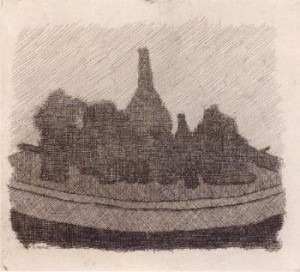
I just got back from Sotheby's, where I failed to bring home the bacon--an exquisite 1931 etching by Giorgio Morandi on which I bid unsuccessfully this afternoon--but had an exhilarating, educational, and slightly scary time anyway.

Sotheby's New York is near the eastern end of 72nd Street. As soon as I got there, I went straight to the seventh floor, where I registered and was given a numbered paddle, which you need in order to place bids. (No, you can't accidentally buy a million-dollar painting by scratching your nose at the wrong moment, unless you're dumb enough to scratch it with the paddle.) Much to my surprise, all I had to do was show a photo ID. I wasn't asked to furnish proof of solvency. Had I wanted, I could have bankrupted myself several times over, and no one would have been the wiser until it came time to settle the tab.

Paddle in hand, I strolled into the salesroom, a cavernous chamber on two of whose walls hung large lithographs by the likes of Robert Motherwell, Helen Frankenthaler, and Chuck Close (this was a print auction, not a big-bucks painting auction). Placed in front of the third wall was what looked like a telethon phone bank, which turned out to be more or less what it was: Sotheby's employees sit there with phones to ears, passing along bids from bidders who couldn't (or wouldn't) show up in person.

The folding chairs filled up, and at two o'clock sharp, a gawky, cheerful-looking WASP in a suit stepped behind the podium, clipped on a lapel microphone, and called the crowd to order. On his right was a ponderous turntable which spun the "lots" into view, one item at a time. On his left was a large video screen on which the items and top bids were flashed, plus a few extra telephone operators and one woman who passed along the on-line bids (Internet bidding is fast becoming a big deal at the lower end of the auction business). The whole thing looked not unlike the set for a low-budget game show.

Once we got started, things moved quickly--really, really quickly. My idea of art auctions had come straight from the scene in North by Northwest in which Cary Grant slips through the fingers of James Mason and Martin Landau by misbehaving in a fancy Chicago auction house and getting himself carted away by the cops. It wasn't like that at all. The auctioneer wasted not a single word describing any of the various prints on sale, much less engaging in small talk. All he did was announce each lot number and (occasionally) the artist, and for the most part he was the only person in the room who said anything at all. Nearly everybody bid in silence, raising their paddles, a finger, or a pen.

The bids came fast and furious, and once the top offer had been made, the auctioneer would say, "Fair warning and down it goes," rap the podium once with his hammer, and move on. It generally took about 30 seconds to dispose of each item, be it a Kandinsky, Feininger, Braque, Matisse, or Miro (of which there were what seemed like at least two dozen for sale). The prices ranged from $1,500 to $30,000, and it was unnerving to watch the numbers soar. The person operating the tote board frequently had trouble keeping up with the bids.

At first I was shocked by the whizzing pace of the bidding, but the etching I wanted was Lot 342, which gave me plenty of time to get used to it, and within half an hour I was swept up in the discreet excitement that rippled through the room. Most of the bidders in the house appeared to be art dealers, but I spotted a few obvious-looking civilians who were clearly delighted to go head to head with the pros, 30 seconds' worth of single combat at a time. It didn't take long for me to figure out that when my time came to bid, I'd need to keep as cool as possible if I didn't want to spend a lot more than I could afford. So I watched in silence, listened, and learned.

Two hours into the auction, Lot 342 finally spun into view. I raised my paddle to place the first bid, and within five seconds I knew the odds were against me. At Sotheby's, the auctioneer places absentee bids on behalf of customers who have authorized him to bid up to a certain amount. Each time I bid, he raised me, at first in hundred-dollar increments, then five hundred at a time. We reached the high end of the pre-auction estimate, then rolled right over it. At that point, a dealer got into the act, and all at once I was bidding above my not-a-dollar-more point--not too far over it, but far enough for me to come to my senses, kick myself, and realize that I was teetering on the verge of doing something extremely stupid. I placed one last ill-advised bid, and the dealer topped it immediately. The auctioneer looked back at me. I shook my head, just like the Sotheby's Web site says to do, and abjectly laid my paddle on the seat next to me. A couple of heartbeats later, the hammer came banging down, and "Vari oggetti su un tavolo" went home with somebody else.

As I left the salesroom, I breathed a deep sigh of relief. I knew it would have been incredibly easy for me to have spent more money than I could afford on that etching (which is, of course, precisely what auction houses count on). But I jammed on the brakes at the next-to-last second--and instead of slinking home with my paddle between my legs, I felt like the king of the cats. As Winston Churchill once said of combat, there is no sensation so exhilarating as being shot at without effect. I'm sure he's right, but there's also something to be said about nearly spending way the hell too much money in public.

The only bad part, of course, is that I came home empty-handed. I'd let myself get my hopes up, and those of you who've been following this blog from the outset will recall how much I love Morandi's work. The thought of owning a piece of it, however small and imperfect (for this particular etching was in less than ideal shape) had filled me with anticipatory joy. On the other hand, I got my first taste of auction-house blood today--and it wasn't my blood, either.

Will I be back? You better believe it.

Posted October 31, 6:06 AM

October 30, 2003

OGIC: I'm twice the boy you are!

Dear Terry:

The Gender Genie is quite insistent: I write like a man. No matter what I feed it. I believe this will surprise you.

As for your critical andogyny, I can only surmise that the theater brings out your feminine side while music cues the testosterone. Nineteenth-century detractors of the novel routinely labeled narrative literature as feminine (and thus decadent) while lauding lyric poetry as a properly manly form. Without endorsing such dusty dichotomies, I wonder whether the Gender Genie--if we even trust it as far as we can throw it--is picking up on some difference in the way you respond to and describe narrative and non-narrative art? This seems like a stretch, but it's all I've got!

Of course, I was disappointed to find that the Genie's methods are not, at a glance, much more sophisticated than counting words. A self-respecting genie should work in more mysterious ways.

Posted October 30, 12:33 PM

TT: Classics and commercials

I've been enjoying OGIC's posts on Henry James. (I wonder if she remembers that we saw The Wings of the Dove together?) And while I have nothing much to add to what she has so beautifully said, I do want to mention another "theatrical" version of James whose Jamesianness seems to me altogether exemplary, Benjamin Britten's opera of The Turn of the Screw. Like all good adaptations, it is fairly free in its approach to the original, and it is precisely because of that freedom that Britten and his librettist, Myfanwy Piper, were able to create a fully independent art object. You don't go see The Turn of the Screw to be reminded of James' story--you see it for its own sake. As far as I'm concerned, that's the only way to successfully translate a classic from one medium to another. Otherwise, why bother?

I mentioned yesterday that I just saw the press preview of Wicked (about which more tomorrow), a new Broadway musical based on the novel of the same name by Gregory Maguire. I brought with me a friend who is a huge Maguire fan, and who bristled visibly at every departure from the original. Not having read the novel, I wasn't bothered by the differences, even after my friend told me how extensively the authors of the show had altered what Maguire wrote. But I knew how she felt. If you're going to make a stage or screen adaptation of a familiar work of art, you really only have two viable alternatives: try to reproduce the original as closely as possible, or go your own way. Anything in between is doomed to failure.

I'll be grappling with the same dilemma when Master and Commander, the new Patrick O'Brian film, is released in a few weeks. I know the O'Brian novels extremely well, and I have my own very strong ideas about what Jack Aubrey and Stephen Maturin sound and look like. If the film fails to match up with my preconceptions, I'll be jolted. The good news is that I've seen the trailer, and Russell Crowe meshes quite nicely with the Aubrey of my imagination. Still, I'm sure I won't be any easier to please than my friend was by Wicked.

A moment ago I asked: why bother adapting the classics? Of course we all know the real answer. Producers and directors adapt movies from well-known originals in order to piggyback on their success. The Harry Potter movies (which I didn't much like) had a huge pre-sold audience going in. Which reminds me of what Edwin Denby, the greatest dance critic of the 20th century, wrote about Seventh Symphony, a ballet choreographed by Leonide Massine to Beethoven's Seventh Symphony, one of several well-known classics that Massine staged, by most accounts unsuccessfully:

[Massine] can get away with murder. If one took him seriously, he would be guilty of murdering the Beethoven Seventh...There is of course no reason for taking Massine seriously; he doesn't mean to be, he doesn't mean to murder. Like a cigarette company, he is using famous names to advertise his wares. But I cannot help resenting it, because they are names of famous things I have loved. It is hardest to bear in the case of his Seventh, where the orchestra is constantly reminding me of the Beethoven original.

Does that perhaps sum up some of your distress with the Wings of the Dove film, dear OGIC?

Posted October 30, 10:12 AM

TT: Not ideas about the thing

I've been reading Virginia Postrel's much-discussed The Substance of Style: How the Rise of Aesthetic Value is Remaking Commerce, Culture, and Consciousness, and finding it stimulating, though I'm struck by the failure of most reviewers to see how fundamentally political it is. Postrel, after all, is an ideologue. Specifically, she's a libertarian, one who believes that individual liberty is an absolute value, a universal trump card that tops all other values. This conviction is indissolubly commingled with her belief, stated at the beginning of The Substance of Style, that "aesthetic value is subjective and can be discovered only through experience, not deduced in advance." Me, I'm not a libertarian, and so am able to recognize that the first half of that sentence is untrue, even though I agree completely with the second half.

I'm also struck by the fact that Postrel, for all the delight she takes in the aesthetic appeal of our hyper-designed, choice-driven world, seems oddly, even weirdly indifferent to certain fundamental values of art. Consider the following passage from her book:

A new art market has developed: upscale wall décor. Artists and art collectors have long mocked the idea that someone might purchase a work to go with a couch--an insult to serious art. Perhaps as a result, the wall décor industry has been the home of generic, clichéd prints. But not all visually sophisticated consumers want art to impress their friends, hobnob with the gallery crowd, or make money as an investment. Some just want a more attractive living room. In response, an unsnobbish middle market is offering prints and photographs to go with stylish furniture.

Many of the featured artists are well-known modern or contemporary names. Eyestorm, which started as a specialized Web site and branched out into stores, offers limited-edition prints by Damien Hirst at $3,000 each and a photo of Andy Warhol by Dennis Hopper for $500. Serving the same need, Crate and Barrel sells framed reproductions of Mark Rothko paintings for $499. Sales are growing at double-digit rates. Customers are "buying for aesthetics, not collecting," says an Eyestorm executive. They're treating art not as an investment or a status symbol but simply as a way to create a beautiful home environment.

Excuse me for being cruel, but that passage could only have been written by someone who quite literally doesn't know the first thing about the meaning and function of art. Put aside for a moment Postrel's implicit suggestion that buying "a photo of Andy Warhol by Dennis Hopper" could possibly "serve" any "need" other than the need to be vulgar. Notice instead the planted axiom in the first paragraph, echoed in the last sentence of the second--the assumption that the only reason why anybody would buy "real" art is to make money or impress his friends. Why bother searching, scrimping, and saving for the real thing when you can buy a framed "reproduction" of a Rothko for five hundred bucks? It'll make your living room look just as beautiful, right?

I hardly know where to begin disentangling all the fallacies embedded in those assertions, but perhaps I should start by addressing a half-truth, which is that the point of a Rothko, or any other work of art, is the way it looks, not who made it. Art connoisseurs have a phrase for people who get those two things confused: such benighted folk "buy signatures," which is one baby step up from collecting autographs. And it's quite true that the "visually sophisticated consumer" who likes Rothko's palette and wants to have it in his home can also do so by purchasing a reproduction of a Rothko painting. If the reproduction is well printed, the colors will be similar.

I hasten to point out, though, that Crate and Barrel didn't create that latter possibility out of thin air. All they did was put a dishonest spin on it by marketing "framed reproductions" that purport to look Just Like the Real Thing. As anyone who's ever hung a museum exhibition poster knows, there's a huge difference between a well-printed poster of a painting, which doesn't purport to be anything other than what it is (in fact, it invariably contains text, thus identifying itself for all to see as a non-painting), and a "framed reproduction," which is by definition pretentious, meaning that it pretends to be a real work of art.

I like looking at beautiful colors, which I suppose makes me visually sophisticated, so I used to hang museum-exhibition posters on my walls. In time, though, I found myself longing for something more "real," and I started to buy etchings and limited-edition prints. I didn't buy them for the signatures (though I freely admit to enjoying the frisson of having Helen Frankenthaler's signature hanging on my living-room wall), but because they were more beautiful than posters. The difference between a reproduction of an etching and an actual etching is quite real, and not all that subtle, either. I bought my copy of Milton Avery's March at a Table from a dealer in San Francisco, not having seen anything other than a catalogue photograph, and when I took it out of the package I was stunned (I actually gasped) by how much more intense a visual punch it packed. Even if it hadn't been signed by Avery--and yes, I do own some unsigned prints, which proves my purity of heart--it would have been worth owning for that reason alone. In fact, that's the only good reason to own it.

I wonder if Virginia Postrel understands any of this. I doubt it. She's so excited by the regime of unlimited, mass-produced aesthetic choice that she's lost sight of the value of the handmade object--assuming she ever knew the difference in the first place. Lest we forget, a "framed reproduction" of a Rothko is different from a Rothko. It looks different. And that's the point, at least for people who really love art. We don't buy art to impress our friends--we buy it so that we can see it every day, as often as we want.

All of which leads us to a far more complicated and interesting question: if you could create a Rothko reproduction that was all but indistinguishable from the real thing, would it be a work of art in its own right? And would it be worth having, and hanging? But of course the answers to such complicated questions are only to be found in the realm of true aesthetics, not the watery simulacrum about which Virginia Postrel has written in The Substance of Style.

Posted October 30, 10:11 AM

TT: The lost language of goons

I got a call yesterday from a fact checker at The New Yorker. He was working on a piece that made reference to H.L. Mencken, and very apologetically asked me if I could perhaps help him by answering two questions (one was simple, the other subtle). I told him that Mencken would have approved of his labors, which is true. Mencken did quite a bit of writing for The New Yorker in the Thirties and Forties, and referred admiringly to its fact-checking department as "Ross' goons" (Harold Ross being, of course, the magazine's founding editor and resident tutelary spirit).

That call filled me with nostalgia. As anyone knows who's been in journalism for more than the past 20 minutes or so, fact checking is an increasingly lost art. Time was when many magazines--if not most--rigorously checked every factual assertion made in every story they published. When I was writing profiles for Mirabella nine years ago, the checkers even required me to give them my interview tapes. But by the time I got to Time, the rigor had loosened considerably. My Time stories about the arts were "self-checked," a wonderfully Orwellian euphemism meaning that they weren't checked at all--it was assumed that I knew what I was talking about (though occasionally a copy editor would query me about odd-looking names).

By then, of course, the whole system was unraveling, at Time and everywhere else. I remember the black day when Time actually closed its in-house library, a cost-cutting measure that filled the writers of the magazine with dread. They knew, in the words of "About Last Night"'s favorite novelist, that we should never be again as we were. And we weren't.

All this fond reminiscence will doubtless amuse, if not astound, those readers who grew up under the aspect of the World Wide Web. Nowadays, most of the journalists I know do much of their research on line, and their first stop is Google rather than the nearest library. What's more, I think many of us tend to reflexively take for granted the accuracy of what we see on the Web--and in the blogosphere, that great echo chamber driven by hyperlinks, such an assumption can lead very quickly to inaccuracy, grief, and libel suits.

I am, as I'm sure I don't need to tell you, decidedly pro-blogosphere, for all the reasons that all of us are constantly touting on our blogs. In particular, I love the combination of immediacy and freedom that comes with unedited self-publishing, and I'm also fairly comfortable with it, in part because I've been a newspaper and magazine editor and so have learned over the years how to clean up my own copy. It also helps that the Gene Fairy made me a near-perfect speller (though I am chronically deaf to the more nuanced differences between "which" and "that," a problem about which I make an unnecessary point of warning all editors unlucky enough to have to work on my stuff).

Even so, I'm well aware, at times painfully so, that I'm working without a net. Not always--sometimes I write and publish an item too quickly to think about it--but at some point in the process I generally remind myself that there's nobody to backstop me but you, the readers, and that you aren't necessarily rooting for me. If you've followed the Gregg Easterbrook imbroglio, you know that in the highly politicized and present-oriented world of blogging, one bad mistake can cause the sharks to circle within hours.

All of which went through my mind after I hung up on that nice fellow from The New Yorker, a magazine that (which?) still believes in taking institutional responsibility for the facts it publishes. I know, I know, things ain't what they used to be, and I, too, have found misspelled proper names in its pages of late. I also know that fact-checking is no kind of panacea. As every writer knows, a large pile of scrupulously checked facts can add up to one great big honking lie. And all things being equal, I'd rather bear the responsibility for what I write than cede it to an editor who may or may not be capable of shouldering it.

Nevertheless, I miss old-fashioned editing, just as I miss the common culture that has been largely replaced by the libertarian regime of choice, even though I'm well aware of the defects of the systems with which I grew up. There are no absolute earthly goods, and every virtue has its reciprocal defect. Or, to put it in American, you pays your money and you takes your choice. Me, I choose freedom, and quite happily, too--if not always comfortably.

Posted October 30, 10:09 AM

TT: One wheel, coming up

I finally (no laughter, please) got a cable modem today, and now I know what a good-sized chunk of the rest of the world knows, which is that using the Web feels different when you're always connected. Heretofore, I thought in terms of "going on the Web" as something you had to do. Now, I don't go on the Web, I am on the Web. It's a permanent state of being. The conceptual difference is enormous, and I have no doubt that it will impact greatly on my blogging.

Just thought you'd enjoy listening to me playing catch-up. Which new technology shall I discover next? Answering machines? Typewriters? The printing press? In a way, the really surprising thing is that I managed to start a blog in the first place, thanks solely and only to the adorable Megan McArdle of Asymmetrical Information (who egged me on) and the amazing Doug McLennan of artsjournal.com (who built the damn thing for me). Blame them.

The only thing for which I take credit is the discovery of Our Girl in Chicago. At a cocktail party last night, a distinguished ex-editor sidled up to me and asked, "O.K., how's the finger? And who is this Our Girl? Where did you find her?" Why, under a cabbage leaf, of course....

Posted October 30, 7:47 AM

OGIC: Duh and duh again

A few readers who, unlike some of us, are paying attention have emailed to point out that my First Lines quiz from this morning is easily solved with the help of Google. Duh. I guess I didn't think of this because I had so much fun with the real McCoy that it never occurred to me to cheat.

What makes me feel even sillier is that the Big Story in books this last week has been Amazon's new Search Inside the Book feature (which, by the way, is the subject of several interesting stories and letters at Moby Lives today). Double duh. Verrrry swift, OGIC.

Well, if you still want to write in with your answers, just consider yourself under the honor system. And stay tuned for the perfectly anti-climactic unveiling of the sources on Monday!

Posted October 30, 6:50 AM

TT: Elsewhere

Erin O'Connor, who blogs at Critical Mass, is following the Senate's hearings on academic speech codes, and she has good stuff. Click here and keep scrolling.

Posted October 30, 6:05 AM

TT: Forgotten but not gone

I wrote earlier today, apropos of The Turn of the Screw, that "all good adaptations" of pre-existing works of art are "fairly free." Alas, John Huston's film of The Maltese Falcon momentarily slipped my mind. It's extremely faithful to Dashiell Hammett's novel. In fact, it's said that Huston's secretary prepared the first draft of the script by simply going through the book and retyping it as dialogue. That can't be right, but it's not far wrong. I don't know a more literally adapted film version of a well-known book, or a better one.

Needless to say, the main reason why The Maltese Falcon works so well on screen--though by no means the only one--is Humphrey Bogart. He made the film, just as it made him. It focused his tough-guy persona in a way none of his previous films (except for Raoul Walsh's masterly High Sierra, co-written by Huston) had quite managed to do. Minus Bogart, the movie would still have been good; any movie with Sydney Greenstreet, Peter Lorre, Mary Astor, and Ward Bond couldn't have been bad. Still, I doubt it'd be half as well remembered today.

Of course somebody added a line to Hammett's original, the best line (and best line reading) in the movie. At the very end, Bond picks up the statuette and asks what it is, to which Bogart rasps in wry reply, "The, uh...stuff that dreams are made of." I gather there's some question about how that Shakespearean snippet got into the script. Did Bogart improvise it, or did Huston write it? Either way, it's a clear improvement on Hammett--though Philip Marlowe would have been more likely to quote from The Tempest than Sam Spade. But I never think about that when I'm watching The Maltese Falcon. In the moment, coming out of Bogart's mouth, it rings true.

Posted October 30, 5:46 AM

TT: You heard it here first

I'm going to Sotheby's Friday afternoon to bid on an etching by an artist whose name has turned up more than once on "About Last Night." It'll be the first time I've ever taken part in an auction of any kind, except when I once raffled off the opportunity to dunk me in a dunking booth as part of a college benefit. (I hope this is more fun.)

Watch this space for details--and in the meantime, cross your fingers. I soooooooo want that etching!

Posted October 30, 5:46 AM

OGIC: Be funny or be quiet

Michael over at 2 Blowhards has stories of disturbing, and possibly disturbed, moviegoers. They range from the merely annoying to the downright hilarious, and include one cautionary tale for New Yorkers.

It's funny he should bring this up today, because there was a general disturbance when I was watching Mystic River in Oak Park the other night (more on the movie later). About halfway through, during a solemn scene involving Tim Robbins' character and his young son, there came a great whooshing from the other side of a door at the front of the theater, as of someone washing a sidewalk with a fire hose. This went on for a while, all of us sitting dumbfounded, looking at the door and missing what may have been a pivotal scene, for all I know. Finally, a brave lady walked over, opened the door, and told the unseen party outside, "we're trying to watch a movie in here!" From outside, we all heard the surprised response: "Uh...you guys can hear this?" Uh, yeah!

Just one more: about ten years ago, a friend went to see an obscure little Russian movie at the selfsame Film Forum that figures in one of Michael's stories. The movie wasn't very good. About half an hour into it, someone at the back stood up, loudly declared, "Janet Maslin sucks!" and walked out. Everyone applauded.

Posted October 30, 3:49 AM

OGIC: News of the bright

Maybe it's just me, but when my next invitation to a Halloween party at a federal building comes rolling in, I'm thinking "gun-toting" anything doesn't get out of the first round of costume ideas.

Posted October 30, 3:45 AM

OGIC: Name that tome

John Dobbins and Mary Ochs's addictive "First Lines" quizzes enlivened and sabotaged my work week (thanks--I think--to Household Opera for the link). They are (yay) many. But (sigh) finite. Helplessly craving another fix, I've raided my own bookshelves for more. I beg forgiveness for the copycatting.

Here are the first lines of 10 works of fiction, arranged by length. The works they come from were published between 1749 and 1991. One is a translation.

1. In that pleasant district of merry England which is watered by the river Don, there extended in ancient times a large forest, covering the greater part of the beautiful hills and valleys which lie between Sheffield and the pleasant town of Doncaster.

2. An author ought to consider himself, not as a gentleman who gives a private or eleemosynary treat, but rather as one who keeps a public ordinary, at which all persons are welcome for their money.

3. At the time when this story begins, the Stanhope press and inking-rollers were not yet in use in small provincial printing-offices.

4. On a January evening of the early seventies, Christine Nilsson was singing in Faust at the Academy of Music in New York.

5. You are not going to believe me, nobody in their right minds could possibly believe me, but it's true, really it is!

6. The mental features discoursed of as the analytical, are, in themselves, but little susceptible of analysis.

7. The schoolmaster was leaving the village, and everybody seemed sorry.

8. The book was thick and black and covered with dust.

9. One never knows when the blow may fall.

10. In Africa, you want more, I think.

Answers will appear Monday. In the meantime, if you would like to submit your answers for recognition, email them to the usual address (but please put "OGIC" in the subject line). Top scorers will get... recognition!

Posted October 30, 3:35 AM

OGIC: Cruel to be kind

To snark or not to snark? The conversation continues on two fronts this week. Maud links to a piece bringing a Canadian perspective to bear on the great snark debate (which, if you've been living under a rock, started here). Kate Taylor puts her finger on the most absurd thing, in my eyes, about the anti-snark campaign: purveyors of snark are far, far outnumbered by "mealy-mouthed reviewers tiptoeing around the books they are reviewing, leaving readers to discern their real opinions between the lines." The last thing we need is more reviews of this sort.

At The Morning News, meanwhile, the subject comes up about two-thirds of the way through a long, consistently interesting interview with Julie Orringer, who recently published her debut short story collection, How to Breathe Underwater, to early acclaim. There's something off about Orringer and Robert Birnbaum's discussion of negative reviewing. Their blind spot is most pronounced in remarks like these:

The dismissive review is the one that really disrespects the time and the effort of the writing itself and that's a horrible thing to see done to someone.

...a bad review can be a plea on the part of the reviewer to make the writer see some truth about his work or the world. That's extremely important.

What--or who--goes missing when you start thinking of reviews as "pleas" to authors, or as something "done to" them? Only the reader! In the author-centric universe promoted by the snarkophobes, readers' needs are elbowed out of the way to make room for authors' sensitivities. This is exactly backwards.

Posted October 30, 1:51 AM

October 29, 2003

TT: Uuuuuuuh, gimme a break!

This blog probably belongs to Our Girl for the rest of the day (I've got a review to write and a bunch of appointments on top of that), but I did want to leave you with something to chew on before I vanished up the spout.

It is, incidentally, tough to type when you have a great big bandage on one of your fingers, not to mention a missing "U" key (which I won't have time to get fixed definitively until I hit my last deadline tomorrow afternoon). I don't recommend it. Nevertheless, I'm doing my best, all for you.

Posted October 29, 7:42 AM

TT: Almanac

"Music has an enormous advantage: it can, without mentioning anything, say everything."

Ilya Ehrenburg, Liudi, gody, zhizn' (quoted in Solomon Volkov's Shostakovich and Stalin, forthcoming in April from Knopf)

Posted October 29, 7:40 AM

TT: Mailbag (and an aggressive suggestion)

A reader writes:

Thanks for plugging John Marin so aggressively...frankly, from inside the museum world it seems as if his marginalization is a function of his having done his major work on paper. Museum curators are typically departmentalized by media so that American paintings specialists will often deride works on paper (as opposed to larger works or those on canvas) as comparatively minor.

I was fascinated to hear from this correspondent, who is a curator at a well-known Eastern museum. I'd always wondered whether there was a bias in the museum biz against "small" artists, a label that could easily be attached to Marin, who left behind no large-format paintings and (as now seems clear in retrospective) did his major work in watercolor rather than oil. Sure sounds like it.

Another reader writes, apropos of Lileks' recent posting on Fantasia and the rise of digital animation, a theme in which this blog has also taken an interest:

I'm of two minds regarding the changes in animation and animation tools: on one hand, I know the medium in which one works affects the work itself, often in nearly imperceivable ways -- when I hand-write a first draft I produce a slightly different style of prose than when I type straight into the computer -- and on the other hand, I have a gut sense that a tool is just a tool and after many revisions the initial effects of the medium become less important than the core of the content. In the case of animated movies, I believe the quality of the story and the skills of the animators have a greater impact than the means by which the movie was made.

Last Thursday's "Wall Street Journal" included an article ("Disney Decides It Must Draw Artists Into the Computer Age," by Bruce Orwall) about Disney's conversion to computer-generated animation that addresses the issue from the traditional animators point of view. I will not be surprised if the conversion to CG tools is beneficial to Disney in unexpected ways: The studio's problems may have more to do with stagnation, and forcing themselves to learn new tools and develop new processes may shake things up enough to allow creativity to happen. Glen Keane's comment that he feels "like about 30 years ago, when I was first at Disney just learning" seems like as a good sign, don't you think?

Yes, I do, and I'm encouraged by the optimism of this letter, though I'm not quite convinced by the comparison between writing on a computer and animating on one. There's a difference between the former (in which the hand merely transfers pure symbols from the writer's brain to the "support" of a computer screen) and the latter (in which the "symbols" are of interest in their own right rather than because of what they stand for). But I incline to agree that "a tool is just a tool," and I think it's perfectly possible that digital animation can aspire to the warmth and imagination of hand-drawn animation. Maybe. I hope.

Which reminds me to remind you that The Looney Tunes Golden Collection, the new four-DVD set of classic Warner Bros. cartoons--all of them created with nary a computer in sight--is now officially on sale. My copy arrived in the mail yesterday from amazon.com, and I had to pry myself away from it to get to the theater on time for the press preview of Wicked, which opens tomorrow and about which more Friday.

I'll be writing about the Golden Collection in the Wall Street Journal, too, perhaps as early as next week, so I don't want to jump my own gun, but I can tell you this: IT'S FANTASTIC. Go get one.

Posted October 29, 7:38 AM

TT: I'm a boy!

Dear OGIC:

The Gender Genie thinks I'm female when I write for The Wall Street Journal and male when I write for Commentary.

Discuss.

Posted October 29, 5:07 AM

October 28, 2003

TT: It comes at last, the distinguished thing

Courtesy of DVD Journal:

We don't have firm any street dates just yet, but our good friends at Criterion have confirmed that their January slate will include Jean Renoir's 1939 The Rules of the Game, one of the greatest films in history and a long-time MIA title. The digital transfer will be taken from a recently discovered master print with restored audio and new English subtitles, and the feature-set is deep -- on board will be an introduction by Renoir, a commentary written by film scholar Alexander Sesonske (read by Peter Bogdanovich), a second track from Renoir historian Christopher Faulkner, the 1966 French television program "Jean Renoir le Patron: La Régle et L'Exception," a video essay about the film's production, release, and later reconstruction, a discussion of the 1965 restoration by Jean Gaborit and Jacques Durand, interviews with assistant cameraman Alain Renoir and set designer Max Douy, and various written tributes in the enclosed booklet.

You know what to do.

Posted October 28, 10:48 AM

TT: Digital update

Don't ask me how (I'm not entirely sure), but I managed to pry a 2,600-word essay on Paul Whiteman out of myself yesterday using only nine fingers. Actually, I can strike keys more or less accurately with my mutilated digit, but not with the Astaire-like precision of my normal typing, so bear that in mind when you stumble across the occasional typo in days to come.

I also went to a play last night, where I saw something astonishing: a playgoer in the front row of the theater had a heart attack in the middle of the next-to-last scene. The ambulance crew was on the scene within minutes, and as they charged down the aisle, I heard a critic sitting behind me mutter, "Well, it wasn't that bad."

Today I write my Washington Post column for Sunday and go to another play tonight, but I did want to poke my head in and check on how you were. I see Our Girl is tempting you with two of her most flagrant enthusiasms, both of which I share. When I visited her in Chicago a couple of years ago, we spent most of my stay watching selected videotaped episodes of Buffy, a marathon that left me persuaded of everything she says below about that excellent show.

As for Jamesian movies, I put my money on The Heiress, which isn't on DVD but can be rented on videocassette at well-stocked stores. Great cast (Olivia de Havilland, Montgomery Clift, Ralph Richardson), great direction (by William Wyler), and an Oscar-winning score by Aaron Copland whose awesome virtues I think I've mentioned before. It's the real reason why The Heiress is so Jamesian. Do seek it out, OGIC.

And now I have to get back to my nine-fingered writing life. Y'all have fun now, you hear?

P.S. Is it just me, or has that Dale Peck interview vanished from Gawker?

Posted October 28, 10:17 AM

OGIC: And it was dead, dead, dead

If you're just tuning in, we've been talking about James on film today (cue the Duran Duran, somebody). Terry's words on behalf of The Heiress this morning (scroll down just a bit) have triggered a small flood of emailed harumphs. Casey Abell writes to steer me toward it and away from The Innocents, which he says "yanks the interpretation toward the governess-is-nuts viewpoint by showing her looking at a picture of Quint before her exact description to Mrs. Grose. This spoils the key ambiguity about whether the ghosts exist outside her active imagination."

Cinetrix also stamps The Heiress with her approval, citing only one caveat: "Montgomery Clift is as dreamy and sleazy/weak-willed as you want, and de Havilland is heartbreaking as Catherine. But Aunt Penniman--oh dear....The movie completely defangs her. She's rendered dithery rather than menacing the way she is in the novel, where her manner of speaking and thinking infects everyone's language."

Casey goes on to ask why all the animus from my corner toward the Wings of the Dove film. It's a good question. A very, very good question. Could it be that I have always felt unreasonably possessive of this novel and jealous of others' appropriations? Am I simply that petty? Yeah, that's part of it. I've been searching my memory, and the only specific criticism I can remember having is of how explicitly and unimaginatively the film represents the bargain struck between Kate Croy and Merton Densher. By showing their liaison in all its immediacy, director Iain Softley theoretically can let the viewer better understand and sympathize with Densher's desire and his choice.

But if the sex scene comes off as just another ho-hum sex scene, despite the transparent and shameless employment of Helena Bonham Carter's naked rear end, as I recall, in the manner of a flashing neon sign advertising "HOT sex"--well, you risk making Densher seem like just some pathetic bounder, altogether unworthy of Milly, and tipping the delicate balance of imperatives that gives James's moral drama its life. And this is what happens. Densher sacrifices Milly for the promise of a night with Kate, that night turns out to consist of bland movie sex, and the whole story becomes hard to take seriously, the dénouement easy to misunderstand. It wasn't just the censors that held James back from depicting the sex in his novel; it was solid professional know-how.

Still, I admit, this is slender evidence on which to hang the whole movie. In the end, I think that the parts of the novel I'm in love with are close to off-limits to Softley or any other filmmaker. Mainly I'm thinking of the big recognition scene, when Milly is snapped out of her dream of being a figure in a Watteau canvas, like the airy people around her in the Matcham gallery, and shown incontestably that she is as different from them as possible--a Bronzino, and doomed. To be honest, I can't even remember whether the movie showed the portrait. But I know it didn't make as big a deal of the scene as I thought it should have.

After thinking this through, I'm deciding that the problem is mine, a symptom of over-attachment. Just as sometimes you can't get there from here, they can't make a movie of this novel that I will like.

Posted October 28, 4:55 AM

OGIC: Fortune cookies

"Your description of the impudent Cambridge winter, however, is vivid--with the earth like a stone and the sky like a feather. Here the earth is like a Persian rug--a hearth-rug, well besprinkled with soot."

Henry James, letter to W. D. Howells (London, December 5, 1880)

"Besides, anything sad that happens to you always seems to me sadder than the same thing happening to anyone else."

Henry James, letter to Grace Norton (February 23, 1884)

Posted October 28, 3:26 AM

OGIC: Grand tour

I love Casey Abell's selection of the best six-step introduction to the work of Henry James (his favorite novelist and mine). His list rang at least five bells for me; it's been long enough since I read Roderick Hudson that I can't say for certain whether it would make my own list. The beauty of Casey's list is that it gives you tastes of all the important phases of James, from the discovery of many of his career's most resonant, abiding themes in Roderick Hudson to the still-Victorian high realism of The Portrait of a Lady, the attempt at a great social novel in The Princess Casamassima, the heady, virtuosic point-of-view innovations (following nearly a decade away from long fiction) of What Maisie Knew, and then full-flowering late James in The Ambassadors and The Wings of the Dove, novels of the Major Phase that manage to reconcile the psychological embeddedness of Maisie with the keen social observation of Portrait and Princess. This list will get you far.

There's much more on Casey's James page, as you'll see for yourself if you simply scroll down. His commentary on the harder-to-find among James's published letters is both a fun read and a useful resource for anyone doing research on James. It has inspired tonight's double dose of fortune cookies (above).

One little point of dissent: more than most filmed versions of James, I loathed Iain Softley's Wings of the Dove. Casey by no means loves it, but he's kinder about it than I could be. I thought that Agnieszka Holland's Washington Square was worthwhile, with its achingly restrained Jennifer Jason Leigh performance. For some unfathomable reason I haven't seen William Wyler's The Heiress nor The Innocents, the 1961 adaptation of "The Turn of the Screw" that is said to be so chilling.

But the best Jamesian cinematic experience I know is Jacques Rivette's new wave film Céline et Julie Vont en Bateau. David Thomson calls it "the most innovative film since Citizen Kane" (in his New Biographical Dictionary). It's very loosely based on the obscure James novella that was brought back into print a couple of years ago by New York Review Books, The Other House--so loosely that it can't rightly be called an adaptation; rather, call the novella its inspiration. There's a little Jamesian world tucked inside the wider world of the movie, which is as far from Jamesian as possible, and the characters get sucked into it. And into it. And into it. Not unlike your trusty blogger and Mr. Abell.

Posted October 28, 2:05 AM

OGIC: Second things first: for aspiring Slayerites

The great fifth season of Buffy the Vampire Slayer will be available soon on DVD. You can make a case for any of the seasons between the second and the fifth being best. Put me on the spot and I'll squirm and equivocate, and in the end take the fifth.

The fifth season begins and ends with two great, jaw-dropping surprises. Although the second surprise is bigger, the first one is gutsier; it's completely disorienting, yet (eventually) satisfyingly accounted for. (It won't be obvious what's so surprising about it unless you've watched the previous seasons.) In between, the Slayer faces her mightiest opponent yet. True, every next Big Bad has to be tougher than the last, but by the fifth season the show had just about topped out in terms of magnitudes of villainy--there wasn't much of anywhere to go after Glory's high-heeled predations. Actually, the sixth season came up with a resourceful and potent solution to this built-in dead end; unfortunately, the individual episodes had become uneven and unreliable by then, lurching from classics like the musical "Once More with Feeling" to terrible clunkers about mystery meat.

If you're like many friends of mine who missed out on Buffy during its run, but want to see what all the fuss was about, I have some advice. Start with the second season. The first season has its charms, but it's different in character from the following seasons and is not the best introduction. Plotwise, there's nothing you can't follow in the second season without having watched the first. If you like the second season, go back and watch the first before you pick up again with the third, and then it's smooth sailing ahead for a good sixty-some episodes before things start falling apart.

About Last Night: you ask, we deliver. Particularly if you ask in verse.

Posted October 28, 1:13 AM

October 27, 2003

TT: Blog-related domestic mishap

I just sliced a chunk out of one of my right-hand fingers on a soup-can lid. It's now wrapped tight and I've mopped up the blood (there was quite a bit of it!). The finger in question, amusingly enough, is the one with which I type "I."

Funny what that does to your blogging. Heeeeelp, OGIC!!

Posted October 27, 11:46 AM

TT: Elsewhere

BuzzMachine is wicked on the Brad Pitt-Jennifer Aniston Middle East peace initiative, tossing off a pair of sentences I desperately wish I'd written:

That's what the Middle East needs: a laughtrack.

And that's the wonderful thing about stars: They have no idea how stupid they are and they have no one to tell them.

(He really should have spelled Aniston's last name right, though, even though the original story doesn't.)

Lileks, whom I wish would write about cultural stuff more often, knocks it way out of the park with today's fugitive essay on Fantasia:

When I look at the great animation of the past, I have the same reaction I have when I see a skyscraper from the end of the Jazz Age boom. Magnificent, utterly American - and for all the machinery involved, it all comes down to the movement of the human hand.

The hand behind the mouse creates something different than the hand behind the pen. Better and worse and worse and better. Classical animation is dead, I think. Frescos, meet oil.

I know he's right. I wish he weren't.

Finally, don't read this story about "earworms" (the technical term for songs that get stuck in your head) unless you want to have your whole day ruined.

You're tempted now, aren't you?

Posted October 27, 10:30 AM

OGIC: Stop me before I tailgate again

If I've been scarce around here, you can blame my recent initiation into the fine American art of tailgating. The rumors are true; I gave over my entire Sunday to football and associated activities. You have to hand it to the diehard fans out there every Sunday in the parking lots of America with their grills and coolers; they really know how to turn a football game into a mere occasion for more important pursuits. Never let it be said, pace Oscar Wilde, that they don't take meals seriously; in this respect, at least, there is nothing shallow about them. I've only lately recovered from yesterday's demonstrations of their depth.

Like I said, this was a first for me (and, for a while at least, a last). On the strength of my native sympathies with the Detroit Lions, I was invited to the Lions-Bears game here in Chicago. Read: sacrificial lamb. The Bears fans who brought me even provided a honolulu-blue Barry Sanders jersey for me to wear, the better to be picked out by the orange-and-navy-clad multitude as an object of pity and curiosity, if the Bears prevailed, or--well, I didn't find out what my role would entail in the unlikely case of a Lions victory. All for the best, I'm sure.

Left in relative peace thanks to the Lions' harmlessness on the field, I was able to enjoy the $3,000 view from inside the architectural bête noire of the year, the new Soldier Field. ($3K being what my friend paid for the license to the seat I warmed yesterday.) So I can confirm what both the stadium's detractors and the enthusiasts have said about the interior: it rocks. The new design brings the field closer to the fans, giving the proceedings an old-timey, college-bowl feel that contrasts thrillingly with the steel-glass-and-angles modernism of the structure around you. Both the interior and the exterior bring together disparate styles, but the former stages a bold, dynamic clash while the latter makes a hapless muddle (much like the Lions!).

From the outside, the colonnade uncomfortably constricts the bowl, while the bowl bears down on the colonnade; the nostalgic effect of the one, and the futuristic effect of the other, cancel each other out. Inside, the intimate dimensions of the field below and the soaring reach of the steel above make room for each other. They lend each other high definition, with an effect that's additive rather than negating. Inside, you can imagine simultaneously that you have been spirited back to 1955 and that you've been zoomed ahead to 2103. Outside, you're in nowhereland.

This is my third post about a building I'm exposed to a lot, whether driving or biking by it. I've taken the whole thing rather personally. I'm going to stop now and just get used to it.

Posted October 27, 6:33 AM

TT: Further adventures of a dedicated writer

As I was washing the blood off my computer keyboard (now there's a sentence I've never before had occasion to write), I managed to knock the "B" key off. Have you ever tried to reinstall a key on an iBook with nine fingers? Or ten, for that matter. I finally had to give up and seek outside help.

I am not having a good day.

P.S. For those who asked, yes, it's the finger.

Posted October 27, 4:12 AM

October 26, 2003

TT: Latest face

New to "Sites to See" as of today is Cup of Chicha, of which (whom?) Our Girl and I are both fans. Click here or in the right-hand column, as you like it.

We urge you to troll through the roll, by the way. Not all the sites will be equally to your liking, but all are at least worth an irregular peek, and I check out most of them at least once every other day. Right now I am especially fond of Household Opera and Pullquote, and of course life without my daily doses of Maud, Old Hag, and You-Know-Who would scarcely be worth living.

OGIC has her own favorites, which overlap substantially but not completely with mine. I'll let her fill you in.

Did I mention that we are members in good standing of the Cool Lit Club? And that you're not?

Posted October 26, 9:47 AM

TT: Music to answer e-mail by

I don't know about OGIC, but I've answered just about all of my mail. (I understand she's tailgating today. Harrumph! No doubt she'll tell you all about it....)

I'm heading into a four-deadline, two-play week, by the way, so you won't be hearing as much from me as usual, but I promise not to disappear even close to completely, and Our Girl has plenty of stuff on her mind. We'll keep you fed and happy.

In the meantime, here's a playlist. I recovered nearly all my data after that horrendous hard-drive explosion, but one thing I did lose was my mp3 files, every last one of them, arrgh. The good part is that I've been ripping lots and lots of CDs in the course of the past couple of weeks in order to reconstitute my Lost iTunes Jukebox, and my listening has been nicely eclectic as a result. Here's what I played (and ripped) as I answered your mail this evening:

1. Elgar Introduction and Allegro, performed by Benjamin Britten and the English Chamber Orchestra (one of the most underrated of all string-orchestra masterpieces, conducted by a great composer to boot).

2. Coldplay, "Yellow"

3. Django Reinhardt and the Quintet of the Hot Club of France, "Swing 42" (I can't hear this record often enough, for some reason)

4. Paul Whiteman, "Dardanella" (arrangement by Bill Challis, solo by Bix Beiderbecke)

5. Gerry Mulligan and Zoot Sims, "Davenport Blues" (in honor of Bix, obviously)

6. Luciana Souza, "Doce de Coco" (from Brazilian Duos, a CD you must own)

7. Fauré "Clair de lune," sung by Gerard Souzay (the 1946 Decca, recorded when his pipes were young and glistening)

8. Nickel Creek, "Seven Wonders" (Sara's singing is so pretty on this one)

Incidentally, has anybody out there heard of a group called the Hot Club of Cowtown? I heard them on NPR the other day, and I'm thinking they might be a good subject for a piece....

Posted October 26, 9:02 AM

TT: For the record

By way of The Corner, this letter to the editor of the Rocky Mountain News:

Recently, a co-worker asked me if I had seen the movie Bowling for Columbine yet, I told her absolutely not! My answer surprised her, given the fact my son, Matthew, was one of the 13 murdered during the deadliest school shooting in our country's history. I explained to her that prior to the public release of the movie the families of the injured and dead were invited by Michael Moore to attend a preview screening. How thoughtful.

Our family and others considered attending because we were genuinely interested in his message to the public regarding gun control and school violence.

However, once we discovered he was going to charge us admission we refrained from doing so.

It's laughable that Moore attempts to portray himself as an anti-establishment liberal who is the voice of the common folk, when in fact he is no better than the greedy capitalists he shuns. Maybe now that he has made millions of dollars off the blood of our children he could toss a DVD or two our way to view.

Ann M. Kechter

Posted October 26, 1:52 AM

TT: Not the place's fault

I just got back from Wesla Whitfield's last set at the Oak Room of the Algonquin Hotel (right in time to reset my clocks), and I simply had to sit down and tell you how wonderful it was. The room was full of singers, among them Julie Wilson and Mary Foster Conklin, and Whitfield was well aware of it, for her singing was everything that cabaret ought to be and sometimes is: sly and playful, daring and free, musically impeccable, devastatingly emotional. (I could--and should--say all the same things about her accompanists, Mike Greensill on piano and Sean Smith on bass, for they, too, were flying.)

The Oak Room and I have a history. I used to go there all the time to see my old friend Nancy LaMott, and when she died, eight Decembers ago (how can so much time have passed?), I found it all but impossible to go back. It took a long time before I started to feel even halfway at ease in the Algonquin, and even then my memories often made me too melancholy to appreciate whatever I happened to be hearing, no matter how good it was.

Of course Nancy was on my mind last night, for Wesla Whitfield was the only cabaret singer she admitted to admiring, and she would have really, really loved the late show from which I just returned. The Oak Room hasn't seen much of Whitfield in recent years, but after an evening like that, I can't imagine they won't bring her back for a nice long run. A one-night stand is about thirty nights too few.

I forgot to mention in my recent posting about Whitfield that she has a new CD out, September Songs. Don't wait for Christmas. Don't even wait for Monday. Click on the link and order it now.

Posted October 26, 1:33 AM

October 25, 2003

TT: What they used to be

I'm reading Wil Haygood's In Black and White: The Life of Sammy Davis, Jr., and finding it engrossing. Perhaps you have to be older than 30--if not 40--to expect to find Davis interesting, but Haygood's anecdotage is quite arrestingly good. Here's an amazing story that comes from Keely Smith:

Sammy and Sinatra and singer Keely Smith were sitting around one evening. Just three singers, awash in the joy they were all having, talking about singing, songs, life. Sammy told Sinatra he'd have to leave early, couldn't hang around. Sinatra couldn't understand what might be more important than hanging around with him. So he wanted to know why Sammy had to leave, and those blue eyes pressed for an answer. It was Kim Novak; they had a date. A little smirk crawled across the Sinatra face. He told Sammy he could get Kim to break the date. Sammy thought Sinatra was kidding, but he wasn't, the blue eyes steady and hard. Keely Smith sat listening, looking between both men. Sammy against Frank. She knew who would win. "I said, ‘Frank, don't do that.' He went into the room, called Kim [said he wanted to see her], and she broke the date with Sammy to go with Frank. It broke Sammy's heart. And Frank never went to meet her."

That's a story any biographer would have killed to unearth, and Haygood's book is full of similar tales.

I have to add, though, that In Black and White is also full of similar journalistic clichés ("A little smirk crawled across the Sinatra face"), and more than a few passages are so throbbingly florid as to read almost like a parody of Tom Wolfe. O.K., it's a celebrity biography, not the life of Samuel Johnson, but In Black and White is also riddled with errors of fact, chronology, and spelling (Jimmie Lunceford's first name is spelled two different ways on the same page) that will be immediately obvious to anybody who knows a reasonable amount about American pop culture in the 20th century. I'm not talking anything so awful as to call into question the fundamental reliability of the book (as a friend of mine cracked, why would you expect an author who can't spell his own first name to be able to spell anything else?), but I just finished proofreading A Terry Teachout Reader, a job I took very seriously, and it's plain to see, at least to me, that nobody went over this book with anything remotely approaching the same kind of care.

Again, I know times have changed...except that In Black and White was published by Alfred A. Knopf, which still has a reputation as a publisher of books that not only look good but read well. There was a not-so-distant time when any Knopf editor who allowed a book as sloppily edited as In Black and White to go into print would have committed ritual suicide in expiation of his sins.

I know this at first hand, incidentally, because Knopf was H.L. Mencken's house, and in 1995 I published a Mencken anthology, A Second Mencken Chrestomathy, that got the full Knopf treatment. It was edited with a kind of care I thought had gone out of style. And so it had at most publishing houses--but not at Knopf, at least not in 1995, and not for at least a few more years after that. But I guess those days are over now, at least when it comes to celebrity biographies.

All of which reminds me of a stanza from my second-favorite song in Chicago (which was inexplicably and inexcusably deleted from the movie, though you'll find it on the DVD):

Whatever happened to old values?
And fine morals?
And good breeding?
Now, no one even says "oops" when they're
Passing their gas
Whatever happened to class?

Posted October 25, 6:21 AM

October 24, 2003

TT: In which I am well pleased

I just received a boxful of author copies of the paperback edition of my latest book, The Skeptic: A Life of H.L. Mencken. It goes on sale November 4, but you can pre-order a copy or three from amazon.com by clicking on the link.

Depending on the religious inclinations of the potential recipient, The Skeptic might make an excellent stocking stuffer for Christmas--and if you couldn't afford the hardcover version, this one looks almost as nice on the shelf. So buy early and often. I mean, I blog for free, there isn't even a tip jar on this page, so you really ought to do something to keep me solvent, right? If we sell enough copies, I do solemnly swear to give Our Girl in Chicago a stupendous dinner at a restaurant of her choice the next time I'm in the Windy City.

(Incidentally, A Terry Teachout Reader has just been listed on amazon.com for the first time. They seem to think it's coming out in December, which it isn't, but who's complaining?)

Posted October 24, 12:57 PM

TT: Give that woman a Tony

William Nicholson's The Retreat From Moscow, starring Eileen Atkins, John Lithgow, and Ben Chaplin, opened Thursday at the Booth Theatre, and I reviewed it in this morning's Wall Street Journal. Here's the money graf:

Can a great performance save a lousy show? It depends on the show. The post-opening buzz on "The Boy From Oz," for instance, is that Hugh Jackman is worth the price of the ticket, but I'd happily pay good cash money never to see that sugar-coated dud again, with or without the excellent Mr. Jackman. On the other hand, Eileen Atkins has definitely done the silk-purse trick at the Booth Theatre, albeit with a higher-quality sow's ear. William Nicholson's "The Retreat From Moscow," which opened last night, is your standard-issue British domestic drama, all dolled up to look like a serious play, but Ms. Atkins tears into it as if it were Chekhov (which is pretty much what Mr. Nicholson wants you to think it is), and even though I wasn't fooled for a second, it didn't matter....you won't find better acting on Broadway, or anywhere else. She is totally present, totally convincing, totally right.

As usual, no link, so to read the whole thing (which also includes my thoughts on Primary Stages' production of A.R. Gurney's Strictly Academic), buy a copy of this morning's Journal and turn to the "Weekend Journal" section, which is full of readable goodies.

Posted October 24, 12:02 PM

TT: Almanac

Ah! What avails the classic bent,
And what the cultured word,
Against the undoctored incident
That actually occurred?

Rudyard Kipling, "The Benefactors"

Posted October 24, 9:57 AM

TT: Rogue male

OGIC and I tend to like the same movies. I can't remember whether she was the one who first told me about Twilight, or vice versa.

I do feel I should point out, however, that we've been inadvertently drawing attention to the same actor, since Twilight and Support Your Local Sheriff, about which I recently posted, are both graced by the presence of James Garner, who belongs in the category of Famous but Underrated Artists. He's been around forever, and everybody knows who he is from TV--my parents watched him in Maverick, I in The Rockford Files--but for reasons not entirely clear to me, he never quite had the film career he deserved. (One reason was that in Garner's day, it was taken for granted that you couldn't move from small screen to large. In fact, it's usually the other way around.) Yet I can't think of a better romantic comedian, not least because he has the gift of doubleness, the ability to be charming and suspect at the same time.

Cary Grant was like that, too, which reminds me to yield the floor briefly to the ever-relevant David Thomson, who reminds us that Garner was on TV

an hour a week for twenty-six weeks a year for ten years. That is the equivalent of well over one hundred movies--and if any actor could claim one hundred movies made with the wit, narrative speed, and good-natured ease of Maverick and Rockford Files he would be...Cary Grant?

If you don't know what to do with yourself this weekend, you could do a whole lot worse than renting Twilight, Support Your Local Sheriff, and maybe Hour of the Gun (in which Garner plays Wyatt Earp completely straight) or Marlowe (not the best Raymond Chandler movie, but Garner is marvelous as Philip Marlowe) or even the film version of Maverick. You won't be sorry.

Posted October 24, 9:49 AM

TT: Dance, 3; looks, 10

I was going to point out the obvious flaw in amazon.com's new book-searching feature, but Bookslut beat me to it:

Amazon.com has completed its newest sparkly addition. Now when you search for a keyword, it searches the text of 120,000 nonfiction books and offers them in your results. I'm sure this is handy in some way. I bet people all over are rejoicing. But all I know is that when I was searching for "curing pig" in an attempt to find the book "Curing the Pig" by Liza Granville, I got 6,454 results, none of the first page results being the book. When I searched for Liza Granville, I got 202 results, none of the first page results being the book. I had to type in the damn ISBN number to find it. I'm sure this is handy, but you can't turn it off. It just clutters up simple searches, hiding what you're really looking for. Wired, however, calls the move ingenious.

Amazon.com is also having a contest to see how their "Search Inside the Book" feature has changed your life. Do you think if I bitch and complain that the feature is not optional I'll win a Segway?

Granted, it really is fun to search your own name, as BuzzMachine seems to have been the first to point out (and yes, that's the very first thing I did). But it's only fun once. So I really do hope amazon.com figures out quickly that "Search Inside the Book" needs an on-off switch. Like, say, tomorrow.

Posted October 24, 9:30 AM

OGIC: Rank adaptation

If you picked up your copy of The Wall Street Journal today, containing Terry's stage review, then you can also read John Lippmann on the disappointing reception the adaptation of Philip Roth's The Human Stain met with at the Toronto Film Festival last month, and the attendant nervous scurrying of its marketers at Miramax. By "disappointing," I mean "mixed," since Miramax sets the bar high for critical response to its movies--especially the ones it releases in Oscar-bait season.

If you don't have the paper, here's the gist of the piece:

But now, a week before the movie has opened, the buzz has pulled back from a surefire Best Picture Oscar nomination. The film's engine began to sputter at the Toronto Film Festival last month, which has become a major showcase for films with Academy Award aspirations....the word out of Toronto for "Human Stain" was less than unqualified. While it won generally positive reviews from such critics as Roger Ebert, overall reaction fell short of a sure-fire awards contender. "Acting is fine, but never quite gels," concluded trade magazine the Hollywood Reporter. Some reviewers found fault with the unlikely casting of Nicole Kidman as a cleaning woman and even more of the selection of Mr. Hopkins to play Coleman; Variety called the choice of Mr. Hopkins "problematic."

Why do I find this not surprising? First, because there is something depressingly predictable, almost automatic, about the rush to film a high-buzz book like Roth's. It is inconceivable to Hollywood that there might be stories that have already found their most fitting form as books, and can be neither improved upon nor done justice to as movies. (I realize that the very idea that this, rather than profitability, is a guiding interest in Hollywood is absurdly naive.) Second, because I very recently read The Human Stain, guessing that I would probably end up seeing the movie and wishing to have an unadulterated experience of a book that came highly recommended from many quarters.

I finished the novel with mixed feelings, about which more in a later post. For now I'll just say that what strengths it has are not narrative, nor even really descriptive--to name two qualities that can make a novel genuinely ripe for screen adaptation. It is unfailingly smart and has at its core a fascinating and lifelike character study. But for all the extraordinary events in it, the novel struck me as more than a little inert. More than it narrates or describes, The Human Stain expounds and diagnoses; the less charitable verb, and the one that occurred to me repeatedly as I read it, would be "lectures." Not, alas, an eminently filmable mode.

On the other hand, not having cared for the book actually gives me half a hope that I will like the movie. After investing scarce and valuable pleasure-reading time in the venture, I'm almost sure to go see it. It doesn't hurt that the director, Robert Benton, brilliantly wrote and directed one of my favorites, Twilight, a modest little picture with an unbelievable cast. Since it is a trickier thing (though by no means an impossibility) for a movie to lecture than for a book to, it could just be that the process of dramatizing and illustrating this material will have breathed some life into it.

Posted October 24, 5:51 AM

TT: Two heads are better than one

In case you didn't notice, I've performed a bit of subtitle-augmentation surgery on this blog, and also added Our Girl in Chicago's bio to the top module of the right-hand column. All this is nothing more than official acknowledgment of the perfectly obvious fact that "About Last Night" is written by two people. (The headlines of posts written by me start with "TT," while Our Girl's posts start with "OGIC.")

I could tell you some stories about my adorable co-blogger, but I'll refrain, since she prefers to be shrouded in impenetrable mystery. Nevertheless, the fact that she introduced me to Exile in Guyville should speak volumes to the cognoscenti....and she can cook, too!

Anyway, Our Girl is a peach, and way smart. And really good at this. And a welcome addition to "About Last Night."

Posted October 24, 2:05 AM

OGIC: Part of the landscape

Jennifer Howard's Washington Post review of Nell Freudenberger's Lucky Girls is written with more conviction than any reviews I've seen of a very attention-getting book. She's politely underwhelmed by it--I mean, if you consider this polite:

[Freudenberger] excels at evoking the wistfulness that's a poetic version of low-grade depression.

But what's most remarkable about this review is neither Howard's critical acumen nor the persuasive way she pegs the stories as New Yorker Lite. The real news is here:

Some publishing history: The story "Lucky Girls" first appeared in the New Yorker's Summer 2001 "Debut Fiction" issue. This splash earned Freudenberger some nice buzz and the envy of many other twentysomething writers, but that's another story. Check any of your favorite literary blogs for the details.

In the same week that found the New York Times tech section looking down skeptically at the blogosphere from on high, asking "more fizzle than sizzle?" Howard takes blogs' existence, and her readers' familiarity with them, completely for granted. This sounds to me like a new level of absorption into a mainstream cultural discourse whose center is gravitating away from the print media more quickly than many corners of the print media would like to admit.

When I read the above I had two instant reactions: Wow, she and her editors didn't even feel the need to explain that it's short for "web log"; and, more tellingly: Hey, no links? Which goes to show not just what my reading habits have become, but why blogs are gaining ground.

Posted October 24, 1:57 AM

October 23, 2003

TT: Orchids to you

Banana Oil (bless him) reports that the first season of A&E's now-cancelled Nero Wolfe, very closely based on Rex Stout's much-loved detective stories, is now available on DVD. I wrote about the series in National Review shortly before it got the axe:

In addition to co-producing the series and directing several episodes, Timothy Hutton plays Archie Goodwin, and I can't see how anyone could do a better job. Not only does he catch Archie's snap-brim Thirties tone with sharp-eared precision, but he also bears an uncanny physical resemblance to the dapper detective-narrator I've been envisioning all these years. No sooner did Hutton make his first entrance in The Golden Spiders than he melded completely with the Archie of my mind's eye. I can no longer read a Stout novel without seeing him, or hearing his voice.

Still, Archie could have wandered out of any number of screwball comedies, whereas Nero Wolfe is a far more complicated proposition. Weighing in at a seventh of a ton, he is a tireless talker endowed with a touch of Johnsonian genius. (It is no small tribute to Stout's own brainpower that he was capable of making that characterization plausible.) At the same time, he is chronically lazy and neurotic to the highest degree, so much so that he refuses to leave his home on business, preferring to sit at his desk or tend his orchids. Like Sherlock Holmes, the predecessor on whom he was obviously modeled, Wolfe is a misogynist who will have nothing to do with women socially--food, not sex, is his sensual outlet--though every once in a while he gives off a faint but perceptible flicker of interest in one of the pretty ladies who pass through his office.

Maury Chaykin has doubtless immersed himself in the Wolfe novels, for he brings to his interpretation of the part both a detailed knowledge of what Stout wrote and an unexpectedly personal touch of insight. He plays Wolfe as a fearful genius, an aesthete turned hermit who has withdrawn from the world (and from the opposite sex) in order to shield himself against...what? Stout never answers that question, giving Chaykin plenty of room to maneuver, which he uses with enviable skill. His Nero Wolfe is gluttonous, blustery, petulant, even a bit dandyish--but he peers out at his clients through the haunted eyes of a man who knows too much.

You can order it here. And should. And when you do, take a look at Kari Matchett and tell me if she's not the jolie-est jolie laide you ever did see.

Posted October 23, 11:44 AM

TT: Elsewhere

Hilton Kramer has a great piece in the New York Observer about the Romare Bearden retrospective which just opened at Washington's National Gallery, and which I can't wait to see:

What's new to me in this exhibition is some of the early work from the 1940's, executed in the vernacular expressionistic style that was then a common pictorial idiom for painters attempting to align themselves with the politics of social protest. As an African-American, born in North Carolina and raised in Harlem in the Jim Crow era, it was all but inevitable that Bearden would ally himself with that imperative. As early as 1934, in an essay called "The Negro Artist and Modern Art," Bearden affirmed that alliance in declaring that "An intense, eager devotion to present-day life, to study it, to help relieve it, this is the calling of the Negro artist."

Yet even in this early period, Bearden's art never conformed to the simplistic conventions of the 1930's social-realist school. Picasso was a more potent influence on his work than, for instance, the likes of William Gropper, and when Bearden hit his stride in the 1960's, it was in the medium of Cubist collage that he found a style in which he could triumphantly integrate the demands of his modernist aesthetic aspirations with those of his embattled social conscience.

Click here to read the whole thing. Yes, I know, Kramer is the Antichrist of art criticism in certain way-cool circles, but the man knows his stuff--and he writes about what he sees, not what he thinks he should have seen.

Posted October 23, 11:33 AM

TT: R.I.P.

In case you missed the news, one of my favorite character actors, Jack Elam, died the other day. He was 84 years old and hadn't acted since 1995, but it isn't hard to remember him in his prime, for he usually played one of two variations on the same part, that of a cockeyed, slightly screwy Western bum/drunk/loony. Sometimes he played it sinister (at which he was good), more often funny (at which he was even better), but either way he was always a pleasure to behold.

Elam's best comic role was in Burt Kennedy's Support Your Local Sheriff, a Western spoof from 1969 that featured James Garner at his slyest and most charming, plus a half-dozen other ultra-familiar faces (including Walter Brennan, Harry Morgan, and Bruce Dern), all of them obviously having a ball. Blazing Saddles is the comedy Western everybody remembers, but Support Your Local Sheriff was smarter and funnier, and holds up much better after three decades. Rent it, and keep an eye out for the "town character." It's Jack Elam, and you can't miss him.

Posted October 23, 11:25 AM

TT: Almanac

"I never meant to deny the moral impact of art which is certainly inherent in every genuine work of art. What I do deny and am prepared to fight to the last drop of my ink is the deliberate moralizing which to me kills every vestige of art in a work however skillfully written."

Vladimir Nabokov, letter to Prof. George R. Noyes (1945)

Posted October 23, 11:24 AM

TT: Good intentions

I've become an avid fan of the pseudonymous Cinetrix, who blogs at Pullquote, so I was pleased to get the following e-mail from her. It starts with a pullquote from my recent posting on Kind of Blue:

It's the record Clint Eastwood (who knows a lot about jazz) puts on when he comes home from a hard day of assassin-hunting in In the Line of Fire. A whole book has been written about its history and cultural significance. Now it's Muzak--yet it remains as vital and listenable as ever. By what strange alchemy was this transformation effected?

Somebody (me, I guess) ought to write an essay about how jazz has come to be used as a cultural signifier in films, TV shows, and ads, an infallible indicator of upper-middle-class hipness.

Yes, please. You could do worse than use Clint as a jumping-off point. Especially because he (and his son) composed the music for the extra-blue-collar "Mystic River," which some viewers have found distracting. Is his score perhaps supposed to signify (to the members of the Academy?) that this working-class tale is tasteful and well-done and designed to be understood and appreciated by discerning, upper-middle-class hipsters like themselves? The credits cite the BSO and the Tanglewood Festival Orchestra, impeccable cultural signifiers indeed.

Alas, this isn't the essay I sort of promised--I've got to write for money today, so I can't be that discursive--but I, too, was intrigued by the fact that Clint Eastwood scored Mystic River himself. (Lennie Niehaus transcribed the music from Eastwood's piano sketch and did the orchestrations, but the actual music is reportedly all Eastwood, except for a couple of snippets by son Kyle.) This, mind you, in spite of the fact that he didn't do a very good job of it. "Distracting" isn't the word. Whatever made him think those slick, inflated symphonic sounds were even remotely appropriate to a film about working-class life in Boston?

On the other hand, I suspect Eastwood's motives, insofar as he understood them, were pure. His interest in music, after all, is both long-standing and considerable (among many other things, he does his own cocktail piano playing--very competently, too--in In the Line of Fire). What's more, it's clear that he's wanted to score one of his own films for some time now. You may not remember this, but Eastwood composed the main-title themes for several of his earlier films, most notably "Claudia's Theme" from Unforgiven, which is actually quite a nice little tune.

I have no doubt that a lot of other directors would score their own films if they could, and some might even do a good job...if they could. Stanley Kubrick, lest we forget, dumped Alex North's marvelous score for 2001: A Space Odyssey and replaced it with his own "score" made up of pre-existing pieces of classical music, some of which worked extremely well in context. His use of György Ligeti's Atmosphères, for example, was unforgettably apposite. And as more than one bonafide film composer has observed, the rock-and-roll song score for GoodFellas was hugely effective (and hugely influential to boot), even though Martin Scorsese didn't write a note of it himself.

The exasperating paradox of film music is that it doesn't have to be original, or even good music qua music, in order to fulfill its near-indispensible function, which was deftly summed up by the greatest of all film composers, Bernard Herrmann:

I feel that music on the screen can seek out and intensify the inner thoughts of the characters. It can invest a scene with terror, grandeur, gaiety or misery. It can propel narrative swiftly forward, or slow it down. It often lifts mere dialogue into the realm of poetry. Finally, it is the communicating link between the screen and the audience, reaching out and enveloping all into one single experience.

That "single experience," as has often been observed, aspires to the condition of the totally unified Gesamtkunstwerk of which Richard Wagner and Serge Diaghilev dreamed. Yet film is by definition a collaborative medium, an undeniable fact that nonetheless frustrates many filmmakers who would prefer to do the whole thing themselves, or at least control the whole process. Instead, they have to call in experts to do the specialized jobs they can't do, foremost among which is almost always the writing of the score.

For this reason, I don't blame Clint Eastwood a bit for having wanted to be one of the very few directors of importance to have scored one of his own films (has anyone else done it other than Charlie Chaplin?). Even if the results weren't especially impressive, I admire him for trying. And I can't imagine that he purposefully chose the idiom in which he worked--the glossy "symphonic score" beloved of film composers of the Thirties and Forties--in order to make Mystic River seem like an upper-middle-class cultural artifact. My guess is that he scored it that way simply because that's the kind of film music with which he grew up, and with which he's most comfortable.

That the results ended up being wholly inappropriate to the film in question is, of course, another matter, and ultimately a far more important one. I think Mystic River is a flawed but compelling film whose total effect is sharply diminished by an inadequate score. But, then, it wouldn't be the first time a smart director did something dumb to a good movie, would it?

Posted October 23, 10:57 AM

TT: Dude, where's my clavichord?

Dear Our Girl in Chicago:

Pursuant to our deal, according to which I agreed to go see The School of Rock if you went to see Lost in Translation, I finally got around to holding up my end of the bargain last night. What you posted about the film seems to me exactly right--it's "a funny wisp of a premise played out with wit, sweetness, and seeming spontaneity." In fact, The School of Rock charmed my socks off.

Since the critic in me is always on duty, I have to pass along a couple of observations:

(1) It'd be hard to conceive of a more derivative film than The School of Rock. Not only does it make seemingly unironic use of all the stock devices of the You-Can-Do-It inspirational flick, but it's an unabashed ripoff of Revenge of the Nerds (has anybody else noticed this?), only with wonky 10-year-olds who go to a big-ticket prep school instead of wonky 18-year-olds in college. And as you rightly pointed out, Jack Black's performance is essentially a replay of his role in High Fidelity, though I was surprised and pleased to see that he could carry an entire film playing that clever part.

(2) I felt cheated by the film's minimalist use of Joan Cusack, the best of all possible supporting comediennes, who didn't get nearly enough screen time. For one thing, we're prompted to expect a big transformation scene in which she decisively sheds her priggishness...and it never happens. (The little scene in the bar isn't nearly drastic enough.) On top of that, the script also sets us up to expect a romance between her and Jack Black that fails to occur--obvious, I know, but movies like The School of Rock thrive by doing the obvious in unexpected ways.

Enough with the quibbles. The School of Rock is a deliciously sweet nothing, just what I needed and wanted to see after a monstrous day's work (I wrote a Wall Street Journal review from scratch in the morning, then interviewed Regina Carter in the afternoon for a New York Times profile). I wouldn't have missed it for the world.

Incidentally, I went to see The School of Rock with one of my cool young musician friends, a singer with fluorescent hair who also took it upon herself to enhance my own coolness quotient by making me listen to selections from Radiohead's Kid A and Coldplay's Parachutes before we went to the theater. I liked them both, a lot. (She also left me a copy of Björk's Vespertine for homework.) I suppose this isn't quite as cataclysmic as that long-ago weekend in Chicago when you introduced me to Exile in Guyville, but I certainly do feel hip and happening this morning.

We return you now to our usual high-culture musings.

Posted October 23, 10:00 AM

TT: Found objects

From artblog.net:

This weekend a friend of mine told me that he was showing his work – prints, mostly – to another artist who said to him, "Yeah, I could do this. It would take longer and it might not come out as good. But my art is about ideas."

And from artnotes, the first installment of a new occasional series called "What Would (Clement) Greenberg Do?"

My two-year-old smeared finger paints on my brand new silk shantung slippers! But when I try to explain to him that this is a no-no, he doesn't understand. What should I do? - Mary H., Minnetonka, Minnesota

Greenberg responds: What it documents is a crisis not of art, but of its criticism: a crisis that is also by way of being a scandal. Scientific method alone asks, or might ask, that a situation be resolved in exactly the same terms as that in which it is presented. ...these mistakes were not so much mistakes as insights, expressed prematurely. There is nothing more to it than that.

We are very definitely amused. (Both of these art-related blogs are worth your time, by the way.)

Posted October 23, 4:49 AM

OGIC: Fork in the road?

If you've wondered how the Atlantic Monthly is recovering, seven months on, from the tragic death of its editor Michael Kelly in Iraq last spring, Dan Kennedy at the Boston Phoenix has a report you will want to read. It's an absorbing look at the magazine's past, present, and especially its future. According to Kennedy, although the Atlantic is now thriving under the interim editorial stewardship of former Managing Editor Cullen Murphy (whose surprising second job is revealed in the story), questions remain about personnel, direction, and even the magazine's continued residence in Boston:

The question now is, where does the Atlantic go from here? Under Kelly and Murphy, the magazine has carved out a handful of areas of expertise--politics, foreign affairs, explanatory journalism, and books. (Literary editor Benjamin Schwartz is highly respected, if intimidating in his judgment--such as his recent pronouncement regarding the King James Bible that "no one who hasn't read it thoroughly should be considered well educated.") Indeed, one of the few differences Murphy admits to having with [former editor William] Whitworth is that he, like Kelly, believes the magazine should be more focused and less eclectic--although a long piece by Robert F. Kennedy Jr. last January, arguing that his cousin Michael Skakel is innocent of murder, was as eclectic a piece as one can imagine.

The Atlantic is currently in the midst of an unusual project--downsizing its circulation by charging more and eliminating cut-rate subscriptions, a move that its executives hope will reduce costs and eventually allow the magazine to break even. According to an account in the New York Times, the magazine will guarantee advertisers a paid circulation of 325,000--down from the current guarantee of 450,000, and considerably below the actual circulation of more than 500,000. The magazine has also cut back over the past few years from 12 issues per year to 10.

Kennedy's well reported piece happens to come just when the future of The Paris Review after Plimpton is a front burner subject (link via Maud Newton). If all of the parties interviewed by Kennedy are not on exactly the same page about the magazine's future, they do seem to be well intentioned. Let's hope this is so, and hope these intentions continue to be realized.

Posted October 23, 2:01 AM

October 22, 2003

OGIC: Wallis and her

Once upon a time I read the book proposal for The Last of the Duchess, and felt the frisson generated by Lady Caroline Blackwood's worldly, aggressive wit right down to my parochial midwestern bones. The book tells her story of trying to complete a newspaper assignment to interview the Duchess of Windsor but being blocked at every turn by Simpson's perversely, intrepidly protective 80-something lawyer--sort of à la Michael Moore at General Motors, but with charm.

Blackwoood died a year after this, her last book, was published. Her work will live to see another day, however, as New York Review Books has reissued two of her novels, Corrigan and Great Granny Webster. Gary Indiana casts an appreciative eye over her career this month in Bookforum:

The prose inventions of Caroline Blackwood have the beguiling and ominous quality of fireside tales told at a very louche and drunken summer camp for morticians.

If this doesn't draw you in--but really, what's not to like?--the rest of what he has to say just might. Indiana doesn't dwell on Blackwood's famous husbands and lovers, a group that included Cary Grant, Lucien Freud, and Robert Lowell. Instead he focuses on her writing, and finds her "equally the artist to any of her paramours and husbands." His admiration is infectious.

Posted October 22, 11:47 AM

OGIC: Back in the mix

I love the tech guys. They fixed my iBook with the greatest of ease yesterday (which may just mean I'm a ninny) and sent me home with a lollipop. Okay, not really, but it does strike me that whenever they see me I'm in the state of elevated panic you'd expect from a hypochondriac in a doctor's office. The hushed tones, the urgent appeals, the excessive display of gratitude and relief when they make everything better... did I say "love"? I meant "worship the ground they tread."

I see Terry's been no slouch while I've been gone. In case you missed it and aren't feeling inclined to scroll, this post on the ubiquity of Kind of Blue was a highlight.

Thanks to those who have sent me email. It has been trickling in this week from Terry. I'll answer it over the next few days, whether in email or right here. And now for some blogging.

Posted October 22, 10:20 AM

OGIC: Addendum

Terry posted here yesterday about Kevin Pollak's silent impression of Robert DeNiro. I couldn't let the opportunity pass without mentioning another great wordless impersonation, the comedian-actor Richard Belzer's shambling full-body rendition of Ronald Reagan.

I only wish I had a link; but if you ever catch Belzer on a late-night talk show, he's likely to be pressed by the host into doing it. (His Mick Jagger employs the same m.o., but isn't half as uncanny.)

Posted October 22, 3:05 AM

OGIC: Hit parades

A reader writes with further observations on the Observer 100:

I'm no expert on the contents but I would note the language barrier protecting this list: Of the 100 "greatest novels of all time," I believe that 15 were not written in English. There are but two in Russian--meaning that On the Road, which did make the list, is "greater" than all the other output of Tolstoy, Dostoevsky and the rest. Note also that there is apparently only one Spanish author as good as Kerouac (Cervantes), and none who's ever written in any Asian language. Point would be not that anyone should attempt a list of "the world's greatest," since that would be nearly impossible for a number of reasons. Rather, couldn't the editors of the Observer have come up with a slightly less grandiose header for their efforts?

Indeed. The Observer has now published reader reaction, including some comments from readers of note. They have also added the 50 books shaken in their faces must huffily by irate readers. This may be more interesting than the original list.

Meanwhile, Roger L. Simon's list of his 20 greatest movies--er, make that 23--is more satisfying. It sure is easy to tell the difference between a list compiled by committee and one put together by a single, discerning organizing intelligence. I also like the way his commenters goaded him into adding Jean Vigo's madly exuberant Zero for Conduct, which in an ideal world would be a hell of a lot easier to see. Maybe one of Chicago's many fine art movie houses could be persuaded to show it sometime soon.

Posted October 22, 3:01 AM

October 21, 2003

TT: R.I.P.

In case you haven't heard, Book Magazine, for which I used to write regularly and with pleasure, is closing down.

Sure, Book had its problems, and its relationship with Barnes & Noble was inevitably tricky, but the bottom line is this: Yet another publication devoted to books and authors has bitten the dust.

All of which strongly suggests (once again, and at least to me) that the future of high-culture journalism is on the Web.

Posted October 21, 11:36 AM

TT: Almanac

"The question of capital punishment arising in connection with In Cold Blood, he says, 'At least in England they don't keep them waiting about for five or ten years.' I point out that in the Christie case they should have and ask whether he thinks the death sentence is ever justifiable. 'Well, there have been people on whom I can picture it being carried out. [Bertolt] Brecht, for one. In fact I can imagine doing it to him myself. It might even have been rather enjoyable, when the time came, to have been able to say to him, "Now let's step outside." I'd have given him a good last meal, of course. Still, you must admire the logic of a man who lives in a Communist country, takes out Austrian citizenship, does his banking in Switzerland, and, like a gambler hedging his bets, sends for the pastor at the end in case there could be something in that, too.'"

W.H. Auden, in conversation with Robert Craft (quoted in Craft's Stravinsky: Chronicle of a Friendship)

Posted October 21, 11:29 AM

TT: Hands across the continent

A reader writes:

I appreciated Monteux's comments on audiences. Interestingly enough, my experience is almost always otherwise here in Houston. Audiences applaud when they feel like it, and are quite enthusiastic (if I were writing for the Eastern media, perhaps the obligatory comment about "cowboys" goes here...). Houston is quite friendly and rather friendly to the arts. Our symphony and ballet are in the black the last time I checked. Ditto theater. We're second tier in the arts world, but an honest second.

Some years ago my wife noted the transformation, over his tenure, of conductor Sergiu Comissiona as he slowly went from "tolerating" the not-at-the-end-of-the-piece applause ... to welcoming and appreciating it. We aren't boors, we just enjoy what we like and are here to have a good time.

Actually, I've always thought Houston was a terrific arts town--good orchestra, good ballet company, close enough to Fort Worth that you can zip over and see the Kimbell Art Museum, which ranks right up there with the Cleveland and the Nelson-Atkins in Kansas City in my cool-museums-from-elsewhere book. So I'm more than pleased to hear that the citizenry of Houston is enlightened when it comes to having a good time in the concert hall.

Not to be obvious, but maybe it isn't so obvious: The first responsibility of art is to give pleasure. If it doesn't, I'm out of there, or wish I were. (Alas, being the drama critic of The Wall Street Journal means never getting to say, "Wow, this really blows, want to leave at intermission?")

Posted October 21, 10:56 AM

TT: Far from Manhattan

I occasionally find in my blogmailbox a teasing note from a reader who feels the need to point out that this blog is supposed to be about the arts in New York City. And so it was, three months ago, and so it usually is today, but in my own mind I now render the subtitle of "About Last Night" as follows: "Terry Teachout in New York City on the arts (with additional dialogue by Our Girl in Chicago)." It's true that New York is the arts capital of America, and maybe even the whole world, but that doesn't mean there aren't important and interesting things constantly happening all over the place. Sometimes I note these IAITs from afar, and sometimes I get on a plane (shudder) and go see for myself. Earlier this month, for instance, I paid visits to Raleigh, N.C., and St. Louis, Mo., about which I've been meaning to tell you, so now I will.

As regular readers know, I take a serious interest in the activities of Carolina Ballet, America's youngest ballet company, and since it won't come to me, I go to it. On my last visit (which took place, you may recall, mere hours after the Great Hard-Drive Crash of 2003), I saw two different programs of new and recent ballets. Robert Weiss, the artistic director, did himself proud with a pair of dances accompanied by string quartet. The first, Grosse Fuge, seemed on paper like a terrible mistake, or at least a high-risk proposition. Why would anybody in his right mind dare to make a dance accompanied by Beethoven's knottiest, most rebarbative string quartet, 16 minutes of ultra-fraught counterpoint? Well, Weiss did, and it's something to see.

Though he's a disciple of George Balanchine, Weiss rarely makes plotless pure-dance ballets in the manner of the master, and when he does, they tend to have a poetic overlay or subtext. Grosse Fuge, for instance, interweaves two corps of dancers, one dressed in white and the other in black, making simultaneous reference to the Black Swan/White Swan dichotomy of Swan Lake and to the famous M.C. Escher drawing in which a flock of birds seems to change color in mid-flight. The result is a complex, richly watchable ballet (I've seen it three times) that has the same kind of emotional resonance as Balanchine's Serenade, another nominally "plotless" ballet which is actually full of mysterious events and encounters.

On the same bill was Des Images, choreographed by Weiss to the Ravel String Quartet (which is, by the way, an absolutely perfect piece of music--I can't imagine why it hasn't been previously used by a major choreographer). Here, the poetic content is explicit: Des Images is a ballet about the making of a ballet, with costumes and lighting by Jeff A.R. Jones and Ross Kolman inspired by the dance-themed paintings and pastels of Edgar Degas. If any of this sounds obvious to you, rest assured that the results are completely involving, a Robbins-like theatrical concept realized in Balanchine-like movement to wholly personal effect. No set, but the hot, high-keyed colors of Kolman's lighting plunge you into the world of late Degas so effectively that you don't feel the absence of a backdrop.

As for Lynne Taylor-Corbett's Lost and Found, I wrote about it in the Journal two weeks ago in connection with the 9/11 plays currently afflicting New York theatergoers. If you didn't see that piece, here's what I said:

I flew down to North Carolina in between "Omnium Gatherum" and "Recent Tragic Events," where I saw Carolina Ballet dance the premiere of Lynne Taylor-Corbett's "Lost and Found," a remarkably poetic dance about--you guessed it--9/11. Ms. Taylor-Corbett has taken some of the postures and gestures of grief she saw in New York City two years ago and woven them into an abstract ballet (set to Schumann's "Symphonic Etudes") that scrupulously shuns melodrama and portentousness and is all the more poignant for it. I mention "Lost and Found" because it reminded me of a remark made by the great dance critic Edwin Denby: "Ballet is the one form of theater where nobody speaks a foolish word all evening--nobody on the stage at least. That's why it becomes so popular in any civilized country during a war." Need I say more?

Here in New York, we occasionally use the word "provincial" to describe artistic events taking place in medium-sized cities--sometimes invidiously, sometimes not. I suppose you could call Raleigh a "provincial" city, but there was nothing even remotely provincial about these new dances, or about Carolina Ballet. The only problem is that you have to go to Raleigh to see the company (which I don't consider a problem--I like Raleigh--but it does entail my getting on a plane). In a better-regulated universe, Carolina Ballet would dance for a week each season in New York and Washington, and the critics in those benighted cities would say, Gee, look what we've been missing! All I can say is, I'm glad I'm not missing it.

Time's up, so I'll write about the St. Louis Art Museum's "German Art Now" exhibit tomorrow, or maybe the next day. Still, you get the idea, right? New York's just fine, I wouldn't live anywhere else, but it doesn't have a monopoly on anything worth having. Remember that the next time you wish you lived here.

Posted October 21, 10:53 AM

TT: Words to the wise

Wesla Whitfield, the greatest cabaret singer in the world, is singing for one night only this Saturday at the Oak Room of the Algonquin Hotel. Two shows, at nine and 11:30. If you've never seen her, call now and make a reservation. It isn't cheap, but it's definitely worth it.

If you need further persuading, here's part of a piece I wrote a few years ago about Whitfield and the Oak Room:

Eighty well-dressed people sit silently in a darkened, oak-paneled room in the center of Manhattan. Some have plates of food in front of them, others have drinks at their elbows, but nobody is paying much attention to food or drink right now, not even the waiters. Instead, they're all listening to a woman seated on a high stool placed in the bend of a piano, her handsome face lit by a single baby spotlight. Her name is Wesla Whitfield, and she's singing a song everyone here knows by heart: Somewhere over the rainbow/Bluebirds fly/Birds fly over the rainbow/Why then oh why can't I? It takes a lot of nerve, and a lot of talent, to sing a song like that in a room like this. The woman has both, which is why the crowd is so quiet: you could hear a pin drop across the street...

[Whitfield] has been a West Coast cult figure for years; her full, fine-drawn mezzo voice, easy swing, and miraculously direct way with a lyric are in the great tradition of American popular singing, and more than a few admirers, myself included, consider her the best cabaret singer in the world. But it was only after she opened at the Oak Room that the rest of the world caught on. "It was a very big deal," she says of her first booking in the room where she now sings regularly to sold-out houses. "I had tried for five years to get a gig here. And when I finally got one, it was a do-or-die thing. The first night, Al Hirschfeld, Burton Lane, George Shearing, and Michael Feinstein were all sitting three feet from me. It was terrifying."

What makes the Oak Room so special? Obviously, the singers who perform there are the heart of the matter, though the room itself contributes significantly to the effect they make. Cabaret is an intimate art, and the 80-seat Oak Room, with its amber sconces and red velvet banquettes, is as up close and personal as a love seat at midnight: there is no finer place to listen to songs of passion and despair. "It's nice singing in a room this small," Whitfield says, "because I get feedback from the people. I know what works--and what doesn't work. When they're bored, you can hear them scrunching up their toes in their shoes. You can get that kind of response in a larger room, but it's very slow, and very limited."

Enough said? See you there.

Posted October 21, 10:51 AM

TT: Elsewhere

Felix Salmon is on my case (in a very gentlemanly way) regarding my recent link about applause between movements:

Audiences these days can't be trusted only to applaud the good stuff: give them half a chance and they'll cheer the downright mediocre as well. And there's no doubt that too much applause in the middle of a symphony, opera or concerto can definitely break up its drive and flow.

Besides, if people get the idea that it's fine to clap at the end of movements, they'll start clapping at every false ending as well, with disastrous consequences. I'm having visions here of people bursting out enthusiastically half a dozen times within ten minutes at the end of a Haydn symphony: something I'm sure no one thinks is a very good idea.

If asked, then, I'll continue to tell novices to classical music that, in general, one doesn't applaud until the end of the whole piece – and even then, one stays still until either everybody's applauding or the conductor lowers his arms. I won't get annoyed with them if they don't follow my advice, but the fewer people clapping, the more quickly the conductor can get on with playing the music, and the less disruptive the applause is.

Read the whole thing--it's thoughtful and astute, as always with Felix. And he's right not to think that I'm granting a license for totally indiscriminate applause. Years ago, I heard a Kansas City performance of the Goldberg Variations by Anthony Newman in which one person clapped and cheered between the brilliant end of the last variation and the quiet reprise of the theme. I could see from my seat that Newman was stricken with horror. So were the rest of us, myself included. The lone clapper, we supposed, had spoiled one of the most sublime moments in Western art, the breath-holding instant when you realize that the great musical world created by Bach has revolved all the way back to its starting point--all because one fellow couldn't wait to pop his cork.

Ought one to applaud at that point? Of course not--nor is it likely, since live performances of the Goldbergs tend not to be attended by people who don't know the piece. I can think of an exception, though: I've seen a half-dozen performances by New York City Ballet of Jerome Robbins' ballet The Goldberg Variations, and there's always a burst of applause at that exact moment, coinciding with one of Robbins' very best showstoppers, the full-company tableau known among dance buffs as "the class photo." And what happens then? The pianist starts playing softly under the fading applause, the dancers slowly break up and drift off stage, Robbins brings back the couple who danced to the aria at the beginning of the piece...and the effect of the reprise is not diminished, but enhanced by the mood-breaking pause enforced by the audience's reaction.

I hear a smart-ass in the back row saying, "Yeah, which just proves that Jerry wasn't musical." No, it doesn't. It proves that there's more than one right way to "perform" the Goldbergs. And it also suggests to me that if you don't want to hear applause in the wrong places, you can always try staying home.

Posted October 21, 6:44 AM

TT: No comment necessary

A reader writes:

Regarding your blog entry about Kind of Blue: Coincidentally, this morning at the coffeeshop I frequent--in the middle of western Pennsylvania, as small-town as small-town gets--Kind of Blue was playing. One fellow who stopped in commented on it. This gentleman was black, which is not-so-common in this particular, quite homogeneous small town. Anyway, he, the proprietor, and the girl working behind the counter talked for a while about how seminal the album was, the geniuses who played on it and the music they made afterwards.

I thought at the time that the interchange was a great example of the bonding force of music, demonstrating its ability to help people find enough common ground to begin friendships. Perhaps it's the music's essential simplicity, as you say, that is truly at the core of this bonding force.

Posted October 21, 6:23 AM

TT: A four-handed job

For those of you wondering why in hell OGIC and I haven't answered your e-mail, the answer is that as of about ten minutes ago, the pile in the mailbox had shrunk to 47 unanswered items. This may not sound like much progress from yesterday, but bear in mind that I also replied to every piece of new mail that came in since then!

The point being, I both delight and regret to say, that "About Last Night" is now starting to get a whole lot of mail. We love it. We read all of it. We're trying to answer all of it (except for the dear-sir-you-cur letters and the spam from Liberia). We're a bit daunted by it.

The following tips may help us to get back to you sooner:

(1) If you're writing to Our Girl in Chicago, put "OGIC" in the subject header. Otherwise, I'll assume you're writing to TT (or both of us).

(2) If you know either of us personally, write to us directly, not through the blog. That slows everything down.

(3) Please don't put "About Last Night" on any routine mailing lists, not even yours. That also slows everything down.

(4) Please don't write only to say Thank you or Ditto or I'll do that. We know it's polite to acknowledge e-mail, but every piece of incoming mail we get, however brief, takes the same amount of time to open and scan. We'll take your thoughtful sentiments for granted.

(5) Be patient. I've turned off the autoresponder (the one that used to automatically send a Be patient response to everyone who wrote to the blog) because it stimulated the spammers. We promise to write you back as soon as we can.

Thanks for your thoughtfulness. Like I said, your mail means a lot to us, absolutely, no fooling, and we're doing our damnedest to chew through it. You're the best.

Posted October 21, 3:04 AM

TT: Kind of omnipresent

As I sat down to lunch today at Good Enough to Eat, my Upper West Side hangout, I heard a familiar sound floating over the purr of conversation. Buzzy, keening, coolly anguished...sure enough, it was Miles Davis playing "All Blues," the best-known cut from the most popular album in the history of jazz, Kind of Blue.

I smiled and shook my head at the thought of Miles' being reduced to the status of background music, but I can't say it bothered me. The waitstaff at Good Enough picks the tunes (which vary from perfectly all right to totally awesome), so it's more than likely that someone as yet unborn when Miles, Trane, Cannonball, and Bill Evans strolled into a New York recording studio in 1959 decided to pop Kind of Blue into the CD player 44 years later. Jazz hasn't existed quite long enough to have definitively passed the Test of Time, but I'd say that's a pretty good sign.

I usually read when I'm dining alone, but today the music caused me to become lost in thought. It's easy to forget that Kind of Blue was one of the most radically innovative jazz recordings of its time. For a generation of open-eared players, it was the passport to a new world of improvisation in which the meticulously interlocked tonal harmonies of the swing era were jettisoned in favor of spacious modal prairies around which the soloist wandered seemingly at will. So how is it that so Indisputably Important a recording has wormed its way into the pop-culture landscape of America? Kind of Blue, after all, is one of the very few jazz albums owned by people who know nothing else about jazz. (As I write these words, it ranks 132 in sales among pop-music CDs on amazon.com.) It's the record Clint Eastwood (who knows a lot about jazz) puts on when he comes home from a hard day of assassin-hunting in In the Line of Fire. A whole book has been written about its history and cultural significance. Now it's Muzak--yet it remains as vital and listenable as ever. By what strange alchemy was this transformation effected?

Somebody (me, I guess) ought to write an essay about how jazz has come to be used as a cultural signifier in films, TV shows, and ads, an infallible indicator of upper-middle-class hipness. That's part of the reason why a pathbreaking musical statement has become so ubiquitous--but not the biggest part. Kind of Blue, lest we forget, was always popular. It was a hit in 1959, too. Why? Because for all its undeniable radicalism, Kind of Blue is also accessible and memorable. You don't have to know what modal improvisation is to revel in its spare, lucid textures. You don't even have to know who Miles, Trane, Cannonball, and Bill Evans were. Yes, they're doing astounding things--but they don't hit you over the head with their innovations, or try to tie your ears in knots. The results are simple, beautiful, and new, and the last of these is not the first.

I'm not saying that all good new art has to be simple, or that I only like simple art. Nor am I saying that all great art is destined in time to be swallowed up and spit out by Madison Avenue. But as I grow older, I find myself increasingly suspicious of the long-term viability of self-consciously "difficult" art. This is part of what I meant when I observed a little earlier today that the first responsibility of art is to give pleasure. Of course it is our reciprocal responsibility to be open to the new. What seems strange now may soon come to seem beautiful--but I very much doubt that a lifetime's puzzling over Finnegans Wake will cause it to seem anything other than pointlessly complex. There's a reason why the greatest artists dissolve into simplicity as they grow older.

I wrote a piece about "fourth-period art" for the New York Times a couple of years ago. I wasn't pleased with the results, so I left it out of the Teachout Reader, but I did like this part:

Yet once in a while the miracle happens, and an artist not only survives middle age, but also remains creatively vital. "Father Time is not always a hard parent," Charles Dickens wrote in "Barnaby Rudge," "and, though he tarries for none of his children, often lays his hand lightly on those who have used him well." To see such folk in the flesh is to be delighted and puzzled in equal measure. I heard the alto saxophonist Benny Carter at Iridium four years ago; he was then 89, but he played like a man of 60, and I could scarcely believe my ears.

Such apparent freedom from the devastation of old age seems to come less easily to those artists who work with words. "To write tolerably over the age of 65 is exceptional," Kenneth Clark rightly notes. That is when painters and orchestral conductors are just getting their second wind. As he embarked on his 19th novel, "The Fisher King," the 76-year-old Anthony Powell ruminated in his journal on the special problems facing the older novelist: "The sluggish imagination of old age makes giving of reality to characters difficult. The story must be seen from the point of view of a writer's own age group, later life being on the whole thin in action of the kind to give point to novels."

This makes sense, and it helps explain why most of the masterpieces of old age have been non-verbal. The best fourth-period art floats free of action and character. Instead, it is about essences, which are notoriously difficult to convey in words, though the Japanese painter Hokusai came close. "All that I have produced before the age of 70," he wrote at 75, "is not worth taking into account. At 73, I learned a little about the real structure of nature, of animals, plants, trees, birds, fishes and insects. In consequence, when I am 80, I shall have made still more progress. At 90, I shall penetrate the mystery of things; at 100, I shall certainly have reached a marvelous stage; and when I am 110, everything I do, be it a dot or a line, will be alive."

Miles Davis and his colleagues were young men when they recorded Kind of Blue, but the muse visited them that day and brought with her the gift of essential simplicity, causing every note and rest they played to pulse with life. That's why we listen to them a half-century later--and why, if I live another half-century, I expect to be listening to them still.

Posted October 21, 1:44 AM

October 20, 2003

OGIC: Now you see her...

How nice for me that Terry has been back with such a vengeance. Various events here have been compromising my blogging ability, from my Microsoft Word program inexplicably going on strike, to my recent acquisition of a family of insomniac yetis as upstairs neighbors, to the usual trials inflicted by the cat who deigns to share with me this space that can only be called hers. You know how really bad parents use the tv as a handy device for hypnotizing their kids when they can't be bothered to pay attention, and end up raising vidiots? Well, through a similar process my cat is halfway to becoming a drug addict; I've been leaning a little too heavily on a cache of potent catnip given to me last week by a well-meaning friend. The cat's starting to remind me a little of the young Zonker Harris. He always seemed to be a pretty happy guy though, right?

Anyway, I'm surrendering my computer to the more technically adept Monday morning and having the system software reinstalled. I hope to have it back by evening, with only the slightest interruption in posting. It's possible it will take longer, though, in which case I'll try to squirrel things away for later in the week. By the way, I have discovered one useful thing thanks to the Word Processor That Would Prefer Not To: Mac Stickies are a perfectly adequate, maybe even ideal, blogging composition tool--basic and efficient.

With any luck, I'll catch you later.

Posted October 20, 12:52 PM

TT: Greetings, salutations

For those of you just tuning in:

(1) I'm back. I posted lots and lots and lots of stuff on Friday and throughout the weekend. Scroll down and regale yourself.

(2) OGIC is surrendering her computer to the gearheads for repair any minute now, but hopes to be back in business tonight (see immediately below).

(3) The very next thing I do is start answering blogmail.

All is explained in infinitely greater detail in the next few dozen postings. Now go wallow.

P.S. Since originally posting this note, I whittled a stack of 154 unanswered pieces of blogmail down to 62. Hold on, I'm coming!

Posted October 20, 11:16 AM

TT: Elsewhere

From 2 Blowhards:

At lunch with a couple of arts buddies, we found ourselves trying to come up with fairly-recent performance forms that you don't see (or see much) anymore. We came up with three that were very popular during our kid-hoods but that are all but invisible today:

* Ventriloquists--they were once a standard feature on variety shows.

* Impersonators--hard to remember, but people who did impressions of celebrities were once very popular: "Here's ... Jack Paar! [applause] And here's ... Dwight Eisenhower! [applause]" Remember buying LP's by impersonators? Who was that guy who did the whole Kennedy family, for instance?

* Comedy teams--Martin and Lewis, Hope and Crosby, the Ritz Brothers, etc.

This caught my eye not only because I recently wrote about The Ed Sullivan Show, a veritable time capsule of such old-fashioned comedy, but because I happened to see Kevin Pollak, a standup comedian turned actor (he's in A Few Good Men, among many other films) who's doing standup again, at the Improv in Washington, D.C. not long ago. Pollak does impersonations (he's modestly famous for his William Shatner), and he did a bunch of them at the Improv to brilliant effect. Not surprisingly, his Jack Nicholson is wildly funny, but it was his Robert De Niro that all but stopped the show--partly, I think, because he doesn't say anything when he's doing it. Usually, the best impersonations are three-layer cakes in which you duplicate the voice, simulate the face, and caricature the personality. Instead, Pollak just stood there and looked like De Niro (whom he doesn't look a bit like), and my mouth fell open with amazement and delight.

I'm old enough, by the way, to remember the greatest of all impersonators, David Frye, who did Richard Nixon with such weird exactitude that it made you positively uncomfortable. And I should mention that one of my friends, a classical composer, does impersonations of other classical composers--a highly specialized niche, to be sure, but they're really funny. (His Ned Rorem is almost too good to be true.)

(For the record, it was Vaughn Meader who did the Kennedys, and the album was called The First Family. And I like ventriloquists, too.)

Posted October 20, 5:25 AM

TT: Your questions answered

To a reader who asked: no, Our Girl in Chicago is not Bookslut.

(I am, however, Fred Astaire.)

Posted October 20, 3:29 AM

TT: Living legend

A reader writes:

I agree that the Mosaic Mulligan Concert Jazz Band collection is absolutely magnificent....Here's an idea for future research: Bob Brookmeyer is one of the unacknowledged giants of American 20th century music. I hadn't realized that he pretty much ran the CJB, and of course there were his innovative arrangements for the Thad Jones-Mel Lewis band, and much great music since then.

And I in turn I couldn't agree more. Brookmeyer isn't quite unsung--I profiled him a few years ago in the New York Times--but he's definitely undersung, and I was delighted that Bill Kirchner gave him full credit for his behind-the-scenes role with the Mulligan Concert Jazz Band in the liner notes for Mosaic's CJB set, a link to which you'll find in the "Teachout's Top Five" box of the right-hand column. In addition to being a no-nonsense, utterly distinctive valve-trombone soloist (and a damned fine pianist, too, amazingly enough), Brookmeyer is gradually coming to be recognized as one of the most individual and significant of all jazz composers, as well as one of the very few to have grappled successfully with the challenge of large-scale form.

For those who don't know Brookmeyer's music, here are links to a few of his best albums:

New Works: Celebration (Challenge), recorded in 1997, features Brookmeyer's Europe-based New Art Orchestra in a performance of his four-movement suite Celebration, a fully realized, highly impressive large-scale work for big band.

Holiday: Bob Brookmeyer Plays Piano (Challenge), recorded in 2000, is proof that all men are not created equal--some can play valve trombone and piano with equal skill and individuality. Life is unfair.

Live at the North Sea Jazz Festival (Challenge), recorded in 1979, is a wonderful collection of duets teaming Brookmeyer with Jim Hall, the best of all possible jazz guitarists.

Live at Sandy's Jazz Revival, Vol. 1 (DCC Compact Classics), recorded in 1978, is the first half of a long-unavailable two-disc album in which Brookmeyer was teamed with Jack Wilkins on guitar, Michael Moore on bass, and Joe LaBarbera on drums--one of the finest small groups he ever led. (Whatever happened to Volume Two, by the way?)

Brookmeyer also recorded extensively as a sideman with Gerry Mulligan (start with the Mosaic set, then look for At Storyville, a live album by the Mulligan Quartet) and Stan Getz (I especially like Stan Getz-Bob Brookmeyer).

That'll get you started, though you should also take a look at Brookmeyer's Web site, which contains a wide-ranging selection of his famously outspoken comments on everything under the sun. I've never known a more candid man, or a more extravagantly gifted one. May he live to be at least a hundred.

Posted October 20, 2:24 AM

OGIC: Fortune cookie

"A rowdy bunch on the whole, they were most of them so violently individualistic as to be practically interchangeable."

Elaine Dundy, The Dud Avocado

Posted October 20, 2:20 AM

OGIC: Wrath of Jim Morrison

Jaime O'Neill, writing for the San Francisco Chronicle Sunday, appreciatively reviews a new collection of Alfred Kazin's criticism. Right off the bat O'Neill coins a neat new term for that increasingly rare bird, the lucid literary critic (and a corresponding term for his opposite number):

When I was a kid, there was a smart-ass remark we used to make to people who were blocking our view: "You make a better door than a window." I kept thinking of that phrase as I read "Alfred Kazin's America." Far too many literary critics make a better door than a window. Not Alfred Kazin.

In case you were wondering what kind of aperture Harold Bloom is, he has a brief cameo in the review as a representative door.

Posted October 20, 2:11 AM

OGIC: True confessions

To be perfectly honest with you, last week at this time I didn't know who Shirley Hazzard was. But on Monday a friend mentioned her new book, The Great Fire, and that opened the floodgates. On Wednesday came word of Hazzard's National Book Award nomination. (Did you know the NBA nominee pages list upcoming events for each author? Now you know.) Then Friday the Wall Street Journal Weekend section ran a review in which Jamie James said the novel "reads like the last masterpiece of a vanished age of civility, even of a certain understanding of civilization" and referred to the "Penelope-like vigil" of the many readers who loved Hazzard's last novel, published 22 years ago, Transit of Venus.

22 years? I felt much better knowing that her reputation was sealed when I was--well, let's just say when I was young enough to be excused for the oversight.

Over the weekend I read two more thunder-struck reviews by notable writers: one by the novelist Howard Norman in The Washington Post, and another by Thomas Mallon in The Atlantic.

I'm now more than sold on reading The Great Fire. But I want to start at the beginning, with Transit of Venus, which Mallon calls "a swirling asteroid belt of connected stories" and "a novel stuffed with description so intellectually active as to be sometimes exhausting, as if metaphysical verse were presenting itself to the reader as prose." The book is in hand, and the first lines do not disappoint:

By nightfall the headlines would be reporting devastation.

It was simply that the sky, on a shadeless day, suddenly lowered itself like an awning. Purple silence petrified the limbs of trees and stood crops upright in the fields like hair on end.

Onward.

Posted October 20, 1:52 AM

October 19, 2003

TT: Out there on her own

Fans of Allison Moorer, the wonderful young country singer about whom I've previously written in this space, should go here to read an excellent Washington Post profile by Eric Brace that supplies the inside skinny on her latest doings.

In brief, Moorer has finally given up on the major labels, signed with Sugar Hill Records (the nonpareil independent country-bluegrass label that brought you Nickel Creek), and now has a new album in the can set for release next spring:

In five short years, she's released four records (her most recent, "Show," a live affair with accompanying DVD) and has just signed with her third record label. She's been touted as the next great country singer and faulted for not playing the game by Nashville's rules. She's had an Academy Award nomination for one of her songs, and been virtually ignored by country radio....

But while Moorer puts on a bravely defiant face, she admits to doubts about her methods. "Oh, sure, I ask myself all the time, 'What am I doing wrong?' " she says, her corduroy cap pulled low over her face. She stares hard at her cappuccino for a second, regaining her bravura. "But I've been true to myself in everything I've done. I don't see anything wrong with that."

Of course I wish Moorer had made it big in Nashville, but I can't tell you how pleased I am to hear that she's hooked up with the best roots-music label in the business. They know a good thing when they hear it. (In the meantime, try her debut CD, Alabama Song, for a taste of Allison Moorer at her major-label best.)

Posted October 19, 11:08 AM

TT: Words to the wise

Deidre Rodman, the pianist-composer about whom I've recently written on this blog and in the Washington Post, is appearing with her quintet on Monday at the Jazz Gallery. The gig is in celebration of the release of her second CD, Simple Stories, about which I had this to say in the Post:

If you liked the Bad Plus' "These Are the Vistas," an all-acoustic piano-trio album with a strong pop flavor, your next stop should be Deidre Rodman's "Simple Stories" (Sunnyside), the second CD by an up-and-coming young pianist-composer from New York City. Rodman has put a similarly fresh spin on the time-honored trumpet-sax quintet lineup, with results as crisp and sweet as a bite out of a Fuji apple.

Like so many other twentysomething players, Rodman has performed all sorts of music. She's worked with Elvis Costello, played in a circus band and now doubles as a member of the Lascivious Biddies, a witty girl group. Not surprisingly, her idiosyncratic approach to jazz is colored by this wide-ranging experience. For one thing, her compositions are far more than just props for aimless blowing. Some are songs (Rodman is also a talented lyricist), others large-scale compositions notable for their high melodic profiles. The influence of rock on pieces like "Sleeping Ground" (sung to perfection by Luciana Souza, who sits in on three cuts) is unmistakable, yet you don't doubt for a moment that you're listening to jazz....

Two sets, at nine and 10:30. For more information, go here.

While you're at the record store, check out Acoustic Romance (Sons of Sound), a gorgeous guitar-bass-drums CD by Gene Bertoncini originally recorded in 1992 for a Japanese label and now being released stateside for the first time. Bertoncini's gently elegant finger-style acoustic jazz guitar and classically flavored arrangements of such blue-chip standards as "The Shadow of Your Smile" and "Two for the Road" have rarely been captured in such warm yet transparent recorded sound, and Akira Tana and Rufus Reid provide impeccable support.

You can order Acoustic Romance by going here, or you can take matters into your own hands by dining at Le Madeleine, the theater-district bistro (it's on 43rd Street just east of Ninth Avenue) where Bertoncini plays solo guitar on Sunday and Monday nights whenever he's in New York. It happens that he's in town for the next few weeks, so I dropped in this evening to eat the excellent food and savor the music. Both were up to par (they always are), and copies of Acoustic Romance were available for purchase and signing (ditto). Nightclubs are all very well and good, but there's nothing like listening to great jazz while eating a good meal in pleasant surroundings, and we all know that some of New York's most admired jazz clubs aren't exactly, ahem, comfy.

Anyway, go see Deidre Rodman at the Jazz Gallery on Monday and Gene Bertoncini at Le Madeleine next Sunday. Buy their albums--and tell 'em I sent you.

Posted October 19, 11:06 AM

TT: As if you didn't have enough to read

In addition to the several miles' worth of new postings that materialized in this spot on Friday, I've just installed a brand-new, all-new set of Top Fives in the right-hand column. Take a look, click on a link, enhance your life.

Much more to come on Monday and Tuesday, including the return of "In the Bag," postings about Carolina Ballet, the Louis Armstrong House, "German Art Now" at the St. Louis Art Museum, and whatever else tickles my fancy. Stay tuned.

Posted October 19, 10:48 AM

TT: Not necessarily New York

Seeing as how this site is officially big on the paintings, watercolors, and etchings of John Marin, I thought you might enjoy reading a very interesting newspaper story suggesting the possibility of a Marin revival:

John Marin is back in vogue.

Thanks to a new book, two new exhibitions and renewed attention stemming from the 50th anniversary of Marin's death, interest in the American-born modernist has peaked. His popularity is borne out not only among young art students who trace his path up and down the Maine coast, but also in art auction houses, where even routine Marin paintings fetch millions of dollars these days....

Much of the new fervor is because of the recently opened retrospective "John Marin's Maine" at the University of Maine Museum of Art in Bangor. The small exhibition of fewer than two dozen pieces traces Marin's evolution as a painter from his first trip to Maine in 1914 to his death Oct. 1, 1953.

Colby College, which owns 55 Marin works and dedicates two galleries to their display, has published a long-overdue hardcover catalog of its holdings, "The John Marin Collection at the Colby College Museum of Art."

And on Nov. 9, the Richard York Gallery in New York City will open "John Marin & Paul Strand: Friends in New England," an exhibition that explores the dialogue between Marin and his photographer friend. It will be the first time their work has been exhibited together since 1925, when both were included in arts patron Alfred Stieglitz's "Seven Americans" exhibition.

The only thing lacking is a major-museum retrospective, the last of which the National Gallery of Art in Washington, D.C., mounted in 1990. Marin's daughter-in-law, Norma Marin, hopes renewed interest will result in a thorough re-examination of the painter's career.

"I'm obviously a little biased, but I think it's time," says Norma Marin, who divides her time between a Manhattan apartment and her home at Cape Split....

And where, pray tell, did this story appear? In today's Portland Press Herald. That's Portland, Maine, not the New York Times, thank you very much. To read the whole thing, go here. To purchase a copy of Colby College's gorgeous Marin catalogue, go here. And to find out why you had to go to a Maine newspaper by way of an arts blog to find out about all this Marin-related activity...well, go figure.

Posted October 19, 6:50 AM

October 17, 2003

TT: Outsmarted

In case you haven't heard, Merce Cunningham, who invented postmodern choreography long before the term "postmodern" was coined, has collaborated with Radiohead and Sigur Rós on a new dance, Split Sides, which received its world premiere earlier this week at the BAM Opera House with both bands in attendance. I was in St. Louis, but I caught up with Merce last night, and though the bands had already hit the road, they left their music behind for the company to dance to.

My plan had been to write about Split Sides this morning, but Tobi Tobias, one of my fellow arts bloggers hosted by artsjournal.com, beat me to it, and I couldn't have put it better. Click here to go to her posting and you'll know pretty much what I thought.

I only have one thing to add, which is that I'd never heard anything by Radiohead prior to last night, even though an alarmingly large number of my musician friends had long been urging me to give them a listen. No special reason--I simply never got around to it--and when I heard that Merce was working with the group, I figured I might as well wait to see and hear what they cooked up together. Boy, was I ever disappointed. Radiohead's portion of the score for Split Sides was nothing more than tinkly British minimalism with a beat, mere aural décor, musical background without a foreground. (Sigur Rós wasn't much better, or different.)

Tobi summed it up quite aptly:

Both Radiohead and Sigur Rós laid down a background of hypnotic New Age chimes-and-gongs (music to space out on), agitating it with the static of indecipherable speech, mechanical noise, and threats from nature (thunder, the buzz of swarming insects). Presumably the competing, fragmented sounds and rhythms reflected the contemporary mindset. To my ears--untutored in such matters, I grant you--all of it sounded terribly dated....Neither sound score was what devotees of, say, Bach--favored by choreographers of various persuasions--would call music. Yet neither, though far less intellectually sophisticated than the work of, say, John Cage, was radically different, in effect, from the aural accompaniment Cunningham has traditionally provided for his dances.

Tobi Tobias may be "untutored" when it comes to up-to-the-nanosecond rock, but she wasn't far wrong. In fact, she wasn't even slightly wrong. My companion for the evening, as it happens, was a jazz musician who is a Radiohead fan, and who assured me that what we heard was unrepresentative of what the group really sounds like. I believe her, and I promise to check out whichever Radiohead CD she recommends. But as I listened last night, the thought occurred to me that any classical musician familiar with avant-garde developments of the past quarter-century or so would find the technomuzak that accompanies Split Sides to be weak tea indeed. As I say, I don't know what Radiohead sounds like at its best, but what I heard at the BAM Opera House was--brace yourself--provincial.

I happen to admire Merce Cunningham very much, which rather surprises me. I wrote about him at length in a 1994 essay reprinted in A Terry Teachout Reader (out next April from Yale University Press, for those of you joining us late), of which this paragraph strikes me as particularly relevant:

To spend an evening with the Merce Cunningham Dance Company is to leaf through a fat scrapbook of twentieth-century nonsense....As the curtain goes up, we find ourselves face to face with two of the most absurdly rigid theories ever foisted upon a dance audience: the idea that dance and music ought to take place simultaneously but not synchronously, and the idea that large choreographic structures can be meaningfully determined by rolling dice. As the "orchestra" starts to play, we are confronted by the ghost of John Cage, the man whose harebrained notions probably did more to damage Western music than anyone since Schoenberg. (Fifty years from now, Cunningham's dances will keep Cage's music alive in exactly the same way La Bayadère keeps the music of Minkus alive.) And then we forget the theories, and are enthralled. The superficial foolishnesses recede quickly into the background; even the music becomes unimportant, a distant clatter one quickly learns to tune out. The dances are all that matter. Of all the lessons Merce Cunningham teaches us, this is the most important one: theory is meaningless to a genius.

Nine years later--and even though I didn't care for Split Sides--I still feel the same way.

Posted October 17, 12:46 PM

TT: One for the anthologies

"About Last Night" and its proprietors have now been immortalized in verse. And yes, we're flattered.

As for the Buffy quotes, well, I'll take it up with OGIC once she gets her computer fixed....

Speaking of landmarks, this blog will receive its 50,000th page view some time this afternoon (probably while I'm eating lunch). Not too shabby, I'd say. And here's something else I'd say, and will: Thanks for your support. Keep it up. Have I told you to tell a friend about www.terryteachout.com lately? Well, do.

Posted October 17, 12:08 PM

TT: Innocent pleasures

Yeah, I know, I promised to post yesterday, but thingsgotbusyaroundhere and all of a sudden it was bedtime. No more excuses, though: I am now officially back, with a vengeance.

Part of what preoccupied me yesterday was the snail mail, which really piles up when I'm gone. Fortunately, there were plenty of accumulated goodies in the mailbox to serve as a counterpoise to all those bills and press releases. Among other things, Mosaic Records sent me a review copy of The Complete Verve Gerry Mulligan Concert Band Sessions, a box set for which jazz buffs have been waiting impatiently ever since word of its imminent release circulated last year. More later, but believe me, you don't need to wait for the reviews, from me or anyone else, to buy this one.

I also received a treasure from San Francisco, Milton Avery's March at a Table, a drypoint etching that I ordered from a dealer months ago but couldn't afford to finish paying for until I received the first installment of the advance for my Louis Armstrong and George Balanchine biographies. It's really, really beautiful, and it's also an anomaly: I don't own any other works of figurative art. All my other pieces are unpeopled landscapes, cityscapes, still lifes, and abstracts. No doubt this says something profound and unintentionally revealing about the nature of my interior life (especially since this "portrait" of the artist's daughter is far from literally representational), but all I know is that I hung "March at a Table" on the wall at the end of my couch, where I can see it easily whenever I'm curled up with a book.

Lastly and leastly--except to me--HarperCollins sent a first-off-the-press copy of the trade paperback edition of The Skeptic: A Life of H. L. Mencken, which comes out on November 4 (you can pre-order it from amazon.com by clicking on the link). It, too, is beautiful, at least as far as I'm concerned. It's also the perfect antidote for those blue periods when you feel like nothing will ever go right again, because in addition to the front- and back-cover blurbs from the Atlantic, the Boston Globe, The Economist, the Baltimore Sun, The Wall Street Journal and The New York Times, the folks at HarperCollins threw in four solid pages of enthusiastic excerpts from thirty other reviews of The Skeptic. Is that cool, or what?

So yes, I've got a lot of stuff to do (don't I always?), and sometimes I wish I didn't, but when you get right down to it, who has a better job? Which is why I'm glad to be blogging again: I love to share my pleasures with you, at least vicariously. Thanks for stopping by while I was gone, and thanks for being so nice to Our Girl in Chicago.

(Incidentally, I just heard from OGIC, who is having computer troubles of her own. Please send benign thoughts her way--I sooooooo know how it is.)

Now if you'll excuse me, I've got a gallery to visit, and a review to write, and a whole lot of accumulated e-mail to start answering....

Posted October 17, 11:10 AM

TT: A friend-in-law of Dorothy

I reviewed The Boy from Oz in this morning's Wall Street Journal. It's a new musical in which Hugh Jackman plays pop singer-songwriter Peter Allen. Here's an excerpt:

Mr. Jackman, an energetic and engaging movie-star-in-the-making whom my friends assure me is babealicious, plays the piano-pounding Australian songster who was discovered by Judy, married Liza, came out of the closet (not that the news of his homosexuality surprised anyone, least of all his wife), enjoyed a momentary vogue as a sort of disco-era Liberace, wrote and starred in "Legs Diamond" (it crashed and burned after 64 performances), and died of AIDS in 1992 at the age of 48, his 15 minutes of fame having long since run out.

All this adds up to a potentially interesting tale, and the story of the Allen-Minnelli marriage in particular is the stuff of which a terrific backstage musical might well have been made. But Martin Sherman, who wrote the book for "The Boy from Oz," has settled instead for the theatrical equivalent of a cheesy TV movie, turning every character into a stick figure and every plot twist into a four-panel comic strip. I've seen some silly things on Broadway, but my Schlock-O-Meter nearly exploded when Allen's dead lover (Jarrod Emick) returned as a ghost to sing "I Honestly Love You" to his grieving companion. Eeuuww!...

No link--it's the Journal--so if you want to read the rest, and also find out what I thought of William Gibson's Golda's Balcony, proceed directly to the nearest newstand, divest yourself of a dollar and turn to the "Weekend Journal" section, which is where I hang out every Friday. You'll find lots of good stuff there.

Posted October 17, 11:09 AM

TT: One size fits all

I'm writing an essay about a new biography of Paul Whiteman, the celebrated bandleader of the Twenties who premiered Rhapsody in Blue. In preparation, and also just for fun, I recently reread A Pocketful of Dreams, the first volume of Gary Giddins' excellent biography of Bing Crosby, who got his start singing with the Whiteman band (I really do wish Giddins would get around to finishing that second volume, by the way).

What caught my eye this time around was the chapter about Kraft Music Hall, Crosby's radio series, one of the most popular shows of the Thirties and Forties. In addition to his own singing and the usual comedy, Crosby consistently booked classical performers. A Pocketful of Dreams lists a few of the now-legendary artists who appeared as guests on KMH, and the roster is illuminating. They include Harold Bauer, Feodor Chaliapin, Emanuel Feuermann, Percy Grainger, Bronislaw Hubermann, Lotte Lehmann, Mischa Levitzki, Gregor Piatigorsky, Ruggiero Ricci, Ernestine Schumann-Heink, Andrés Segovia, Efrem Zimbalist--and that was just the first season.

The mere fact that these giants of classical music appeared on KMH will doubtless be hard for anyone under the age of 50 to believe, much less imagine. (When David Letterman books a classical musician, the earth trembles.) What is even more interesting, though, is the way Crosby presented them. Says Giddins: "No other program in broadcast history did as much to introduce Americans to classical music and its stars, whom Bing chaperoned with casual respect, presenting their talents as a non-medicinal contrast to the pop tunes handled by himself and Jimmy Dorsey's 12-piece band."

"Casual respect": that's the key. Crosby's guests were expected to join him in scripted banter (in which they got most of the punch lines), but when it came to the music, they played it straight. So did he. Here's Giddins again, describing a guest shot by the violinist Toscha Seidel:

Bing introduced Seidel with straightforward biographical remarks, noting his Oslo debut, his first American visit, and his 1,100 recitals, winding up with a peculiar Crosbyan verbal turn, starting high and landing low: "Mr. Seidel favors us this evening with the scherzando movement from Lalo's violin concerto, Symphonie Espagnole, and when you hear Mr. Seidel play it, if you don't think it's swell music, then you can't pick tunes for me."

If you read what I wrote here last week about the lost world of middlebrow culture, you'll know why this part of A Pocketful of Dreams stuck in my mind.

I suppose you could complain about how Crosby only let his classical-music guests play short pieces or individual movements from longer works, or how he made them swap jokes with him. But if you did, you'd be missing the point, which is that he presented them on a plane of implicit equality with the pop singers and movie stars who were his other guests. Even if you think that an artist like Toscha Seidel is by definition superior to an artist like, say, Art Tatum (and I don't), pause for a moment and consider what it meant for the biggest pop-culture star of the pre-rock era to showcase classical music in that way on his hugely successful radio show.

If you want to know what middlebrow culture was like at its best and most honorable--and how different it was from the rigidly stratified culture of today--I don't think you can do much better than that.

Posted October 17, 11:07 AM

TT: Almanac

"I shall not be sorry to be in town. I am rather tired of simple pleasures, bad reasoning, and worse cookery."

Sydney Smith, letter to Sir George Philips (1839)

Posted October 17, 11:07 AM

TT: On the best authority

The autumn issue of Classic Record Collector, the only classical-music magazine I still read regularly (not that there's a whole lot of competition out there), features on its cover Pierre Monteux, a great conductor who was by all accounts a perfectly delightful man. These two traits are rarely found in the same person, so their simultaneity in the case of Monteux is worthy of note.

Born in 1875, Monteux played for Brahms, conducted the first performance of The Rite of Spring for Serge Diaghilev's Ballets Russes, and lived long enough to conduct the 50th-anniversary performance of the same piece in 1963, with Igor Stravinsky present and cheering. As if that weren't enough to put him in the history books, he also conducted the premieres of Stravinsky's Petrushka and Ravel's Daphnis et Chloé. (Most of his best recordings are out of print, but this is a choice example of Monteux in his absolute prime.)

In short, Monteux was a very distinguished artist, which is all the more reason why I found these remarks he made in a 1959 interview to be worth mentioning:

I do have one big complaint about audiences in all countries, and that is their artificial restraint from applause between movements or a concerto or symphony. I don't know where the habit started, but it certainly does not fit in with the composers' intentions. Of course applause should be spontaneous, not dutiful, but often it is the most natural thing to applaud between movements.

It sure is, and yet I continue to see obviously excited concertgoers shamefacedly sitting on their hands at the very moment when they ought to be raising a ruckus. What's more, the concert halls of New York are full of spine-starched prigs who delight in staring down any poor dope who makes the "mistake" of expressing his heartfelt enthusiasm for a great performance at a moment not to their liking. This never happens at the ballet--not only do dance audiences clap between movements, but they also applaud whenever anything especially cool happens on stage. Good for them, and down with the prigs.

Incidentally, my favorite Monteux anecdote (which didn't make it into Classic Record Collector, alas) is to be found, logically enough, in one of my favorite musical memoirs, André Previn's No Minor Chords: My Days in Hollywood, a book which has served as the source of two "About Last Night" almanac entries to date. Previn, who likes to tell stories of which he is the butt, studied conducting with Monteux:

He liked cloaking his advice with indirection and irony. A few years later he saw me conduct a concert with a provincial orchestra. He came backstage after the performance. He paid me some compliments and then asked, "In the last movement of the Haydn symphony, my dear, did you think the orchestra was playing well?" My mind whipped through the movement; had there been a mishap, had something gone wrong? Finally, and fearing the worst, I said that yes, I thought the orchestra had indeed played very well. Monteux leaned toward me conspiratorially and smiled. "So did I," he said. "Next time, don't interfere!" It was advice to be followed forever, germinal and important.

I wish somebody had told Leonard Bernstein that.

While I'm at it, I should mention that John Canarina, another Monteux pupil who wrote about his master in Classic Record Collector, has just published Pierre Monteux, Maître, a biography I plan to order from amazon.com as soon as I post this item. If it's as good as his article, you should, too. (I'll let you know.)

Posted October 17, 2:51 AM

TT: Elsewhere

Charles Paul Freund makes interesting and provocative mention of my middlebrow posting from last week (see below, ad infinitum) in "Reading for NoBrows," a piece written for Reason's Web site which you can read by clicking here:

The underlying conceit of the middlebrow phenomenon--that cultural choices should be understood as cultural duties--made gatekeepers more than useful; it made them necessary. Middlebrow adherents, in their attempts at achieving well-roundedness, often spread themselves notably thin, listening to, say, Third Stream Jazz, attending exhibits of Abstract Expressionism, watching enigmatic Bergman movies, sitting through eventless Beckett plays, etc. This entailed a lot of heavy lifting, intellectually speaking, and gatekeepers could greatly ease the trial by telling you not only what works were worth your while, but also what they meant. It was the age of the influential critic, to whom culture consumers often yielded power in exchange for guidance....

Good or bad, however, middlebrow's eclipse is such that even its basic forms--such as greatest-ever lists--are now at the service of post-middlebrow values.

If I may mix my metaphors, Freund and I may not be quite on the same page, but we're in the same ballpark.

Posted October 17, 1:04 AM

October 15, 2003

OGIC: Annals of demurral

The London Review of Books (October 9 issue) prints a head-turning letter from one of its own frequent contributors. He writes:

What is disappointing, even embarrassing about the poetry of Robert Lowell in retrospect is not so much the tin ear or heavy-handedness, not the posturing and self-dramatisation, not even the straining after the important subject, the insistence on being taken as major, when, in fact, with very few exceptions, the poetry isn't really much good at all; what is, finally, so dreary about the oeuvre at this remove, the reason his enormous Collected Poems sinks like a breached tanker, are Lowell's cultural assumptions, his notion of a cultural hierarchy and his pre-eminent position in that hierarchy so tirelessly cultivated throughout his career.

Even in the midst of the widespread reassessment that has followed the publication of Lowell's Collected Poems last summer, I haven't seen anything close to this emphatic a dissent from the consensus view of Lowell as a great twentieth-century poet. Is Kleinzahler's view so exceptional, or are there like-minded poetry readers out there who have been biting their tongues?

Posted October 15, 12:37 PM

TT: Who was that masked woman?

For those of you visiting "About Last Night" for the first time, or who only tuned in recently, this is a two-headed blog.

Posts whose headlines begin with "TT" are by me. If you want to know more about who I am, visit the top box of the right-hand column.

In recent weeks, I've been sharing this space with a fetching young lady who prefers to be known as Our Girl in Chicago. (Posts whose headlines begin with "OGIC" are by her.) The original plan was for Our Girl to blog in my stead on Fridays, but when my hard drive exploded and I subsequently had to spend a good-sized chunk of October out of town, OGIC was kind enough to split the blogging burden with me, thus lengthening my life and saving my sanity.

If you want to know more about who Our Girl is, here's how she described herself on the eve of her debut:

OGIC is a thirty-something dilettante (in the best sense of the word, she hopes) with experience as an editor, critic, graduate student, and teacher. Naturally drawn to the medium-hot centers of this world, she is a fierce advocate of her adopted Second City but still feels at home when she visits her one-time stomping grounds of Manhattan. A serious media addiction helps her keeps close tabs on the red-hot from her comfy but happening city by the lake. She worries she should shoulder more guilt about her guilty pleasures--which include pro hockey, cop and lawyer shows, Las Vegas, and the colorful adventures of Travis McGee--but they're all just so damn pleasurable. More presentably, she's into Romantic poetry, Henry James, landscape painting, modern dance (with and without shoes, if you know what she means), and Edward Gorey. But she's not always sure she doesn't have some of those items in the wrong column....

I hope that clears up any lurking confusion. We return you now to our regularly scheduled blog.

Posted October 15, 6:44 AM

TT: Now it can be told

The finalists for the 2003 National Book Awards have just been posted on the National Book Foundation's Web site. (I'm a judge for the nonfiction prize.)

To see lists of finalists in all categories, go here.

Posted October 15, 4:53 AM

TT: Here today, here tomorrow

Yes, I'm back in New York City, finally and believe it or not (and I was starting to have my doubts as the plane approached LaGuardia, seeing as how the wind was up and we got bounced around pretty extensively).

Coming attractions include a quick nap, then The Boy from Oz, then a modest amount of additional sleep, then a wild sprint to a noon deadline for Friday's Wall Street Journal, and then...I'll be blogging again, with a vengeance. I can't believe I missed all the action around here. I mean, Bookslut? Mark Steyn? Instapundit? Come on, now.

In the meantime, my heartfelt thanks to Our Girl in Chicago for keeping the joint jumping while I was out giving speeches and nibbling at my fear-of-flying problem. She isn't going anywhere, but she does need a rest, so I'll be doing most of the writing around here for the next few days, starting some time on Thursday.

As for School of Rock, I'll see it the first free evening I have. I promise!

Posted October 15, 4:04 AM

OGIC: Elsewhere

Still not sure whether you want to see the Coen Brothers' Intolerable Cruelty? Cinetrix at Pullquote might not make your decision any easier--

This is a high-gloss enterprise; it's not clear to me yet whether there's any heart beating behind its Brian Grazer-buffed surface.

--but you'll be glad you read her riff on the movie anyway.

Posted October 15, 2:42 AM

October 14, 2003

OGIC: Cabbages and kings

The Booker Prize winner will be announced later today, seemingly depriving scores of British culture beat writers of a livelihood. What will they write about? Meanwhile, Moorish Girl links to an outspoken piece in the Scotsman by Booker chairman John Carey about an ascendant genre of fiction.

He calls it the moral indignation novel (MIN), and he says the hell with it. Seems like Carey and Tony Kushner have a lot to talk about.

Posted October 14, 3:51 AM

OGIC: Fortune cookie

"The world was different--whether for worse or for better--from her rudimentary readings, and it gave her the feeling of a wasted past. If she had only known sooner she might have arranged herself more to meet it."

Henry James, The Wings of the Dove

Posted October 14, 3:49 AM

OGIC: Holdin' down a rockin' fort

When the cat's away, the mice will bask happily in his reflected luminosity. That's how it felt Monday, anyway, what with Terry away and unplugged in St. Louis, and OGIC left to gape all alone at the awesome traffic-generating power of referrals from the likes of Bookslut, Mark Steyn, and especially Instapundit. These are a few of the kind bloggers who recently linked to Terry's piece from last week about the demise of middlebrow culture. The result? A record day at About Last Night by a longshot, with more than 2,800 page views for the day. Whew.

Terry will be back in the saddle Wednesday, after one last speaking engagement at Washington University. In the meantime, it'll be an OGIC kind of day around here. Check back for updates, please; I'm saving some of my best links for later.

Posted October 14, 3:39 AM

OGIC: Adam vs. Adam

Jessa Crispin at Bookslut helpfully provides a link to this recent interview with the outrageously talented young writer Adam Johnson. His short story collection from last year, Emporium, is a book I just can't shut up about. I have not yet gotten my hands on his new novel Parasites Like Us, and have not read much about it.

As far as splashy fiction debuts, last summer sometimes seemed to be the summer of Adams: Johnson and Haslett. It was easy to get them confused at first, but soon this one was grabbing most of the attention, topped off with a National Book Award nomination. I liked Adam Haslett's stories, but the media fuss seemed misplaced. To my mind there is something just a little showy, and less than fully felt, about the stories in You Are Not a Stranger Here. They're inventive, diverse and impeccably crafted, beyond any argument. But--and I know this is a highly subjective criterion--to me Haslett's stories feel decisively less urgent, less necessary. They may be too diverse; as a group they feel oddly professional in their intent, like a portfolio of work samples designed to demonstrate mastery of a range of modes and subjects.

I think Lost in Translation is going to be a touchstone for all of my thinking about art and storytelling for a while. What it has in common with the amazing stories in Emporium, and what distinguishes them from Haslett's fine, but finally sterile, performance in You Are Not a Stranger Here, is hard to put your finger on precisely. It's in the vicinity of conviction or purpose--whatever all that lovely craft is serving. Encountering Coppola and Johnson's work, I experienced something very like what Terry described here.

Posted October 14, 3:13 AM

OGIC: Beyond the Booker

The UK Observer has posted its selection of the 100 greatest novels ever.

Of course there's much to disagree with (Roald Dahl? Atonement?). It's in the nature of these exercises to be pretty rote in the early going (chronologically) and somewhat scattershot toward the end. But my biggest quarrel is that this list comes bubble-wrapped in enough caveats and preemptive defensive gestures to very nearly take all of the fun out of the proceedings. If you're going to do something bold like make a canon, do it boldly, please.

Posted October 14, 2:00 AM

October 13, 2003

OGIC: And then some

Last week, literary blogger Maud Newton wondered aloud whether Lost in Translation was really as good as its press and word-of-mouth suggested. I finally made it to the movie last night [aside: according to the terms of our deal, Terry, you are now bound to see School of Rock, and, we hope, report back here!] and can give Maud my two cents: yes, at least that good.

It's deft and gorgeous. I can't remember ever being so ravished and heartened by a story of, essentially, renunciation. Most of the reviewers I'd read emphasized the film's delicacy, subtlety, understatement--and these are in fact its defining qualities. But this characterization led me to expect a sort of charming, airy soufflé, so I was really knocked down by the emotional wallop the picture ultimately delivered. It's a strangely quiet wallop, one whose force is built up throughout the film slowly and deliberately, but with such a light touch and alongside so many incidental pleasures that you don't see it happening, like in life.

I'm going to see it again as soon as possible.

Posted October 13, 3:28 AM

OGIC: Keywords

I never noticed before today that my thesaurus, Roget's International, includes definition-quotations from famous writers for certain words, like "love" and "memory." Some of the bundlings of quotations read like miniature epigrammatic debates.

This example tells a tart little history of the fortunes of the word it explicates:

TASTE, TASTEFULNESS

"good sense delicately put in force"--Chévier, "the microscope of the judgment"--Rousseau, "a fine judgment in discerning art"--Horace, "the literary conscience of the soul"--Joseph Joubert, "the fundamental quality which sums up all other qualities"--Lautréamont, "the enemy of creativeness"--Picasso

And here's HOPE:

"the second soul of the unhappy"--Goethe, "the dream of those who wake"--Matthew Prior, "the thing with feathers that perches in the soul"--Emily Dickinson, "the worst of all evils, because it prolongs the torments of man"--Nietzsche

A cynic in every crowd.

Posted October 13, 2:59 AM

OGIC: Coming attractions, the game

When I was waiting to see Lost in Translation last night, there were plenty of new trailers. This meant a perfect chance to play the thumb game. It's simple: the moment a trailer ends, each participant votes thumbs-up or thumbs-down, Siskel-and-Ebert-style. There are two rules: your verdict must be instantaneous (in demanding a snap decision, this game shares in the spirit of "In the Bag"), and, most crucially, there is no middle ground. Period. A horizontal or flickering thumb is grounds for no popcorn. And that's about it; there's no winning or losing, just the need to publicly commit to a judgment before sussing out what everyone else you're with thinks, and live with the consequences.

The trouble is, these days even trailers for good movies are pretty reliably awful, so anyone voting thumbs-up for anything risks having to absorb a lot of abuse and condescension for the rest of the evening. Depending on how tough the crowd is, and how honest, it can make things more interesting to require each player to vote thumbs-up at least once or twice, no matter how dismal the offerings.

Drastic measures weren't necessary last night, though, since there were a couple of advertised films that actually looked pretty good. Here's my scorecard:

In America: New Jim Sheridan looks faintly autobiographical, but seemingly centers not on Irish starving-artist émigré character but on his New York drag queen neighbors and adorable, open-minded small children. Saccharine and drag queens don't mix. Thumbs down.

21 Grams: Blue-chip cast has Sean Penn, Benicio del Toro, Naomi Watts (here's hoping Robin Wright isn't now considered too old to play her husband's romantic interest, but Watts is close enough to a young Wright to raise the suspicion), director of Amores Perros; cool, trippy trailer is hard to follow, doesn't give too much away. Thumbs way up.

Sylvia: See it to believe it. Crumpled balls of bond paper abound, but no oven in sight. Thumbs on the floor.

Pieces of April: Katie Holmes plays madcap misfit hosting her suburban family for Thanksgiving dinner in East Village or similar. Trailer tries too hard, with many poultry disaster shots, but Holmes is intrinsically appealing and writer-director Peter Hedges pushes this one over the edge. Hope is the thing with feathers that perches in the soul. Thumbs up.

I think there were more, but they must have looked neither very good nor too spectacularly awful.

Posted October 13, 2:27 AM

October 12, 2003

TT: Ooh, yum! Slurp!

Among other things with which I just caught up was this posting from an anonymous blogger who seems to be suggesting (if I read him right) that OGIC and I are members in good standing of the Cool Lit Club:

Hi. Did you read a lot of books in high school, but secretly thought bullies were kinda cool? Did you enjoy watching them pummel the kids who thought they were being original, when really, they were just being stupid and annoying with their "different" dress and "underground" music? Are you now in your 20s? Fancy yourself a writer? I mean, a real writer, not those arty, navel-gazing fags who only write about their lives? Well, hey, blogging's for you!...

Links. Oh god, this may be THE most important aspect of your blog. You must have an extensive links list. But not just any links list. You must have a CLC-approved links list. A small sample of cool links would include: Gawker; Neal Pollack; The Minor Fall, The Major Lift; Maud Newton; Moby Lives; Book Slut; The Old Hag; Moorish Girl; The Literary Saloon; About Last Night; Boing Boing; Number One Hit Song; etc....

Membership in the CLC is all about how much a------ you can chow down. Shamelessly lick the cornhole of The Minor Fall, The Major Lift. Shamelessly. Once you've pounded that stinky butthole down, move on to Gawker and then Maud Newton. Even though the CLC is all about criticism and snark, never EVER criticize them. They are above criticism.... praise them. Endlessly. Worship them. Pat them all on the back, even though most of what they say is not witty, clever, or even observant. That is not the point. The point is that they're cool. And you want to be cool, don't you?

The part I like is about how I'm in my 20s. As for OGIC, she's the cool one around here.

Posted October 12, 6:57 AM

TT: Almanac

"This age makes me so sick that sometimes I am almost impelled to stop at a corner and start calling down curses from Heaven."

George Orwell, letter to Brenda Salkeld, 1934

Posted October 12, 6:37 AM

TT: Just passing through

I'm in New York for the night, en route from Washington to St. Louis, and I'm severely underslept, so I doubt I'll be posting anything substantial until Wednesday. This is just to say that I miss the old blog--that's why I put so much stuff up on Thursday night--and that I promise to make up for lost time with a vengeance once I get back.

I haven't had my iBook with me (and won't be taking it to St. Louis, either), and hence was astonished to see how widely my posting on middlebrow culture was picked up in the blogosphere. Those in the know will recognize it as a snippet from the introduction to A Terry Teachout Reader, the collection of my greatest hits that I just finished indexing. Did I mention that it'll be out from Yale University Press in April? I did? Several times? Well, in the immortal words of Truman Capote, a boy must peddle his book.

What have I done since you saw me last? I saw Mystic River in Washington and Golda's Balcony in New York, and will have something to say about both in this space at some point subsequent to my return on Wednesday. I reread the first volume of Gary Giddins' Bing Crosby biography, about which I will also be thinking out loud. I made notes for other things I want to write, here and elsewhere (including some fresh Top Fives). What I didn't do was catch up with the blogmail--that'll have to wait until Thursday and Friday. But as you know, I always answer everything sooner or later, even the dear-sir-you-cir e-mail (of which I don't get much, believe it or not).

No "In the Bag," either. I just haven't got the steam. I have dark circles all around my eyes tonight! So I'll leave you in the elegantly manicured hands of Our Girl in Chicago for now. I'll seeeeeee you again....

Posted October 12, 6:36 AM

October 10, 2003

TT: This way out

Here's an excerpt from a recent interview with playwright Tony Kushner, published in Seattle Weekly:

How important is it to be political in the arts right now?

You can't find any important work of American art, in theater or anywhere else, that doesn't have a very powerful political dimension. [But] whatever you do with your day job--and writing plays is what I do--is no replacement for activism, which is a necessary part of being a citizen in a democracy. And not to be foolish and think that writing a political play is going to do it, because there's only one thing that does it--organizing and voting and demonstrating and fund-raising and e-mailing and joining groups. Art is not [it]. I mean, I admire theater groups that mobilized around the antiwar effort, but I don't think that's essential, and it can be incredibly misleading because you wind up with everybody getting up and doing sort of a performance piece about the war. What we really have to be doing now is organizing people to get out and vote for the candidate that the Democratic party nominates for president. It's the one thing that counts right now. And nothing else does.

I'm sure Kushner believes every word of this. But...all important American art is political? Really and truly?

Rather than belabor the blindingly obvious (though I can't help but wonder whether Kushner is tone-deaf), I want to share another quote from you. As I was proofreading the Teachout Reader, I came across something John Sayles once told an interviewer. It struck me so forcibly that I made a point of including it in an essay I wrote last year about Sayles' film Sunshine State. Asked why so few American directors make politically conscious movies, he replied:

It's easier not to, and sometimes it's really not the point of a movie. Sometimes it would really get in the way. I think more than being political or not political, it's often the problem of being complex: The characters aren't heroic. Sometimes they do things you don't like, even if you may like them, and it's hard to know exactly who the good guys and bad guys are, because everybody is a little bit compromised. And if you put that into your average adventure movie, it makes it complicated in ways that slow the movie down and really aren't appropriate for that particular movie.

All of which goes a long way toward explaining why I love John Sayles' movies and don't much care for Tony Kushner's plays, even though I doubt that Sayles' politics are noticeably different from Kushner's.

Posted October 10, 1:43 AM

October 9, 2003

TT: Four-letter man

Close readers of "About Last Night" may have noticed that OGIC and I don't print certain words on this blog. (I don't know what her reason is, but I'm too genteel.)

Having said that, I must go on to confess that posts like this one, which actually caused me to laugh out loud while sitting next to an open window, also make me wonder whether I, too, ought to consider introducing a touch of vulgarity into this blog. Maybe just a little bit? A teeny-weeny pinch? You think not?

Well, Kingsley Amis introduced the concept of the "obscenity-saver" in his extremely funny novel Girl, 20. Obscenity-savers (which also have a more pungent title that I can't print here) are cant phrases you find so irritating that it's almost as satisfying to snarl them out loud as it is to actually talk dirty. Some of the obscenity-savers used by Sir Roy Vandervane in Girl, 20 include "school of thought," "Christian gentleman" and "sporting spirit." So perhaps I'll try throwing around an obscenity-saver or two the next time I get in a mood to emulate Mr. TMFTML. Oh...stream of consciousness! Tonal nostalgia!! DIFFERENTLY ABLED!!!

I know, I know, it's just not the same....

Posted October 09, 10:50 AM

TT: Now you see me...

I just thought you'd like to know that the index to A Terry Teachout Reader is finished! So am I, almost--I swear I'll never do anything like this again.

Now that the great task is complete, I've got to hit the road in two separate installments. I leave for Washington on Friday morning. I'll be back in New York long enough to catch the Sunday matinee of Golda's Balcony, then it's off to St. Louis to jabber for two days at Washington University, then it's back to New York on Wednesday to see the last press preview of The Boy From Oz. I'm not taking the iBook with me on my travels, but I promise to post a line or two on Sunday, and of course I'll be back in the saddle next Wednesday (if my plane lands on time) or Thursday (if it doesn't).

Thanks for your patience. This blogging thing is harder than I thought--but it's still fun.

Posted October 09, 10:10 AM

TT: Tied to the mommy track

I reviewed two new plays in Friday's Wall Street Journal, Lisa Loomer's Living Out (which I liked) and Jez Butterworth's The Night Heron (which I way didn't). Here's the lead:

Clear the decks for superlatives. Of all the new plays to open in Manhattan since I launched this column six months ago, Lisa Loomer's "Living Out," running through Nov. 2 at Second Stage Theatre, is easily the smartest, with acting and direction to match. Dramatically speaking, it's a dry martini, mixing crisp satire and heart-tugging pathos in exactly the right proportions, and unlike the flabby, feeble 9/11 plays currently buzzing around town, it never stoops to pretentiousness.

I'm a little embarrassed to admit this, since I came within inches of passing up "Living Out." Who wants to see a play about Latino nannies in Los Angeles and the well-to-do Jewish mothers whose children they tend? Not me, I thought. I have the strongest possible aversion to heavy-handed political playwriting, and never having seen any of Ms. Loomer's work, I expected the worst. Well, fear not: "Living Out" contains no sermons, no bumper stickers, no clunkily obvious messages of any kind whatsoever. It's about life, not politics, and it aims its shafts of wit in all directions--including straight at the heads of the audience....

No link, so to find out more about Living Out (and to read the terrible things I had to say about The Night Heron), extract a dollar from your wallet, buy a copy of Friday's Journal, and turn to my theater column in the "Weekend Journal" section. I highly recommend it--and not just for my stuff, either.

Unpaid advertisement: I can't tell you how many people I know are surprised to find out that the Wall Street Journal covers the arts, and does it well. You don't have to be rich to read it--all it takes is a buck, and I'm there every Friday.

Posted October 09, 10:09 AM

TT: The middlebrow moment

Courtesy of artsjournal.com, my invaluable host, this story from the Guardian about a recent survey showing how little Brits know about art:

Nearly half (49%) of those questioned were...unable to identify who painted the "Mona Lisa." One in 10 Britons cited Vincent Van Gogh instead of Leonardo da Vinci as the master behind the Louvre's most celebrated treasure.

Meanwhile, despite the painting's popularity with students, more than four out of five people (85%) cannot name the Norwegian painter Edvard Munch as the artist behind "The Scream."...

The survey has gloomy news for gallery directors. It finds that more than two fifths (43%) have never set foot inside Britain's art galleries.

Needless to say, I can't imagine that Americans would score any better--probably worse--but my snap reaction to this grim report is not quite what you might suppose. After all, how many people can one reasonably expect to know who painted the "Mona Lisa"? In a well-regulated society, of course, the answer would be 100%, but our society isn't regulated at all, meaning (among many other things, some good and some not) that we don't "expect" anyone to know anything about high art. As a result, most ordinary people don't know anything about it, and are perfectly happy not to--so far as they know. What surprised me, in fact, was that the number of Brits who'd never been to an art gallery was as low as 43%, not as high.

I'm not saying, however, that the capacity to appreciate high art, or at least to get real pleasure out of it, is limited to those people who currently know who painted the "Mona Lisa." For it so happens that throughout much of the 20th century, ordinary Americans were regularly exposed as a matter of course to a remarkably wide variety of high art--and not by the public schools, either, but by the commercial mass media.

I grew up in the Age of the Middlebrow, that earnest, self-improving fellow who watched prime-time documentaries and read the Book of the Month. That was me, in spades. I was born in a small Missouri town in 1956, the year Dwight Eisenhower was re-elected by a landslide, and as far back as I can remember, I was eager to learn what was going on beyond the city limits of that small town, out in the great world of art and culture. Not that we were hopelessly at sea--we had a Little Theater and a Community Concerts series--but my home was hundreds of miles from the nearest museum, and it wasn't until I went to college that I saw my first live performance of a ballet. Nevertheless, I already knew a little something about people like Willem de Kooning and Jerome Robbins, thanks to Time and Life magazines and The Ed Sullivan Show, and what little I knew made me want to know more.

Ours is essentially a popular culture, of course, but in the democratic culture of postwar America, there was also unfettered access to what Matthew Arnold so famously called "the best that has been thought and said in the world"--and, just as important, there was no contempt for it. When I was a boy, most Americans who didn't care for high art still held it in a kind of puzzled respect. I doubt that Ed Sullivan cared much for Maria Callas or Edward Villella, but that didn't stop him from putting them on his show, along with Louis Armstrong and the original cast of West Side Story (not to mention Jackie Mason and Señor Wences). In the Sixties, all was grist for the middlebrow mill.

Just as city dwellers can't understand what it meant for the residents of a rural town to wake up one day and find themselves within driving distance of a Wal-Mart, so are they incapable of properly appreciating the true significance of middlebrow culture. For all its flaws, it nurtured at least two generations' worth of Americans who, like me, went on to become full-fledged highbrows--but highbrows who, while accepting the existence of a hierarchy of values in art, never lost sight of the value of popular culture.

The catch was that the middlebrow culture on which I was raised was a common culture, based on the existence of widely shared values, and it is now splintered beyond hope of repair. Under the middlebrow regime, ordinary Americans were exposed to a wide range of cultural options from which they could pick and choose at will. They still do so, but without the preliminary exposure to the unfamiliar that once made their choices potentially more adventurous. The rise of digital information technology, with its unique capacity for niche marketing, has replaced such demographically broad-based instruments of middlebrow self-education as The Ed Sullivan Show with a new regime of seemingly infinite cultural choice. Instead of three TV networks, we have a hundred channels, each "narrowcasting" to a separate sliver of the viewing public, just as today's corporations market new products not to the American people as a whole but to carefully balanced combinations of "lifestyle clusters" whose members are known to prefer gourmet coffee to Coca-Cola, or BMWs to Dodge pickups.

The information age offers something for anybody: Survivor for simpletons, The Sopranos for sophisticates. The problem is that it offers nothing for everybody. By maximizing and facilitating cultural choice, information-age capitalism fused with identity politics to bring about the disintegration of the common middlebrow culture of my youth. Let's return for a moment to those unlettered folks who don't know who painted the "Mona Lisa." I assume, since you're reading this, that you're distressed by this unmistakable symptom of the widespread cultural illiteracy with which what Winston Churchill liked to call "the English-speaking peoples" are currently afflicted. But it so happens that a great many American intellectuals, most of them academics, would respond to your distress with a question: so what? To them, the very idea of "high art" is anathema, a murderous act of cultural imperialism. They don't think Leonardo da Vinci should be "privileged" (to use one of their favorite pieces of jargon) over the local neighborhood graffiti artist. And as preposterous as this notion may seem to you, it is all but taken for granted among a frighteningly large swath of the postmodern American intelligentsia.

Which brings us right back to the problem of cultural illiteracy. How can we do anything about it if we can't even agree on the fact that it is a problem--or about what basic cultural facts ordinary people should be expected to know? The answer is simple: we can't.

What's really sad is that most people under the age of 35 or so don't remember and can't imagine a time when there were magazines that "everybody" read and TV shows that "everybody" watched, much less that those magazines and shows went out of their way to introduce their audiences to high art of various kinds. Those days, of course, are gone for good, and it won't help to mourn their passing. I'm not one to curse the darkness--that's one of the reasons why I started this blog. Even so, that doesn't stop me from feeling pangs of nostalgia for our lost middlebrow culture. It wasn't perfect, and sometimes it wasn't even very good, but it beat hell out of nothing.

Posted October 09, 10:04 AM

TT: Almanac

"One morning, when they were walking on the deck, Christopher heard himself say: 'You know, it just doesn't mean anything to me any more--the Popular Front, the party line, the anti-fascist struggle. I suppose they're okay but something's wrong with me. I simply cannot swallow another mouthful.' To which Wystan answered: 'Neither can I.'"

Christopher Isherwood, Christopher and His Kind

Posted October 09, 10:03 AM

OGIC: Bloggers on ice

Well, Terry apparently continues immersed in matters indexical, as he warned us. I have some deadlines of my own to cope with. All in all, it's looking like a light menu here at the arts blog today.

However, it is beyond my powers of self-suppression not to somehow mark the beginning of the new hockey season--yes, even here at this arts-dedicated site. Now, if baseball were my thing, I'd actually have a pretty easy time of it. From Roger Angell to John Sayles, cultural and artistic attention to baseball is not just plentiful, it can sometimes seem downright pestilent. (I'm looking at you, NYTBR--an entire issue? Every year?)

With hockey the pickings are most definitely slimmer, at least down here south of the border. But there are a few things I can call your attention to. Of course, there's the elephant in the room; it may be old news, but it always holds up to another viewing. Then there's the far-flung hidden gem, to procure which you'll have to trek to the far reaches of internet commerce, Amazon Canada, but which I recommend most highly. Finally, there's the nostalgic favorite.

But let me put in an extra word for Mordecai Richler's wonderful book (that would be the hidden gem). It includes essays not only about my game of choice but about boxing, sports writing by non-sportswriters, Jews in sports, and (natch) baseball. It's a showcase where a master novelist gets to be fan, artist, journalist, and--since a game well played is in his eyes art--critic, all at once.

Posted October 09, 3:06 AM

October 8, 2003

TT: Progress report

You haven't heard from me lately because I'm racing to finish the index to A Terry Teachout Reader (I'm doing it myself to save money). So far, I've finished 295 pages out of 407. The deadline is Thursday. I think I'll make it. I'd better make it. If I hadn't fallen behind by a week and a half because of my hard-drive crash, I think it might actually be kind of fun, in part because indexes (indices?) often contain stretches of something like found poetry. Here's a sample:

Chasing Amy (Smith), 279

Cheers (TV series), 57, 277

Cheever, John, 292

"Chelsea Bridge" (Strayhorn), 258

The Children's Hour (Hellman), 219

Chinatown (Polanski), 172

Chopin, Frederic, 126, 129-30

Chuck Jones: A Flurry of Drawings (Kenner), 55-57

"Chuckles Bites the Dust" (episode of The Mary Tyler Moore Show), 175

The Cider House Rules (Irving), 89

Citizen Kane (Welles, score by Herrmann), 177, 279

So yes, it's kind of fun, and yes, I'll be glad to be done. Once I've got it wrapped up, you'll hear about my trip to Raleigh to see Carolina Ballet, the plays I saw off Broadway this week, and whatever else comes to mind. Until then, Our Girl in Chicago will do her best to keep you satisfied. Judging by the numbers on the site meter, I'd say she's doing fine.

In the meantime, I'm calling the doctor the second I start dreaming about page numbers....

Posted October 08, 12:28 PM

OGIC: Paragraphs I wish I'd written

This comes from The Old Man and Me, Elaine Dundy's out-of-print and hard-to-find sophomore (but never sophomoric!) novel. It followed her 1958 cult classic The Dud Avocado (which, now that I think of it, is also a title I wish I'd written).

There is a sort of coal hole in the heart of Soho that is open every afternoon: a dark, dank, dead-ended subterranean tunnel. It is a drinking club called the Crypt and the only light to penetrate it is the shaft of golden sunlight slipping through the doorway from time to time glancing off someone's nose or hair or glass of gin, all the more poignant for its sudden revelations, in an atmosphere almost solid with failure, of pure wind-swept nostalgia, of clean airy summer houses, of the beach, of windy reefs; of the sun radiating through the clouds the instant before the clouds race back over it again--leaving the day as sad and desperate as before.

It's amazing to me that everyone in Hollywood runs around snapping up rights to any book that sells any copies at all, and nobody has yet thought to film either of Dundy's darkly charming books. OK, so some of those movies--well, at least one--will probably be good, but that doesn't mean I have to like this compulsion to film everything in print, as though what really ratifies a book's worth is having one of its characters end up as yet another notch in Anthony Hopkins's belt. (In fact, they're filming David Auburn's play Proof in my neighborhood lately, and I walk around alternating between craning my neck to try to glimpse Hopkins, la Gwyneth, or Jake Gyllenhaal, and despising myself.)

Posted October 08, 1:43 AM

OGIC: Two blogatrices

Two new sites debut on the blogroll (look right, scroll down) today. They're so new, they still have that new blog smell. One is the moviegoing Pullquote, written by the Cinetrix, a mysterious and witty being who knows what she's talking about, and has good taste to boot. (Link via Old Hag.)

The other is the hard-boiled Confessions of an Idiosyncratic Mind, a title that proves hard to abbreviate to blogroll width, so I've listed it under the name of its proprietress, Sarah Weinman. Confessions covers literary news generally and crime fiction in particular, all in a manner more sunny than noir.

Posted October 08, 1:28 AM

OGIC: Waxxxing delirious

It might be an understatement to say that my friend is pleased with last week's #1 album:

This white girl has nothing but infatuation and admiration for the OutKast CD "Speakerboxxx/The Love Below." It's two CDs, actually--Dre and Big Boi have packaged their respective solo albums together in one jewel case and labeled it the next OutKast album. To those who think a house divided cannot stand, think again. The two display a voracious musical intelligence that is literally a trip. Big Boi's "Speakerboxxx" is the less varied but no less intoxicating half of the project; he moves from channeling Earth, Wind & Fire to a gospel choir to more of the urbanity heard on Outkast's last album, "Stankonia," with complex raps that hold together in the middle of his riffs, not just around the edges. Singing about everything from Daniel Pearl and Operation Anaconda to the gangsta quadrivium of women, guns, drugs, and name brands, Big Boi explodes all over "Speakerboxxx" with an energy that can only be described as Olympian.

"The Love Below," Dre's contribution, is at the same time randier and more romantic--and musically all over the map. Underlying his erotic exhortations--i.e., to "shake it like a polaroid picture"--are grooves drawn from Prince, a mellower Hendrix, the best of neo-soul, George Benson; every offering strikes a different tone. How can you not like a guy who sweetly sings, "so what if your head sports a couple of gray hairs/Same here, and actually I think it's funky in a Claire Huxtable-type way"? And then has me singing along to a song whose refrain is "crazy bitch"?

Sure, there are some fillers and cringers here and there, and the de rigueur talky interludes, but considering the mass of music they've put together here, the whole project has an astronomical batting average. It's the most infectious, enthusiastic, ambitious music I've heard in a long time.

She's not the only one. Read more about it here and here.

UPDATE: Slate's Sasha Frere-Jones is similarly smitten.

Posted October 08, 1:10 AM

October 7, 2003

OGIC: My Paul Harvey moment

The latest installment of the Washington Post Book World's "First Encounters" series has Michael Dirda unpacking a series of poems by Victorian writer George Meredith. Meredith is a tough nut to crack; there's a reason he's read and remembered mainly by scholars. Meredith has his rewards, but to the modern ear his writing does sound, in Dirda's words, "labored, overblown and clunky."

Still, Meredith was an original, and it's nice to see his Modern Love get a little ink in the WaPo. The poems in question tell of the break-up of a marriage, and Dirda mentions in a general way that Meredith wrote from the experience of his own failed marriage to Mary Ellen Meredith (née Peacock). But it's the spectacularly awful way the marriage failed that's really fascinating and that, for at least one critic, actually provides the key to understanding the difficult nature of Meredith's writing.

Allon White told the rest of the story in 1981 in "The Uses of Obscurity: The Fiction of Early Modernism" (out of print but sometimes available used). He argued that the labored, over-furnished quality Dirda points to in Meredith's writing was in part a response to a formative experience of shame: a compulsion to "clothe in formal obscurity their author's strange and touching fear of [his books'] 'ridiculous nakedness.'"

This sense of exposure, according to White's persuasive and affecting account, had its source in the truly sadistic circumstances of Meredith's cuckolding as a young husband. In 1855 his good friend, the artist Henry Wallis, had painted Meredith posed as the Romantic-era poet-fabricator-suicide Thomas Chatterton, "lying exposed across a sofa before an open window, the torn fragments of his verse upon the floor and the phial of poison nearby."

Here's White's account of what followed:

The painting was an immense success, hung at the Royal Academy Exhibition of 1856 and bought by Augustus Egg. Egg had engravings made of the picture which were distributed and sold in London and the picture became one of the most famous mid-century story-portraits....But sometime between August 1856 and July 1857, Mary Ellen and Wallis began an adulterous affair. It was precisely at this period that the picture was being exhibited, and the prints must have circulated in the artistic and intellectual groups of London at the same time as the gossip. Wallis and Mary Ellen went off to Wales together, and Meredith was left to look after his young son Arthur whilst the picture of himself, painted by the man who had cuckolded him, continued to attract whispers, insinuations and knowing smiles....

In that picture, Meredith is posed and exposed as the fake poet, the marvellous boy who was himself exposed to the world as forger and mad imitator, part inspired and part fraud. The picture must have been an agony for Meredith. Desperately struggling for artistic fame himself, he saw this picture become a source of fame and recognition for the friend who had stolen his wife--"Faultless and wonderful," Ruskin said of it, "a most noble example of the great school." A picture of horrible and humiliating ironies, it was simultaneously an attack upon himself as an artist and as a body displayed in its deathly stupor, the languorous romantic pose transformed, by the ulterior story, into the ridiculous, indecent body of a man lying and pretending at the feet of his wife's seducer.

Such an episode is not necessarily the "origin" of shame in Meredith but the iconography freezes the endless moment of shame into a tableau of horrid petrification.

It seems safe, at this late date, to confess that The Egoist was the one book on my main oral examinations list that I did not read in its entirety. I dodged that particular bullet; the novel didn't come up in the questioning. Retrospectively, I think I feel less shamed or shrewd than just sad to have cut my corners on an author whom, it seems, nobody much wants to talk about anymore.

Posted October 07, 3:32 AM

October 6, 2003

OGIC: Charm school

The weekend's top movie, School of Rock, is perfect for what it is: a funny wisp of a premise played out with wit, sweetness, and seeming spontaneity. The beauty of it is how unlabored it all seems--and also, contrary to what you might expect, the fact that it's been kept clean and family-friendly. Jack Black says in this interview that

Just because you take out the cuss words doesn't mean you have to be less funny. In fact, I think I was more funny to make up for it. You get more intense. You have to communicate those cusswords through your face muscles.

You won't mind that it's formulaic and predictable and takes full advantage of the cuteness of its kid costars. You won't care that Black has yet to show he can master more than one character (i.e., the same guy he played in High Fidelity). You'll fall hook, line, and sinker for its seductive vision of the rock band as an ideal little society: a meritocracy that's also all-inclusive.

Just go see it, and let the critic in you take the night off. I haven't had this kind of effortless fun at a movie since the first time I saw Clueless.

Posted October 06, 6:27 AM

TT: Let God sort 'em out

I just received in the mail a copy of Paul Johnson's Art: A New History. Like all his books, it is fabulously energetic and violently opinionated, and thus as a result irresistibly readable--you can open it almost at random and find gems. It also contains, as advertised, a categorical rejection of the modern movement in art, whose values and virtues Johnson denies virtually in toto (he does like Edward Hopper).

I've always been fascinated by this kind of clean-sweep rejectionism, in part because it speaks to a quirk in my own temperament. I vividly remember the thrill of guilty pleasure with which I read for the first time this oft-quoted passage from Evelyn Waugh's 1957 novel The Ordeal of Gilbert Pinfold:

His strongest tastes were negative. He abhorred plastics, Picasso, sunbathing and jazz--everything in fact that had happened in his own lifetime. The tiny kindling of charity which came to him through his religion sufficed only to temper his disgust and change it to boredom. There was a phrase in the 'thirties: "It is later than you think," which was designed to cause uneasiness. It was never later than Mr. Pinfold thought.

I don't feel this way, but I think I know what it would feel like to feel this way, and I confess to finding it more than a little bit tempting. Since there is, after all, so much about the modern era that is worthy of loathing, why not simply loathe it all and be done with it? The problem is that I've never been able to reject the evidence of my senses, which tell me that Stravinsky was a great composer (usually) and Picasso a great painter (sometimes). For me, pretending otherwise would be a pose, and I don't like poseurs.

It also helps that I have a good many interesting friends who are a good deal younger than I, and that insofar as possible I try not to waste their time telling them what things were like when I was their age. I feel the temptation to live in the past, but one can truly live only in the moment, and the last thing I want to do is end up like the pathetic narrator of "Hey Nineteen," the Steely Dan song about a no-longer-young baby boomer who tries to tell his teenaged girlfriend about Aretha Franklin but discovers that "she don't remember/The Queen of Soul," subsequently realizing that "we got nothing in common/No, we can't talk at all." On the whole, I prefer to hear about the world they live in (though sometimes their stories make me shiver), and not infrequently they draw my attention to wonderful things about which I wouldn't have known had I not been paying attention to what they had to say.

Nevertheless, the fact remains that the world is full of rejectionists of various kinds--not so many as when I was younger, but still quite a few. I have a number of older musician friends who claim to hate all kinds of post-Sinatra pop music, for example, and I also get occasional letters from readers who want to know how I could possibly admire the music of Benjamin Britten or the paintings of Giorgio Morandi, or take a movie like Ghost World seriously. What nearly all these latter correspondents seem to have in common is that they really, truly don't like any modern art, a position which puzzles me. Now, I freely admit to having problems with large tracts of the modern movement, and I long ago brought in guilty verdicts on atonal music and minimalist art, but at no time in my life has it ever occurred to me to dismiss all modernism as a snare and a delusion.

Are these anti-modernists poseurs? Some probably are, but I can't imagine that many of them are merely playing at the old-fogy game. A greater number, I suspect, are rejecting something about which they know nothing, or at least not nearly enough to have an informed opinion. (H.L. Mencken was like that, as I explain in The Skeptic.)

Not knowing much about modernism, needless to say, is an affliction not limited to the ranks of the confirmed modernism-haters. Hanging on the walls of my apartment are works on paper by William Bailey, Nell Blaine, Helen Frankenthaler, Jane Freilicher, Wolf Kahn, Alex Katz, John Marin, Fairfield Porter, and Neil Welliver, and I never cease to be amazed by the high percentage of my visitors who don't recognize any of their names--though most of them do like the art, or at least claim to. I'd be interested in knowing whether the author of the following amazon.com customer review of Art: A New History is familiar with the work of any of the above-mentioned artists, all of whom are "modern" but only one of whom is an abstractionist in the conventional sense of the word:

This excellent, irreverent survey of art history is a breath of fresh air for those struggling artists and art historians who are dissenters from the contemporary art establishment. I hope that Johnson's emphasis on training, technique, and realism will aid in the post-modern renaissance that is now quietly occuring, especially among younger artists who are burnt out on the stifling sameness of the arts community and want a return to classical training, beauty, and order in an arts climate that has for decades been inhospitable to those values.

But even after allowing for the effects of ignorance, there still remains a not insignificant residue of what I suppose must be called well-informed clean-sweep rejectionism, though I prefer to think of it as Pinfoldism. Paul Johnson is a prime example. He's not even slightly ignorant (though judging by the index to Art: A New History, I suspect he doesn't know as much as he should about the less radical forms of modern American art), and while I don't know him personally, he doesn't strike me as a poseur, either. He just doesn't like modern art--modern visual art, that is, though my guess is that his rejectionism encompasses music and literature as well. I wouldn't dream of arguing with him, either, since he seems perfectly happy to live without the fruits of the modern movement.

What's more, Johnson's rejectionism hasn't stopped him from writing a good book. You don't have to be right to be interesting. Insofar as possible, though, I'd rather be both.

Posted October 06, 3:14 AM

OGIC: Fortune cookie

"Gertrude was never polite to anything but material: when she patted someone on the head you could be sure that the head was about to appear, smoked, in her next novel."

Randall Jarrell, Pictures from an Institution

Posted October 06, 1:21 AM

October 5, 2003

TT: Buy me for Christmas

I'm pleased to announce that the trade paperback edition of my most recent book, The Skeptic: A Life of H.L. Mencken, can now be ordered in advance at amazon.com. To buy it, click here, and it'll be sent to you on publication in November. It'll make a great stocking stuffer (if your sock is big enough).

For those who've been asking, the unofficial publication date of A Terry Teachout Reader, Yale University Press' forthcoming collection of my greatest hits, is April. This could change, depending on whether or not I get the book proofread and indexed on time! I haven't seen it yet, but my editor tells me that the dust jacket (which makes use of the Fairfield Porter lithograph chosen by you, the readers of "About Last Night") looks terrific.

Now all I have to do is get my George Balanchine biography written, and 2004 should be a very good year....

Posted October 05, 10:32 AM

TT: Almanac (and a query)

"By dint of railing at idiots, one runs the risk of becoming idiotic one's self."

Gustave Flaubert, quoted in Irving Babbitt, Rousseau and Romanticism

(P.S. Can anybody out there supply an exact citation for the original source of this quote?)

Posted October 05, 6:08 AM

TT: Attitude adjuster

Feeling low down and dirty? Here's a little Monday-morning musical festivity to float your boat. Go here, then click on "Maple Leaf Rag," and if your computer is equipped to run RealAudio files, you will be treated to three minutes of red-hot jazz, courtesy of www.redhotjazz.com.

(This happens to be one of my half-dozen all-time favorite jazz records of the Thirties, by the way.)

Posted October 05, 6:05 AM

TT: More than meets the eye

If you're a regular visitor, check out the right-hand column, which has been extensively updated with fresh top-five items, links to recently published pieces, and other stuff.

If you're new here, do the same thing.

Posted October 05, 6:03 AM

TT: Cut that man a check

The MacArthur Foundation's "genius grants" have been known to go to some pretty awful people, but on balance the fine-arts grants have tended to be...well, not altogether bad. Stephen Hough, my favorite classical pianist, got one a couple of years ago, and now Osvaldo Golijov, one of the most interesting and provocative classical composers around, is part of the latest roster of recipients.

If you're curious about what manner of composer is thought worthy of a MacArthur these days, I can recommend two CDs. This one contains a representative and well-played sample of his chamber music. Also of interest is his extraordinary Pasion Segun San Marcos, about whose New York premiere I had this to say in the Washington Post:

Golijov's St. Mark Passion is a rich musico-dramatic stew in which seemingly incompatible styles are jammed together like the sounds you might hear through the open window of a fast-moving car on a hot summer night. Classical strings, chattering brass, Afro-Cuban percussion, flamenco guitar, a Venezuelan chorus that struts and hollers like a black gospel choir--you name it, Golijov has stirred it in, not merely for effect but with the shrewd self-assurance of a composer who knows exactly what he's about.

The recording, incidentally, features Luciana Souza, about whom I need only remind you that her appearance with the New York Philharmonic in Central Park this summer was the subject of "About Last Night"'s first posting. Enough said?

(Nobody asked me, by the way, but I'd sure like to see Maria Schneider get a genius grant.)

Posted October 05, 1:28 AM

October 4, 2003

TT: A reminder

In case you're joining us late (a week late, but who's counting?), I took up the posting slack during my hard-drive crisis by inviting Our Girl in Chicago, my guest-blogger-on-Fridays, to chime in at will while I was preoccupied with the current crisis. Apparently not everybody noticed that "About Last Night" had grown a second head, even though our postings are signed at the end (mine read "terryteachout," hers "ourgirlinchicago"). So until everybody gets with the program, we're going to put our respective initials in the headlines, too, as per above.

Once again, I'm badly behind on the blogmail, for reasons that will be obvious to any of you who have suffered a hard-drive crash. Next week isn't going to be easy, since I have to reconstitute my e-mail address book, reinstall a couple of applications, write three pieces, see two plays, and finish proofreading and indexing A Terry Teachout Reader. But I'll start cleaning up the mail before week's end, and OGIC and I will make sure you always have something toothsome to read while you're waiting.

Now I'm off to Massachusetts (or Connecticut, or someplace like that) to give a speech about H. L. Mencken. Thanks for your patience, and don't forget to tell your friends about "About Last Night," open for business 24/7 at www.terryteachout.com.

Posted October 04, 8:33 AM

October 3, 2003

Hit and miss

I reviewed two newly opened plays in this morning's Wall Street Journal. The first is Little Shop of Horrors, a Broadway revival of the 1982 off-Broadway musical, now running at the Virginia Theatre:

I don't mind admitting that I came to the theater with malice aforethought. Broadway, after all, plays it so safe these days that I wouldn't have been entirely disappointed had this safer-than-safe cash cow gone belly up. Instead, it turned out to be a zippy romp, staged and sung to the hilt. Hunter Foster and Kerry Butler are completely charming as Seymour and Audrey, two Skid Row florists brought together by Audrey II, a jumbo Venus flytrap that dines on human blood. Douglas Sills is suitably slimy as Orin, the pain-loving dentist who snorts a little too much laughing gas and ends up as plant food. Audrey II is winsomely monstrous, Scott Pask's comic-book sets are just right, and even if you don't especially care for '50s rock (which I don't), the Howard Ashman-Alan Menken songs are genial enough. So what's not to like? Nothing, really, except that the music is TOO DAMN LOUD....

The second is Craig Wright's Recent Tragic Events, a play about 9/11 now running at Playwrights Horizons:

How did "Recent Tragic Events" exasperate me? Let me count the ways. For openers, it stinks of cutesy-wutesy postmodernism. Aside from that stupid sock puppet, Mr. Wright bashes us in the face with such trickery as a bell that rings whenever the plot takes what the playwright wrongly supposes to be an unexpected turn (David Ives, call your lawyer) and a chummy stage manager who talks to the audience (Thornton Wilder, call your executor). Stripped of these devices, "Recent Tragic Events" boils down to a feeble sketch about how four vapid sitcom-type characters are transformed by an unimaginable catastrophe. Mr. Wright, a graduate of United Theological Seminary who now writes for "Six Feet Under," doubtless considers this to be deep thinking (the play's epigraph is a loooooooong quote from Schopenhauer). I suppose it is, too--six feet deep, to be exact....

As usual, no link, so to read the whole review, march to the nearest newsstand and buy a copy of the Journal. "Weekend Journal," the section in which my theater column appears, is well worth your while, with or without me.

Posted October 03, 12:03 PM

Almanac

"Other sins only speak; murder shrieks out."

John Webster, The Duchess of Malfi

Posted October 03, 12:02 PM

Almanac

"Mummy was easily found in the drawing-room, listening to, or apparently keeping quiet during, a Miles Davis record. Gilbert presided at the gramophone, which faithfully rendered that tiny, elementary universe of despair and hatred."

Kingsley Amis, Girl, 20

Posted October 03, 11:07 AM

Our long national nightmare is over

This posting is brought to you by my newly repaired iBook, with all data intact except for my e-mail address file, which so far I haven't been able to find.

Once again, if you are a regular correspondent through my personal e-mail address (as opposed to the blog), please send me an e-mail ASAP so that I can reconstruct as much of my address file as possible.

That excepted, praise be!

Posted October 03, 10:04 AM

Saith the preacher

I've been looking through the bound galleys of The George Gershwin Reader, forthcoming from Oxford University Press. I flipped through the bibliography and found a piece of mine, "The Fabulous Gershwin Boys," published in the Washington Post 11 years ago. Nothing unusual about that, except...I don't remember writing it. In fact, I don't remember anything about it. I suppose it must have been a book review, but of what? Beats me.

You may not find this surprising for somebody who writes a lot of stuff, but I do. I'm not saying that I could sit down and write out a bibliography of my published pieces. Far from it. When I put together A Terry Teachout Reader out of my clip files last year, I was startled by how many articles I'd forgotten. Still, I recognized all of them as soon as I saw them on the page, and their contents came back to me instantly. Yet I have no memory whatsoever of having written a piece about George and Ira Gershwin for the Washington Post 11 years ago. That's a definite sign of something or other, though I'd rather not think about what.

Incidentally, I'm quite prepared to be twitted for my vanity in having riffled through that bibliography in search of myself. I have an excuse of sorts: I have to check books I might possibly review to make sure they don't mention me invidiously, which would create a conflict of interest were I then to write about them. (Yes, this has happened.) But the truth is simpler: I get a kick out of seeing my name in books I didn't write. I may be 47, but in my heart I'm still a 20-year-old baby writer who marvels at the mysterious spectacle of his own name in print. I still remember the first time I turned up in The Reader's Guide to Periodical Literature, back in my undergraduate days. You have to be a natural-born library wonk to regard that as a great event, but I sure did.

The real sign that you've become a low-grade personage, I suppose, is when you pop up in other people's memoirs. (This has happened to me twice.) Which reminds me of a funny story that I won't bother to check because I like the way I remember it. Bill Buckley is supposed to have sent Norman Mailer a copy of his latest book, in which Mailer was mentioned. In the index, next to Mailer's name, Buckley scribbled in the margin, "Hi!"

Posted October 03, 9:16 AM

Back to the spaceship

As I noted here last week, almost everybody has weighed in against Chicago's new Soldier Field--so much so that the temptation to buck the trend must have been all but irresistible to New York Times architecture critic Herbert Muschamp. So what do you get when an irresistible urge hits an unmistakable eyesore? An explosion of jargon-rich apologetics.

I call this type of design parabuilding: it is the modern tick on the postmodern host....Here modernity erupts with the jubilance of a prodigal returned.

As for those who have lamented the way the new design caters to the relatively few who will enter the stadium, at the expense of taxing the senses of the many who have to drive by it every day, Muschamp directs them to take their medicine and like it:

...implicit in such criticisms is the assumption that the city should somehow operate outside the economic system we have developed for ourselves in the post-cold-war world. Perhaps it should. Until that dubious prospect is realized, however, we shouldn't expect our architects to do more than aestheticize the actual urban condition.

I think I'd prefer it if he just came out and called all of us who hate it philistines.

(By the way, neither the photos accompanying this story nor the live shots that appeared on "Monday Night Football" effectively convey how alarmingly the new bowl dwarfs and impinges on the old colonnade. There are gorgeous views of the stadium available, for sure; it just happens that the commonly accessible views are not among them.)

Posted October 03, 4:10 AM

Not soon forgotten

Bob Dylan has posted a tribute to Johnny Cash on his website. "If we want to know what it means to be mortal," he says, "we need look no further than the Man in Black." And he reminisces: "In '55 or '56, 'I Walk the Line' played all summer on the radio, and it was different than anything else you had ever heard." (Link via Boston Phoenix Media Log.)

Dylan's memory has a close echo in "I Walk the Line (Revisited)," Rodney Crowell's joyful homage to his ex-father-in-law that appears on his 2001 album "The Houston Kid":

I'm back on board that '49 Ford in 1956 / Long before the sun came up way out in the sticks / The headlights showed a two-rut road way back up in the pines / The first time I heard Johnny Cash sing, I Walk the Line.

The best thing about this track, though, is the surprise cameo.

Posted October 03, 3:15 AM

Waveringly?

I was glad to receive this response to my recent post comparing Walter Scott to Stephen King:

Scott was no great stylist, but he was vastly more popular and influential in his own time than any novelist is today. Scott's stories caught the imagination of whole continents, whereas the most one can say about King is that he's very popular for a writer, and even he can't match the likes of Dr. Atkins in sales of individual books. I would suggest that the nearest analog to Scott in today's world would be George Lucas or Stephen Spielberg. Both have created other worlds in which a good number of the inhabitants of this world have gone to immerse themselves, and both have spawned scores of less talented imitators. Both have occasionally approached a more enduring art, they will be remembered for their popular work. And they will be remembered perhaps less for what they said than for their subsequent influence, which is not precisely true for a Dickens or a Fellini.

I'm not trying to be snobbish about this--I'm a great fan of popular culture. But there is a difference between the novels of King and Ishiguro, just as there is a difference between the music of The Beatles and Benjamin Britten. Perhaps the crux of it has to do with the one being immediately enjoyable, while the other requires an investment of time and energy to be fully appreciated. These questions are easier to answer when faced with something that is obviously of superior quality and is immediately enjoyable (e.g., Beethoven's 9th, Apocalypse Now or Anna Karenina), but I don't see that anything on this level is being produced today, which is why we are so stymied when faced with the question of to whom we should give a literary award.

The first point, about Scott, sounds about right. I'm certain, anyway, that the comparison I drew works out a whole lot better as an answer to the question "who in the 19th century was like King?" than as an answer to "who today is like Scott?" For an answer to the latter question, jumping from literature to film is unquestionably a smart move, and gives a much truer sense of the magnitude of Scott's impact on his contemporaries and his literary inheritors.

As for the second point, yes. Absolutely. These differences exist, and they matter, and recognizing them matters. I didn't mean to suggest we lump together Stephen King and Kazuo Ishiguro. What my reader is describing, though, are individuals' experiences of cultural works. What I find satisfying about the giving of this award to King has to do with his wider, if shallower, impact on many readers (an impact made intelligently and imaginatively, in my opinion, or we wouldn't even be having this conversation). They're two distinct sorts of writing achievements, and it makes sense to me to recognize both.

Posted October 03, 3:10 AM

Sand castles

I've been reading a new biography of Alfred Lunt and Lynn Fontanne, and wondering how many people under the age of 50--or 60, for that matter--recognize their names. Regular New York theatergoers know, of course, that there's a Lunt-Fontanne Theatre on 46th Street (Beauty and the Beast is playing there), but who among them knows how that house got its name? Yet the Lunts were still widely known well into the Sixties as the most distinguished husband-and-wife acting team in the modern history of the English-language theater, capable of selling out a show merely on the strength of their choosing to act in it.

How do such formidable reputations vanish so quickly and completely? Well, one answer is that the theater itself is no longer a major part of the American cultural conversation. (If you doubt it, ask a friend who doesn't live in New York to name a living American playwright.) Another is that Lunt and Fontanne starred in only one feature film, the stagy, now-forgotten The Guardsman, and acted on TV just twice. For whatever reason, they felt their gifts were best displayed in the theater, and so they neglected to leave behind a permanent record of their work. Time was when actors could etch their names into the collective consciousness solely by appearing on stage, but with the invention of film, that time ended forever. Katharine Cornell was as famous as the Lunts, shunned film and TV as they did, and now is no less forgotten. The only reason why Ruth Draper is remembered is because she was shrewd enough to make audio recordings of her self-written monologues, the existence of which kept her memory green even during the long years when they were out of print. (They're now available on CD, and can be ordered here.)

Which brings us to the last of the Lunts' fateful mistakes. Unlike Draper or their good friend Noël Coward, they weren't writers, and unlike other better-remembered actors, they were notorious for appearing almost exclusively in custom-tailored two-cylinder vehicles unworthy of their great gifts. (The only play they introduced that has held the stage was Coward's Design for Living.) As Kenneth Tynan, that shrewdest of drama critics, once remarked, "I wish the Lunts would test themselves in better plays. I wish I even felt sure that they knew a good script when they saw one. As things are, they have become a sort of grandiose circus act; instead of climbing mountains, they are content to jump through hoops." Rarely have more damning words been written about more talented people.

For all these reasons, it strikes me as a bit odd that Alfred A. Knopf took the trouble to publish Margot Peters' Design for Living: Alfred Lunt and Lynn Fontanne: A Biography. (That's what I call a high-colonic title.) Mind you, it's not a bad book, but there have been other biographies of the Lunts, and the only thing that distinguishes this one, so far as I can tell, is that it makes explicit mention of the long-standing rumors that both Lunt and Fontanne were homosexual, albeit without a shred of verifiable accompanying evidence. That seems a rather weak reed on which to hang a well-meaning but breathlessly written theatrical biography. Yes, I read it, but only because Knopf sent me a unsolicited review copy and I was desperate for diversion in the midst of more arduous literary chores.

Is there anything so evanescent as what happens on a stage? Paintings last for centuries, the written word for millennia, but performances and productions not captured on film or videotape are gone before they're over. I've long suspected that this was why Jerome Robbins, who abandoned the ballet business to become the richest and most successful musical-comedy director of his generation, started making ballets again in 1969. His productions (especially Gypsy) were praised to the skies by some of the most knowledgeable critics who ever lived. But except for Peter Pan, which NBC taped for TV in 1960, they all vanished into thin air, whereas New York City Ballet performs every ballet Robbins thought worth preserving on a regular rotating basis--while Alfred Lunt and Lynn Fontanne are barely more than names on a marquee.

This story has no moral, incidentally, unless it's the one that starts Vanity, vanity. But, then, that's a pretty good all-purpose moral, isn't it?

Posted October 03, 1:16 AM

October 2, 2003

Elbow room

On Tuesday night, I went to see Recent Tragic Events, the new play about 9/11 that opened Sunday at Playwrights Horizons (about which more in tomorrow's Wall Street Journal and here on "About Last Night"). Early in the evening, I noted with astonishment that the two principal characters not only were fans of the novels of Anthony Trollope (one plausibly, the other not) but thought The Way We Live Now to be his best book. It so happens that (1) I think so, too, (2) I happened to be rereading The Way We Live Now that very evening, and (3) I had a copy of it in my shoulder bag. Since Recent Tragic Events is about coincidences, I was pleased to be experiencing a big fat juicy one of my own.

I'm one of those benighted souls who prefers Trollope to Dickens, though "prefers" is a weak way of putting it, since I don't like Dickens at all and have been more than mildly addicted to Trollope for a good many years. I don't know what caused me to re-read The Way We Live Now this week (other than the long arm of coincidence), but I usually pick it up once a year. In fact, I like it so much that I wore out my original paperback copy and am now the proud owner of an elegant little "World's Classics" miniature edition printed in 1962 on Bible paper and small enough to fit easily in the palm of one hand--unusually compact for a 960-page novel that is Trollope's longest.

I like a lot of things about The Way We Live Now, among them the sheer festiveness with which it catalogues the moral disintegration of Victorian London. Trollope was a moralist of sorts, and The Way We Live Now is a vivid document of his change-and-decay-in-all-around-I-see brand of conservatism, but he was too fascinated by the spectacle of human nature not to tell his angry tale with the lip-smacking gusto of a man who knew that a big crook is still big.

I also like the dazzling concision with which so naturally expansive a writer is capable on occasion of making his points. At one point, Trollope describes the frankly cynical way in which Lord Nidderdale, an impecunious young noble, woos Marie Melmotte, the daughter of the aforementioned crook. Nidderdale is looking to marry money, and makes no bones about it. Says Trollope: "I doubt whether Lord Nidderdale had ever said a word of love to Marie Melmotte,--or whether the poor girl had expected it. Her destiny had no doubt been explained to her." That second sentence is perfect.

Another aspect of The Way We Live Now that I admire more and more as I grow older is directly related to Trollope's expansive tendencies. As a young reader, I particularly admired short, polished novels written from a tightly focused point of view. I still do--I think The Great Gatsby is the great American novel by an extra-long shot--but I've also learned to love the baggy inclusiveness of the triple-decker novel. The Way We Live Now is crammed full of characters, situations, and subplots, to all of which Trollope pays affectionate attention. If you judge novels solely by their neatness, you'll find this one way too messy. I used to feel that way, but now I revel in the panache with which Trollope riffles through his snapshots of the various strata of London society. He's out to show us the biggest possible picture, and like Tom Wolfe in The Bonfire of the Vanities, he succeeds with a vengeance.

One advantage of so amply proportioned a novel is that it leaves its readers room to grow. When I first read The Way We Live Now, more than a decade ago, I was completely caught up in the story of Augustus Melmotte, the brazen swindler who cons his way into Parliament. At the time, I was writing editorials for the New York Daily News (and, not coincidentally, had just read The Bonfire of the Vanities), and Melmotte, logically enough, seemed to me the book's most convincingly realized character. I still think he's pretty damned impressive, but now that I've settled into an uneasy middle age, I find myself far more interested in Roger Carbury, the fortysomething squire who rejects the mad hurly-burly of Melmotte's corrupt world, falls in unrequited love with a sweet young girl who doesn't reciprocate his ardor, and does his best to do the right thing by her even though it breaks his heart. When I was 35, Carbury's dilemma struck me as stagy--rather too Victorian, if you know what I mean. Now that I'm 47, I find it both believable and deeply moving.

That's the great thing about the large-scale novel of society and manners. Precisely because its canvas is so wide and varied, it can be seen from many different points of view, and so is less likely to go dead on you over time, the way art collectors speak of certain of their paintings as having gone "dead on the wall." It's not that I can readily imagine getting tired of The Great Gatsby or Black Mischief or Enemies, a Love Story, but who knows? After all, I might live a very long time (and would like to). Ivy Compton-Burnett confessed in old age that she no longer read Jane Austen because she knew her novels so well from frequent reading that they no longer held her attention. I can't imagine ever saying such a thing about The Way We Live Now.

So when Heather Graham, the star of Recent Tragic Events, announced in her best party-girl voice that The Way We Live Now was her favorite novel, I giggled to myself. That wasn't the most unlikely-sounding thing about Recent Tragic Events, but it definitely ranked in the top ten. I'm not saying that leggy young blondes can't appreciate Trollope. Stranger things have happened...just not to me.

Posted October 02, 9:48 AM

Fourteen lines, 12 tones, one staircase

This morning's Wall Street Journal has a fascinating story (no link, damn it) about the making of sitcoms, whose producers turn out to be as tightly rule-bound as lawyers who specialize in jury selection. I especially liked this paragraph:

Sitcom producers discovered long ago that living rooms offer a ready excuse for characters to gather, and the staircase lets characters enter and exist while talking. Writers are loth to monkey with what works: This fall, 67% of sitcoms on ABC, CBS and NBC feature a living room with a sofa and staircase.

I'm a classicist, I believe in rules, but...

Posted October 02, 3:21 AM

October 1, 2003

Slouching towards freedom

Felix Salmon has posted some provocative thoughts about blog timeliness, custom-tailored for "About Last Night":

One of the greatest things about blogs in general is that they're much more personal than, say, the Wall Street Journal. Updating a website shortly after midnight every day is not personal: it's mechanical. It also mitigates against the kind of impulsive postings which might not go down in internet history but which help to build community: the things which give your audience an idea of who you are and what makes you tick. "Ohmigod I just heard George Plimpton died," maybe followed by a personal anecdote, is not exactly newspaper material, but it's perfect for a weblog....

So the upsides to publishing on an as-and-when basis are many: your site stats increase, your readers become more loyal (if only because they visit you more often), your blog becomes more blog-like and less like a daily newspaper column, and it also, when it wants or needs to, becomes more timely. What are the downsides? For you, I'd say the main one would be that blogging would become more of a full-time occupation. At the moment, you might be doing your regular job during the day and then settling down in the evenings to do the blog, maybe after having mulled a number of different possible topics in the back of your head over the course of the day. If you change posting habits then you might find yourself blogging during hours of the day in which you had intended to do something else.

That said, no-one's going to mind if you don't update between the hours of nine and five, or if you do so only very occasionally. Do what works best for you, because that, I can guarantee you, is going to be what works best for your readers. I would only urge you not to sit on blog postings for hours after you've written them, just because you want to wait until a certain hour before you post. I simply cannot see why that does either your or your readers any favours at all.

This hit me where I live. I spent a lot of time (three years, off and on) thinking about the nature of blogging before I decided to launch "About Last Night," and I worked out a lot of things in my head in advance of the first day's postings. But blogging really is a new medium, with its own indigenous properties and natural laws, and after actually doing it for two months I'm only just beginning to grasp some of them. What Felix Salmon is saying may well be obvious to people who came to blogging first, as opposed to people with a long history of print-media journalism, with its deadline-driven timetables (to which I am a slave, as all of you who've been reading my recent postings will be all too aware). But it wasn't obvious to me--at least not until my hard drive crashed and I found it impossible to keep to the kind of clockwork schedule I simply took for granted was as necessary on line as off.

I think I may already have been starting to realize some of this on my own. I'd noticed, for example, that the traffic for this site is lowest in the mornings--the very time I took for granted that most people would read it, the way they do a newspaper. Instead, the numbers start to spike upward around one p.m. on the East Coast, and you can see them continue to climb as the lunch hour moves across the continent. Had I expected that? No. Did it change my posting habits? No. It took a computer-related disaster to jolt me out of my print-based routine, and even then I felt odd, almost guilty, because I wasn't hitting at the same time every day.

Old habits die hard, even when they're ill-suited to new circumstances. I suspect this is especially true for middle-aged people who are stumbling into a brand-new conceptual world pioneered by younger folk. (As I remarked in this space a couple of weeks ago, advancing age brings wisdom and inflexibility in equal measure.) The trick is to see what's under your nose, and what I seem to be seeing, thanks in part to Felix Salmon, is that the whole point of blogging is to do things your way, at your own pace, secure in the knowledge that the 24/7 nature of the medium will allow other people to do exactly the same thing.

As it happens, I was talking about all this yesterday with Our Girl in Chicago, who is considerably younger than I am and thus has found it easier to adapt to the intrinsic nature of the medium. In addition, we're both enjoying joint blogging very much (an idea I got from 2 Blowhards, by the way), and it occurred to us at roughly the same time that this is no coincidence. Two-headed blogs are not only easier to keep in motion, but the unpredictable alternation of the two voices makes for a serendipitous variety of tone and topic that I find appealing. Yet that, too, is something you won't find in newspapers and magazines, whose fixed periods of publication are antithetical to free conversational interplay.

As I announced on Monday, "About Last Night" will be updated on what Felix Salmon calls an "as-and-when" basis for the duration of the current computer crisis. But I now suspect that is likely to become a permanent arrangement once my iBook is up and running. Once again--and not for the first time--what initially seemed like a major disaster has actually had the effect of dynamiting an arbitrary routine and making me rethink the way I do things.

So here's to the unforeseen...up to a point.

Posted October 01, 10:18 AM

Fortune cookie

This is the inaugural installment of a recurring feature by OGIC that, like Terry's "Almanac," will provide profound or funny or otherwise arresting words--something I'd like to find in my next fortune cookie. Or, who knows, maybe something I have found in a fortune cookie. It will appear not daily, but as frequently or infrequently as fortune sees fit.

"On the way back to Tourves we drive past it again, Mont Sainte-Victoire. It looks bald, formidable, remote. It looks like it would kill you if you tried to paint it."

Robert Cohen, Slate "Diary"

Posted October 01, 4:17 AM

e="application/atom+xml" title="Atom" href="http://www.artsjournal.com/aboutlastnight/atom.xml" /> About Last Night: October 2003 Archives

« September 2003 | Main | November 2003 »

October 2003 Archives

October 1, 2003

Fortune cookie

This is the inaugural installment of a recurring feature by OGIC that, like Terry's "Almanac," will provide profound or funny or otherwise arresting words--something I'd like to find in my next fortune cookie. Or, who knows, maybe something I have found in a fortune cookie. It will appear not daily, but as frequently or infrequently as fortune sees fit.

"On the way back to Tourves we drive past it again, Mont Sainte-Victoire. It looks bald, formidable, remote. It looks like it would kill you if you tried to paint it."

Robert Cohen, Slate "Diary"

Slouching towards freedom

Felix Salmon has posted some provocative thoughts about blog timeliness, custom-tailored for "About Last Night":

One of the greatest things about blogs in general is that they're much more personal than, say, the Wall Street Journal. Updating a website shortly after midnight every day is not personal: it's mechanical. It also mitigates against the kind of impulsive postings which might not go down in internet history but which help to build community: the things which give your audience an idea of who you are and what makes you tick. "Ohmigod I just heard George Plimpton died," maybe followed by a personal anecdote, is not exactly newspaper material, but it's perfect for a weblog....

So the upsides to publishing on an as-and-when basis are many: your site stats increase, your readers become more loyal (if only because they visit you more often), your blog becomes more blog-like and less like a daily newspaper column, and it also, when it wants or needs to, becomes more timely. What are the downsides? For you, I'd say the main one would be that blogging would become more of a full-time occupation. At the moment, you might be doing your regular job during the day and then settling down in the evenings to do the blog, maybe after having mulled a number of different possible topics in the back of your head over the course of the day. If you change posting habits then you might find yourself blogging during hours of the day in which you had intended to do something else.

That said, no-one's going to mind if you don't update between the hours of nine and five, or if you do so only very occasionally. Do what works best for you, because that, I can guarantee you, is going to be what works best for your readers. I would only urge you not to sit on blog postings for hours after you've written them, just because you want to wait until a certain hour before you post. I simply cannot see why that does either your or your readers any favours at all.

This hit me where I live. I spent a lot of time (three years, off and on) thinking about the nature of blogging before I decided to launch "About Last Night," and I worked out a lot of things in my head in advance of the first day's postings. But blogging really is a new medium, with its own indigenous properties and natural laws, and after actually doing it for two months I'm only just beginning to grasp some of them. What Felix Salmon is saying may well be obvious to people who came to blogging first, as opposed to people with a long history of print-media journalism, with its deadline-driven timetables (to which I am a slave, as all of you who've been reading my recent postings will be all too aware). But it wasn't obvious to me--at least not until my hard drive crashed and I found it impossible to keep to the kind of clockwork schedule I simply took for granted was as necessary on line as off.

I think I may already have been starting to realize some of this on my own. I'd noticed, for example, that the traffic for this site is lowest in the mornings--the very time I took for granted that most people would read it, the way they do a newspaper. Instead, the numbers start to spike upward around one p.m. on the East Coast, and you can see them continue to climb as the lunch hour moves across the continent. Had I expected that? No. Did it change my posting habits? No. It took a computer-related disaster to jolt me out of my print-based routine, and even then I felt odd, almost guilty, because I wasn't hitting at the same time every day.

Old habits die hard, even when they're ill-suited to new circumstances. I suspect this is especially true for middle-aged people who are stumbling into a brand-new conceptual world pioneered by younger folk. (As I remarked in this space a couple of weeks ago, advancing age brings wisdom and inflexibility in equal measure.) The trick is to see what's under your nose, and what I seem to be seeing, thanks in part to Felix Salmon, is that the whole point of blogging is to do things your way, at your own pace, secure in the knowledge that the 24/7 nature of the medium will allow other people to do exactly the same thing.

As it happens, I was talking about all this yesterday with Our Girl in Chicago, who is considerably younger than I am and thus has found it easier to adapt to the intrinsic nature of the medium. In addition, we're both enjoying joint blogging very much (an idea I got from 2 Blowhards, by the way), and it occurred to us at roughly the same time that this is no coincidence. Two-headed blogs are not only easier to keep in motion, but the unpredictable alternation of the two voices makes for a serendipitous variety of tone and topic that I find appealing. Yet that, too, is something you won't find in newspapers and magazines, whose fixed periods of publication are antithetical to free conversational interplay.

As I announced on Monday, "About Last Night" will be updated on what Felix Salmon calls an "as-and-when" basis for the duration of the current computer crisis. But I now suspect that is likely to become a permanent arrangement once my iBook is up and running. Once again--and not for the first time--what initially seemed like a major disaster has actually had the effect of dynamiting an arbitrary routine and making me rethink the way I do things.

So here's to the unforeseen...up to a point.

October 2, 2003

Fourteen lines, 12 tones, one staircase

This morning's Wall Street Journal has a fascinating story (no link, damn it) about the making of sitcoms, whose producers turn out to be as tightly rule-bound as lawyers who specialize in jury selection. I especially liked this paragraph:

Sitcom producers discovered long ago that living rooms offer a ready excuse for characters to gather, and the staircase lets characters enter and exist while talking. Writers are loth to monkey with what works: This fall, 67% of sitcoms on ABC, CBS and NBC feature a living room with a sofa and staircase.

I'm a classicist, I believe in rules, but...

Elbow room

On Tuesday night, I went to see Recent Tragic Events, the new play about 9/11 that opened Sunday at Playwrights Horizons (about which more in tomorrow's Wall Street Journal and here on "About Last Night"). Early in the evening, I noted with astonishment that the two principal characters not only were fans of the novels of Anthony Trollope (one plausibly, the other not) but thought The Way We Live Now to be his best book. It so happens that (1) I think so, too, (2) I happened to be rereading The Way We Live Now that very evening, and (3) I had a copy of it in my shoulder bag. Since Recent Tragic Events is about coincidences, I was pleased to be experiencing a big fat juicy one of my own.

I'm one of those benighted souls who prefers Trollope to Dickens, though "prefers" is a weak way of putting it, since I don't like Dickens at all and have been more than mildly addicted to Trollope for a good many years. I don't know what caused me to re-read The Way We Live Now this week (other than the long arm of coincidence), but I usually pick it up once a year. In fact, I like it so much that I wore out my original paperback copy and am now the proud owner of an elegant little "World's Classics" miniature edition printed in 1962 on Bible paper and small enough to fit easily in the palm of one hand--unusually compact for a 960-page novel that is Trollope's longest.

I like a lot of things about The Way We Live Now, among them the sheer festiveness with which it catalogues the moral disintegration of Victorian London. Trollope was a moralist of sorts, and The Way We Live Now is a vivid document of his change-and-decay-in-all-around-I-see brand of conservatism, but he was too fascinated by the spectacle of human nature not to tell his angry tale with the lip-smacking gusto of a man who knew that a big crook is still big.

I also like the dazzling concision with which so naturally expansive a writer is capable on occasion of making his points. At one point, Trollope describes the frankly cynical way in which Lord Nidderdale, an impecunious young noble, woos Marie Melmotte, the daughter of the aforementioned crook. Nidderdale is looking to marry money, and makes no bones about it. Says Trollope: "I doubt whether Lord Nidderdale had ever said a word of love to Marie Melmotte,--or whether the poor girl had expected it. Her destiny had no doubt been explained to her." That second sentence is perfect.

Another aspect of The Way We Live Now that I admire more and more as I grow older is directly related to Trollope's expansive tendencies. As a young reader, I particularly admired short, polished novels written from a tightly focused point of view. I still do--I think The Great Gatsby is the great American novel by an extra-long shot--but I've also learned to love the baggy inclusiveness of the triple-decker novel. The Way We Live Now is crammed full of characters, situations, and subplots, to all of which Trollope pays affectionate attention. If you judge novels solely by their neatness, you'll find this one way too messy. I used to feel that way, but now I revel in the panache with which Trollope riffles through his snapshots of the various strata of London society. He's out to show us the biggest possible picture, and like Tom Wolfe in The Bonfire of the Vanities, he succeeds with a vengeance.

One advantage of so amply proportioned a novel is that it leaves its readers room to grow. When I first read The Way We Live Now, more than a decade ago, I was completely caught up in the story of Augustus Melmotte, the brazen swindler who cons his way into Parliament. At the time, I was writing editorials for the New York Daily News (and, not coincidentally, had just read The Bonfire of the Vanities), and Melmotte, logically enough, seemed to me the book's most convincingly realized character. I still think he's pretty damned impressive, but now that I've settled into an uneasy middle age, I find myself far more interested in Roger Carbury, the fortysomething squire who rejects the mad hurly-burly of Melmotte's corrupt world, falls in unrequited love with a sweet young girl who doesn't reciprocate his ardor, and does his best to do the right thing by her even though it breaks his heart. When I was 35, Carbury's dilemma struck me as stagy--rather too Victorian, if you know what I mean. Now that I'm 47, I find it both believable and deeply moving.

That's the great thing about the large-scale novel of society and manners. Precisely because its canvas is so wide and varied, it can be seen from many different points of view, and so is less likely to go dead on you over time, the way art collectors speak of certain of their paintings as having gone "dead on the wall." It's not that I can readily imagine getting tired of The Great Gatsby or Black Mischief or Enemies, a Love Story, but who knows? After all, I might live a very long time (and would like to). Ivy Compton-Burnett confessed in old age that she no longer read Jane Austen because she knew her novels so well from frequent reading that they no longer held her attention. I can't imagine ever saying such a thing about The Way We Live Now.

So when Heather Graham, the star of Recent Tragic Events, announced in her best party-girl voice that The Way We Live Now was her favorite novel, I giggled to myself. That wasn't the most unlikely-sounding thing about Recent Tragic Events, but it definitely ranked in the top ten. I'm not saying that leggy young blondes can't appreciate Trollope. Stranger things have happened...just not to me.

October 3, 2003

Sand castles

I've been reading a new biography of Alfred Lunt and Lynn Fontanne, and wondering how many people under the age of 50--or 60, for that matter--recognize their names. Regular New York theatergoers know, of course, that there's a Lunt-Fontanne Theatre on 46th Street (Beauty and the Beast is playing there), but who among them knows how that house got its name? Yet the Lunts were still widely known well into the Sixties as the most distinguished husband-and-wife acting team in the modern history of the English-language theater, capable of selling out a show merely on the strength of their choosing to act in it.

How do such formidable reputations vanish so quickly and completely? Well, one answer is that the theater itself is no longer a major part of the American cultural conversation. (If you doubt it, ask a friend who doesn't live in New York to name a living American playwright.) Another is that Lunt and Fontanne starred in only one feature film, the stagy, now-forgotten The Guardsman, and acted on TV just twice. For whatever reason, they felt their gifts were best displayed in the theater, and so they neglected to leave behind a permanent record of their work. Time was when actors could etch their names into the collective consciousness solely by appearing on stage, but with the invention of film, that time ended forever. Katharine Cornell was as famous as the Lunts, shunned film and TV as they did, and now is no less forgotten. The only reason why Ruth Draper is remembered is because she was shrewd enough to make audio recordings of her self-written monologues, the existence of which kept her memory green even during the long years when they were out of print. (They're now available on CD, and can be ordered here.)

Which brings us to the last of the Lunts' fateful mistakes. Unlike Draper or their good friend Noël Coward, they weren't writers, and unlike other better-remembered actors, they were notorious for appearing almost exclusively in custom-tailored two-cylinder vehicles unworthy of their great gifts. (The only play they introduced that has held the stage was Coward's Design for Living.) As Kenneth Tynan, that shrewdest of drama critics, once remarked, "I wish the Lunts would test themselves in better plays. I wish I even felt sure that they knew a good script when they saw one. As things are, they have become a sort of grandiose circus act; instead of climbing mountains, they are content to jump through hoops." Rarely have more damning words been written about more talented people.

For all these reasons, it strikes me as a bit odd that Alfred A. Knopf took the trouble to publish Margot Peters' Design for Living: Alfred Lunt and Lynn Fontanne: A Biography. (That's what I call a high-colonic title.) Mind you, it's not a bad book, but there have been other biographies of the Lunts, and the only thing that distinguishes this one, so far as I can tell, is that it makes explicit mention of the long-standing rumors that both Lunt and Fontanne were homosexual, albeit without a shred of verifiable accompanying evidence. That seems a rather weak reed on which to hang a well-meaning but breathlessly written theatrical biography. Yes, I read it, but only because Knopf sent me a unsolicited review copy and I was desperate for diversion in the midst of more arduous literary chores.

Is there anything so evanescent as what happens on a stage? Paintings last for centuries, the written word for millennia, but performances and productions not captured on film or videotape are gone before they're over. I've long suspected that this was why Jerome Robbins, who abandoned the ballet business to become the richest and most successful musical-comedy director of his generation, started making ballets again in 1969. His productions (especially Gypsy) were praised to the skies by some of the most knowledgeable critics who ever lived. But except for Peter Pan, which NBC taped for TV in 1960, they all vanished into thin air, whereas New York City Ballet performs every ballet Robbins thought worth preserving on a regular rotating basis--while Alfred Lunt and Lynn Fontanne are barely more than names on a marquee.

This story has no moral, incidentally, unless it's the one that starts Vanity, vanity. But, then, that's a pretty good all-purpose moral, isn't it?

Waveringly?

I was glad to receive this response to my recent post comparing Walter Scott to Stephen King:

Scott was no great stylist, but he was vastly more popular and influential in his own time than any novelist is today. Scott's stories caught the imagination of whole continents, whereas the most one can say about King is that he's very popular for a writer, and even he can't match the likes of Dr. Atkins in sales of individual books. I would suggest that the nearest analog to Scott in today's world would be George Lucas or Stephen Spielberg. Both have created other worlds in which a good number of the inhabitants of this world have gone to immerse themselves, and both have spawned scores of less talented imitators. Both have occasionally approached a more enduring art, they will be remembered for their popular work. And they will be remembered perhaps less for what they said than for their subsequent influence, which is not precisely true for a Dickens or a Fellini.

I'm not trying to be snobbish about this--I'm a great fan of popular culture. But there is a difference between the novels of King and Ishiguro, just as there is a difference between the music of The Beatles and Benjamin Britten. Perhaps the crux of it has to do with the one being immediately enjoyable, while the other requires an investment of time and energy to be fully appreciated. These questions are easier to answer when faced with something that is obviously of superior quality and is immediately enjoyable (e.g., Beethoven's 9th, Apocalypse Now or Anna Karenina), but I don't see that anything on this level is being produced today, which is why we are so stymied when faced with the question of to whom we should give a literary award.

The first point, about Scott, sounds about right. I'm certain, anyway, that the comparison I drew works out a whole lot better as an answer to the question "who in the 19th century was like King?" than as an answer to "who today is like Scott?" For an answer to the latter question, jumping from literature to film is unquestionably a smart move, and gives a much truer sense of the magnitude of Scott's impact on his contemporaries and his literary inheritors.

As for the second point, yes. Absolutely. These differences exist, and they matter, and recognizing them matters. I didn't mean to suggest we lump together Stephen King and Kazuo Ishiguro. What my reader is describing, though, are individuals' experiences of cultural works. What I find satisfying about the giving of this award to King has to do with his wider, if shallower, impact on many readers (an impact made intelligently and imaginatively, in my opinion, or we wouldn't even be having this conversation). They're two distinct sorts of writing achievements, and it makes sense to me to recognize both.

Not soon forgotten

Bob Dylan has posted a tribute to Johnny Cash on his website. "If we want to know what it means to be mortal," he says, "we need look no further than the Man in Black." And he reminisces: "In '55 or '56, 'I Walk the Line' played all summer on the radio, and it was different than anything else you had ever heard." (Link via Boston Phoenix Media Log.)

Dylan's memory has a close echo in "I Walk the Line (Revisited)," Rodney Crowell's joyful homage to his ex-father-in-law that appears on his 2001 album "The Houston Kid":

I'm back on board that '49 Ford in 1956 / Long before the sun came up way out in the sticks / The headlights showed a two-rut road way back up in the pines / The first time I heard Johnny Cash sing, I Walk the Line.

The best thing about this track, though, is the surprise cameo.

Back to the spaceship

As I noted here last week, almost everybody has weighed in against Chicago's new Soldier Field--so much so that the temptation to buck the trend must have been all but irresistible to New York Times architecture critic Herbert Muschamp. So what do you get when an irresistible urge hits an unmistakable eyesore? An explosion of jargon-rich apologetics.

I call this type of design parabuilding: it is the modern tick on the postmodern host....Here modernity erupts with the jubilance of a prodigal returned.

As for those who have lamented the way the new design caters to the relatively few who will enter the stadium, at the expense of taxing the senses of the many who have to drive by it every day, Muschamp directs them to take their medicine and like it:

...implicit in such criticisms is the assumption that the city should somehow operate outside the economic system we have developed for ourselves in the post-cold-war world. Perhaps it should. Until that dubious prospect is realized, however, we shouldn't expect our architects to do more than aestheticize the actual urban condition.

I think I'd prefer it if he just came out and called all of us who hate it philistines.

(By the way, neither the photos accompanying this story nor the live shots that appeared on "Monday Night Football" effectively convey how alarmingly the new bowl dwarfs and impinges on the old colonnade. There are gorgeous views of the stadium available, for sure; it just happens that the commonly accessible views are not among them.)

Saith the preacher

I've been looking through the bound galleys of The George Gershwin Reader, forthcoming from Oxford University Press. I flipped through the bibliography and found a piece of mine, "The Fabulous Gershwin Boys," published in the Washington Post 11 years ago. Nothing unusual about that, except...I don't remember writing it. In fact, I don't remember anything about it. I suppose it must have been a book review, but of what? Beats me.

You may not find this surprising for somebody who writes a lot of stuff, but I do. I'm not saying that I could sit down and write out a bibliography of my published pieces. Far from it. When I put together A Terry Teachout Reader out of my clip files last year, I was startled by how many articles I'd forgotten. Still, I recognized all of them as soon as I saw them on the page, and their contents came back to me instantly. Yet I have no memory whatsoever of having written a piece about George and Ira Gershwin for the Washington Post 11 years ago. That's a definite sign of something or other, though I'd rather not think about what.

Incidentally, I'm quite prepared to be twitted for my vanity in having riffled through that bibliography in search of myself. I have an excuse of sorts: I have to check books I might possibly review to make sure they don't mention me invidiously, which would create a conflict of interest were I then to write about them. (Yes, this has happened.) But the truth is simpler: I get a kick out of seeing my name in books I didn't write. I may be 47, but in my heart I'm still a 20-year-old baby writer who marvels at the mysterious spectacle of his own name in print. I still remember the first time I turned up in The Reader's Guide to Periodical Literature, back in my undergraduate days. You have to be a natural-born library wonk to regard that as a great event, but I sure did.

The real sign that you've become a low-grade personage, I suppose, is when you pop up in other people's memoirs. (This has happened to me twice.) Which reminds me of a funny story that I won't bother to check because I like the way I remember it. Bill Buckley is supposed to have sent Norman Mailer a copy of his latest book, in which Mailer was mentioned. In the index, next to Mailer's name, Buckley scribbled in the margin, "Hi!"

Our long national nightmare is over

This posting is brought to you by my newly repaired iBook, with all data intact except for my e-mail address file, which so far I haven't been able to find.

Once again, if you are a regular correspondent through my personal e-mail address (as opposed to the blog), please send me an e-mail ASAP so that I can reconstruct as much of my address file as possible.

That excepted, praise be!

Almanac

"Mummy was easily found in the drawing-room, listening to, or apparently keeping quiet during, a Miles Davis record. Gilbert presided at the gramophone, which faithfully rendered that tiny, elementary universe of despair and hatred."

Kingsley Amis, Girl, 20

Almanac

"Other sins only speak; murder shrieks out."

John Webster, The Duchess of Malfi

Hit and miss

I reviewed two newly opened plays in this morning's Wall Street Journal. The first is Little Shop of Horrors, a Broadway revival of the 1982 off-Broadway musical, now running at the Virginia Theatre:

I don't mind admitting that I came to the theater with malice aforethought. Broadway, after all, plays it so safe these days that I wouldn't have been entirely disappointed had this safer-than-safe cash cow gone belly up. Instead, it turned out to be a zippy romp, staged and sung to the hilt. Hunter Foster and Kerry Butler are completely charming as Seymour and Audrey, two Skid Row florists brought together by Audrey II, a jumbo Venus flytrap that dines on human blood. Douglas Sills is suitably slimy as Orin, the pain-loving dentist who snorts a little too much laughing gas and ends up as plant food. Audrey II is winsomely monstrous, Scott Pask's comic-book sets are just right, and even if you don't especially care for '50s rock (which I don't), the Howard Ashman-Alan Menken songs are genial enough. So what's not to like? Nothing, really, except that the music is TOO DAMN LOUD....

The second is Craig Wright's Recent Tragic Events, a play about 9/11 now running at Playwrights Horizons:

How did "Recent Tragic Events" exasperate me? Let me count the ways. For openers, it stinks of cutesy-wutesy postmodernism. Aside from that stupid sock puppet, Mr. Wright bashes us in the face with such trickery as a bell that rings whenever the plot takes what the playwright wrongly supposes to be an unexpected turn (David Ives, call your lawyer) and a chummy stage manager who talks to the audience (Thornton Wilder, call your executor). Stripped of these devices, "Recent Tragic Events" boils down to a feeble sketch about how four vapid sitcom-type characters are transformed by an unimaginable catastrophe. Mr. Wright, a graduate of United Theological Seminary who now writes for "Six Feet Under," doubtless considers this to be deep thinking (the play's epigraph is a loooooooong quote from Schopenhauer). I suppose it is, too--six feet deep, to be exact....

As usual, no link, so to read the whole review, march to the nearest newsstand and buy a copy of the Journal. "Weekend Journal," the section in which my theater column appears, is well worth your while, with or without me.

October 4, 2003

TT: A reminder

In case you're joining us late (a week late, but who's counting?), I took up the posting slack during my hard-drive crisis by inviting Our Girl in Chicago, my guest-blogger-on-Fridays, to chime in at will while I was preoccupied with the current crisis. Apparently not everybody noticed that "About Last Night" had grown a second head, even though our postings are signed at the end (mine read "terryteachout," hers "ourgirlinchicago"). So until everybody gets with the program, we're going to put our respective initials in the headlines, too, as per above.

Once again, I'm badly behind on the blogmail, for reasons that will be obvious to any of you who have suffered a hard-drive crash. Next week isn't going to be easy, since I have to reconstitute my e-mail address book, reinstall a couple of applications, write three pieces, see two plays, and finish proofreading and indexing A Terry Teachout Reader. But I'll start cleaning up the mail before week's end, and OGIC and I will make sure you always have something toothsome to read while you're waiting.

Now I'm off to Massachusetts (or Connecticut, or someplace like that) to give a speech about H. L. Mencken. Thanks for your patience, and don't forget to tell your friends about "About Last Night," open for business 24/7 at www.terryteachout.com.

October 5, 2003

TT: Cut that man a check

The MacArthur Foundation's "genius grants" have been known to go to some pretty awful people, but on balance the fine-arts grants have tended to be...well, not altogether bad. Stephen Hough, my favorite classical pianist, got one a couple of years ago, and now Osvaldo Golijov, one of the most interesting and provocative classical composers around, is part of the latest roster of recipients.

If you're curious about what manner of composer is thought worthy of a MacArthur these days, I can recommend two CDs. This one contains a representative and well-played sample of his chamber music. Also of interest is his extraordinary Pasion Segun San Marcos, about whose New York premiere I had this to say in the Washington Post:

Golijov's St. Mark Passion is a rich musico-dramatic stew in which seemingly incompatible styles are jammed together like the sounds you might hear through the open window of a fast-moving car on a hot summer night. Classical strings, chattering brass, Afro-Cuban percussion, flamenco guitar, a Venezuelan chorus that struts and hollers like a black gospel choir--you name it, Golijov has stirred it in, not merely for effect but with the shrewd self-assurance of a composer who knows exactly what he's about.

The recording, incidentally, features Luciana Souza, about whom I need only remind you that her appearance with the New York Philharmonic in Central Park this summer was the subject of "About Last Night"'s first posting. Enough said?

(Nobody asked me, by the way, but I'd sure like to see Maria Schneider get a genius grant.)

TT: More than meets the eye

If you're a regular visitor, check out the right-hand column, which has been extensively updated with fresh top-five items, links to recently published pieces, and other stuff.

If you're new here, do the same thing.

TT: Attitude adjuster

Feeling low down and dirty? Here's a little Monday-morning musical festivity to float your boat. Go here, then click on "Maple Leaf Rag," and if your computer is equipped to run RealAudio files, you will be treated to three minutes of red-hot jazz, courtesy of www.redhotjazz.com.

(This happens to be one of my half-dozen all-time favorite jazz records of the Thirties, by the way.)

TT: Almanac (and a query)

"By dint of railing at idiots, one runs the risk of becoming idiotic one's self."

Gustave Flaubert, quoted in Irving Babbitt, Rousseau and Romanticism

(P.S. Can anybody out there supply an exact citation for the original source of this quote?)

TT: Buy me for Christmas

I'm pleased to announce that the trade paperback edition of my most recent book, The Skeptic: A Life of H.L. Mencken, can now be ordered in advance at amazon.com. To buy it, click here, and it'll be sent to you on publication in November. It'll make a great stocking stuffer (if your sock is big enough).

For those who've been asking, the unofficial publication date of A Terry Teachout Reader, Yale University Press' forthcoming collection of my greatest hits, is April. This could change, depending on whether or not I get the book proofread and indexed on time! I haven't seen it yet, but my editor tells me that the dust jacket (which makes use of the Fairfield Porter lithograph chosen by you, the readers of "About Last Night") looks terrific.

Now all I have to do is get my George Balanchine biography written, and 2004 should be a very good year....

October 6, 2003

OGIC: Fortune cookie

"Gertrude was never polite to anything but material: when she patted someone on the head you could be sure that the head was about to appear, smoked, in her next novel."

Randall Jarrell, Pictures from an Institution

TT: Let God sort 'em out

I just received in the mail a copy of Paul Johnson's Art: A New History. Like all his books, it is fabulously energetic and violently opinionated, and thus as a result irresistibly readable--you can open it almost at random and find gems. It also contains, as advertised, a categorical rejection of the modern movement in art, whose values and virtues Johnson denies virtually in toto (he does like Edward Hopper).

I've always been fascinated by this kind of clean-sweep rejectionism, in part because it speaks to a quirk in my own temperament. I vividly remember the thrill of guilty pleasure with which I read for the first time this oft-quoted passage from Evelyn Waugh's 1957 novel The Ordeal of Gilbert Pinfold:

His strongest tastes were negative. He abhorred plastics, Picasso, sunbathing and jazz--everything in fact that had happened in his own lifetime. The tiny kindling of charity which came to him through his religion sufficed only to temper his disgust and change it to boredom. There was a phrase in the 'thirties: "It is later than you think," which was designed to cause uneasiness. It was never later than Mr. Pinfold thought.

I don't feel this way, but I think I know what it would feel like to feel this way, and I confess to finding it more than a little bit tempting. Since there is, after all, so much about the modern era that is worthy of loathing, why not simply loathe it all and be done with it? The problem is that I've never been able to reject the evidence of my senses, which tell me that Stravinsky was a great composer (usually) and Picasso a great painter (sometimes). For me, pretending otherwise would be a pose, and I don't like poseurs.

It also helps that I have a good many interesting friends who are a good deal younger than I, and that insofar as possible I try not to waste their time telling them what things were like when I was their age. I feel the temptation to live in the past, but one can truly live only in the moment, and the last thing I want to do is end up like the pathetic narrator of "Hey Nineteen," the Steely Dan song about a no-longer-young baby boomer who tries to tell his teenaged girlfriend about Aretha Franklin but discovers that "she don't remember/The Queen of Soul," subsequently realizing that "we got nothing in common/No, we can't talk at all." On the whole, I prefer to hear about the world they live in (though sometimes their stories make me shiver), and not infrequently they draw my attention to wonderful things about which I wouldn't have known had I not been paying attention to what they had to say.

Nevertheless, the fact remains that the world is full of rejectionists of various kinds--not so many as when I was younger, but still quite a few. I have a number of older musician friends who claim to hate all kinds of post-Sinatra pop music, for example, and I also get occasional letters from readers who want to know how I could possibly admire the music of Benjamin Britten or the paintings of Giorgio Morandi, or take a movie like Ghost World seriously. What nearly all these latter correspondents seem to have in common is that they really, truly don't like any modern art, a position which puzzles me. Now, I freely admit to having problems with large tracts of the modern movement, and I long ago brought in guilty verdicts on atonal music and minimalist art, but at no time in my life has it ever occurred to me to dismiss all modernism as a snare and a delusion.

Are these anti-modernists poseurs? Some probably are, but I can't imagine that many of them are merely playing at the old-fogy game. A greater number, I suspect, are rejecting something about which they know nothing, or at least not nearly enough to have an informed opinion. (H.L. Mencken was like that, as I explain in The Skeptic.)

Not knowing much about modernism, needless to say, is an affliction not limited to the ranks of the confirmed modernism-haters. Hanging on the walls of my apartment are works on paper by William Bailey, Nell Blaine, Helen Frankenthaler, Jane Freilicher, Wolf Kahn, Alex Katz, John Marin, Fairfield Porter, and Neil Welliver, and I never cease to be amazed by the high percentage of my visitors who don't recognize any of their names--though most of them do like the art, or at least claim to. I'd be interested in knowing whether the author of the following amazon.com customer review of Art: A New History is familiar with the work of any of the above-mentioned artists, all of whom are "modern" but only one of whom is an abstractionist in the conventional sense of the word:

This excellent, irreverent survey of art history is a breath of fresh air for those struggling artists and art historians who are dissenters from the contemporary art establishment. I hope that Johnson's emphasis on training, technique, and realism will aid in the post-modern renaissance that is now quietly occuring, especially among younger artists who are burnt out on the stifling sameness of the arts community and want a return to classical training, beauty, and order in an arts climate that has for decades been inhospitable to those values.

But even after allowing for the effects of ignorance, there still remains a not insignificant residue of what I suppose must be called well-informed clean-sweep rejectionism, though I prefer to think of it as Pinfoldism. Paul Johnson is a prime example. He's not even slightly ignorant (though judging by the index to Art: A New History, I suspect he doesn't know as much as he should about the less radical forms of modern American art), and while I don't know him personally, he doesn't strike me as a poseur, either. He just doesn't like modern art--modern visual art, that is, though my guess is that his rejectionism encompasses music and literature as well. I wouldn't dream of arguing with him, either, since he seems perfectly happy to live without the fruits of the modern movement.

What's more, Johnson's rejectionism hasn't stopped him from writing a good book. You don't have to be right to be interesting. Insofar as possible, though, I'd rather be both.

OGIC: Charm school

The weekend's top movie, School of Rock, is perfect for what it is: a funny wisp of a premise played out with wit, sweetness, and seeming spontaneity. The beauty of it is how unlabored it all seems--and also, contrary to what you might expect, the fact that it's been kept clean and family-friendly. Jack Black says in this interview that

Just because you take out the cuss words doesn't mean you have to be less funny. In fact, I think I was more funny to make up for it. You get more intense. You have to communicate those cusswords through your face muscles.

You won't mind that it's formulaic and predictable and takes full advantage of the cuteness of its kid costars. You won't care that Black has yet to show he can master more than one character (i.e., the same guy he played in High Fidelity). You'll fall hook, line, and sinker for its seductive vision of the rock band as an ideal little society: a meritocracy that's also all-inclusive.

Just go see it, and let the critic in you take the night off. I haven't had this kind of effortless fun at a movie since the first time I saw Clueless.

October 7, 2003

OGIC: My Paul Harvey moment

The latest installment of the Washington Post Book World's "First Encounters" series has Michael Dirda unpacking a series of poems by Victorian writer George Meredith. Meredith is a tough nut to crack; there's a reason he's read and remembered mainly by scholars. Meredith has his rewards, but to the modern ear his writing does sound, in Dirda's words, "labored, overblown and clunky."

Still, Meredith was an original, and it's nice to see his Modern Love get a little ink in the WaPo. The poems in question tell of the break-up of a marriage, and Dirda mentions in a general way that Meredith wrote from the experience of his own failed marriage to Mary Ellen Meredith (née Peacock). But it's the spectacularly awful way the marriage failed that's really fascinating and that, for at least one critic, actually provides the key to understanding the difficult nature of Meredith's writing.

Allon White told the rest of the story in 1981 in "The Uses of Obscurity: The Fiction of Early Modernism" (out of print but sometimes available used). He argued that the labored, over-furnished quality Dirda points to in Meredith's writing was in part a response to a formative experience of shame: a compulsion to "clothe in formal obscurity their author's strange and touching fear of [his books'] 'ridiculous nakedness.'"

This sense of exposure, according to White's persuasive and affecting account, had its source in the truly sadistic circumstances of Meredith's cuckolding as a young husband. In 1855 his good friend, the artist Henry Wallis, had painted Meredith posed as the Romantic-era poet-fabricator-suicide Thomas Chatterton, "lying exposed across a sofa before an open window, the torn fragments of his verse upon the floor and the phial of poison nearby."

Here's White's account of what followed:

The painting was an immense success, hung at the Royal Academy Exhibition of 1856 and bought by Augustus Egg. Egg had engravings made of the picture which were distributed and sold in London and the picture became one of the most famous mid-century story-portraits....But sometime between August 1856 and July 1857, Mary Ellen and Wallis began an adulterous affair. It was precisely at this period that the picture was being exhibited, and the prints must have circulated in the artistic and intellectual groups of London at the same time as the gossip. Wallis and Mary Ellen went off to Wales together, and Meredith was left to look after his young son Arthur whilst the picture of himself, painted by the man who had cuckolded him, continued to attract whispers, insinuations and knowing smiles....

In that picture, Meredith is posed and exposed as the fake poet, the marvellous boy who was himself exposed to the world as forger and mad imitator, part inspired and part fraud. The picture must have been an agony for Meredith. Desperately struggling for artistic fame himself, he saw this picture become a source of fame and recognition for the friend who had stolen his wife--"Faultless and wonderful," Ruskin said of it, "a most noble example of the great school." A picture of horrible and humiliating ironies, it was simultaneously an attack upon himself as an artist and as a body displayed in its deathly stupor, the languorous romantic pose transformed, by the ulterior story, into the ridiculous, indecent body of a man lying and pretending at the feet of his wife's seducer.

Such an episode is not necessarily the "origin" of shame in Meredith but the iconography freezes the endless moment of shame into a tableau of horrid petrification.

It seems safe, at this late date, to confess that The Egoist was the one book on my main oral examinations list that I did not read in its entirety. I dodged that particular bullet; the novel didn't come up in the questioning. Retrospectively, I think I feel less shamed or shrewd than just sad to have cut my corners on an author whom, it seems, nobody much wants to talk about anymore.

October 8, 2003

OGIC: Waxxxing delirious

It might be an understatement to say that my friend is pleased with last week's #1 album:

This white girl has nothing but infatuation and admiration for the OutKast CD "Speakerboxxx/The Love Below." It's two CDs, actually--Dre and Big Boi have packaged their respective solo albums together in one jewel case and labeled it the next OutKast album. To those who think a house divided cannot stand, think again. The two display a voracious musical intelligence that is literally a trip. Big Boi's "Speakerboxxx" is the less varied but no less intoxicating half of the project; he moves from channeling Earth, Wind & Fire to a gospel choir to more of the urbanity heard on Outkast's last album, "Stankonia," with complex raps that hold together in the middle of his riffs, not just around the edges. Singing about everything from Daniel Pearl and Operation Anaconda to the gangsta quadrivium of women, guns, drugs, and name brands, Big Boi explodes all over "Speakerboxxx" with an energy that can only be described as Olympian.

"The Love Below," Dre's contribution, is at the same time randier and more romantic--and musically all over the map. Underlying his erotic exhortations--i.e., to "shake it like a polaroid picture"--are grooves drawn from Prince, a mellower Hendrix, the best of neo-soul, George Benson; every offering strikes a different tone. How can you not like a guy who sweetly sings, "so what if your head sports a couple of gray hairs/Same here, and actually I think it's funky in a Claire Huxtable-type way"? And then has me singing along to a song whose refrain is "crazy bitch"?

Sure, there are some fillers and cringers here and there, and the de rigueur talky interludes, but considering the mass of music they've put together here, the whole project has an astronomical batting average. It's the most infectious, enthusiastic, ambitious music I've heard in a long time.

She's not the only one. Read more about it here and here.

UPDATE: Slate's Sasha Frere-Jones is similarly smitten.

OGIC: Two blogatrices

Two new sites debut on the blogroll (look right, scroll down) today. They're so new, they still have that new blog smell. One is the moviegoing Pullquote, written by the Cinetrix, a mysterious and witty being who knows what she's talking about, and has good taste to boot. (Link via Old Hag.)

The other is the hard-boiled Confessions of an Idiosyncratic Mind, a title that proves hard to abbreviate to blogroll width, so I've listed it under the name of its proprietress, Sarah Weinman. Confessions covers literary news generally and crime fiction in particular, all in a manner more sunny than noir.

OGIC: Paragraphs I wish I'd written

This comes from The Old Man and Me, Elaine Dundy's out-of-print and hard-to-find sophomore (but never sophomoric!) novel. It followed her 1958 cult classic The Dud Avocado (which, now that I think of it, is also a title I wish I'd written).

There is a sort of coal hole in the heart of Soho that is open every afternoon: a dark, dank, dead-ended subterranean tunnel. It is a drinking club called the Crypt and the only light to penetrate it is the shaft of golden sunlight slipping through the doorway from time to time glancing off someone's nose or hair or glass of gin, all the more poignant for its sudden revelations, in an atmosphere almost solid with failure, of pure wind-swept nostalgia, of clean airy summer houses, of the beach, of windy reefs; of the sun radiating through the clouds the instant before the clouds race back over it again--leaving the day as sad and desperate as before.

It's amazing to me that everyone in Hollywood runs around snapping up rights to any book that sells any copies at all, and nobody has yet thought to film either of Dundy's darkly charming books. OK, so some of those movies--well, at least one--will probably be good, but that doesn't mean I have to like this compulsion to film everything in print, as though what really ratifies a book's worth is having one of its characters end up as yet another notch in Anthony Hopkins's belt. (In fact, they're filming David Auburn's play Proof in my neighborhood lately, and I walk around alternating between craning my neck to try to glimpse Hopkins, la Gwyneth, or Jake Gyllenhaal, and despising myself.)

TT: Progress report

You haven't heard from me lately because I'm racing to finish the index to A Terry Teachout Reader (I'm doing it myself to save money). So far, I've finished 295 pages out of 407. The deadline is Thursday. I think I'll make it. I'd better make it. If I hadn't fallen behind by a week and a half because of my hard-drive crash, I think it might actually be kind of fun, in part because indexes (indices?) often contain stretches of something like found poetry. Here's a sample:

Chasing Amy (Smith), 279

Cheers (TV series), 57, 277

Cheever, John, 292

"Chelsea Bridge" (Strayhorn), 258

The Children's Hour (Hellman), 219

Chinatown (Polanski), 172

Chopin, Frederic, 126, 129-30

Chuck Jones: A Flurry of Drawings (Kenner), 55-57

"Chuckles Bites the Dust" (episode of The Mary Tyler Moore Show), 175

The Cider House Rules (Irving), 89

Citizen Kane (Welles, score by Herrmann), 177, 279

So yes, it's kind of fun, and yes, I'll be glad to be done. Once I've got it wrapped up, you'll hear about my trip to Raleigh to see Carolina Ballet, the plays I saw off Broadway this week, and whatever else comes to mind. Until then, Our Girl in Chicago will do her best to keep you satisfied. Judging by the numbers on the site meter, I'd say she's doing fine.

In the meantime, I'm calling the doctor the second I start dreaming about page numbers....

October 9, 2003

OGIC: Bloggers on ice

Well, Terry apparently continues immersed in matters indexical, as he warned us. I have some deadlines of my own to cope with. All in all, it's looking like a light menu here at the arts blog today.

However, it is beyond my powers of self-suppression not to somehow mark the beginning of the new hockey season--yes, even here at this arts-dedicated site. Now, if baseball were my thing, I'd actually have a pretty easy time of it. From Roger Angell to John Sayles, cultural and artistic attention to baseball is not just plentiful, it can sometimes seem downright pestilent. (I'm looking at you, NYTBR--an entire issue? Every year?)

With hockey the pickings are most definitely slimmer, at least down here south of the border. But there are a few things I can call your attention to. Of course, there's the elephant in the room; it may be old news, but it always holds up to another viewing. Then there's the far-flung hidden gem, to procure which you'll have to trek to the far reaches of internet commerce, Amazon Canada, but which I recommend most highly. Finally, there's the nostalgic favorite.

But let me put in an extra word for Mordecai Richler's wonderful book (that would be the hidden gem). It includes essays not only about my game of choice but about boxing, sports writing by non-sportswriters, Jews in sports, and (natch) baseball. It's a showcase where a master novelist gets to be fan, artist, journalist, and--since a game well played is in his eyes art--critic, all at once.

TT: Almanac

"One morning, when they were walking on the deck, Christopher heard himself say: 'You know, it just doesn't mean anything to me any more--the Popular Front, the party line, the anti-fascist struggle. I suppose they're okay but something's wrong with me. I simply cannot swallow another mouthful.' To which Wystan answered: 'Neither can I.'"

Christopher Isherwood, Christopher and His Kind

TT: The middlebrow moment

Courtesy of artsjournal.com, my invaluable host, this story from the Guardian about a recent survey showing how little Brits know about art:

Nearly half (49%) of those questioned were...unable to identify who painted the "Mona Lisa." One in 10 Britons cited Vincent Van Gogh instead of Leonardo da Vinci as the master behind the Louvre's most celebrated treasure.

Meanwhile, despite the painting's popularity with students, more than four out of five people (85%) cannot name the Norwegian painter Edvard Munch as the artist behind "The Scream."...

The survey has gloomy news for gallery directors. It finds that more than two fifths (43%) have never set foot inside Britain's art galleries.

Needless to say, I can't imagine that Americans would score any better--probably worse--but my snap reaction to this grim report is not quite what you might suppose. After all, how many people can one reasonably expect to know who painted the "Mona Lisa"? In a well-regulated society, of course, the answer would be 100%, but our society isn't regulated at all, meaning (among many other things, some good and some not) that we don't "expect" anyone to know anything about high art. As a result, most ordinary people don't know anything about it, and are perfectly happy not to--so far as they know. What surprised me, in fact, was that the number of Brits who'd never been to an art gallery was as low as 43%, not as high.

I'm not saying, however, that the capacity to appreciate high art, or at least to get real pleasure out of it, is limited to those people who currently know who painted the "Mona Lisa." For it so happens that throughout much of the 20th century, ordinary Americans were regularly exposed as a matter of course to a remarkably wide variety of high art--and not by the public schools, either, but by the commercial mass media.

I grew up in the Age of the Middlebrow, that earnest, self-improving fellow who watched prime-time documentaries and read the Book of the Month. That was me, in spades. I was born in a small Missouri town in 1956, the year Dwight Eisenhower was re-elected by a landslide, and as far back as I can remember, I was eager to learn what was going on beyond the city limits of that small town, out in the great world of art and culture. Not that we were hopelessly at sea--we had a Little Theater and a Community Concerts series--but my home was hundreds of miles from the nearest museum, and it wasn't until I went to college that I saw my first live performance of a ballet. Nevertheless, I already knew a little something about people like Willem de Kooning and Jerome Robbins, thanks to Time and Life magazines and The Ed Sullivan Show, and what little I knew made me want to know more.

Ours is essentially a popular culture, of course, but in the democratic culture of postwar America, there was also unfettered access to what Matthew Arnold so famously called "the best that has been thought and said in the world"--and, just as important, there was no contempt for it. When I was a boy, most Americans who didn't care for high art still held it in a kind of puzzled respect. I doubt that Ed Sullivan cared much for Maria Callas or Edward Villella, but that didn't stop him from putting them on his show, along with Louis Armstrong and the original cast of West Side Story (not to mention Jackie Mason and Señor Wences). In the Sixties, all was grist for the middlebrow mill.

Just as city dwellers can't understand what it meant for the residents of a rural town to wake up one day and find themselves within driving distance of a Wal-Mart, so are they incapable of properly appreciating the true significance of middlebrow culture. For all its flaws, it nurtured at least two generations' worth of Americans who, like me, went on to become full-fledged highbrows--but highbrows who, while accepting the existence of a hierarchy of values in art, never lost sight of the value of popular culture.

The catch was that the middlebrow culture on which I was raised was a common culture, based on the existence of widely shared values, and it is now splintered beyond hope of repair. Under the middlebrow regime, ordinary Americans were exposed to a wide range of cultural options from which they could pick and choose at will. They still do so, but without the preliminary exposure to the unfamiliar that once made their choices potentially more adventurous. The rise of digital information technology, with its unique capacity for niche marketing, has replaced such demographically broad-based instruments of middlebrow self-education as The Ed Sullivan Show with a new regime of seemingly infinite cultural choice. Instead of three TV networks, we have a hundred channels, each "narrowcasting" to a separate sliver of the viewing public, just as today's corporations market new products not to the American people as a whole but to carefully balanced combinations of "lifestyle clusters" whose members are known to prefer gourmet coffee to Coca-Cola, or BMWs to Dodge pickups.

The information age offers something for anybody: Survivor for simpletons, The Sopranos for sophisticates. The problem is that it offers nothing for everybody. By maximizing and facilitating cultural choice, information-age capitalism fused with identity politics to bring about the disintegration of the common middlebrow culture of my youth. Let's return for a moment to those unlettered folks who don't know who painted the "Mona Lisa." I assume, since you're reading this, that you're distressed by this unmistakable symptom of the widespread cultural illiteracy with which what Winston Churchill liked to call "the English-speaking peoples" are currently afflicted. But it so happens that a great many American intellectuals, most of them academics, would respond to your distress with a question: so what? To them, the very idea of "high art" is anathema, a murderous act of cultural imperialism. They don't think Leonardo da Vinci should be "privileged" (to use one of their favorite pieces of jargon) over the local neighborhood graffiti artist. And as preposterous as this notion may seem to you, it is all but taken for granted among a frighteningly large swath of the postmodern American intelligentsia.

Which brings us right back to the problem of cultural illiteracy. How can we do anything about it if we can't even agree on the fact that it is a problem--or about what basic cultural facts ordinary people should be expected to know? The answer is simple: we can't.

What's really sad is that most people under the age of 35 or so don't remember and can't imagine a time when there were magazines that "everybody" read and TV shows that "everybody" watched, much less that those magazines and shows went out of their way to introduce their audiences to high art of various kinds. Those days, of course, are gone for good, and it won't help to mourn their passing. I'm not one to curse the darkness--that's one of the reasons why I started this blog. Even so, that doesn't stop me from feeling pangs of nostalgia for our lost middlebrow culture. It wasn't perfect, and sometimes it wasn't even very good, but it beat hell out of nothing.

TT: Tied to the mommy track

I reviewed two new plays in Friday's Wall Street Journal, Lisa Loomer's Living Out (which I liked) and Jez Butterworth's The Night Heron (which I way didn't). Here's the lead:

Clear the decks for superlatives. Of all the new plays to open in Manhattan since I launched this column six months ago, Lisa Loomer's "Living Out," running through Nov. 2 at Second Stage Theatre, is easily the smartest, with acting and direction to match. Dramatically speaking, it's a dry martini, mixing crisp satire and heart-tugging pathos in exactly the right proportions, and unlike the flabby, feeble 9/11 plays currently buzzing around town, it never stoops to pretentiousness.

I'm a little embarrassed to admit this, since I came within inches of passing up "Living Out." Who wants to see a play about Latino nannies in Los Angeles and the well-to-do Jewish mothers whose children they tend? Not me, I thought. I have the strongest possible aversion to heavy-handed political playwriting, and never having seen any of Ms. Loomer's work, I expected the worst. Well, fear not: "Living Out" contains no sermons, no bumper stickers, no clunkily obvious messages of any kind whatsoever. It's about life, not politics, and it aims its shafts of wit in all directions--including straight at the heads of the audience....

No link, so to find out more about Living Out (and to read the terrible things I had to say about The Night Heron), extract a dollar from your wallet, buy a copy of Friday's Journal, and turn to my theater column in the "Weekend Journal" section. I highly recommend it--and not just for my stuff, either.

Unpaid advertisement: I can't tell you how many people I know are surprised to find out that the Wall Street Journal covers the arts, and does it well. You don't have to be rich to read it--all it takes is a buck, and I'm there every Friday.

TT: Now you see me...

I just thought you'd like to know that the index to A Terry Teachout Reader is finished! So am I, almost--I swear I'll never do anything like this again.

Now that the great task is complete, I've got to hit the road in two separate installments. I leave for Washington on Friday morning. I'll be back in New York long enough to catch the Sunday matinee of Golda's Balcony, then it's off to St. Louis to jabber for two days at Washington University, then it's back to New York on Wednesday to see the last press preview of The Boy From Oz. I'm not taking the iBook with me on my travels, but I promise to post a line or two on Sunday, and of course I'll be back in the saddle next Wednesday (if my plane lands on time) or Thursday (if it doesn't).

Thanks for your patience. This blogging thing is harder than I thought--but it's still fun.

TT: Four-letter man

Close readers of "About Last Night" may have noticed that OGIC and I don't print certain words on this blog. (I don't know what her reason is, but I'm too genteel.)

Having said that, I must go on to confess that posts like this one, which actually caused me to laugh out loud while sitting next to an open window, also make me wonder whether I, too, ought to consider introducing a touch of vulgarity into this blog. Maybe just a little bit? A teeny-weeny pinch? You think not?

Well, Kingsley Amis introduced the concept of the "obscenity-saver" in his extremely funny novel Girl, 20. Obscenity-savers (which also have a more pungent title that I can't print here) are cant phrases you find so irritating that it's almost as satisfying to snarl them out loud as it is to actually talk dirty. Some of the obscenity-savers used by Sir Roy Vandervane in Girl, 20 include "school of thought," "Christian gentleman" and "sporting spirit." So perhaps I'll try throwing around an obscenity-saver or two the next time I get in a mood to emulate Mr. TMFTML. Oh...stream of consciousness! Tonal nostalgia!! DIFFERENTLY ABLED!!!

I know, I know, it's just not the same....

October 10, 2003

TT: This way out

Here's an excerpt from a recent interview with playwright Tony Kushner, published in Seattle Weekly:

How important is it to be political in the arts right now?

You can't find any important work of American art, in theater or anywhere else, that doesn't have a very powerful political dimension. [But] whatever you do with your day job--and writing plays is what I do--is no replacement for activism, which is a necessary part of being a citizen in a democracy. And not to be foolish and think that writing a political play is going to do it, because there's only one thing that does it--organizing and voting and demonstrating and fund-raising and e-mailing and joining groups. Art is not [it]. I mean, I admire theater groups that mobilized around the antiwar effort, but I don't think that's essential, and it can be incredibly misleading because you wind up with everybody getting up and doing sort of a performance piece about the war. What we really have to be doing now is organizing people to get out and vote for the candidate that the Democratic party nominates for president. It's the one thing that counts right now. And nothing else does.

I'm sure Kushner believes every word of this. But...all important American art is political? Really and truly?

Rather than belabor the blindingly obvious (though I can't help but wonder whether Kushner is tone-deaf), I want to share another quote from you. As I was proofreading the Teachout Reader, I came across something John Sayles once told an interviewer. It struck me so forcibly that I made a point of including it in an essay I wrote last year about Sayles' film Sunshine State. Asked why so few American directors make politically conscious movies, he replied:

It's easier not to, and sometimes it's really not the point of a movie. Sometimes it would really get in the way. I think more than being political or not political, it's often the problem of being complex: The characters aren't heroic. Sometimes they do things you don't like, even if you may like them, and it's hard to know exactly who the good guys and bad guys are, because everybody is a little bit compromised. And if you put that into your average adventure movie, it makes it complicated in ways that slow the movie down and really aren't appropriate for that particular movie.

All of which goes a long way toward explaining why I love John Sayles' movies and don't much care for Tony Kushner's plays, even though I doubt that Sayles' politics are noticeably different from Kushner's.

October 12, 2003

TT: Just passing through

I'm in New York for the night, en route from Washington to St. Louis, and I'm severely underslept, so I doubt I'll be posting anything substantial until Wednesday. This is just to say that I miss the old blog--that's why I put so much stuff up on Thursday night--and that I promise to make up for lost time with a vengeance once I get back.

I haven't had my iBook with me (and won't be taking it to St. Louis, either), and hence was astonished to see how widely my posting on middlebrow culture was picked up in the blogosphere. Those in the know will recognize it as a snippet from the introduction to A Terry Teachout Reader, the collection of my greatest hits that I just finished indexing. Did I mention that it'll be out from Yale University Press in April? I did? Several times? Well, in the immortal words of Truman Capote, a boy must peddle his book.

What have I done since you saw me last? I saw Mystic River in Washington and Golda's Balcony in New York, and will have something to say about both in this space at some point subsequent to my return on Wednesday. I reread the first volume of Gary Giddins' Bing Crosby biography, about which I will also be thinking out loud. I made notes for other things I want to write, here and elsewhere (including some fresh Top Fives). What I didn't do was catch up with the blogmail--that'll have to wait until Thursday and Friday. But as you know, I always answer everything sooner or later, even the dear-sir-you-cir e-mail (of which I don't get much, believe it or not).

No "In the Bag," either. I just haven't got the steam. I have dark circles all around my eyes tonight! So I'll leave you in the elegantly manicured hands of Our Girl in Chicago for now. I'll seeeeeee you again....

TT: Almanac

"This age makes me so sick that sometimes I am almost impelled to stop at a corner and start calling down curses from Heaven."

George Orwell, letter to Brenda Salkeld, 1934

TT: Ooh, yum! Slurp!

Among other things with which I just caught up was this posting from an anonymous blogger who seems to be suggesting (if I read him right) that OGIC and I are members in good standing of the Cool Lit Club:

Hi. Did you read a lot of books in high school, but secretly thought bullies were kinda cool? Did you enjoy watching them pummel the kids who thought they were being original, when really, they were just being stupid and annoying with their "different" dress and "underground" music? Are you now in your 20s? Fancy yourself a writer? I mean, a real writer, not those arty, navel-gazing fags who only write about their lives? Well, hey, blogging's for you!...

Links. Oh god, this may be THE most important aspect of your blog. You must have an extensive links list. But not just any links list. You must have a CLC-approved links list. A small sample of cool links would include: Gawker; Neal Pollack; The Minor Fall, The Major Lift; Maud Newton; Moby Lives; Book Slut; The Old Hag; Moorish Girl; The Literary Saloon; About Last Night; Boing Boing; Number One Hit Song; etc....

Membership in the CLC is all about how much a------ you can chow down. Shamelessly lick the cornhole of The Minor Fall, The Major Lift. Shamelessly. Once you've pounded that stinky butthole down, move on to Gawker and then Maud Newton. Even though the CLC is all about criticism and snark, never EVER criticize them. They are above criticism.... praise them. Endlessly. Worship them. Pat them all on the back, even though most of what they say is not witty, clever, or even observant. That is not the point. The point is that they're cool. And you want to be cool, don't you?

The part I like is about how I'm in my 20s. As for OGIC, she's the cool one around here.

October 13, 2003

OGIC: Coming attractions, the game

When I was waiting to see Lost in Translation last night, there were plenty of new trailers. This meant a perfect chance to play the thumb game. It's simple: the moment a trailer ends, each participant votes thumbs-up or thumbs-down, Siskel-and-Ebert-style. There are two rules: your verdict must be instantaneous (in demanding a snap decision, this game shares in the spirit of "In the Bag"), and, most crucially, there is no middle ground. Period. A horizontal or flickering thumb is grounds for no popcorn. And that's about it; there's no winning or losing, just the need to publicly commit to a judgment before sussing out what everyone else you're with thinks, and live with the consequences.

The trouble is, these days even trailers for good movies are pretty reliably awful, so anyone voting thumbs-up for anything risks having to absorb a lot of abuse and condescension for the rest of the evening. Depending on how tough the crowd is, and how honest, it can make things more interesting to require each player to vote thumbs-up at least once or twice, no matter how dismal the offerings.

Drastic measures weren't necessary last night, though, since there were a couple of advertised films that actually looked pretty good. Here's my scorecard:

In America: New Jim Sheridan looks faintly autobiographical, but seemingly centers not on Irish starving-artist émigré character but on his New York drag queen neighbors and adorable, open-minded small children. Saccharine and drag queens don't mix. Thumbs down.

21 Grams: Blue-chip cast has Sean Penn, Benicio del Toro, Naomi Watts (here's hoping Robin Wright isn't now considered too old to play her husband's romantic interest, but Watts is close enough to a young Wright to raise the suspicion), director of Amores Perros; cool, trippy trailer is hard to follow, doesn't give too much away. Thumbs way up.

Sylvia: See it to believe it. Crumpled balls of bond paper abound, but no oven in sight. Thumbs on the floor.

Pieces of April: Katie Holmes plays madcap misfit hosting her suburban family for Thanksgiving dinner in East Village or similar. Trailer tries too hard, with many poultry disaster shots, but Holmes is intrinsically appealing and writer-director Peter Hedges pushes this one over the edge. Hope is the thing with feathers that perches in the soul. Thumbs up.

I think there were more, but they must have looked neither very good nor too spectacularly awful.

OGIC: Keywords

I never noticed before today that my thesaurus, Roget's International, includes definition-quotations from famous writers for certain words, like "love" and "memory." Some of the bundlings of quotations read like miniature epigrammatic debates.

This example tells a tart little history of the fortunes of the word it explicates:

TASTE, TASTEFULNESS

"good sense delicately put in force"--Chévier, "the microscope of the judgment"--Rousseau, "a fine judgment in discerning art"--Horace, "the literary conscience of the soul"--Joseph Joubert, "the fundamental quality which sums up all other qualities"--Lautréamont, "the enemy of creativeness"--Picasso

And here's HOPE:

"the second soul of the unhappy"--Goethe, "the dream of those who wake"--Matthew Prior, "the thing with feathers that perches in the soul"--Emily Dickinson, "the worst of all evils, because it prolongs the torments of man"--Nietzsche

A cynic in every crowd.

OGIC: And then some

Last week, literary blogger Maud Newton wondered aloud whether Lost in Translation was really as good as its press and word-of-mouth suggested. I finally made it to the movie last night [aside: according to the terms of our deal, Terry, you are now bound to see School of Rock, and, we hope, report back here!] and can give Maud my two cents: yes, at least that good.

It's deft and gorgeous. I can't remember ever being so ravished and heartened by a story of, essentially, renunciation. Most of the reviewers I'd read emphasized the film's delicacy, subtlety, understatement--and these are in fact its defining qualities. But this characterization led me to expect a sort of charming, airy soufflé, so I was really knocked down by the emotional wallop the picture ultimately delivered. It's a strangely quiet wallop, one whose force is built up throughout the film slowly and deliberately, but with such a light touch and alongside so many incidental pleasures that you don't see it happening, like in life.

I'm going to see it again as soon as possible.

October 14, 2003

OGIC: Beyond the Booker

The UK Observer has posted its selection of the 100 greatest novels ever.

Of course there's much to disagree with (Roald Dahl? Atonement?). It's in the nature of these exercises to be pretty rote in the early going (chronologically) and somewhat scattershot toward the end. But my biggest quarrel is that this list comes bubble-wrapped in enough caveats and preemptive defensive gestures to very nearly take all of the fun out of the proceedings. If you're going to do something bold like make a canon, do it boldly, please.

OGIC: Adam vs. Adam

Jessa Crispin at Bookslut helpfully provides a link to this recent interview with the outrageously talented young writer Adam Johnson. His short story collection from last year, Emporium, is a book I just can't shut up about. I have not yet gotten my hands on his new novel Parasites Like Us, and have not read much about it.

As far as splashy fiction debuts, last summer sometimes seemed to be the summer of Adams: Johnson and Haslett. It was easy to get them confused at first, but soon this one was grabbing most of the attention, topped off with a National Book Award nomination. I liked Adam Haslett's stories, but the media fuss seemed misplaced. To my mind there is something just a little showy, and less than fully felt, about the stories in You Are Not a Stranger Here. They're inventive, diverse and impeccably crafted, beyond any argument. But--and I know this is a highly subjective criterion--to me Haslett's stories feel decisively less urgent, less necessary. They may be too diverse; as a group they feel oddly professional in their intent, like a portfolio of work samples designed to demonstrate mastery of a range of modes and subjects.

I think Lost in Translation is going to be a touchstone for all of my thinking about art and storytelling for a while. What it has in common with the amazing stories in Emporium, and what distinguishes them from Haslett's fine, but finally sterile, performance in You Are Not a Stranger Here, is hard to put your finger on precisely. It's in the vicinity of conviction or purpose--whatever all that lovely craft is serving. Encountering Coppola and Johnson's work, I experienced something very like what Terry described here.

OGIC: Holdin' down a rockin' fort

When the cat's away, the mice will bask happily in his reflected luminosity. That's how it felt Monday, anyway, what with Terry away and unplugged in St. Louis, and OGIC left to gape all alone at the awesome traffic-generating power of referrals from the likes of Bookslut, Mark Steyn, and especially Instapundit. These are a few of the kind bloggers who recently linked to Terry's piece from last week about the demise of middlebrow culture. The result? A record day at About Last Night by a longshot, with more than 2,800 page views for the day. Whew.

Terry will be back in the saddle Wednesday, after one last speaking engagement at Washington University. In the meantime, it'll be an OGIC kind of day around here. Check back for updates, please; I'm saving some of my best links for later.

OGIC: Fortune cookie

"The world was different--whether for worse or for better--from her rudimentary readings, and it gave her the feeling of a wasted past. If she had only known sooner she might have arranged herself more to meet it."

Henry James, The Wings of the Dove

OGIC: Cabbages and kings

The Booker Prize winner will be announced later today, seemingly depriving scores of British culture beat writers of a livelihood. What will they write about? Meanwhile, Moorish Girl links to an outspoken piece in the Scotsman by Booker chairman John Carey about an ascendant genre of fiction.

He calls it the moral indignation novel (MIN), and he says the hell with it. Seems like Carey and Tony Kushner have a lot to talk about.

October 15, 2003

OGIC: Elsewhere

Still not sure whether you want to see the Coen Brothers' Intolerable Cruelty? Cinetrix at Pullquote might not make your decision any easier--

This is a high-gloss enterprise; it's not clear to me yet whether there's any heart beating behind its Brian Grazer-buffed surface.

--but you'll be glad you read her riff on the movie anyway.

TT: Here today, here tomorrow

Yes, I'm back in New York City, finally and believe it or not (and I was starting to have my doubts as the plane approached LaGuardia, seeing as how the wind was up and we got bounced around pretty extensively).

Coming attractions include a quick nap, then The Boy from Oz, then a modest amount of additional sleep, then a wild sprint to a noon deadline for Friday's Wall Street Journal, and then...I'll be blogging again, with a vengeance. I can't believe I missed all the action around here. I mean, Bookslut? Mark Steyn? Instapundit? Come on, now.

In the meantime, my heartfelt thanks to Our Girl in Chicago for keeping the joint jumping while I was out giving speeches and nibbling at my fear-of-flying problem. She isn't going anywhere, but she does need a rest, so I'll be doing most of the writing around here for the next few days, starting some time on Thursday.

As for School of Rock, I'll see it the first free evening I have. I promise!

TT: Now it can be told

The finalists for the 2003 National Book Awards have just been posted on the National Book Foundation's Web site. (I'm a judge for the nonfiction prize.)

To see lists of finalists in all categories, go here.

TT: Who was that masked woman?

For those of you visiting "About Last Night" for the first time, or who only tuned in recently, this is a two-headed blog.

Posts whose headlines begin with "TT" are by me. If you want to know more about who I am, visit the top box of the right-hand column.

In recent weeks, I've been sharing this space with a fetching young lady who prefers to be known as Our Girl in Chicago. (Posts whose headlines begin with "OGIC" are by her.) The original plan was for Our Girl to blog in my stead on Fridays, but when my hard drive exploded and I subsequently had to spend a good-sized chunk of October out of town, OGIC was kind enough to split the blogging burden with me, thus lengthening my life and saving my sanity.

If you want to know more about who Our Girl is, here's how she described herself on the eve of her debut:

OGIC is a thirty-something dilettante (in the best sense of the word, she hopes) with experience as an editor, critic, graduate student, and teacher. Naturally drawn to the medium-hot centers of this world, she is a fierce advocate of her adopted Second City but still feels at home when she visits her one-time stomping grounds of Manhattan. A serious media addiction helps her keeps close tabs on the red-hot from her comfy but happening city by the lake. She worries she should shoulder more guilt about her guilty pleasures--which include pro hockey, cop and lawyer shows, Las Vegas, and the colorful adventures of Travis McGee--but they're all just so damn pleasurable. More presentably, she's into Romantic poetry, Henry James, landscape painting, modern dance (with and without shoes, if you know what she means), and Edward Gorey. But she's not always sure she doesn't have some of those items in the wrong column....

I hope that clears up any lurking confusion. We return you now to our regularly scheduled blog.

OGIC: Annals of demurral

The London Review of Books (October 9 issue) prints a head-turning letter from one of its own frequent contributors. He writes:

What is disappointing, even embarrassing about the poetry of Robert Lowell in retrospect is not so much the tin ear or heavy-handedness, not the posturing and self-dramatisation, not even the straining after the important subject, the insistence on being taken as major, when, in fact, with very few exceptions, the poetry isn't really much good at all; what is, finally, so dreary about the oeuvre at this remove, the reason his enormous Collected Poems sinks like a breached tanker, are Lowell's cultural assumptions, his notion of a cultural hierarchy and his pre-eminent position in that hierarchy so tirelessly cultivated throughout his career.

Even in the midst of the widespread reassessment that has followed the publication of Lowell's Collected Poems last summer, I haven't seen anything close to this emphatic a dissent from the consensus view of Lowell as a great twentieth-century poet. Is Kleinzahler's view so exceptional, or are there like-minded poetry readers out there who have been biting their tongues?

October 17, 2003

TT: Elsewhere

Charles Paul Freund makes interesting and provocative mention of my middlebrow posting from last week (see below, ad infinitum) in "Reading for NoBrows," a piece written for Reason's Web site which you can read by clicking here:

The underlying conceit of the middlebrow phenomenon--that cultural choices should be understood as cultural duties--made gatekeepers more than useful; it made them necessary. Middlebrow adherents, in their attempts at achieving well-roundedness, often spread themselves notably thin, listening to, say, Third Stream Jazz, attending exhibits of Abstract Expressionism, watching enigmatic Bergman movies, sitting through eventless Beckett plays, etc. This entailed a lot of heavy lifting, intellectually speaking, and gatekeepers could greatly ease the trial by telling you not only what works were worth your while, but also what they meant. It was the age of the influential critic, to whom culture consumers often yielded power in exchange for guidance....

Good or bad, however, middlebrow's eclipse is such that even its basic forms--such as greatest-ever lists--are now at the service of post-middlebrow values.

If I may mix my metaphors, Freund and I may not be quite on the same page, but we're in the same ballpark.

TT: On the best authority

The autumn issue of Classic Record Collector, the only classical-music magazine I still read regularly (not that there's a whole lot of competition out there), features on its cover Pierre Monteux, a great conductor who was by all accounts a perfectly delightful man. These two traits are rarely found in the same person, so their simultaneity in the case of Monteux is worthy of note.

Born in 1875, Monteux played for Brahms, conducted the first performance of The Rite of Spring for Serge Diaghilev's Ballets Russes, and lived long enough to conduct the 50th-anniversary performance of the same piece in 1963, with Igor Stravinsky present and cheering. As if that weren't enough to put him in the history books, he also conducted the premieres of Stravinsky's Petrushka and Ravel's Daphnis et Chloé. (Most of his best recordings are out of print, but this is a choice example of Monteux in his absolute prime.)

In short, Monteux was a very distinguished artist, which is all the more reason why I found these remarks he made in a 1959 interview to be worth mentioning:

I do have one big complaint about audiences in all countries, and that is their artificial restraint from applause between movements or a concerto or symphony. I don't know where the habit started, but it certainly does not fit in with the composers' intentions. Of course applause should be spontaneous, not dutiful, but often it is the most natural thing to applaud between movements.

It sure is, and yet I continue to see obviously excited concertgoers shamefacedly sitting on their hands at the very moment when they ought to be raising a ruckus. What's more, the concert halls of New York are full of spine-starched prigs who delight in staring down any poor dope who makes the "mistake" of expressing his heartfelt enthusiasm for a great performance at a moment not to their liking. This never happens at the ballet--not only do dance audiences clap between movements, but they also applaud whenever anything especially cool happens on stage. Good for them, and down with the prigs.

Incidentally, my favorite Monteux anecdote (which didn't make it into Classic Record Collector, alas) is to be found, logically enough, in one of my favorite musical memoirs, André Previn's No Minor Chords: My Days in Hollywood, a book which has served as the source of two "About Last Night" almanac entries to date. Previn, who likes to tell stories of which he is the butt, studied conducting with Monteux:

He liked cloaking his advice with indirection and irony. A few years later he saw me conduct a concert with a provincial orchestra. He came backstage after the performance. He paid me some compliments and then asked, "In the last movement of the Haydn symphony, my dear, did you think the orchestra was playing well?" My mind whipped through the movement; had there been a mishap, had something gone wrong? Finally, and fearing the worst, I said that yes, I thought the orchestra had indeed played very well. Monteux leaned toward me conspiratorially and smiled. "So did I," he said. "Next time, don't interfere!" It was advice to be followed forever, germinal and important.

I wish somebody had told Leonard Bernstein that.

While I'm at it, I should mention that John Canarina, another Monteux pupil who wrote about his master in Classic Record Collector, has just published Pierre Monteux, Maître, a biography I plan to order from amazon.com as soon as I post this item. If it's as good as his article, you should, too. (I'll let you know.)

TT: Almanac

"I shall not be sorry to be in town. I am rather tired of simple pleasures, bad reasoning, and worse cookery."

Sydney Smith, letter to Sir George Philips (1839)

TT: One size fits all

I'm writing an essay about a new biography of Paul Whiteman, the celebrated bandleader of the Twenties who premiered Rhapsody in Blue. In preparation, and also just for fun, I recently reread A Pocketful of Dreams, the first volume of Gary Giddins' excellent biography of Bing Crosby, who got his start singing with the Whiteman band (I really do wish Giddins would get around to finishing that second volume, by the way).

What caught my eye this time around was the chapter about Kraft Music Hall, Crosby's radio series, one of the most popular shows of the Thirties and Forties. In addition to his own singing and the usual comedy, Crosby consistently booked classical performers. A Pocketful of Dreams lists a few of the now-legendary artists who appeared as guests on KMH, and the roster is illuminating. They include Harold Bauer, Feodor Chaliapin, Emanuel Feuermann, Percy Grainger, Bronislaw Hubermann, Lotte Lehmann, Mischa Levitzki, Gregor Piatigorsky, Ruggiero Ricci, Ernestine Schumann-Heink, Andrés Segovia, Efrem Zimbalist--and that was just the first season.

The mere fact that these giants of classical music appeared on KMH will doubtless be hard for anyone under the age of 50 to believe, much less imagine. (When David Letterman books a classical musician, the earth trembles.) What is even more interesting, though, is the way Crosby presented them. Says Giddins: "No other program in broadcast history did as much to introduce Americans to classical music and its stars, whom Bing chaperoned with casual respect, presenting their talents as a non-medicinal contrast to the pop tunes handled by himself and Jimmy Dorsey's 12-piece band."

"Casual respect": that's the key. Crosby's guests were expected to join him in scripted banter (in which they got most of the punch lines), but when it came to the music, they played it straight. So did he. Here's Giddins again, describing a guest shot by the violinist Toscha Seidel:

Bing introduced Seidel with straightforward biographical remarks, noting his Oslo debut, his first American visit, and his 1,100 recitals, winding up with a peculiar Crosbyan verbal turn, starting high and landing low: "Mr. Seidel favors us this evening with the scherzando movement from Lalo's violin concerto, Symphonie Espagnole, and when you hear Mr. Seidel play it, if you don't think it's swell music, then you can't pick tunes for me."

If you read what I wrote here last week about the lost world of middlebrow culture, you'll know why this part of A Pocketful of Dreams stuck in my mind.

I suppose you could complain about how Crosby only let his classical-music guests play short pieces or individual movements from longer works, or how he made them swap jokes with him. But if you did, you'd be missing the point, which is that he presented them on a plane of implicit equality with the pop singers and movie stars who were his other guests. Even if you think that an artist like Toscha Seidel is by definition superior to an artist like, say, Art Tatum (and I don't), pause for a moment and consider what it meant for the biggest pop-culture star of the pre-rock era to showcase classical music in that way on his hugely successful radio show.

If you want to know what middlebrow culture was like at its best and most honorable--and how different it was from the rigidly stratified culture of today--I don't think you can do much better than that.

TT: A friend-in-law of Dorothy

I reviewed The Boy from Oz in this morning's Wall Street Journal. It's a new musical in which Hugh Jackman plays pop singer-songwriter Peter Allen. Here's an excerpt:

Mr. Jackman, an energetic and engaging movie-star-in-the-making whom my friends assure me is babealicious, plays the piano-pounding Australian songster who was discovered by Judy, married Liza, came out of the closet (not that the news of his homosexuality surprised anyone, least of all his wife), enjoyed a momentary vogue as a sort of disco-era Liberace, wrote and starred in "Legs Diamond" (it crashed and burned after 64 performances), and died of AIDS in 1992 at the age of 48, his 15 minutes of fame having long since run out.

All this adds up to a potentially interesting tale, and the story of the Allen-Minnelli marriage in particular is the stuff of which a terrific backstage musical might well have been made. But Martin Sherman, who wrote the book for "The Boy from Oz," has settled instead for the theatrical equivalent of a cheesy TV movie, turning every character into a stick figure and every plot twist into a four-panel comic strip. I've seen some silly things on Broadway, but my Schlock-O-Meter nearly exploded when Allen's dead lover (Jarrod Emick) returned as a ghost to sing "I Honestly Love You" to his grieving companion. Eeuuww!...

No link--it's the Journal--so if you want to read the rest, and also find out what I thought of William Gibson's Golda's Balcony, proceed directly to the nearest newstand, divest yourself of a dollar and turn to the "Weekend Journal" section, which is where I hang out every Friday. You'll find lots of good stuff there.

TT: Innocent pleasures

Yeah, I know, I promised to post yesterday, but thingsgotbusyaroundhere and all of a sudden it was bedtime. No more excuses, though: I am now officially back, with a vengeance.

Part of what preoccupied me yesterday was the snail mail, which really piles up when I'm gone. Fortunately, there were plenty of accumulated goodies in the mailbox to serve as a counterpoise to all those bills and press releases. Among other things, Mosaic Records sent me a review copy of The Complete Verve Gerry Mulligan Concert Band Sessions, a box set for which jazz buffs have been waiting impatiently ever since word of its imminent release circulated last year. More later, but believe me, you don't need to wait for the reviews, from me or anyone else, to buy this one.

I also received a treasure from San Francisco, Milton Avery's March at a Table, a drypoint etching that I ordered from a dealer months ago but couldn't afford to finish paying for until I received the first installment of the advance for my Louis Armstrong and George Balanchine biographies. It's really, really beautiful, and it's also an anomaly: I don't own any other works of figurative art. All my other pieces are unpeopled landscapes, cityscapes, still lifes, and abstracts. No doubt this says something profound and unintentionally revealing about the nature of my interior life (especially since this "portrait" of the artist's daughter is far from literally representational), but all I know is that I hung "March at a Table" on the wall at the end of my couch, where I can see it easily whenever I'm curled up with a book.

Lastly and leastly--except to me--HarperCollins sent a first-off-the-press copy of the trade paperback edition of The Skeptic: A Life of H. L. Mencken, which comes out on November 4 (you can pre-order it from amazon.com by clicking on the link). It, too, is beautiful, at least as far as I'm concerned. It's also the perfect antidote for those blue periods when you feel like nothing will ever go right again, because in addition to the front- and back-cover blurbs from the Atlantic, the Boston Globe, The Economist, the Baltimore Sun, The Wall Street Journal and The New York Times, the folks at HarperCollins threw in four solid pages of enthusiastic excerpts from thirty other reviews of The Skeptic. Is that cool, or what?

So yes, I've got a lot of stuff to do (don't I always?), and sometimes I wish I didn't, but when you get right down to it, who has a better job? Which is why I'm glad to be blogging again: I love to share my pleasures with you, at least vicariously. Thanks for stopping by while I was gone, and thanks for being so nice to Our Girl in Chicago.

(Incidentally, I just heard from OGIC, who is having computer troubles of her own. Please send benign thoughts her way--I sooooooo know how it is.)

Now if you'll excuse me, I've got a gallery to visit, and a review to write, and a whole lot of accumulated e-mail to start answering....

TT: One for the anthologies

"About Last Night" and its proprietors have now been immortalized in verse. And yes, we're flattered.

As for the Buffy quotes, well, I'll take it up with OGIC once she gets her computer fixed....

Speaking of landmarks, this blog will receive its 50,000th page view some time this afternoon (probably while I'm eating lunch). Not too shabby, I'd say. And here's something else I'd say, and will: Thanks for your support. Keep it up. Have I told you to tell a friend about www.terryteachout.com lately? Well, do.

TT: Outsmarted

In case you haven't heard, Merce Cunningham, who invented postmodern choreography long before the term "postmodern" was coined, has collaborated with Radiohead and Sigur Rós on a new dance, Split Sides, which received its world premiere earlier this week at the BAM Opera House with both bands in attendance. I was in St. Louis, but I caught up with Merce last night, and though the bands had already hit the road, they left their music behind for the company to dance to.

My plan had been to write about Split Sides this morning, but Tobi Tobias, one of my fellow arts bloggers hosted by artsjournal.com, beat me to it, and I couldn't have put it better. Click here to go to her posting and you'll know pretty much what I thought.

I only have one thing to add, which is that I'd never heard anything by Radiohead prior to last night, even though an alarmingly large number of my musician friends had long been urging me to give them a listen. No special reason--I simply never got around to it--and when I heard that Merce was working with the group, I figured I might as well wait to see and hear what they cooked up together. Boy, was I ever disappointed. Radiohead's portion of the score for Split Sides was nothing more than tinkly British minimalism with a beat, mere aural décor, musical background without a foreground. (Sigur Rós wasn't much better, or different.)

Tobi summed it up quite aptly:

Both Radiohead and Sigur Rós laid down a background of hypnotic New Age chimes-and-gongs (music to space out on), agitating it with the static of indecipherable speech, mechanical noise, and threats from nature (thunder, the buzz of swarming insects). Presumably the competing, fragmented sounds and rhythms reflected the contemporary mindset. To my ears--untutored in such matters, I grant you--all of it sounded terribly dated....Neither sound score was what devotees of, say, Bach--favored by choreographers of various persuasions--would call music. Yet neither, though far less intellectually sophisticated than the work of, say, John Cage, was radically different, in effect, from the aural accompaniment Cunningham has traditionally provided for his dances.

Tobi Tobias may be "untutored" when it comes to up-to-the-nanosecond rock, but she wasn't far wrong. In fact, she wasn't even slightly wrong. My companion for the evening, as it happens, was a jazz musician who is a Radiohead fan, and who assured me that what we heard was unrepresentative of what the group really sounds like. I believe her, and I promise to check out whichever Radiohead CD she recommends. But as I listened last night, the thought occurred to me that any classical musician familiar with avant-garde developments of the past quarter-century or so would find the technomuzak that accompanies Split Sides to be weak tea indeed. As I say, I don't know what Radiohead sounds like at its best, but what I heard at the BAM Opera House was--brace yourself--provincial.

I happen to admire Merce Cunningham very much, which rather surprises me. I wrote about him at length in a 1994 essay reprinted in A Terry Teachout Reader (out next April from Yale University Press, for those of you joining us late), of which this paragraph strikes me as particularly relevant:

To spend an evening with the Merce Cunningham Dance Company is to leaf through a fat scrapbook of twentieth-century nonsense....As the curtain goes up, we find ourselves face to face with two of the most absurdly rigid theories ever foisted upon a dance audience: the idea that dance and music ought to take place simultaneously but not synchronously, and the idea that large choreographic structures can be meaningfully determined by rolling dice. As the "orchestra" starts to play, we are confronted by the ghost of John Cage, the man whose harebrained notions probably did more to damage Western music than anyone since Schoenberg. (Fifty years from now, Cunningham's dances will keep Cage's music alive in exactly the same way La Bayadère keeps the music of Minkus alive.) And then we forget the theories, and are enthralled. The superficial foolishnesses recede quickly into the background; even the music becomes unimportant, a distant clatter one quickly learns to tune out. The dances are all that matter. Of all the lessons Merce Cunningham teaches us, this is the most important one: theory is meaningless to a genius.

Nine years later--and even though I didn't care for Split Sides--I still feel the same way.

October 19, 2003

TT: Not necessarily New York

Seeing as how this site is officially big on the paintings, watercolors, and etchings of John Marin, I thought you might enjoy reading a very interesting newspaper story suggesting the possibility of a Marin revival:

John Marin is back in vogue.

Thanks to a new book, two new exhibitions and renewed attention stemming from the 50th anniversary of Marin's death, interest in the American-born modernist has peaked. His popularity is borne out not only among young art students who trace his path up and down the Maine coast, but also in art auction houses, where even routine Marin paintings fetch millions of dollars these days....

Much of the new fervor is because of the recently opened retrospective "John Marin's Maine" at the University of Maine Museum of Art in Bangor. The small exhibition of fewer than two dozen pieces traces Marin's evolution as a painter from his first trip to Maine in 1914 to his death Oct. 1, 1953.

Colby College, which owns 55 Marin works and dedicates two galleries to their display, has published a long-overdue hardcover catalog of its holdings, "The John Marin Collection at the Colby College Museum of Art."

And on Nov. 9, the Richard York Gallery in New York City will open "John Marin & Paul Strand: Friends in New England," an exhibition that explores the dialogue between Marin and his photographer friend. It will be the first time their work has been exhibited together since 1925, when both were included in arts patron Alfred Stieglitz's "Seven Americans" exhibition.

The only thing lacking is a major-museum retrospective, the last of which the National Gallery of Art in Washington, D.C., mounted in 1990. Marin's daughter-in-law, Norma Marin, hopes renewed interest will result in a thorough re-examination of the painter's career.

"I'm obviously a little biased, but I think it's time," says Norma Marin, who divides her time between a Manhattan apartment and her home at Cape Split....

And where, pray tell, did this story appear? In today's Portland Press Herald. That's Portland, Maine, not the New York Times, thank you very much. To read the whole thing, go here. To purchase a copy of Colby College's gorgeous Marin catalogue, go here. And to find out why you had to go to a Maine newspaper by way of an arts blog to find out about all this Marin-related activity...well, go figure.

TT: As if you didn't have enough to read

In addition to the several miles' worth of new postings that materialized in this spot on Friday, I've just installed a brand-new, all-new set of Top Fives in the right-hand column. Take a look, click on a link, enhance your life.

Much more to come on Monday and Tuesday, including the return of "In the Bag," postings about Carolina Ballet, the Louis Armstrong House, "German Art Now" at the St. Louis Art Museum, and whatever else tickles my fancy. Stay tuned.

TT: Words to the wise

Deidre Rodman, the pianist-composer about whom I've recently written on this blog and in the Washington Post, is appearing with her quintet on Monday at the Jazz Gallery. The gig is in celebration of the release of her second CD, Simple Stories, about which I had this to say in the Post:

If you liked the Bad Plus' "These Are the Vistas," an all-acoustic piano-trio album with a strong pop flavor, your next stop should be Deidre Rodman's "Simple Stories" (Sunnyside), the second CD by an up-and-coming young pianist-composer from New York City. Rodman has put a similarly fresh spin on the time-honored trumpet-sax quintet lineup, with results as crisp and sweet as a bite out of a Fuji apple.

Like so many other twentysomething players, Rodman has performed all sorts of music. She's worked with Elvis Costello, played in a circus band and now doubles as a member of the Lascivious Biddies, a witty girl group. Not surprisingly, her idiosyncratic approach to jazz is colored by this wide-ranging experience. For one thing, her compositions are far more than just props for aimless blowing. Some are songs (Rodman is also a talented lyricist), others large-scale compositions notable for their high melodic profiles. The influence of rock on pieces like "Sleeping Ground" (sung to perfection by Luciana Souza, who sits in on three cuts) is unmistakable, yet you don't doubt for a moment that you're listening to jazz....

Two sets, at nine and 10:30. For more information, go here.

While you're at the record store, check out Acoustic Romance (Sons of Sound), a gorgeous guitar-bass-drums CD by Gene Bertoncini originally recorded in 1992 for a Japanese label and now being released stateside for the first time. Bertoncini's gently elegant finger-style acoustic jazz guitar and classically flavored arrangements of such blue-chip standards as "The Shadow of Your Smile" and "Two for the Road" have rarely been captured in such warm yet transparent recorded sound, and Akira Tana and Rufus Reid provide impeccable support.

You can order Acoustic Romance by going here, or you can take matters into your own hands by dining at Le Madeleine, the theater-district bistro (it's on 43rd Street just east of Ninth Avenue) where Bertoncini plays solo guitar on Sunday and Monday nights whenever he's in New York. It happens that he's in town for the next few weeks, so I dropped in this evening to eat the excellent food and savor the music. Both were up to par (they always are), and copies of Acoustic Romance were available for purchase and signing (ditto). Nightclubs are all very well and good, but there's nothing like listening to great jazz while eating a good meal in pleasant surroundings, and we all know that some of New York's most admired jazz clubs aren't exactly, ahem, comfy.

Anyway, go see Deidre Rodman at the Jazz Gallery on Monday and Gene Bertoncini at Le Madeleine next Sunday. Buy their albums--and tell 'em I sent you.

TT: Out there on her own

Fans of Allison Moorer, the wonderful young country singer about whom I've previously written in this space, should go here to read an excellent Washington Post profile by Eric Brace that supplies the inside skinny on her latest doings.

In brief, Moorer has finally given up on the major labels, signed with Sugar Hill Records (the nonpareil independent country-bluegrass label that brought you Nickel Creek), and now has a new album in the can set for release next spring:

In five short years, she's released four records (her most recent, "Show," a live affair with accompanying DVD) and has just signed with her third record label. She's been touted as the next great country singer and faulted for not playing the game by Nashville's rules. She's had an Academy Award nomination for one of her songs, and been virtually ignored by country radio....

But while Moorer puts on a bravely defiant face, she admits to doubts about her methods. "Oh, sure, I ask myself all the time, 'What am I doing wrong?' " she says, her corduroy cap pulled low over her face. She stares hard at her cappuccino for a second, regaining her bravura. "But I've been true to myself in everything I've done. I don't see anything wrong with that."

Of course I wish Moorer had made it big in Nashville, but I can't tell you how pleased I am to hear that she's hooked up with the best roots-music label in the business. They know a good thing when they hear it. (In the meantime, try her debut CD, Alabama Song, for a taste of Allison Moorer at her major-label best.)

October 20, 2003

OGIC: True confessions

To be perfectly honest with you, last week at this time I didn't know who Shirley Hazzard was. But on Monday a friend mentioned her new book, The Great Fire, and that opened the floodgates. On Wednesday came word of Hazzard's National Book Award nomination. (Did you know the NBA nominee pages list upcoming events for each author? Now you know.) Then Friday the Wall Street Journal Weekend section ran a review in which Jamie James said the novel "reads like the last masterpiece of a vanished age of civility, even of a certain understanding of civilization" and referred to the "Penelope-like vigil" of the many readers who loved Hazzard's last novel, published 22 years ago, Transit of Venus.

22 years? I felt much better knowing that her reputation was sealed when I was--well, let's just say when I was young enough to be excused for the oversight.

Over the weekend I read two more thunder-struck reviews by notable writers: one by the novelist Howard Norman in The Washington Post, and another by Thomas Mallon in The Atlantic.

I'm now more than sold on reading The Great Fire. But I want to start at the beginning, with Transit of Venus, which Mallon calls "a swirling asteroid belt of connected stories" and "a novel stuffed with description so intellectually active as to be sometimes exhausting, as if metaphysical verse were presenting itself to the reader as prose." The book is in hand, and the first lines do not disappoint:

By nightfall the headlines would be reporting devastation.

It was simply that the sky, on a shadeless day, suddenly lowered itself like an awning. Purple silence petrified the limbs of trees and stood crops upright in the fields like hair on end.

Onward.

OGIC: Wrath of Jim Morrison

Jaime O'Neill, writing for the San Francisco Chronicle Sunday, appreciatively reviews a new collection of Alfred Kazin's criticism. Right off the bat O'Neill coins a neat new term for that increasingly rare bird, the lucid literary critic (and a corresponding term for his opposite number):

When I was a kid, there was a smart-ass remark we used to make to people who were blocking our view: "You make a better door than a window." I kept thinking of that phrase as I read "Alfred Kazin's America." Far too many literary critics make a better door than a window. Not Alfred Kazin.

In case you were wondering what kind of aperture Harold Bloom is, he has a brief cameo in the review as a representative door.

OGIC: Fortune cookie

"A rowdy bunch on the whole, they were most of them so violently individualistic as to be practically interchangeable."

Elaine Dundy, The Dud Avocado

TT: Living legend

A reader writes:

I agree that the Mosaic Mulligan Concert Jazz Band collection is absolutely magnificent....Here's an idea for future research: Bob Brookmeyer is one of the unacknowledged giants of American 20th century music. I hadn't realized that he pretty much ran the CJB, and of course there were his innovative arrangements for the Thad Jones-Mel Lewis band, and much great music since then.

And I in turn I couldn't agree more. Brookmeyer isn't quite unsung--I profiled him a few years ago in the New York Times--but he's definitely undersung, and I was delighted that Bill Kirchner gave him full credit for his behind-the-scenes role with the Mulligan Concert Jazz Band in the liner notes for Mosaic's CJB set, a link to which you'll find in the "Teachout's Top Five" box of the right-hand column. In addition to being a no-nonsense, utterly distinctive valve-trombone soloist (and a damned fine pianist, too, amazingly enough), Brookmeyer is gradually coming to be recognized as one of the most individual and significant of all jazz composers, as well as one of the very few to have grappled successfully with the challenge of large-scale form.

For those who don't know Brookmeyer's music, here are links to a few of his best albums:

New Works: Celebration (Challenge), recorded in 1997, features Brookmeyer's Europe-based New Art Orchestra in a performance of his four-movement suite Celebration, a fully realized, highly impressive large-scale work for big band.

Holiday: Bob Brookmeyer Plays Piano (Challenge), recorded in 2000, is proof that all men are not created equal--some can play valve trombone and piano with equal skill and individuality. Life is unfair.

Live at the North Sea Jazz Festival (Challenge), recorded in 1979, is a wonderful collection of duets teaming Brookmeyer with Jim Hall, the best of all possible jazz guitarists.

Live at Sandy's Jazz Revival, Vol. 1 (DCC Compact Classics), recorded in 1978, is the first half of a long-unavailable two-disc album in which Brookmeyer was teamed with Jack Wilkins on guitar, Michael Moore on bass, and Joe LaBarbera on drums--one of the finest small groups he ever led. (Whatever happened to Volume Two, by the way?)

Brookmeyer also recorded extensively as a sideman with Gerry Mulligan (start with the Mosaic set, then look for At Storyville, a live album by the Mulligan Quartet) and Stan Getz (I especially like Stan Getz-Bob Brookmeyer).

That'll get you started, though you should also take a look at Brookmeyer's Web site, which contains a wide-ranging selection of his famously outspoken comments on everything under the sun. I've never known a more candid man, or a more extravagantly gifted one. May he live to be at least a hundred.

TT: Your questions answered

To a reader who asked: no, Our Girl in Chicago is not Bookslut.

(I am, however, Fred Astaire.)

TT: Elsewhere

From 2 Blowhards:

At lunch with a couple of arts buddies, we found ourselves trying to come up with fairly-recent performance forms that you don't see (or see much) anymore. We came up with three that were very popular during our kid-hoods but that are all but invisible today:

* Ventriloquists--they were once a standard feature on variety shows.

* Impersonators--hard to remember, but people who did impressions of celebrities were once very popular: "Here's ... Jack Paar! [applause] And here's ... Dwight Eisenhower! [applause]" Remember buying LP's by impersonators? Who was that guy who did the whole Kennedy family, for instance?

* Comedy teams--Martin and Lewis, Hope and Crosby, the Ritz Brothers, etc.

This caught my eye not only because I recently wrote about The Ed Sullivan Show, a veritable time capsule of such old-fashioned comedy, but because I happened to see Kevin Pollak, a standup comedian turned actor (he's in A Few Good Men, among many other films) who's doing standup again, at the Improv in Washington, D.C. not long ago. Pollak does impersonations (he's modestly famous for his William Shatner), and he did a bunch of them at the Improv to brilliant effect. Not surprisingly, his Jack Nicholson is wildly funny, but it was his Robert De Niro that all but stopped the show--partly, I think, because he doesn't say anything when he's doing it. Usually, the best impersonations are three-layer cakes in which you duplicate the voice, simulate the face, and caricature the personality. Instead, Pollak just stood there and looked like De Niro (whom he doesn't look a bit like), and my mouth fell open with amazement and delight.

I'm old enough, by the way, to remember the greatest of all impersonators, David Frye, who did Richard Nixon with such weird exactitude that it made you positively uncomfortable. And I should mention that one of my friends, a classical composer, does impersonations of other classical composers--a highly specialized niche, to be sure, but they're really funny. (His Ned Rorem is almost too good to be true.)

(For the record, it was Vaughn Meader who did the Kennedys, and the album was called The First Family. And I like ventriloquists, too.)

TT: Greetings, salutations

For those of you just tuning in:

(1) I'm back. I posted lots and lots and lots of stuff on Friday and throughout the weekend. Scroll down and regale yourself.

(2) OGIC is surrendering her computer to the gearheads for repair any minute now, but hopes to be back in business tonight (see immediately below).

(3) The very next thing I do is start answering blogmail.

All is explained in infinitely greater detail in the next few dozen postings. Now go wallow.

P.S. Since originally posting this note, I whittled a stack of 154 unanswered pieces of blogmail down to 62. Hold on, I'm coming!

OGIC: Now you see her...

How nice for me that Terry has been back with such a vengeance. Various events here have been compromising my blogging ability, from my Microsoft Word program inexplicably going on strike, to my recent acquisition of a family of insomniac yetis as upstairs neighbors, to the usual trials inflicted by the cat who deigns to share with me this space that can only be called hers. You know how really bad parents use the tv as a handy device for hypnotizing their kids when they can't be bothered to pay attention, and end up raising vidiots? Well, through a similar process my cat is halfway to becoming a drug addict; I've been leaning a little too heavily on a cache of potent catnip given to me last week by a well-meaning friend. The cat's starting to remind me a little of the young Zonker Harris. He always seemed to be a pretty happy guy though, right?

Anyway, I'm surrendering my computer to the more technically adept Monday morning and having the system software reinstalled. I hope to have it back by evening, with only the slightest interruption in posting. It's possible it will take longer, though, in which case I'll try to squirrel things away for later in the week. By the way, I have discovered one useful thing thanks to the Word Processor That Would Prefer Not To: Mac Stickies are a perfectly adequate, maybe even ideal, blogging composition tool--basic and efficient.

With any luck, I'll catch you later.

October 21, 2003

TT: Kind of omnipresent

As I sat down to lunch today at Good Enough to Eat, my Upper West Side hangout, I heard a familiar sound floating over the purr of conversation. Buzzy, keening, coolly anguished...sure enough, it was Miles Davis playing "All Blues," the best-known cut from the most popular album in the history of jazz, Kind of Blue.

I smiled and shook my head at the thought of Miles' being reduced to the status of background music, but I can't say it bothered me. The waitstaff at Good Enough picks the tunes (which vary from perfectly all right to totally awesome), so it's more than likely that someone as yet unborn when Miles, Trane, Cannonball, and Bill Evans strolled into a New York recording studio in 1959 decided to pop Kind of Blue into the CD player 44 years later. Jazz hasn't existed quite long enough to have definitively passed the Test of Time, but I'd say that's a pretty good sign.

I usually read when I'm dining alone, but today the music caused me to become lost in thought. It's easy to forget that Kind of Blue was one of the most radically innovative jazz recordings of its time. For a generation of open-eared players, it was the passport to a new world of improvisation in which the meticulously interlocked tonal harmonies of the swing era were jettisoned in favor of spacious modal prairies around which the soloist wandered seemingly at will. So how is it that so Indisputably Important a recording has wormed its way into the pop-culture landscape of America? Kind of Blue, after all, is one of the very few jazz albums owned by people who know nothing else about jazz. (As I write these words, it ranks 132 in sales among pop-music CDs on amazon.com.) It's the record Clint Eastwood (who knows a lot about jazz) puts on when he comes home from a hard day of assassin-hunting in In the Line of Fire. A whole book has been written about its history and cultural significance. Now it's Muzak--yet it remains as vital and listenable as ever. By what strange alchemy was this transformation effected?

Somebody (me, I guess) ought to write an essay about how jazz has come to be used as a cultural signifier in films, TV shows, and ads, an infallible indicator of upper-middle-class hipness. That's part of the reason why a pathbreaking musical statement has become so ubiquitous--but not the biggest part. Kind of Blue, lest we forget, was always popular. It was a hit in 1959, too. Why? Because for all its undeniable radicalism, Kind of Blue is also accessible and memorable. You don't have to know what modal improvisation is to revel in its spare, lucid textures. You don't even have to know who Miles, Trane, Cannonball, and Bill Evans were. Yes, they're doing astounding things--but they don't hit you over the head with their innovations, or try to tie your ears in knots. The results are simple, beautiful, and new, and the last of these is not the first.

I'm not saying that all good new art has to be simple, or that I only like simple art. Nor am I saying that all great art is destined in time to be swallowed up and spit out by Madison Avenue. But as I grow older, I find myself increasingly suspicious of the long-term viability of self-consciously "difficult" art. This is part of what I meant when I observed a little earlier today that the first responsibility of art is to give pleasure. Of course it is our reciprocal responsibility to be open to the new. What seems strange now may soon come to seem beautiful--but I very much doubt that a lifetime's puzzling over Finnegans Wake will cause it to seem anything other than pointlessly complex. There's a reason why the greatest artists dissolve into simplicity as they grow older.

I wrote a piece about "fourth-period art" for the New York Times a couple of years ago. I wasn't pleased with the results, so I left it out of the Teachout Reader, but I did like this part:

Yet once in a while the miracle happens, and an artist not only survives middle age, but also remains creatively vital. "Father Time is not always a hard parent," Charles Dickens wrote in "Barnaby Rudge," "and, though he tarries for none of his children, often lays his hand lightly on those who have used him well." To see such folk in the flesh is to be delighted and puzzled in equal measure. I heard the alto saxophonist Benny Carter at Iridium four years ago; he was then 89, but he played like a man of 60, and I could scarcely believe my ears.

Such apparent freedom from the devastation of old age seems to come less easily to those artists who work with words. "To write tolerably over the age of 65 is exceptional," Kenneth Clark rightly notes. That is when painters and orchestral conductors are just getting their second wind. As he embarked on his 19th novel, "The Fisher King," the 76-year-old Anthony Powell ruminated in his journal on the special problems facing the older novelist: "The sluggish imagination of old age makes giving of reality to characters difficult. The story must be seen from the point of view of a writer's own age group, later life being on the whole thin in action of the kind to give point to novels."

This makes sense, and it helps explain why most of the masterpieces of old age have been non-verbal. The best fourth-period art floats free of action and character. Instead, it is about essences, which are notoriously difficult to convey in words, though the Japanese painter Hokusai came close. "All that I have produced before the age of 70," he wrote at 75, "is not worth taking into account. At 73, I learned a little about the real structure of nature, of animals, plants, trees, birds, fishes and insects. In consequence, when I am 80, I shall have made still more progress. At 90, I shall penetrate the mystery of things; at 100, I shall certainly have reached a marvelous stage; and when I am 110, everything I do, be it a dot or a line, will be alive."

Miles Davis and his colleagues were young men when they recorded Kind of Blue, but the muse visited them that day and brought with her the gift of essential simplicity, causing every note and rest they played to pulse with life. That's why we listen to them a half-century later--and why, if I live another half-century, I expect to be listening to them still.

TT: A four-handed job

For those of you wondering why in hell OGIC and I haven't answered your e-mail, the answer is that as of about ten minutes ago, the pile in the mailbox had shrunk to 47 unanswered items. This may not sound like much progress from yesterday, but bear in mind that I also replied to every piece of new mail that came in since then!

The point being, I both delight and regret to say, that "About Last Night" is now starting to get a whole lot of mail. We love it. We read all of it. We're trying to answer all of it (except for the dear-sir-you-cur letters and the spam from Liberia). We're a bit daunted by it.

The following tips may help us to get back to you sooner:

(1) If you're writing to Our Girl in Chicago, put "OGIC" in the subject header. Otherwise, I'll assume you're writing to TT (or both of us).

(2) If you know either of us personally, write to us directly, not through the blog. That slows everything down.

(3) Please don't put "About Last Night" on any routine mailing lists, not even yours. That also slows everything down.

(4) Please don't write only to say Thank you or Ditto or I'll do that. We know it's polite to acknowledge e-mail, but every piece of incoming mail we get, however brief, takes the same amount of time to open and scan. We'll take your thoughtful sentiments for granted.

(5) Be patient. I've turned off the autoresponder (the one that used to automatically send a Be patient response to everyone who wrote to the blog) because it stimulated the spammers. We promise to write you back as soon as we can.

Thanks for your thoughtfulness. Like I said, your mail means a lot to us, absolutely, no fooling, and we're doing our damnedest to chew through it. You're the best.

TT: No comment necessary

A reader writes:

Regarding your blog entry about Kind of Blue: Coincidentally, this morning at the coffeeshop I frequent--in the middle of western Pennsylvania, as small-town as small-town gets--Kind of Blue was playing. One fellow who stopped in commented on it. This gentleman was black, which is not-so-common in this particular, quite homogeneous small town. Anyway, he, the proprietor, and the girl working behind the counter talked for a while about how seminal the album was, the geniuses who played on it and the music they made afterwards.

I thought at the time that the interchange was a great example of the bonding force of music, demonstrating its ability to help people find enough common ground to begin friendships. Perhaps it's the music's essential simplicity, as you say, that is truly at the core of this bonding force.

TT: Elsewhere

Felix Salmon is on my case (in a very gentlemanly way) regarding my recent link about applause between movements:

Audiences these days can't be trusted only to applaud the good stuff: give them half a chance and they'll cheer the downright mediocre as well. And there's no doubt that too much applause in the middle of a symphony, opera or concerto can definitely break up its drive and flow.

Besides, if people get the idea that it's fine to clap at the end of movements, they'll start clapping at every false ending as well, with disastrous consequences. I'm having visions here of people bursting out enthusiastically half a dozen times within ten minutes at the end of a Haydn symphony: something I'm sure no one thinks is a very good idea.

If asked, then, I'll continue to tell novices to classical music that, in general, one doesn't applaud until the end of the whole piece – and even then, one stays still until either everybody's applauding or the conductor lowers his arms. I won't get annoyed with them if they don't follow my advice, but the fewer people clapping, the more quickly the conductor can get on with playing the music, and the less disruptive the applause is.

Read the whole thing--it's thoughtful and astute, as always with Felix. And he's right not to think that I'm granting a license for totally indiscriminate applause. Years ago, I heard a Kansas City performance of the Goldberg Variations by Anthony Newman in which one person clapped and cheered between the brilliant end of the last variation and the quiet reprise of the theme. I could see from my seat that Newman was stricken with horror. So were the rest of us, myself included. The lone clapper, we supposed, had spoiled one of the most sublime moments in Western art, the breath-holding instant when you realize that the great musical world created by Bach has revolved all the way back to its starting point--all because one fellow couldn't wait to pop his cork.

Ought one to applaud at that point? Of course not--nor is it likely, since live performances of the Goldbergs tend not to be attended by people who don't know the piece. I can think of an exception, though: I've seen a half-dozen performances by New York City Ballet of Jerome Robbins' ballet The Goldberg Variations, and there's always a burst of applause at that exact moment, coinciding with one of Robbins' very best showstoppers, the full-company tableau known among dance buffs as "the class photo." And what happens then? The pianist starts playing softly under the fading applause, the dancers slowly break up and drift off stage, Robbins brings back the couple who danced to the aria at the beginning of the piece...and the effect of the reprise is not diminished, but enhanced by the mood-breaking pause enforced by the audience's reaction.

I hear a smart-ass in the back row saying, "Yeah, which just proves that Jerry wasn't musical." No, it doesn't. It proves that there's more than one right way to "perform" the Goldbergs. And it also suggests to me that if you don't want to hear applause in the wrong places, you can always try staying home.

TT: Words to the wise

Wesla Whitfield, the greatest cabaret singer in the world, is singing for one night only this Saturday at the Oak Room of the Algonquin Hotel. Two shows, at nine and 11:30. If you've never seen her, call now and make a reservation. It isn't cheap, but it's definitely worth it.

If you need further persuading, here's part of a piece I wrote a few years ago about Whitfield and the Oak Room:

Eighty well-dressed people sit silently in a darkened, oak-paneled room in the center of Manhattan. Some have plates of food in front of them, others have drinks at their elbows, but nobody is paying much attention to food or drink right now, not even the waiters. Instead, they're all listening to a woman seated on a high stool placed in the bend of a piano, her handsome face lit by a single baby spotlight. Her name is Wesla Whitfield, and she's singing a song everyone here knows by heart: Somewhere over the rainbow/Bluebirds fly/Birds fly over the rainbow/Why then oh why can't I? It takes a lot of nerve, and a lot of talent, to sing a song like that in a room like this. The woman has both, which is why the crowd is so quiet: you could hear a pin drop across the street...

[Whitfield] has been a West Coast cult figure for years; her full, fine-drawn mezzo voice, easy swing, and miraculously direct way with a lyric are in the great tradition of American popular singing, and more than a few admirers, myself included, consider her the best cabaret singer in the world. But it was only after she opened at the Oak Room that the rest of the world caught on. "It was a very big deal," she says of her first booking in the room where she now sings regularly to sold-out houses. "I had tried for five years to get a gig here. And when I finally got one, it was a do-or-die thing. The first night, Al Hirschfeld, Burton Lane, George Shearing, and Michael Feinstein were all sitting three feet from me. It was terrifying."

What makes the Oak Room so special? Obviously, the singers who perform there are the heart of the matter, though the room itself contributes significantly to the effect they make. Cabaret is an intimate art, and the 80-seat Oak Room, with its amber sconces and red velvet banquettes, is as up close and personal as a love seat at midnight: there is no finer place to listen to songs of passion and despair. "It's nice singing in a room this small," Whitfield says, "because I get feedback from the people. I know what works--and what doesn't work. When they're bored, you can hear them scrunching up their toes in their shoes. You can get that kind of response in a larger room, but it's very slow, and very limited."

Enough said? See you there.

TT: Far from Manhattan

I occasionally find in my blogmailbox a teasing note from a reader who feels the need to point out that this blog is supposed to be about the arts in New York City. And so it was, three months ago, and so it usually is today, but in my own mind I now render the subtitle of "About Last Night" as follows: "Terry Teachout in New York City on the arts (with additional dialogue by Our Girl in Chicago)." It's true that New York is the arts capital of America, and maybe even the whole world, but that doesn't mean there aren't important and interesting things constantly happening all over the place. Sometimes I note these IAITs from afar, and sometimes I get on a plane (shudder) and go see for myself. Earlier this month, for instance, I paid visits to Raleigh, N.C., and St. Louis, Mo., about which I've been meaning to tell you, so now I will.

As regular readers know, I take a serious interest in the activities of Carolina Ballet, America's youngest ballet company, and since it won't come to me, I go to it. On my last visit (which took place, you may recall, mere hours after the Great Hard-Drive Crash of 2003), I saw two different programs of new and recent ballets. Robert Weiss, the artistic director, did himself proud with a pair of dances accompanied by string quartet. The first, Grosse Fuge, seemed on paper like a terrible mistake, or at least a high-risk proposition. Why would anybody in his right mind dare to make a dance accompanied by Beethoven's knottiest, most rebarbative string quartet, 16 minutes of ultra-fraught counterpoint? Well, Weiss did, and it's something to see.

Though he's a disciple of George Balanchine, Weiss rarely makes plotless pure-dance ballets in the manner of the master, and when he does, they tend to have a poetic overlay or subtext. Grosse Fuge, for instance, interweaves two corps of dancers, one dressed in white and the other in black, making simultaneous reference to the Black Swan/White Swan dichotomy of Swan Lake and to the famous M.C. Escher drawing in which a flock of birds seems to change color in mid-flight. The result is a complex, richly watchable ballet (I've seen it three times) that has the same kind of emotional resonance as Balanchine's Serenade, another nominally "plotless" ballet which is actually full of mysterious events and encounters.

On the same bill was Des Images, choreographed by Weiss to the Ravel String Quartet (which is, by the way, an absolutely perfect piece of music--I can't imagine why it hasn't been previously used by a major choreographer). Here, the poetic content is explicit: Des Images is a ballet about the making of a ballet, with costumes and lighting by Jeff A.R. Jones and Ross Kolman inspired by the dance-themed paintings and pastels of Edgar Degas. If any of this sounds obvious to you, rest assured that the results are completely involving, a Robbins-like theatrical concept realized in Balanchine-like movement to wholly personal effect. No set, but the hot, high-keyed colors of Kolman's lighting plunge you into the world of late Degas so effectively that you don't feel the absence of a backdrop.

As for Lynne Taylor-Corbett's Lost and Found, I wrote about it in the Journal two weeks ago in connection with the 9/11 plays currently afflicting New York theatergoers. If you didn't see that piece, here's what I said:

I flew down to North Carolina in between "Omnium Gatherum" and "Recent Tragic Events," where I saw Carolina Ballet dance the premiere of Lynne Taylor-Corbett's "Lost and Found," a remarkably poetic dance about--you guessed it--9/11. Ms. Taylor-Corbett has taken some of the postures and gestures of grief she saw in New York City two years ago and woven them into an abstract ballet (set to Schumann's "Symphonic Etudes") that scrupulously shuns melodrama and portentousness and is all the more poignant for it. I mention "Lost and Found" because it reminded me of a remark made by the great dance critic Edwin Denby: "Ballet is the one form of theater where nobody speaks a foolish word all evening--nobody on the stage at least. That's why it becomes so popular in any civilized country during a war." Need I say more?

Here in New York, we occasionally use the word "provincial" to describe artistic events taking place in medium-sized cities--sometimes invidiously, sometimes not. I suppose you could call Raleigh a "provincial" city, but there was nothing even remotely provincial about these new dances, or about Carolina Ballet. The only problem is that you have to go to Raleigh to see the company (which I don't consider a problem--I like Raleigh--but it does entail my getting on a plane). In a better-regulated universe, Carolina Ballet would dance for a week each season in New York and Washington, and the critics in those benighted cities would say, Gee, look what we've been missing! All I can say is, I'm glad I'm not missing it.

Time's up, so I'll write about the St. Louis Art Museum's "German Art Now" exhibit tomorrow, or maybe the next day. Still, you get the idea, right? New York's just fine, I wouldn't live anywhere else, but it doesn't have a monopoly on anything worth having. Remember that the next time you wish you lived here.

TT: Hands across the continent

A reader writes:

I appreciated Monteux's comments on audiences. Interestingly enough, my experience is almost always otherwise here in Houston. Audiences applaud when they feel like it, and are quite enthusiastic (if I were writing for the Eastern media, perhaps the obligatory comment about "cowboys" goes here...). Houston is quite friendly and rather friendly to the arts. Our symphony and ballet are in the black the last time I checked. Ditto theater. We're second tier in the arts world, but an honest second.

Some years ago my wife noted the transformation, over his tenure, of conductor Sergiu Comissiona as he slowly went from "tolerating" the not-at-the-end-of-the-piece applause ... to welcoming and appreciating it. We aren't boors, we just enjoy what we like and are here to have a good time.

Actually, I've always thought Houston was a terrific arts town--good orchestra, good ballet company, close enough to Fort Worth that you can zip over and see the Kimbell Art Museum, which ranks right up there with the Cleveland and the Nelson-Atkins in Kansas City in my cool-museums-from-elsewhere book. So I'm more than pleased to hear that the citizenry of Houston is enlightened when it comes to having a good time in the concert hall.

Not to be obvious, but maybe it isn't so obvious: The first responsibility of art is to give pleasure. If it doesn't, I'm out of there, or wish I were. (Alas, being the drama critic of The Wall Street Journal means never getting to say, "Wow, this really blows, want to leave at intermission?")

TT: Almanac

"The question of capital punishment arising in connection with In Cold Blood, he says, 'At least in England they don't keep them waiting about for five or ten years.' I point out that in the Christie case they should have and ask whether he thinks the death sentence is ever justifiable. 'Well, there have been people on whom I can picture it being carried out. [Bertolt] Brecht, for one. In fact I can imagine doing it to him myself. It might even have been rather enjoyable, when the time came, to have been able to say to him, "Now let's step outside." I'd have given him a good last meal, of course. Still, you must admire the logic of a man who lives in a Communist country, takes out Austrian citizenship, does his banking in Switzerland, and, like a gambler hedging his bets, sends for the pastor at the end in case there could be something in that, too.'"

W.H. Auden, in conversation with Robert Craft (quoted in Craft's Stravinsky: Chronicle of a Friendship)

TT: R.I.P.

In case you haven't heard, Book Magazine, for which I used to write regularly and with pleasure, is closing down.

Sure, Book had its problems, and its relationship with Barnes & Noble was inevitably tricky, but the bottom line is this: Yet another publication devoted to books and authors has bitten the dust.

All of which strongly suggests (once again, and at least to me) that the future of high-culture journalism is on the Web.

October 22, 2003

OGIC: Hit parades

A reader writes with further observations on the Observer 100:

I'm no expert on the contents but I would note the language barrier protecting this list: Of the 100 "greatest novels of all time," I believe that 15 were not written in English. There are but two in Russian--meaning that On the Road, which did make the list, is "greater" than all the other output of Tolstoy, Dostoevsky and the rest. Note also that there is apparently only one Spanish author as good as Kerouac (Cervantes), and none who's ever written in any Asian language. Point would be not that anyone should attempt a list of "the world's greatest," since that would be nearly impossible for a number of reasons. Rather, couldn't the editors of the Observer have come up with a slightly less grandiose header for their efforts?

Indeed. The Observer has now published reader reaction, including some comments from readers of note. They have also added the 50 books shaken in their faces must huffily by irate readers. This may be more interesting than the original list.

Meanwhile, Roger L. Simon's list of his 20 greatest movies--er, make that 23--is more satisfying. It sure is easy to tell the difference between a list compiled by committee and one put together by a single, discerning organizing intelligence. I also like the way his commenters goaded him into adding Jean Vigo's madly exuberant Zero for Conduct, which in an ideal world would be a hell of a lot easier to see. Maybe one of Chicago's many fine art movie houses could be persuaded to show it sometime soon.

OGIC: Addendum

Terry posted here yesterday about Kevin Pollak's silent impression of Robert DeNiro. I couldn't let the opportunity pass without mentioning another great wordless impersonation, the comedian-actor Richard Belzer's shambling full-body rendition of Ronald Reagan.

I only wish I had a link; but if you ever catch Belzer on a late-night talk show, he's likely to be pressed by the host into doing it. (His Mick Jagger employs the same m.o., but isn't half as uncanny.)

OGIC: Back in the mix

I love the tech guys. They fixed my iBook with the greatest of ease yesterday (which may just mean I'm a ninny) and sent me home with a lollipop. Okay, not really, but it does strike me that whenever they see me I'm in the state of elevated panic you'd expect from a hypochondriac in a doctor's office. The hushed tones, the urgent appeals, the excessive display of gratitude and relief when they make everything better... did I say "love"? I meant "worship the ground they tread."

I see Terry's been no slouch while I've been gone. In case you missed it and aren't feeling inclined to scroll, this post on the ubiquity of Kind of Blue was a highlight.

Thanks to those who have sent me email. It has been trickling in this week from Terry. I'll answer it over the next few days, whether in email or right here. And now for some blogging.

OGIC: Wallis and her

Once upon a time I read the book proposal for The Last of the Duchess, and felt the frisson generated by Lady Caroline Blackwood's worldly, aggressive wit right down to my parochial midwestern bones. The book tells her story of trying to complete a newspaper assignment to interview the Duchess of Windsor but being blocked at every turn by Simpson's perversely, intrepidly protective 80-something lawyer--sort of à la Michael Moore at General Motors, but with charm.

Blackwoood died a year after this, her last book, was published. Her work will live to see another day, however, as New York Review Books has reissued two of her novels, Corrigan and Great Granny Webster. Gary Indiana casts an appreciative eye over her career this month in Bookforum:

The prose inventions of Caroline Blackwood have the beguiling and ominous quality of fireside tales told at a very louche and drunken summer camp for morticians.

If this doesn't draw you in--but really, what's not to like?--the rest of what he has to say just might. Indiana doesn't dwell on Blackwood's famous husbands and lovers, a group that included Cary Grant, Lucien Freud, and Robert Lowell. Instead he focuses on her writing, and finds her "equally the artist to any of her paramours and husbands." His admiration is infectious.

October 23, 2003

OGIC: Fork in the road?

If you've wondered how the Atlantic Monthly is recovering, seven months on, from the tragic death of its editor Michael Kelly in Iraq last spring, Dan Kennedy at the Boston Phoenix has a report you will want to read. It's an absorbing look at the magazine's past, present, and especially its future. According to Kennedy, although the Atlantic is now thriving under the interim editorial stewardship of former Managing Editor Cullen Murphy (whose surprising second job is revealed in the story), questions remain about personnel, direction, and even the magazine's continued residence in Boston:

The question now is, where does the Atlantic go from here? Under Kelly and Murphy, the magazine has carved out a handful of areas of expertise--politics, foreign affairs, explanatory journalism, and books. (Literary editor Benjamin Schwartz is highly respected, if intimidating in his judgment--such as his recent pronouncement regarding the King James Bible that "no one who hasn't read it thoroughly should be considered well educated.") Indeed, one of the few differences Murphy admits to having with [former editor William] Whitworth is that he, like Kelly, believes the magazine should be more focused and less eclectic--although a long piece by Robert F. Kennedy Jr. last January, arguing that his cousin Michael Skakel is innocent of murder, was as eclectic a piece as one can imagine.

The Atlantic is currently in the midst of an unusual project--downsizing its circulation by charging more and eliminating cut-rate subscriptions, a move that its executives hope will reduce costs and eventually allow the magazine to break even. According to an account in the New York Times, the magazine will guarantee advertisers a paid circulation of 325,000--down from the current guarantee of 450,000, and considerably below the actual circulation of more than 500,000. The magazine has also cut back over the past few years from 12 issues per year to 10.

Kennedy's well reported piece happens to come just when the future of The Paris Review after Plimpton is a front burner subject (link via Maud Newton). If all of the parties interviewed by Kennedy are not on exactly the same page about the magazine's future, they do seem to be well intentioned. Let's hope this is so, and hope these intentions continue to be realized.

TT: Found objects

From artblog.net:

This weekend a friend of mine told me that he was showing his work – prints, mostly – to another artist who said to him, "Yeah, I could do this. It would take longer and it might not come out as good. But my art is about ideas."

And from artnotes, the first installment of a new occasional series called "What Would (Clement) Greenberg Do?"

My two-year-old smeared finger paints on my brand new silk shantung slippers! But when I try to explain to him that this is a no-no, he doesn't understand. What should I do? - Mary H., Minnetonka, Minnesota

Greenberg responds: What it documents is a crisis not of art, but of its criticism: a crisis that is also by way of being a scandal. Scientific method alone asks, or might ask, that a situation be resolved in exactly the same terms as that in which it is presented. ...these mistakes were not so much mistakes as insights, expressed prematurely. There is nothing more to it than that.

We are very definitely amused. (Both of these art-related blogs are worth your time, by the way.)

TT: Dude, where's my clavichord?

Dear Our Girl in Chicago:

Pursuant to our deal, according to which I agreed to go see The School of Rock if you went to see Lost in Translation, I finally got around to holding up my end of the bargain last night. What you posted about the film seems to me exactly right--it's "a funny wisp of a premise played out with wit, sweetness, and seeming spontaneity." In fact, The School of Rock charmed my socks off.

Since the critic in me is always on duty, I have to pass along a couple of observations:

(1) It'd be hard to conceive of a more derivative film than The School of Rock. Not only does it make seemingly unironic use of all the stock devices of the You-Can-Do-It inspirational flick, but it's an unabashed ripoff of Revenge of the Nerds (has anybody else noticed this?), only with wonky 10-year-olds who go to a big-ticket prep school instead of wonky 18-year-olds in college. And as you rightly pointed out, Jack Black's performance is essentially a replay of his role in High Fidelity, though I was surprised and pleased to see that he could carry an entire film playing that clever part.

(2) I felt cheated by the film's minimalist use of Joan Cusack, the best of all possible supporting comediennes, who didn't get nearly enough screen time. For one thing, we're prompted to expect a big transformation scene in which she decisively sheds her priggishness...and it never happens. (The little scene in the bar isn't nearly drastic enough.) On top of that, the script also sets us up to expect a romance between her and Jack Black that fails to occur--obvious, I know, but movies like The School of Rock thrive by doing the obvious in unexpected ways.

Enough with the quibbles. The School of Rock is a deliciously sweet nothing, just what I needed and wanted to see after a monstrous day's work (I wrote a Wall Street Journal review from scratch in the morning, then interviewed Regina Carter in the afternoon for a New York Times profile). I wouldn't have missed it for the world.

Incidentally, I went to see The School of Rock with one of my cool young musician friends, a singer with fluorescent hair who also took it upon herself to enhance my own coolness quotient by making me listen to selections from Radiohead's Kid A and Coldplay's Parachutes before we went to the theater. I liked them both, a lot. (She also left me a copy of Björk's Vespertine for homework.) I suppose this isn't quite as cataclysmic as that long-ago weekend in Chicago when you introduced me to Exile in Guyville, but I certainly do feel hip and happening this morning.

We return you now to our usual high-culture musings.

TT: Good intentions

I've become an avid fan of the pseudonymous Cinetrix, who blogs at Pullquote, so I was pleased to get the following e-mail from her. It starts with a pullquote from my recent posting on Kind of Blue:

It's the record Clint Eastwood (who knows a lot about jazz) puts on when he comes home from a hard day of assassin-hunting in In the Line of Fire. A whole book has been written about its history and cultural significance. Now it's Muzak--yet it remains as vital and listenable as ever. By what strange alchemy was this transformation effected?

Somebody (me, I guess) ought to write an essay about how jazz has come to be used as a cultural signifier in films, TV shows, and ads, an infallible indicator of upper-middle-class hipness.

Yes, please. You could do worse than use Clint as a jumping-off point. Especially because he (and his son) composed the music for the extra-blue-collar "Mystic River," which some viewers have found distracting. Is his score perhaps supposed to signify (to the members of the Academy?) that this working-class tale is tasteful and well-done and designed to be understood and appreciated by discerning, upper-middle-class hipsters like themselves? The credits cite the BSO and the Tanglewood Festival Orchestra, impeccable cultural signifiers indeed.

Alas, this isn't the essay I sort of promised--I've got to write for money today, so I can't be that discursive--but I, too, was intrigued by the fact that Clint Eastwood scored Mystic River himself. (Lennie Niehaus transcribed the music from Eastwood's piano sketch and did the orchestrations, but the actual music is reportedly all Eastwood, except for a couple of snippets by son Kyle.) This, mind you, in spite of the fact that he didn't do a very good job of it. "Distracting" isn't the word. Whatever made him think those slick, inflated symphonic sounds were even remotely appropriate to a film about working-class life in Boston?

On the other hand, I suspect Eastwood's motives, insofar as he understood them, were pure. His interest in music, after all, is both long-standing and considerable (among many other things, he does his own cocktail piano playing--very competently, too--in In the Line of Fire). What's more, it's clear that he's wanted to score one of his own films for some time now. You may not remember this, but Eastwood composed the main-title themes for several of his earlier films, most notably "Claudia's Theme" from Unforgiven, which is actually quite a nice little tune.

I have no doubt that a lot of other directors would score their own films if they could, and some might even do a good job...if they could. Stanley Kubrick, lest we forget, dumped Alex North's marvelous score for 2001: A Space Odyssey and replaced it with his own "score" made up of pre-existing pieces of classical music, some of which worked extremely well in context. His use of György Ligeti's Atmosphères, for example, was unforgettably apposite. And as more than one bonafide film composer has observed, the rock-and-roll song score for GoodFellas was hugely effective (and hugely influential to boot), even though Martin Scorsese didn't write a note of it himself.

The exasperating paradox of film music is that it doesn't have to be original, or even good music qua music, in order to fulfill its near-indispensible function, which was deftly summed up by the greatest of all film composers, Bernard Herrmann:

I feel that music on the screen can seek out and intensify the inner thoughts of the characters. It can invest a scene with terror, grandeur, gaiety or misery. It can propel narrative swiftly forward, or slow it down. It often lifts mere dialogue into the realm of poetry. Finally, it is the communicating link between the screen and the audience, reaching out and enveloping all into one single experience.

That "single experience," as has often been observed, aspires to the condition of the totally unified Gesamtkunstwerk of which Richard Wagner and Serge Diaghilev dreamed. Yet film is by definition a collaborative medium, an undeniable fact that nonetheless frustrates many filmmakers who would prefer to do the whole thing themselves, or at least control the whole process. Instead, they have to call in experts to do the specialized jobs they can't do, foremost among which is almost always the writing of the score.

For this reason, I don't blame Clint Eastwood a bit for having wanted to be one of the very few directors of importance to have scored one of his own films (has anyone else done it other than Charlie Chaplin?). Even if the results weren't especially impressive, I admire him for trying. And I can't imagine that he purposefully chose the idiom in which he worked--the glossy "symphonic score" beloved of film composers of the Thirties and Forties--in order to make Mystic River seem like an upper-middle-class cultural artifact. My guess is that he scored it that way simply because that's the kind of film music with which he grew up, and with which he's most comfortable.

That the results ended up being wholly inappropriate to the film in question is, of course, another matter, and ultimately a far more important one. I think Mystic River is a flawed but compelling film whose total effect is sharply diminished by an inadequate score. But, then, it wouldn't be the first time a smart director did something dumb to a good movie, would it?

TT: Almanac

"I never meant to deny the moral impact of art which is certainly inherent in every genuine work of art. What I do deny and am prepared to fight to the last drop of my ink is the deliberate moralizing which to me kills every vestige of art in a work however skillfully written."

Vladimir Nabokov, letter to Prof. George R. Noyes (1945)

TT: R.I.P.

In case you missed the news, one of my favorite character actors, Jack Elam, died the other day. He was 84 years old and hadn't acted since 1995, but it isn't hard to remember him in his prime, for he usually played one of two variations on the same part, that of a cockeyed, slightly screwy Western bum/drunk/loony. Sometimes he played it sinister (at which he was good), more often funny (at which he was even better), but either way he was always a pleasure to behold.

Elam's best comic role was in Burt Kennedy's Support Your Local Sheriff, a Western spoof from 1969 that featured James Garner at his slyest and most charming, plus a half-dozen other ultra-familiar faces (including Walter Brennan, Harry Morgan, and Bruce Dern), all of them obviously having a ball. Blazing Saddles is the comedy Western everybody remembers, but Support Your Local Sheriff was smarter and funnier, and holds up much better after three decades. Rent it, and keep an eye out for the "town character." It's Jack Elam, and you can't miss him.

TT: Elsewhere

Hilton Kramer has a great piece in the New York Observer about the Romare Bearden retrospective which just opened at Washington's National Gallery, and which I can't wait to see:

What's new to me in this exhibition is some of the early work from the 1940's, executed in the vernacular expressionistic style that was then a common pictorial idiom for painters attempting to align themselves with the politics of social protest. As an African-American, born in North Carolina and raised in Harlem in the Jim Crow era, it was all but inevitable that Bearden would ally himself with that imperative. As early as 1934, in an essay called "The Negro Artist and Modern Art," Bearden affirmed that alliance in declaring that "An intense, eager devotion to present-day life, to study it, to help relieve it, this is the calling of the Negro artist."

Yet even in this early period, Bearden's art never conformed to the simplistic conventions of the 1930's social-realist school. Picasso was a more potent influence on his work than, for instance, the likes of William Gropper, and when Bearden hit his stride in the 1960's, it was in the medium of Cubist collage that he found a style in which he could triumphantly integrate the demands of his modernist aesthetic aspirations with those of his embattled social conscience.

Click here to read the whole thing. Yes, I know, Kramer is the Antichrist of art criticism in certain way-cool circles, but the man knows his stuff--and he writes about what he sees, not what he thinks he should have seen.

TT: Orchids to you

Banana Oil (bless him) reports that the first season of A&E's now-cancelled Nero Wolfe, very closely based on Rex Stout's much-loved detective stories, is now available on DVD. I wrote about the series in National Review shortly before it got the axe:

In addition to co-producing the series and directing several episodes, Timothy Hutton plays Archie Goodwin, and I can't see how anyone could do a better job. Not only does he catch Archie's snap-brim Thirties tone with sharp-eared precision, but he also bears an uncanny physical resemblance to the dapper detective-narrator I've been envisioning all these years. No sooner did Hutton make his first entrance in The Golden Spiders than he melded completely with the Archie of my mind's eye. I can no longer read a Stout novel without seeing him, or hearing his voice.

Still, Archie could have wandered out of any number of screwball comedies, whereas Nero Wolfe is a far more complicated proposition. Weighing in at a seventh of a ton, he is a tireless talker endowed with a touch of Johnsonian genius. (It is no small tribute to Stout's own brainpower that he was capable of making that characterization plausible.) At the same time, he is chronically lazy and neurotic to the highest degree, so much so that he refuses to leave his home on business, preferring to sit at his desk or tend his orchids. Like Sherlock Holmes, the predecessor on whom he was obviously modeled, Wolfe is a misogynist who will have nothing to do with women socially--food, not sex, is his sensual outlet--though every once in a while he gives off a faint but perceptible flicker of interest in one of the pretty ladies who pass through his office.

Maury Chaykin has doubtless immersed himself in the Wolfe novels, for he brings to his interpretation of the part both a detailed knowledge of what Stout wrote and an unexpectedly personal touch of insight. He plays Wolfe as a fearful genius, an aesthete turned hermit who has withdrawn from the world (and from the opposite sex) in order to shield himself against...what? Stout never answers that question, giving Chaykin plenty of room to maneuver, which he uses with enviable skill. His Nero Wolfe is gluttonous, blustery, petulant, even a bit dandyish--but he peers out at his clients through the haunted eyes of a man who knows too much.

You can order it here. And should. And when you do, take a look at Kari Matchett and tell me if she's not the jolie-est jolie laide you ever did see.

October 24, 2003

OGIC: Part of the landscape

Jennifer Howard's Washington Post review of Nell Freudenberger's Lucky Girls is written with more conviction than any reviews I've seen of a very attention-getting book. She's politely underwhelmed by it--I mean, if you consider this polite:

[Freudenberger] excels at evoking the wistfulness that's a poetic version of low-grade depression.

But what's most remarkable about this review is neither Howard's critical acumen nor the persuasive way she pegs the stories as New Yorker Lite. The real news is here:

Some publishing history: The story "Lucky Girls" first appeared in the New Yorker's Summer 2001 "Debut Fiction" issue. This splash earned Freudenberger some nice buzz and the envy of many other twentysomething writers, but that's another story. Check any of your favorite literary blogs for the details.

In the same week that found the New York Times tech section looking down skeptically at the blogosphere from on high, asking "more fizzle than sizzle?" Howard takes blogs' existence, and her readers' familiarity with them, completely for granted. This sounds to me like a new level of absorption into a mainstream cultural discourse whose center is gravitating away from the print media more quickly than many corners of the print media would like to admit.

When I read the above I had two instant reactions: Wow, she and her editors didn't even feel the need to explain that it's short for "web log"; and, more tellingly: Hey, no links? Which goes to show not just what my reading habits have become, but why blogs are gaining ground.

TT: Two heads are better than one

In case you didn't notice, I've performed a bit of subtitle-augmentation surgery on this blog, and also added Our Girl in Chicago's bio to the top module of the right-hand column. All this is nothing more than official acknowledgment of the perfectly obvious fact that "About Last Night" is written by two people. (The headlines of posts written by me start with "TT," while Our Girl's posts start with "OGIC.")

I could tell you some stories about my adorable co-blogger, but I'll refrain, since she prefers to be shrouded in impenetrable mystery. Nevertheless, the fact that she introduced me to Exile in Guyville should speak volumes to the cognoscenti....and she can cook, too!

Anyway, Our Girl is a peach, and way smart. And really good at this. And a welcome addition to "About Last Night."

OGIC: Rank adaptation

If you picked up your copy of The Wall Street Journal today, containing Terry's stage review, then you can also read John Lippmann on the disappointing reception the adaptation of Philip Roth's The Human Stain met with at the Toronto Film Festival last month, and the attendant nervous scurrying of its marketers at Miramax. By "disappointing," I mean "mixed," since Miramax sets the bar high for critical response to its movies--especially the ones it releases in Oscar-bait season.

If you don't have the paper, here's the gist of the piece:

But now, a week before the movie has opened, the buzz has pulled back from a surefire Best Picture Oscar nomination. The film's engine began to sputter at the Toronto Film Festival last month, which has become a major showcase for films with Academy Award aspirations....the word out of Toronto for "Human Stain" was less than unqualified. While it won generally positive reviews from such critics as Roger Ebert, overall reaction fell short of a sure-fire awards contender. "Acting is fine, but never quite gels," concluded trade magazine the Hollywood Reporter. Some reviewers found fault with the unlikely casting of Nicole Kidman as a cleaning woman and even more of the selection of Mr. Hopkins to play Coleman; Variety called the choice of Mr. Hopkins "problematic."

Why do I find this not surprising? First, because there is something depressingly predictable, almost automatic, about the rush to film a high-buzz book like Roth's. It is inconceivable to Hollywood that there might be stories that have already found their most fitting form as books, and can be neither improved upon nor done justice to as movies. (I realize that the very idea that this, rather than profitability, is a guiding interest in Hollywood is absurdly naive.) Second, because I very recently read The Human Stain, guessing that I would probably end up seeing the movie and wishing to have an unadulterated experience of a book that came highly recommended from many quarters.

I finished the novel with mixed feelings, about which more in a later post. For now I'll just say that what strengths it has are not narrative, nor even really descriptive--to name two qualities that can make a novel genuinely ripe for screen adaptation. It is unfailingly smart and has at its core a fascinating and lifelike character study. But for all the extraordinary events in it, the novel struck me as more than a little inert. More than it narrates or describes, The Human Stain expounds and diagnoses; the less charitable verb, and the one that occurred to me repeatedly as I read it, would be "lectures." Not, alas, an eminently filmable mode.

On the other hand, not having cared for the book actually gives me half a hope that I will like the movie. After investing scarce and valuable pleasure-reading time in the venture, I'm almost sure to go see it. It doesn't hurt that the director, Robert Benton, brilliantly wrote and directed one of my favorites, Twilight, a modest little picture with an unbelievable cast. Since it is a trickier thing (though by no means an impossibility) for a movie to lecture than for a book to, it could just be that the process of dramatizing and illustrating this material will have breathed some life into it.

TT: Dance, 3; looks, 10

I was going to point out the obvious flaw in amazon.com's new book-searching feature, but Bookslut beat me to it:

Amazon.com has completed its newest sparkly addition. Now when you search for a keyword, it searches the text of 120,000 nonfiction books and offers them in your results. I'm sure this is handy in some way. I bet people all over are rejoicing. But all I know is that when I was searching for "curing pig" in an attempt to find the book "Curing the Pig" by Liza Granville, I got 6,454 results, none of the first page results being the book. When I searched for Liza Granville, I got 202 results, none of the first page results being the book. I had to type in the damn ISBN number to find it. I'm sure this is handy, but you can't turn it off. It just clutters up simple searches, hiding what you're really looking for. Wired, however, calls the move ingenious.

Amazon.com is also having a contest to see how their "Search Inside the Book" feature has changed your life. Do you think if I bitch and complain that the feature is not optional I'll win a Segway?

Granted, it really is fun to search your own name, as BuzzMachine seems to have been the first to point out (and yes, that's the very first thing I did). But it's only fun once. So I really do hope amazon.com figures out quickly that "Search Inside the Book" needs an on-off switch. Like, say, tomorrow.

TT: Rogue male

OGIC and I tend to like the same movies. I can't remember whether she was the one who first told me about Twilight, or vice versa.

I do feel I should point out, however, that we've been inadvertently drawing attention to the same actor, since Twilight and Support Your Local Sheriff, about which I recently posted, are both graced by the presence of James Garner, who belongs in the category of Famous but Underrated Artists. He's been around forever, and everybody knows who he is from TV--my parents watched him in Maverick, I in The Rockford Files--but for reasons not entirely clear to me, he never quite had the film career he deserved. (One reason was that in Garner's day, it was taken for granted that you couldn't move from small screen to large. In fact, it's usually the other way around.) Yet I can't think of a better romantic comedian, not least because he has the gift of doubleness, the ability to be charming and suspect at the same time.

Cary Grant was like that, too, which reminds me to yield the floor briefly to the ever-relevant David Thomson, who reminds us that Garner was on TV

an hour a week for twenty-six weeks a year for ten years. That is the equivalent of well over one hundred movies--and if any actor could claim one hundred movies made with the wit, narrative speed, and good-natured ease of Maverick and Rockford Files he would be...Cary Grant?

If you don't know what to do with yourself this weekend, you could do a whole lot worse than renting Twilight, Support Your Local Sheriff, and maybe Hour of the Gun (in which Garner plays Wyatt Earp completely straight) or Marlowe (not the best Raymond Chandler movie, but Garner is marvelous as Philip Marlowe) or even the film version of Maverick. You won't be sorry.

TT: Almanac

Ah! What avails the classic bent,
And what the cultured word,
Against the undoctored incident
That actually occurred?

Rudyard Kipling, "The Benefactors"

TT: Give that woman a Tony

William Nicholson's The Retreat From Moscow, starring Eileen Atkins, John Lithgow, and Ben Chaplin, opened Thursday at the Booth Theatre, and I reviewed it in this morning's Wall Street Journal. Here's the money graf:

Can a great performance save a lousy show? It depends on the show. The post-opening buzz on "The Boy From Oz," for instance, is that Hugh Jackman is worth the price of the ticket, but I'd happily pay good cash money never to see that sugar-coated dud again, with or without the excellent Mr. Jackman. On the other hand, Eileen Atkins has definitely done the silk-purse trick at the Booth Theatre, albeit with a higher-quality sow's ear. William Nicholson's "The Retreat From Moscow," which opened last night, is your standard-issue British domestic drama, all dolled up to look like a serious play, but Ms. Atkins tears into it as if it were Chekhov (which is pretty much what Mr. Nicholson wants you to think it is), and even though I wasn't fooled for a second, it didn't matter....you won't find better acting on Broadway, or anywhere else. She is totally present, totally convincing, totally right.

As usual, no link, so to read the whole thing (which also includes my thoughts on Primary Stages' production of A.R. Gurney's Strictly Academic), buy a copy of this morning's Journal and turn to the "Weekend Journal" section, which is full of readable goodies.

TT: In which I am well pleased

I just received a boxful of author copies of the paperback edition of my latest book, The Skeptic: A Life of H.L. Mencken. It goes on sale November 4, but you can pre-order a copy or three from amazon.com by clicking on the link.

Depending on the religious inclinations of the potential recipient, The Skeptic might make an excellent stocking stuffer for Christmas--and if you couldn't afford the hardcover version, this one looks almost as nice on the shelf. So buy early and often. I mean, I blog for free, there isn't even a tip jar on this page, so you really ought to do something to keep me solvent, right? If we sell enough copies, I do solemnly swear to give Our Girl in Chicago a stupendous dinner at a restaurant of her choice the next time I'm in the Windy City.

(Incidentally, A Terry Teachout Reader has just been listed on amazon.com for the first time. They seem to think it's coming out in December, which it isn't, but who's complaining?)

October 25, 2003

TT: What they used to be

I'm reading Wil Haygood's In Black and White: The Life of Sammy Davis, Jr., and finding it engrossing. Perhaps you have to be older than 30--if not 40--to expect to find Davis interesting, but Haygood's anecdotage is quite arrestingly good. Here's an amazing story that comes from Keely Smith:

Sammy and Sinatra and singer Keely Smith were sitting around one evening. Just three singers, awash in the joy they were all having, talking about singing, songs, life. Sammy told Sinatra he'd have to leave early, couldn't hang around. Sinatra couldn't understand what might be more important than hanging around with him. So he wanted to know why Sammy had to leave, and those blue eyes pressed for an answer. It was Kim Novak; they had a date. A little smirk crawled across the Sinatra face. He told Sammy he could get Kim to break the date. Sammy thought Sinatra was kidding, but he wasn't, the blue eyes steady and hard. Keely Smith sat listening, looking between both men. Sammy against Frank. She knew who would win. "I said, ‘Frank, don't do that.' He went into the room, called Kim [said he wanted to see her], and she broke the date with Sammy to go with Frank. It broke Sammy's heart. And Frank never went to meet her."

That's a story any biographer would have killed to unearth, and Haygood's book is full of similar tales.

I have to add, though, that In Black and White is also full of similar journalistic clichés ("A little smirk crawled across the Sinatra face"), and more than a few passages are so throbbingly florid as to read almost like a parody of Tom Wolfe. O.K., it's a celebrity biography, not the life of Samuel Johnson, but In Black and White is also riddled with errors of fact, chronology, and spelling (Jimmie Lunceford's first name is spelled two different ways on the same page) that will be immediately obvious to anybody who knows a reasonable amount about American pop culture in the 20th century. I'm not talking anything so awful as to call into question the fundamental reliability of the book (as a friend of mine cracked, why would you expect an author who can't spell his own first name to be able to spell anything else?), but I just finished proofreading A Terry Teachout Reader, a job I took very seriously, and it's plain to see, at least to me, that nobody went over this book with anything remotely approaching the same kind of care.

Again, I know times have changed...except that In Black and White was published by Alfred A. Knopf, which still has a reputation as a publisher of books that not only look good but read well. There was a not-so-distant time when any Knopf editor who allowed a book as sloppily edited as In Black and White to go into print would have committed ritual suicide in expiation of his sins.

I know this at first hand, incidentally, because Knopf was H.L. Mencken's house, and in 1995 I published a Mencken anthology, A Second Mencken Chrestomathy, that got the full Knopf treatment. It was edited with a kind of care I thought had gone out of style. And so it had at most publishing houses--but not at Knopf, at least not in 1995, and not for at least a few more years after that. But I guess those days are over now, at least when it comes to celebrity biographies.

All of which reminds me of a stanza from my second-favorite song in Chicago (which was inexplicably and inexcusably deleted from the movie, though you'll find it on the DVD):

Whatever happened to old values?
And fine morals?
And good breeding?
Now, no one even says "oops" when they're
Passing their gas
Whatever happened to class?

October 26, 2003

TT: Not the place's fault

I just got back from Wesla Whitfield's last set at the Oak Room of the Algonquin Hotel (right in time to reset my clocks), and I simply had to sit down and tell you how wonderful it was. The room was full of singers, among them Julie Wilson and Mary Foster Conklin, and Whitfield was well aware of it, for her singing was everything that cabaret ought to be and sometimes is: sly and playful, daring and free, musically impeccable, devastatingly emotional. (I could--and should--say all the same things about her accompanists, Mike Greensill on piano and Sean Smith on bass, for they, too, were flying.)

The Oak Room and I have a history. I used to go there all the time to see my old friend Nancy LaMott, and when she died, eight Decembers ago (how can so much time have passed?), I found it all but impossible to go back. It took a long time before I started to feel even halfway at ease in the Algonquin, and even then my memories often made me too melancholy to appreciate whatever I happened to be hearing, no matter how good it was.

Of course Nancy was on my mind last night, for Wesla Whitfield was the only cabaret singer she admitted to admiring, and she would have really, really loved the late show from which I just returned. The Oak Room hasn't seen much of Whitfield in recent years, but after an evening like that, I can't imagine they won't bring her back for a nice long run. A one-night stand is about thirty nights too few.

I forgot to mention in my recent posting about Whitfield that she has a new CD out, September Songs. Don't wait for Christmas. Don't even wait for Monday. Click on the link and order it now.

TT: For the record

By way of The Corner, this letter to the editor of the Rocky Mountain News:

Recently, a co-worker asked me if I had seen the movie Bowling for Columbine yet, I told her absolutely not! My answer surprised her, given the fact my son, Matthew, was one of the 13 murdered during the deadliest school shooting in our country's history. I explained to her that prior to the public release of the movie the families of the injured and dead were invited by Michael Moore to attend a preview screening. How thoughtful.

Our family and others considered attending because we were genuinely interested in his message to the public regarding gun control and school violence.

However, once we discovered he was going to charge us admission we refrained from doing so.

It's laughable that Moore attempts to portray himself as an anti-establishment liberal who is the voice of the common folk, when in fact he is no better than the greedy capitalists he shuns. Maybe now that he has made millions of dollars off the blood of our children he could toss a DVD or two our way to view.

Ann M. Kechter

TT: Music to answer e-mail by

I don't know about OGIC, but I've answered just about all of my mail. (I understand she's tailgating today. Harrumph! No doubt she'll tell you all about it....)

I'm heading into a four-deadline, two-play week, by the way, so you won't be hearing as much from me as usual, but I promise not to disappear even close to completely, and Our Girl has plenty of stuff on her mind. We'll keep you fed and happy.

In the meantime, here's a playlist. I recovered nearly all my data after that horrendous hard-drive explosion, but one thing I did lose was my mp3 files, every last one of them, arrgh. The good part is that I've been ripping lots and lots of CDs in the course of the past couple of weeks in order to reconstitute my Lost iTunes Jukebox, and my listening has been nicely eclectic as a result. Here's what I played (and ripped) as I answered your mail this evening:

1. Elgar Introduction and Allegro, performed by Benjamin Britten and the English Chamber Orchestra (one of the most underrated of all string-orchestra masterpieces, conducted by a great composer to boot).

2. Coldplay, "Yellow"

3. Django Reinhardt and the Quintet of the Hot Club of France, "Swing 42" (I can't hear this record often enough, for some reason)

4. Paul Whiteman, "Dardanella" (arrangement by Bill Challis, solo by Bix Beiderbecke)

5. Gerry Mulligan and Zoot Sims, "Davenport Blues" (in honor of Bix, obviously)

6. Luciana Souza, "Doce de Coco" (from Brazilian Duos, a CD you must own)

7. Fauré "Clair de lune," sung by Gerard Souzay (the 1946 Decca, recorded when his pipes were young and glistening)

8. Nickel Creek, "Seven Wonders" (Sara's singing is so pretty on this one)

Incidentally, has anybody out there heard of a group called the Hot Club of Cowtown? I heard them on NPR the other day, and I'm thinking they might be a good subject for a piece....

TT: Latest face

New to "Sites to See" as of today is Cup of Chicha, of which (whom?) Our Girl and I are both fans. Click here or in the right-hand column, as you like it.

We urge you to troll through the roll, by the way. Not all the sites will be equally to your liking, but all are at least worth an irregular peek, and I check out most of them at least once every other day. Right now I am especially fond of Household Opera and Pullquote, and of course life without my daily doses of Maud, Old Hag, and You-Know-Who would scarcely be worth living.

OGIC has her own favorites, which overlap substantially but not completely with mine. I'll let her fill you in.

Did I mention that we are members in good standing of the Cool Lit Club? And that you're not?

October 27, 2003

TT: Further adventures of a dedicated writer

As I was washing the blood off my computer keyboard (now there's a sentence I've never before had occasion to write), I managed to knock the "B" key off. Have you ever tried to reinstall a key on an iBook with nine fingers? Or ten, for that matter. I finally had to give up and seek outside help.

I am not having a good day.

P.S. For those who asked, yes, it's the finger.

OGIC: Stop me before I tailgate again

If I've been scarce around here, you can blame my recent initiation into the fine American art of tailgating. The rumors are true; I gave over my entire Sunday to football and associated activities. You have to hand it to the diehard fans out there every Sunday in the parking lots of America with their grills and coolers; they really know how to turn a football game into a mere occasion for more important pursuits. Never let it be said, pace Oscar Wilde, that they don't take meals seriously; in this respect, at least, there is nothing shallow about them. I've only lately recovered from yesterday's demonstrations of their depth.

Like I said, this was a first for me (and, for a while at least, a last). On the strength of my native sympathies with the Detroit Lions, I was invited to the Lions-Bears game here in Chicago. Read: sacrificial lamb. The Bears fans who brought me even provided a honolulu-blue Barry Sanders jersey for me to wear, the better to be picked out by the orange-and-navy-clad multitude as an object of pity and curiosity, if the Bears prevailed, or--well, I didn't find out what my role would entail in the unlikely case of a Lions victory. All for the best, I'm sure.

Left in relative peace thanks to the Lions' harmlessness on the field, I was able to enjoy the $3,000 view from inside the architectural bête noire of the year, the new Soldier Field. ($3K being what my friend paid for the license to the seat I warmed yesterday.) So I can confirm what both the stadium's detractors and the enthusiasts have said about the interior: it rocks. The new design brings the field closer to the fans, giving the proceedings an old-timey, college-bowl feel that contrasts thrillingly with the steel-glass-and-angles modernism of the structure around you. Both the interior and the exterior bring together disparate styles, but the former stages a bold, dynamic clash while the latter makes a hapless muddle (much like the Lions!).

From the outside, the colonnade uncomfortably constricts the bowl, while the bowl bears down on the colonnade; the nostalgic effect of the one, and the futuristic effect of the other, cancel each other out. Inside, the intimate dimensions of the field below and the soaring reach of the steel above make room for each other. They lend each other high definition, with an effect that's additive rather than negating. Inside, you can imagine simultaneously that you have been spirited back to 1955 and that you've been zoomed ahead to 2103. Outside, you're in nowhereland.

This is my third post about a building I'm exposed to a lot, whether driving or biking by it. I've taken the whole thing rather personally. I'm going to stop now and just get used to it.

TT: Elsewhere

BuzzMachine is wicked on the Brad Pitt-Jennifer Aniston Middle East peace initiative, tossing off a pair of sentences I desperately wish I'd written:

That's what the Middle East needs: a laughtrack.

And that's the wonderful thing about stars: They have no idea how stupid they are and they have no one to tell them.

(He really should have spelled Aniston's last name right, though, even though the original story doesn't.)

Lileks, whom I wish would write about cultural stuff more often, knocks it way out of the park with today's fugitive essay on Fantasia:

When I look at the great animation of the past, I have the same reaction I have when I see a skyscraper from the end of the Jazz Age boom. Magnificent, utterly American - and for all the machinery involved, it all comes down to the movement of the human hand.

The hand behind the mouse creates something different than the hand behind the pen. Better and worse and worse and better. Classical animation is dead, I think. Frescos, meet oil.

I know he's right. I wish he weren't.

Finally, don't read this story about "earworms" (the technical term for songs that get stuck in your head) unless you want to have your whole day ruined.

You're tempted now, aren't you?

TT: Blog-related domestic mishap

I just sliced a chunk out of one of my right-hand fingers on a soup-can lid. It's now wrapped tight and I've mopped up the blood (there was quite a bit of it!). The finger in question, amusingly enough, is the one with which I type "I."

Funny what that does to your blogging. Heeeeelp, OGIC!!

October 28, 2003

OGIC: Second things first: for aspiring Slayerites

The great fifth season of Buffy the Vampire Slayer will be available soon on DVD. You can make a case for any of the seasons between the second and the fifth being best. Put me on the spot and I'll squirm and equivocate, and in the end take the fifth.

The fifth season begins and ends with two great, jaw-dropping surprises. Although the second surprise is bigger, the first one is gutsier; it's completely disorienting, yet (eventually) satisfyingly accounted for. (It won't be obvious what's so surprising about it unless you've watched the previous seasons.) In between, the Slayer faces her mightiest opponent yet. True, every next Big Bad has to be tougher than the last, but by the fifth season the show had just about topped out in terms of magnitudes of villainy--there wasn't much of anywhere to go after Glory's high-heeled predations. Actually, the sixth season came up with a resourceful and potent solution to this built-in dead end; unfortunately, the individual episodes had become uneven and unreliable by then, lurching from classics like the musical "Once More with Feeling" to terrible clunkers about mystery meat.

If you're like many friends of mine who missed out on Buffy during its run, but want to see what all the fuss was about, I have some advice. Start with the second season. The first season has its charms, but it's different in character from the following seasons and is not the best introduction. Plotwise, there's nothing you can't follow in the second season without having watched the first. If you like the second season, go back and watch the first before you pick up again with the third, and then it's smooth sailing ahead for a good sixty-some episodes before things start falling apart.

About Last Night: you ask, we deliver. Particularly if you ask in verse.

OGIC: Grand tour

I love Casey Abell's selection of the best six-step introduction to the work of Henry James (his favorite novelist and mine). His list rang at least five bells for me; it's been long enough since I read Roderick Hudson that I can't say for certain whether it would make my own list. The beauty of Casey's list is that it gives you tastes of all the important phases of James, from the discovery of many of his career's most resonant, abiding themes in Roderick Hudson to the still-Victorian high realism of The Portrait of a Lady, the attempt at a great social novel in The Princess Casamassima, the heady, virtuosic point-of-view innovations (following nearly a decade away from long fiction) of What Maisie Knew, and then full-flowering late James in The Ambassadors and The Wings of the Dove, novels of the Major Phase that manage to reconcile the psychological embeddedness of Maisie with the keen social observation of Portrait and Princess. This list will get you far.

There's much more on Casey's James page, as you'll see for yourself if you simply scroll down. His commentary on the harder-to-find among James's published letters is both a fun read and a useful resource for anyone doing research on James. It has inspired tonight's double dose of fortune cookies (above).

One little point of dissent: more than most filmed versions of James, I loathed Iain Softley's Wings of the Dove. Casey by no means loves it, but he's kinder about it than I could be. I thought that Agnieszka Holland's Washington Square was worthwhile, with its achingly restrained Jennifer Jason Leigh performance. For some unfathomable reason I haven't seen William Wyler's The Heiress nor The Innocents, the 1961 adaptation of "The Turn of the Screw" that is said to be so chilling.

But the best Jamesian cinematic experience I know is Jacques Rivette's new wave film Céline et Julie Vont en Bateau. David Thomson calls it "the most innovative film since Citizen Kane" (in his New Biographical Dictionary). It's very loosely based on the obscure James novella that was brought back into print a couple of years ago by New York Review Books, The Other House--so loosely that it can't rightly be called an adaptation; rather, call the novella its inspiration. There's a little Jamesian world tucked inside the wider world of the movie, which is as far from Jamesian as possible, and the characters get sucked into it. And into it. And into it. Not unlike your trusty blogger and Mr. Abell.

OGIC: Fortune cookies

"Your description of the impudent Cambridge winter, however, is vivid--with the earth like a stone and the sky like a feather. Here the earth is like a Persian rug--a hearth-rug, well besprinkled with soot."

Henry James, letter to W. D. Howells (London, December 5, 1880)

"Besides, anything sad that happens to you always seems to me sadder than the same thing happening to anyone else."

Henry James, letter to Grace Norton (February 23, 1884)

OGIC: And it was dead, dead, dead

If you're just tuning in, we've been talking about James on film today (cue the Duran Duran, somebody). Terry's words on behalf of The Heiress this morning (scroll down just a bit) have triggered a small flood of emailed harumphs. Casey Abell writes to steer me toward it and away from The Innocents, which he says "yanks the interpretation toward the governess-is-nuts viewpoint by showing her looking at a picture of Quint before her exact description to Mrs. Grose. This spoils the key ambiguity about whether the ghosts exist outside her active imagination."

Cinetrix also stamps The Heiress with her approval, citing only one caveat: "Montgomery Clift is as dreamy and sleazy/weak-willed as you want, and de Havilland is heartbreaking as Catherine. But Aunt Penniman--oh dear....The movie completely defangs her. She's rendered dithery rather than menacing the way she is in the novel, where her manner of speaking and thinking infects everyone's language."

Casey goes on to ask why all the animus from my corner toward the Wings of the Dove film. It's a good question. A very, very good question. Could it be that I have always felt unreasonably possessive of this novel and jealous of others' appropriations? Am I simply that petty? Yeah, that's part of it. I've been searching my memory, and the only specific criticism I can remember having is of how explicitly and unimaginatively the film represents the bargain struck between Kate Croy and Merton Densher. By showing their liaison in all its immediacy, director Iain Softley theoretically can let the viewer better understand and sympathize with Densher's desire and his choice.

But if the sex scene comes off as just another ho-hum sex scene, despite the transparent and shameless employment of Helena Bonham Carter's naked rear end, as I recall, in the manner of a flashing neon sign advertising "HOT sex"--well, you risk making Densher seem like just some pathetic bounder, altogether unworthy of Milly, and tipping the delicate balance of imperatives that gives James's moral drama its life. And this is what happens. Densher sacrifices Milly for the promise of a night with Kate, that night turns out to consist of bland movie sex, and the whole story becomes hard to take seriously, the dénouement easy to misunderstand. It wasn't just the censors that held James back from depicting the sex in his novel; it was solid professional know-how.

Still, I admit, this is slender evidence on which to hang the whole movie. In the end, I think that the parts of the novel I'm in love with are close to off-limits to Softley or any other filmmaker. Mainly I'm thinking of the big recognition scene, when Milly is snapped out of her dream of being a figure in a Watteau canvas, like the airy people around her in the Matcham gallery, and shown incontestably that she is as different from them as possible--a Bronzino, and doomed. To be honest, I can't even remember whether the movie showed the portrait. But I know it didn't make as big a deal of the scene as I thought it should have.

After thinking this through, I'm deciding that the problem is mine, a symptom of over-attachment. Just as sometimes you can't get there from here, they can't make a movie of this novel that I will like.

TT: Digital update

Don't ask me how (I'm not entirely sure), but I managed to pry a 2,600-word essay on Paul Whiteman out of myself yesterday using only nine fingers. Actually, I can strike keys more or less accurately with my mutilated digit, but not with the Astaire-like precision of my normal typing, so bear that in mind when you stumble across the occasional typo in days to come.

I also went to a play last night, where I saw something astonishing: a playgoer in the front row of the theater had a heart attack in the middle of the next-to-last scene. The ambulance crew was on the scene within minutes, and as they charged down the aisle, I heard a critic sitting behind me mutter, "Well, it wasn't that bad."

Today I write my Washington Post column for Sunday and go to another play tonight, but I did want to poke my head in and check on how you were. I see Our Girl is tempting you with two of her most flagrant enthusiasms, both of which I share. When I visited her in Chicago a couple of years ago, we spent most of my stay watching selected videotaped episodes of Buffy, a marathon that left me persuaded of everything she says below about that excellent show.

As for Jamesian movies, I put my money on The Heiress, which isn't on DVD but can be rented on videocassette at well-stocked stores. Great cast (Olivia de Havilland, Montgomery Clift, Ralph Richardson), great direction (by William Wyler), and an Oscar-winning score by Aaron Copland whose awesome virtues I think I've mentioned before. It's the real reason why The Heiress is so Jamesian. Do seek it out, OGIC.

And now I have to get back to my nine-fingered writing life. Y'all have fun now, you hear?

P.S. Is it just me, or has that Dale Peck interview vanished from Gawker?

TT: It comes at last, the distinguished thing

Courtesy of DVD Journal:

We don't have firm any street dates just yet, but our good friends at Criterion have confirmed that their January slate will include Jean Renoir's 1939 The Rules of the Game, one of the greatest films in history and a long-time MIA title. The digital transfer will be taken from a recently discovered master print with restored audio and new English subtitles, and the feature-set is deep -- on board will be an introduction by Renoir, a commentary written by film scholar Alexander Sesonske (read by Peter Bogdanovich), a second track from Renoir historian Christopher Faulkner, the 1966 French television program "Jean Renoir le Patron: La Régle et L'Exception," a video essay about the film's production, release, and later reconstruction, a discussion of the 1965 restoration by Jean Gaborit and Jacques Durand, interviews with assistant cameraman Alain Renoir and set designer Max Douy, and various written tributes in the enclosed booklet.

You know what to do.

October 29, 2003

TT: I'm a boy!

Dear OGIC:

The Gender Genie thinks I'm female when I write for The Wall Street Journal and male when I write for Commentary.

Discuss.

TT: Mailbag (and an aggressive suggestion)

A reader writes:

Thanks for plugging John Marin so aggressively...frankly, from inside the museum world it seems as if his marginalization is a function of his having done his major work on paper. Museum curators are typically departmentalized by media so that American paintings specialists will often deride works on paper (as opposed to larger works or those on canvas) as comparatively minor.

I was fascinated to hear from this correspondent, who is a curator at a well-known Eastern museum. I'd always wondered whether there was a bias in the museum biz against "small" artists, a label that could easily be attached to Marin, who left behind no large-format paintings and (as now seems clear in retrospective) did his major work in watercolor rather than oil. Sure sounds like it.

Another reader writes, apropos of Lileks' recent posting on Fantasia and the rise of digital animation, a theme in which this blog has also taken an interest:

I'm of two minds regarding the changes in animation and animation tools: on one hand, I know the medium in which one works affects the work itself, often in nearly imperceivable ways -- when I hand-write a first draft I produce a slightly different style of prose than when I type straight into the computer -- and on the other hand, I have a gut sense that a tool is just a tool and after many revisions the initial effects of the medium become less important than the core of the content. In the case of animated movies, I believe the quality of the story and the skills of the animators have a greater impact than the means by which the movie was made.

Last Thursday's "Wall Street Journal" included an article ("Disney Decides It Must Draw Artists Into the Computer Age," by Bruce Orwall) about Disney's conversion to computer-generated animation that addresses the issue from the traditional animators point of view. I will not be surprised if the conversion to CG tools is beneficial to Disney in unexpected ways: The studio's problems may have more to do with stagnation, and forcing themselves to learn new tools and develop new processes may shake things up enough to allow creativity to happen. Glen Keane's comment that he feels "like about 30 years ago, when I was first at Disney just learning" seems like as a good sign, don't you think?

Yes, I do, and I'm encouraged by the optimism of this letter, though I'm not quite convinced by the comparison between writing on a computer and animating on one. There's a difference between the former (in which the hand merely transfers pure symbols from the writer's brain to the "support" of a computer screen) and the latter (in which the "symbols" are of interest in their own right rather than because of what they stand for). But I incline to agree that "a tool is just a tool," and I think it's perfectly possible that digital animation can aspire to the warmth and imagination of hand-drawn animation. Maybe. I hope.

Which reminds me to remind you that The Looney Tunes Golden Collection, the new four-DVD set of classic Warner Bros. cartoons--all of them created with nary a computer in sight--is now officially on sale. My copy arrived in the mail yesterday from amazon.com, and I had to pry myself away from it to get to the theater on time for the press preview of Wicked, which opens tomorrow and about which more Friday.

I'll be writing about the Golden Collection in the Wall Street Journal, too, perhaps as early as next week, so I don't want to jump my own gun, but I can tell you this: IT'S FANTASTIC. Go get one.

TT: Almanac

"Music has an enormous advantage: it can, without mentioning anything, say everything."

Ilya Ehrenburg, Liudi, gody, zhizn' (quoted in Solomon Volkov's Shostakovich and Stalin, forthcoming in April from Knopf)

TT: Uuuuuuuh, gimme a break!

This blog probably belongs to Our Girl for the rest of the day (I've got a review to write and a bunch of appointments on top of that), but I did want to leave you with something to chew on before I vanished up the spout.

It is, incidentally, tough to type when you have a great big bandage on one of your fingers, not to mention a missing "U" key (which I won't have time to get fixed definitively until I hit my last deadline tomorrow afternoon). I don't recommend it. Nevertheless, I'm doing my best, all for you.

October 30, 2003

OGIC: Cruel to be kind

To snark or not to snark? The conversation continues on two fronts this week. Maud links to a piece bringing a Canadian perspective to bear on the great snark debate (which, if you've been living under a rock, started here). Kate Taylor puts her finger on the most absurd thing, in my eyes, about the anti-snark campaign: purveyors of snark are far, far outnumbered by "mealy-mouthed reviewers tiptoeing around the books they are reviewing, leaving readers to discern their real opinions between the lines." The last thing we need is more reviews of this sort.

At The Morning News, meanwhile, the subject comes up about two-thirds of the way through a long, consistently interesting interview with Julie Orringer, who recently published her debut short story collection, How to Breathe Underwater, to early acclaim. There's something off about Orringer and Robert Birnbaum's discussion of negative reviewing. Their blind spot is most pronounced in remarks like these:

The dismissive review is the one that really disrespects the time and the effort of the writing itself and that's a horrible thing to see done to someone.

...a bad review can be a plea on the part of the reviewer to make the writer see some truth about his work or the world. That's extremely important.

What--or who--goes missing when you start thinking of reviews as "pleas" to authors, or as something "done to" them? Only the reader! In the author-centric universe promoted by the snarkophobes, readers' needs are elbowed out of the way to make room for authors' sensitivities. This is exactly backwards.

OGIC: Name that tome

John Dobbins and Mary Ochs's addictive "First Lines" quizzes enlivened and sabotaged my work week (thanks--I think--to Household Opera for the link). They are (yay) many. But (sigh) finite. Helplessly craving another fix, I've raided my own bookshelves for more. I beg forgiveness for the copycatting.

Here are the first lines of 10 works of fiction, arranged by length. The works they come from were published between 1749 and 1991. One is a translation.

1. In that pleasant district of merry England which is watered by the river Don, there extended in ancient times a large forest, covering the greater part of the beautiful hills and valleys which lie between Sheffield and the pleasant town of Doncaster.

2. An author ought to consider himself, not as a gentleman who gives a private or eleemosynary treat, but rather as one who keeps a public ordinary, at which all persons are welcome for their money.

3. At the time when this story begins, the Stanhope press and inking-rollers were not yet in use in small provincial printing-offices.

4. On a January evening of the early seventies, Christine Nilsson was singing in Faust at the Academy of Music in New York.

5. You are not going to believe me, nobody in their right minds could possibly believe me, but it's true, really it is!

6. The mental features discoursed of as the analytical, are, in themselves, but little susceptible of analysis.

7. The schoolmaster was leaving the village, and everybody seemed sorry.

8. The book was thick and black and covered with dust.

9. One never knows when the blow may fall.

10. In Africa, you want more, I think.

Answers will appear Monday. In the meantime, if you would like to submit your answers for recognition, email them to the usual address (but please put "OGIC" in the subject line). Top scorers will get... recognition!

OGIC: News of the bright

Maybe it's just me, but when my next invitation to a Halloween party at a federal building comes rolling in, I'm thinking "gun-toting" anything doesn't get out of the first round of costume ideas.

OGIC: Be funny or be quiet

Michael over at 2 Blowhards has stories of disturbing, and possibly disturbed, moviegoers. They range from the merely annoying to the downright hilarious, and include one cautionary tale for New Yorkers.

It's funny he should bring this up today, because there was a general disturbance when I was watching Mystic River in Oak Park the other night (more on the movie later). About halfway through, during a solemn scene involving Tim Robbins' character and his young son, there came a great whooshing from the other side of a door at the front of the theater, as of someone washing a sidewalk with a fire hose. This went on for a while, all of us sitting dumbfounded, looking at the door and missing what may have been a pivotal scene, for all I know. Finally, a brave lady walked over, opened the door, and told the unseen party outside, "we're trying to watch a movie in here!" From outside, we all heard the surprised response: "Uh...you guys can hear this?" Uh, yeah!

Just one more: about ten years ago, a friend went to see an obscure little Russian movie at the selfsame Film Forum that figures in one of Michael's stories. The movie wasn't very good. About half an hour into it, someone at the back stood up, loudly declared, "Janet Maslin sucks!" and walked out. Everyone applauded.

TT: You heard it here first

I'm going to Sotheby's Friday afternoon to bid on an etching by an artist whose name has turned up more than once on "About Last Night." It'll be the first time I've ever taken part in an auction of any kind, except when I once raffled off the opportunity to dunk me in a dunking booth as part of a college benefit. (I hope this is more fun.)

Watch this space for details--and in the meantime, cross your fingers. I soooooooo want that etching!

TT: Forgotten but not gone

I wrote earlier today, apropos of The Turn of the Screw, that "all good adaptations" of pre-existing works of art are "fairly free." Alas, John Huston's film of The Maltese Falcon momentarily slipped my mind. It's extremely faithful to Dashiell Hammett's novel. In fact, it's said that Huston's secretary prepared the first draft of the script by simply going through the book and retyping it as dialogue. That can't be right, but it's not far wrong. I don't know a more literally adapted film version of a well-known book, or a better one.

Needless to say, the main reason why The Maltese Falcon works so well on screen--though by no means the only one--is Humphrey Bogart. He made the film, just as it made him. It focused his tough-guy persona in a way none of his previous films (except for Raoul Walsh's masterly High Sierra, co-written by Huston) had quite managed to do. Minus Bogart, the movie would still have been good; any movie with Sydney Greenstreet, Peter Lorre, Mary Astor, and Ward Bond couldn't have been bad. Still, I doubt it'd be half as well remembered today.

Of course somebody added a line to Hammett's original, the best line (and best line reading) in the movie. At the very end, Bond picks up the statuette and asks what it is, to which Bogart rasps in wry reply, "The, uh...stuff that dreams are made of." I gather there's some question about how that Shakespearean snippet got into the script. Did Bogart improvise it, or did Huston write it? Either way, it's a clear improvement on Hammett--though Philip Marlowe would have been more likely to quote from The Tempest than Sam Spade. But I never think about that when I'm watching The Maltese Falcon. In the moment, coming out of Bogart's mouth, it rings true.

TT: Elsewhere

Erin O'Connor, who blogs at Critical Mass, is following the Senate's hearings on academic speech codes, and she has good stuff. Click here and keep scrolling.

OGIC: Duh and duh again

A few readers who, unlike some of us, are paying attention have emailed to point out that my First Lines quiz from this morning is easily solved with the help of Google. Duh. I guess I didn't think of this because I had so much fun with the real McCoy that it never occurred to me to cheat.

What makes me feel even sillier is that the Big Story in books this last week has been Amazon's new Search Inside the Book feature (which, by the way, is the subject of several interesting stories and letters at Moby Lives today). Double duh. Verrrry swift, OGIC.

Well, if you still want to write in with your answers, just consider yourself under the honor system. And stay tuned for the perfectly anti-climactic unveiling of the sources on Monday!

TT: One wheel, coming up

I finally (no laughter, please) got a cable modem today, and now I know what a good-sized chunk of the rest of the world knows, which is that using the Web feels different when you're always connected. Heretofore, I thought in terms of "going on the Web" as something you had to do. Now, I don't go on the Web, I am on the Web. It's a permanent state of being. The conceptual difference is enormous, and I have no doubt that it will impact greatly on my blogging.

Just thought you'd enjoy listening to me playing catch-up. Which new technology shall I discover next? Answering machines? Typewriters? The printing press? In a way, the really surprising thing is that I managed to start a blog in the first place, thanks solely and only to the adorable Megan McArdle of Asymmetrical Information (who egged me on) and the amazing Doug McLennan of artsjournal.com (who built the damn thing for me). Blame them.

The only thing for which I take credit is the discovery of Our Girl in Chicago. At a cocktail party last night, a distinguished ex-editor sidled up to me and asked, "O.K., how's the finger? And who is this Our Girl? Where did you find her?" Why, under a cabbage leaf, of course....

TT: The lost language of goons

I got a call yesterday from a fact checker at The New Yorker. He was working on a piece that made reference to H.L. Mencken, and very apologetically asked me if I could perhaps help him by answering two questions (one was simple, the other subtle). I told him that Mencken would have approved of his labors, which is true. Mencken did quite a bit of writing for The New Yorker in the Thirties and Forties, and referred admiringly to its fact-checking department as "Ross' goons" (Harold Ross being, of course, the magazine's founding editor and resident tutelary spirit).

That call filled me with nostalgia. As anyone knows who's been in journalism for more than the past 20 minutes or so, fact checking is an increasingly lost art. Time was when many magazines--if not most--rigorously checked every factual assertion made in every story they published. When I was writing profiles for Mirabella nine years ago, the checkers even required me to give them my interview tapes. But by the time I got to Time, the rigor had loosened considerably. My Time stories about the arts were "self-checked," a wonderfully Orwellian euphemism meaning that they weren't checked at all--it was assumed that I knew what I was talking about (though occasionally a copy editor would query me about odd-looking names).

By then, of course, the whole system was unraveling, at Time and everywhere else. I remember the black day when Time actually closed its in-house library, a cost-cutting measure that filled the writers of the magazine with dread. They knew, in the words of "About Last Night"'s favorite novelist, that we should never be again as we were. And we weren't.

All this fond reminiscence will doubtless amuse, if not astound, those readers who grew up under the aspect of the World Wide Web. Nowadays, most of the journalists I know do much of their research on line, and their first stop is Google rather than the nearest library. What's more, I think many of us tend to reflexively take for granted the accuracy of what we see on the Web--and in the blogosphere, that great echo chamber driven by hyperlinks, such an assumption can lead very quickly to inaccuracy, grief, and libel suits.

I am, as I'm sure I don't need to tell you, decidedly pro-blogosphere, for all the reasons that all of us are constantly touting on our blogs. In particular, I love the combination of immediacy and freedom that comes with unedited self-publishing, and I'm also fairly comfortable with it, in part because I've been a newspaper and magazine editor and so have learned over the years how to clean up my own copy. It also helps that the Gene Fairy made me a near-perfect speller (though I am chronically deaf to the more nuanced differences between "which" and "that," a problem about which I make an unnecessary point of warning all editors unlucky enough to have to work on my stuff).

Even so, I'm well aware, at times painfully so, that I'm working without a net. Not always--sometimes I write and publish an item too quickly to think about it--but at some point in the process I generally remind myself that there's nobody to backstop me but you, the readers, and that you aren't necessarily rooting for me. If you've followed the Gregg Easterbrook imbroglio, you know that in the highly politicized and present-oriented world of blogging, one bad mistake can cause the sharks to circle within hours.

All of which went through my mind after I hung up on that nice fellow from The New Yorker, a magazine that (which?) still believes in taking institutional responsibility for the facts it publishes. I know, I know, things ain't what they used to be, and I, too, have found misspelled proper names in its pages of late. I also know that fact-checking is no kind of panacea. As every writer knows, a large pile of scrupulously checked facts can add up to one great big honking lie. And all things being equal, I'd rather bear the responsibility for what I write than cede it to an editor who may or may not be capable of shouldering it.

Nevertheless, I miss old-fashioned editing, just as I miss the common culture that has been largely replaced by the libertarian regime of choice, even though I'm well aware of the defects of the systems with which I grew up. There are no absolute earthly goods, and every virtue has its reciprocal defect. Or, to put it in American, you pays your money and you takes your choice. Me, I choose freedom, and quite happily, too--if not always comfortably.

TT: Not ideas about the thing

I've been reading Virginia Postrel's much-discussed The Substance of Style: How the Rise of Aesthetic Value is Remaking Commerce, Culture, and Consciousness, and finding it stimulating, though I'm struck by the failure of most reviewers to see how fundamentally political it is. Postrel, after all, is an ideologue. Specifically, she's a libertarian, one who believes that individual liberty is an absolute value, a universal trump card that tops all other values. This conviction is indissolubly commingled with her belief, stated at the beginning of The Substance of Style, that "aesthetic value is subjective and can be discovered only through experience, not deduced in advance." Me, I'm not a libertarian, and so am able to recognize that the first half of that sentence is untrue, even though I agree completely with the second half.

I'm also struck by the fact that Postrel, for all the delight she takes in the aesthetic appeal of our hyper-designed, choice-driven world, seems oddly, even weirdly indifferent to certain fundamental values of art. Consider the following passage from her book:

A new art market has developed: upscale wall décor. Artists and art collectors have long mocked the idea that someone might purchase a work to go with a couch--an insult to serious art. Perhaps as a result, the wall décor industry has been the home of generic, clichéd prints. But not all visually sophisticated consumers want art to impress their friends, hobnob with the gallery crowd, or make money as an investment. Some just want a more attractive living room. In response, an unsnobbish middle market is offering prints and photographs to go with stylish furniture.

Many of the featured artists are well-known modern or contemporary names. Eyestorm, which started as a specialized Web site and branched out into stores, offers limited-edition prints by Damien Hirst at $3,000 each and a photo of Andy Warhol by Dennis Hopper for $500. Serving the same need, Crate and Barrel sells framed reproductions of Mark Rothko paintings for $499. Sales are growing at double-digit rates. Customers are "buying for aesthetics, not collecting," says an Eyestorm executive. They're treating art not as an investment or a status symbol but simply as a way to create a beautiful home environment.

Excuse me for being cruel, but that passage could only have been written by someone who quite literally doesn't know the first thing about the meaning and function of art. Put aside for a moment Postrel's implicit suggestion that buying "a photo of Andy Warhol by Dennis Hopper" could possibly "serve" any "need" other than the need to be vulgar. Notice instead the planted axiom in the first paragraph, echoed in the last sentence of the second--the assumption that the only reason why anybody would buy "real" art is to make money or impress his friends. Why bother searching, scrimping, and saving for the real thing when you can buy a framed "reproduction" of a Rothko for five hundred bucks? It'll make your living room look just as beautiful, right?

I hardly know where to begin disentangling all the fallacies embedded in those assertions, but perhaps I should start by addressing a half-truth, which is that the point of a Rothko, or any other work of art, is the way it looks, not who made it. Art connoisseurs have a phrase for people who get those two things confused: such benighted folk "buy signatures," which is one baby step up from collecting autographs. And it's quite true that the "visually sophisticated consumer" who likes Rothko's palette and wants to have it in his home can also do so by purchasing a reproduction of a Rothko painting. If the reproduction is well printed, the colors will be similar.

I hasten to point out, though, that Crate and Barrel didn't create that latter possibility out of thin air. All they did was put a dishonest spin on it by marketing "framed reproductions" that purport to look Just Like the Real Thing. As anyone who's ever hung a museum exhibition poster knows, there's a huge difference between a well-printed poster of a painting, which doesn't purport to be anything other than what it is (in fact, it invariably contains text, thus identifying itself for all to see as a non-painting), and a "framed reproduction," which is by definition pretentious, meaning that it pretends to be a real work of art.

I like looking at beautiful colors, which I suppose makes me visually sophisticated, so I used to hang museum-exhibition posters on my walls. In time, though, I found myself longing for something more "real," and I started to buy etchings and limited-edition prints. I didn't buy them for the signatures (though I freely admit to enjoying the frisson of having Helen Frankenthaler's signature hanging on my living-room wall), but because they were more beautiful than posters. The difference between a reproduction of an etching and an actual etching is quite real, and not all that subtle, either. I bought my copy of Milton Avery's March at a Table from a dealer in San Francisco, not having seen anything other than a catalogue photograph, and when I took it out of the package I was stunned (I actually gasped) by how much more intense a visual punch it packed. Even if it hadn't been signed by Avery--and yes, I do own some unsigned prints, which proves my purity of heart--it would have been worth owning for that reason alone. In fact, that's the only good reason to own it.

I wonder if Virginia Postrel understands any of this. I doubt it. She's so excited by the regime of unlimited, mass-produced aesthetic choice that she's lost sight of the value of the handmade object--assuming she ever knew the difference in the first place. Lest we forget, a "framed reproduction" of a Rothko is different from a Rothko. It looks different. And that's the point, at least for people who really love art. We don't buy art to impress our friends--we buy it so that we can see it every day, as often as we want.

All of which leads us to a far more complicated and interesting question: if you could create a Rothko reproduction that was all but indistinguishable from the real thing, would it be a work of art in its own right? And would it be worth having, and hanging? But of course the answers to such complicated questions are only to be found in the realm of true aesthetics, not the watery simulacrum about which Virginia Postrel has written in The Substance of Style.

TT: Classics and commercials

I've been enjoying OGIC's posts on Henry James. (I wonder if she remembers that we saw The Wings of the Dove together?) And while I have nothing much to add to what she has so beautifully said, I do want to mention another "theatrical" version of James whose Jamesianness seems to me altogether exemplary, Benjamin Britten's opera of The Turn of the Screw. Like all good adaptations, it is fairly free in its approach to the original, and it is precisely because of that freedom that Britten and his librettist, Myfanwy Piper, were able to create a fully independent art object. You don't go see The Turn of the Screw to be reminded of James' story--you see it for its own sake. As far as I'm concerned, that's the only way to successfully translate a classic from one medium to another. Otherwise, why bother?

I mentioned yesterday that I just saw the press preview of Wicked (about which more tomorrow), a new Broadway musical based on the novel of the same name by Gregory Maguire. I brought with me a friend who is a huge Maguire fan, and who bristled visibly at every departure from the original. Not having read the novel, I wasn't bothered by the differences, even after my friend told me how extensively the authors of the show had altered what Maguire wrote. But I knew how she felt. If you're going to make a stage or screen adaptation of a familiar work of art, you really only have two viable alternatives: try to reproduce the original as closely as possible, or go your own way. Anything in between is doomed to failure.

I'll be grappling with the same dilemma when Master and Commander, the new Patrick O'Brian film, is released in a few weeks. I know the O'Brian novels extremely well, and I have my own very strong ideas about what Jack Aubrey and Stephen Maturin sound and look like. If the film fails to match up with my preconceptions, I'll be jolted. The good news is that I've seen the trailer, and Russell Crowe meshes quite nicely with the Aubrey of my imagination. Still, I'm sure I won't be any easier to please than my friend was by Wicked.

A moment ago I asked: why bother adapting the classics? Of course we all know the real answer. Producers and directors adapt movies from well-known originals in order to piggyback on their success. The Harry Potter movies (which I didn't much like) had a huge pre-sold audience going in. Which reminds me of what Edwin Denby, the greatest dance critic of the 20th century, wrote about Seventh Symphony, a ballet choreographed by Leonide Massine to Beethoven's Seventh Symphony, one of several well-known classics that Massine staged, by most accounts unsuccessfully:

[Massine] can get away with murder. If one took him seriously, he would be guilty of murdering the Beethoven Seventh...There is of course no reason for taking Massine seriously; he doesn't mean to be, he doesn't mean to murder. Like a cigarette company, he is using famous names to advertise his wares. But I cannot help resenting it, because they are names of famous things I have loved. It is hardest to bear in the case of his Seventh, where the orchestra is constantly reminding me of the Beethoven original.

Does that perhaps sum up some of your distress with the Wings of the Dove film, dear OGIC?

OGIC: I'm twice the boy you are!

Dear Terry:

The Gender Genie is quite insistent: I write like a man. No matter what I feed it. I believe this will surprise you.

As for your critical andogyny, I can only surmise that the theater brings out your feminine side while music cues the testosterone. Nineteenth-century detractors of the novel routinely labeled narrative literature as feminine (and thus decadent) while lauding lyric poetry as a properly manly form. Without endorsing such dusty dichotomies, I wonder whether the Gender Genie--if we even trust it as far as we can throw it--is picking up on some difference in the way you respond to and describe narrative and non-narrative art? This seems like a stretch, but it's all I've got!

Of course, I was disappointed to find that the Genie's methods are not, at a glance, much more sophisticated than counting words. A self-respecting genie should work in more mysterious ways.

October 31, 2003

TT: Among the professionals

I just got back from Sotheby's, where I failed to bring home the bacon--an exquisite 1931 etching by Giorgio Morandi on which I bid unsuccessfully this afternoon--but had an exhilarating, educational, and slightly scary time anyway.

Sotheby's New York is near the eastern end of 72nd Street. As soon as I got there, I went straight to the seventh floor, where I registered and was given a numbered paddle, which you need in order to place bids. (No, you can't accidentally buy a million-dollar painting by scratching your nose at the wrong moment, unless you're dumb enough to scratch it with the paddle.) Much to my surprise, all I had to do was show a photo ID. I wasn't asked to furnish proof of solvency. Had I wanted, I could have bankrupted myself several times over, and no one would have been the wiser until it came time to settle the tab.

Paddle in hand, I strolled into the salesroom, a cavernous chamber on two of whose walls hung large lithographs by the likes of Robert Motherwell, Helen Frankenthaler, and Chuck Close (this was a print auction, not a big-bucks painting auction). Placed in front of the third wall was what looked like a telethon phone bank, which turned out to be more or less what it was: Sotheby's employees sit there with phones to ears, passing along bids from bidders who couldn't (or wouldn't) show up in person.

The folding chairs filled up, and at two o'clock sharp, a gawky, cheerful-looking WASP in a suit stepped behind the podium, clipped on a lapel microphone, and called the crowd to order. On his right was a ponderous turntable which spun the "lots" into view, one item at a time. On his left was a large video screen on which the items and top bids were flashed, plus a few extra telephone operators and one woman who passed along the on-line bids (Internet bidding is fast becoming a big deal at the lower end of the auction business). The whole thing looked not unlike the set for a low-budget game show.

Once we got started, things moved quickly--really, really quickly. My idea of art auctions had come straight from the scene in North by Northwest in which Cary Grant slips through the fingers of James Mason and Martin Landau by misbehaving in a fancy Chicago auction house and getting himself carted away by the cops. It wasn't like that at all. The auctioneer wasted not a single word describing any of the various prints on sale, much less engaging in small talk. All he did was announce each lot number and (occasionally) the artist, and for the most part he was the only person in the room who said anything at all. Nearly everybody bid in silence, raising their paddles, a finger, or a pen.

The bids came fast and furious, and once the top offer had been made, the auctioneer would say, "Fair warning and down it goes," rap the podium once with his hammer, and move on. It generally took about 30 seconds to dispose of each item, be it a Kandinsky, Feininger, Braque, Matisse, or Miro (of which there were what seemed like at least two dozen for sale). The prices ranged from $1,500 to $30,000, and it was unnerving to watch the numbers soar. The person operating the tote board frequently had trouble keeping up with the bids.

At first I was shocked by the whizzing pace of the bidding, but the etching I wanted was Lot 342, which gave me plenty of time to get used to it, and within half an hour I was swept up in the discreet excitement that rippled through the room. Most of the bidders in the house appeared to be art dealers, but I spotted a few obvious-looking civilians who were clearly delighted to go head to head with the pros, 30 seconds' worth of single combat at a time. It didn't take long for me to figure out that when my time came to bid, I'd need to keep as cool as possible if I didn't want to spend a lot more than I could afford. So I watched in silence, listened, and learned.

Two hours into the auction, Lot 342 finally spun into view. I raised my paddle to place the first bid, and within five seconds I knew the odds were against me. At Sotheby's, the auctioneer places absentee bids on behalf of customers who have authorized him to bid up to a certain amount. Each time I bid, he raised me, at first in hundred-dollar increments, then five hundred at a time. We reached the high end of the pre-auction estimate, then rolled right over it. At that point, a dealer got into the act, and all at once I was bidding above my not-a-dollar-more point--not too far over it, but far enough for me to come to my senses, kick myself, and realize that I was teetering on the verge of doing something extremely stupid. I placed one last ill-advised bid, and the dealer topped it immediately. The auctioneer looked back at me. I shook my head, just like the Sotheby's Web site says to do, and abjectly laid my paddle on the seat next to me. A couple of heartbeats later, the hammer came banging down, and "Vari oggetti su un tavolo" went home with somebody else.

As I left the salesroom, I breathed a deep sigh of relief. I knew it would have been incredibly easy for me to have spent more money than I could afford on that etching (which is, of course, precisely what auction houses count on). But I jammed on the brakes at the next-to-last second--and instead of slinking home with my paddle between my legs, I felt like the king of the cats. As Winston Churchill once said of combat, there is no sensation so exhilarating as being shot at without effect. I'm sure he's right, but there's also something to be said about nearly spending way the hell too much money in public.

The only bad part, of course, is that I came home empty-handed. I'd let myself get my hopes up, and those of you who've been following this blog from the outset will recall how much I love Morandi's work. The thought of owning a piece of it, however small and imperfect (for this particular etching was in less than ideal shape) had filled me with anticipatory joy. On the other hand, I got my first taste of auction-house blood today--and it wasn't my blood, either.

Will I be back? You better believe it.

TT: He's a what?

Dear OGIC:

I waded through a sea of very peculiar-looking people this evening (though I quite liked the brunette cat on 70th and Broadway, not to mention my black-clad companion for the evening, who claims to have been disguised as J-Lo) en route to The Human Stain.

I'm full of strong opinions, but seeing as how you've read the book but not yet seen the film, I'm not sure how much I should disclose, given the fact that I'm now in the inverse condition. I'll disgorge my thoughts at your command.

TT: Melancholic Friday-night playlist

(1) Arturo Benedetti Michelangeli, Ravel Piano Concerto in G (slow movement)

(2) Frank Sinatra, Guess I'll Hang My Tears Out to Dry (1958 version, from Only the Lonely)

(3) Steely Dan, Monkey in Your Soul

(4) Gerry Mulligan, Lonely Town

(5) Stan Getz, Blood Count (dedicated to my damaged digit)

(6) Julian Bream, Britten Nocturnal

And so...good night.

TT: The girl from Oz

I reviewed Wicked, a new Broadway musical based on Gregory Maguire's postmodern version of the "Wizard of Oz" story, in this morning's Wall Street Journal. Here's the gist:

Broadway's got itself a great big expensive new musical, complete with smoke, mirrors and (no fooling) flying monkeys. Kristin Chenoweth finally has a full-fledged star part that's worthy of her. Stephen Schwartz has written a ballad with legs. And Joel Grey, God bless him, is back on stage. So what's not to like? Not much, really. "Wicked," which opened last night at the Gershwin Theatre, isn't perfect, but it's more than good enough to run for a decade or two. If it doesn't please you, you're too tough to please....

Critics aren't supposed to get crushes, but I've got it bad for Kristin Chenoweth, a teeny blond bombshell who makes perkiness palatable. Ever since she first blew into town with the 1999 revival of "You're a Good Man, Charlie Brown," Broadway buffs have been waiting for Ms. Chenoweth to land a bona fide star part in a successful show. Well, this is it. She sings like a cherub on uppers and acts like a damned good actress, and Mr. Schwartz has written her a show-stopping comic turn, "Popular," which will doubtless be heard on the next Tony telecast.

No link (gnashing of teeth), but you can read the whole thing, including my short, scathing remarks on Six Dance Lessons in Six Weeks, by picking up a copy of Friday's Journal and turning to the "Weekend Journal" section. Do, please--the Journal covers the arts really well.

OGIC: Elsewhere

Charles Johnson has a cure for what ails our schools' creative writing programs, and it's not for the faint of heart (link via Bookslut). His epigraph from John Gardner gives you an idea of what he's about: "If our furniture was as poorly made as our fiction, we would always be falling onto the floor."

Shirley Hazzard's Great Fire, about which I am officially excited, gets a nuanced review from Judith Shulevitz at Slate: "The Great Fire is a lyrical rather than social novel, its richest writing reserved for landscapes as seen in the fresh, full light of day."

My personal plan to whip through Transit of Venus en route to The Great Fire has been slowed up by the arrival of some books I'm reviewing, as well as my compulsion to read most of Hazzard's wondrous sentences two or three times each. In this regard, and surely no other, she reminds me a little of Barry Hannah. His haywire Southern Gothic plots tend to baffle me, but his sentences are stunning enough to propel me through his novels all by themselves. (I'm at work now, but I'll give you some examples next time I blog from home.)

TT: Almanac

"I think ‘deep' is almost always a description chosen by the shallow."

Cup of Chicha, Oct. 31, 2003

TT: Off to fetch my paddle

Don't get your hopes up. I just finished writing a book review for the Los Angeles Times, and now I'm about to dress and depart for Sotheby's, where I will be bidding on an etching by an artist-to-be-named-later. After that, I'm going to see The Human Stain with one of my musician friends. After that, I'm coming home and crashing, but good.

Yes, some blogging may take place in the interstices, but not necessarily. I mean, we posted ourselves silly yesterday. What do you want, blood? (You got that earlier this week, anyway.)

P.S. Henceforth Maud (who was really good on the Evelyn Waugh centenary) will be known around these parts as the Pint-Sized Polemicist. Indeed, she is a bonny wee thing, not unlike Kristin Chenoweth, who stole my heart at the Gershwin Theatre the other night. And can she sing? Who cares?

TT: Shrink-wrapped

To those who inquired about my damaged digit, it is improving, slowly but surely. The dressing gets smaller every day, sort of like the bandage on Jack Nicholson's nose in Chinatown. Too bad I don't have Faye Dunaway to kiss it and make it better. (Well, maybe not--she is pretty weird in that movie.)

About October 2003

This page contains all entries posted to About Last Night in October 2003. They are listed from oldest to newest.

September 2003 is the previous archive.

November 2003 is the next archive.

Many more can be found on the main index page or by looking through the archives.

Powered by
Movable Type 3.33